Plant These 7 Species If You Want Your Oregon Garden To Smell Incredible After Rain
Grey skies, persistent drizzle, the kind of weather that sends most people straight back inside… Well, that’s Oregon.
But step outside right after a Pacific Northwest shower and something unexpected happens.
The air changes. Something in the garden releases, and the whole yard smells like a place you want to stay.
Not every garden does this. The difference between a yard that smells like wet concrete after rain and one that smells like something you cannot quite name but never want to leave comes down entirely to what was planted there.
Do you know which plants are actually activated by rain rather than just surviving it?
Oregon’s cool, moist climate does not work against fragrant plants. For the right species, it works with them. Moisture releases essential oils, loosens scent compounds, and carries fragrance further than dry air ever could.
The plants that take fullest advantage of that chemistry are specific. A few of them might surprise you.
1. Mock Orange
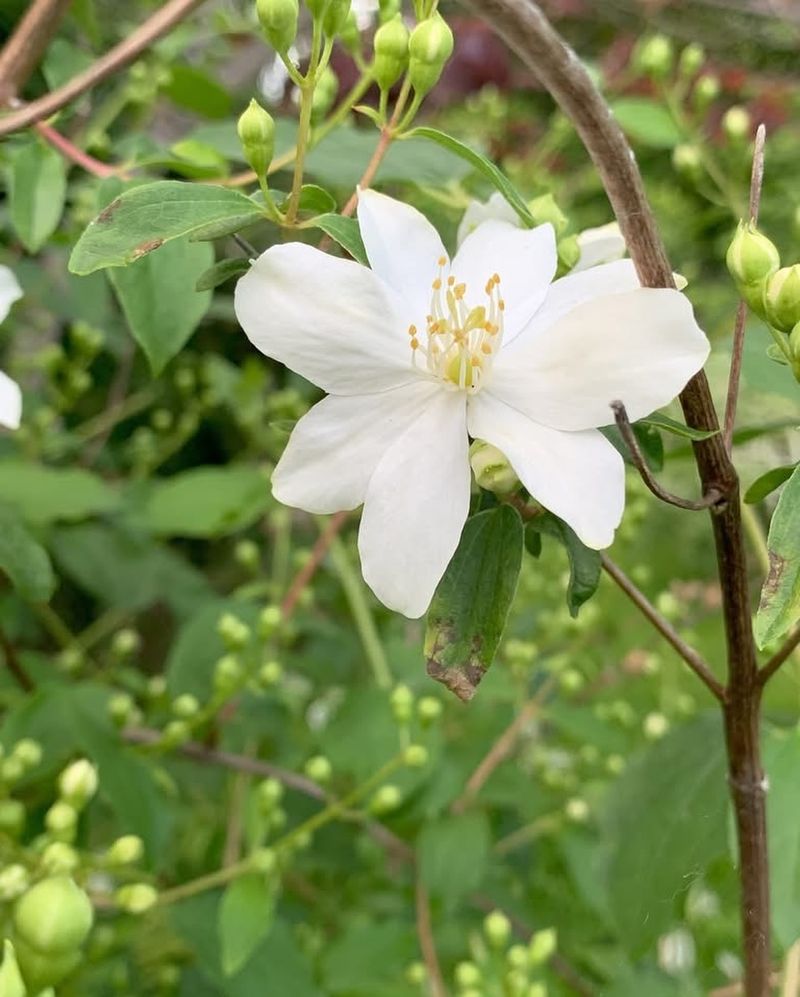
Mock orange does not hint at its fragrance. It announces it. And when Oregon rain soaks the blooms, that announcement gets considerably louder.
Philadelphus lewisii is native to the Pacific Northwest, which means it arrived in Oregon long before anyone thought to plant it deliberately. That origin shows in how naturally it performs here.
The sweet, citrusy scent is often described as orange blossom and jasmine combined. After rain, the oils in the flowers release more freely into the damp air and the fragrance carries across an impressive distance.
Plant it in a sunny to partly shaded spot with well-drained soil. Blooms appear from late spring into early June and last for several weeks.
The plant tolerates Oregon’s clay-heavy soils better than many flowering shrubs, which makes placement decisions considerably easier.
Mature plants reach six to ten feet tall. Give them room from the start. Prune immediately after flowering since blooms appear on old wood. Cutting at the wrong time removes next year’s display before it forms.
Established plants handle Oregon’s dry summers with minimal supplemental water. Deer tend to leave mock orange alone, which matters in yards that back up to wooded areas.
Plant one near a patio, a frequently used path, or an open window. Every rainy afternoon delivers fragrance without any effort from you.
The plant does the work. The rain delivers it. You just have to be there.
2. Hellebores
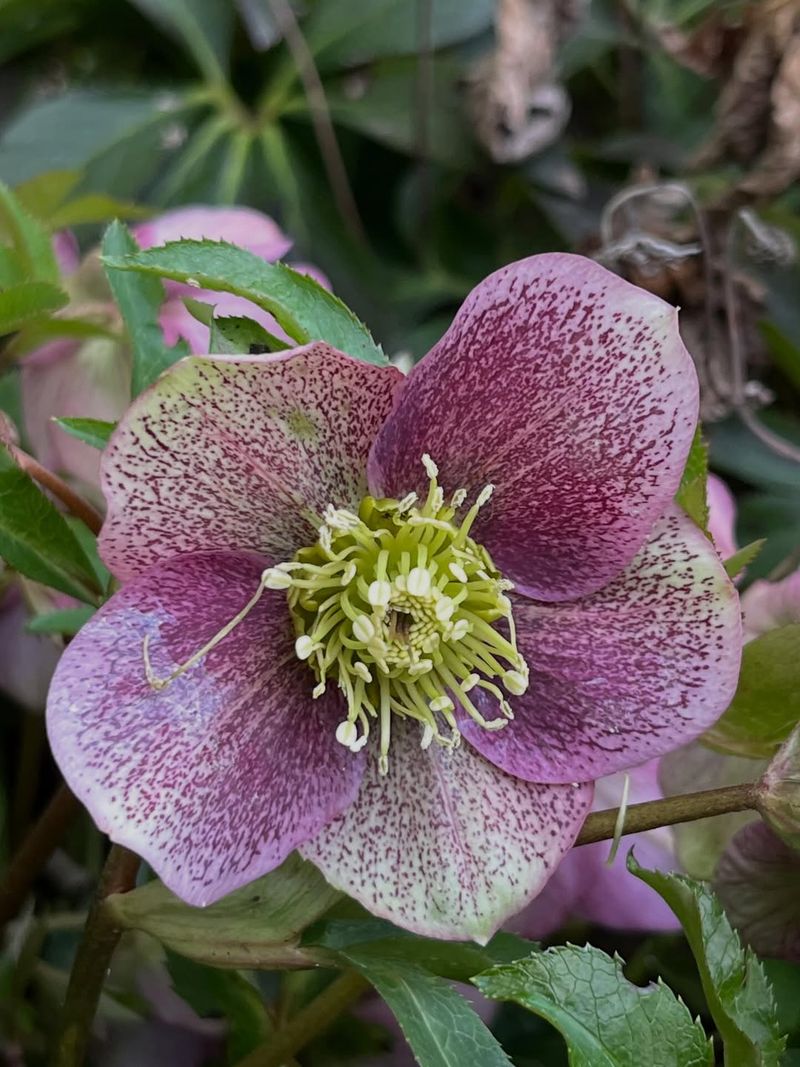
Hellebores earn their reputation as late-winter show-offs. The blooms appear when almost nothing else is flowering, and they last for weeks.
What many gardeners overlook is the fragrance certain varieties carry, particularly when rain-soaked petals warm slightly after a shower.
It is not a dramatic scent. It is earthy, subtle, and deeply connected to the feeling of a wet forest floor in February. In a garden that is still waiting for spring, that kind of fragrance lands differently.
Helleborus orientalis and its hybrids are the most widely grown types in Oregon, and they genuinely thrive in the shaded, moist conditions the western part of the state naturally provides.
Your Oregon Garden Changes Every Week. Your Plan Should Too.
Gardening in Oregon changes quickly throughout the season. Every Friday you’ll receive a simple weekly plan showing exactly what to plant, prune, fertilize, harvest, and protect so you never miss the right timing.
Under deciduous trees, where winter sun reaches through bare branches and summer shade protects the roots, is where they perform at their best.
Plant in fall or early spring in humus-rich, well-drained soil. Once established, they require very little ongoing attention.
Removing old foliage in late winter before new blooms emerge keeps the display looking clean. Slugs are worth monitoring through wet winters since they find hellebores appealing.
Fragrant species like Helleborus odorus tend to carry the strongest scent. Mixing several varieties creates a layered color display that runs from January through April.
Place them near a path or a garden bench. On grey Oregon mornings, catching that quiet rainy-day scent while walking past is one of those small pleasures that requires no explanation to anyone who has experienced it.
3. Winter Daphne
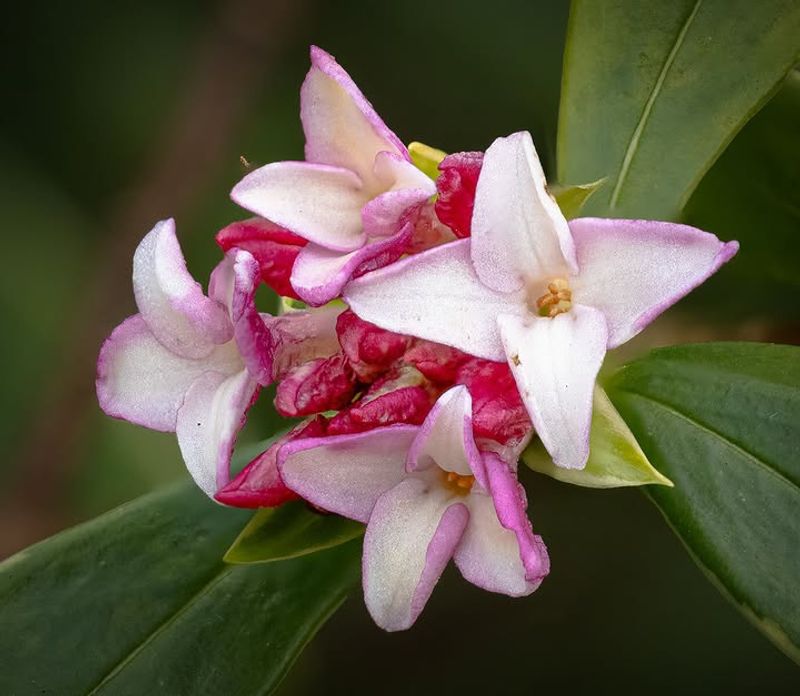
February in Oregon is not typically the month that sends people rushing into the garden. Winter daphne is the plant that changes that calculation entirely.
Daphne odora blooms from January through March, which means it performs during the months when most of the garden has nothing to offer.
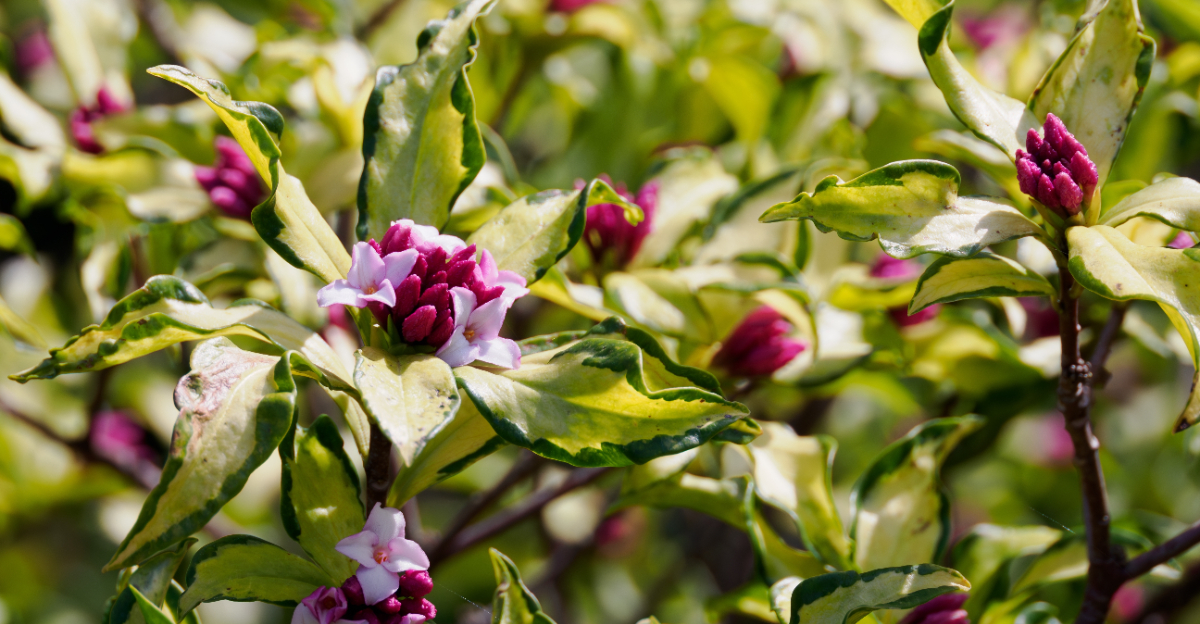
The small tubular flowers in pink and white clusters carry a rich, sweet fragrance that travels further than the size of the plant would suggest.
Rain loosens the fragrance oils in the blooms and the scent spreads across the yard in a way that feels genuinely disproportionate to what you are looking at.
This shrub likes a sheltered spot with morning sun and afternoon shade. It is particular about drainage. Raised beds and slopes suit it far better than low-lying areas where water collects after rain.
Mixing compost into the planting hole improves the soil structure and gives the roots a better start.
Once established and happy, the plant rewards very little ongoing care with years of reliable winter blooms.
The variegated form with cream-edged leaves looks attractive even when it is not flowering, which extends its visual contribution through the entire year.
Keep placement in mind since all parts of the plant are toxic if eaten. A path edge or entry area where people pass frequently suits it well without creating access concerns.
Plant it near a door and every visitor from January through March gets a welcome they were not expecting.
That is a reasonable return on one shrub.
4. Oregon Grape
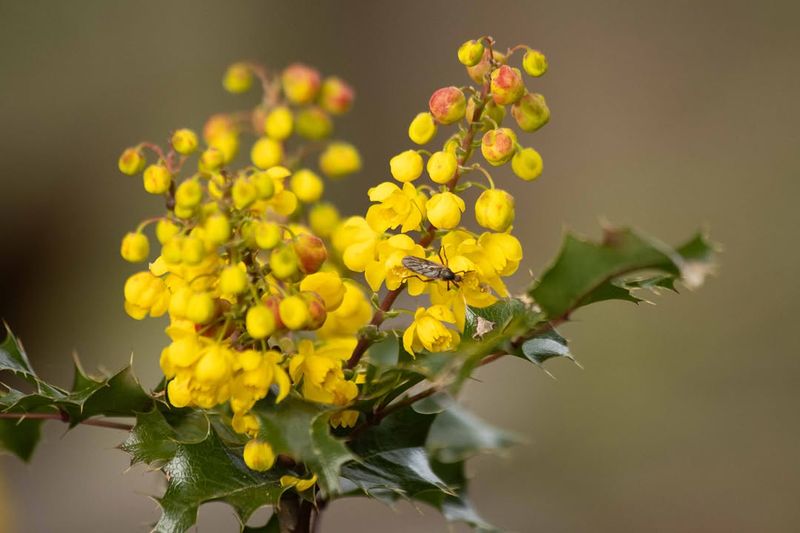
Oregon grape earned its state flower status by being exactly what this climate produces best. Mahonia aquifolium has thrived here for thousands of years without anyone’s help.
The scent it releases when rain hits the foliage is not floral or sweet. It is earthy, slightly spicy, and unmistakably connected to the Pacific Northwest forest floor.
That scent is irreplaceable. No exotic plant replicates it because no exotic plant developed alongside Oregon’s specific ecosystem.
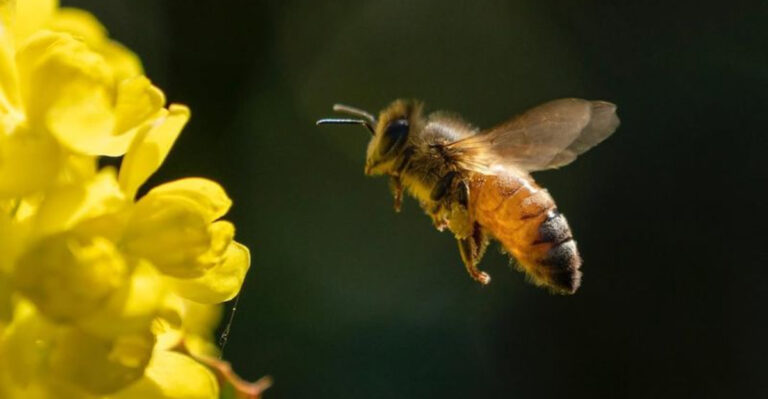
The bright yellow flower clusters appear in late winter to early spring and carry a lighter honey-like fragrance that attracts early native bees just beginning to emerge.
The deep blue-purple berries that follow feed birds through summer. The plant contributes something to the garden in every season.
It handles full sun to deep shade, which makes it useful in locations where other plants have struggled. In shadier spots the growth is more open and graceful.
In sunnier positions it grows denser and more compact. It tolerates poor soils and drought once established, though occasional summer water during the driest months keeps it looking its best.
Use it on slopes to manage erosion. Plant it in masses under tall conifers for a naturalistic look. The spiny leaves make it a practical barrier along property edges.
After every rain, the fresh resinous scent rising from the foliage is a reminder that the right native plant in the right location does not need to be explained or justified.
It just belongs there.
5. Scented Geraniums
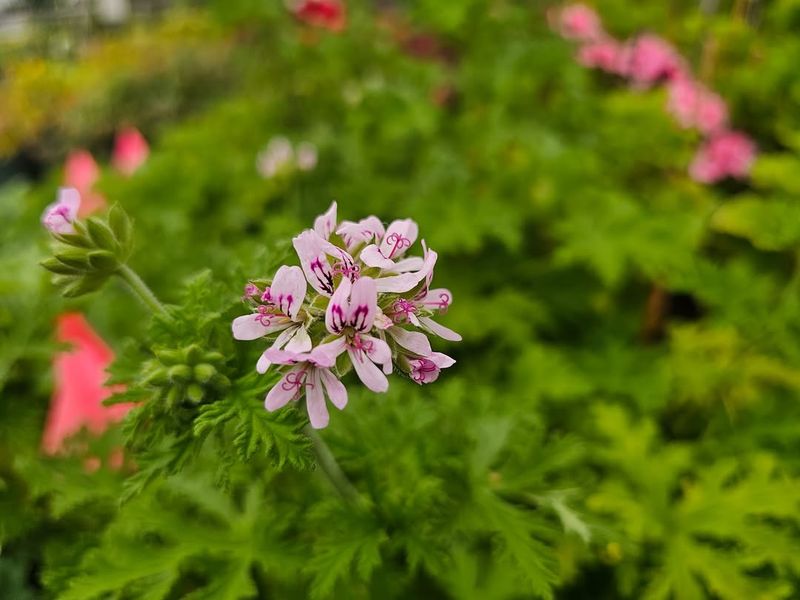
Standard geraniums are fine. Scented geraniums are a completely different sensory category.
Pelargonium species carry fragrance in their leaves rather than primarily in their flowers, which means every brush of contact releases something.
Depending on the variety, that something might be rose, lemon, mint, nutmeg, or peppermint. Rain amplifies these herbal and floral compounds significantly, turning a container display into something that smells like a botanical collection with serious intentions.
Because Pelargonium species are frost-tender, Oregon gardeners typically grow them as annuals outdoors or bring them inside before the first cold snap.
The container habit is actually an advantage. Pots can be moved to wherever fragrance is most useful. Next to a seating area, along a covered porch, flanking a doorway.
They prefer full sun and fast-draining potting mix. Allow the soil to approach dryness between waterings since they tolerate dry conditions considerably better than soggy roots. Light liquid fertilizer every few weeks during the growing season keeps growth lush.
Rose-scented Pelargonium graveolens is a classic starting point. Lemon-scented and peppermint-scented varieties are equally rewarding and useful in the kitchen.
The leaves work in baking, homemade sachets, and anywhere else a reliable botanical fragrance is welcome.
When Oregon drizzle rolls in and the air goes damp, scented geraniums on the patio deliver layered fragrance that improves the experience of being outside in the rain.
Which is exactly the kind of problem Oregon gardeners should have more of.
6. Lavender
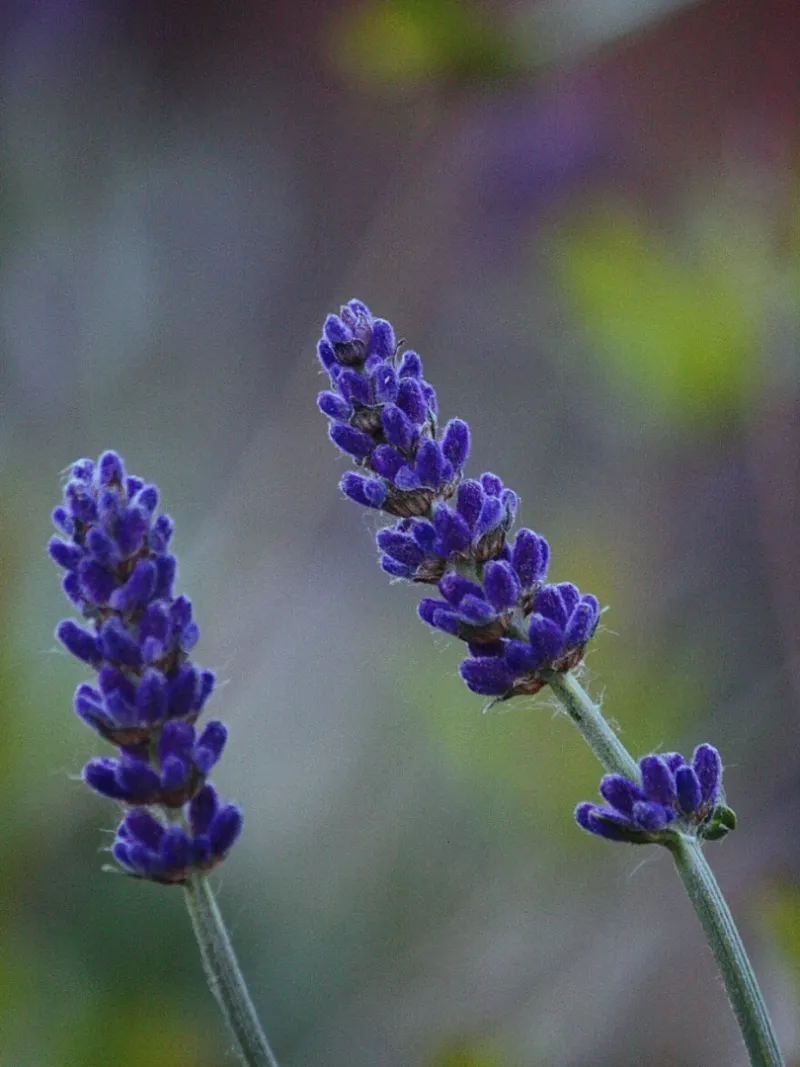
Anyone who has been near lavender after rain already knows this. The scent lifts off the plant and spreads in a way that dry conditions simply do not replicate.
The essential oils in lavender are released more effectively by moisture, which is why a post-rain garden planted with lavender smells closer to an aromatherapy session than a yard.
English lavender and its hybrids perform best in Oregon’s climate. They bloom from June through August and prefer conditions drier than western Oregon’s typical rainfall provides. That means placement and drainage matter more here than in many other regions.
Fast-draining, slightly alkaline soil suits lavender well. Heavy clay without significant amendment creates the wet feet conditions that consistently cause problems.
Raised beds work well in the wetter Willamette Valley. East of the Cascades, lavender finds conditions naturally closer to what it prefers.
Space plants two to three feet apart to allow good airflow. Oregon’s damp winters create fungal pressure that tight spacing amplifies.
Prune lightly in early spring to keep plants productive. Avoid cutting into old wood since lavender does not regenerate from bare stems.
Varieties like Hidcote, Munstead, and Phenomenal have proven reliable in Oregon conditions across multiple seasons and through variable winters.
Line a garden path with lavender and every rainy day becomes something you actually walk out into rather than watch through a window.
A spa visit and a garden path are not the same thing. But after a good Oregon rain, they come close.
7. Sweet Alyssum
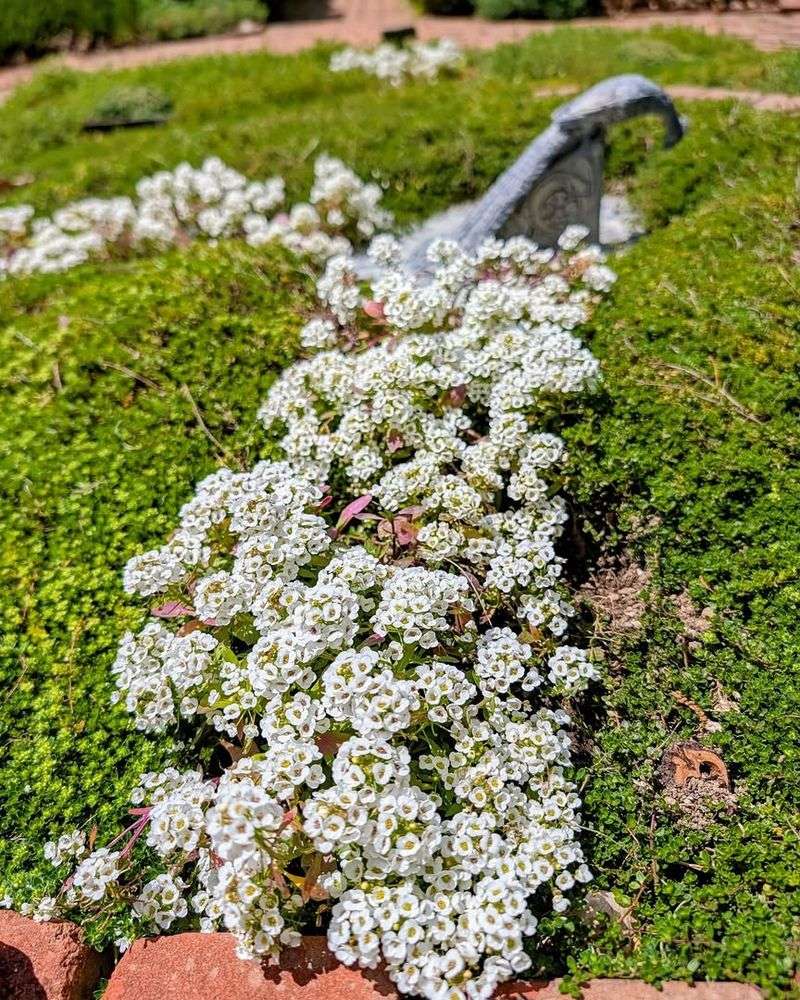
Sweet alyssum is the plant that makes visitors stop mid-stride and look around trying to identify what they are smelling.
The source is usually underfoot or tucked along a path edge, and the scale of the fragrance relative to the size of the plant is genuinely surprising.
Lobularia maritima grows low and spreading. It fills gaps between stepping stones, edges paths, and spills from containers with minimal encouragement.
After rain, the tiny clustered flowers release their honey-vanilla scent in waves that drift across the garden well beyond the plant itself.
This cool-season annual suits Oregon’s climate almost precisely. It germinates quickly from seed and can be sown directly in the garden from early spring through fall.
It actually prefers cooler temperatures, which means it performs through the shoulder seasons when many other plants are resting. During the hottest weeks of summer it may slow down, then bounces back when temperatures drop in fall.
Full sun to partial shade in average, well-drained soil covers most situations. Minimal fertilizer is better since excess nitrogen pushes leafy growth at the expense of flowers. Shearing plants back by half mid-season encourages a fresh flush of fragrant new growth.
White varieties tend to carry the strongest fragrance. Purple and pink types add color contrast and work beautifully alongside lavender or scented geraniums in a layered fragrant border.
It is the smallest plant on this list. After rain, it frequently gets the biggest reaction from anyone walking through the garden gate.
Size, as sweet alyssum demonstrates, is not everything.