Plant These Virginia Natives This Fall, And Your Yard Bursts Into Color By April
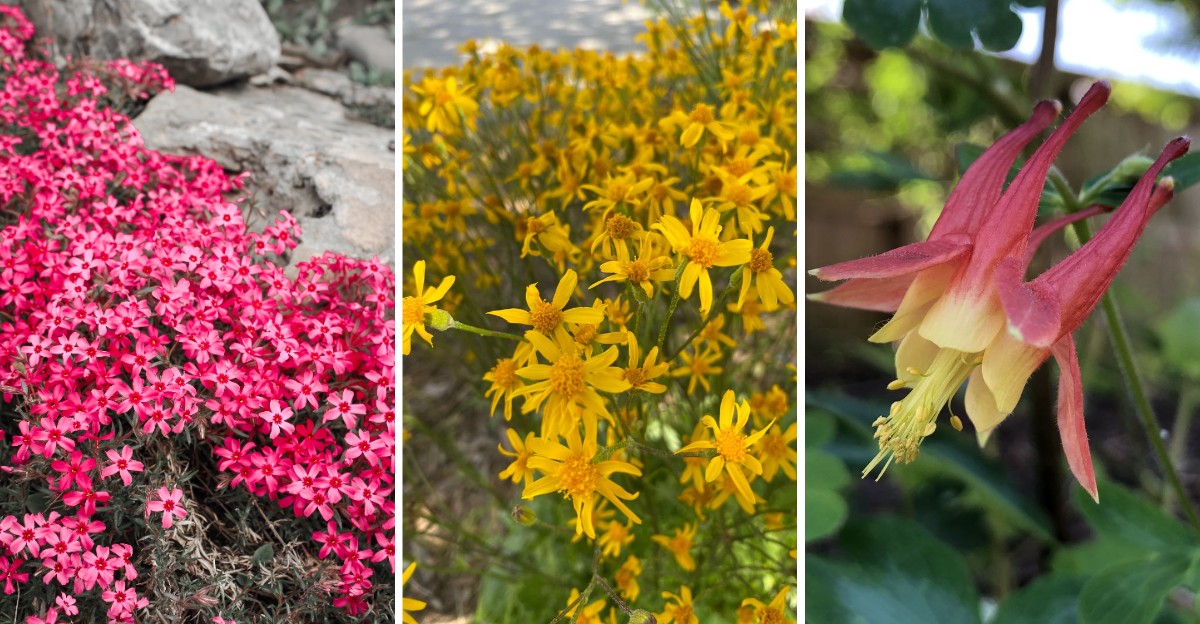
Step outside next April, and your yard could be glowing like a box of fresh crayons. Bees buzz, hummingbirds zip past, and the air smells faintly sweet.
That kind of spring magic starts months earlier, when the right plants go into cool autumn soil. Fall planting gives roots time to settle in while the rest of the garden winds down.
Virginia’s own wildflowers are tough, pretty, and made for local weather. They handle clay, shrug off hot summers, and feed the birds and bugs that live nearby.
Many of them spread on their own and return year after year. Some love deep shade, while others crave sunny slopes.
A few bloom so early they’ll surprise the neighbors. The natives below can turn a plain yard into the brightest spot on the block by spring.
1. Golden Ragwort For Sheets Of Yellow In April
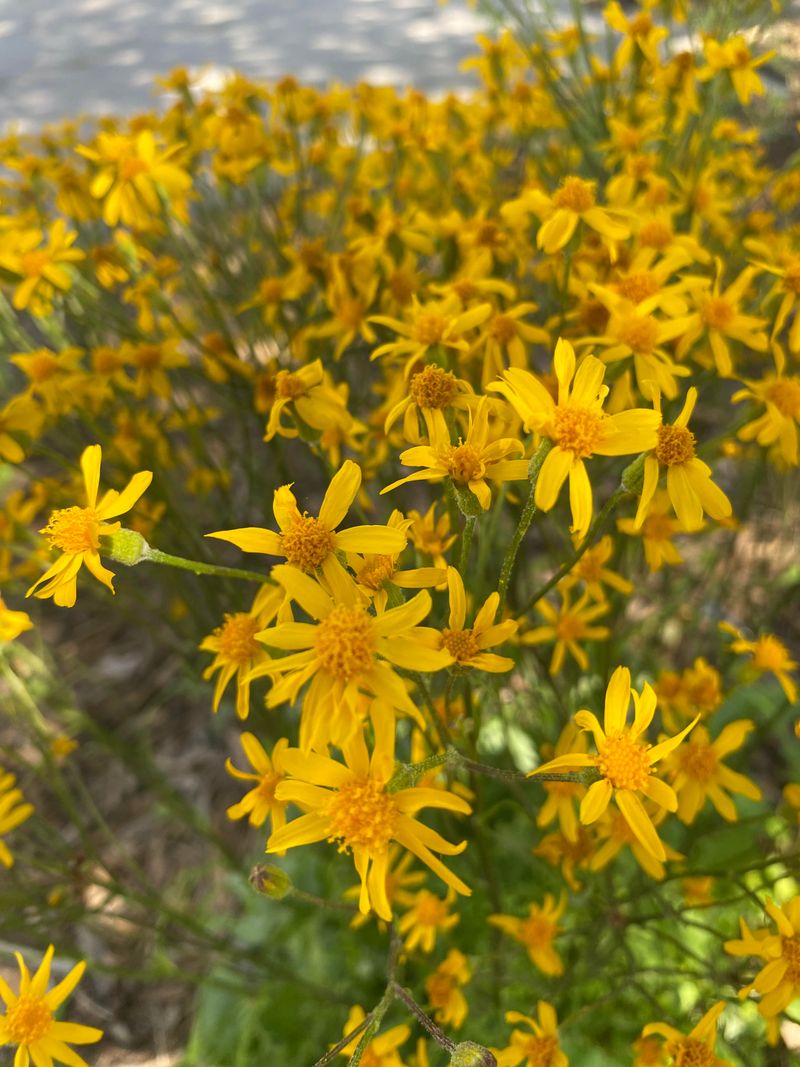
Some plants whisper spring, but golden ragwort shouts it from the rooftops. By April, a single patch can become a glowing yellow sheet under your trees.
Known to botanists as Packera aurea, it grows flower stalks 12 to 30 inches tall. Each stem holds clusters of bright, daisy-like blooms that feel like sunshine on a stick.
Watch the buds closely in March. Many show a hint of purple before they pop open into full gold.
Down at ground level, the heart-shaped leaves stay dark green all winter. Your garden keeps some color even when everything else looks brown and sleepy.
Planting in early fall gives the roots a solid head start. Cool soil and steady rain help young plants settle before winter arrives.
Golden ragwort grows well across all of Virginia, from mountain towns to coastal suburbs. It handles full sun, part shade, or full shade with surprising ease.
Moist soil makes it happiest, since it naturally grows along stream banks and in wet woods. Still, it often manages fine in drier upland spots too.
Here is a helpful bonus for busy gardeners. The plant spreads by seeds and underground roots, forming large colonies even under big trees.
Deer usually leave it alone because they dislike the taste of its leaves. Bees and butterflies, on the other hand, visit the blooms eagerly.
Got a soggy corner where grass struggles? Golden ragwort could turn that trouble spot into a bright, low-care groundcover.
Give it space, and it will reward you with more gold each spring.
2. Virginia Bluebells For Sky-Blue Woodland Drifts
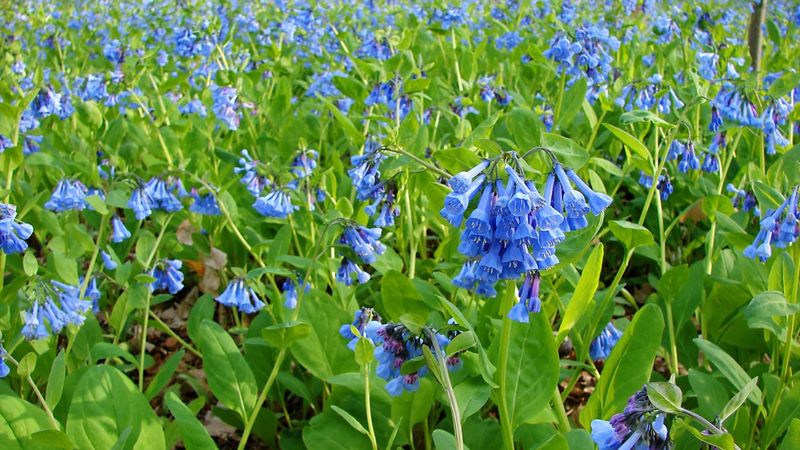
Walk through a Virginia forest in mid-April, and you might feel like the sky fell onto the ground. Virginia bluebells create that dreamy scene with soft blue drifts.
Their flowers start as dusky pink buds. Slowly, they open into dangling bells of sky blue, sometimes with touches of lavender.
Timing matters with this beauty. In Virginia, bluebells bloom from late March through April, and the show lasts about three weeks.
After that, the plant fades away and rests underground by early summer. Gardeners call plants like this spring ephemerals, meaning they appear briefly and then nap.
Your Virginia Garden Changes Every Week. Your Plan Should Too.
Gardening in Virginia changes quickly throughout the season. Every Friday you’ll receive a simple weekly plan showing exactly what to plant, prune, fertilize, harvest, and protect so you never miss the right timing.
Fall is the sweet spot for planting. Aim for late September through early November, before the ground freezes solid.
You can find them as potted plants, bare roots, or seeds. Seeds sown outdoors in autumn get the natural winter chill they need.
Shade suits them well, whether partial or full. Rich, moist soil with good drainage keeps their roots healthy.
Try working compost or shredded leaves into the planting area. Bluebells love that loose, spongy forest-floor feel.
One smart trick is pairing them with ferns or hostas. As the bluebells go dormant, their neighbors fill in the empty space.
Deer tend to skip them, which is a relief in many suburbs. Early bees rely on their nectar when few other flowers are open.
Over time, bluebells multiply through seeds and underground stems. A small handful planted now can grow into a sweeping blue river in a few years.
Patience pays off with this one, and the payoff is breathtaking.
3. Woodland Phlox For Fragrant Lavender Carpets
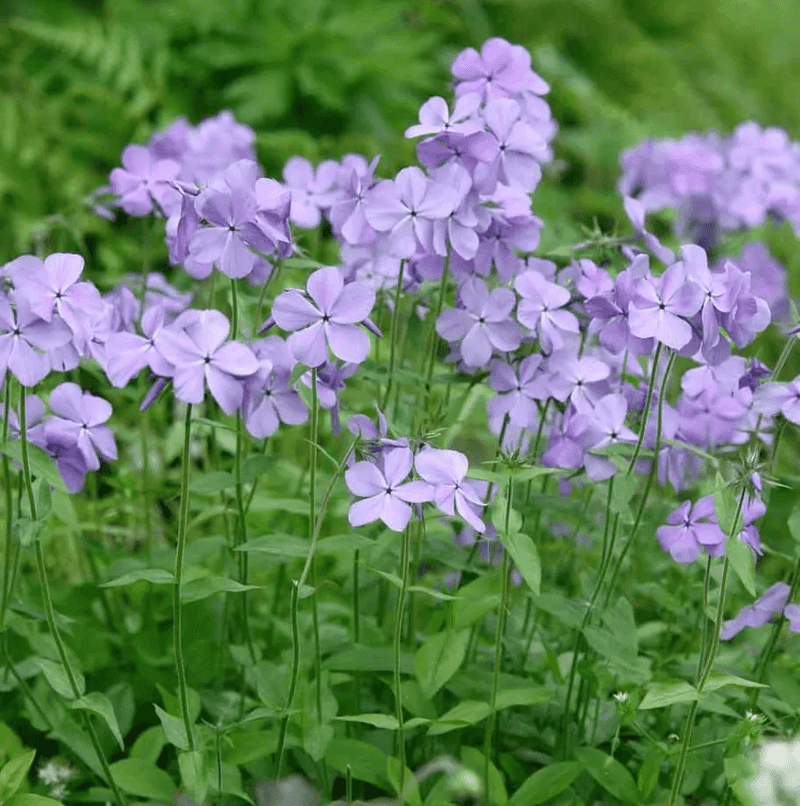
Back in 1793, Lady Jean Skipwith grew woodland phlox at her Virginia plantation. Centuries later, gardeners still fall for its soft lavender charm.
Phlox divaricata forms thick swatches of pale blue or lavender flowers. Each bloom has five petals that look like tiny pinwheels.
On a warm, sunny afternoon, lean in and take a sniff. The sweet scent drifts gently across the garden bed.
Flowers usually open between March and May, right around tulip season. During cool springs, the display can stretch into June.
Planting works well in fall or spring, and divisions settle in quickly. Just dig a clump, split it, and replant the pieces.
Partial shade makes this plant feel at home. Think of the dappled light under a maple or oak tree.
Clay soil can frustrate many gardeners across the state. Happily, woodland phlox tolerates most soils, including heavy clay.
Pollinators treat these blooms like a spring buffet. Hummingbirds, butterflies, and long-tongued bees can reach deep into the tube-shaped flowers.
For the best look, plant several in a loose group. Soon they knit together into a fragrant lavender rug.
Tulips and daffodils make fun partners, since they bloom around the same time. The blue phlox makes bold yellows and reds look even brighter.
After blooming, trim the old stems if they look messy. Fresh leaves will keep the ground covered through summer.
History, fragrance, and easy care make this phlox a true garden keeper.
4. Moss Phlox For Bright Mats On Sunny Slopes
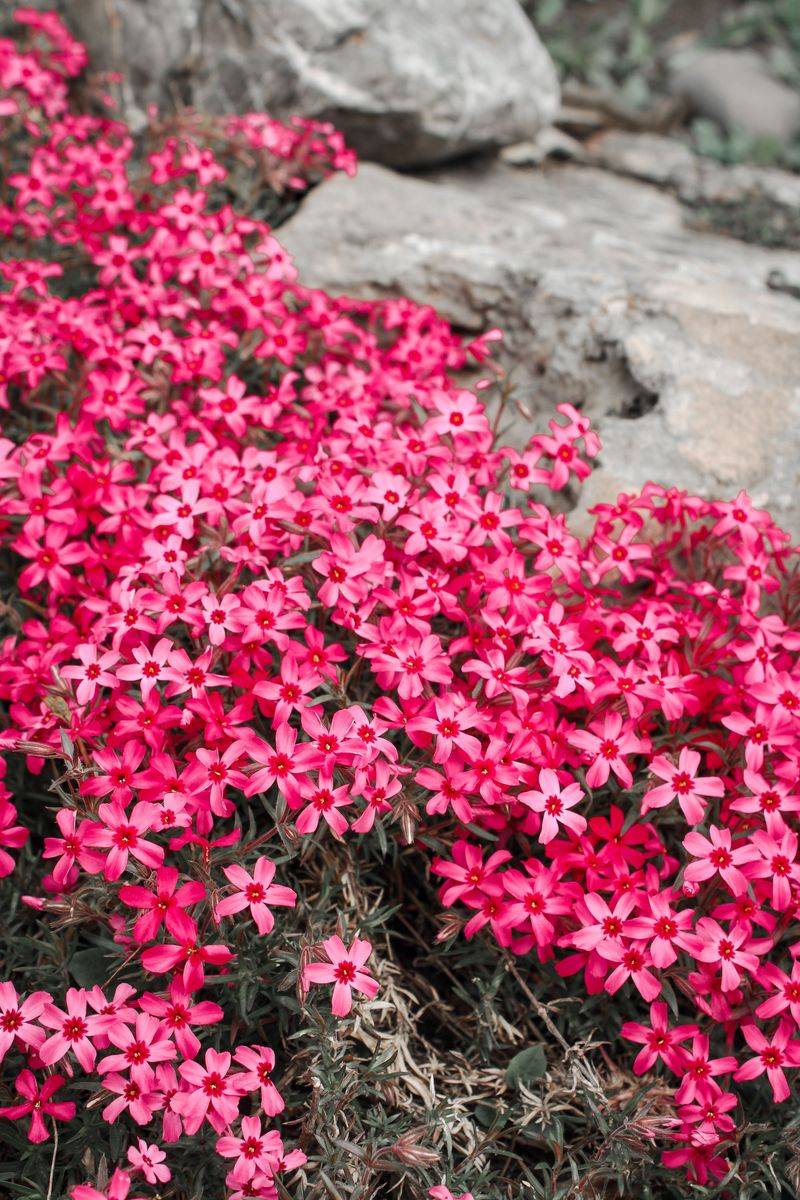
Got a steep, sunny bank that mowers hate? Moss phlox might be the fix you have been hoping for.
Phlox subulata grows in low, tight mats of needle-like leaves. In spring, those mats disappear under star-shaped flowers of pink, purple, or white.
Blooming often begins in March and can last into June. April usually brings the biggest, brightest wave of color.
Many people spot it tumbling over stone walls along country roads. It creates a bold ribbon of color you can see from far away.
Plant it in early fall or spring for the best results. Skip planting during a heat wave or a hard freeze.
Full sun keeps moss phlox blooming heavily. It can handle a little shade, though flowers may be fewer.
Poor, rocky, or gravelly soil suits it just fine. Good drainage matters more than rich dirt.
On slopes, its roots help hold soil in place. That makes it a handy helper against erosion after heavy rain.
Light foot traffic is not a big problem either. Kids and pets crossing the edge now and then should not hurt it much.
Deer usually leave it alone, which many homeowners appreciate. Early bees and butterflies visit the blooms when food is still scarce.
A simple tip is to trim the plants lightly after flowering. That encourages denser growth and keeps the mats tidy.
The needle-like leaves stay green all year, so the slope looks neat even in winter.
5. Wild Columbine For Red Blooms That Draw Hummingbirds
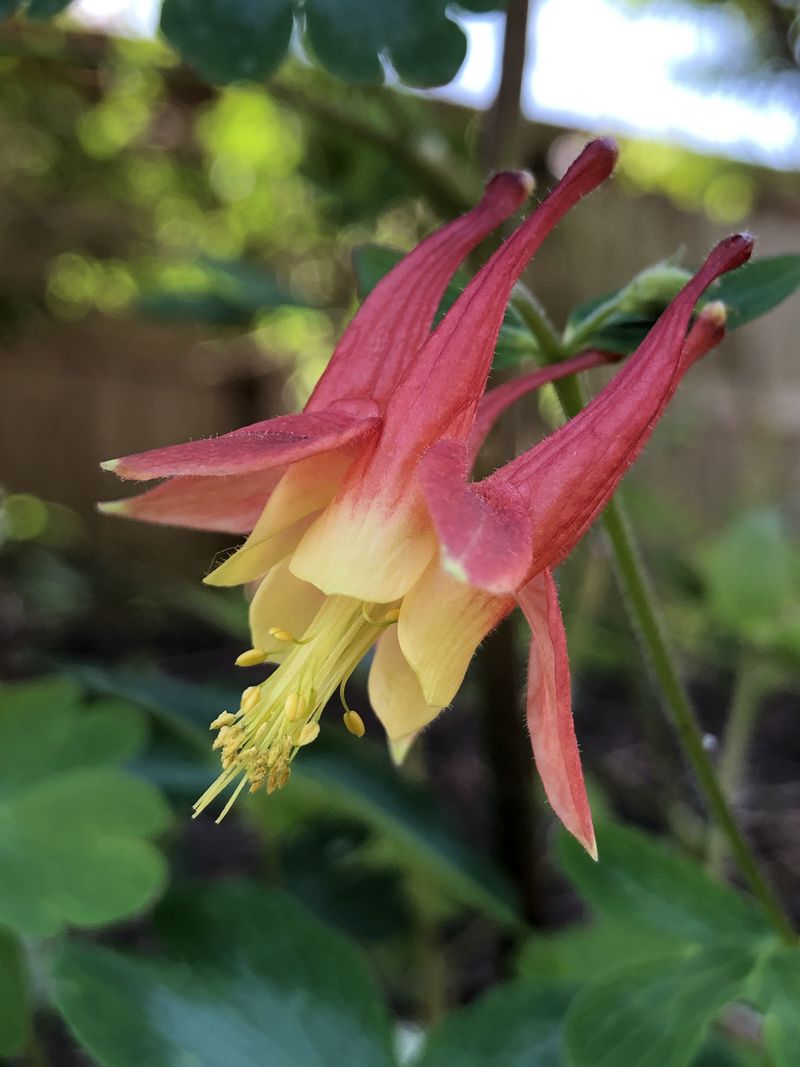
Hummingbirds return to the state each spring hungry and tired. Wild columbine waits for them like a roadside diner with the lights on.
Aquilegia canadensis produces nodding red and yellow blooms with long spurs. Some folks say the petals look like tiny eagle claws.
Inside those spurs sits sweet nectar, perfect for a hummingbird beak. Bees and early butterflies stop by for a taste too.
Blooms often appear in early April, though some open in March. Flowering can continue into May, matching the birds’ arrival.
Fall is a smart time to sow seeds outdoors. Winter cold gives them the chill they need to sprout.
Plants from seed usually flower in their second year. Nursery plants go in the ground easily in fall or spring.
Rocky, well-drained soil suits it best. In nature, it clings to wooded ledges and riverbanks.
Partial shade or dappled light keeps it happy. Once settled, it handles dry spells surprisingly well.
Deer usually avoid it because the leaves are toxic. Keep that in mind if pets like to nibble plants.
The lacy blue-green leaves look lovely even after flowers fade. Let a few seed pods ripen, and new plants will pop up nearby.
Wild columbine grows naturally in most counties across the state. Planting it helps local wildlife and honors a true regional treasure.
Set a chair nearby and watch the hummingbird visits roll in each morning.
6. Lyreleaf Sage For Purple Spikes That Self-Seed Fast
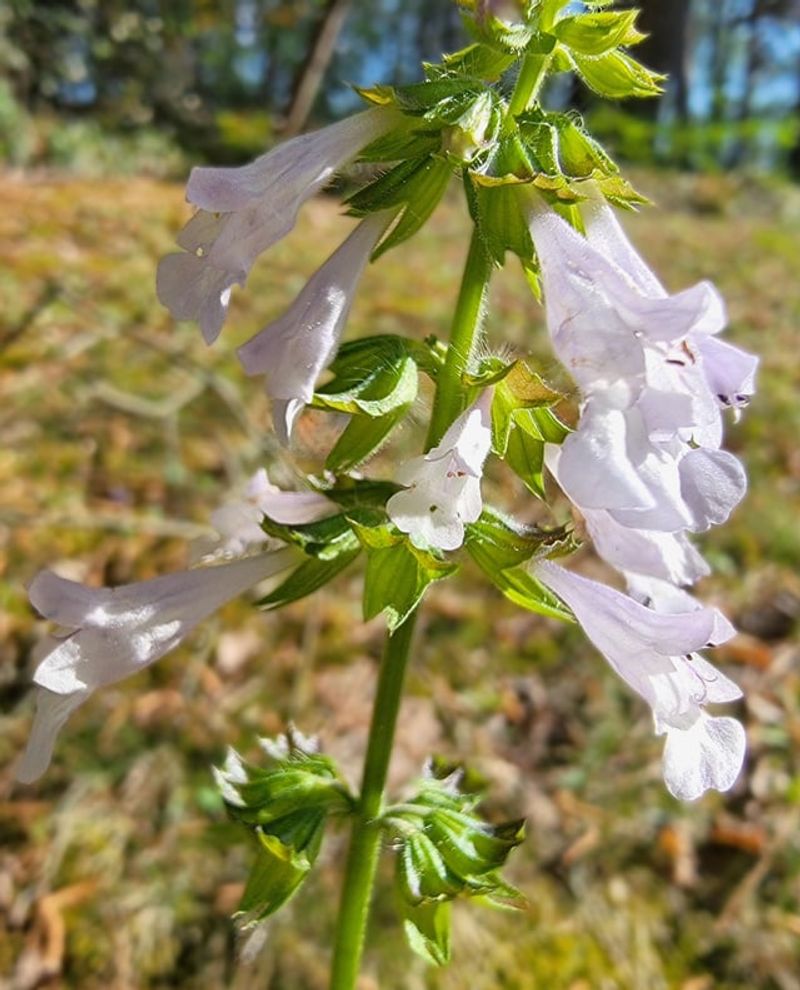
Think of lyreleaf sage as the friendly neighbor who shows up with extra seedlings. Give it one season, and it starts sharing generously.
Salvia lyrata sends up slim spikes of violet or bluish-purple flowers. Blooms appear from March through June, sometimes lasting into summer.
Its name comes from the leaves, which look a bit like a lyre. They form a tight rosette close to the ground.
Cool fall weather often turns the foliage a deep purple. Part shade can make that color even richer.
Toughness is its superpower. It handles drought, too much rain, and clay soil without much complaint.
Sun or part shade both work fine. That flexibility makes it great for tricky spots where fussy plants struggle.
Want more plants for free? Collect seeds in late summer or early fall and scatter them in autumn.
Fall-sown seeds get the cold period they need to sprout. Dividing clumps in early spring or fall also works.
Self-seeding happens fast, so plan ahead. Let it fill a meadow patch, lawn edge, or bare corner.
As a groundcover, it helps crowd out weeds and keeps soil cool. Deer rarely bother it once it settles in.
Hummingbirds, bees, and butterflies sip from the flowers. Native caterpillars feed on the leaves too, supporting local wildlife.
If it wanders too far, simply pull extra seedlings. They come up easily and can be shared with friends.
Low effort, big rewards, and a sea of purple make it hard to resist.
7. Green-And-Gold For Cheerful Yellow Stars
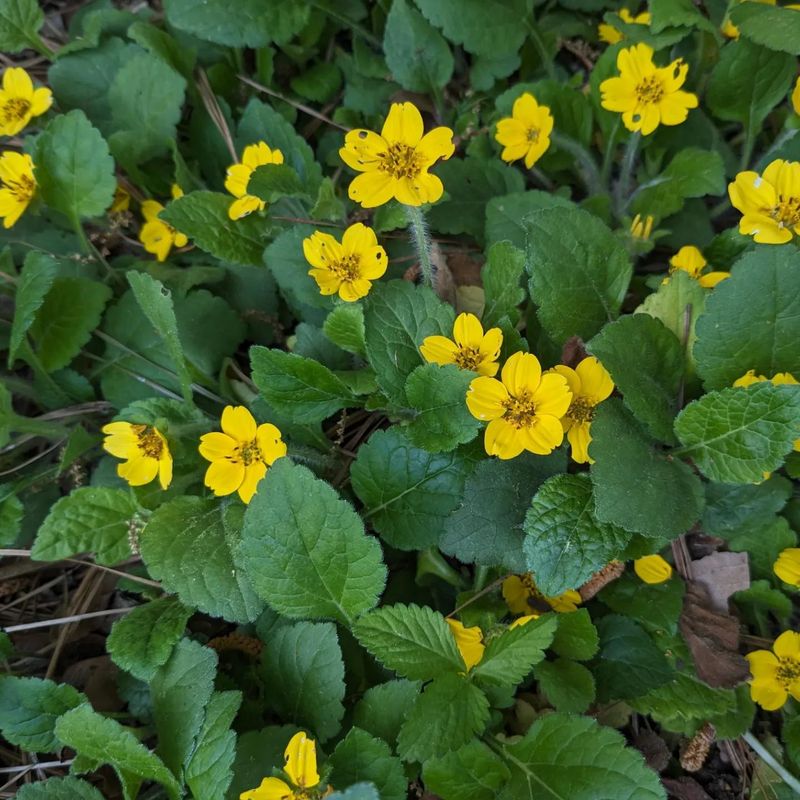
Its species name, virginianum, says a lot about where this plant feels at home. Green-and-gold is a proud local that lights up shady paths.
Chrysogonum virginianum forms low mats of dark green, fuzzy leaves. Above them sit bright yellow flowers with five rounded petals.
Each bloom looks like a little star someone dropped on the ground. Kids often love spotting them along walkways.
Flowers can start in March, but April is when they truly pop. In warmer areas, a second light bloom may appear in fall.
Fall and spring are the best planting seasons. Seedlings transplant most successfully in autumn, while soil is still warm.
Partial shade suits it well. A few hours of morning sun will encourage extra flowers.
Full sun is possible if the soil stays moist. Just avoid soggy ground, which can cause root trouble.
Rich soil with plenty of leaf mold or compost helps it thrive. Mulching with shredded leaves mimics its natural woodland home.
Over time, it spreads by rhizomes and seeds. That creeping habit makes it a lovely edge plant along paths and borders.
Deer usually walk right past it. Butterflies and bees, meanwhile, enjoy the early nectar.
Many gardeners use it instead of store-bought annuals. It returns each year without replanting.
For a fun combo, plant it near woodland phlox. The yellow and lavender together look like a spring painting.
8. Foamflower For Frothy White Spikes In Shade
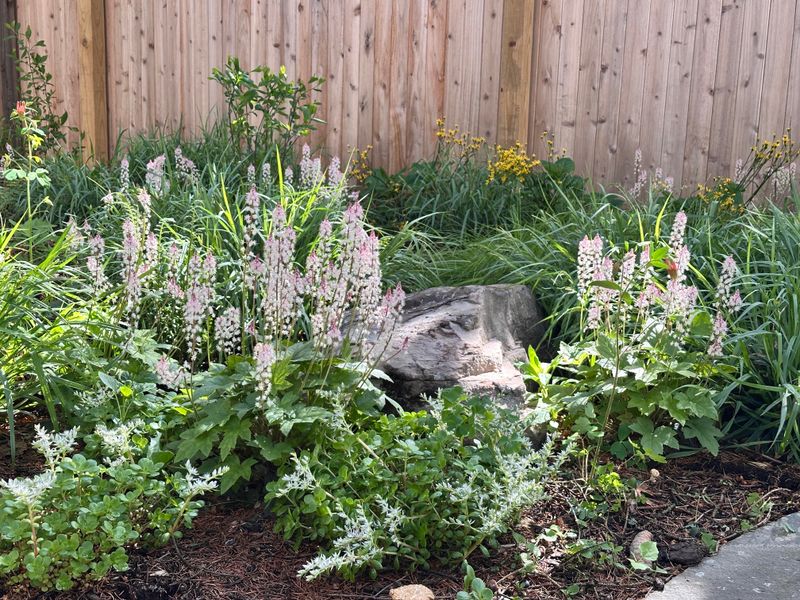
Imagine sea foam washing over the darkest corner of your yard. Foamflower brings that soft, bubbly look to deep shade.
Tiarella cordifolia sends up spikes packed with tiny, star-shaped white flowers. From a distance, they look fluffy, like whipped cream.
Along the Virginia coast, blooms can start by mid-March. Farther inland, they usually appear in mid to late spring.
The show lasts four to six weeks, which is generous for a spring bloomer. Some plants keep flowering into early summer.
Leaves deserve praise too. They are heart-shaped and often turn bronze or burgundy in cold weather.
In mild southern winters, much of that foliage hangs on. You get color even in January.
Plant it in fall or spring for easy establishment. Mature clumps can be divided in autumn by gently separating the crowns.
Shade or part shade works best. Moist, slightly acidic soil with plenty of organic matter keeps it thriving.
Here is the one catch. Foamflower is not drought tolerant, so water during dry spells.
A soaker hose or thick leaf mulch helps hold moisture. Your plants will thank you with fuller growth.
Underground runners let it spread into a lovely groundcover. Bare spots under trees can fill in within a few seasons.
Its light fragrance draws small pollinators. For hard shady areas, few natives look this elegant.
9. Blue-Eyed Grass For Tiny Blooms In Sunny Spots
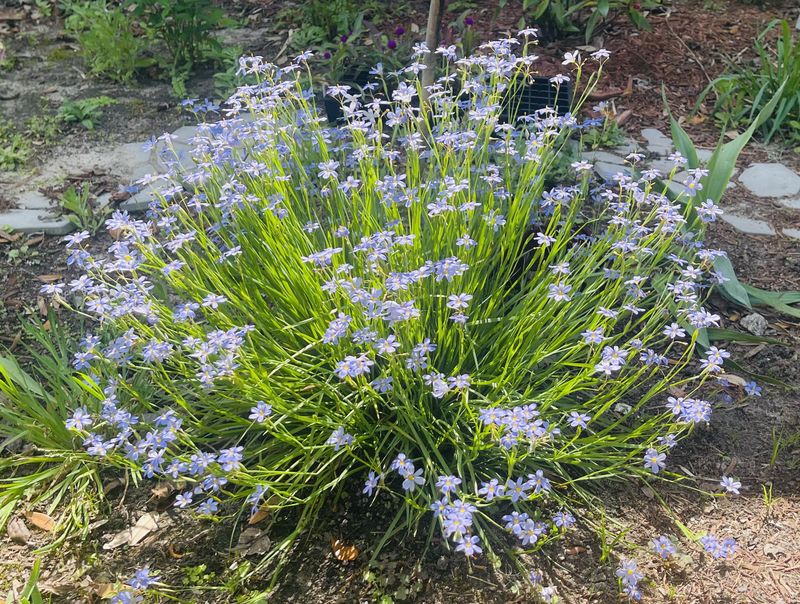
Here is a fun riddle for garden visitors. What looks like grass, blooms like a flower, and belongs to the iris family?
Blue-eyed grass is the answer. Sisyrinchium angustifolium forms neat tufts of narrow leaves that fool almost everyone.
Tiny star-shaped flowers dot the foliage in true blue to lavender. Each one has a cheerful yellow eye in the center.
Blooms appear from early May into June, often covering the mounds. A second round sometimes shows up in late summer or fall.
Timing your visits matters. Flowers open in sunshine and close from dusk until morning.
Plant it in fall so roots settle before spring. By May, the small clumps should look full and ready to bloom.
Full sun brings the most flowers, though part shade works. Moist, well-drained soil keeps it happiest.
In the wild, it grows in damp meadows and along riverbanks. Avoid planting it in very dry, sandy spots.
Every two or three years, divide the clumps. Early spring or fall is the best time for splitting.
Dividing keeps plants strong and gives you extras for other beds. It may also self-sow a little on its own.
Sweat bees, bumblebees, and spring butterflies visit the blooms. Songbirds later snack on the seeds.
Tuck it along a sunny path edge or between stepping stones. It adds a sweet final touch to any spring garden.