Protect Your Young New Jersey Trees Before Bucks Start Rubbing This Month
Autumn in New Jersey smells like wet leaves, woodsmoke, and cider going slightly flat in the garage fridge. It is a lovely season, right up until you walk out one morning and find your favorite young tree looking like it lost an argument.
Something moves through the yard at dusk. It has velvet on its mind, a bad attitude, and zero respect for the sapling you planted last spring.
The damage happens fast, usually overnight, usually to the smoothest, straightest trunk you own. By the time you notice the shredded bark curling like ribbon, the visitor is long gone into the tree line.
The fix is simple: a weekend of simple prep now saves you years of regret later. Here are eight practical ways to guard your young trees before the calendar turns against you.
1. Know Which Trunks Attract The Most Attention
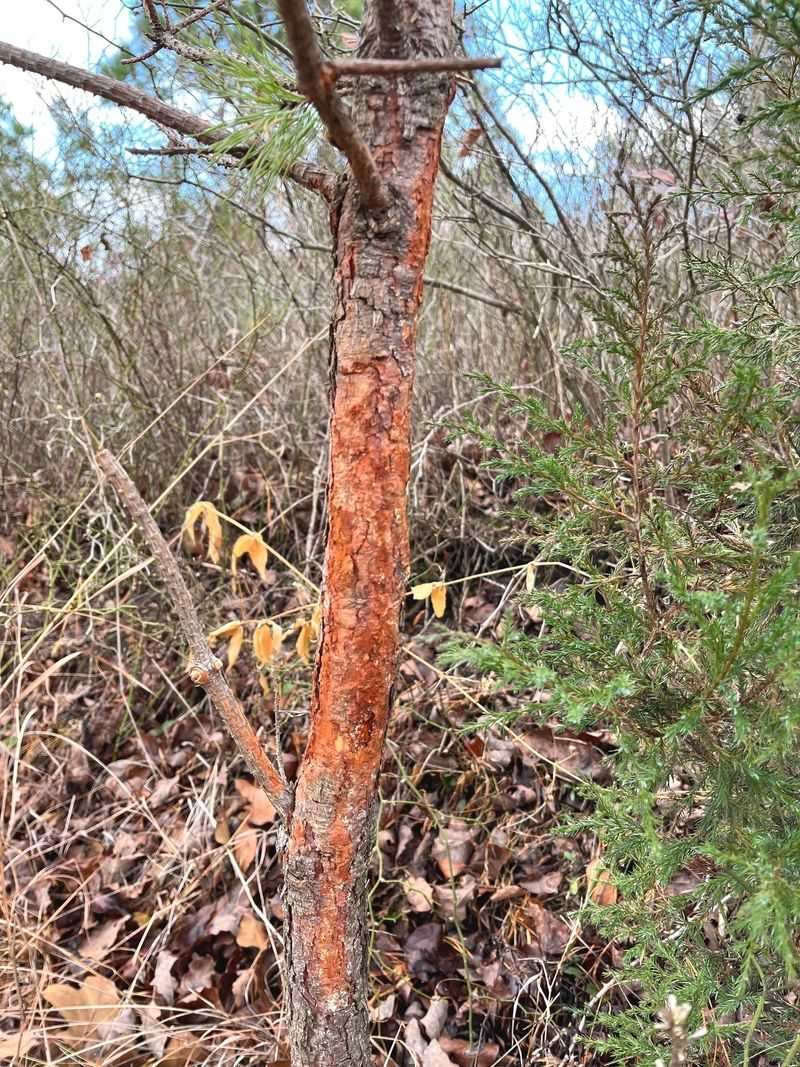
Not every tree in your yard carries the same risk. Bucks strongly favor smooth, flexible trunks between one and four inches across, roughly the thickness of a broom handle or a soda bottle.
In New Jersey yards, that usually means young maples, birches, cherries, arborvitae, dogwoods, crabapples, and fruit trees. Aromatic species like cedar and pine also draw interest, likely due to their strong scent.
Older trees with thick, craggy bark rarely get touched. Their rough surface offers no satisfying friction, and their stiff trunks do not bend the way a young stem does.
Take a slow walk around your property this week with a notebook. Mark every tree that fits the target size, and pay special attention to ones standing alone in open lawn or along a wood edge.
Isolated saplings get chosen far more often than trees tucked inside dense shrub beds. A buck wants room to swing his head without tangling in branches.
Also note trees planted near established deer trails, which often run along fence lines, stream banks, and the shady seam between lawn and forest. Those spots see the heaviest traffic during October and November.
Once you have your list, rank it. Protect the irreplaceable specimens first, meaning the memorial tree, the expensive nursery purchase, or the fruit tree you have babied for three seasons.
Knowing your vulnerable trunks turns a vague worry into a short, manageable to-do list you can knock out in an afternoon.
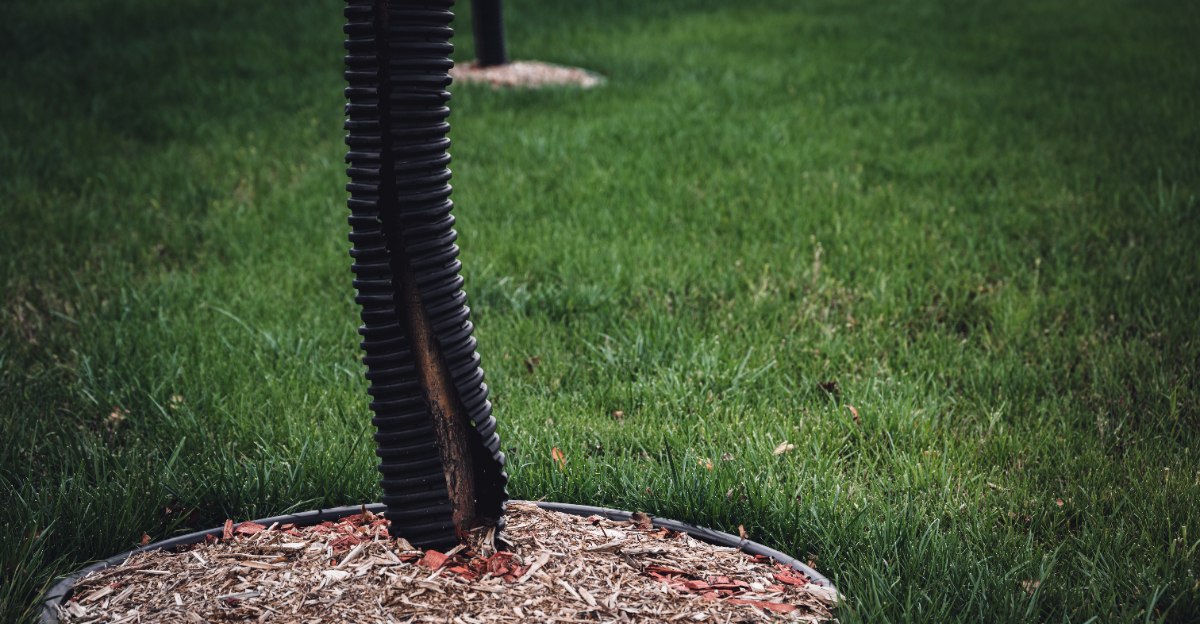
2. Wrap Trunks With Corrugated Plastic Drain Pipe
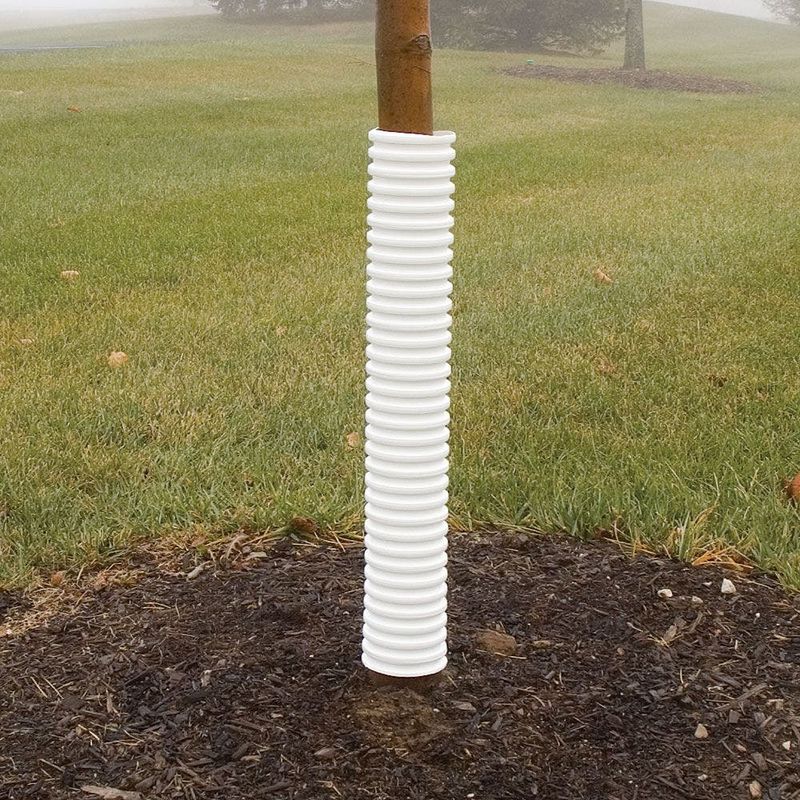
Here is the trick many arborists rely on: a length of black corrugated drain pipe, split down one side, slipped around the trunk like a sleeve. Cheap, fast, and remarkably effective.
Buy four-inch flexible pipe at any hardware store, then cut sections about four to five feet long. Run a utility knife along the length so the pipe opens like a hinge.
Wrap it around the trunk, letting the corrugations spring back into a loose tube. Leave a little breathing room so the bark is not pressed flat against plastic.
The ridges keep the sleeve slightly away from the bark, allowing air to move and moisture to escape. That gap matters, because a tight wrap can trap dampness and invite fungus.
Your New Jersey Garden Changes Every Week. Your Plan Should Too.
Gardening in New Jersey changes quickly throughout the season. Every Friday you’ll receive a simple weekly plan showing exactly what to plant, prune, fertilize, harvest, and protect so you never miss the right timing.
Antlers hit hard plastic instead of tender cambium. Most bucks give up after a swipe or two and wander off to find something more satisfying.
One sleeve costs a couple of dollars and can be reused for several seasons if you store it in the garage. Label them by size if you have a mixed planting.
Check the fit each spring and loosen or replace anything the trunk has outgrown. A sleeve that becomes snug can girdle the tree it was meant to guard.
Remove the pipe once trunk diameter passes about five inches and the bark toughens up. At that point your tree can handle itself, and you can pass the sleeve along to a neighbor who is about to learn this lesson the hard way.
3. Build A Simple Three-Stake Cage
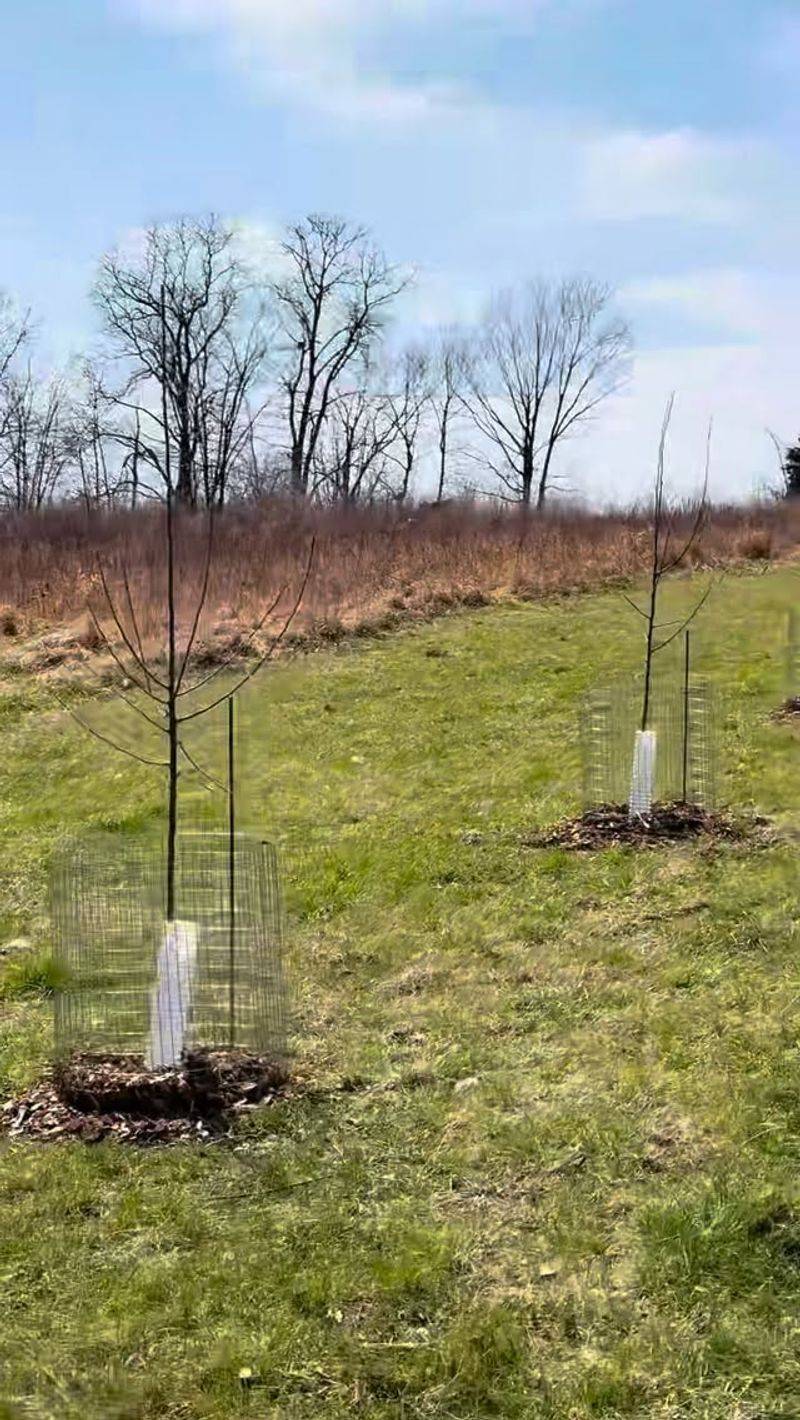
When a trunk is too large for a pipe sleeve, or the tree has low branches you would rather keep, a stake cage does the job beautifully. Three posts and a wrap of fencing, done in fifteen minutes.
Drive three sturdy stakes into the ground about eighteen inches out from the trunk, spaced evenly like a triangle. Hardwood stakes, metal T-posts, or even rebar all work fine.
Wrap welded wire, hog panel, or heavy plastic mesh around the outside of the stakes and secure it with zip ties. Aim for a height of at least four to five feet.
The gap between cage and trunk is the whole point. A buck cannot reach the bark through the barrier, and the rigid frame discourages him from leaning in.
Cages shine for arborvitae, hollies, and anything with foliage running low to the ground. Those plants suffer both rubbing and browsing, so one structure solves two problems.
Do not skip the stake depth. Push each post at least a foot into the soil, because a wobbly cage collapses on the first serious shove.
Aesthetics bother some homeowners, and that is fair. Black or dark green mesh disappears into the landscape far better than shiny galvanized wire.
Come spring, unclip the ties and stack everything behind the shed. Reuse the same materials next October, and you will have paid for them in a single saved tree.
4. Time Your Defenses To The Rut Calendar
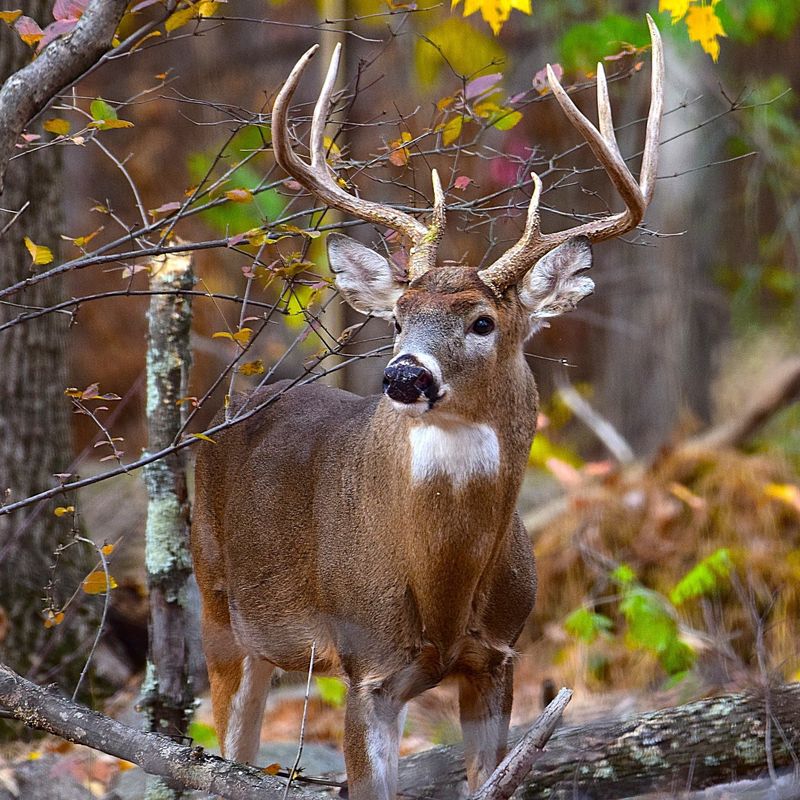
Timing separates the smug homeowner from the frustrated one. Rubbing activity in New Jersey ramps up in early to mid September and peaks through October into the middle of November.
Early rubs happen when bucks scrape drying velvet off freshly hardened antlers. Later rubs are all about communication, leaving scent from forehead glands as territorial signposts.
That means protection installed in late September is good, and protection installed in August is better. Once the first frost hits and you hear the neighbors talking about deer in the road, you are behind schedule.
Mark a recurring reminder on your phone for Labor Day weekend. Pair it with your usual fall chores like gutter cleaning and bulb planting.
Keep guards in place through late December. Some bucks continue marking well after the main rut winds down, especially younger ones.
Winter brings a second threat that has nothing to do with antlers. Hungry deer nibble buds and twigs, so leaving barriers up until March covers both problems at once.
Spring removal deserves its own reminder. Wraps left on year-round can trap moisture, hide insects, and restrict the trunk as it thickens.
Newly planted trees need attention the very first autumn they are in the ground. Nursery stock arrives with smooth, thin bark and no established defenses, making it the most tempting target on your property.
Plan the calendar once, and the rest becomes routine muscle memory every fall.
5. Give Sacrificial Saplings A Job
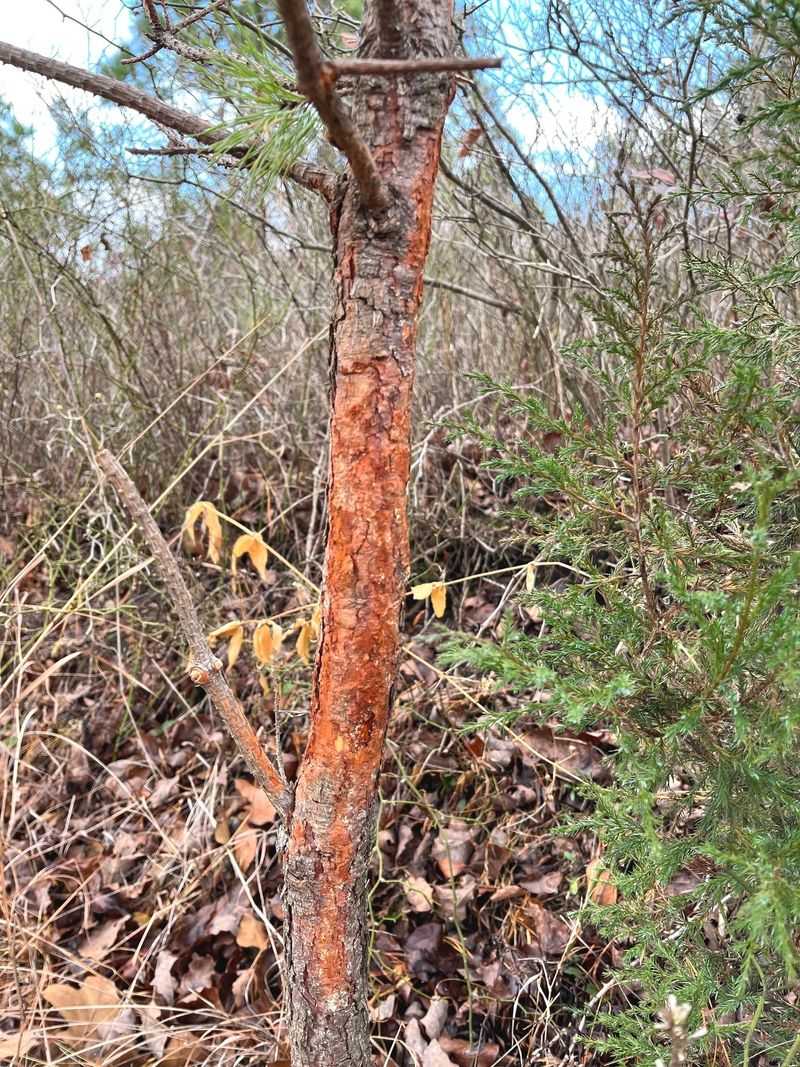
Sometimes the smartest defense is redirection rather than resistance. Leave a few scrubby, low-value saplings standing at the wood edge and let them absorb the abuse.
Bucks are not picky when they are worked up. A volunteer black cherry or a spindly ailanthus at the property line will satisfy the urge just as well as your prized dogwood.
Landowners across rural New Jersey have used this approach for years, sometimes without realizing it. Messy field edges quietly protect tidy front yards.
The idea works best combined with physical guards on the trees you care about. Give the deer an easy option, then make your favorites difficult.
You can even encourage decoy stems on purpose. Allow a patch of brushy growth to develop thirty or forty feet from your ornamental beds.
That brush offers a bonus. Songbirds nest in it, pollinators use the flowers, and rabbits stay out of your vegetable rows because they have better cover elsewhere.
Skip this tactic if the volunteer species is invasive and spreading toward your beds. Some tradeoffs are not worth the paperwork later.
Watch which stems get hit each year, and you will learn your deer traffic patterns for free. Fresh rubs are basically road signs telling you where the highway runs.
Next season, use that information to prioritize where cages and sleeves go first. The deer will keep updating your map regardless.
6. Try Scent Repellents As Backup, Not the Main Defense
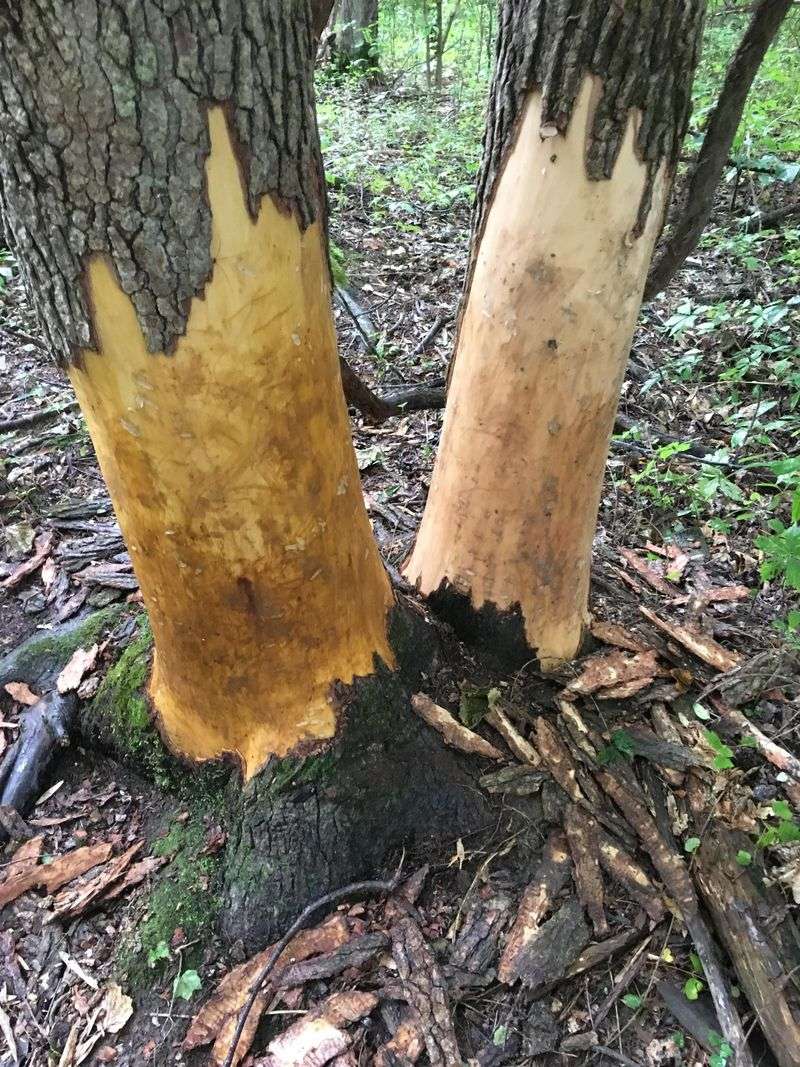
Sprays get a lot of hype, and they do have a place. Just do not expect a bottle of repellent to stop a buck who has already picked your tree as his personal scratching post.
Repellents work on smell and taste, which discourages browsing quite well. Rubbing, though, is driven by hormones and instinct, and a stinky trunk rarely changes that plan.
Use repellent as a layer on top of physical barriers, especially for foliage above the cage line. Choose products with putrescent egg solids or garlic oil for longer staying power.
Reapply after heavy rain, and New Jersey autumns deliver plenty of that. Every two to four weeks is a reasonable rhythm during peak season.
Rotate between two different formulas if you can. Deer adapt to a familiar odor surprisingly quickly, and variety keeps them guessing.
Homemade mixes involving eggs, dish soap, and cayenne have devoted fans. They wash off faster than commercial options but cost almost nothing to whip up.
Apply on a dry day above forty degrees so the product bonds to bark and leaves properly. Cold, wet application usually means wasted money.
Keep spray off fruit you plan to eat, and read the label about edible crops. Some formulas are fine on ornamentals only.
Think of repellent as a helpful nudge rather than a wall. The wall is made of plastic, wire, or wood, and it does the heavy lifting.
7. Startle Bucks With Motion-Activated Sprinklers Or Lights
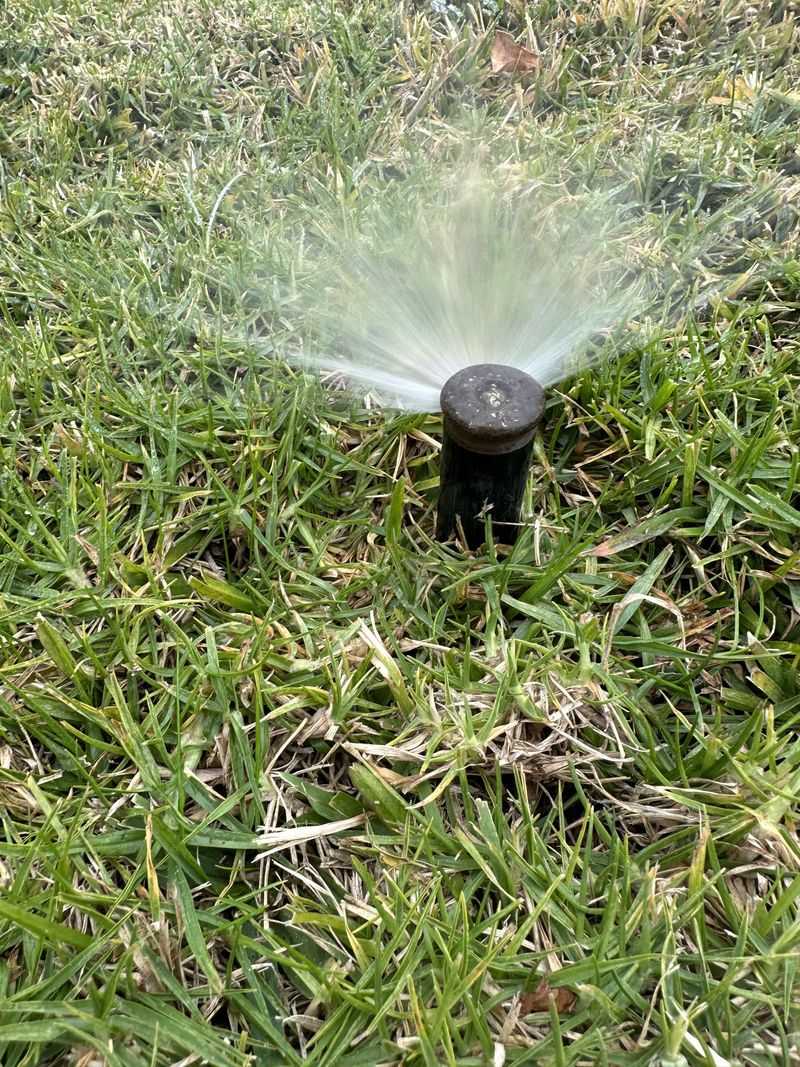
Physical barriers stop damage after a buck commits, but motion-triggered devices can turn him away before he ever reaches the trunk. A sudden burst of water or a flash of light breaks his concentration and sends him trotting back toward cover.
Battery-powered sprinklers with motion sensors cover a radius of twenty to thirty feet and reset automatically after each trigger. Position one near the cluster of young trees most at risk rather than trying to cover the whole yard.
Solar spotlights with a motion sensor work well for properties where a hose connection is not practical. Mount them at chest height, angled toward the open lawn where deer typically approach.
Move the device every week or two if possible. Deer are quick learners, and a sprinkler that fires from the same spot every night eventually becomes background noise instead of a surprise.
Combine this tactic with physical guards rather than relying on it alone. A startled buck often returns later in the evening, and a bare trunk offers no backup protection once the novelty wears off.
Expect a break-in period of a week or two before the deterrent proves itself. Early skepticism is normal, and most homeowners report a noticeable drop in nighttime visits once the device is in regular rotation.
Check batteries and sensor angles after storms, since heavy wind can knock a sprinkler head sideways or drain a solar panel faster than expected.
8. Check Your Barriers Every Few Weeks
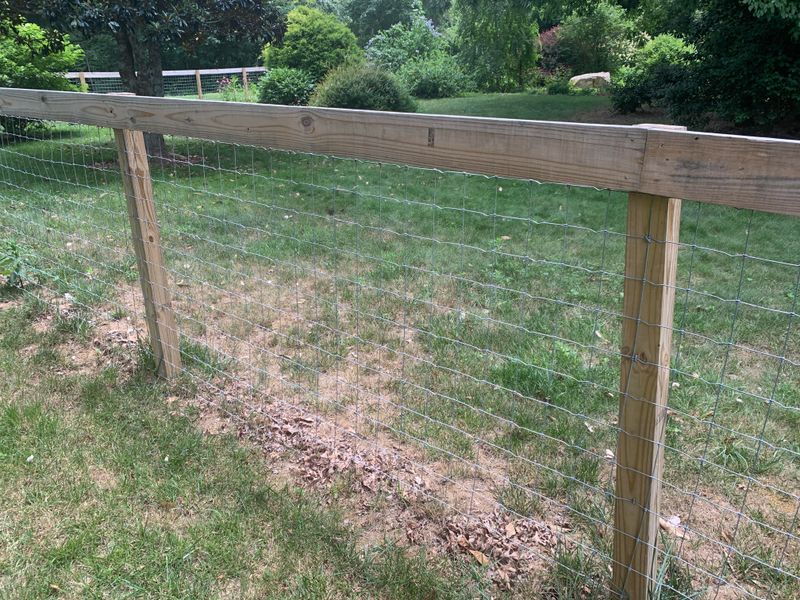
Installing a guard once in September does not mean the job is finished. Wind, rain, and the occasional determined buck can loosen ties, shift cages, or knock tubes sideways within a matter of days.
Walk the property every two to three weeks through the fall and into winter, giving each protected trunk a quick once-over. Look for ties that have slipped, mesh that has pulled away from stakes, or gaps wide enough for a nose to squeeze through.
Snow and ice add their own complications later in the season. Heavy drifts can bend stakes or bury the bottom of a cage, leaving a lower section exposed right where rabbits and voles like to gnaw over winter.
Re-tighten anything loose and swap out cracked or split pipe sleeves before they fail. A guard that fails mid-season often gets discovered only after the damage is already done, which defeats the purpose of installing it early.
Keep a small bag of spare zip ties and stakes in the garage so repairs take minutes rather than a special trip to the store. Jot a note on the calendar alongside your original installation reminder.
This short habit costs almost nothing in time but catches small problems before they become an expensive spring surprise. A five-minute walk now can save a season of new growth later.