Purple Berries Dangling From Tall Magenta Stems In Texas Yards Deserve A Closer Look
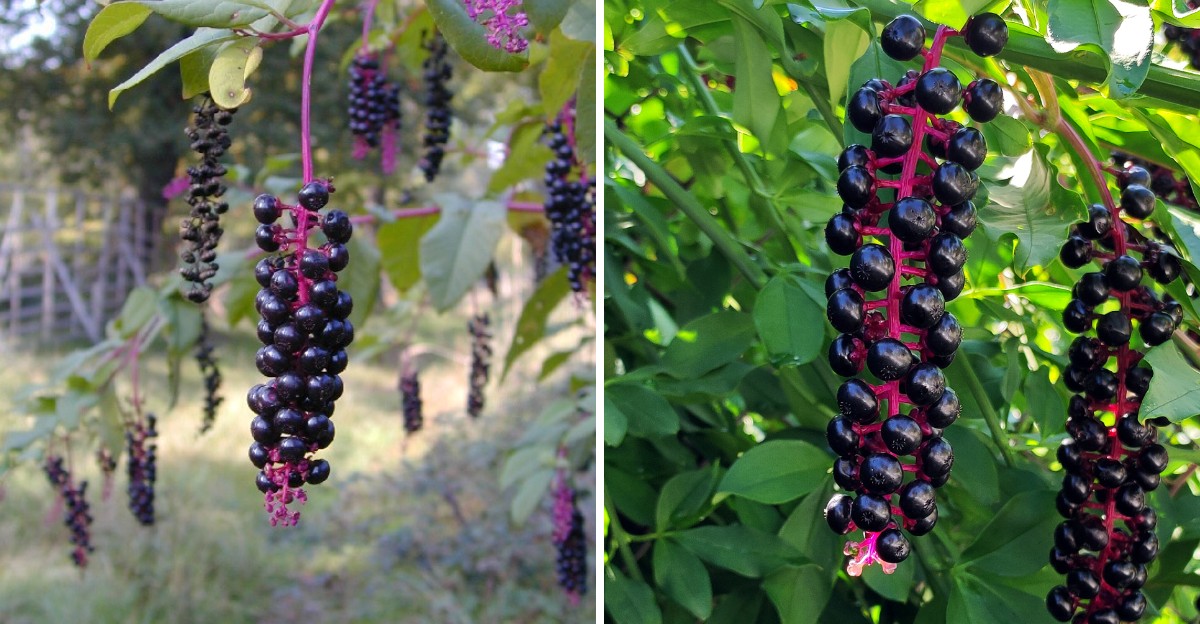
Who planted that magenta giant along your fence? You spot stems glowing hot pink, taller than you stand.
Glossy purple berries dangle in heavy clusters under the Texas sun. Mockingbirds crowd the branches and feast there.
Squeeze a berry and your fingertips stain royal purple for days. Kids will beg you for potion ingredients. Resist that urge. Berries, roots, and raw leaves carry toxins that sicken people and pets.
Birds handle those berries fine, but your child and your dog cannot. Small bites can trigger vomiting, cramps, and dizziness.
Grandma calls it a weed, and you might agree. Your ancestors may have boiled young shoots into a Southern dish.
Neighbors across Texas argue over whether to pull it or admire it. Wear gloves before you touch those stems. Identify the plant by its bright pink stems and drooping berry spikes.
American Pokeweed Is The Tall Plant Behind Those Berries
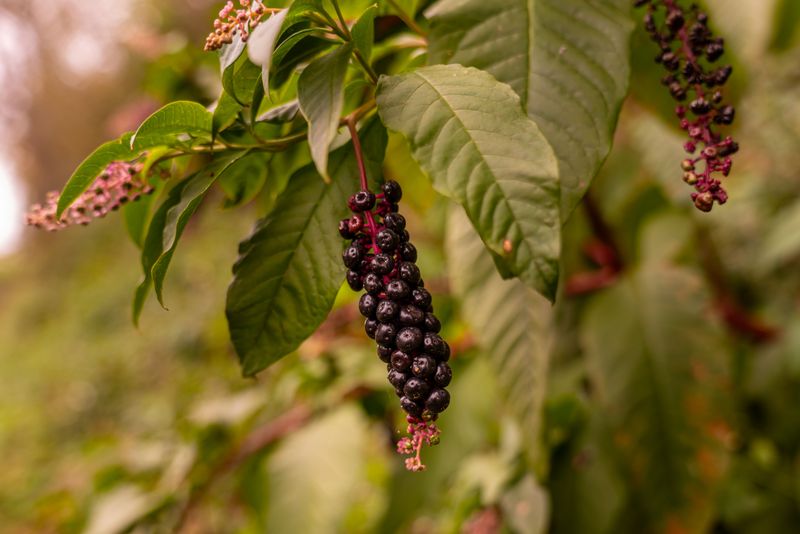
Those dangling purple berries most likely belong to American pokeweed, a native plant common in eastern and central Texas. Folks also call it poke sallet, pigeon berry, or inkberry, depending on where they grew up.
The plant can reach six to ten feet tall in a single season. Its thick stems turn hot pink or magenta as summer slides into fall.
Leaves are large and smooth, often stretching a foot long on healthy plants. In October, many of them start turning yellow or picking up a reddish blush.
Flowers show up first as small white or greenish blooms on long, drooping stalks. Those stalks later fill with green berries that ripen into a shiny, dark purple.
Each berry looks a bit like a tiny flattened pumpkin with ridges around its sides. Inside, you will find about ten small, hard black seeds.
Below the ground hides a big, fleshy taproot that can grow as thick as a man’s arm. That root stores energy, so the plant returns every spring after winter knocks it back.
Because it is native, pokeweed has fed Texas wildlife for thousands of years. Birds, raccoons, and opossums eat the berries, though tolerance varies by animal.
People, pets, and livestock are a different story, since every part of the plant contains toxins. Knowing what you are looking at is the smartest first step.
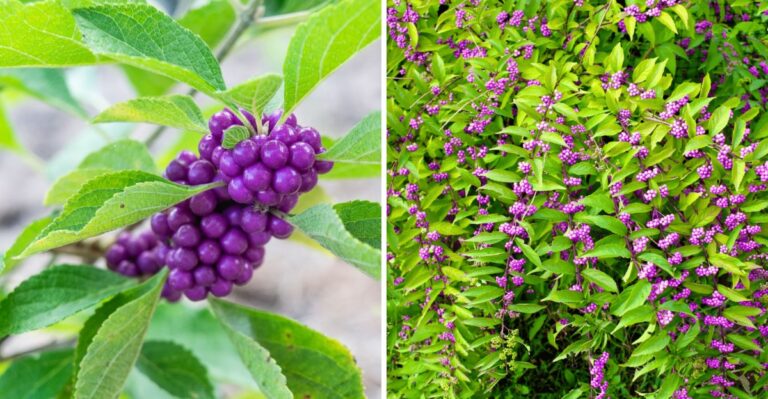
Pink stems help set pokeweed apart from other purple-berried plants, such as elderberry and American beautyberry.
Snap a photo and compare it with a trusted guide from Texas A&M AgriLife if you feel unsure. A second opinion costs nothing and saves plenty of worry.
Birds As The Sneaky Gardeners Behind Its Arrival
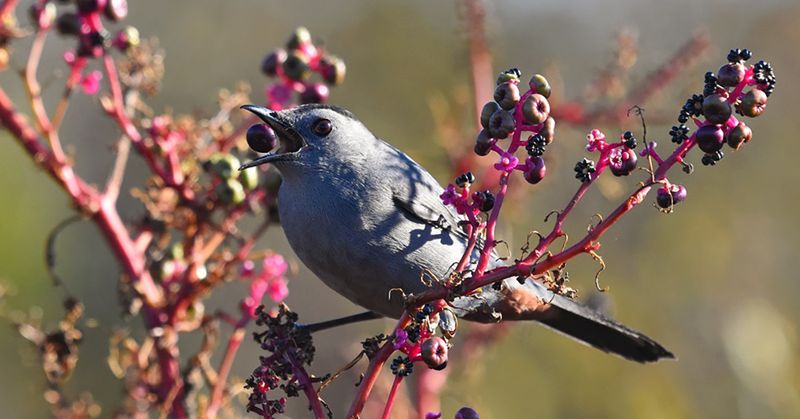
Few people plant pokeweed on purpose, yet it pops up in flower beds, fence corners, and empty lots. Blame the mockingbirds, robins, cardinals, and cedar waxwings perching overhead.
Birds love the juicy berries and swallow them whole. The seeds pass through their bodies and land wherever the bird happens to rest.
Fence lines are a common drop zone because birds often perch there. That explains why so many pokeweed plants line up along backyard fences like a purple parade.
Your Texas Garden Changes Every Week. Your Plan Should Too.
Gardening in Texas changes quickly throughout the season. Every Friday you’ll receive a simple weekly plan showing exactly what to plant, prune, fertilize, harvest, and protect so you never miss the right timing.
The seeds are tough little travelers with a hard outer coat. Some can stay viable in the soil for up to forty years, waiting for the right moment.
Disturbed soil gives them that moment. Digging a new garden bed, pulling up shrubs, or clearing brush can wake up seeds that sat quietly for decades.
Sunny spots with loose, rich dirt make the plant especially happy. It also handles drought well thanks to its deep root, which suits hot Texas summers perfectly.
Mild weather helps too. Across eastern and central Texas, pokeweed can sprout in early spring and keep growing until the first hard freeze arrives.
So if a plant appeared out of nowhere, you did nothing wrong. Your yard simply hosted a few hungry birds, and they left a leafy thank-you note.
Seeing a crop of seedlings next year would not be surprising. Keeping an eye on bird perches is a smart way to spot them early.
Bird feeders and birdbaths often become hot spots for the same reason. Check the ground beneath them every few weeks during the warm months.
October Is Peak Season For Ripe Purple Clusters
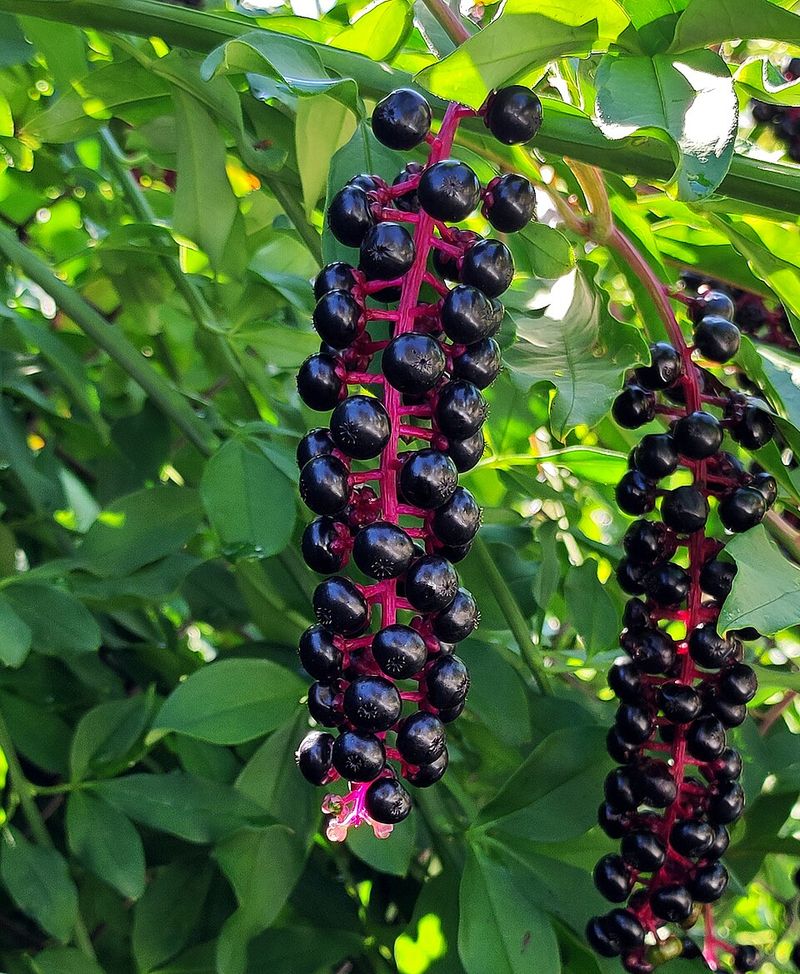
Walk outside in October, and pokeweed is probably putting on its biggest show of the year. Stems glow magenta, and berry clusters droop under their own weight.
Berries usually begin ripening in late summer, around August. By fall, a single plant may carry green, red, and deep purple berries all at once.
That mix of colors is normal, since flowers keep forming for months. New clusters start at branch tips while older ones finish ripening below.
October is also when migrating birds pass through Texas in big numbers. Many of them stop to refuel on pokeweed berries before heading farther south.
For homeowners, this season matters for another reason. Ripe berries mean thousands of seeds are ready to scatter across your yard and your neighbors’ yards too.
One large plant can produce tens of thousands of seeds in a single year. That number grows fast when several plants stand together in a sunny corner.
As nights cool down, the leaves fade and the plant begins shutting down for winter. A frost will knock the top growth flat in many parts of the state.
The root underneath stays alive and ready, though. Come spring, fresh shoots will push up from the same spot, often bigger than before.
If you plan to remove pokeweed, autumn gives you a clear view of the plants. Bright stems make each one easy to find among fading flower beds.
Cutting off berry clusters now, before birds grab them, cuts down on next year’s crop. Bag them up instead of tossing them on the compost pile.
Why Pokeweed Is Toxic
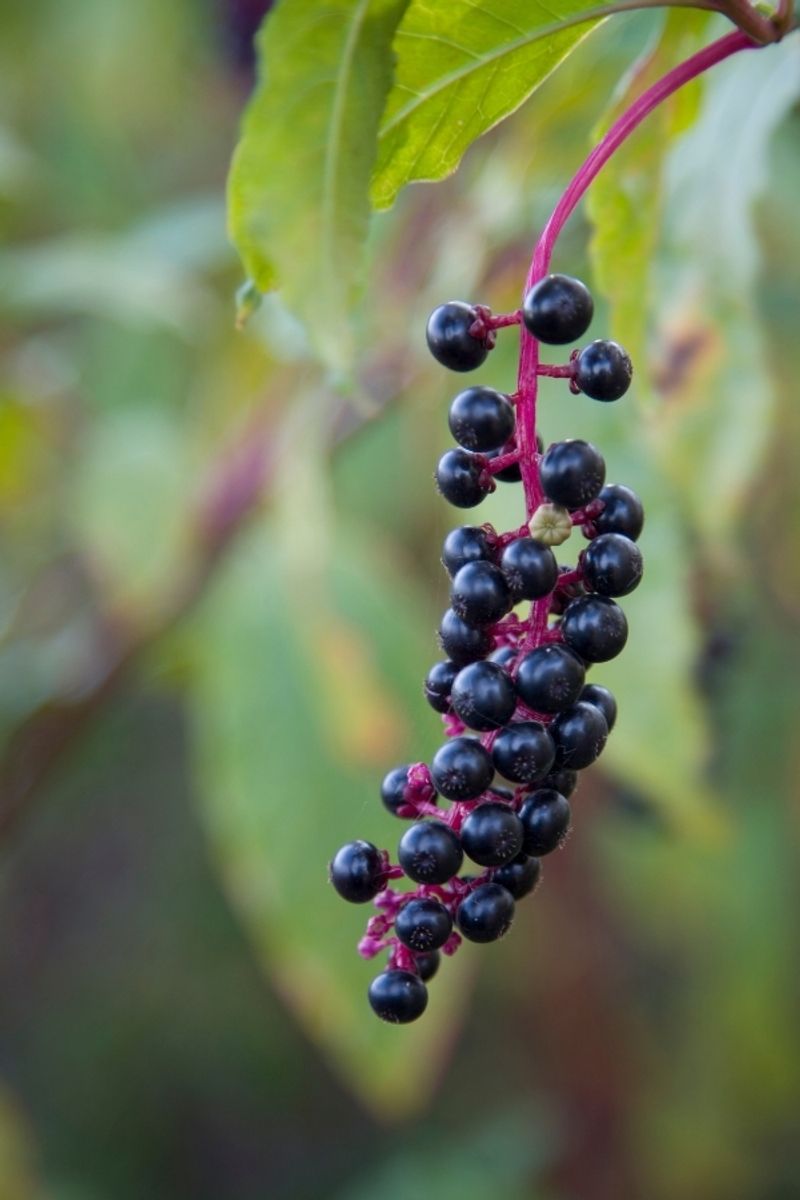
Picture a curious five-year-old holding a handful of purple berries that look like grapes. Scenes like this lead to calls to poison control centers across Texas during berry season.
Every part of pokeweed contains toxins, but the root is the most dangerous part. Mature leaves, stems, and seeds come next, while the berry juice is milder but still harmful.
Eating the berries can cause stomach cramps, vomiting, and diarrhea in children. Larger amounts may lead to more serious problems that need a doctor right away.
Dogs, cats, horses, and cattle can get sick from nibbling the plant as well. Pigs can be poisoned by eating the roots, which is a risk on farms.
Some people mix pokeweed up with edible plants. The root has been confused with horseradish, parsnip, or even ginseng, and the results can be serious.
Southern cooks have a long tradition of eating poke sallet in spring. Even so, they boil the tender young leaves in several changes of water first.
Skipping those steps, or using older leaves, risks poisoning. Poison control experts caution against eating pokeweed, so it is wiser to admire the plant instead.
Bare skin can react too. Handling cut stems or crushed roots may cause irritation, so gloves are a smart choice anytime you touch it.
If someone does swallow part of the plant, call Poison Control right away. Keep a sample handy so experts know exactly what was eaten.
Teaching kids a simple rule helps a lot. Wild berries stay on the bush until a grown-up says otherwise.
Safe Removal With Gloves And A Sturdy Shovel
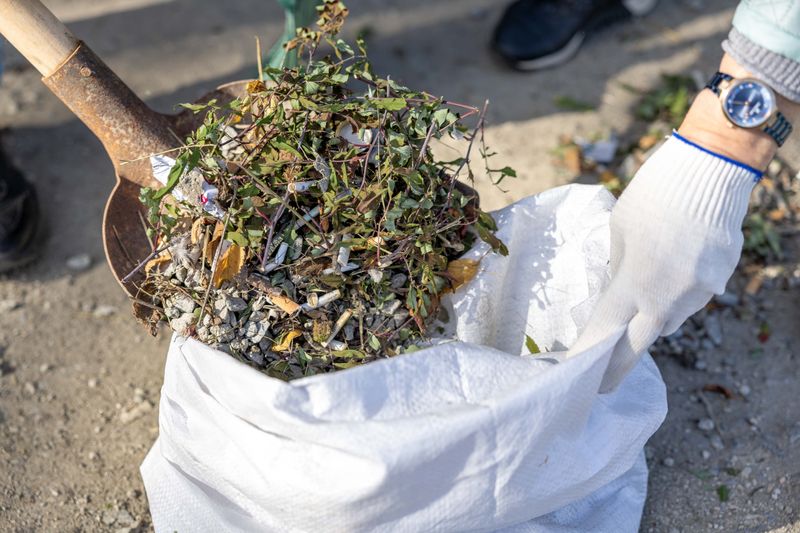
Ready to remove that ten-foot plant? Start with long sleeves, sturdy gloves, and safety glasses, since the purple juice loves to splatter.
Snip off any berry clusters first and drop them straight into a trash bag. That simple move keeps seeds from spilling everywhere while you work.
Next, cut the tall stems down close to the ground with loppers or pruners. The stems are hollow and soft, so this part goes quickly.
The real job sits underground. Pokeweed regrows from its chunky taproot, so cutting the top alone just gives it a short break.
Moist soil makes digging much easier, so try working a day after a good rain. Use a sharp shovel or digging fork and loosen the dirt in a wide circle.
Pry the root out in one piece if you can. Leftover root pieces may resprout, so sift through the hole and pick out stray bits.
Young seedlings are much simpler to handle. Grab them low and pull firmly when they are only a few inches tall.
For large plants, some people use a systemic herbicide such as glyphosate or triclopyr, but check that the product label lists pokeweed first. Read and follow the label carefully, and keep kids and pets away from treated areas.
Bag every piece and put it in the trash rather than the compost bin. Wash your gloves and tools afterward to remove any leftover sap.
The payoff is a cleaner yard and peace of mind for the whole family. Your fence line will look tidier, though birds may still bring new seeds.
Preventing New Seedlings Next Spring
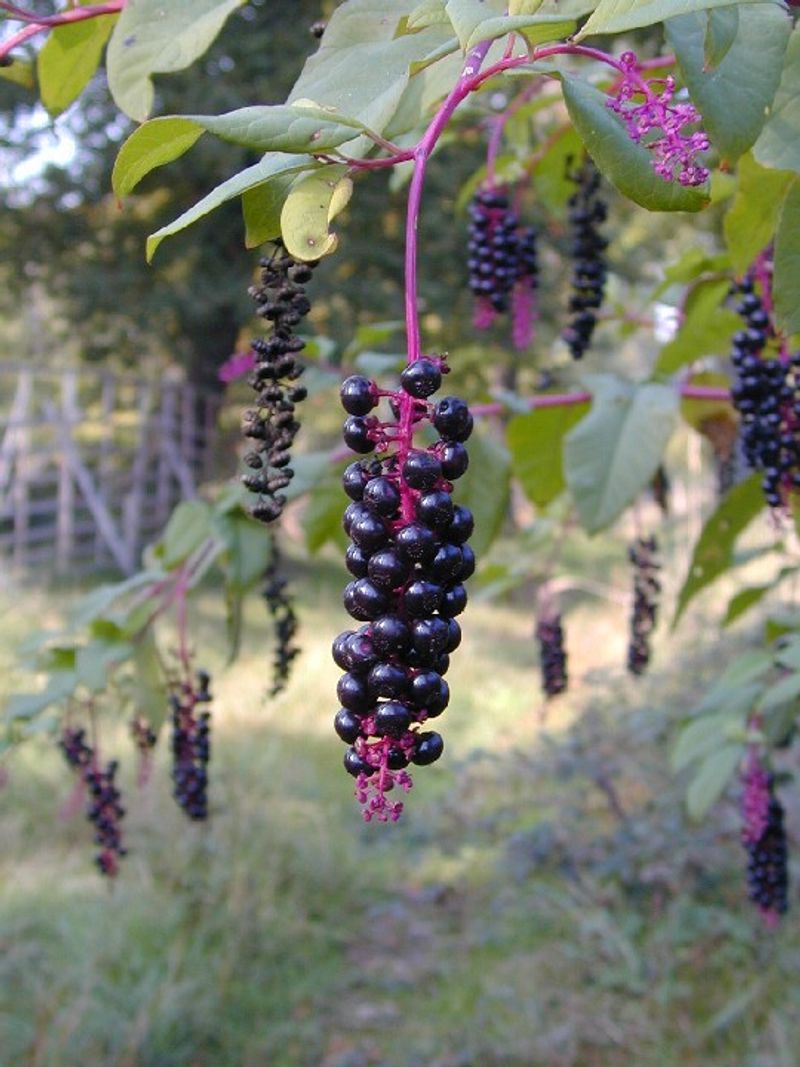
Think of pokeweed control as a long-term effort rather than a one-time job. Those buried seeds will keep testing your yard for years, so a steady plan wins.
Spring is the best time to catch trouble early. Watch for smooth, oval leaves and reddish stems poking up near fences and feeders.
A thick layer of mulch helps suppress seedlings. Three inches of wood chips or shredded leaves limits light and makes sprouting harder.
Avoid digging up soil more than you need to. Each turn of the shovel can bring old seeds to the surface and give them a new start.
Healthy lawns and dense plantings leave little room for weeds. Fill bare patches with native groundcovers or grasses that suit your part of Texas.
Walk your yard once a week from April through September. Pulling a few tiny seedlings takes seconds, while a mature plant can take an hour.
Talk with neighbors who have pokeweed growing nearby. Birds do not care about property lines, so teamwork keeps the whole street clearer.
Some gardeners choose to leave one plant in a far corner for wildlife. That can work if no young children or pets will be tempted by the berries.
If you go that route, keep it far from play areas and pull any seedlings it spreads. Wildlife gets a snack, and your flower beds stay under control.
With steady habits, each year brings fewer surprise sprouts. Over time, those magenta stems should appear less often, though buried seeds can keep producing sprouts for years.