8 Reasons Alabama Yellow Jackets Are Turning More Aggressive This September
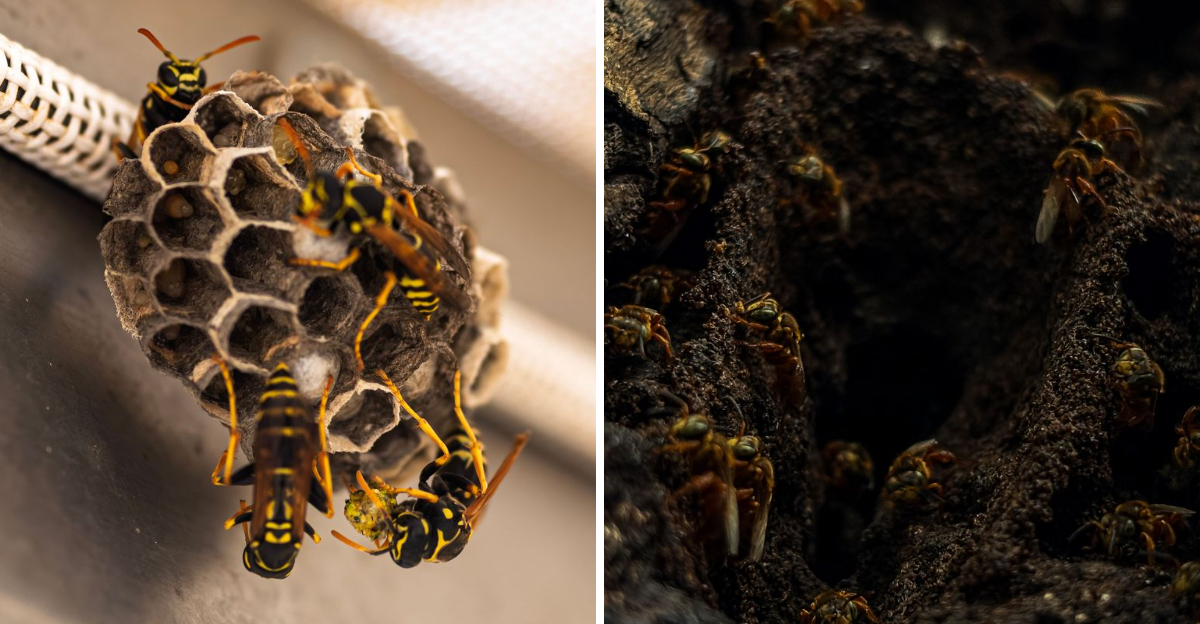
Picnics turn tense once yellow jackets sense Alabama’s shifting season. You notice them quickly, circling your drinks and garbage cans. Their aggression climbs sharply as colonies swell toward peak size. Queens slow their egg laying while worker instincts shift fast.
Without new larvae to feed, hungry workers crave sugar instead now. Sodas, watermelon, and barbecue sauce near you become favorite targets. Nests grow crowded fast, and stress spreads through the colony. Stings arrive faster now, with far less warning than before.
Alabama’s warm autumn stretches your risk window even further. Sometimes yellow jackets outnumber actual wasps near you now. Backyards become sudden hot zones where your caution matters more than confidence.
Porch lights draw them toward you long after sunset too. Understanding their basic biology gives you a real defensive edge. Knowing precisely when they strike protects your whole family outdoors. Your next outdoor gathering depends on what you learn here.
1. Colonies Hit Their Peak Population
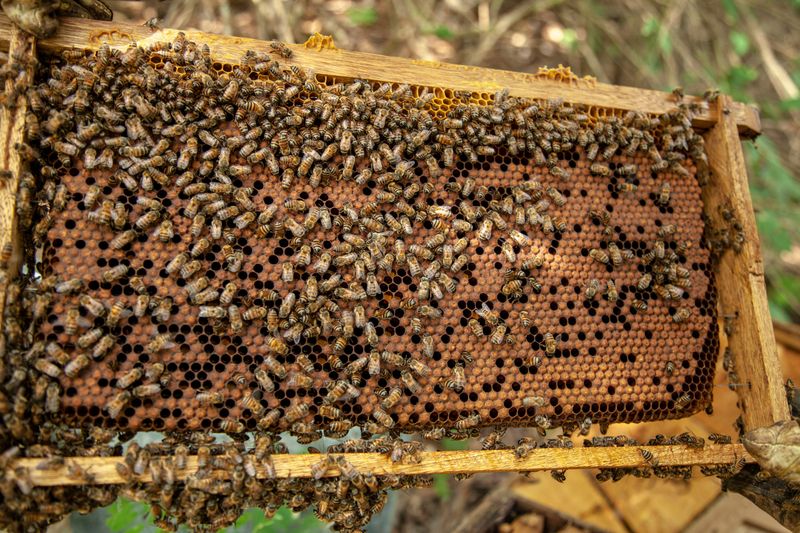
Picture a small apartment building that suddenly houses four thousand roommates. That is basically what an Alabama yellow jacket nest looks like by early September.
A queen starts the colony alone in spring with just a handful of workers. Through summer, the numbers double again and again.
By the ninth month of the year, a single ground nest can hold anywhere from 1,500 to 5,000 adults, and some southern nests grow even larger because our mild climate stretches the season.
More bodies mean more mouths, more traffic near the entrance, and far more insects ready to respond when something rumbles overhead. A lawnmower that passed harmlessly over the same spot in June might trigger a defensive swarm now.
Crowding also raises the odds that you will simply bump into one. Workers fan out in wide circles hunting food, so encounters happen in places nowhere near the actual nest.
What helps: walk your yard slowly before mowing and watch for steady insect traffic disappearing into a single hole in the ground. Mark the spot with a flag from a safe distance.
Treat nests after dark when nearly all foragers have returned and are sluggish. Wear long sleeves, pants, closed shoes, and never shine a bright flashlight directly at the opening, since the light gives them a target to follow.
If the nest sits near a doorway, playground, or anywhere kids run barefoot, hiring a licensed professional is money well spent.
2. The Queen Stops Laying Worker Eggs
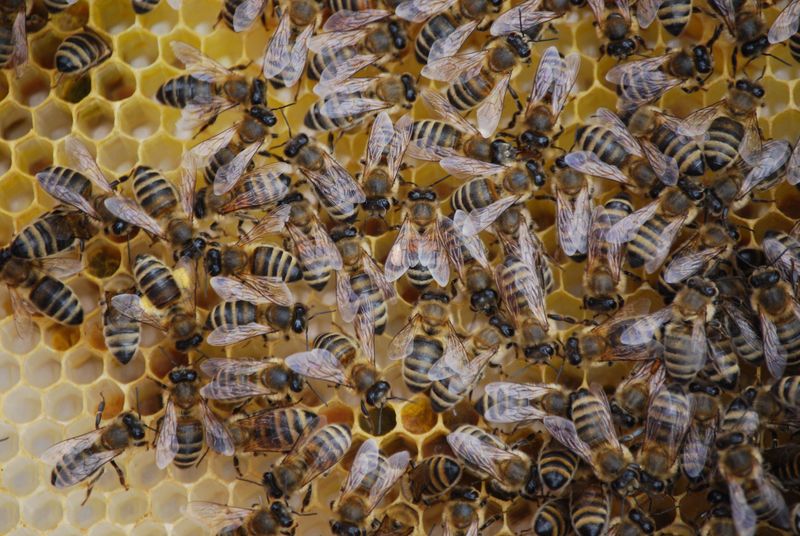
Something strange happens inside the nest as summer winds down. The queen shifts from producing worker larvae to producing next year’s queens and males, and eventually she slows down almost entirely.
Why does that matter to you? Because worker yellow jackets are wired to feed babies. Larvae reward them with a sweet liquid secretion, a kind of insect payment for every delivery of chewed-up caterpillar.
Once the brood shrinks, that reward disappears. Thousands of workers suddenly have no job, no snack, and no purpose. Scientists sometimes describe them as without a feeding role, and more active, and the behavior shows.
Your Alabama Garden Changes Every Week. Your Plan Should Too.
Gardening in Alabama changes quickly throughout the season. Every Friday you’ll receive a simple weekly plan showing exactly what to plant, prune, fertilize, harvest, and protect so you never miss the right timing.
Unemployed workers wander farther, linger longer around human food, and react faster to disturbances. They are no longer carefully rationing their energy for the colony’s future because, biologically speaking, the colony has no future past the first hard freeze.
In practical terms, expect the boldest behavior between late August and the first cold snap. In North Alabama, first frost can arrive as early as mid-to-late October, while the rest of the state often waits until November.
Keep sugary drinks covered during that window. Cans left open on a tailgate table are a favorite hiding spot, and stings inside the mouth or throat are genuinely dangerous.
Pour drinks into clear cups so you can see what is floating inside. Wipe sticky spills off tables right away.
Understanding the queen’s schedule takes some of the mystery out of the aggression. The insects are not out to get you personally. Their whole social system is quietly falling apart.
3. Protein Runs Short, Sugar Becomes King
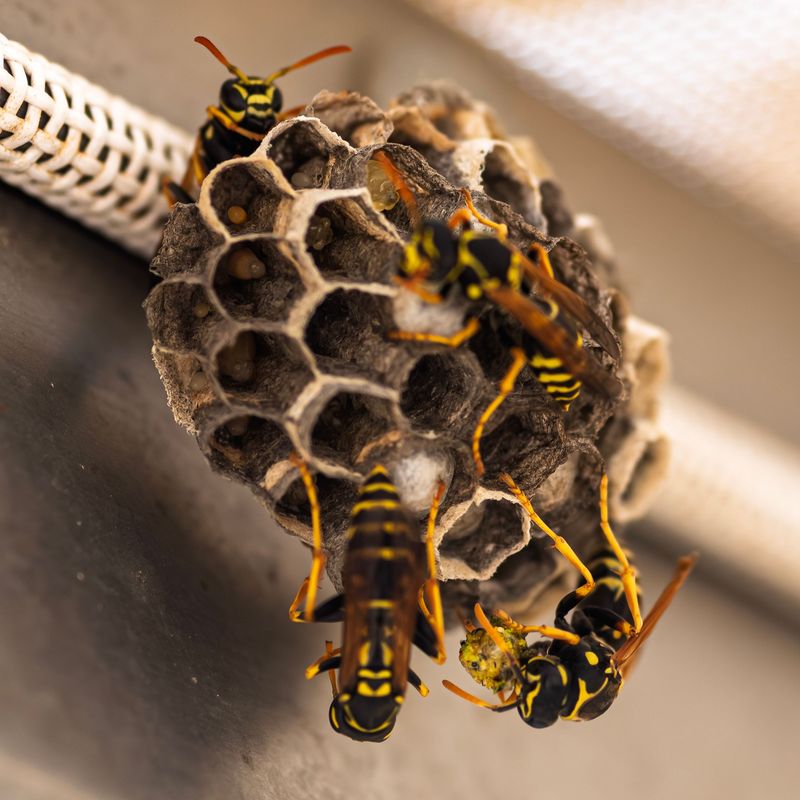
Ask anyone who has hosted a September cookout in Birmingham and they will tell you the same story: the burgers attract a few visitors, but the sweet tea draws a crowd.
Early in the season, yellow jackets are meat eaters. They hunt caterpillars, flies, and spiders to feed developing larvae, which makes them genuinely useful garden helpers.
Late in the season the diet flips. With no larvae to feed, adults crave carbohydrates for their own energy.
Ripe figs, fallen muscadines, spilled soda, watermelon rinds, and open trash cans all become high-value targets.
Competition for those sugar sources gets fierce. In some cases, a dozen or more workers may converge on one dropped popsicle, and they defend it the way they would defend a nest.
That is why a yellow jacket landing on your plate acts differently than one landing on a flower. It considers the food already claimed.
Smart moves for the season: serve food indoors or under screened cover, use lidded trash containers, and rinse recycling before setting it out.
Pick up fallen fruit from pear, fig, and persimmon trees every couple of days. Rotting fruit under a tree is an all-you-can-eat buffet.
Set commercial bait traps at the edges of your yard, roughly twenty feet from where people gather, so the insects get pulled away from the party rather than toward it.
Never swat at one hovering over your plate. Slow, calm movement away from the table works far better.
4. Alabama Heat And Drought Squeeze Water Supplies
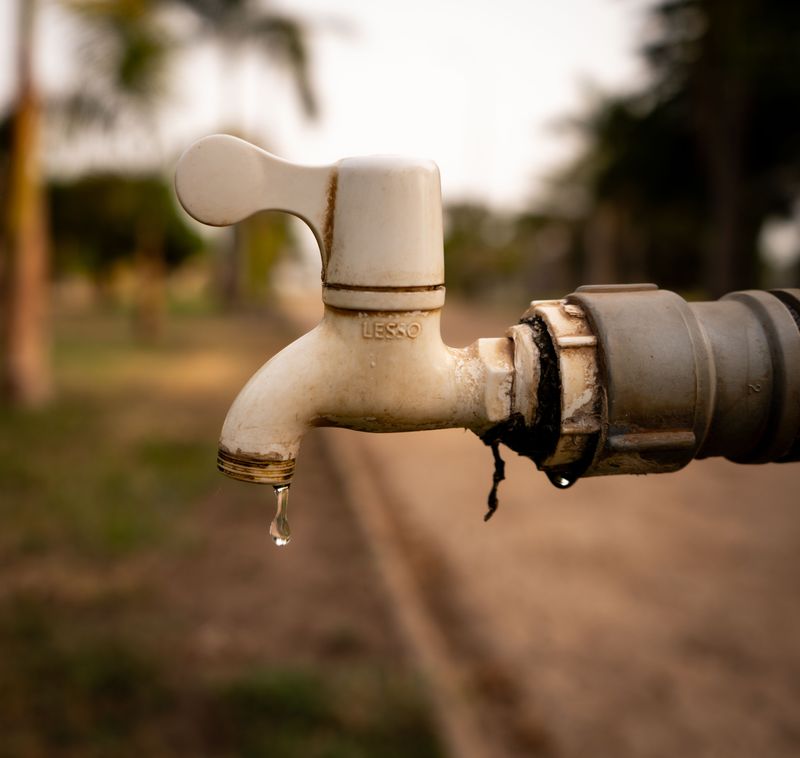
September in Alabama often brings the tail end of a long dry stretch. Creeks shrink, lawns crunch underfoot, and natural water sources get scarce.
Yellow jackets need water for drinking and for cooling the nest. Workers collect droplets and spread them across the paper comb, then fan their wings to lower the temperature inside.
When the ground dries out, they travel to whatever water remains: dog bowls, birdbaths, leaky spigots, condensation from air conditioners, and swimming pool edges. Those are exactly the spots where people and pets hang out.
Heat stress also shortens their tempers. Insects operating near their thermal limit react more quickly and more forcefully to vibration and shadow.
A drought year tends to produce noticeably more sting reports than a wet one, partly because of this overlap and partly because dry soil makes ideal nesting ground for the species that burrow.
Helpful adjustments: move pet water bowls away from doors and refresh them often. Fix dripping outdoor faucets, since a slow leak creates a reliable watering hole right beside your house.
If you enjoy watching birds, place the birdbath on the far side of the yard rather than beside the patio.
Around pools, keep a lookout near the skimmer and the wet concrete edge before kids sit down. Give a hovering insect a few seconds to drink and leave instead of splashing at it. Small changes to where water sits can meaningfully reduce close encounters.
5. Nests Mature Underground In Loose Southern Soil
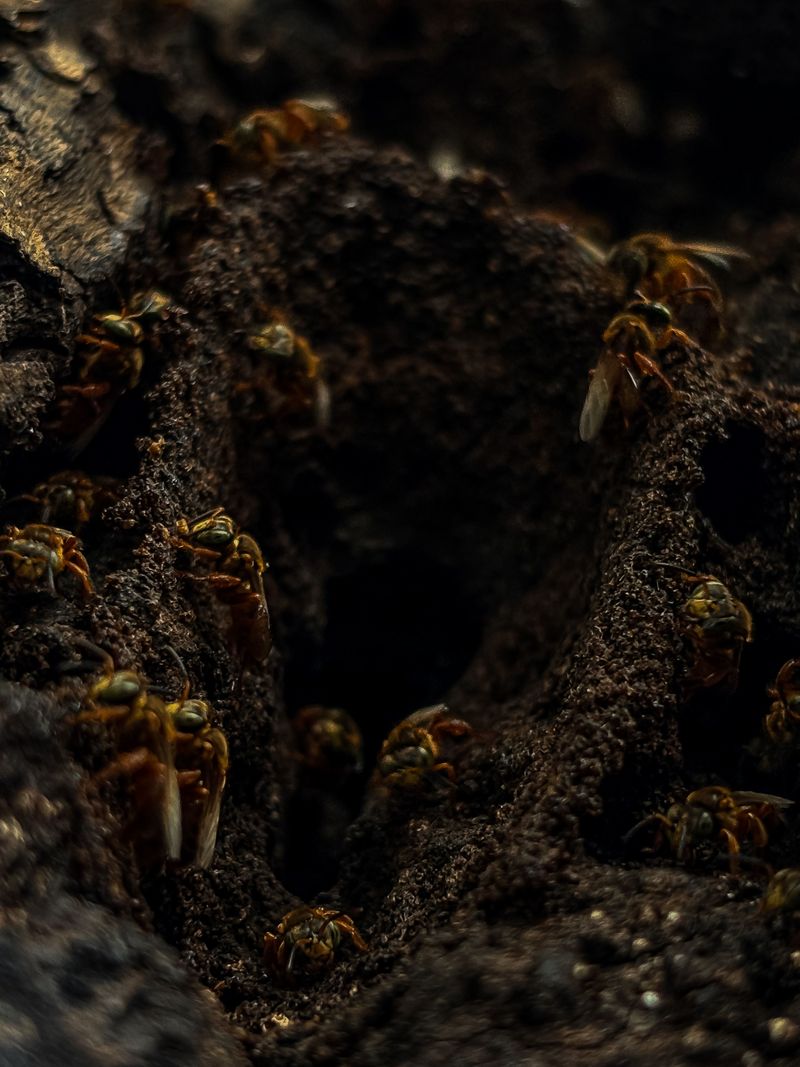
Most of the trouble in Alabama comes from species that nest below your feet rather than under an eave.
Eastern yellow jackets and German yellow jackets commonly take over abandoned rodent burrows, hollow spots under tree roots, mulch beds, and gaps beneath old sheds. The entrance can be no bigger than a quarter.
Our sandy loam and crumbly clay make excavation easy, so colonies expand the underground chamber all summer long. Some fall nests can reach the size of a basketball or larger.
Here is the danger: you cannot see an underground nest until you are standing on top of it. Vibration from a mower, string trimmer, wheelbarrow, or even heavy footsteps sets off an immediate alarm response.
Guard wasps release an alarm pheromone that recruits hundreds of nestmates within seconds. Victims often report being stung repeatedly before they know what happened.
Practical protection: scout the yard visually a day before you mow. Stand still for two minutes and look for a steady stream of insects coming and going from one point.
Pay extra attention along fence lines, around stumps, near compost piles, and beneath shrubs where the grass is thin.
Should you disturb a nest, run in a straight line away from it and get indoors or into a vehicle. Do not jump into water, because they will simply wait above the surface. Teach children the same escape plan before they play in tall grass.
6. Fall Football Tailgates Serve An Open Buffet
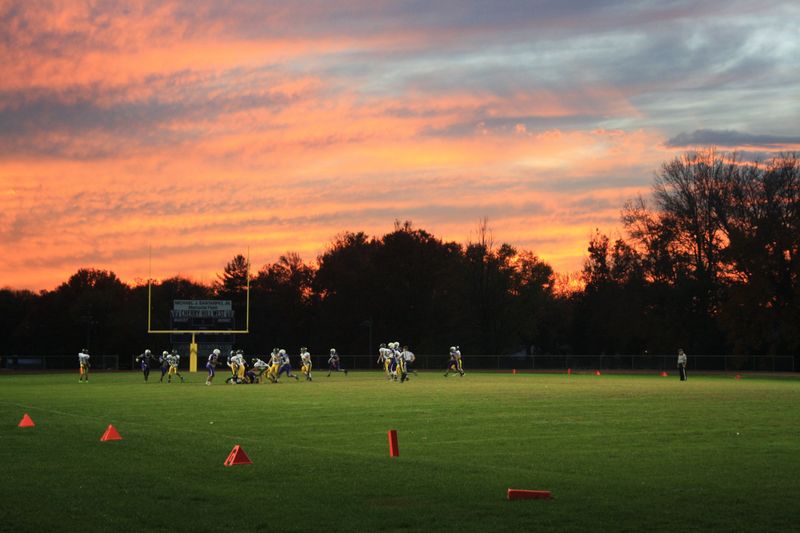
Saturdays in the fall turn Alabama parking lots and front yards into miles of open-air dining rooms. Yellow jackets have noticed.
Barbecue smoke, sugary sodas, spilled beer, chicken wings, and overflowing trash barrels create a scent trail that carries a surprising distance. Foraging workers can travel several hundred yards from the nest, and once one finds a reliable food source, others follow.
Crowds add another problem. Hundreds of people moving, swatting, and knocking over cups means more accidental contact and more insects feeling threatened.
Someone gets stung, the venom releases an alarm chemical, and nearby wasps arrive to help. What began with one bug on a rib bone can escalate quickly.
Tailgate tips that actually work: bring covered coolers, keep lids on food containers between servings, and bag trash frequently rather than letting a barrel fill up.
Skip heavy floral perfume and bright floral-print clothing on game day, both of which draw curious visitors.
Set a couple of baited traps upwind and thirty feet from the tent so foragers intercept the trap first.
Keep a sting kit in the cooler bag: antihistamine tablets, hydrocortisone cream, an ice pack, and an epinephrine auto-injector for anyone with known allergies.
If a group of yellow jackets shows up in force, move the food, not the people. Relocating the buffet twenty feet away usually breaks their pattern within a few minutes.
7. Mild Winters Let Some Colonies Survive Into Giant Nests
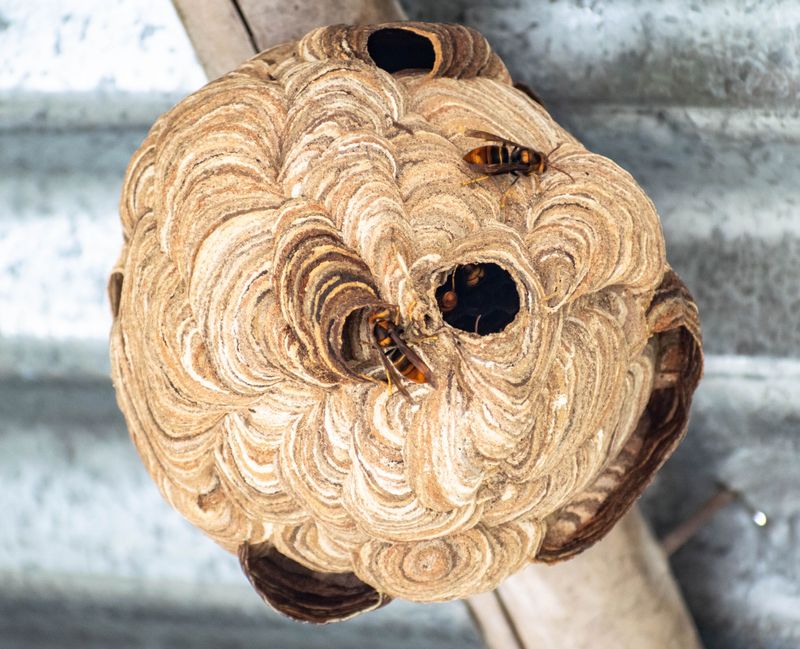
Alabama earned national headlines for something entomologists call super nests. In certain years, entire colonies survive the winter instead of ending with the season.
Normally, only mated queens live through cold weather while the rest of the colony perishes. When winters stay unusually mild, the original queen and a portion of her workers keep going, and the nest continues growing into a second year.
Auburn University Extension entomologists have documented perennial ‘super nests’ in past years reaching remarkable sizes, with worker counts reported in the thousands. Some had multiple queens sharing the same structure.
Those unusually large colonies show up most often after warm winters, and the aggression level is notably higher. Thousands of defenders can pour out of an opening in seconds.
Super nests turn up inside abandoned cars, sheds, barns, attic spaces, and hollow walls as well as underground.
What to watch for: unusually heavy insect traffic around an old outbuilding, a constant humming sound from inside a wall, or gray papery material visible through a gap.
Never attempt to treat something that large yourself. Store-bought sprays are largely ineffective against nests this large, and the risk of multiple stings increases significantly.
Contact a licensed pest control operator with protective gear and experience handling social wasps. Many Alabama Cooperative Extension offices can also point you toward help.
Keep everyone, especially pets and kids, well clear of the area until professionals finish the job.
8. Shorter Days Trigger A Race Against the Clock
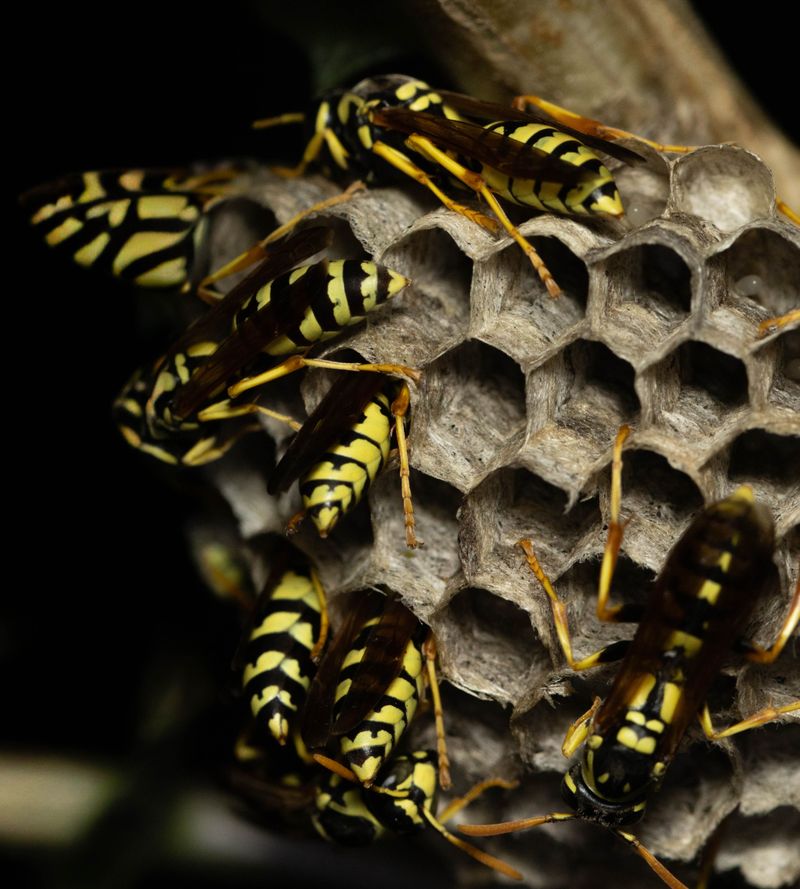
Nature runs on a calendar, and yellow jackets read it through daylight. As the hours of sunlight shrink after the equinox, the colony shifts into reproductive overdrive.
Every remaining worker focuses on one goal: producing and provisioning the new queens who must survive winter and start fresh colonies next spring.
Those future queens need to build fat reserves before they leave the nest. Workers push themselves hard to gather enough calories, foraging earlier in the morning, later into the evening, and in weather they would normally avoid.
Urgency shows up as boldness. A wasp that would have flown off in July now stands its ground on a plate of barbecue.
Males also emerge during this window. They cannot sting, but they hover in open areas looking for mates, which adds to the general sense that the yard is suddenly full of wasps.
Living with it: shift outdoor gatherings toward midday when possible, and be extra careful during the last hour of daylight when foraging peaks.
Seal gaps around windows, vents, and door frames now, because searching queens will hunt for winter shelter inside walls and attics through October.
Cut back on outdoor lighting near seating areas, since lights draw the insects toward people after dusk.
The upside is that the whole show ends with the first solid freeze. Nests do not get reused, and wasp activity drops sharply by December.