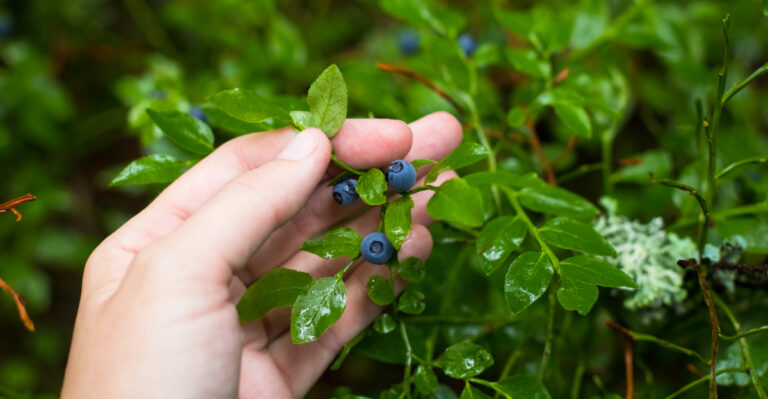
Seeing Robins In Your Ohio Yard This November Isn’t A Mistake
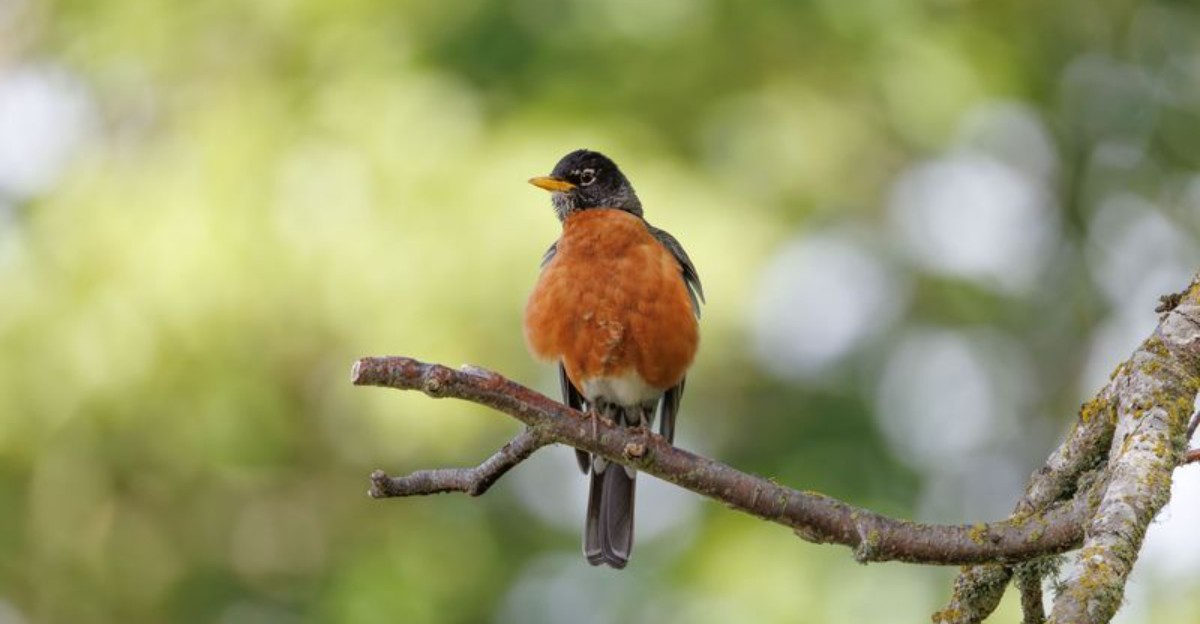
Everybody knows robins mean spring. So what’s one doing on your lawn with frost on the grass?
Ohio folks spot them in November and assume the bird got lost, missed its flight, or took a wrong turn somewhere over Kentucky. The truth is a lot less dramatic, and a lot more interesting.
That bird knows exactly where it is.
Something about its habits changes with the season, and you’d never guess it from the way it acts in April. The robins you watch now may not even be the ones that nested in your yard last summer.
Where they go, what they eat, and why they bother to hang around all make sense once you hear the story.
Watch one for a few minutes tomorrow morning. The behavior gives it away.
The Robin From Last Summer May Still Be Nearby
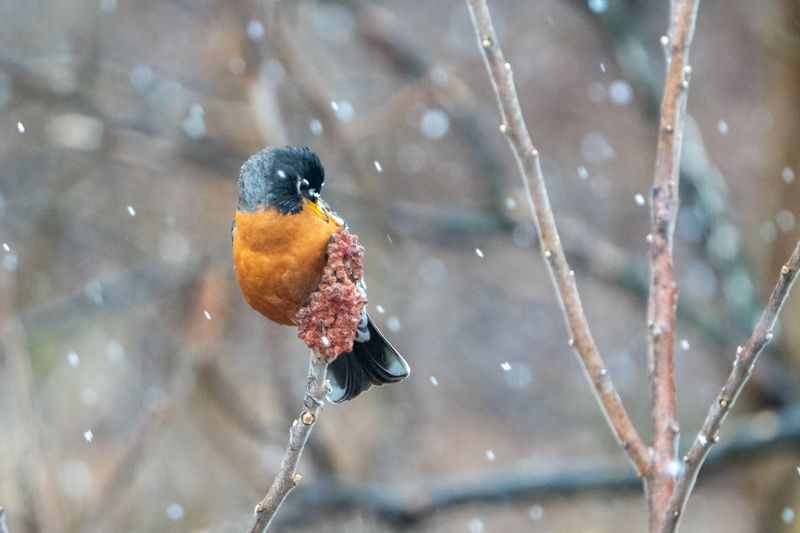
Picture the robin that built a nest in your maple tree last May. There is a good chance that same bird is still hanging around your town right now.
Plenty of people think robins pack their bags each fall like snowbirds heading to Florida. In Ohio, that idea misses the mark for many of them, since lots of robins live here all year long.
Southern Ohio tends to hold the most winter robins. Milder winters also help more birds stick around in the central and northern parts of the state.
Bird experts believe many of the robins you spot in December are the very same ones that raised chicks here in summer. Some newcomers from farther north may join them, but the locals are often part of the crowd.
So why does it feel like they vanish? Their habits change so much that they become easy to overlook, which is a big part of the mystery.
Here is a fun way to test this yourself. Keep a simple notebook by the window and jot down each robin you see from November through February.
You might be amazed at how many show up once you start paying attention. Your notes can even help community science projects like the Great Backyard Bird Count each February.
Only Robins From The Far North Head South
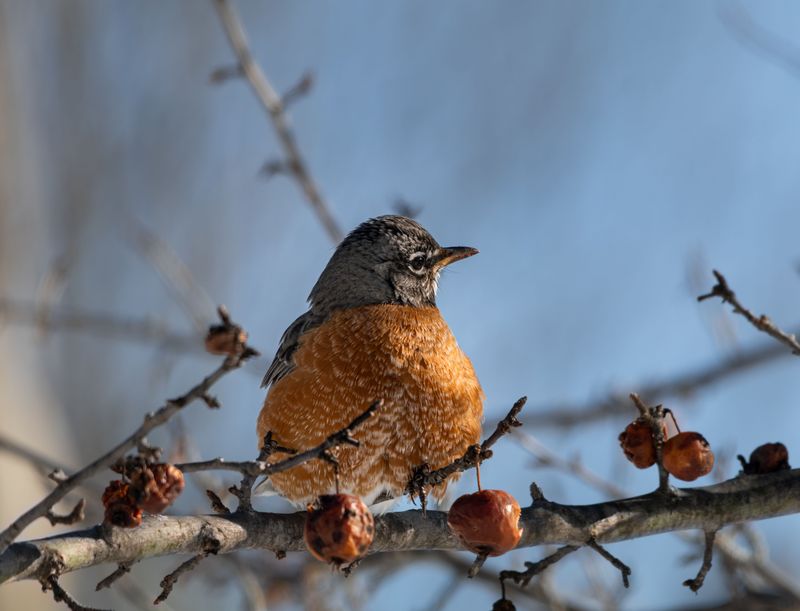
Scientists have a neat label for robins: partial migrants. That phrase means some birds travel long distances while others barely move at all.
Robins raised in northern Canada face harsh winters with deep snow covering every scrap of food. Those birds often fly south into the United States, and some may land right in Ohio.
Meanwhile, many robins already living in the U.S. only make short trips. Others just shift from open lawns into nearby woods and river valleys.
Here is the twist that surprises most folks. Robins are not really chasing warm weather, because cold air does not bother them much at all.
Food is the real driver behind their travels. A robin can handle chilly temperatures with fluffed feathers, but it cannot handle an empty belly.
If berries are plentiful in your area, robins may stay put even during a snowy stretch. When the fruit runs low, the flocks move on to find better pickings.
Think of it like a family road trip that only happens when the fridge is bare. This explains why robin numbers in Ohio can rise and fall from one winter to the next.
A bumper berry year often means more robins nearby. A poor fruit crop can send them wandering elsewhere for a while.
Fall Flocks Thin Out As November Arrives
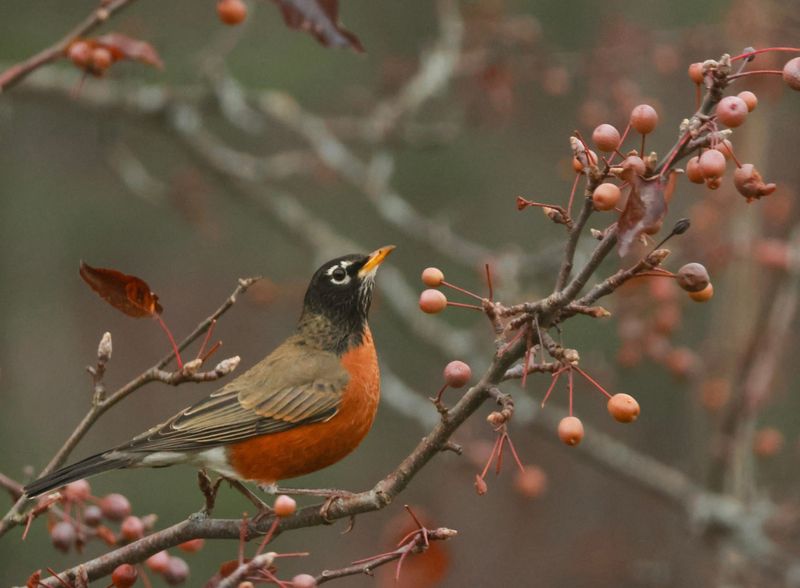
Remember those cheerful robin songs that woke you up at dawn back in April? By November, the morning chorus has gone quiet, and that silence fools a lot of people.
Robins sing mostly to claim space and attract mates. Once nesting season ends, they have little reason to belt out tunes from the rooftops.
They also stop guarding their own little patches of yard. Without the singing and squabbling, the birds blend into the background much more easily.
Another change happens with the young ones. Robins hatched in spring spread out across the countryside in autumn, looking for new places to explore.
That scattering makes your yard feel emptier, even if the total number of robins in the region has not dropped much. It is a bit like a busy school hallway after the bell rings.
The students did not disappear. They just moved into different classrooms where you cannot see them.
Want to spot more robins anyway? Listen for soft clucks and short tut-tut calls instead of full songs.
Those quiet sounds often give away a group hiding in nearby trees. Once your ears tune in, you may catch robins chatting on even the grayest mornings.
Frozen Ground Sends Them Searching For Berries
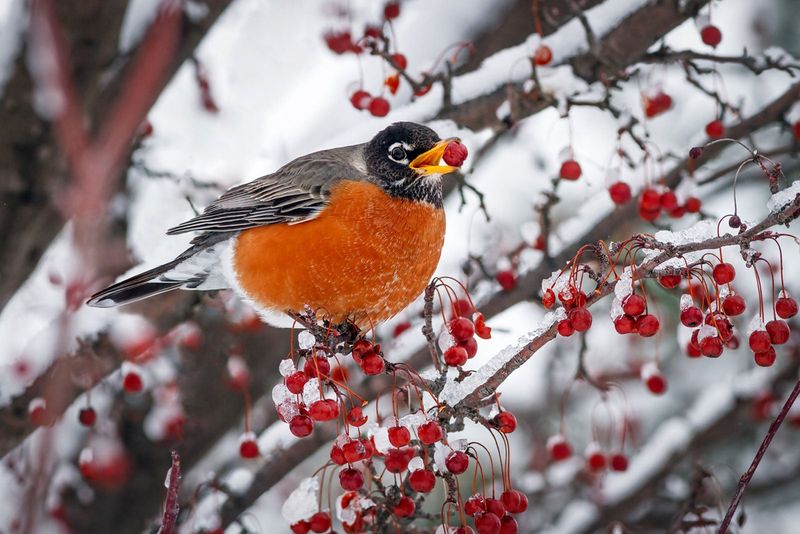
Fruit and berries. That is what fills most of a winter robin’s meals.
All summer, robins hop across lawns, tilt their heads, and yank up juicy earthworms. It is one of the most famous bird habits in America.
Once the ground freezes solid, though, worms burrow deep where no beak can reach. Insects also become scarce when temperatures drop.
Robins solve this problem with a smart menu swap. They switch almost entirely to fruit that clings to trees and shrubs through the cold months.
These hardy fruits are often called persistent fruits because they hang on long after leaves fall. Many taste better to birds after a few freezes soften them up.
Fun fact: robins sometimes get a little tipsy from eating fermented berries late in winter. You might see one acting wobbly or clumsy near a fruit tree.
For backyard watchers, this diet change is great news. Instead of searching the grass, look up into branches loaded with red, blue, or purple berries.
Skip putting out birdseed for robins, since they rarely eat it. Chopped apples, raisins soaked in water, or dried mealworms in a dish will interest them far more.
Persistent Fruit Trees Become Winter Diners
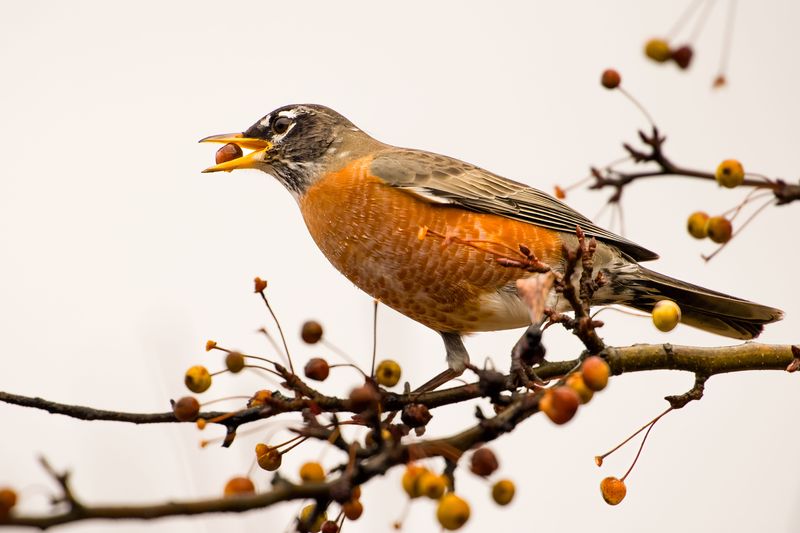
Walk past a crabapple tree in December and you might hear a happy racket. A dozen robins tugging at tiny red apples can turn a sleepy street into a lively buffet.
Crabapples rank near the top of the robin wish list. Their small fruits often stay on branches well into winter, giving birds a steady snack bar.
Hawthorns are another favorite stop. These thorny trees produce glossy red berries that hang on long after the first snowfall.
The thorns offer a bonus, too. Sharp branches help keep hungry hawks and cats from sneaking up on feeding birds.
American holly rounds out this tasty trio. Its bright red berries shine against dark green leaves, making it easy for robins to find a meal.
Keep in mind that holly plants come as male and female. Only female hollies grow berries, so you need at least one male nearby to help them fruit.
If you already have any of these trees, resist the urge to tidy up the fruit in fall. Every dangling berry is a future robin dinner.
Neighbors with ornamental crabapples might also be hosting robin flocks. A short winter walk could reveal a hidden hotspot just down the block.
Juniper Berries Make A Winter Staple Too
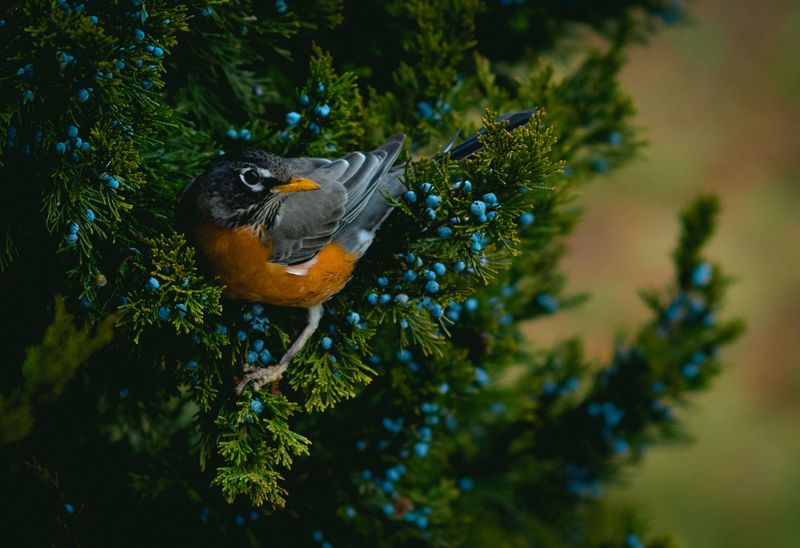
Ever notice those dusty blue beads dotting cedar trees along Ohio roadsides? To a robin, they look like a pantry stocked for the whole winter.
Those beads come from the Eastern red cedar, which is actually a type of juniper. Its berries are really tiny cones, though everyone calls them berries anyway.
Juniper berries stay on the trees right through the coldest weeks. That makes them a dependable food when other fruits have been picked over.
They are also packed with fats called lipids. Fat gives robins the extra calories they need to keep their bodies warm on frosty nights.
Robins can gobble huge amounts of these berries in a single sitting. Some birds swallow dozens before flying off to rest.
Here is a cool twist. Seeds pass through the robin and get dropped in new spots, which helps plant fresh cedar trees across fields and fence lines.
In a way, robins are little tree farmers. Many of the cedars you see in rows along old fences were likely planted by birds.
If you have space, an Eastern red cedar makes a sturdy, low-fuss addition to your property. It also gives birds thick evergreen shelter from icy winds.
They Gather In Flocks Instead Of Holding Territories
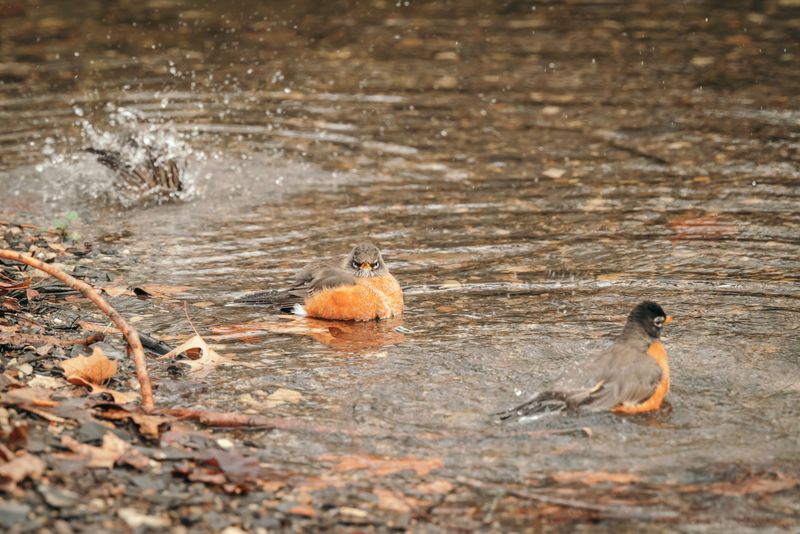
Imagine looking out one morning and counting two hundred robins in a single tree. It sounds wild, but winter flocks can reach hundreds or even thousands of birds.
During spring, robins act like grumpy neighbors. Males chase rivals away and defend their own patch of yard with loud songs and quick dives.
Come fall, that attitude melts away. Robins band together into roaming groups that travel from one food source to the next.
Why the sudden friendliness? Teamwork pays off when food is spread out and hard to find.
More eyes mean a better chance of spotting a tree heavy with berries. A big crowd also makes it easier to notice a hawk before it strikes.
These flocks are nomadic, which means they wander without a fixed home. A group might strip a holly bush in one afternoon and vanish by the next day.
That explains why robins can seem to appear out of nowhere. One minute your yard is empty, and the next it is buzzing with orange-bellied visitors.
Keep a camera handy on cold, sunny days. Watching a flock swoop in together is one of winter’s most delightful backyard shows.
You’ll See Them Less Because They Stay Out Of Lawns
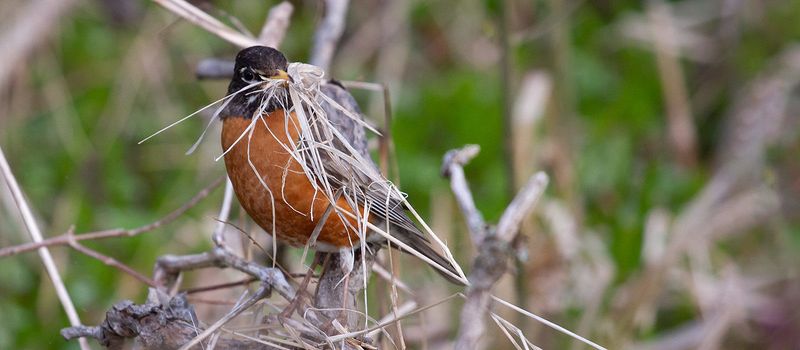
Honestly, the lawn is where most of us learned to recognize robins. That classic image of a bird tugging a worm from wet grass is practically a postcard.
In winter, though, that postcard scene mostly disappears. Frozen soil locks worms and bugs underground, so lawns offer nothing worth eating.
Robins respond by heading for trees and shrubs instead. They focus on spots where berries are plentiful, often tucked inside wooded areas.
Creek bottoms, park edges, and overgrown fence rows become prime hangouts. These places also give shelter from wind and predators.
So the birds have not left. They have simply moved to a different part of the neighborhood that people rarely check.
Here is a helpful trick for finding them. Take a walk along a wooded trail or stream on a mild winter day and scan the branches.
Look for chunky birds with rusty chests sitting fluffed up like little feather balls. They puff out to trap warm air close to their bodies.
After a thaw, you might catch a few back on soggy grass hunting worms again. Those brief visits remind us that robins stay flexible and ready for any opening.
Fruit-Bearing Natives Can Bring Them Into Your Yard
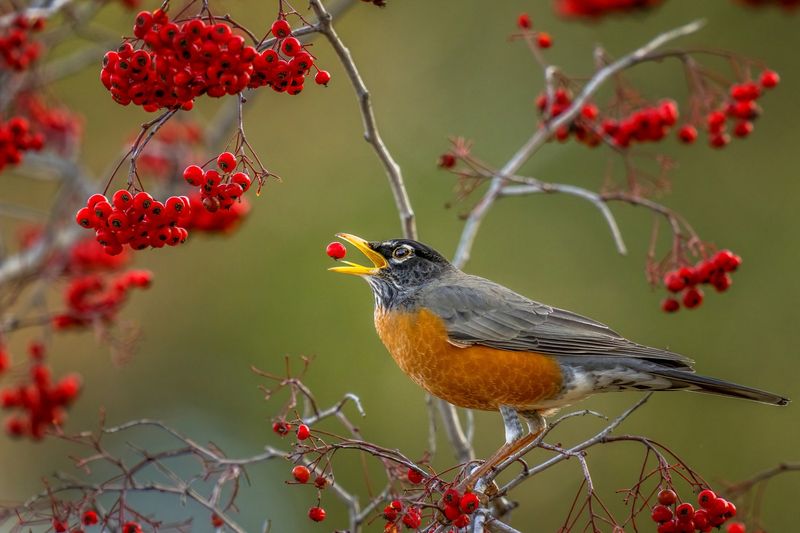
Want robins as winter guests? Think of your yard as a restaurant, and native fruit plants are the menu that brings in the crowds.
Native trees and shrubs grew up alongside Ohio birds over thousands of years. Their fruits match what robins need to stay energized through cold snaps.
Dogwoods are a smart starting point, with several kinds growing well across the state. Hawthorn, sumac, and wild cherries like chokecherry and wild black cherry are also excellent picks.
Viburnums deserve a spot on your list, too. Arrowwood, blackhaw, nannyberry, and highbush cranberry all produce berries birds love.
Elderberry and American holly can round out your planting plan. Mixing several types means something stays ripe from late summer into deep winter.
Fall and early spring are great times to plant shrubs in Ohio. Local native plant sales and nurseries often carry these species at fair prices.
Plant in small clusters rather than single shrubs scattered around. Robins feel safer feeding where branches overlap and offer cover.
A heated birdbath can add another welcome perk once ponds freeze. With fruit and fresh water in place, your yard could become a favorite robin stop each November.