Shiny Dark Rings On Maryland Cherry Twigs Hold Next Spring’s Caterpillars
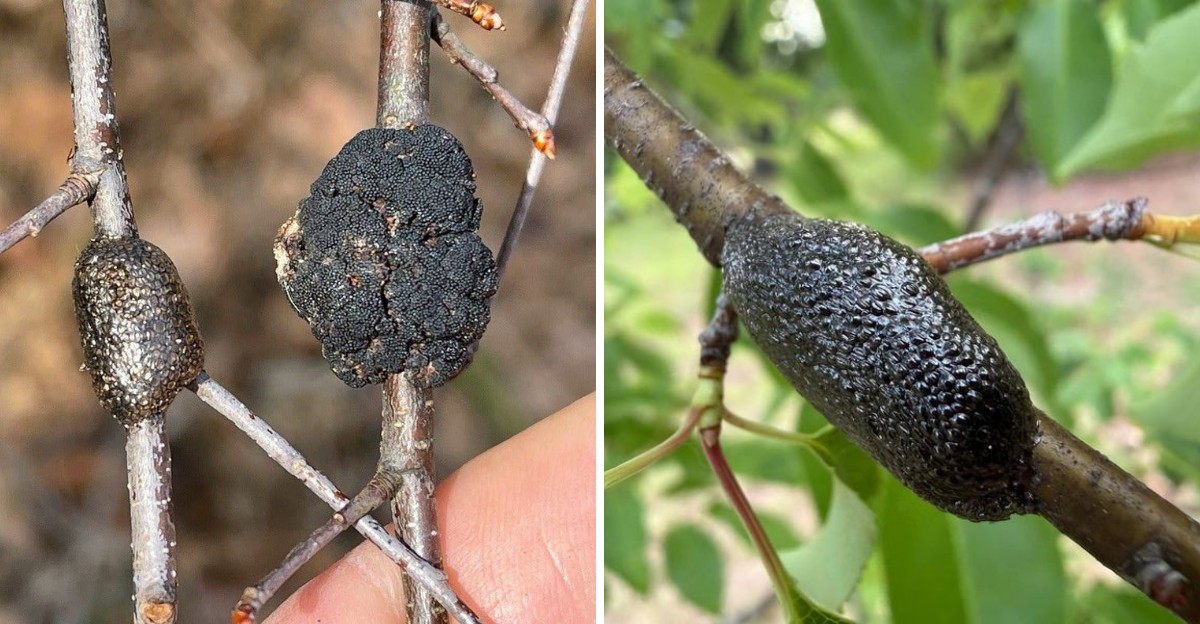
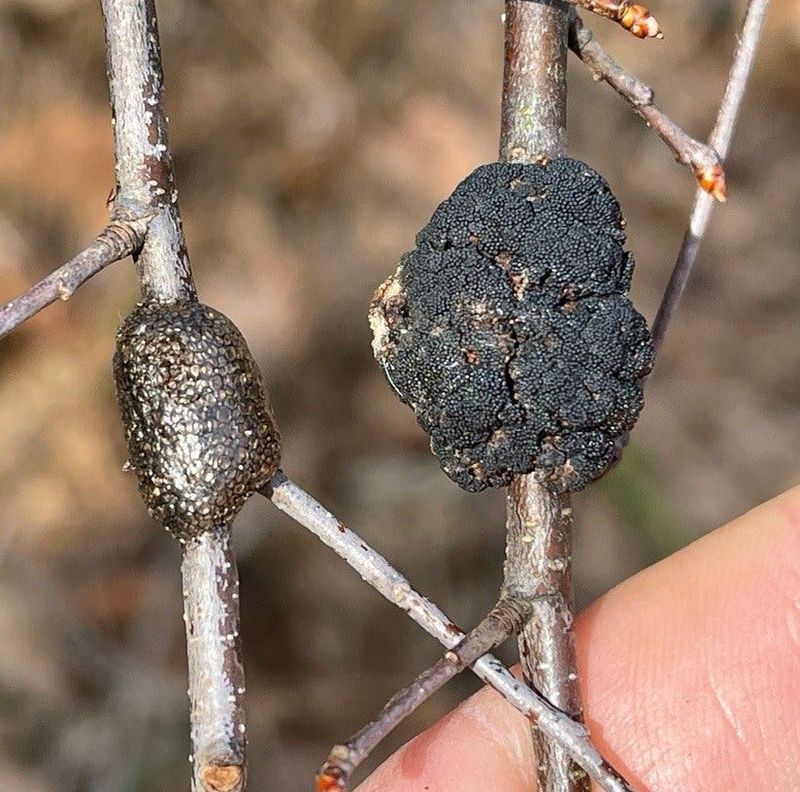
A single glossy band no wider than a pencil can hold 150 to 400 tiny eggs. I spotted my first one on a bare cherry twig and honestly thought it was a drip of old tar.
The coating feels firm and foamy, almost like hardened varnish. It wraps the twig in a neat collar, as if someone painted it on with care. Inside, little larvae are already formed and simply waiting for warm weather.
Here in Maryland, late fall and winter are the perfect time to find these mystery rings. The leaves are gone, so the twigs are easy to scan from a ladder or even from the ground. You need sharp eyes, though, because the color blends with dark bark.
I can’t stop checking my wild cherry every November now. Could a few of these rings be hiding on your trees right now?
That Glossy Collar On Your Cherry Twig Is No Bark Bump
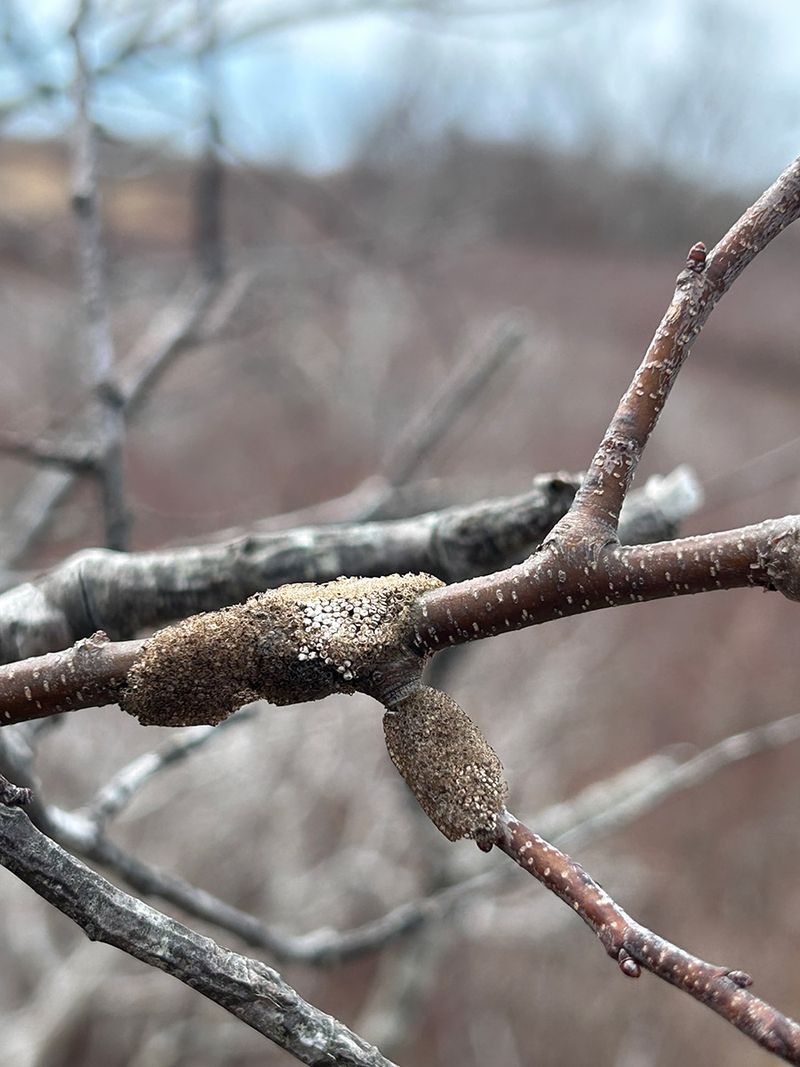
Run your thumb along a bare cherry twig in November and you may feel a smooth, raised collar. It looks dark, shiny, and a little out of place, like a drop of glaze that hardened in a perfect ring.
That ring is an egg mass from the eastern tent caterpillar, a native moth that loves wild black cherry. Each mass usually holds somewhere between 150 and 400 eggs, packed tightly side by side around the twig.
The shine comes from a frothy coating called spumaline. The female moth spreads it over the eggs, and it hardens into a tough, water-resistant shell. Scientists believe it helps protect the eggs from drying out and from some predators through the long winter.
Most masses are about three-quarters of an inch long. They often sit on pencil-thin twigs near the outer edges of branches, where sunshine is strong.
Once you spot one, you start seeing them everywhere. I like to tell friends it feels like learning a secret code hidden on the tree. Grab a hand lens if you have one, because the tiny bumpy texture under the gloss is fun to study up close.
Snip Those Egg Rings Off Bare Cherry Branches This Winter
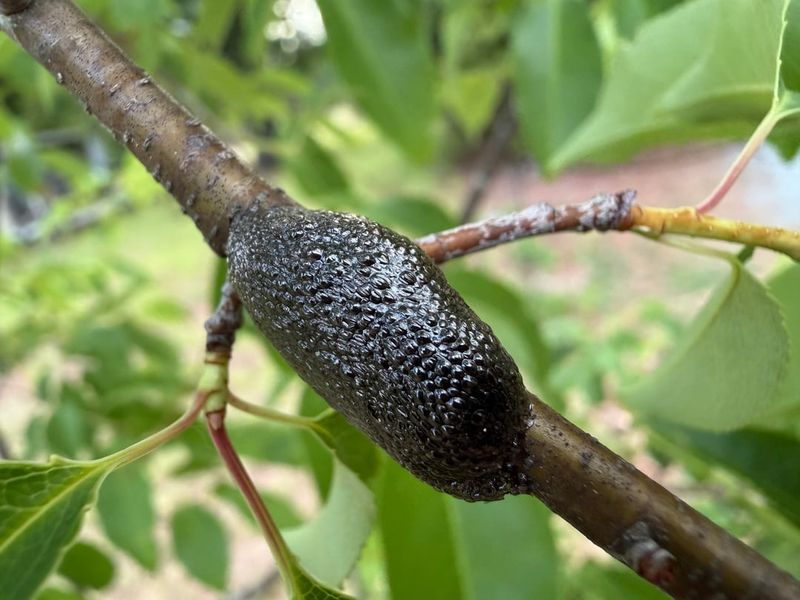
Winter is honestly the easiest season to get ahead of these caterpillars. With the leaves gone, every glossy ring stands out on the bare twigs.
University extension experts agree that removing egg masses during the dormant season is a simple, spray-free way to reduce spring trouble. Use clean pruning shears and cut the twig just below the ring. Small twigs heal quickly, so the tree barely notices.
You can also scrape a mass off with your fingernail or a dull knife if cutting would ruin the shape of a branch. After removal, drop the masses into a bucket of soapy water, or seal them in a bag for the trash.
Work from the ground with a pole pruner for higher branches. Skip wobbly ladders on icy days, because no caterpillar is worth a fall.
Your timing window runs from late fall until buds swell in early spring. In most of Maryland, that means roughly November through early March, a bit later in the western mountains.
Personally, I make it a cozy chore on a sunny winter afternoon. Twenty minutes with shears can mean far fewer tents to deal with when spring arrives.
Tiny Caterpillars Hatch Right As Cherry Buds Open
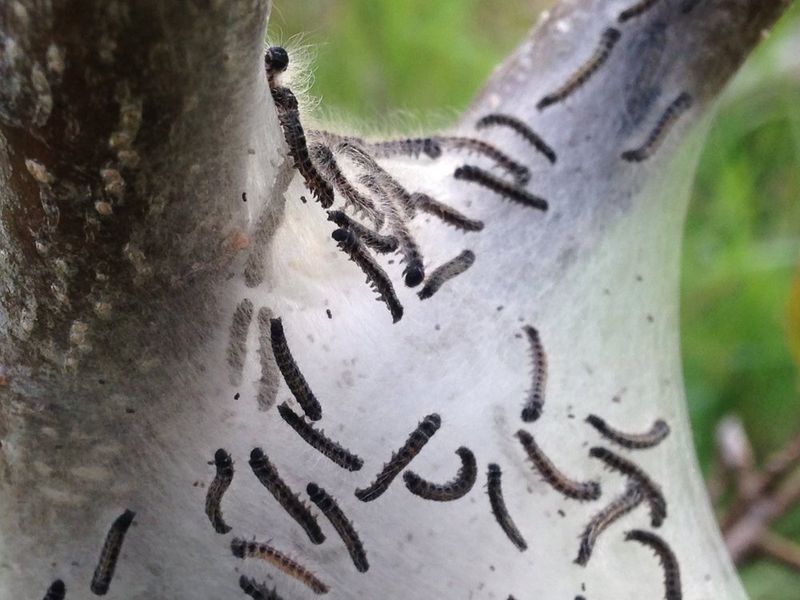
Nature runs on a tight schedule here. The eggs inside each ring hatch in early spring, often just as cherry buds begin to unfold their first tender leaves.
That timing is no accident. Newly hatched larvae are small and need soft, fresh foliage to eat, so they emerge when the tree is ready to feed them. In much of Maryland, that usually happens in late March or April.
Here is a surprising part of the story. The larvae actually finish developing inside the eggs during the summer before. They spend fall and winter as fully formed little caterpillars, tucked inside their shells and waiting.
After hatching, the young caterpillars stick together as a group. They crawl to a nearby branch fork and start spinning silk, building the first layer of their famous tent.
The family stays together for weeks, heading out to feed and returning to the tent to rest. They often eat early in the morning, in the evening, and sometimes at night.
The moths mate and lay new egg rings in early summer, and only one generation forms each year. So the glossy rings you find now are the whole crop for next spring.
Silky Tents In Cherry Branch Forks Give The Game Away
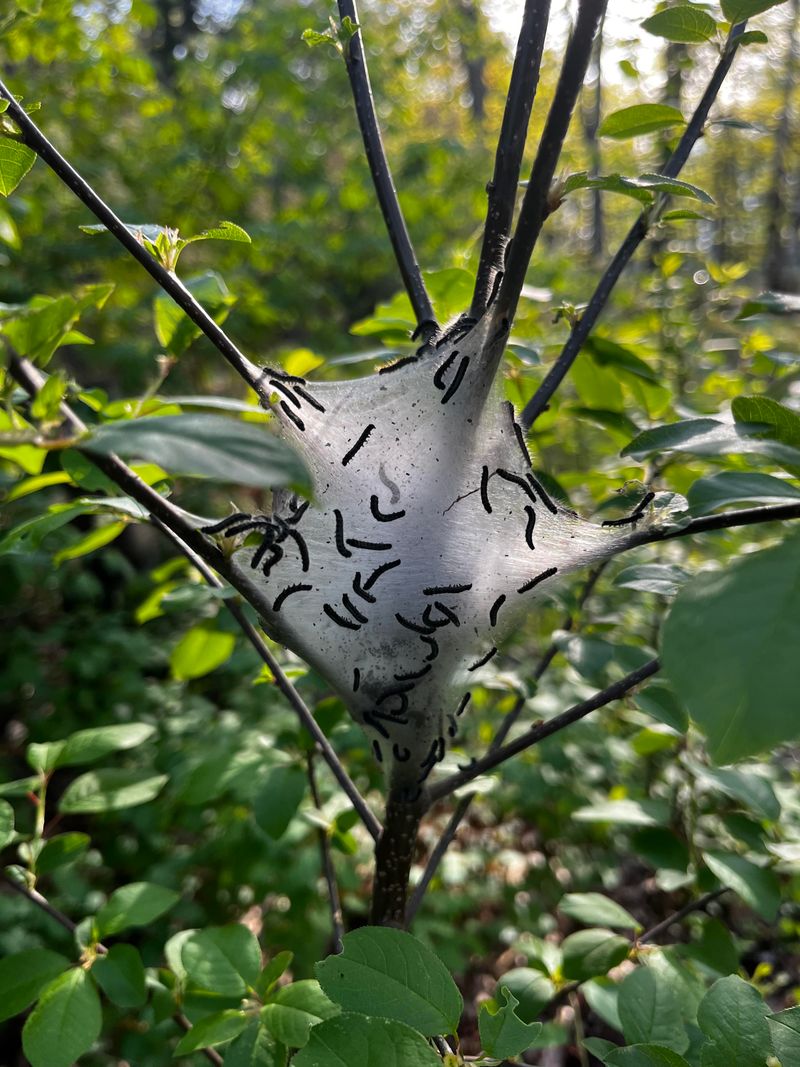
Ever driven past a roadside cherry tree in April and noticed white, cottony bundles in the branches? Those are the tents, and they are a classic sign that last winter’s rings hatched.
Eastern tent caterpillars build their shelters in the crotches, or forks, of branches. That is a handy clue. Fall webworms, a different native caterpillar, spin loose webs over the tips of branches in late summer and fall instead.
The tent starts small and grows as the caterpillars add new silk layers. By May, some tents can be larger than a football.
Full-grown caterpillars reach about two inches long. Look for a black body with a solid white stripe down the back, blue spots along the sides, and fine light brown hairs.
They can look a bit like spongy moth caterpillars, which are not native. Spongy moth larvae have rows of blue and red dots and no tents, so the silk shelter is your best quick tell.
My favorite moment is spotting caterpillars marching in a line along a branch. They leave silk trails as they go, which helps the group find their way back home.
Your Leafless Cherry Tree Will Probably Bounce Back
Few things feel more alarming than watching caterpillars strip a favorite tree. Take a breath, though, because healthy, established cherry trees usually recover just fine.
Eastern tent caterpillars feed early in the season and finish by late spring or early summer. That leaves the tree plenty of time to push out a second set of leaves. Maryland forest health experts note that most trees regrow foliage within a few weeks.
The caterpillars eat leaves, not wood. So the branches, buds, and roots stay intact, ready to support new growth.
Repeated heavy feeding year after year can stress a tree, especially a young, newly planted, or drought-weakened one. In those cases, extra care matters more.
Give a hungry tree a deep watering during dry spells. Spread a thin layer of mulch over the root zone, keeping it a few inches away from the trunk.
Skip heavy fertilizer right after leaves are lost. Too much quick growth can attract other pests and strain the tree further.
I have watched my own wild cherry go bare in May and look lush again by July. Patience really is part of the job here.
Pull Down Tent Caterpillar Nests Safely And Skip The Fire
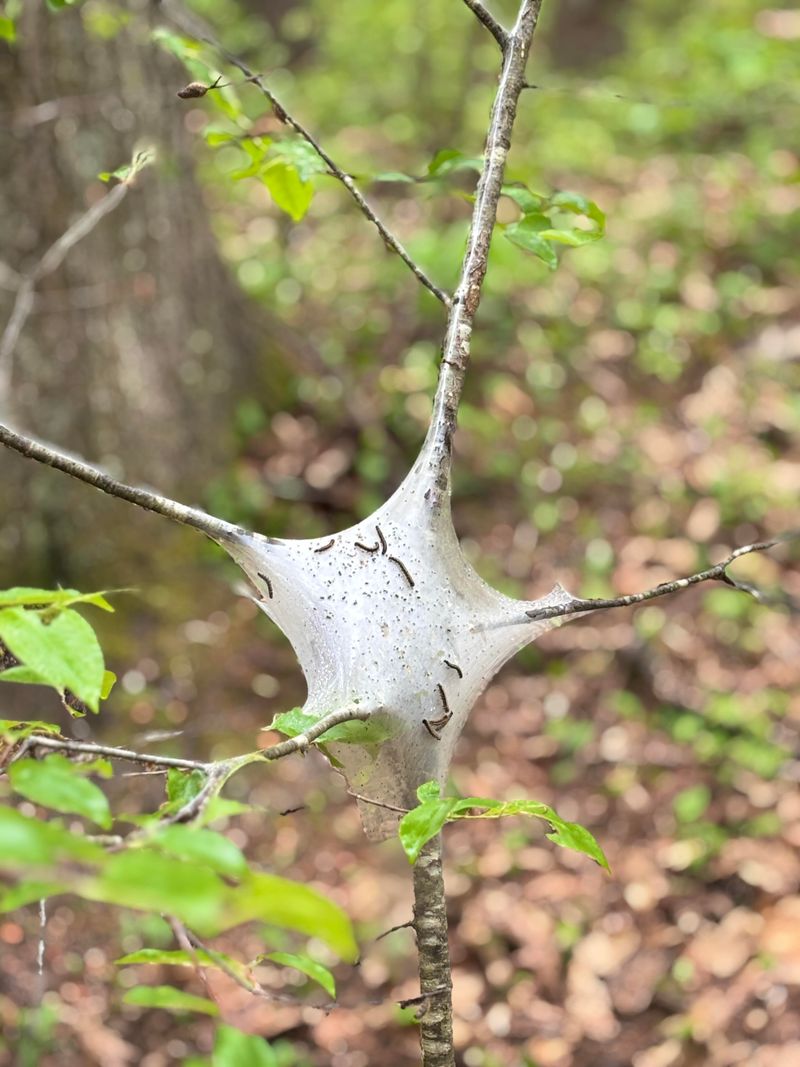
Missed a few rings over the winter? No worries, because you still have options once tents appear.
Visit the tree on a cool, overcast day, when most caterpillars are resting inside. Use a long stick or a pole with a rough tip and twist the tent around it like cotton candy. Then drop the whole mess into a bucket of soapy water.
Wear gloves if you plan to touch the caterpillars. Their hairs can irritate sensitive skin for some people.
Please skip burning the tents. Extension services warn that fire damages bark and branches far more than the caterpillars do, and it can spark a dangerous blaze.
For bigger outbreaks on young trees, a product with Bacillus thuringiensis, often called Bt, can help. This natural bacterium affects caterpillars that eat treated leaves, and it works best while larvae are still small.
Read the label carefully and spray only the affected tree. Broad insecticides can harm bees and other helpful insects, so they are rarely worth it for this native pest.
Honestly, the stick method feels oddly satisfying. Two or three quick twists can clear a tent in under a minute.
Hungry Cuckoos Love Those Wild Cherry Caterpillars
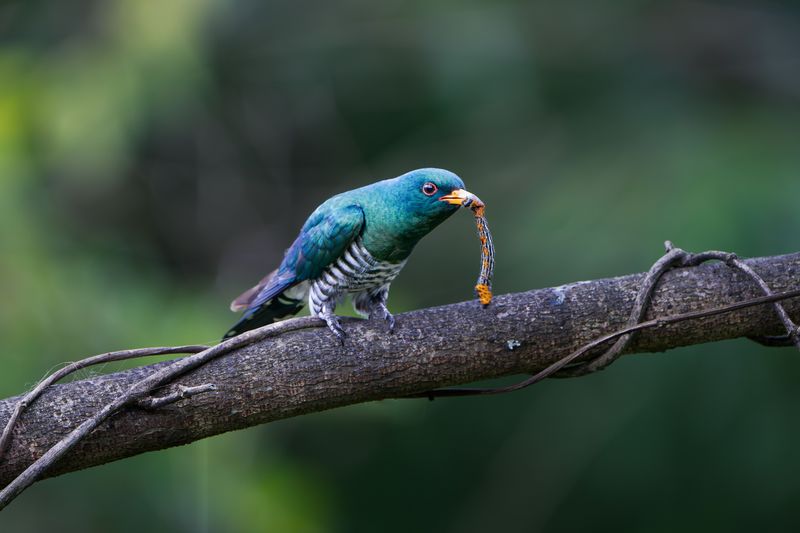
Not every visitor finds hairy caterpillars gross. Yellow-billed and black-billed cuckoos happily gobble them up, hairs and all.
Most birds avoid fuzzy caterpillars, but cuckoos have a clever trick. They shed the lining of their stomach when it fills with prickly hairs, then grow a fresh one. Orioles, chickadees, and other birds also help by picking off smaller larvae.
Parasitic wasps, flies, and certain diseases join in too. Thanks to these natural helpers, tent caterpillar numbers rise and fall in cycles, often booming for a few years before crashing.
That makes these insects an important native piece of Maryland woodlands. Wild black cherry supports hundreds of caterpillar species, which in turn feed baby birds every spring.
So aim for balance instead of a spotless tree. Remove rings on small ornamental cherries or trees near your patio, and leave a few on wild cherries at the yard’s edge.
Planting native shrubs and leaving some leaf litter invites more birds and beneficial insects to patrol your trees. A bird bath nearby helps too.
Next time you spot a glossy ring, you will know exactly what it means. That tiny band is a full spring story waiting to unfold.