7 Signs a Wind-Damaged Tree in Your New York Yard Needs an Arborist
Hurricane Sandy left New York City with roughly twenty thousand damaged or toppled trees after it roared ashore in 2012. Some of those trees looked fine at sunrise, then cracked open weeks later during a much gentler breeze.
Tree experts see this delayed failure often, and it plays out like something from a mystery novel. Wind can twist a trunk like a wet towel, leaving damage tucked deep inside where your eyes cannot reach.
I once shrugged off a cracked maple limb after a blustery April squall. Two weeks later it crashed onto my garden bench, and I still wince every time I sit there.
You deserve to know which warning signals matter most before the next big storm rolls across New York. So how can you tell a scratched survivor from a tree quietly planning its grand exit onto your roof?
1. A Tree Suddenly Leaning Toward Your House
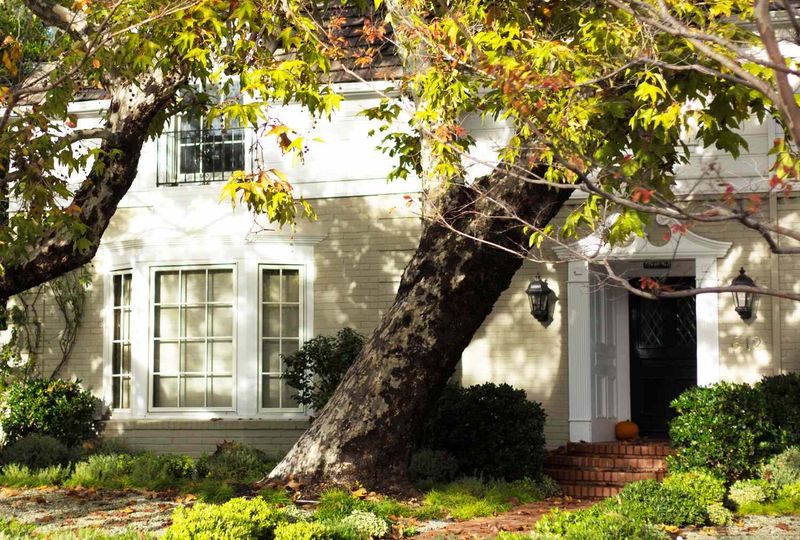
My stomach dropped the morning I noticed our backyard oak tilting like a tired commuter on a subway train. A fresh lean after a windstorm often means roots have torn loose underground, even when everything above looks healthy.
Many tree care professionals treat a new lean of roughly fifteen degrees or more as a serious warning sign. Trees that grew slanted for decades usually have curved trunks and branches that bend back toward the sunlight.
Check the soil on the side opposite the lean for raised mounds or a lifted root plate. That heaving ground tells you the anchor has shifted, and the tree may keep moving as soil settles.
Soggy spring soil makes the problem worse because wet earth loses much of its grip on the roots. Shallow-rooted species like spruce and some maples can tip more easily when heavy rain arrives with strong gusts.
Old family photos or online street view images can quickly show whether that lean existed before the storm. I found a picture from a birthday party that proved our oak had stood straight just last summer.
Keep kids and pets away from the side the tree is leaning toward until a professional checks it. Avoid piling soil against the trunk, since that rarely fixes anything and can invite rot around the bark.
A certified arborist can test the root zone and decide whether careful monitoring or removal makes the most sense. Their trained eyes can spot anchoring problems that homeowners easily miss while standing in the yard.
2. Deep Cracks Splitting The Main Trunk
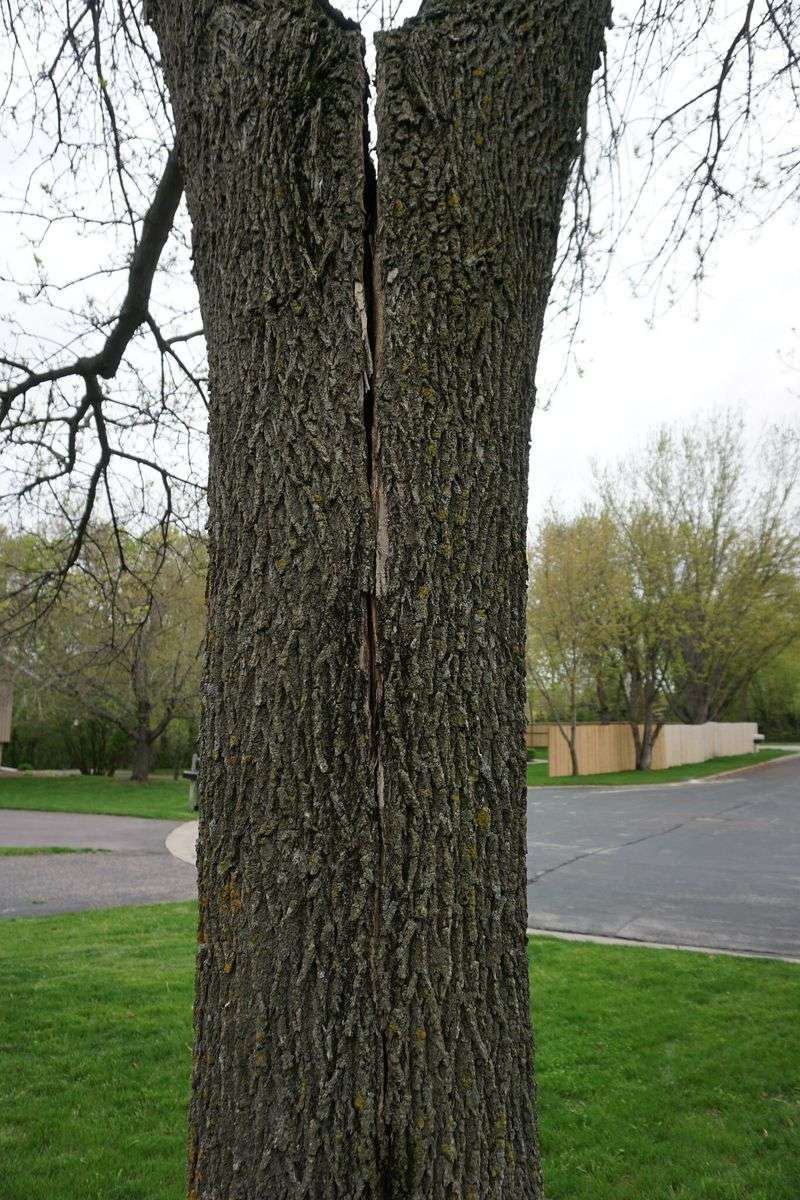
Ever heard a big tree groan like an old staircase while wind howled through your neighborhood at night? Sometimes that eerie noise comes from wood fibers separating inside a trunk that has started to crack.
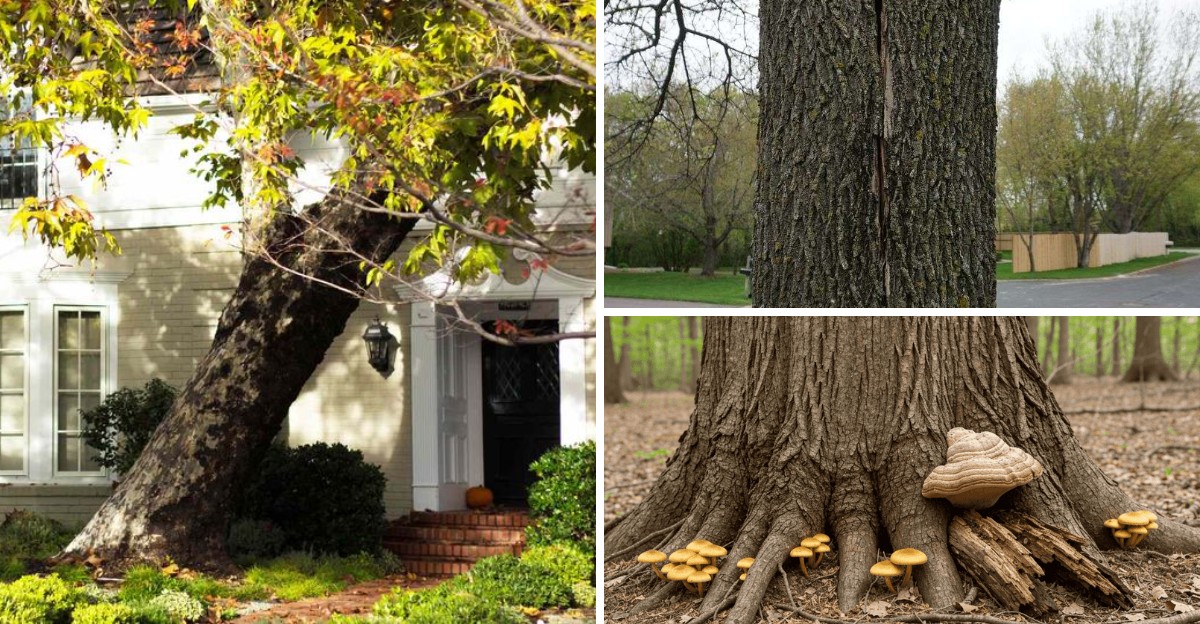
Vertical cracks running up the trunk are among the most serious defects arborists look for after strong winds. Unlike surface scrapes, these splits reach into the structural wood that holds the whole canopy upright.
Pay close attention to the spot where two large stems meet in a tight V shape near the top. Bark often gets squeezed inside these narrow unions, which weakens the connection and makes splitting much more likely.
Silver maples are well known for splitting at these weak forks when heavy wind loads their wide crowns. I watched one in a friend’s yard peel apart like string cheese after a summer thunderstorm.
On a breezy day, watch the crack closely from a safe distance and see whether it opens and closes. Arborists sometimes call that movement breathing, and it suggests the fracture runs deeper than it looks.
Please skip the urge to stuff the crack with foam or concrete from the hardware store. Those fillers can trap moisture against the wood and often hide the problem from future inspections.
An arborist may recommend cabling or bracing for some split trees, while severe splits usually call for removal. Getting that verdict early gives you time to plan instead of scrambling after the next big storm hits.
3. Broken Branches Dangling High In The Canopy
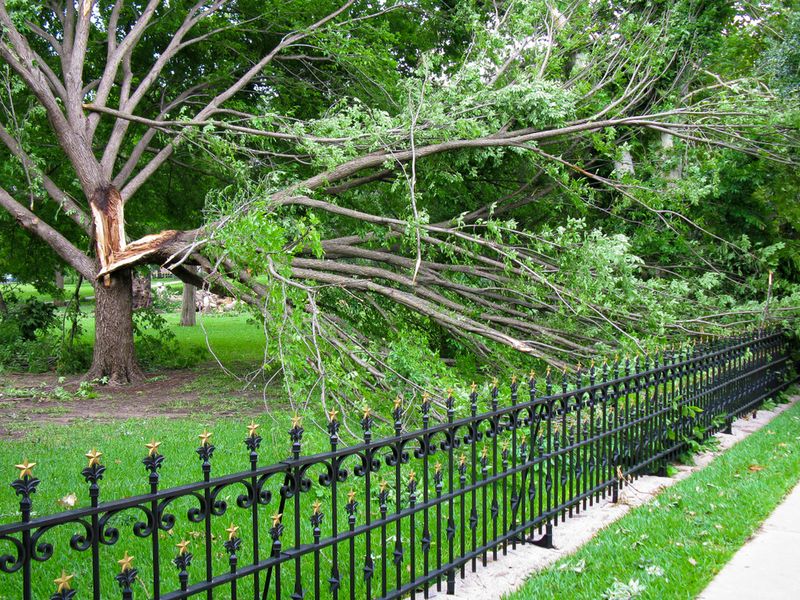
Woods workers have long called snagged, hanging branches widowmakers, and that spooky nickname exists for a solid reason. These limbs can drop without warning days after the wind settles, even on a calm sunny afternoon.
Grab a pair of binoculars and scan the canopy slowly from several spots around your yard. Look for pale, freshly exposed wood or limbs resting at odd angles on top of other branches.
I spotted one last fall that looked like a giant spider dangling over our driveway after a windy night. My heart raced every time my car rolled underneath until the crew finally lowered it to the ground.
Hanging branches carry stored tension, so they can spring or twist in surprising directions when disturbed. Tugging on one with a rope or poking it with a pole can bring it straight down onto you.
Mark off the area underneath with lawn chairs or caution tape until the branch comes down safely. Remind delivery drivers and visiting kids to use another path, even if the limb looks firmly stuck.
Trained arborists use ropes and pulleys to lower heavy wood slowly instead of letting gravity take charge. They also clean up the jagged stub left behind, which helps the tree seal the wound properly.
Ask whether the company holds International Society of Arboriculture certification and carries liability insurance before work begins. That quick question protects your wallet if a heavy limb lands somewhere nobody planned for it to go.
4. Peeling Bark And Hidden Rot Inside The Trunk
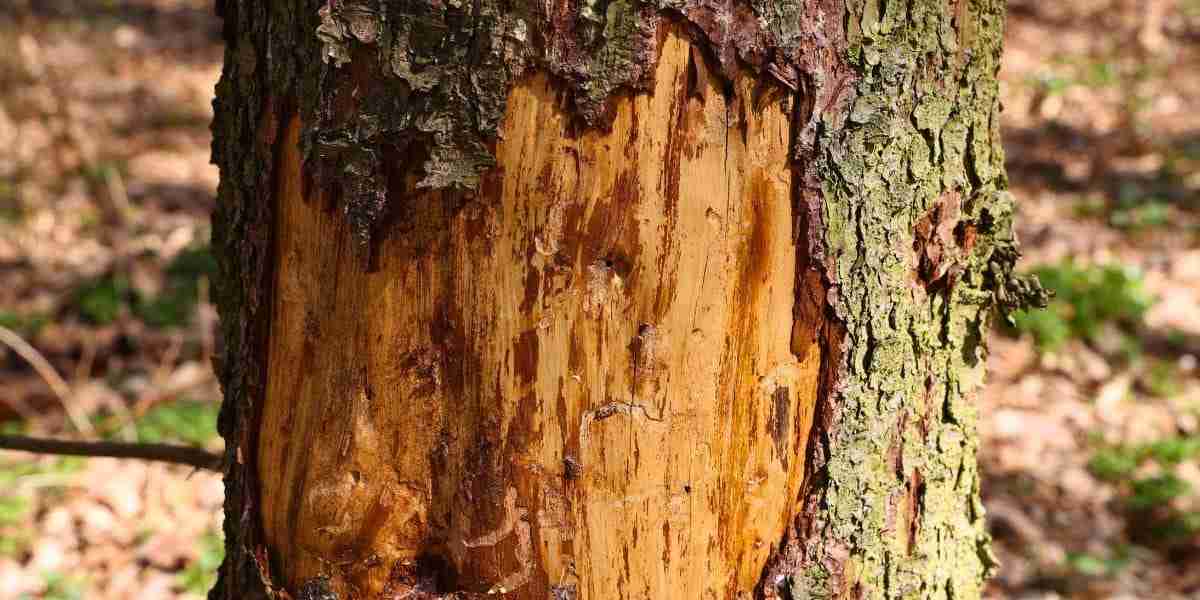
Bark works like a raincoat for your tree, and wind can rip that coat open in seconds. Flying debris and rubbing branches often gouge trunks during storms, leaving raw patches of exposed wood behind for insects.
Small scrapes usually seal over with time, but large wounds wrapping around the trunk deserve a much closer look. Many arborists grow concerned when damage circles more than about one third of the trunk’s circumference.
Loose bark that sounds hollow when tapped can hint at separation or decay hiding underneath the surface. I like to knock gently with my knuckles and listen, a bit like checking a ripe watermelon.
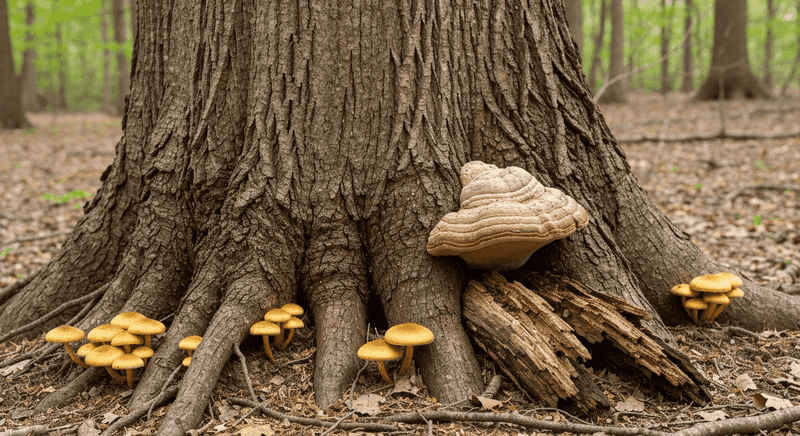
Watch for mushrooms or shelf-shaped conks sprouting from the trunk in the seasons following a storm. These fungal growths are the visible tip of rot working through the wood you cannot see from the lawn.
Oozing sap or dark wet streaks running down the bark can also signal internal injury or infection. Do not paint wounds with tar or sealant, because research shows it rarely helps trees recover.
Trees cannot heal like our skin does, so they wall off damaged wood in a process called compartmentalization. Healthy trees handle this well, while stressed trees struggle to contain decay after major storm injuries.
Arborists can use sounding mallets and resistance drills to measure how much solid wood remains inside a trunk. That data helps them decide whether your tree stays put or heads for careful removal this season.
5. Wilting Leaves And Mushrooms Near The Roots
Sometimes the loudest warning arrives quietly, as a canopy that looks a little tired weeks after the storm. Torn or stressed roots struggle to move water upward, so the leaves start telling the story first.
Keep an eye out for wilting foliage or leaves that seem smaller and sparser than last year. Early fall color on just one side of the tree can point toward root damage on that side.
I have to confess that I blamed dry weather for my dogwood’s droopy leaves for a whole month. Watering helped a little, but the real trouble turned out to be roots snapped during a windy spell.
Mushrooms clustered around the base can be another clue, especially honey-colored clumps that return year after year. Some root rot fungi weaken anchoring roots long before the canopy shows any obvious trouble to homeowners.
Standing water around the trunk after heavy rain also deserves attention, since soggy soil starves roots of oxygen. Avoid driving or parking on the root zone while the ground stays wet and easily compacted.
Resist the urge to pile on fertilizer, because stressed roots often cannot use extra nutrients right away. A slow, deep watering during dry stretches and a thin ring of mulch usually help far more.
An arborist can dig carefully around the root collar to look for decay or broken anchoring roots. Catching these hidden problems early may save a cherished shade tree that once seemed beyond any help.
6. Snapped Treetops And Half The Crown Missing
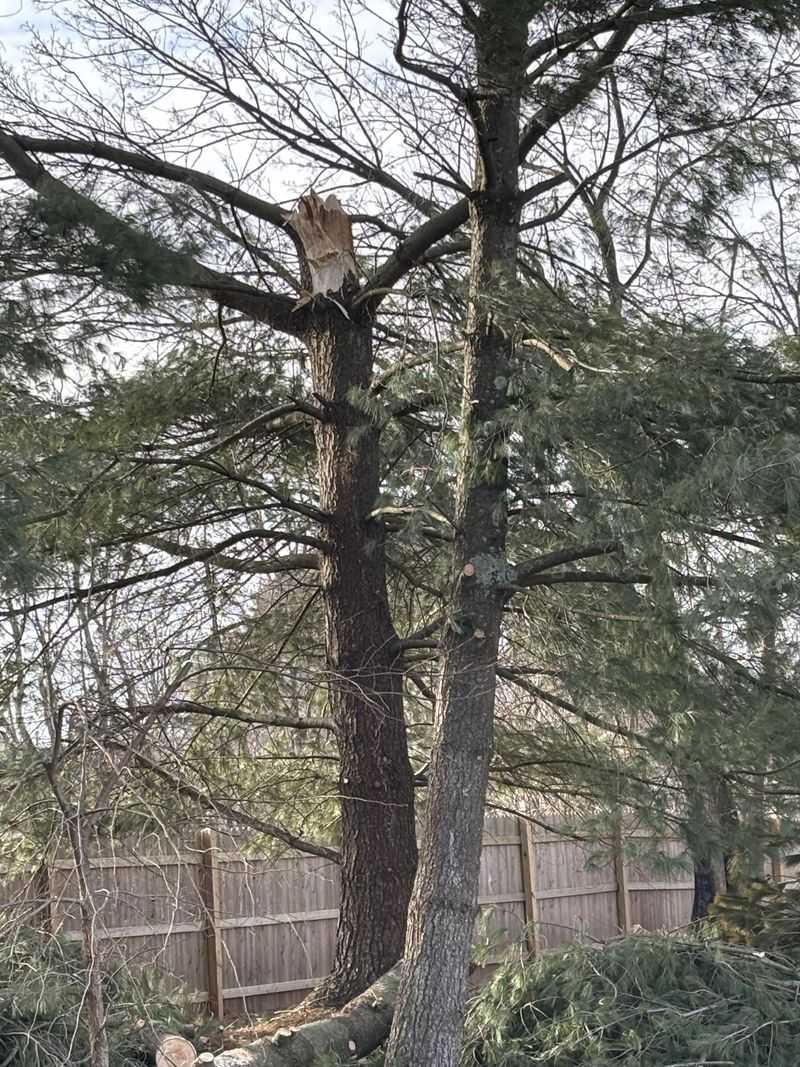
Losing the very top of a tree feels a bit like watching a lighthouse lose its lamp. Wind often snaps the leader on tall evergreens and shade trees, leaving a jagged stump high in the air.
A general guideline many arborists share says trees losing more than half their crown face tough odds. Fewer leaves mean less food production, which makes recovery slow and sometimes impossible for older trees.
Topped trees also respond by pushing out clusters of fast, skinny shoots near the broken end of the trunk. Those sprouts attach weakly, so they can break off easily once they grow large and heavy.
If you ask me, lopsided crowns are just as worrying as missing tops after a hard blow. A tree stripped on one side carries uneven weight, and that imbalance strains roots during the next gusty day.
Our old white pine lost its top in a winter nor’easter, and I honestly thought it was finished. An arborist trained a new leader from a side branch, and the tree now looks surprisingly handsome again.
Restoration pruning like that takes several careful visits spread over a few years to work properly. Hiring someone who advertises topping as a fix usually creates bigger headaches down the road for you.
A professional can judge whether the remaining canopy holds enough energy to support healthy regrowth next season. That honest assessment beats guessing, especially when a big trunk towers right over your upstairs bedroom window.
7. Tree Limbs Tangled In Power Lines Or Resting On Roofs
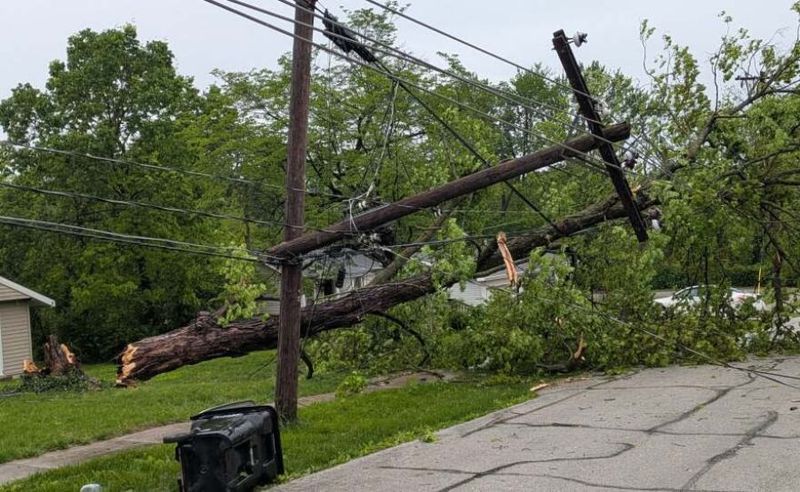
Few sights make my pulse jump faster than a branch draped across a sagging wire near the house. Wood can conduct electricity, especially when wet, so that tangled limb deserves serious respect from a distance.
Across New York, utilities like Con Edison and National Grid ask residents to report trees touching lines right away. Stay at least thirty feet away from any downed line and treat it as energized every time.
Regular tree crews are not allowed to work close to power lines without special line-clearance training. In most cases the utility needs to clear the line first, so call them before calling anyone else.
Branches resting on a roof bring their own drama, since stored tension can shift as you climb closer. Please leave the ladder in the garage and snap a few photos for your insurance claim instead.
Now that I think about it, the scariest trees are often the ones with small damage near big targets. A cracked limb over a vegetable bed is a nuisance, but over a bedroom it becomes an emergency.
Arborists rank hazards by asking what would get hit if a damaged part finally gave way. Homes and play sets push a tree higher on the priority list, even when damage looks modest.
Once the utility clears the lines, book an arborist to inspect whatever trees still stand near your home. A little caution now spares you sleepless nights listening to every creak during the next storm.