7 Fall Bulbs New York Gardeners Should Plant Before Halloween
October gives New York gardeners a small but important planting window. The air is cooler, the soil is still workable, and spring bulbs have time to settle in before winter arrives.
While the garden goes quiet, bulbs are busy underground. They build roots through the cold months so they can burst into color when spring finally returns.
The timing is simple. Plant before the ground freezes, often around October, and give each bulb the right depth and location.
You do not need special tools or expert skills. With a few bulbs and an afternoon in the garden, you can create a spring display that returns year after year.
1. Daffodils Bring Reliable Spring Color To New York Yards
If deer treat your garden like a salad bar, daffodils are your revenge. Their bulbs contain compounds that make them less appealing to many deer and rodent pests.
Timing is straightforward across most of the state. Aim for early October through late November, once soil at a 6-inch depth cools below 55 degrees Fahrenheit.
Upstate and northern gardeners in Zones 4 and 5 should lean toward early to mid-October. Folks in New York City and on Long Island can often plant into November, sometimes even early December if the ground stays workable.
Give them at least six hours of sun for thick stems and rich color. Partial shade works too, since daffodils bloom before leafy trees fill in overhead.
Drainage matters more than soil richness. Heavy clay holds water against the bulb, so mix in a few inches of compost before you plant.
Standard bulbs go about 6 inches deep, pointy end facing up. Water once, thoroughly, to settle everything in place.
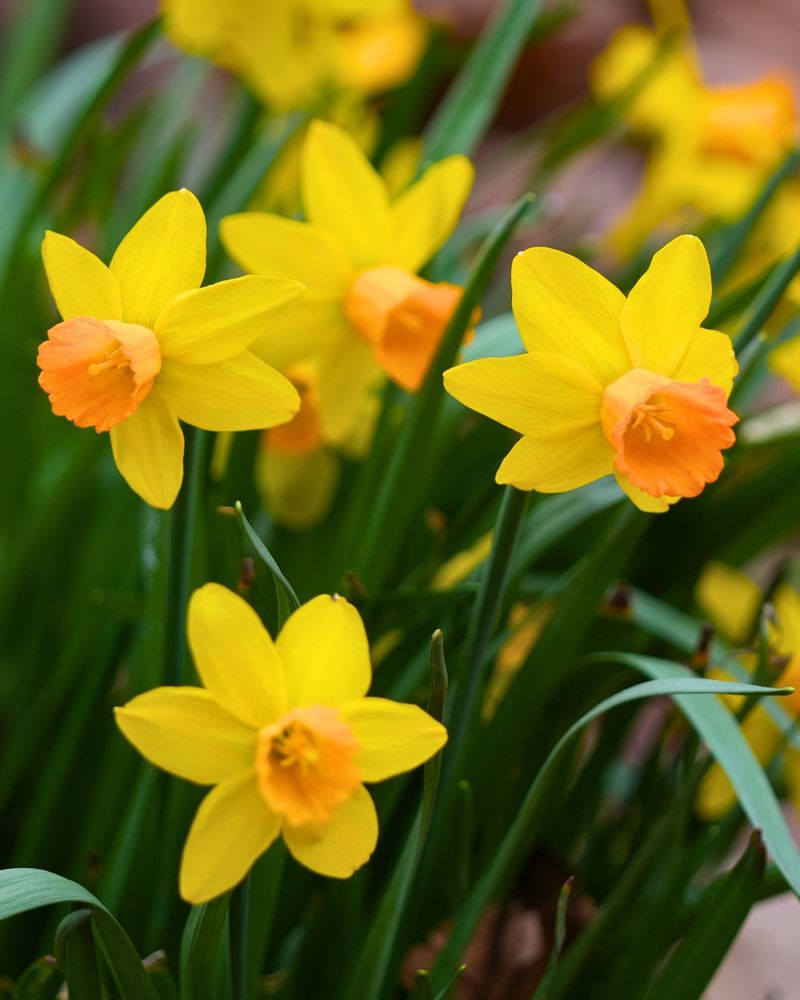
With thousands of varieties available, you can stretch the show from late March into May. Trumpet types open early and handle cold well, large-cup and small-cup forms offer unusual colors, doubles look almost like peonies, and miniatures such as Tete-a-Tete fit rock gardens or pots.
After the flowers fade, snip the spent blooms but leave the leaves alone for roughly six weeks. Those yellowing leaves are recharging the bulb for next spring.
Plant a generous handful. Daffodils naturalize, meaning your patch quietly grows larger each year.
2. Tulips Add Bold Blooms In Every Garden Style
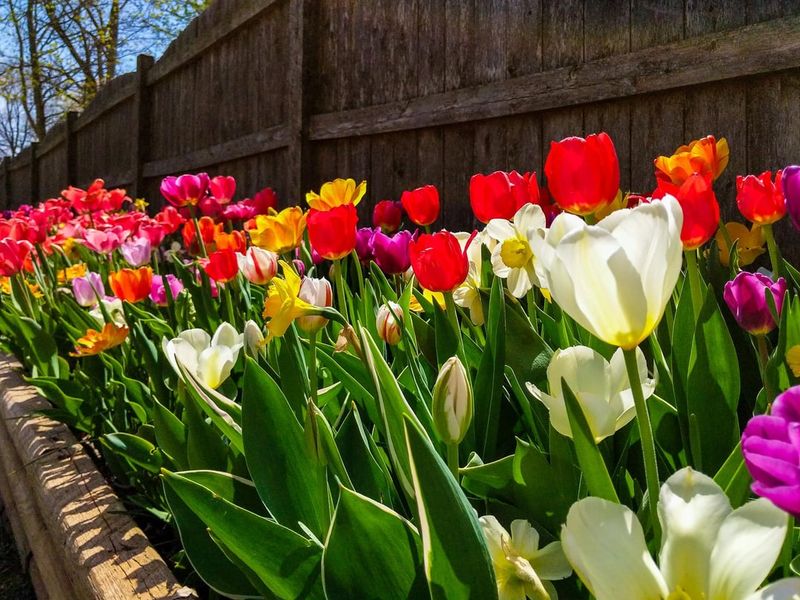
Few flowers commit to color the way a tulip does. One bed of Darwin hybrids can carry an entire spring, and they hold up surprisingly well when weather swings from frost to sunshine in a single week.
Mid-September through late November is your planting range, with October sitting right in the sweet spot. Soil should measure 60 degrees Fahrenheit or cooler at a 6-inch depth.
Zones 4 and 5 gardeners upstate do best planting in September or October. City and Long Island growers stretch comfortably into November.
Pick a spot with six or more hours of direct sun for sturdy stems and vivid petals. Under deciduous trees works fine, since tulips finish before the canopy closes.
Here’s the honest warning: deer love tulips. Species tulips hold up a little better, but nothing in the tulip family is truly deer-proof, so wire mesh over new plantings or a repellent spray is worth the effort.
Your New York Garden Changes Every Week. Your Plan Should Too.
Gardening in New York changes quickly throughout the season. Every Friday you’ll receive a simple weekly plan showing exactly what to plant, prune, fertilize, harvest, and protect so you never miss the right timing.
Soggy soil is the other risk. Clay-heavy beds, common through the Hudson Valley, need organic matter worked in first.
Set bulbs 6 to 8 inches deep, roughly three times the bulb’s height, pointy side up. Water deeply once and walk away.
Mix early, mid, and late bloomers and you can enjoy six or seven weeks of flowers, from late March into mid-May. Peak show usually lands mid to late April.
Trim after blooming, but let foliage yellow naturally for about six weeks. A bulb fertilizer or compost worked into the planting area can support long-term performance, but avoid excessive nitrogen that encourages weak foliage.
3. Crocuses Deliver The First Signs Of Spring
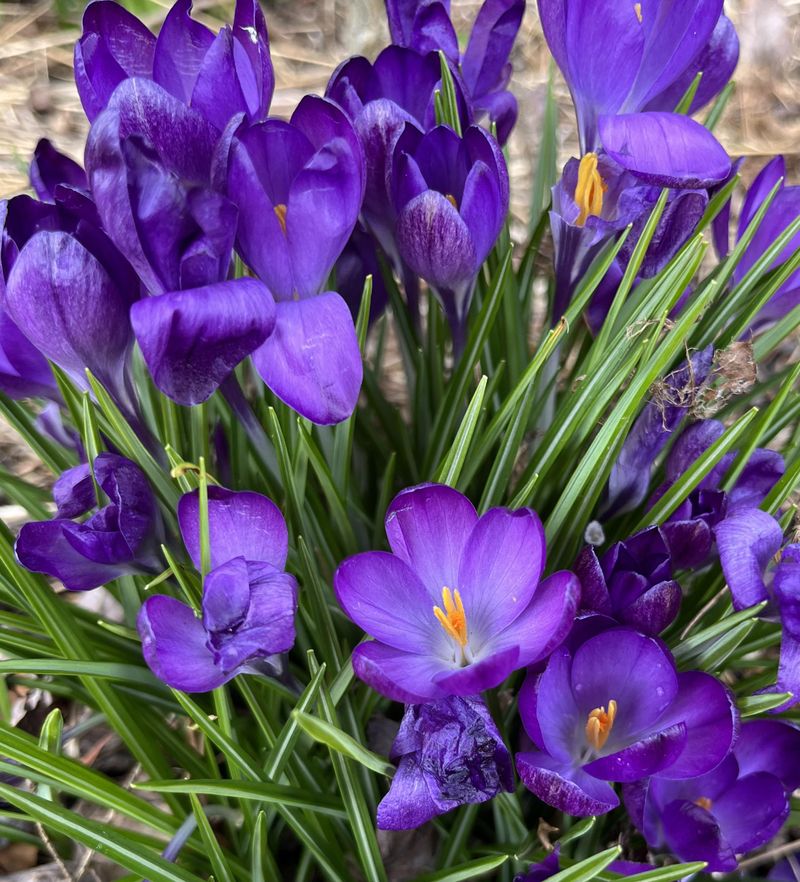
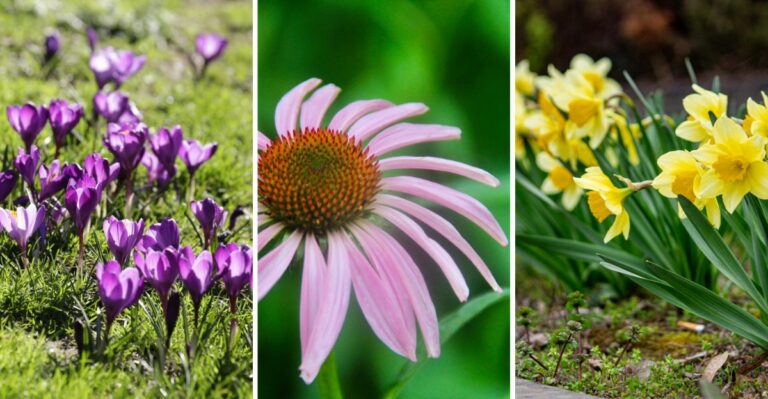
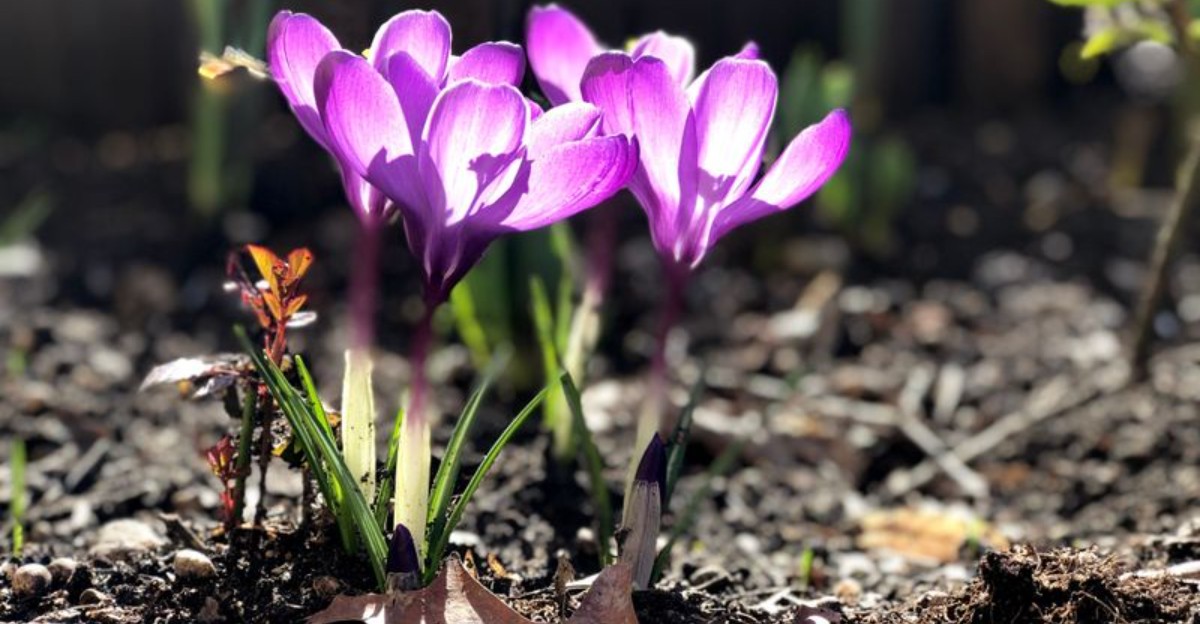
Picture patches of purple pushing through a crust of snow while the rest of the yard is still asleep. That’s crocus season, and it can start as early as late February.
Corms go in the ground 6 to 8 weeks before the first hard frost, generally September through November. Wait until soil temperature drops below 60 degrees Fahrenheit, but get them planted before the ground locks up.
A spot with southern exposure warms faster, which nudges the flowers open sooner. Full sun to partial shade both work well.
Drainage is the one thing crocuses insist on, since corms rot in compacted, soggy ground. A shovelful of compost mixed into heavy soil solves most problems.
Plant them shallow: 2 to 3 inches deep and 2 to 3 inches apart, pointy end up. Water once after planting and you’re finished.
Deer generally pass them by, and many types resist rodents too. Crocus tommasinianus, nicknamed Tommies, is especially unappealing to voles.
Squirrels are a different story. They dig at freshly turned soil out of curiosity, so laying hardware cloth or crushed shells over the area for a few weeks helps.
Colors run through purple, gold, white, and striped combinations. Dutch crocus offers the biggest flowers, while snow crocus and Tommies stay petite and scatter beautifully through lawns and rock gardens.
Early-flying bees rely on crocus nectar when little else is open. Let the grassy leaves yellow naturally, and your patch will multiply on its own.
4. Alliums Create Tall Flowering Displays For Pollinators
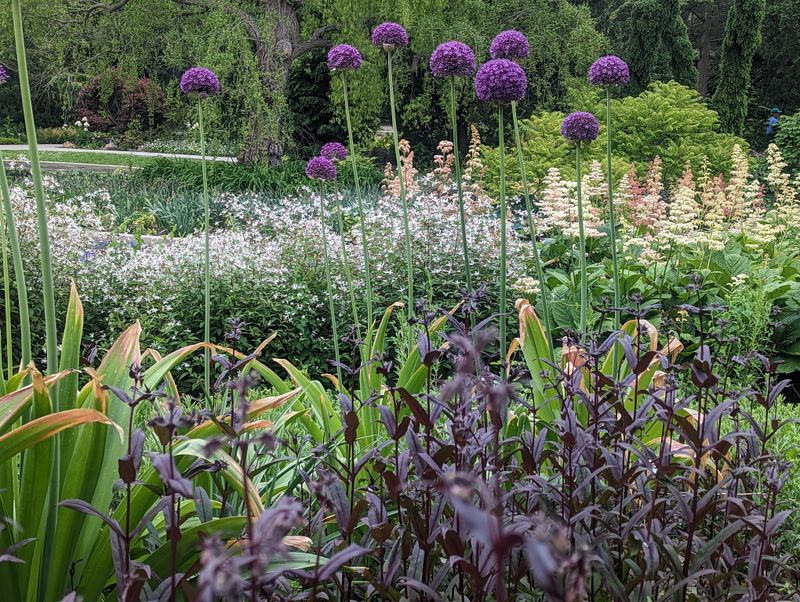
Giant purple globes floating on bare stems look almost unreal, like someone stuck lollipops in the garden. Bees disagree with that description entirely and treat each flowerhead as a buffet.
Fall planting runs September through November, and before Halloween is a solid target. Soil around 55 to 60 degrees Fahrenheit gives roots time to settle before freeze-up.
Full sun brings the best results, so count on six hours minimum. A few varieties tolerate filtered light, but blooms tend to be smaller.
Sandy loam is the dream soil here. Clay needs amending with compost or coarse sand, because alliums sulk in wet feet.
Their onion-like scent makes them less attractive to many deer and rodents compared with some other bulbs. Gardeners in browsing-heavy parts of the state appreciate that a lot.
Bloom time lands in late spring into early summer, filling the awkward gap after tulips fade and before summer perennials take over. Certain types push the show into midsummer.
For height, look at Globemaster at nearly four feet, Gladiator at three to four feet, Purple Sensation for violet globes, Mont Blanc for creamy white, and Summer Drummer for a late finish. Nodding onion, a Northeast native, stays low and charming.
Large bulbs go 6 to 8 inches deep and 8 to 10 inches apart, smaller ones about 4 inches deep. Trim to limit self-sowing, or leave the dried seedheads standing for winter texture.
5. Hyacinths Fill Beds With Fragrant Spring Blooms
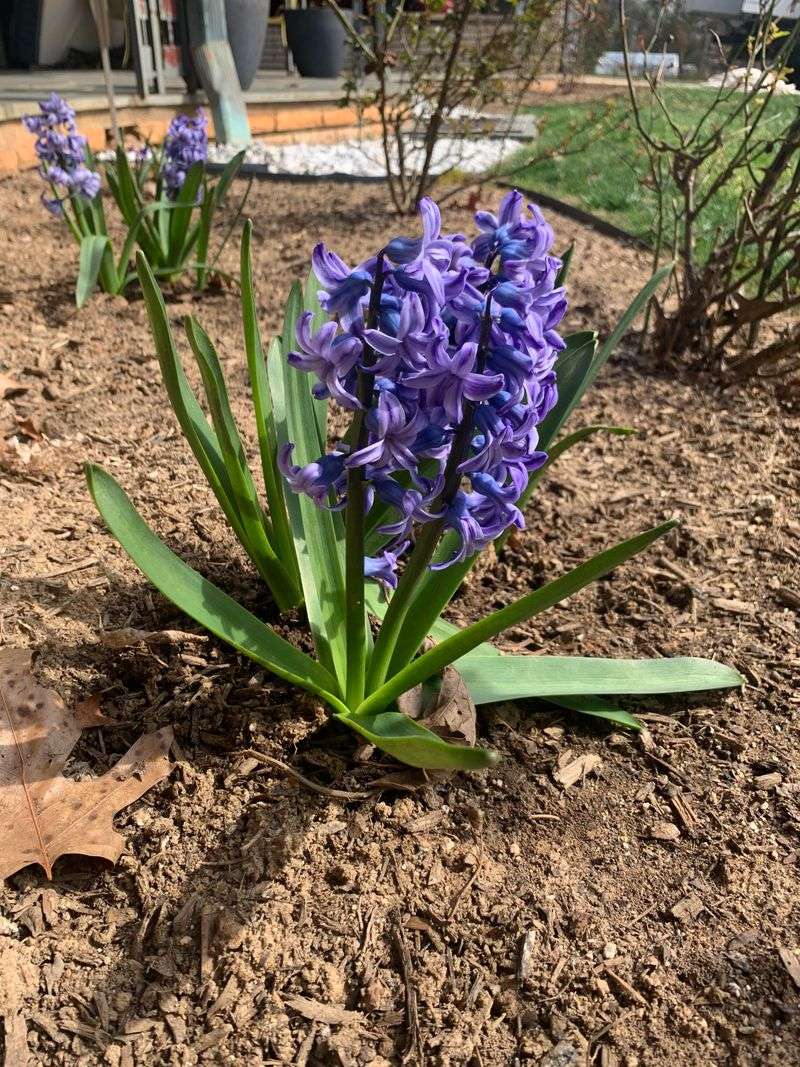
Walk past a blooming hyacinth and the scent catches you before your eyes do. One small cluster near a doorstep can perfume the whole entry, which is why gardeners keep planting them decade after decade.
Get bulbs in 6 to 8 weeks ahead of the first hard frost, when ground temperature slides to 50 or 55 degrees Fahrenheit. For much of New York, that means September through October.
Six hours of sun produces the fullest flower spikes, though light shade is acceptable. Rich, well-drained soil that stays dry through summer dormancy keeps bulbs healthy.
Neutral to slightly alkaline soil suits them best. Work compost or aged manure into clay beds, and consider a raised bed if water tends to pool.
Oxalic acid inside the bulbs keeps deer, rabbits, and voles uninterested. That same compound can irritate skin, so slip on gloves while handling them.
Plant 4 to 6 inches deep, spaced about 6 inches apart, pointy end skyward. Water thoroughly once, then let nature take over.
Flowers arrive early to mid-spring, usually after crocuses and just ahead of tulips and daffodils, lasting two to three weeks. Each bulb sends up a single stalk packed with bell-shaped florets.
Color choices are wide open. Blue Jacket goes royal blue, Delft Blue leans soft, Anna Marie brings pink, Gipsy Queen offers apricot-salmon, Carnegie stays crisp white, and City of Haarlem glows soft yellow.
Cut spent spikes after blooming, but let the leaves fade on their own schedule.
6. Snowdrops Wake Up Gardens Before Most Flowers
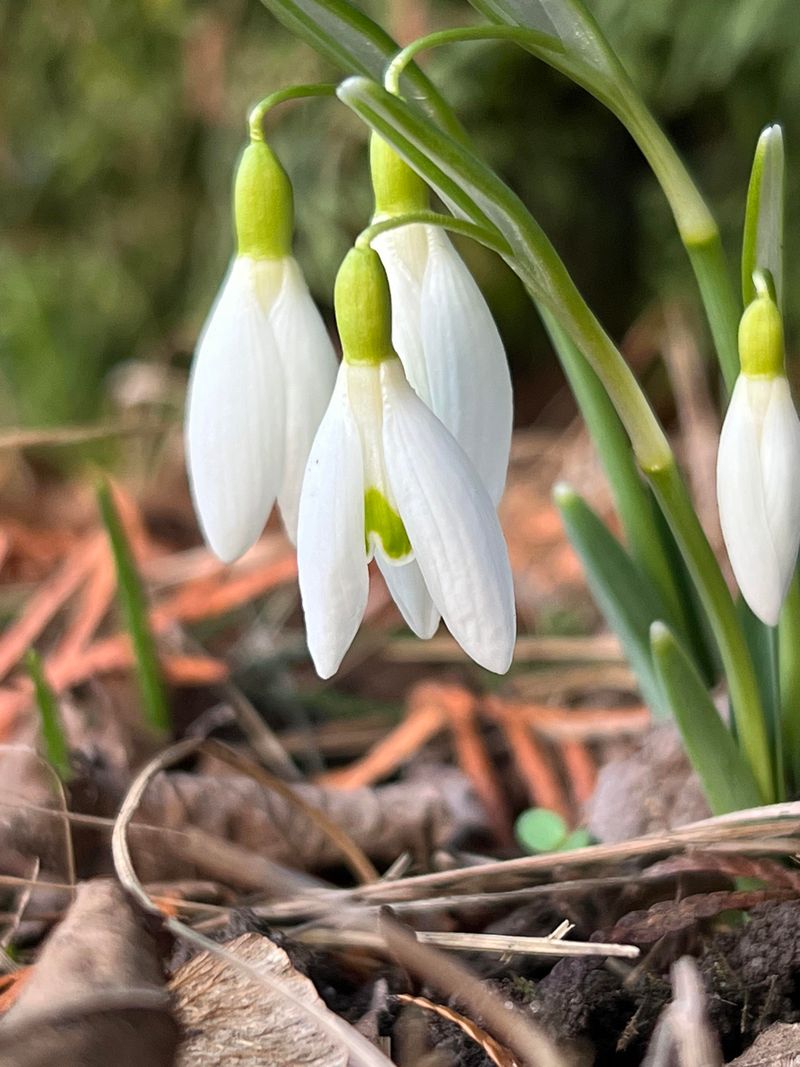
Nodding white bells appearing in February feel like a small act of defiance. Snowdrops often bloom while snow still lingers, sometimes as early as January in milder parts of the state.
Plant snowdrops in late summer through fall, ideally early enough for roots to establish before the ground freezes. You can also plant them green, as leafy live plants, in late winter or early spring after flowering.
Partial shade to full sun works, especially under bare deciduous trees that let winter light reach the ground. Woodland edges are natural homes for them.
Moist, fertile soil rich in organic matter suits them, but avoid spots that stay waterlogged. Bulbs sitting in standing water rarely perform.
Plant roughly 3 inches deep and 4 inches apart, pointy end up. Water generously once, then add a couple inches of mulch to buffer temperature swings.
Deer and rabbits leave snowdrops alone, another reason they suit wooded properties. Peak displays usually hit in February and March.
Solitary bees and early flies visit the flowers when almost nothing else offers pollen. That makes a drift of snowdrops genuinely useful, not just pretty.
Common snowdrop, Galanthus nivalis, stands 3 to 6 inches tall and naturalizes strongly. Giant snowdrop, Galanthus elwesii, grows considerably taller, and collectors chase doubles like Flore Pleno or honey-scented S.
Arnott.
Let foliage yellow at its own pace after flowering. Once established, snowdrops spread steadily with barely any help from you.
7. Grape Hyacinths Add Easy Color Along Garden Edges
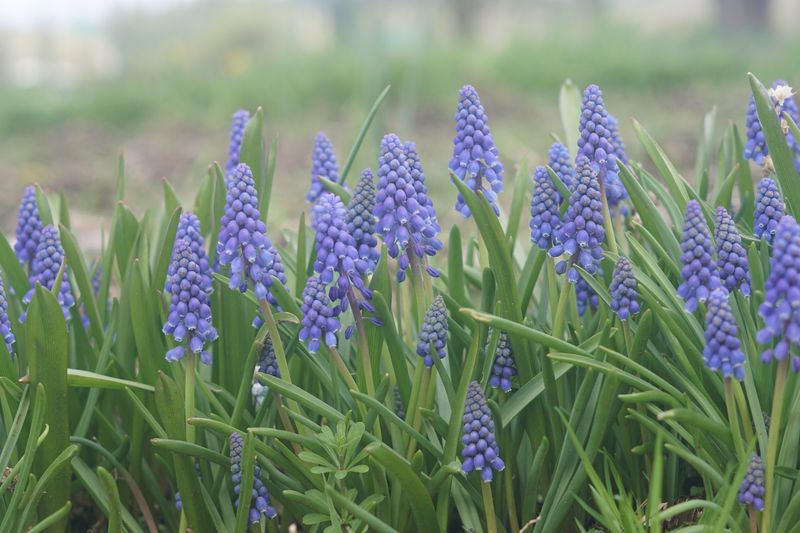
Tiny spikes of tight blue bells stacked like miniature grape clusters, that’s Muscari in a nutshell. Line a walkway with them and spring looks intentional, even if you planted the bulbs in twenty rushed minutes.
Fall planting works best about 4 to 6 weeks before the ground freezes, generally September into October. If leaves pop up in autumn and stick around through winter, that’s normal behavior, not trouble.
Full sun brings stronger flowering and deeper color, though partial shade is fine. Gardeners often tuck them along the sunny side of a fence or driveway.
Drainage is the main requirement, since bulbs rot in standing water. Soil type and pH barely matter, so average garden ground usually works.
Bulbs go 2 to 3 inches deep and 2 to 3 inches apart, pointy end facing up. Water once after planting and add bone meal if you want a boost.
Deer, rabbits, and rodents generally skip them. Bloom season stretches from March into May, overlapping nicely with daffodils and early tulips.
Growing just 4 to 8 inches tall, they excel as borders, rock garden fillers, and container companions. A mild grape-like fragrance is a small bonus you notice up close.
Muscari armeniacum is the vigorous cobalt classic, while aucheri and latifolium show two-tone spikes. Botryoides Album turns white, Valerie Finnis glows powder-blue, and Pink Sunrise blushes.
They multiply freely into carpets. Divide crowded clumps every three to five years and share the extras.