Skip Boxwood Along Your North Carolina Front Walk And Plant These Native Shrubs With Real Character
You walk out to grab the mail on a sticky July morning in the Piedmont, and there it is again, that same clipped green boxwood squatting by the front walk like every other house on the street. It smells a little like cat when the sun hits it, and the Japanese beetles do not care one bit. Boxwood is fine, but it does nothing for the birds, the bees, or the monarchs drifting through in fall. So skip it.
There are North Carolina native shrubs that shrug off our red clay, our surprise cold snaps, and our muggy afternoons, and they actually feed the yard instead of just filling space.
1. Inkberry Holly Gives You The Neat Look Without The Fuss
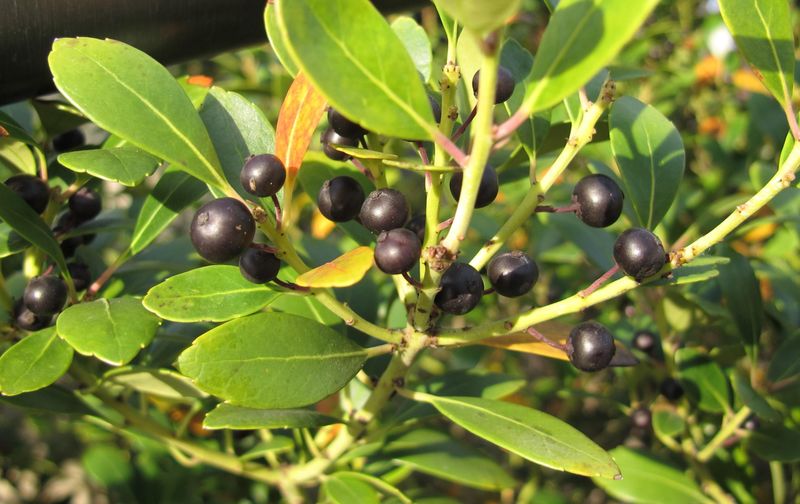
Picture the tidy green globe you wanted from boxwood, minus the funky smell and the winter dieback. That is inkberry holly, or Ilex glabra, a Coastal Plain native that grows wild in the pocosin wetlands down east.
Here is the turn. Boxwood struggles in our soggy spring soil and gets hit by blight that spreads fast in muggy weather. Inkberry actually likes wet feet, so a downpour that rots a boxwood only makes inkberry happier.
Plant it in spring or early fall, spacing plants about 3 feet apart for a low hedge along the walk. It holds its leaves through winter and takes a light shearing once a year, usually late winter before new growth. Look for compact cultivars that stay around 3 to 4 feet, since the wild form can go leggy at the bottom.
The females carry small black berries that songbirds pick through in the cold months. NC State Extension lists it as a solid boxwood swap for exactly this reason.
You get the crisp evergreen edge, and the yard gets a quiet food source. Not a bad trade for the front walk.
2. Virginia Sweetspire Drapes The Walk In White And Burns Red In Fall
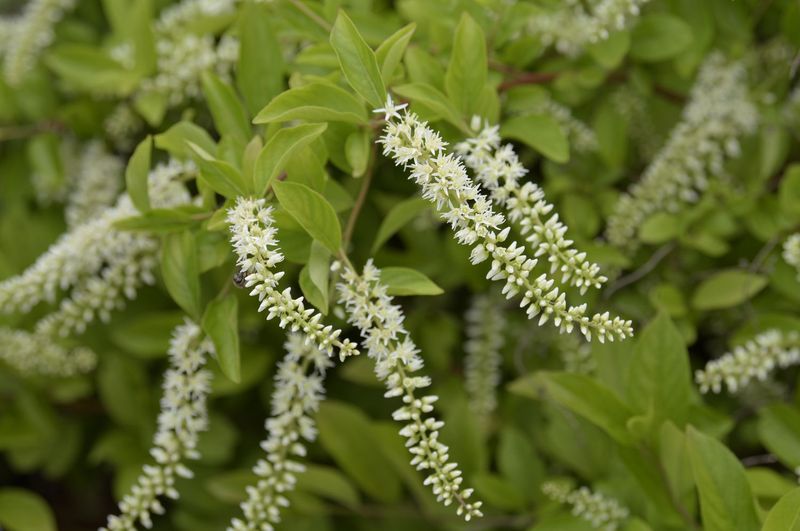
Some shrubs earn their spot twice a year, and Virginia sweetspire is one of them. Known to botanists as Itea virginica, it sends out arching white flower spikes in late May that smell faintly sweet on a warm evening.
Then October comes. While the boxwood next door stays the same flat green, sweetspire turns deep burgundy and crimson, holding that color well into November across much of the Piedmont.
It handles the red clay most of us fight, and it does not sulk when a summer storm floods the bed. Give it a spot along the walk with morning sun, space plants about 4 feet apart, and it will slowly form a loose colony roughly 3 to 5 feet tall.
Bees and small pollinators work those flower spikes hard in spring. The arching shape softens a hard concrete edge, so your front walk feels less like a runway and more like a path.
Prune right after it blooms if you want to keep it tidy, since it sets flowers on old wood, which is last year’s growth. Cut too late and you trade next spring’s show for nothing.
Your North Carolina Garden Changes Every Week. Your Plan Should Too.
Gardening in North Carolina changes quickly throughout the season. Every Friday you’ll receive a simple weekly plan showing exactly what to plant, prune, fertilize, harvest, and protect so you never miss the right timing.
3. Dwarf Fothergilla Smells Like Honey In Early Spring
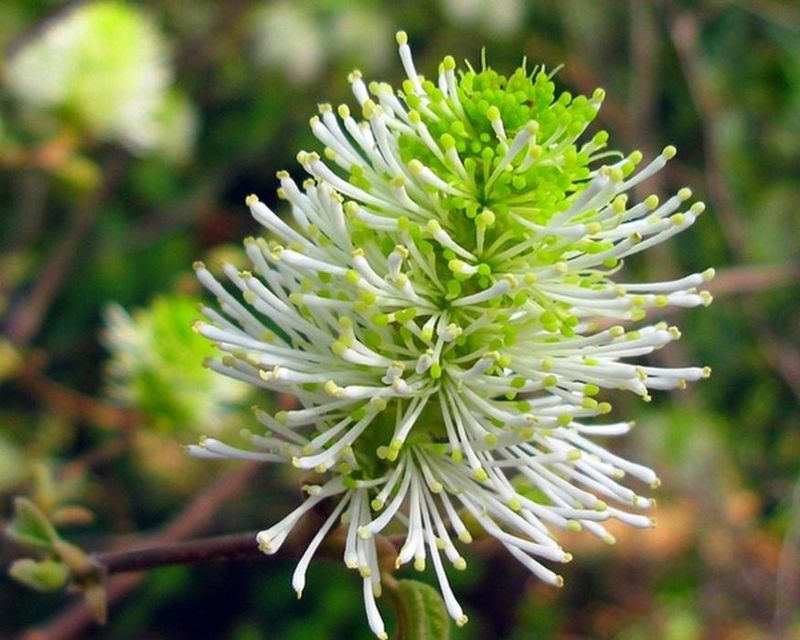
Long before the dogwoods pop, dwarf fothergilla is already showing off. This mountain and Piedmont native, Fothergilla gardenii, puts out fuzzy white bottlebrush blooms in late March that carry a genuine honey scent you catch when you step out the door.
Most folks have never heard of it, and that is a shame, because it earns its keep all season. Summer brings clean blue-green leaves that shrug off our humidity, and fall lights them up in a wild mix of yellow, orange, and red on the same plant.
It stays small, usually 2 to 3 feet, which makes it a natural fit right beside the front walk where a big shrub would crowd the path. Plant it in spring in a spot with a few hours of sun, and keep the soil a touch acidic, which our clay usually already is.
Early pollinators waking up on the first warm days find those blooms when little else is open. You get a shrub that greets spring, coasts through summer, and throws a fall party, all in a footprint smaller than a boxwood.
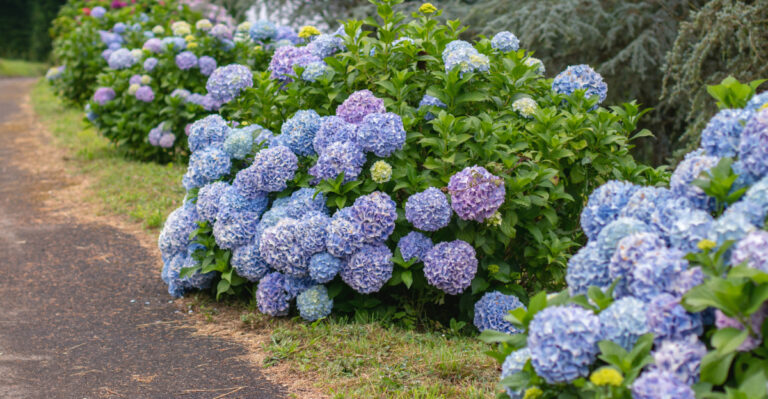
4. Oakleaf Hydrangea Turns A Plain Walk Into A Showstopper
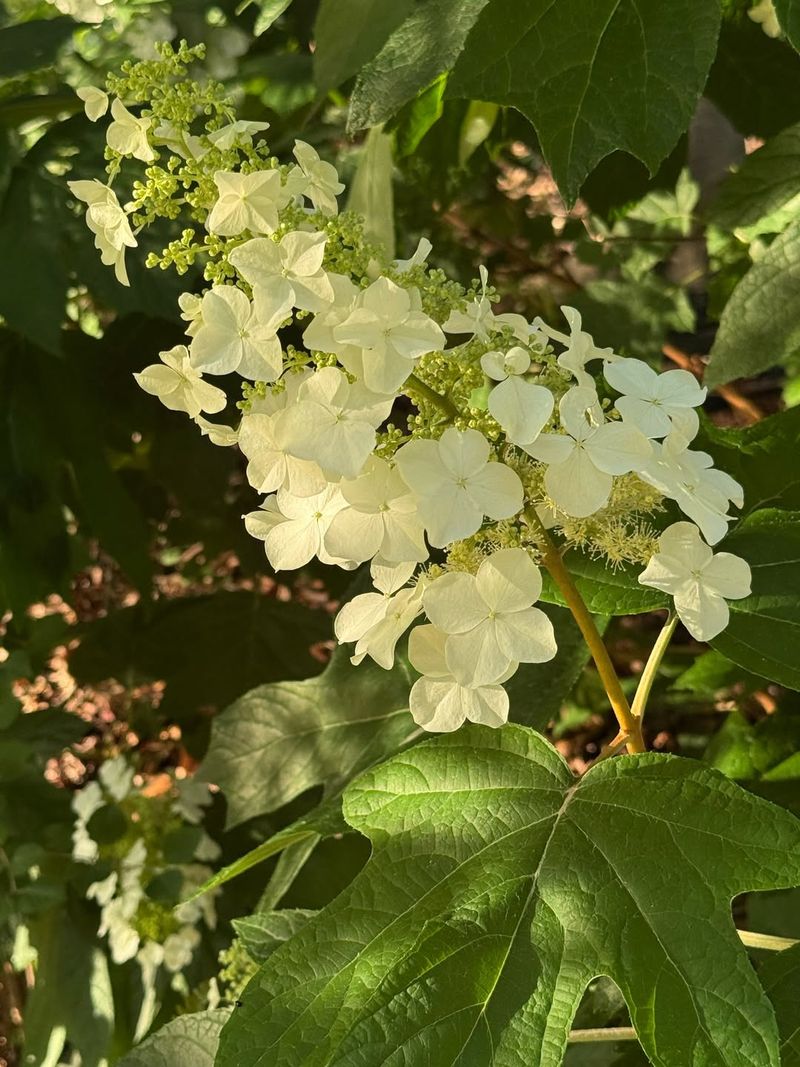
If you have only ever grown the blue mophead hydrangeas that wilt by two in the afternoon, meet their tougher cousin. Oakleaf hydrangea, Hydrangea quercifolia, is native to the Southeast and built for our heat.
The name comes from its big leaves shaped like oak leaves, and those leaves are the secret. They turn deep wine red in fall and hang on for weeks, giving the front walk color long after the flowers fade.
Cone-shaped white blooms open in June and slowly age to a dusty pink through summer. Even in winter the peeling cinnamon bark gives you something to look at.
Here is where it gets tricky along a walk. Full-size oakleafs can reach 6 to 8 feet, so pick a compact cultivar around 3 to 4 feet if space is tight. Give it afternoon shade in the hot Sandhills or Coastal Plain, space plants about 4 feet apart, and water deeply the first summer while roots settle in.
It asks for almost nothing once established, and it works those June blooms with bees all day. That is a lot of character for one plant.
5. Yaupon Holly Is The Evergreen Screen That Feeds Winter Birds
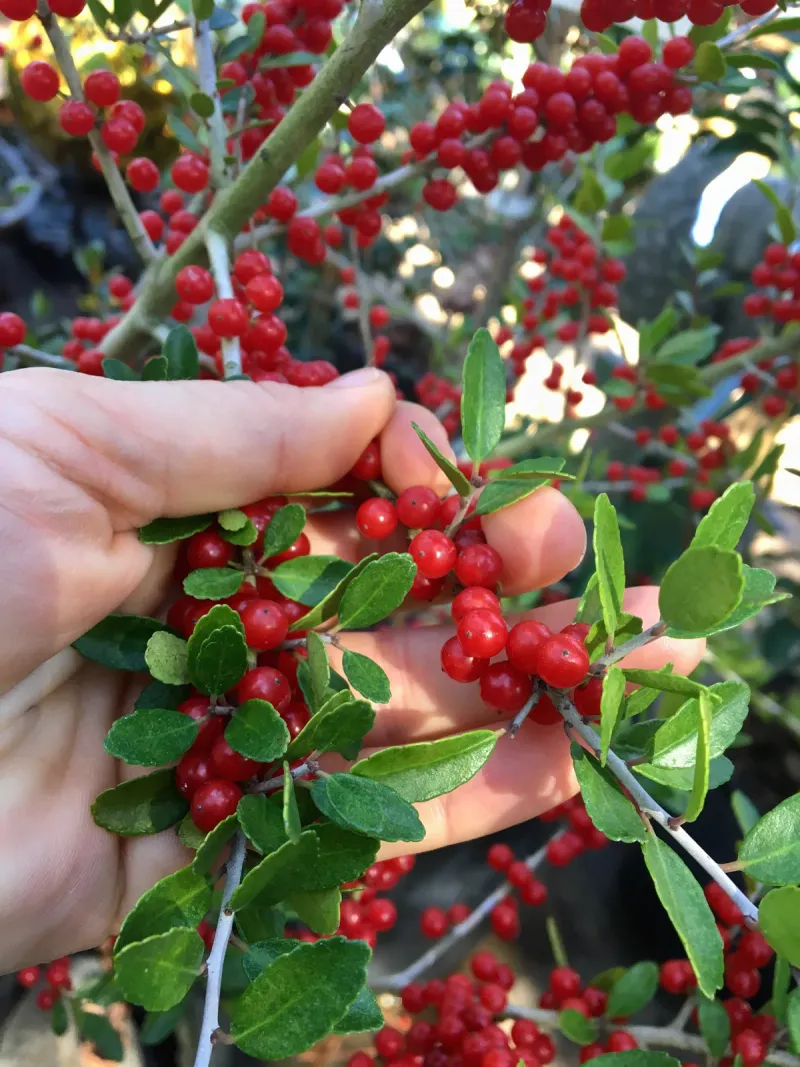
Native Americans brewed a tea from its leaves, which is how yaupon holly earned the only caffeinated plant native to North America. Ilex vomitoria grows all across the Coastal Plain and takes to yards without complaint.
You want an evergreen with backbone near the walk, and yaupon delivers. Small-leaved and dense, it takes shearing like a champ, so you can keep it as a low formal hedge or let it loosen into a natural shape.
The female plants glow with translucent red berries from fall into late winter, and mockingbirds, cedar waxwings, and robins strip them on cold days when other food runs short. Dwarf forms stay around 3 to 4 feet, perfect for lining a path, while the wild type can climb past 15 feet if you let it.
It handles drought once rooted, salt spray near the coast, and the sandy soil that starves fussier plants. Plant in spring or fall and space dwarf plants about 3 feet apart for a tight line.
Boxwood just sits there. Yaupon works a winter shift feeding your yard, and it holds green through every surprise January cold snap.
6. Sweetshrub Hides A Fruity Perfume By The Door
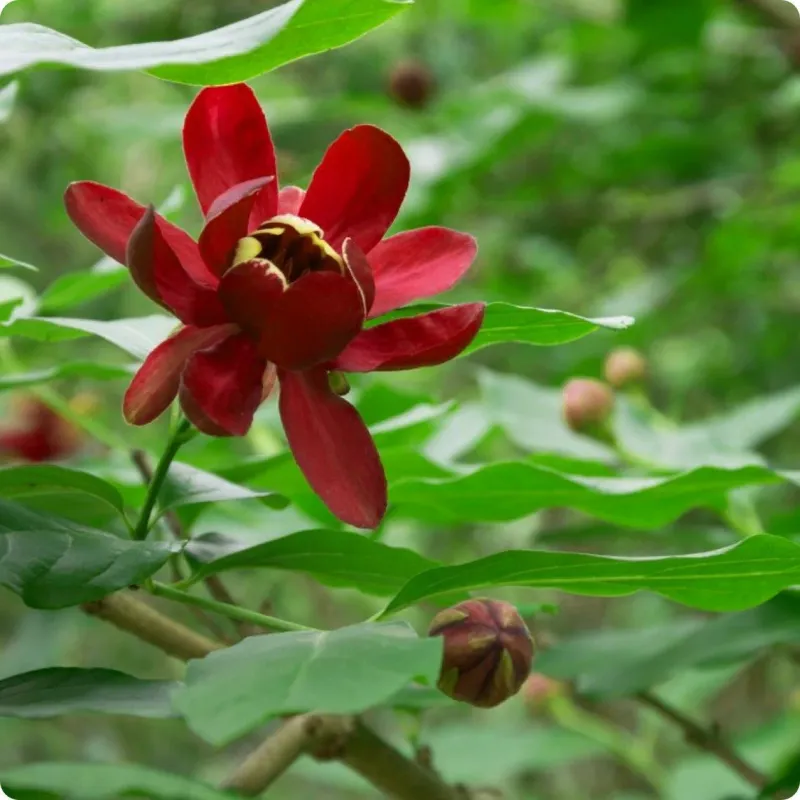
Brush past this one on your way to the car and you might stop cold, wondering where the smell of ripe strawberries and pineapple is coming from. Sweetshrub, Calycanthus floridus, tucks a fruity perfume into odd maroon flowers that open in April and May.
The blooms are a strange deep red-brown, easy to miss at a glance, but the fragrance gives them away. Mountain folks used to call it Carolina allspice and tuck sprigs in a pocket or drawer to carry the scent around.
Growing along the walk, it forms a rounded shrub about 6 to 8 feet tall, so give it a corner where it can spread a little rather than a pinched spot. It is genuinely easygoing, taking sun or part shade and handling our clay without drama.
Glossy leaves turn buttery yellow in fall, and the seed pods hang on for winter interest. Plant it in spring, space plants roughly 5 feet apart, and put it where you will walk close enough to catch that scent.
A shrub you smell before you see it beats a green box every time.
7. Winterberry Sets The Yard On Fire After The Leaves Drop
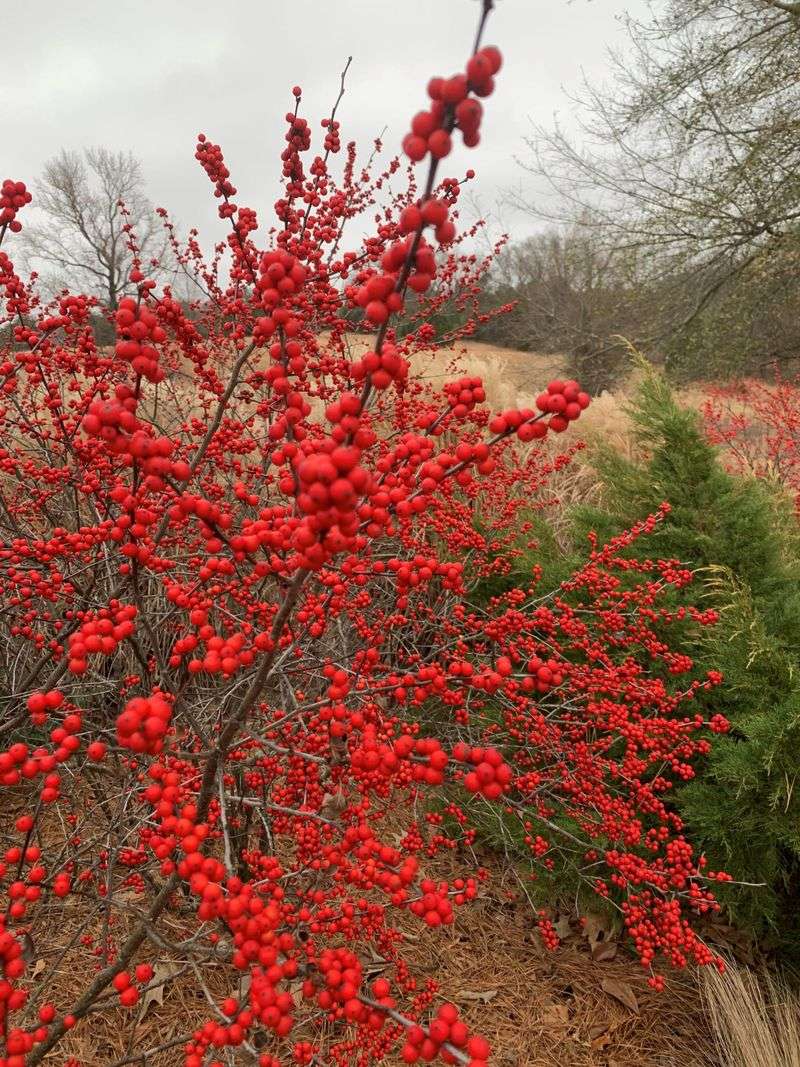
Most shrubs go quiet in December. Winterberry does the opposite, dropping every leaf to reveal branches packed with bright red berries that glow against a gray Carolina sky.
A deciduous holly might sound like a contradiction, but Ilex verticillata is native across North Carolina and thrives in the damp low spots that drown other plants. It is the shrub you notice from the road all winter, no evergreen leaves required.
Here is the catch worth knowing. You need a male plant nearby to pollinate the berry-producing females, roughly one male for every three to five females, or you get bare branches and no show. Nurseries usually label them so you can grab a matched pair.
Berries hang on through the cold and feed robins and bluebirds during late-winter food shortages, sometimes clearing out by February. Plant in spring or fall, space plants about 4 feet apart, and pick a spot that stays a little moist along the walk.
Cut a few branches for a vase indoors and the color follows you inside. Come January, while every boxwood on the block sits flat and dull, your front walk will be the one that stops traffic.