Something Is Spinning Tree Branches Into Silk All Across Tennessee Yards
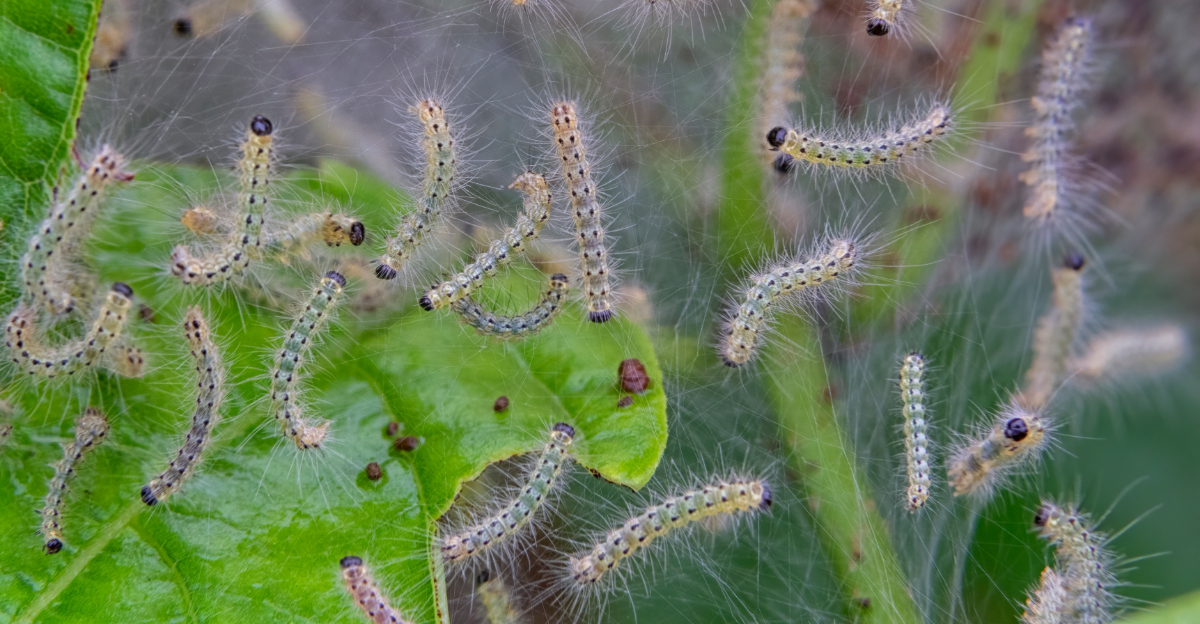
Gray webbing wraps your pecan branches overnight, and you notice immediately. Silk drapes across your limbs, unexpected and unwelcome. Mornings across Tennessee bring this scene to your yard each September.
Curiosity sets in fast when your branches look wrapped in ghostly fabric. Spiders seem like an obvious culprit, but instincts might mislead you. Fall webworms build silky nests around your branches with speed.
Their silk expands daily, stretching further across limbs you thought safe. Coverage looks striking, yet your tree keeps growing underneath the mess. Neighbors across Tennessee text you the same photos from their porches.
Questions pile up faster than your answers arrive. Understanding what hides inside silk changes how you look at your trees. Wonder pulls you outside before logic catches up.
Each yard tells you a different version of this story. Knowing what causes this silky invasion will change how you look at your trees.
The Fuzzy Native Behind The Webs
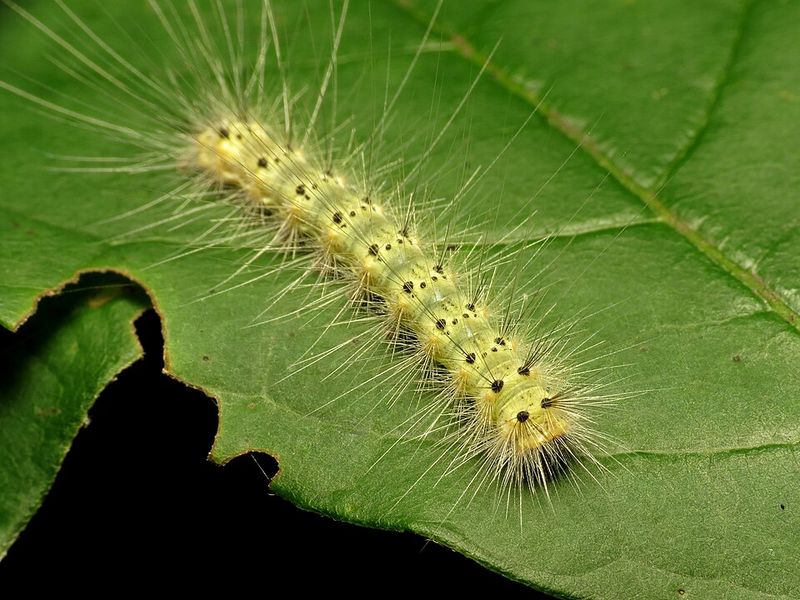
Peel back a corner of that gauzy netting and you will meet a fuzzy little architect. The fall webworm, known to scientists as Hyphantria cunea, is a native moth caterpillar that has lived across the eastern United States for ages.
The adults are small snowy moths, sometimes flecked with dark dots, and they flutter around porch lights in early summer. Females lay fuzzy patches of a few hundred eggs on the undersides of leaves.
Once those eggs hatch, the tiny caterpillars stay together and spin silk around the leaves they are chewing. The tent works like a mobile dining room, stretching bigger as the group munches its way toward the branch tip.
Colors vary quite a bit from one group to the next. Some caterpillars look pale yellow with black spots, others are darker with orange bumps, and all of them wear long white hairs that catch the light.
Handling them is usually harmless, though those bristles can itch sensitive skin, so garden gloves are a smart choice. Kids get a kick out of tapping the web and watching the whole colony wiggle in unison, which is a defense trick meant to startle hungry birds.
Here is a quirky bit of history. This Tennessee native has traveled the globe, turning up in Europe and Asia after hitching rides on shipping cargo, where it became far more damaging than it is here at home.
Nests At The Branch Tips Versus The Look-Alikes
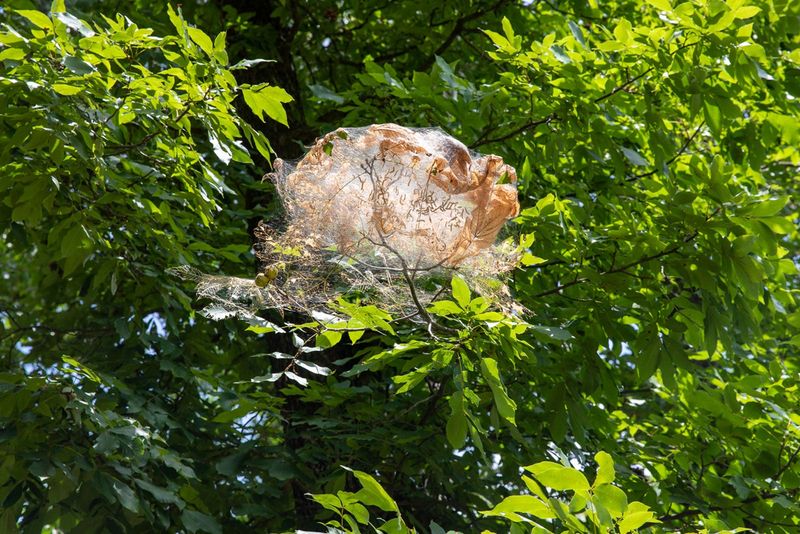
Location is the biggest giveaway. Fall webworm silk wraps the outer tips of limbs, bundling leaves right where the twigs end, and it expands outward week by week.
Eastern tent caterpillars work differently. They build in spring inside the crotch where two limbs meet, then crawl out to feed instead of eating inside their silk.
Spot a tent on a wild cherry back in April, and you were looking at that spring insect instead. Bagworms cause another mix-up, hanging small cone shaped sacks decorated with bits of needles on cedars, arborvitae, and junipers.
Your Tennessee Garden Changes Every Week. Your Plan Should Too.
Gardening in Tennessee changes quickly throughout the season. Every Friday you’ll receive a simple weekly plan showing exactly what to plant, prune, fertilize, harvest, and protect so you never miss the right timing.
Each bagworm sack holds a single caterpillar, so you will not see a crowd inside one pouch. Spider mite webbing is finer and dustier, coating leaf undersides without gathering foliage into a pocket.
Mimosa webworms tie leaflets together on honeylocust and mimosa trees, creating tighter, browner bundles that look scorched. Ballooning spiders can also drape sheets of silk over damp Tennessee lawns in September, but those layers sit on grass, not on limbs.
A dusk flashlight check settles the question fast. Give the web a light poke, and if dozens of hairy caterpillars twitch in sync, you have found fall webworms.
Take a photo before you touch anything, since your county Extension office can confirm an identification from a clear picture. Knowing exactly what you have keeps you from treating for the wrong pest at the wrong time of year.
Why The Webs Grow Larger In Late Summer
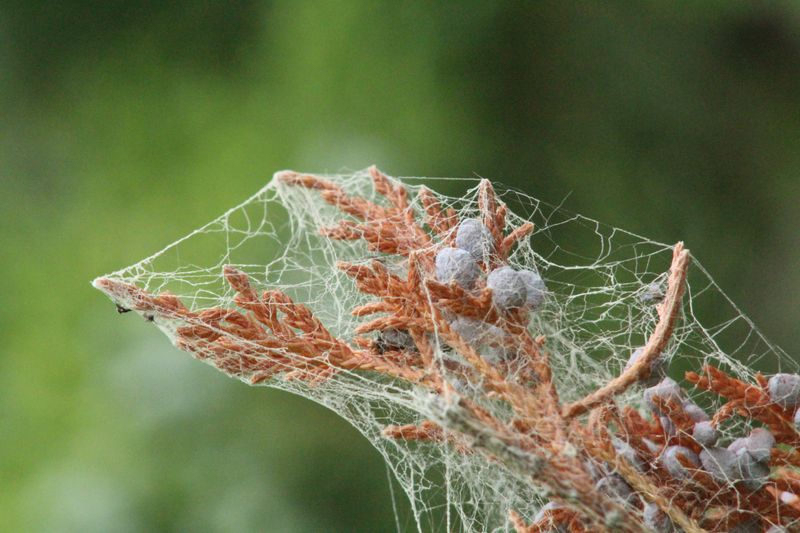
Timing explains the sudden increase. Tennessee sits in a warm zone where fall webworms squeeze in two or sometimes three rounds of caterpillars in a single season.
The first batch, active in late spring, stays small and often goes unnoticed high in the canopy. The later batches build the giant, sagging tents that become hard to miss in August and September.
Warm springs and long, mild autumns give the insects extra weeks to reproduce, so numbers stack up as the year goes on. A hot, dry summer can also thin out the diseases and parasites that normally keep colonies in check.
By early September the caterpillars are large, hungry, and highly visible. Leaves are also starting to thin and fade, which makes gray silk stand out against a tree that once hid it.
Populations vary noticeably from year to year in the same neighborhood, with some Septembers bringing far more webs than others.
When the caterpillars finish feeding, they crawl down to spin cocoons in bark crevices, fence posts, leaf litter, and mulch. The moths emerge next summer to start the cycle over again.
Empty webs can hang on the branches for months, especially after the leaves drop. Winter winds and rain eventually shred them, so a tattered gray rag in January is old news rather than a fresh problem worth treating.
Favorite Tennessee Trees On Their Menu
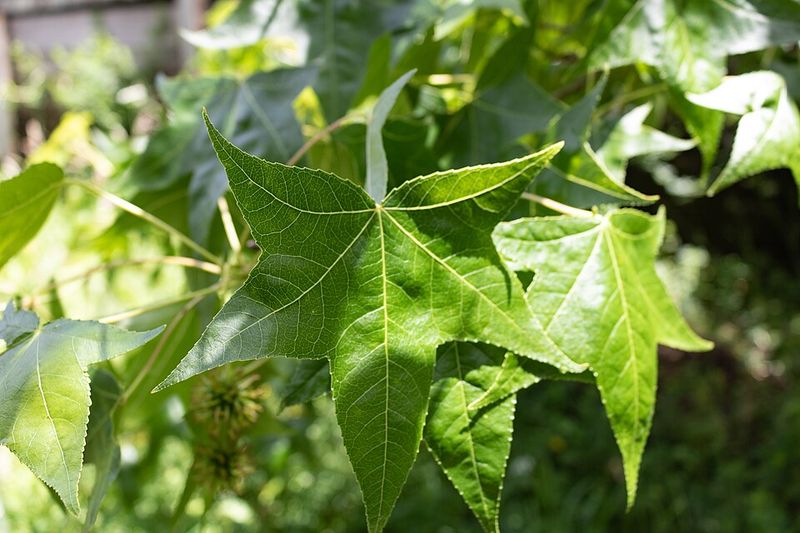
Pecan growers know these caterpillars better than anyone. Pecan and hickory rank near the top of the list in Tennessee, which is why roadside trees along river bottoms often look tinseled by September.
Black walnut, persimmon, sourwood, mulberry, wild cherry, sweetgum, redbud, and river birch also get plenty of attention. Researchers have recorded hundreds of host plants worldwide, making this one of the least picky leaf eaters around.
Pines and other conifers get skipped, so your spruce and cedar stay clear. Oaks and maples can host colonies, though they usually escape with lighter, scattered feeding.
Trees standing alone in open yards seem to attract more egg laying than crowded woodland trees. Sunny edges, fence lines, and driveway plantings are prime real estate for female moths hunting for tender leaves.
If you have a young pecan or persimmon you planted a few seasons ago, keep a closer eye on it. Small trees have fewer leaves to spare, so a couple of busy colonies can strip a noticeable share of the canopy.
Fruit and nut crops are rarely affected directly, since caterpillars stick to foliage rather than the nuts themselves. Heavy feeding repeated over several years may modestly reduce the following year’s harvest on backyard pecans.
Walking your property once a week in August and September pays off. Catching a golf ball sized web early is far easier than wrestling with one the size of a laundry basket.
Reading Your Tree’s Health After The Feast
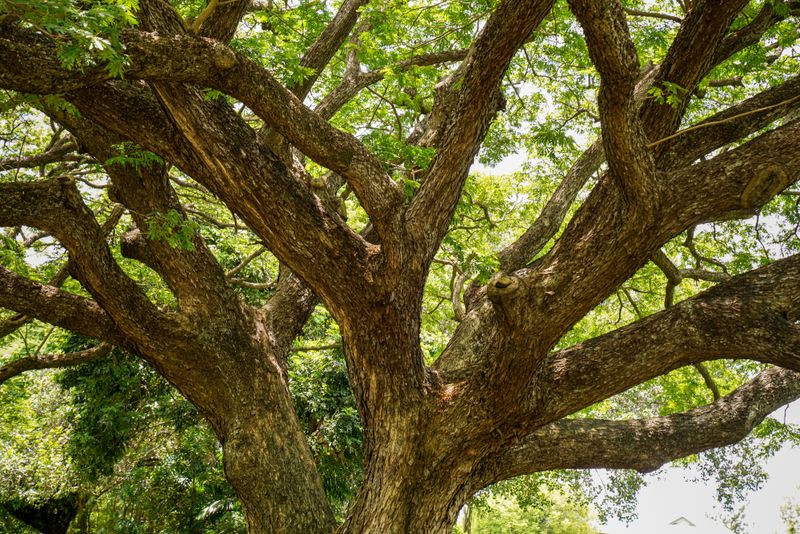
Good news arrives with the calendar. By September a shade tree has already banked the sugars it needs for winter, so leaves nibbled this late do far less for the tree than June foliage would.
That is why arborists treat most webworm damage as a cosmetic issue. The silk looks striking, the chewed twigs look ragged, and the tree still pushes out fresh leaves next spring.
Even trees with a quarter of the canopy wrapped in silk usually recover without lasting harm. Buds for next year formed earlier in the season and sit safely tucked along the branches.
Watch more closely if the same tree is heavily affected several years in a row. Repeat heavy feeding, stacked on top of drought, construction damage, or root problems, can leave a tree stressed and slow to leaf out.
Young trees under about four inches in trunk diameter deserve extra care, since they carry fewer leaves to begin with. A deep soaking during dry September weeks helps them recover their footing.
Skip the fertilizer this time of year and reach for mulch and water instead. A two to three inch mulch ring, kept off the trunk, protects roots better than any quick fix.
More serious signs look different from webs: peeling bark, mushrooms at the base, or whole limbs failing to leaf out in spring. Those symptoms are worth a certified arborist’s visit, while silk at the branch tips rarely is.
Simple Cleanup Tricks And The Bugs That Pitch In
Start with the easiest tool you own: a pole pruner. Snipping out a web you can reach, then bagging it or dropping it in a bucket of soapy water, handles the problem in about a minute.
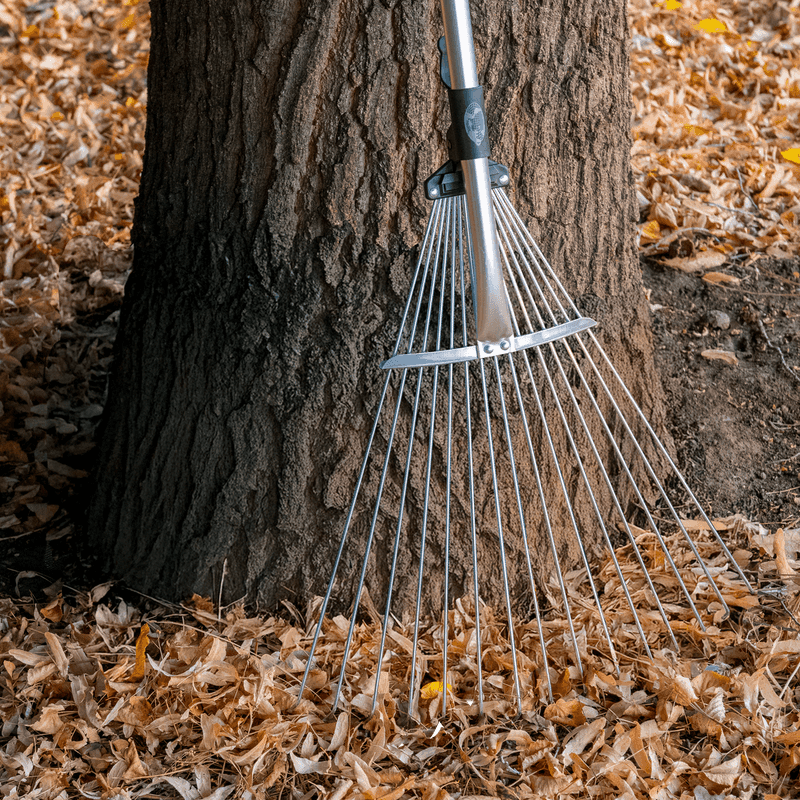
For webs a little higher up, a rake or broom works wonders. Tearing the silk open invites birds and predatory insects inside, and they finish the job for free.
A hard blast from the garden hose also breaks up tents and knocks caterpillars to the ground. Chickadees, wrens, cardinals, and yellow jackets are quick to notice a fresh buffet.
Avoid burning a web on a tree. Fire scars the bark, threatens your house, and does more harm than the caterpillars typically would.
If you want a spray, products containing Bacillus thuringiensis or spinosad work best on small caterpillars in young webs. Coverage matters, since the silk shields larger caterpillars from anything you mist over the outside.
Webs high in a mature canopy are usually fine left alone. Reaching them means ladders and risk, and the tree can spare those leaves in September. A number of natural predators help keep populations in check.
Parasitic wasps, tachinid flies, stink bugs, paper wasps, and hungry songbirds all help reduce colony numbers, which is one reason big outbreaks fade after a season or two. Raking leaf litter in late fall removes some overwintering cocoons around favorite trees.