Strange Round Balls Are Clinging To Missouri Oak Branches This Fall
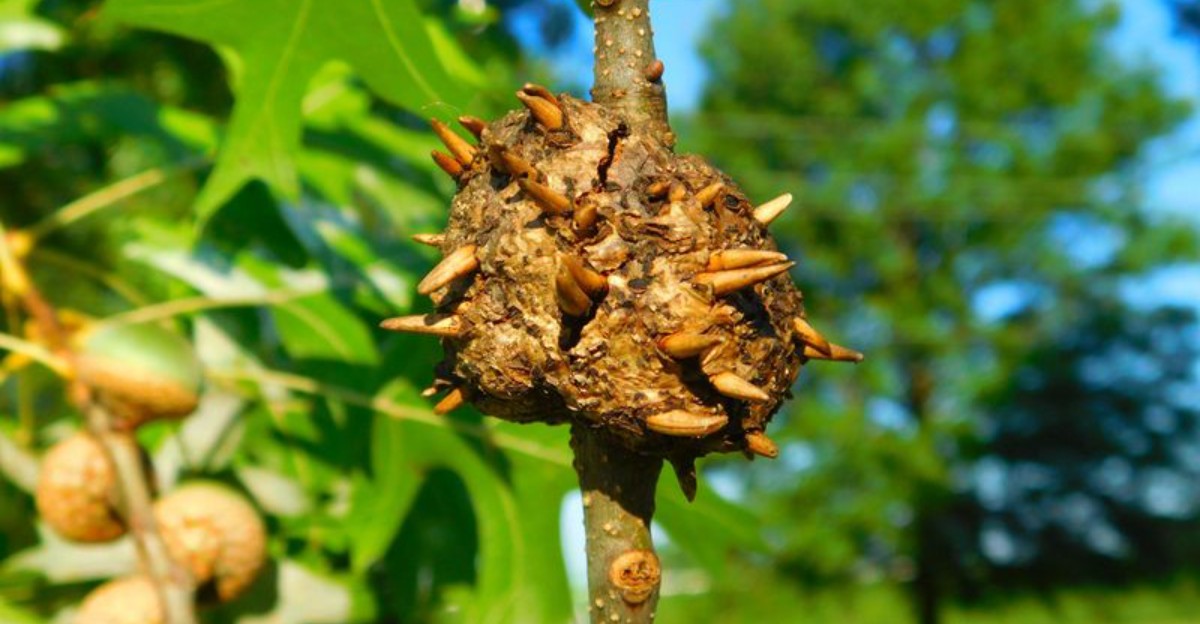
Those round balls on oak twigs are not fruit, and in most cases a tiny insect made them. Some look like green marbles, while others look more like brown ping pong balls.
University extension specialists explain that a small wasp lays an egg in fresh oak growth. The tree then grows the lump around it.
I love how odd these lumps look when the leaves turn gold in October. You can often spot them by walking under oaks in yards, parks, and wooded areas across Missouri.
Inside many of the balls, a single larva is growing, though some hold more than one. Others are already empty by fall, with a tiny hole showing where the adult wasp left.
They may look worrying at first, but these growths usually cause little lasting harm to healthy trees. Here is what is happening inside them and what, if anything, you need to do.
A Tiny Insect Triggers The Tree To Grow A Shelter For Its Young
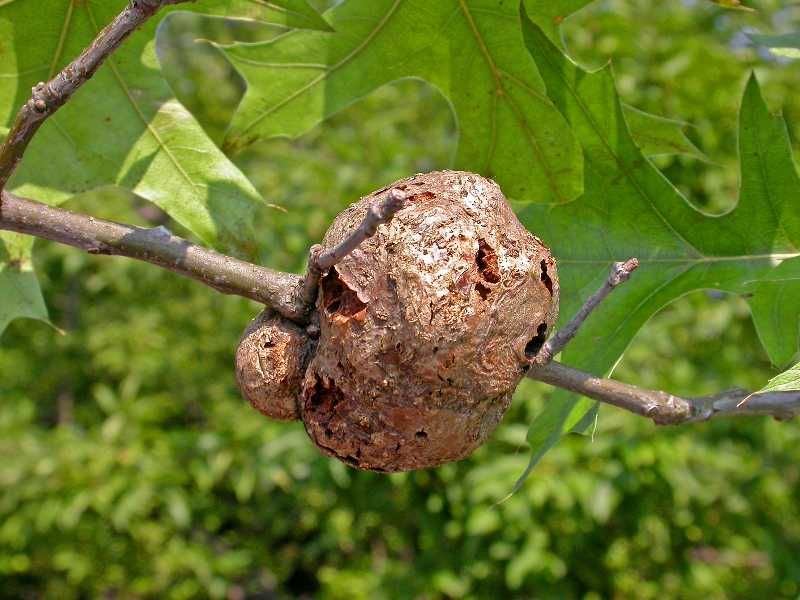
Walk under an oak in October and you may spot marble-sized balls hanging from the twigs. Many people assume they are acorns or odd fruit, but they are homes built by the tree itself.
The story begins in spring or early summer when a tiny gall wasp finds fresh oak growth. She lays an egg inside the soft tissue of a bud, leaf, or twig. The wasp is usually smaller than a grain of rice, so you will rarely see her.
Once the egg hatches, the tiny larva begins to feed. The tree responds by growing a lump around the young insect. That lump gives the larva food and a protected place to grow, though birds and parasitic insects can still find some of them.
By fall, the gall is fully formed and often turns brown, tan, or papery. Some stay green into October. Missouri extension experts note that many gall wasps spend the winter inside the gall or drop to the ground with the leaves.
If you want to see for yourself, pick up one fallen gall and look for a tiny round hole. That hole often means the adult wasp has already left. Gently cutting a gall open with a knife can reveal a small chamber at the center, which is where the larva grew up.
Wasps are not the only gall makers. Midges, mites, and aphids can also trigger galls on trees and other plants.
Chemical Signals Reshape The Tree Tissue Around Each Larva
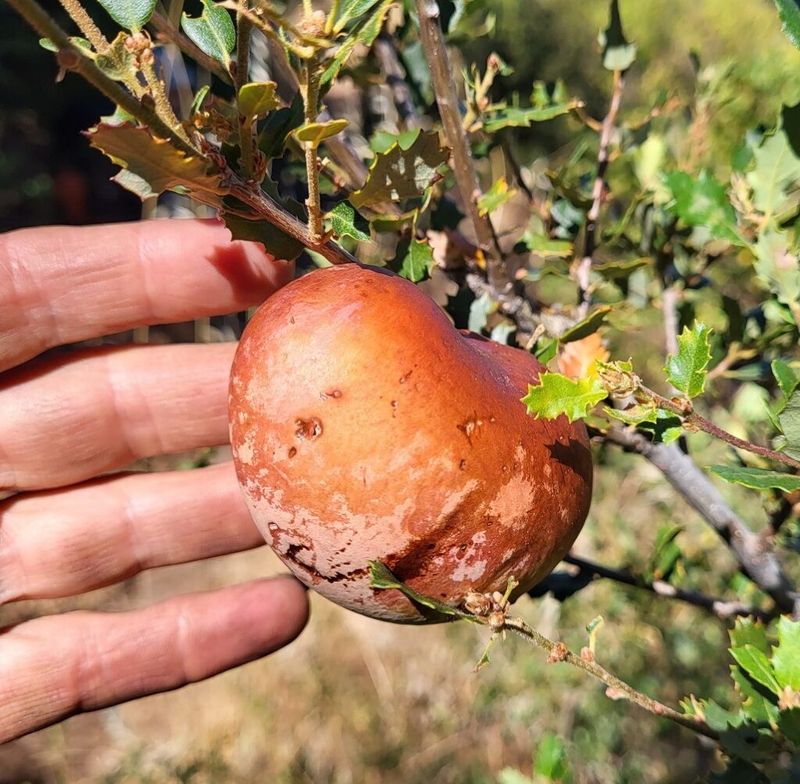
Here is the clever part that scientists still study today. The larva does not simply sit inside a lump. Researchers believe it releases chemicals that change how nearby plant cells grow and divide.
Normally, oak tissue would become a leaf or a twig. Under the influence of these signals, the cells form a ball with layers instead. The tree is following instructions from the insect, almost like a builder taking orders from a tiny boss.
Cut a gall open and you can often see the result. A small chamber sits at the center, surrounded by spongy or hard tissue. In many galls, the inner layer feeds the larva, while the outer layer helps protect it from weather and some predators.
Your Missouri Garden Changes Every Week. Your Plan Should Too.
Gardening in Missouri changes quickly throughout the season. Every Friday you’ll receive a simple weekly plan showing exactly what to plant, prune, fertilize, harvest, and protect so you never miss the right timing.
Scientists at universities and botanical institutions are still working out exactly how each wasp species does this. The details are not fully understood, and that is part of what makes galls so interesting to study.
For a fun fall project, collect a few galls with an adult nearby. Slice one carefully and compare it to others from the same tree. You may notice that even galls on one branch look a little different inside.
Timing plays a big part in gall formation. The wasp has to lay her egg while the oak’s tissue is young and actively growing, which is why most galls begin in spring. The larva does not need to leave its chamber to find food.
Different Wasp Species Produce Different Shapes On Oaks
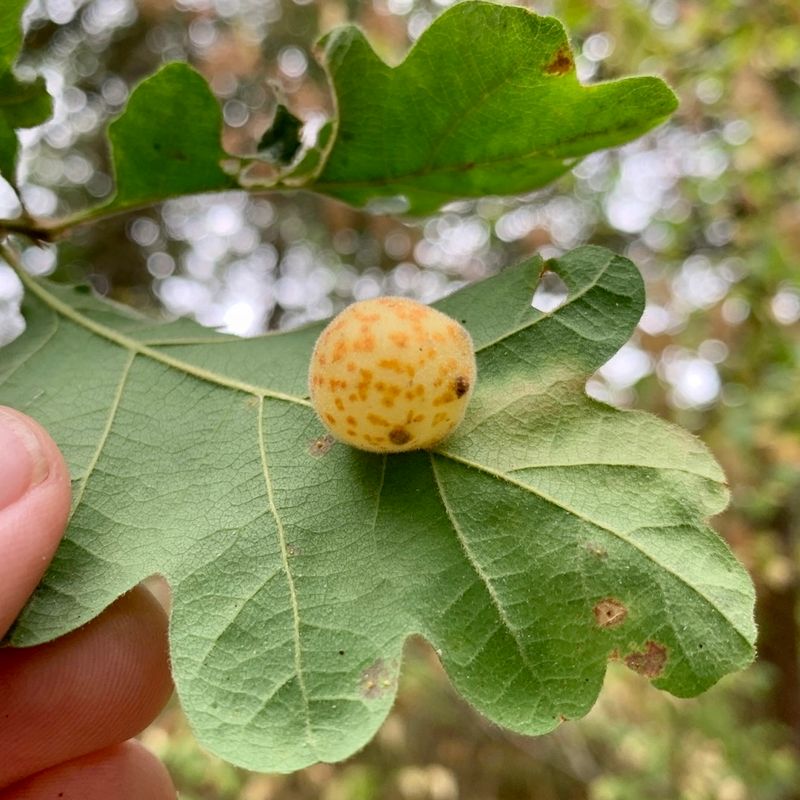
Oak trees can host an impressive variety of galls, and each shape usually points to a different insect. Some look like smooth apples, while others look like fuzzy balls, tiny horns, or spiky stars.
The round, papery ones that many Missourians notice in fall are often called oak apple galls. They can be about the size of a golf ball and feel light when you pick them up. Inside, the center often holds a small larva suspended in spongy fibers.
Other galls grow on leaf veins, on the underside of leaves, or along twigs. Some are hard and woody, which helps them last through winter. Others are soft and fall apart quickly after a few rainy days.
Because so many wasp species exist, a gall found on a red oak can look very different from one found on a white oak. Experts at extension offices often use the host tree and gall shape together to help with identification.
If you are curious, take a photo of the gall, the leaf, and the whole tree. Then send it to your local extension office. Their staff can often tell you what made it and whether anything needs to be done.
Some gall wasp species have a surprising life cycle. One generation may make galls on leaves, while the next makes galls on twigs or roots, so the same wasp species can produce very different galls.
Most Oaks Tolerate Them With Little Lasting Harm
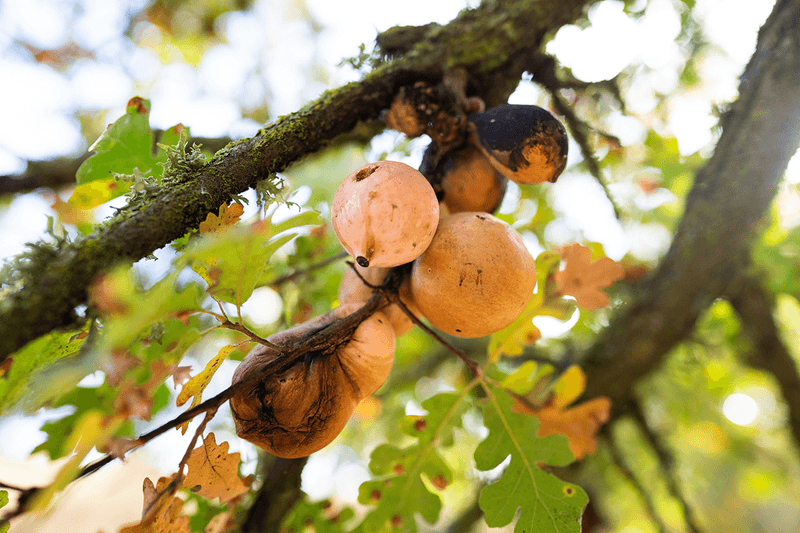
Seeing dozens of lumps on a favorite tree can feel alarming. The reassuring part is that university extension services generally say healthy oaks handle galls well, and the damage is mostly cosmetic.
The wasps usually affect only small portions of the tree. A leaf gall might change how a few leaves look, but the tree still makes plenty of food through the rest of its canopy. Twig galls can slow growth on a single branch without hurting the whole tree.
Because the galls form in spring and early summer, fall is not the time for treatment. Sprays at this point do not help, since the wasp has already finished its work. Most experts suggest leaving the tree alone instead.
The best thing you can do for an oak is to keep it healthy overall. Water it during dry spells, spread mulch under the canopy without piling it against the trunk, and avoid cutting into the roots.
A healthy tree can usually tolerate galls year after year. If the lumps bother you, simply enjoy them as a sign that your oak is part of a busy little ecosystem full of insects, birds, and other creatures.
Birds can play a part too. Some birds peck open galls to reach the larvae inside, which is one of the natural ways gall insect numbers stay in balance. Oaks with steady moisture and undisturbed roots usually bounce back from insect activity without much help.
Fallen Leaves With Growths Are Fine For Compost Or Mulch
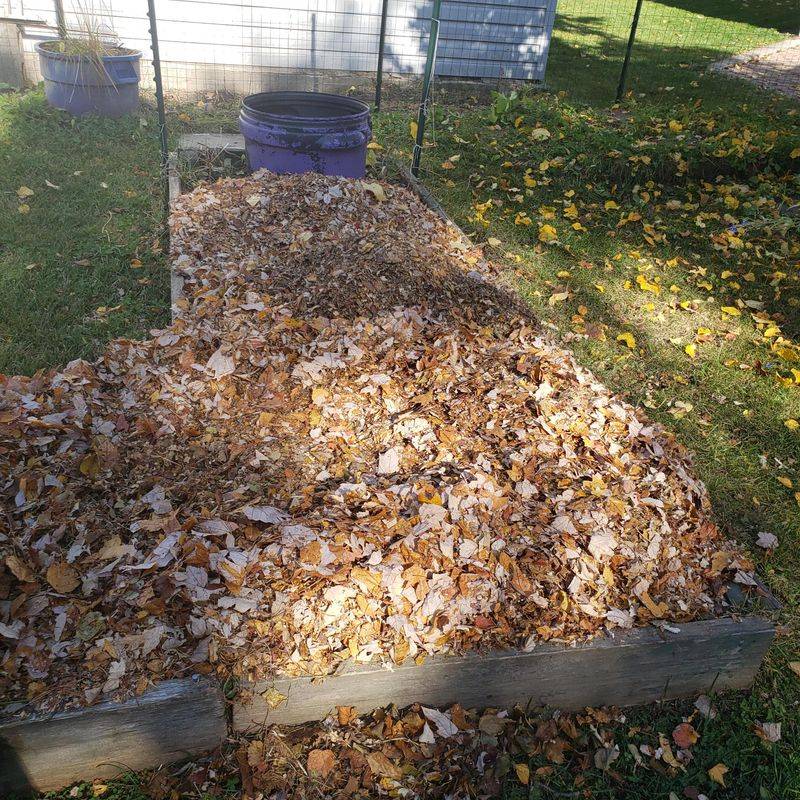
Raking time arrives in October, and you may find galls tangled in your leaf piles. Gardeners often wonder if those leaves are safe to reuse. In most cases, they are fine.
Gall wasps are not known to spread diseases that harm other plants, so leaves and galls can go into a compost bin. Shredding them first helps them break down faster. A lawn mower run over the pile works well for this.
You can also use shredded oak leaves as mulch around shrubs and perennial beds. A layer about two to three inches deep helps hold moisture and protect roots during winter. Keep the mulch a little away from stems and trunks so they stay dry.
Oak leaves break down slowly, which many gardeners like. They add organic matter to the soil without needing much extra work. Mixing them with softer leaves or grass clippings can speed things up.
Some wildlife also benefit from leaving a few leaves in a quiet corner. Insects and other small creatures often use the leaf layer for shelter. A small pile under a shrub gives them a spot while the rest of the yard stays tidy.
Leaf mold is another option. Piling moist leaves in a corner of the yard or in a wire bin and leaving them to break down for a year or more produces a crumbly, dark material that helps improve garden soil.
A Visit From An Arborist Makes Sense For Heavy Twig Dieback
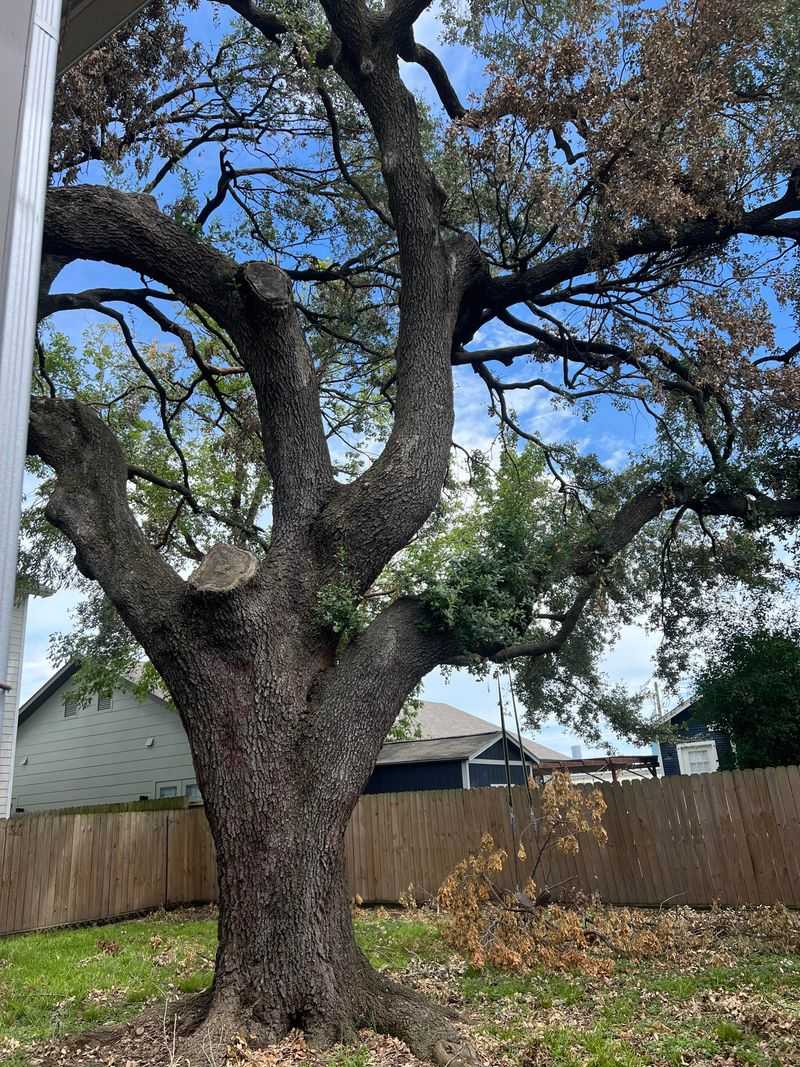
Galls alone rarely call for a professional. Still, there are times when a closer look helps. If you notice many twigs turning brown and bare, something more than galls may be going on.
Some gall types, such as certain twig galls, can cause small branch tips to weaken. A few of them are normal. A large number across the tree, especially with thin leaves, deserves attention.
An arborist can check for other issues that look similar. Oak wilt, drought stress, and borers can all cause branch problems in Missouri. The state forestry agencies and extension offices explain that early identification gives the tree a better chance.
Look for a certified arborist through a recognized group such as the International Society of Arboriculture. Ask for credentials and for proof of insurance before any work starts. Be cautious of anyone who pushes quick treatments in fall.
Take photos of the tree now, while the leaves still show color. Note where the dieback appears and how long it has been there. Those details help the expert decide whether the tree needs care or simply some patience.
Some signs separate a serious problem from harmless galls. Leaves that turn brown from the edges inward and drop early, especially on red oaks, are worth a professional opinion.
Timing also matters for oak care. Many forestry experts advise pruning oaks during the dormant season, because fresh cuts in warm months can attract beetles that spread oak wilt.