Tennessee Crape Myrtles Can Develop Black Sooty Mold In June And Here Is What’s Causing It
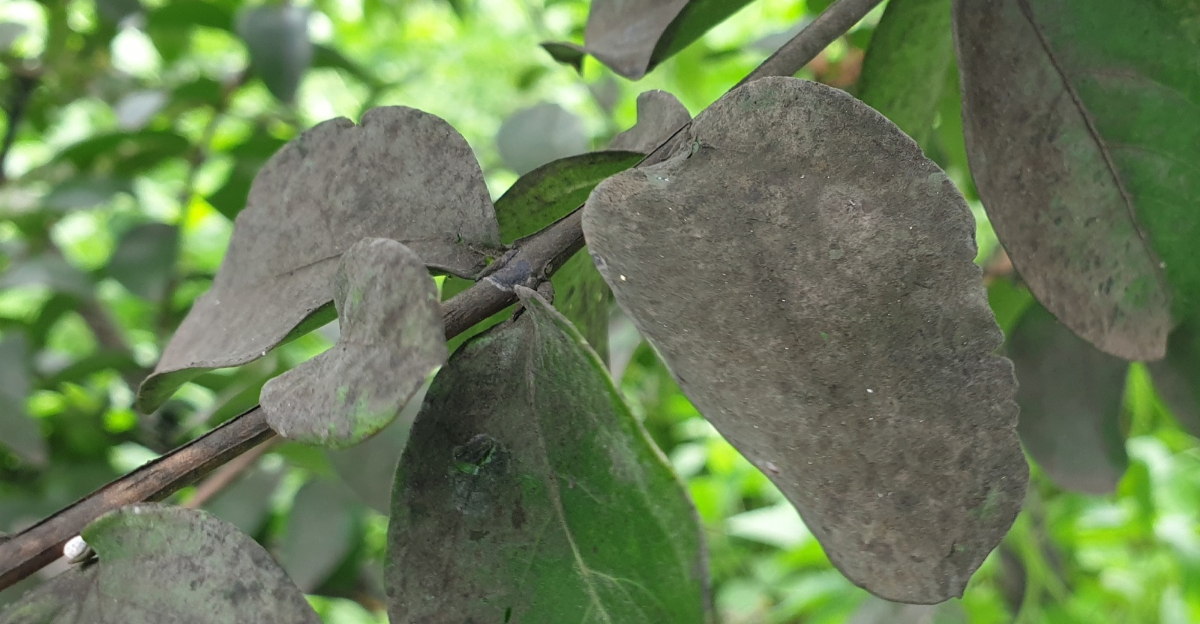
Suddenly, you notice black grime spreading fast across crape myrtle leaves despite last summer’s brilliance. Instead, you face a consequence triggered elsewhere long before the dark coating became visible today.
Beneath, you will find insects extracting sap and leaving residue that fuels stubborn surface growth. Across Tennessee you may see identical symptoms appearing on healthy trees without warning or mercy.
Meanwhile, you confront sticky honeydew that attracts mold and masks foliage color and vigor quickly. Because you understand the sequence you can target causes rather than wasting effort on symptoms.
Equipped with insight you can disrupt infestations before they smother fresh growth and future blooms.
Soon you recognize patterns that separate cosmetic damage from problems demanding immediate attention and action.
Throughout Tennessee you can outmaneuver recurring outbreaks by spotting early clues and responding with precision. Ultimately you gain the missing advantage and blackened leaves stop hiding the real culprit entirely.
Aphids Excrete Honeydew On Leaves
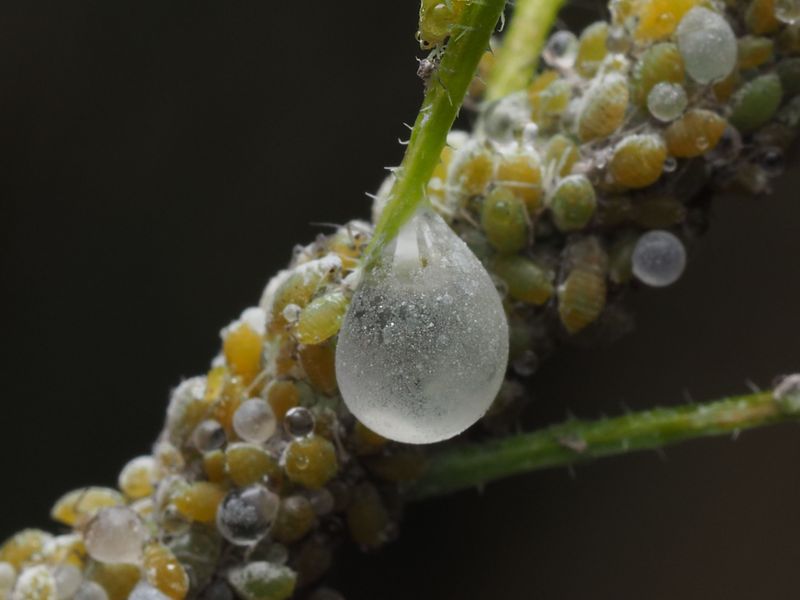
Tiny insects, significant consequences. Aphids are some of the smallest troublemakers in your garden, but they can have a disproportionate impact when it comes to damage.
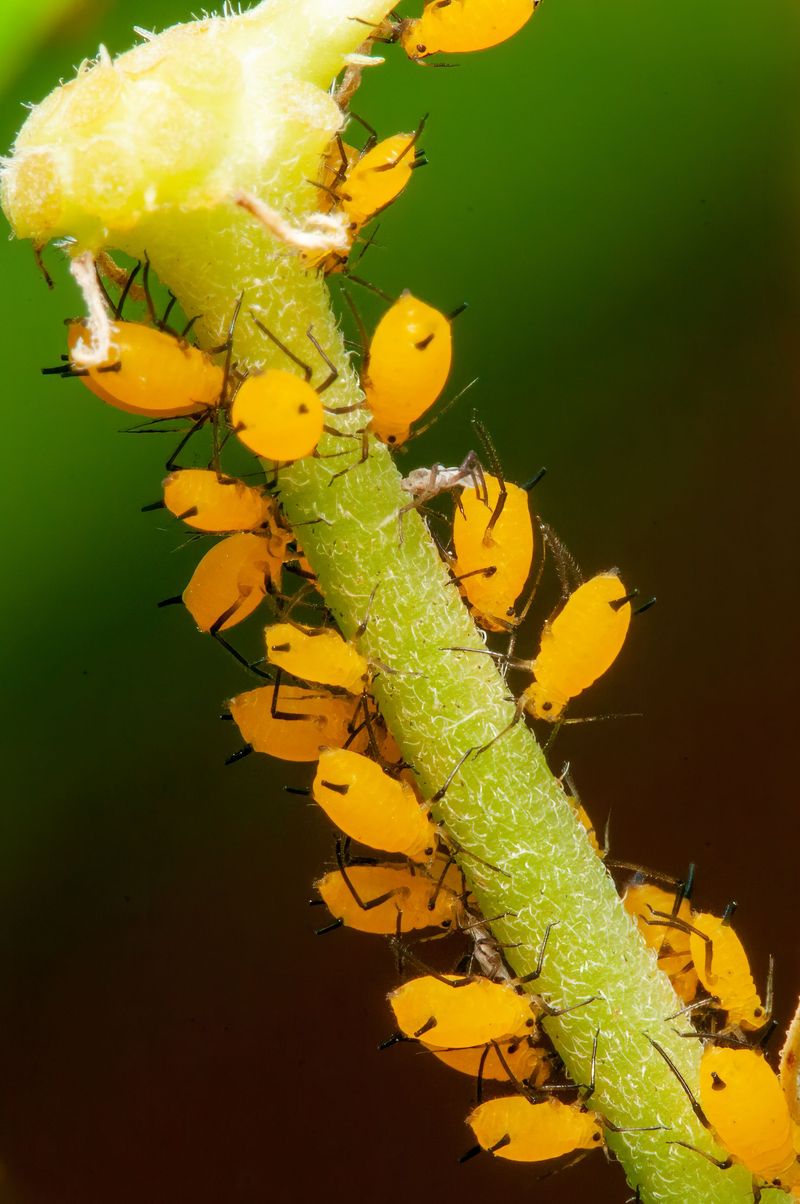
These soft-bodied insects cluster tightly on new crape myrtle growth in late spring. They pierce tender stems and leaves with needle-like mouths and suck out plant sap throughout the day.
Here is the part most people miss. Aphids cannot digest all that sugar from the sap. They excrete the excess as a sticky liquid called honeydew, which coats everything below them.
That honeydew is not just unpleasant to touch. It creates an ideal surface for sooty mold fungi, including species in the genus Capnodium, which form the black coating on crape myrtle branches and leaves.
Aphid populations can increase rapidly under warm conditions. One small cluster in early spring can become a large infestation by the time June arrives across much of the mid-South.
Checking the undersides of new leaves is your best early warning system. If you spot clusters of pale green or yellowish insects near the growing tips, you have likely identified the source before mold begins developing.
A strong spray of water from a garden hose can knock aphids off young branches. Catching them early can significantly reduce the likelihood of sooty mold spreading across the tree.
Scale Insects Coat Bark And Branches
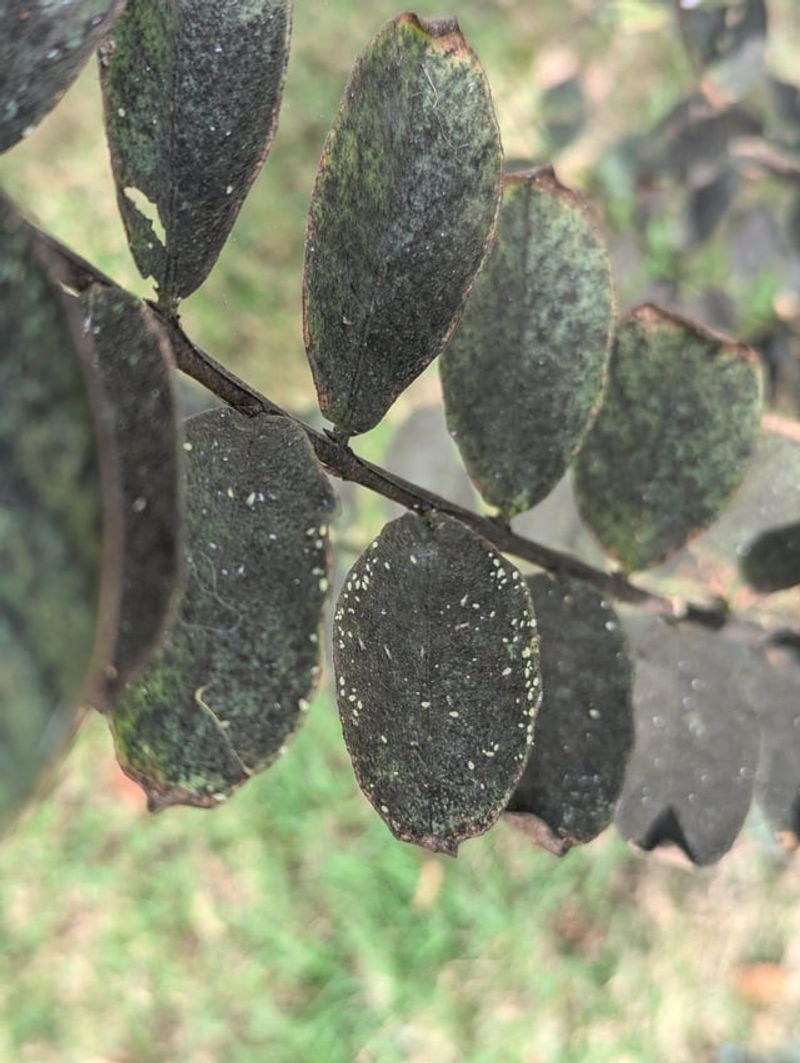
Scale insects look more like a disease than a bug, and that disguise is exactly what makes them so dangerous to crape myrtles in June.
These pests attach themselves to bark and branches, forming hard or waxy coverings that protect them while they feed. Many gardeners mistake them for unusual bark texture or a fungal crust rather than a living insect colony.
Crape myrtle bark scale is a specific species that has spread rapidly across the South during the past two decades. It was first reported in Texas around 2004 and has since spread into Tennessee and neighboring states.
Like aphids, scale insects feed on plant sap and excrete honeydew in large quantities. Because they can cover entire branches in dense colonies, the honeydew output can be substantial compared with smaller infestations.
Your Tennessee Garden Changes Every Week. Your Plan Should Too.
Gardening in Tennessee changes quickly throughout the season. Every Friday you’ll receive a simple weekly plan showing exactly what to plant, prune, fertilize, harvest, and protect so you never miss the right timing.
That heavy honeydew flow drips down through the canopy and coats lower leaves, stems, and even the ground beneath the tree. Black sooty mold follows wherever that sticky residue accumulates.
Heavily infested branches often appear white or gray before mold arrives. Once mold develops, those same branches can turn black, creating a noticeable contrast against the tree’s natural bark color.
Treating scale often involves horticultural oil sprays, and severe infestations may require systemic insecticides where appropriate.
Catching an infestation before protective coverings fully develop improves your chances of protecting the tree that season.
Whiteflies Feed Heavily Underneath Foliage
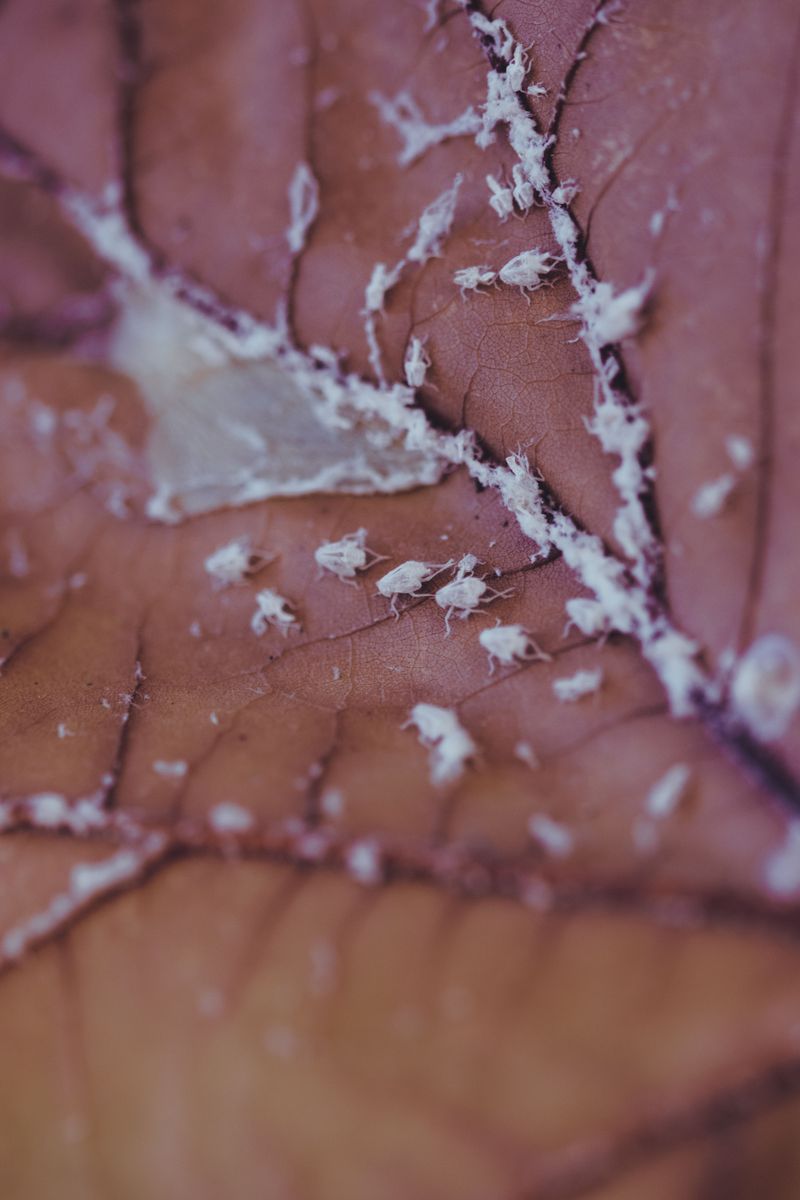
Flip a crape myrtle leaf over in June and you may get a surprise. A group of tiny white insects taking flight is a strong sign whiteflies have moved in for the season.
Whiteflies are not actually flies. They are more closely related to aphids and scale insects, and they share the same feeding habit of extracting plant sap from living tissue.
Adult whiteflies lay eggs on leaf undersides, and both nymphs and adults feed actively on the same surface. This allows infestations to build in a hidden location that many gardeners rarely inspect.
Just like their sap-sucking relatives, whiteflies produce honeydew as a byproduct of feeding. A large population on a mature crape myrtle can generate enough residue to coat many leaves within a relatively short period.
Hot and humid June weather in Tennessee often creates favorable breeding conditions for whiteflies. Populations can increase quickly when temperatures remain warm and moisture levels stay elevated.
The sooty mold that follows a whitefly infestation often appears first on the upper surfaces of lower leaves. Honeydew falls from feeding insects above and lands on the foliage below.
Yellow sticky traps hung near crape myrtles can help monitor whitefly activity early. Detecting a population increase before it peaks gives you a better opportunity to protect your trees before mold develops.
Humid June Weather Accelerates Fungal Growth
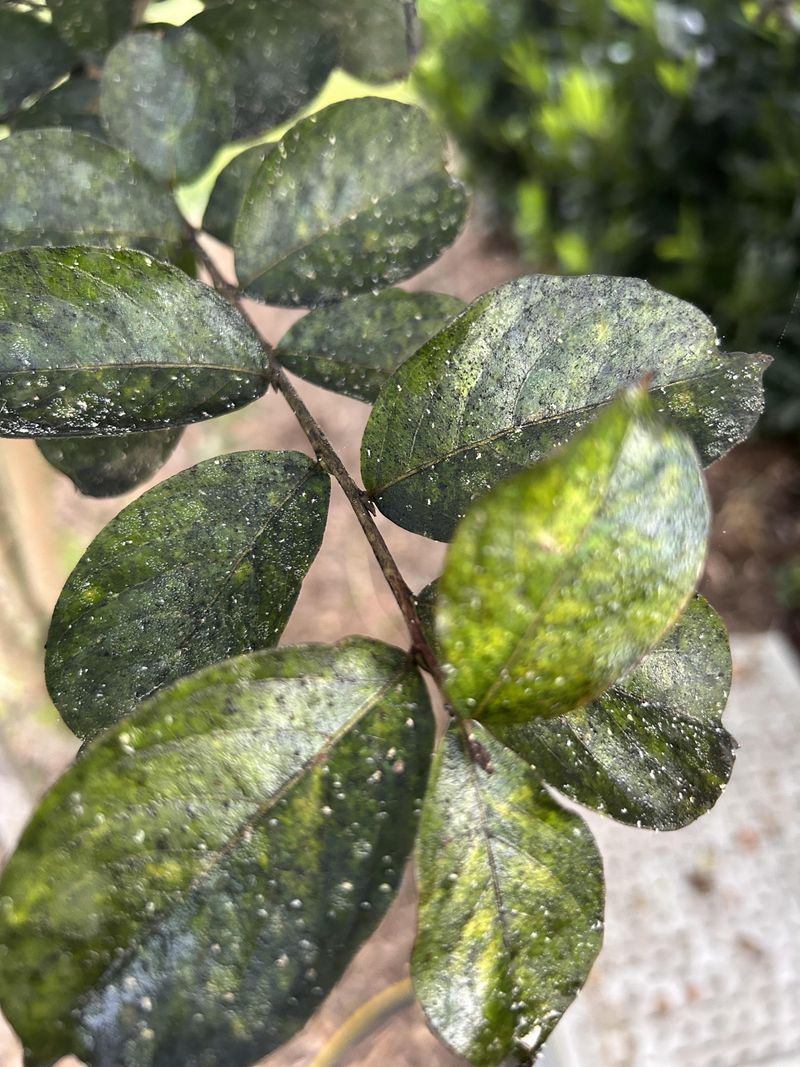
Warm and humid weather helps explain why sooty mold becomes so noticeable during June. High humidity, warm nights, and seasonal heat create favorable conditions for fungal growth across many landscapes.
Sooty mold is not a single fungus but a group of dark-colored fungi that thrive in moist environments.
These organisms do not infect plant tissue directly, but they can spread rapidly on honeydew left behind by sap-sucking insects.
Extended periods of high humidity can accelerate the growth and spread of sooty mold colonies.
June frequently brings these conditions to many parts of Tennessee, allowing mold to develop quickly once honeydew is present.
The fungal spores themselves are already present in the environment around your garden. They simply need a food source and favorable moisture levels before they begin colonizing a surface.
Once a honeydew-coated leaf experiences several warm and humid nights, fungal growth can spread across larger portions of the surface. What begins as a small dark patch can eventually cover entire leaves and branches.
This helps explain why crape myrtles sometimes appear to change almost overnight. The mold is not necessarily building slowly over months.
Under favorable conditions, it can spread quickly within days. Improving air circulation through thoughtful pruning can reduce humidity levels inside the canopy.
Less trapped moisture often means slower mold development even when the broader weather remains warm and humid.
Honeydew Drips Down Through The Canopy
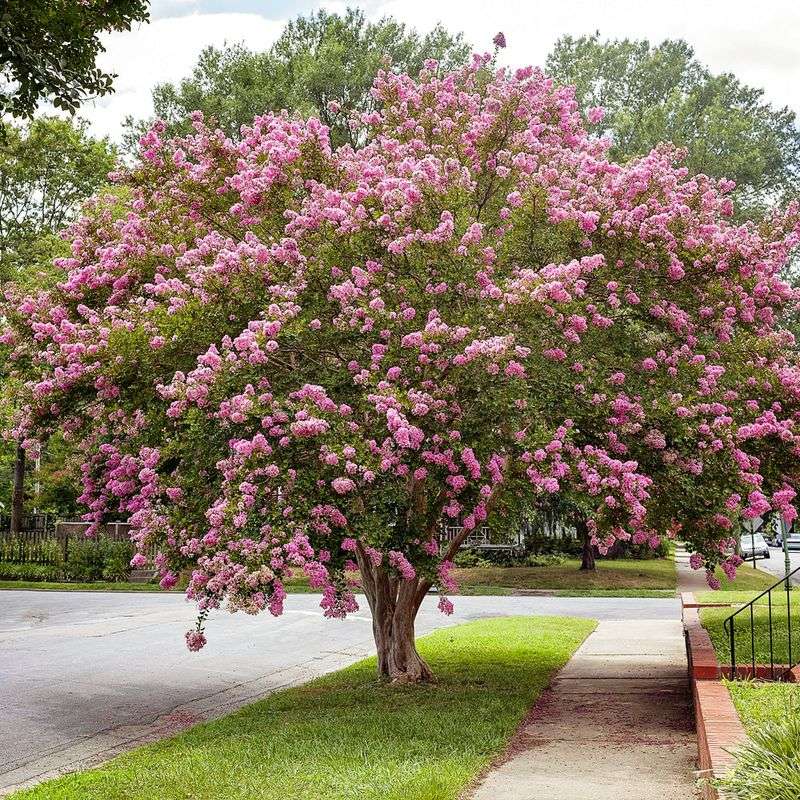
Gravity works against your crape myrtle in a very specific way during June. Every drop of honeydew produced by insects higher in the tree eventually moves downward through the canopy.
This movement helps explain why sooty mold often appears on leaves that have no insects feeding on them. Gardeners sometimes become confused when lower branches show mold but visible pests seem absent.
The insects are usually located higher in the canopy, feeding on tender new growth near branch tips. The honeydew they produce falls onto everything beneath them.
Larger crape myrtles with dense canopies can create a funneling effect that concentrates honeydew on certain lower branches.
Those branches often become coated more heavily than surrounding areas even though the feeding source is located above.
Cars parked beneath infested crape myrtles sometimes develop a sticky film on their surfaces. That same residue provides the food source fungal spores use when colonizing a tree.
Understanding this top-down movement helps you treat the problem at its source. Cleaning mold from lower leaves accomplishes little if insects producing honeydew remain active higher in the canopy.
Always inspect the highest reachable branches when diagnosing a mold problem on crape myrtles. Identifying the insect colony at the source is the key to stopping the honeydew supply.
Dense Branches Trap Moisture Inside
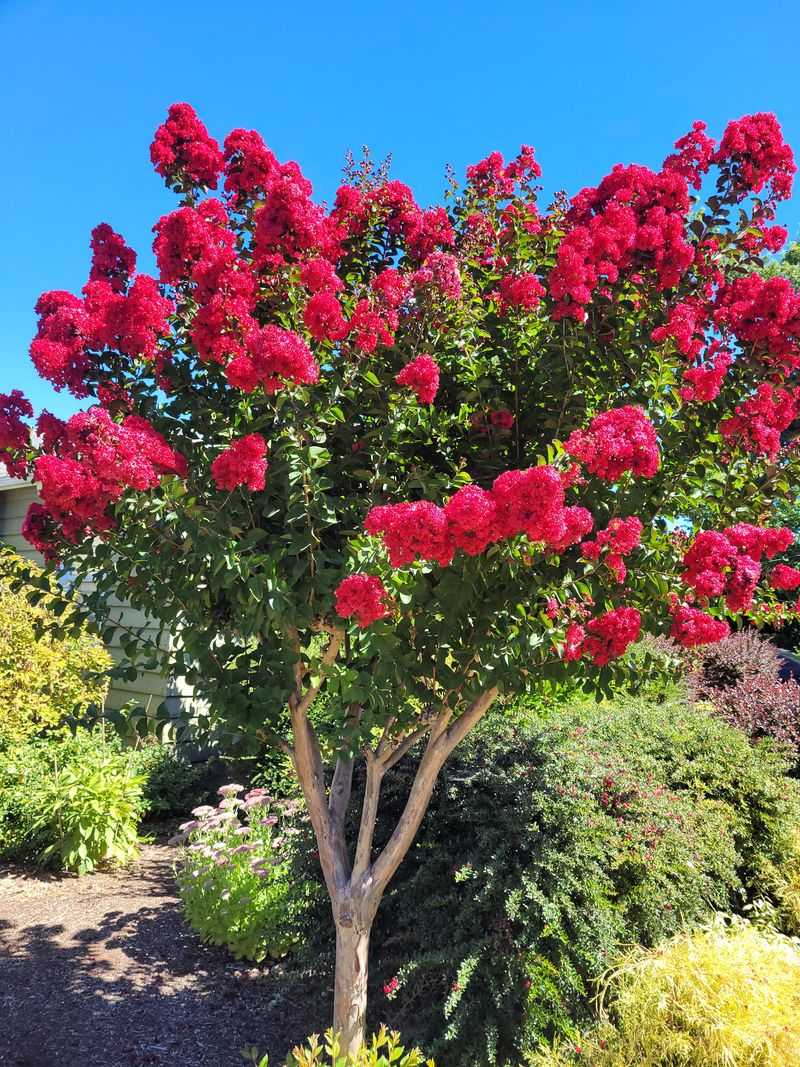
Some crape myrtles develop extremely dense canopies in June, with so many crossing branches that air movement becomes limited. That trapped air can hold moisture for extended periods.
Poor air circulation is one of the most overlooked reasons sooty mold spreads aggressively on certain trees while nearby trees remain less affected. The denser the canopy, the longer moisture tends to remain on leaves and bark.
Crape myrtles that were heavily topped in previous years often respond by producing numerous thin shoots from pruning cuts. These shoots grow quickly and create crowded interiors that restrict airflow.
That dense interior may remain damp for hours after the rest of the landscape has dried. Fungal spores landing on honeydew-coated surfaces in those conditions gain a strong advantage.
Selective thinning cuts made during late winter or early spring can significantly improve airflow through the canopy. Removing crossing branches and inward-growing stems allows air to move more freely.
Healthy air movement is one of the best passive defenses against recurring sooty mold. Trees that dry more quickly after rain provide fungal colonies with fewer opportunities to establish.
Proper pruning is not only about appearance. It also helps create a tree structure that resists the conditions sooty mold needs to thrive. The result is cleaner foliage and healthier seasonal growth.
Predator Populations Lag Behind Pests
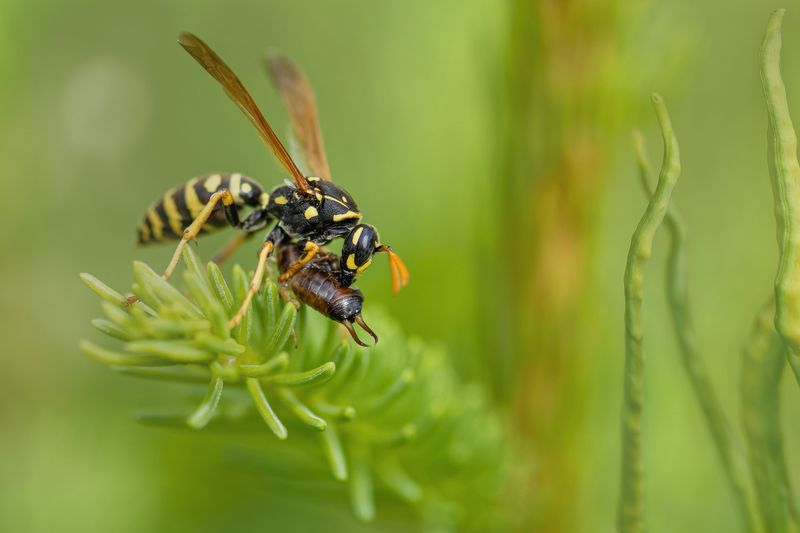
Beneficial insects help regulate pest populations, but their response often lags behind the first stages of an outbreak. Ladybugs, lacewings, and parasitic wasps are among the natural enemies of aphids and whiteflies.
The challenge is that predator populations usually require time to increase after pest numbers begin rising.
By the time enough beneficial insects arrive to reduce an infestation, honeydew and mold may already be present.
This timing difference is a normal part of many garden ecosystems. Pest populations often increase before predator populations can respond to the additional food source.
Broad-spectrum insecticides can make this situation worse by reducing beneficial insect populations along with the target pests.
When natural predators are removed, future pest generations may encounter less biological resistance.
Gardens that rely heavily on broad-spectrum pesticide applications can sometimes experience secondary pest outbreaks after beneficial insects are reduced.
The chemicals may reduce the natural controls that would otherwise help slow population growth.
Planting nectar-rich flowers such as marigolds, zinnias, and fennel near crape myrtles can help attract beneficial insects throughout the season.
A diverse landscape encourages these predators to remain nearby before pest pressure increases. Supporting predator populations is a long-term strategy, but it can provide benefits year after year.
A balanced garden ecosystem remains one of the most durable defenses against recurring sooty mold problems.
Over-Fertilizing Encourages Conditions Favored By Sap-Sucking Insects
More fertilizer does not always create a healthier tree, and crape myrtles are a good example. Excess nitrogen promotes soft, lush new growth that sap-sucking insects often prefer.
Aphids, whiteflies, and scale insects frequently feed on young, nitrogen-rich tissue. That tender growth is easier to penetrate and contains the nutrient-rich sap these insects seek.
When a crape myrtle receives excessive amounts of high-nitrogen fertilizer during spring, it often produces repeated flushes of soft new growth through June. Each flush creates additional feeding opportunities for pest insects.
Crape myrtles growing within fertilized lawn areas may absorb additional nutrients intended for turfgrass. In some situations, this can result in more nitrogen than the tree actually requires.
The connection between excess fertilizer and sooty mold is not always obvious because several steps occur between the two.
Additional nitrogen encourages lush growth, insects feed on that growth, honeydew accumulates, and mold develops afterward.
Switching to a balanced fertilizer and applying it appropriately in early spring can help reduce pest pressure. Crape myrtles are naturally resilient plants that generally do not require aggressive feeding programs.
Using fertilizer carefully encourages steady, durable growth rather than repeated flushes of soft tissue. That growth is often less attractive to the sap-sucking insects responsible for starting the sooty mold cycle.