8 Texas Berry Shrubs That Make Your Yard Look Festive
Early American colonists boiled bushels of tiny gray berries just to skim off enough wax for one fragrant candle. That same scrappy shrub still grows wild across East Texas, and it is only one of my favorite finds.
Another native bush hides enough caffeine in its leaves to brew a real cup of morning tea. Birds ignore the tea part, but they happily strip its scarlet berries once cold fronts roll through Texas.
I have to admit, I used to think winter yards were meant to look gray and a little sad. Then I planted a few berry shrubs, and my brown January view suddenly looked ready for a party.
You need just one sunny corner and a little patience to get the same cheerful payoff at home. Which jewel-toned shrubs deserve a spot along your fence line before the next cool season arrives?
1. American Beautyberry
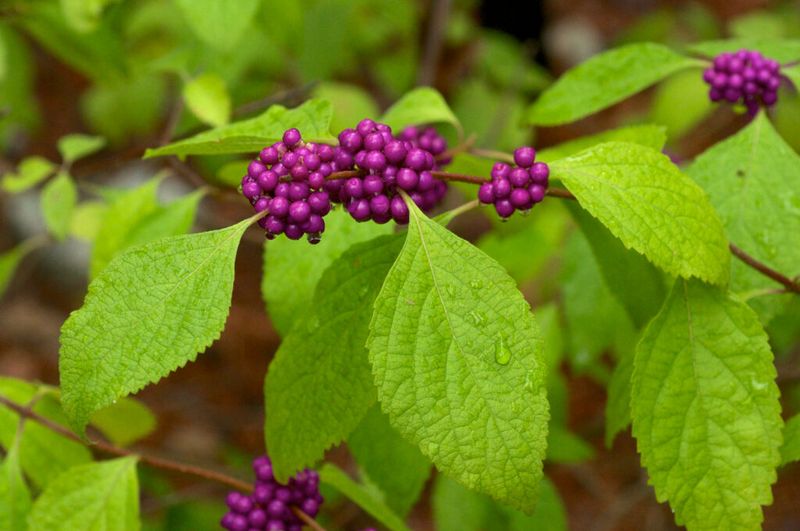
Those clusters of magenta berries look so fake that visitors sometimes reach out to check if they are plastic.
I love watching their faces when they discover American beautyberry is a real native shrub, Callicarpa americana.
The berries wrap around the stems in tight rings, like someone threaded beads onto every arching branch. Color begins showing in late summer and peaks in fall, often lingering until hungry birds finish them off.
Mockingbirds and cardinals gobble the fruit, so expect plenty of feathered company once cooler weather settles in.
Deer also nibble the leaves now and then, which is worth knowing if they wander through your neighborhood.
Most plants reach three to six feet tall and about as wide, with a loose and relaxed shape. Partial shade works well, though you will get heavier berry crops when the shrub soaks up morning sun.
Average soil suits it fine, and established plants handle dry spells better than many fussy nursery shrubs. During its first summer, water deeply about once a week so the roots can settle in comfortably.
Personally, I cut mine back to about a foot tall in late winter before new leaves appear. Berries form on fresh growth, so that hard trim usually rewards you with a fuller and brighter show.
For a fun bonus, USDA researchers found compounds in the crushed leaves that help repel biting mosquitoes.
Old-timers tucked leaves under horse harnesses for the same reason, long before scientists confirmed their hunch.
2. Possumhaw Holly
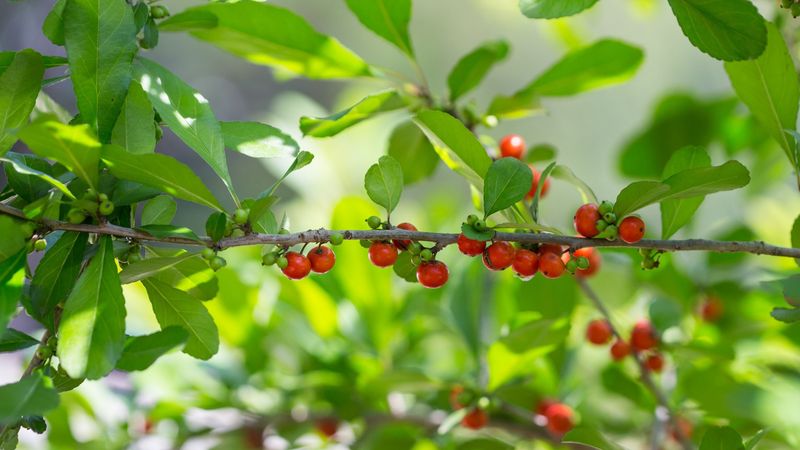
Most hollies hang onto their leaves all year, but possumhaw drops every one and then steals the show.
Bare silver branches studded with glossy red berries look like someone strung tiny ornaments across your yard.
Botanists call it Ilex decidua, a name that simply points to its habit of shedding leaves each fall. Once the foliage is gone, nothing hides the fruit, so the color seems to glow on gray mornings.
You should know that only female plants produce berries, and they need a male plant growing somewhere nearby.
I recommend buying possumhaw in fall or winter, when you can see the fruit before handing over cash.
Expect a multi-trunked shrub or small tree reaching about fifteen to twenty feet tall over many years. Pruning lower limbs turns it into a charming little tree that fits nicely near a patio or entry.
Native to much of eastern and central Texas, it handles heavy clay and seasonal soggy spots surprisingly well. Full sun brings the biggest berry crop, although partial shade still produces a respectable and cheerful display.
Robins and cedar waxwings usually arrive in late winter, sometimes stripping a loaded tree within a few days. Honestly, I consider that a fair trade, because watching those flocks feed is half the fun for me.
The odd name likely comes from the idea that opossums enjoy the fallen fruit as much as birds. Whatever the true story, the berries are not meant for people, so leave them for the wildlife.
3. Coralberry
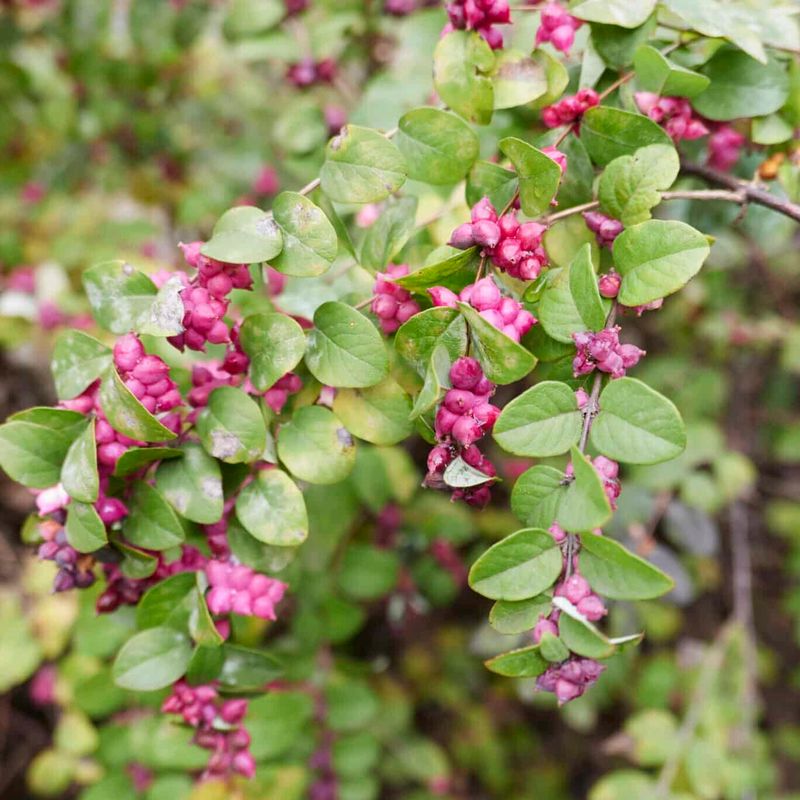
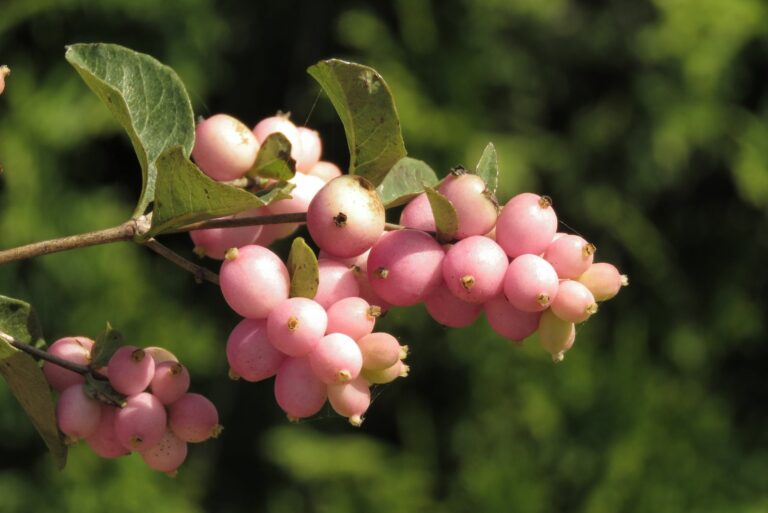
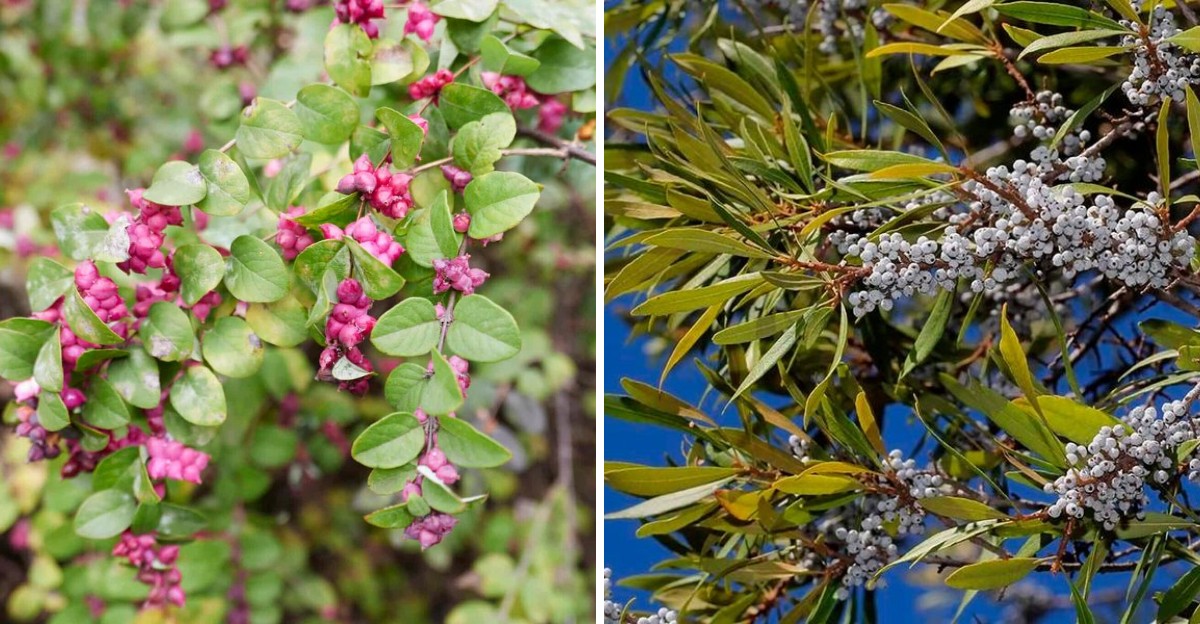
Coralberry is the quiet kid in class who turns out to have the best sense of style. Its tiny pinkish-purple berries cluster tightly along slender stems, almost like strings of candy hugging each twig.
You may also hear it called Indian currant or buckbrush, and its scientific name is Symphoricarpos orbiculatus. The fruit ripens in fall and often hangs on into winter, long after the leaves have dropped away.
I like how this small shrub fills shady spots where many flowering plants sulk and refuse to bloom. It grows about two to five feet tall, making it handy beneath taller trees or along woodland edges.
Be ready for some wandering, since coralberry spreads by underground runners and slowly forms a low thicket. That habit makes it great for holding soil on slopes, but you may need to pull stray shoots.
It adapts to clay or rocky ground across north and central parts of Texas with very little fuss. Once roots settle in, occasional deep watering during long dry stretches keeps the foliage looking fresh and healthy.
Small greenish-pink flowers appear in summer, and bees visit them even though most people barely notice the blooms.
Later, birds such as bobwhite quail and wild turkeys snack on the berries when other food runs short.
For a festive touch, I snip a few berry-covered stems to tuck into winter wreaths and mantel arrangements.
The berries are not considered safe to eat, so keep those decorations out of reach of curious toddlers.
4. Evergreen Sumac
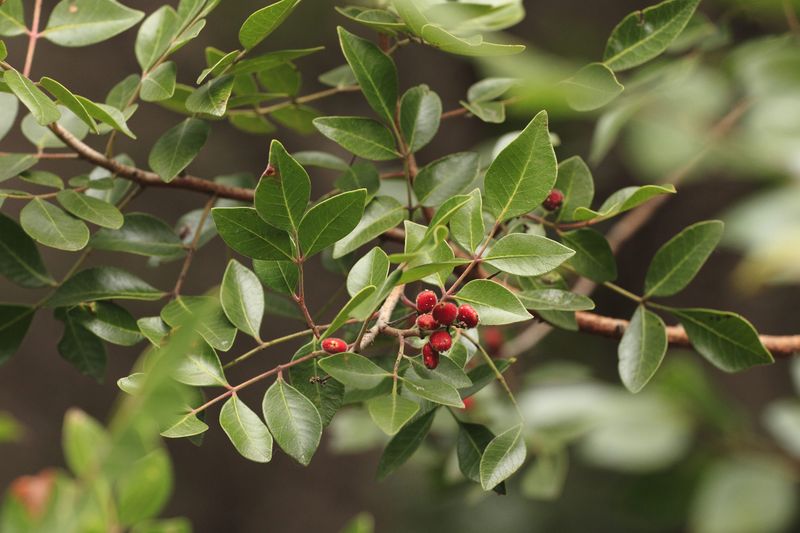
Rub one of the fuzzy red berries on this tough shrub, and you will notice a tangy, lemony coating. Evergreen sumac, known as Rhus virens, stays leafy through winter while its fruit clusters glow like little embers.
The glossy leaves look almost polished, giving the plant a neat appearance even during chilly gray weeks.
Many folks expect sumac to spread aggressively, but this species behaves politely and stays a tidy, rounded shape.
Plants usually grow eight to twelve feet tall, so they make a handy screen along a property line. I also like them as a backdrop for smaller perennials, since the dark foliage makes bright flowers pop.
Small white flowers open in late summer, drawing busy crowds of bees when many other blooms are fading. Those flowers turn into the red fruit clusters by fall, and birds pick at them through the cooler months.
Native to the Hill Country and West Texas, this sumac loves rocky, limestone soil and excellent drainage. Heavy, soggy clay can cause root trouble, so plant on a slope or raised bed if water lingers.
Full sun keeps the shape dense, although afternoon shade is fine in hotter areas with reflected heat. After the first year, water deeply only during long dry spells, because too much moisture invites problems.
Fun fact: sumac berries in this family have long been soaked in water to make a tangy, lemonade-style drink.
Still, check with an expert before tasting anything, and enjoy the glowing fruit mostly as winter decoration.
5. Wax Myrtle
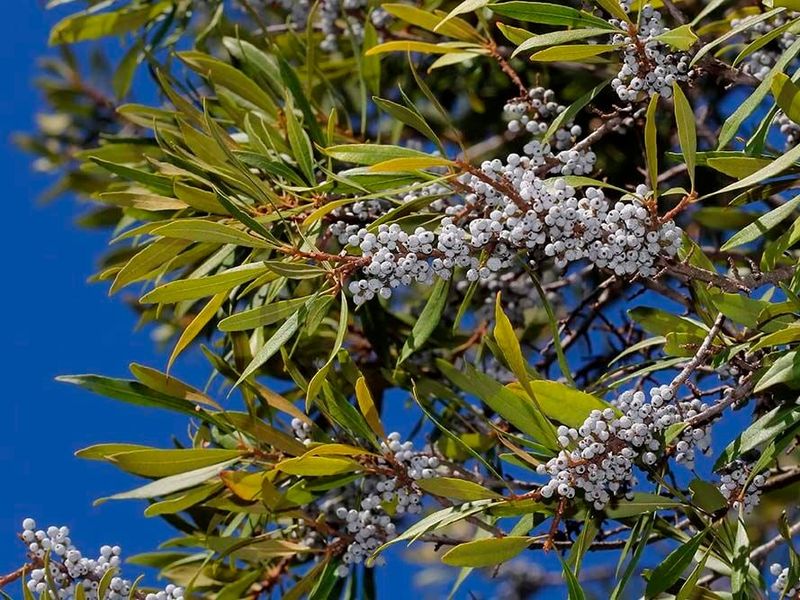
Brush past a wax myrtle and a warm, spicy scent drifts up from the leaves like a holiday candle shop. The connection is real, because colonists once boiled the pale berries to collect wax for fragrant candles.
Gardeners today know it as Morella cerifera, a fast-growing evergreen with narrow olive-green leaves and smooth gray bark.
Female plants carry clusters of small blue-gray berries that look frosted, almost like they were dusted with powdered sugar.
Those waxy berries are packed with fat, which makes them a valuable winter meal for yellow-rumped warblers.
I have watched bluebirds and warblers visit mine on frosty mornings, flitting between branches like busy shoppers.
Growth can be impressive, with many plants reaching ten to fifteen feet tall in just a few seasons. That speed makes wax myrtle a popular choice for quick privacy screens, especially along fences or busy streets.
It handles sandy soil, clay, and even salty coastal breezes better than most evergreen shrubs you can buy.
Full sun or partial shade works, and established plants tolerate both wet spells and dry summers fairly well.
Keep an eye on suckers, since this shrub sends up new shoots around its base over time. Personally, I trim those extra shoots each spring to keep the plant from forming a sprawling, crowded thicket.
Very hard freezes can brown the leaves in colder northern areas, though plants usually recover with warm weather. For the best berry show, choose a female plant and let a male grow somewhere in the neighborhood.
6. Arrowwood Viburnum
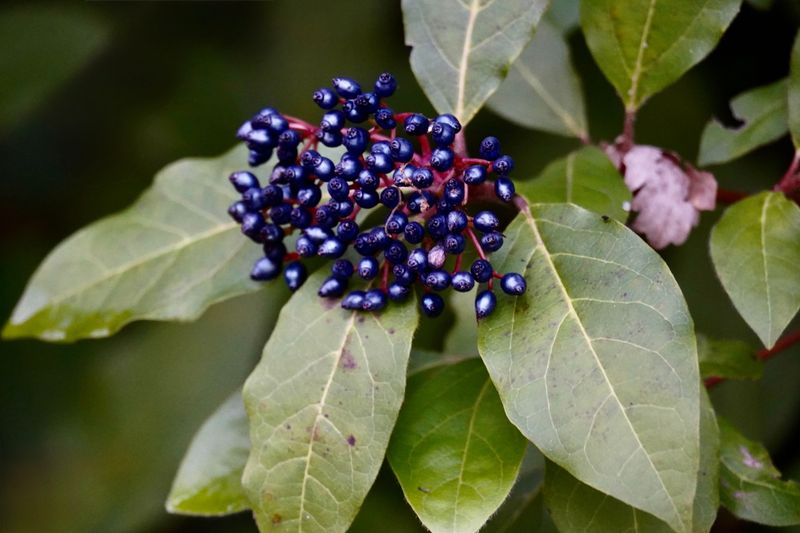
Dusky blue berries on arrowwood viburnum look like tiny blueberries, but birds claim them long before you can blink. I find myself racing the catbirds every fall just to snap a few photos of the full clusters.
Known to botanists as Viburnum dentatum, the shrub earns its species name from coarsely toothed leaf edges.
Flat clusters of creamy white flowers cover the branches in spring, attracting butterflies and plenty of busy bees.
By late summer, those blooms have turned into blue-black fruit that ripens in time for migrating songbirds. The berries rarely last long, yet their brief appearance adds a lovely cool-toned contrast to warm fall colors.
Autumn leaves can shift to yellow or deep reddish purple, depending on sunlight and how cool nights get. In milder parts of the state, the color may be softer, so I treat any fiery display as a bonus.
Most plants grow six to ten feet tall with a rounded, multi-stemmed shape that works nicely as a hedge. It is native to East Texas woodlands, so it appreciates soil that stays a bit moist between rains.
Give it morning sun and some afternoon shade, especially in hotter regions where summer heat lingers into fall. A layer of shredded leaves or bark mulch helps hold moisture and keeps the roots cooler in summer.
Plant two different seedlings or cultivars nearby, because cross-pollination often leads to heavier fruit on each shrub.
Skip heavy pruning in winter, because those branches already hold the buds that become next spring’s flowers.
7. Yaupon Holly
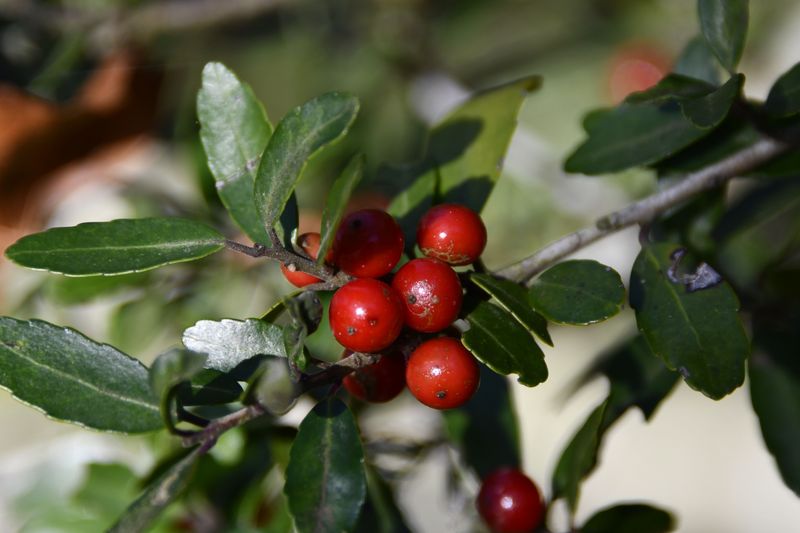
Yaupon is the only plant native to North America known to contain caffeine in its leaves. Indigenous peoples brewed a strong tea from it for centuries, and small farms still sell yaupon tea today.
Its scientific name, Ilex vomitoria, sounds alarming, but it came from ceremonies rather than the tea itself. For your yard, the real treat is the shiny red berries that crowd female branches all winter long.
I love how those scarlet berries pop against tiny evergreen leaves, creating a ready-made holiday look outdoors.
Cedar waxwings and mockingbirds feast on the fruit, though people should skip the berries since they upset stomachs.
Wild yaupon can grow fifteen to twenty feet tall, forming dense thickets in East Texas forests and coastal areas. Nurseries offer dwarf types that stay round and compact, but most of those dwarfs produce few berries.
For a full display, pick a female plant that already shows fruit, and make sure a male grows nearby. Weeping yaupon is another fun option, with drooping branches that turn into a cascading curtain of red.
Few shrubs match its toughness, because it handles sand, clay, salt spray, and even short periods of flooding. Full sun gives the heaviest berry set, while shady spots grow leafier plants with lighter fruit.
Once established, yaupon gets by on rainfall in most years, which makes it a smart water-saving choice. Personally, I prefer letting one grow into a small tree, then pruning lower branches to show its pale bark.
8. Rusty Blackhaw Viburnum
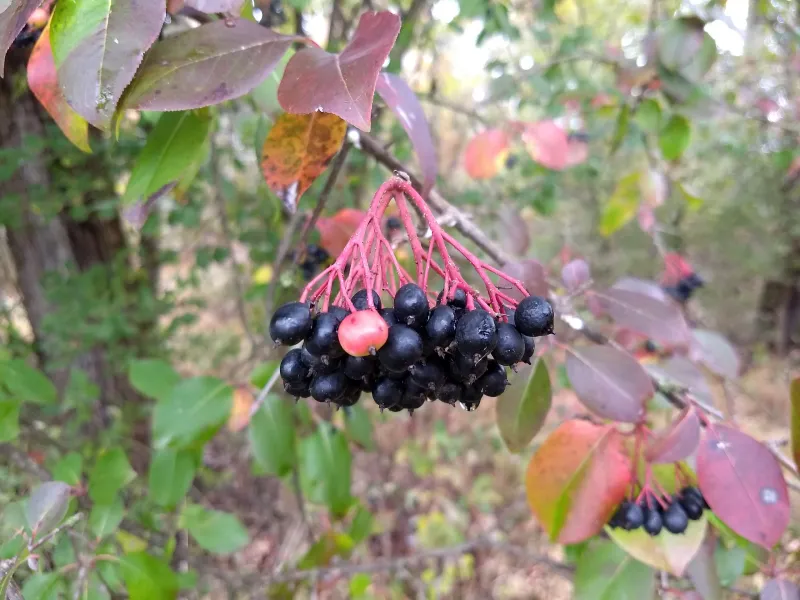
Run your finger over a fresh bud on rusty blackhaw, and you will feel soft, reddish-brown fuzz. Those rusty hairs give Viburnum rufidulum its name, and they make winter twigs surprisingly fun to examine up close.
Dark blue berries with a pale, dusty bloom ripen in fall, hanging in drooping clusters beneath glossy leaves. I have to admit, the foliage often steals attention, turning shades of maroon and purple as nights cool.
Unlike most shrubs on this list, its ripe fruit is edible, with a sweet flavor some folks compare to raisins. The berries contain large seeds, so they make a better trailside nibble than a pie filling for dessert.
Songbirds and foxes enjoy the harvest too, so expect plenty of visitors when the fruit softens on branches.
In spring, flat clusters of creamy white flowers cover the tree before most neighboring plants have fully leafed out.
Rusty blackhaw grows slowly into a small tree about ten to twenty feet tall, often with several trunks. Older bark breaks into blocky squares that resemble alligator skin, adding texture to the yard in winter.
It is native across much of Texas, including rocky Hill Country slopes and the edges of eastern woodlands. Well-drained soil keeps it happy, and it tolerates limestone better than many viburnums sold at garden centers.
Afternoon shade helps young plants through scorching summers, especially during their first couple of years in the ground.
Water deeply until roots establish, then enjoy a low-care shrub that rewards you through several different seasons.