7 Texas Native Shrubs That Take Full Sun Foundation Heat
The zone right up against a Texas home foundation is one of the harshest growing environments in any residential landscape.
Full sun beats down for most of the day, heat radiates off walls and concrete, soil dries out faster than anywhere else in the yard, and the combination creates conditions that push most shrubs past their limits. Most Texas foundation plantings are quietly struggling.
Native Texas shrubs are a different story. Plants that evolved in this climate developed the specific adaptations that foundation conditions demand.
The right ones don’t just survive in that harsh zone. They thrive in it, holding their structure and coming back stronger each season without the constant intervention that non-native shrubs increasingly require.
Here are the native Texas shrubs that genuinely handle full sun foundation heat and why each one earns its place in the most demanding spot in the yard.
1. Texas Sage
Nothing says Texas tough quite like cenizo. This silvery shrub sits happily in the hottest spot you can find and asks for almost nothing in return.
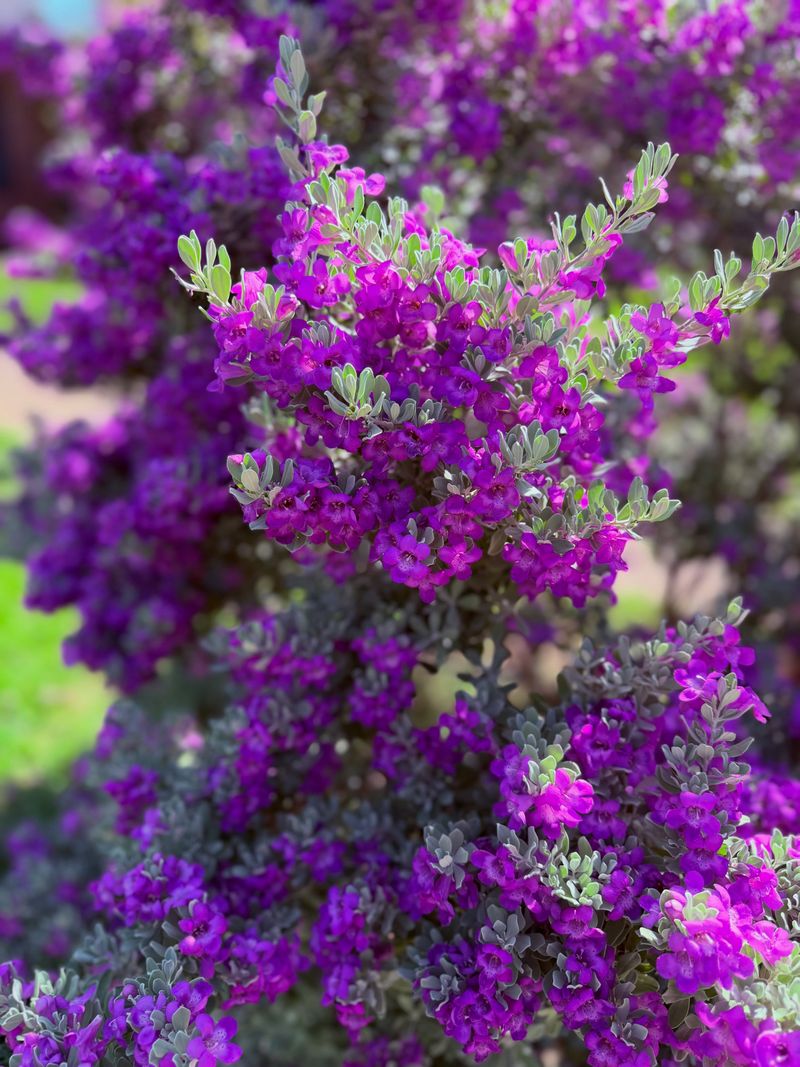
Also called Texas Sage or barometer bush, it earns that last nickname for a fun reason. After a rain or a rise in humidity, it bursts into purple, pink, or lavender blooms.
Folks say it can predict a coming storm better than the weatherman.
The soft, gray-green leaves reflect sunlight, which helps the plant stay cool in the blazing heat. Those leaves also give your foundation bed a pretty color even when the shrub is not flowering.
It grows into a rounded mound, usually about four to six feet tall and wide. Cenizo hates wet feet, so plant it in well-drained soil and skip the heavy watering. Too much kindness with the hose can actually harm it.
Once established, rainfall alone often keeps it going. Full sun is a must. In shade, it gets leggy and blooms poorly. Against a hot, sunny wall is exactly where it shines.
You can leave it natural for a soft look or trim it into a neat shape. Light pruning after a bloom cycle keeps it tidy without much effort.
Bees and butterflies love visiting the flowers, so you get a little wildlife show along with the color. Deer usually leave it alone, which is a bonus for rural yards.
For a low-water, high-reward plant that laughs at Texas summers, cenizo belongs on your short list.
2. Flame Acanthus
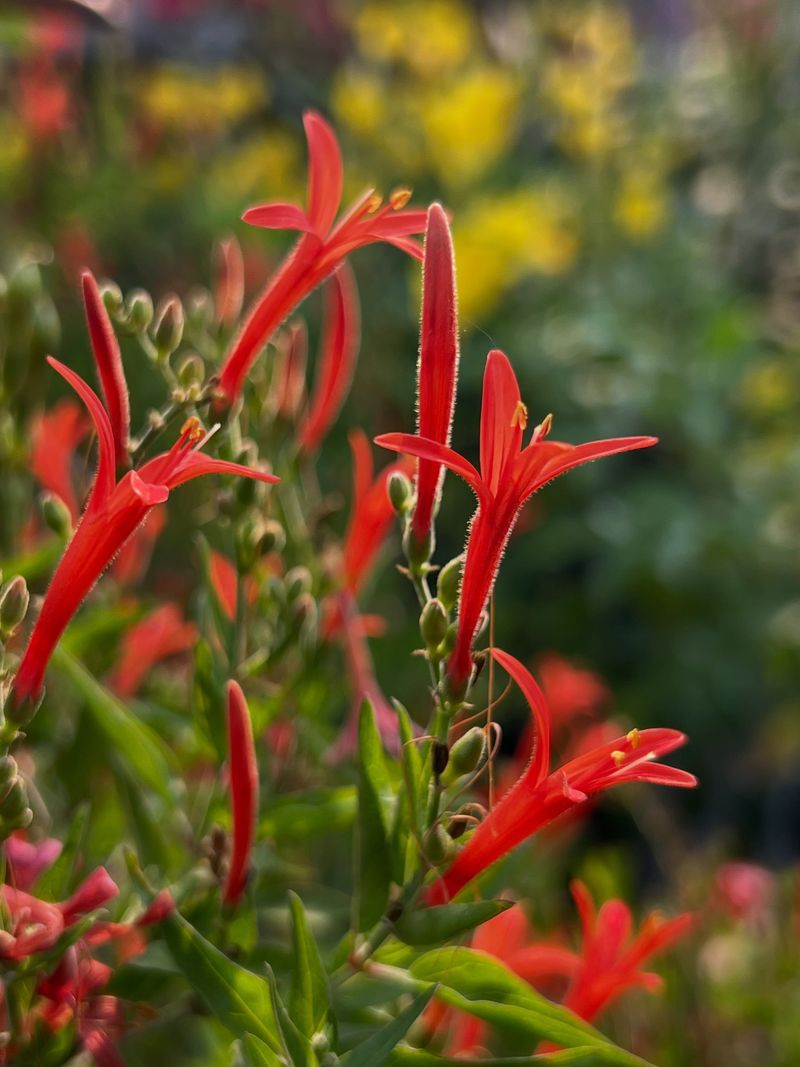
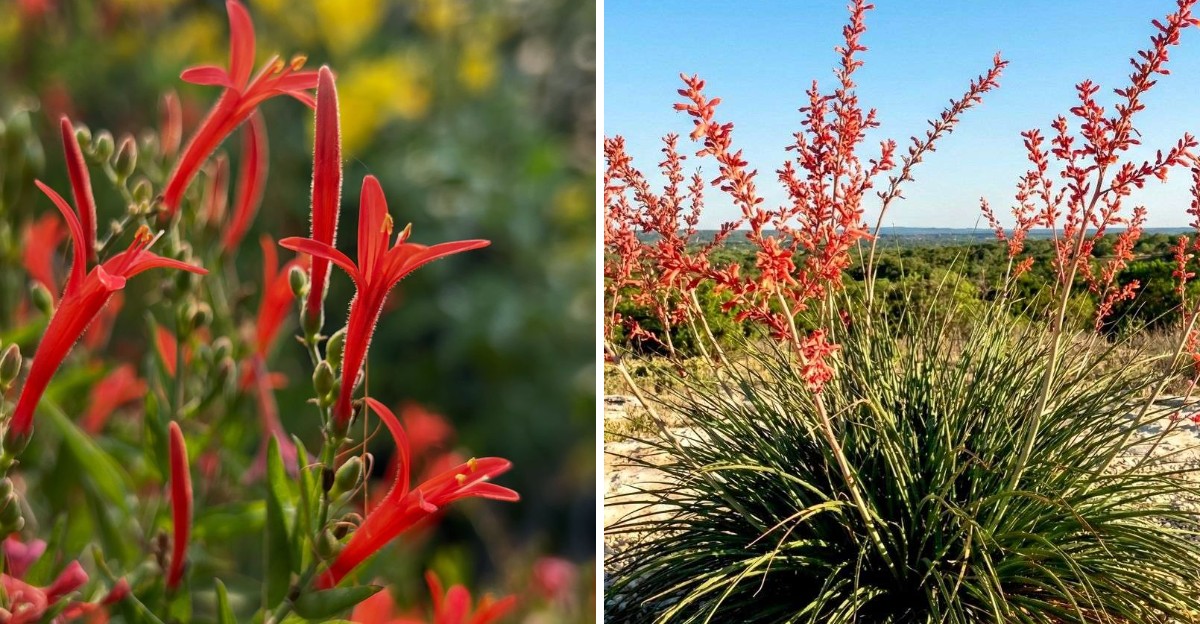
If you want to invite hummingbirds to hang around your house, flame acanthus is your plant. Its skinny orange-red tubes are like little cups of nectar that birds cannot resist.
This shrub blooms all through the hottest part of summer, right when many other plants have given up. While your neighbors watch their flowers fade, flame acanthus keeps the color coming from late spring into fall.
It stays fairly small, usually three to four feet tall, with an airy, open shape. The loose branches give it a soft, natural look rather than a stiff hedge feel.
Heat and drought barely faze it. Native to the rocky soils of central and west Texas, it expects tough conditions and thrives in them. A sunny foundation bed suits it perfectly.
Your Texas Garden Changes Every Week. Your Plan Should Too.
Gardening in Texas changes quickly throughout the season. Every Friday you’ll receive a simple weekly plan showing exactly what to plant, prune, fertilize, harvest, and protect so you never miss the right timing.
Plant it in soil that drains well and give it plenty of sun. The more sun it gets, the more flowers it produces.
In winter, it drops its leaves and can look bare, but do not worry. Cut it back hard in late winter, and it springs back bushier than before.
Butterflies join the hummingbirds at the blooms, turning your yard into a busy feeding station. That makes it a favorite for anyone who enjoys watching wildlife from the porch.
Because it reseeds a little, you might find baby plants nearby. These are easy to move or share with friends who want their own hummingbird magnet.
For nonstop summer flowers and zero fuss, flame acanthus delivers big personality in a small package.
3. Autumn Sage
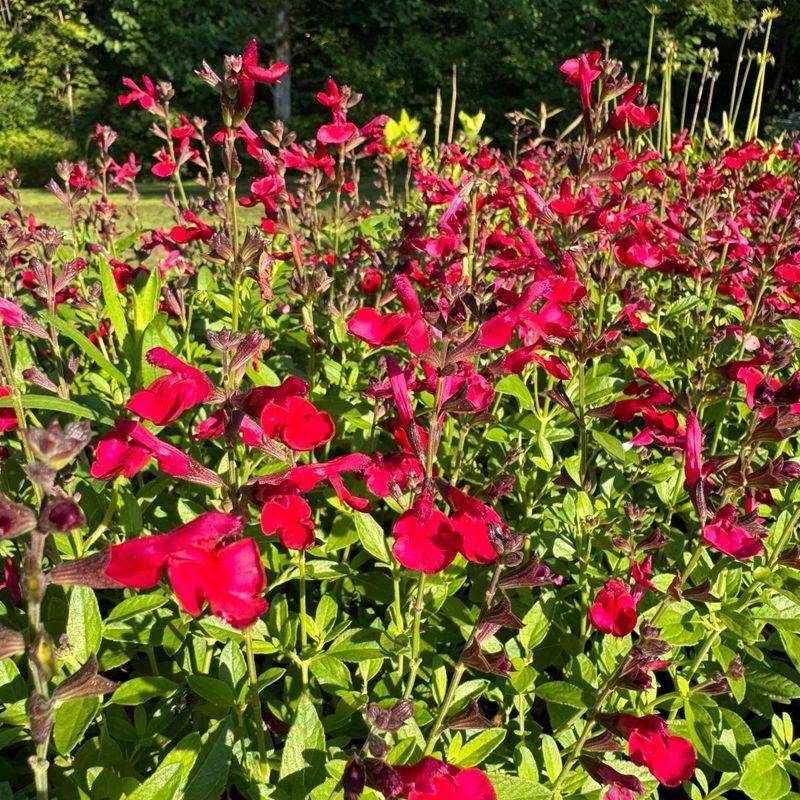
Despite its name, autumn sage does not wait until fall to show off. This cheerful shrub flowers from spring clear through the first frost, giving you months of color.
Salvia greggii comes in a rainbow of shades, including red, pink, coral, white, and purple. You can mix a few colors along your foundation for a fun, patchwork look.
It stays neat and compact, usually two to three feet tall, which makes it perfect for tight beds next to the house. The small size means it will not swallow your windows or block the walkway.
Bees, butterflies, and hummingbirds all flock to the blooms. Having autumn sage near your porch is like installing a front-row seat to a garden show.
This plant handles heat and dry spells with ease once its roots take hold. A quick drink during long droughts keeps it happy, but it never demands much.
Well-drained soil and full sun bring out the best in it. In too much shade, it stretches out and blooms less.
To keep it full and flowering, give it a light trim now and then. A harder cutback in late winter refreshes the whole plant for the new season. Deer tend to skip it, which is a relief in areas where hungry deer treat gardens like a buffet.
Easy to grow, long-blooming, and loved by pollinators, autumn sage is one of those plants that just makes gardening feel simple. Tuck a few along your sunny wall and enjoy the show.
4. Dwarf Wax Myrtle
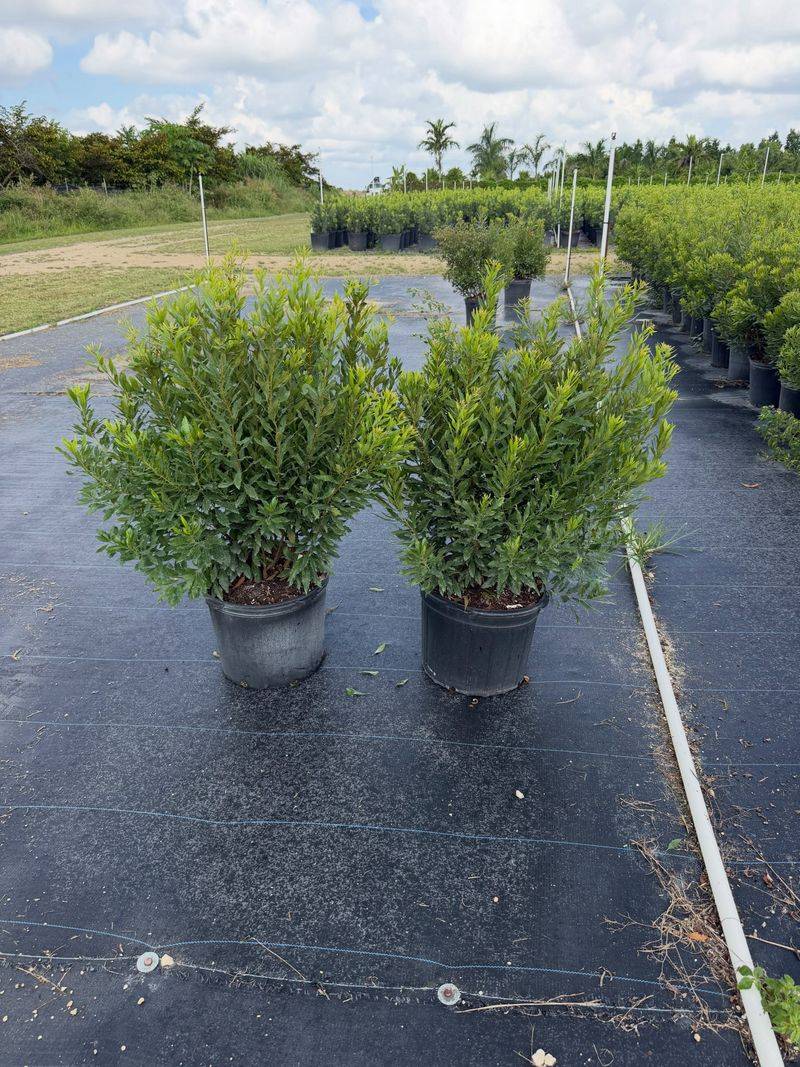
Looking for year-round green to soften a bare wall? Dwarf wax myrtle brings that steady, leafy fullness without any drama.
This evergreen shrub keeps its glossy green leaves all winter, so your foundation never looks empty. Crush a leaf between your fingers and you will catch a pleasant, spicy scent.
The dwarf version stays around four to six feet, smaller than its towering cousin. That makes it much easier to manage in a home landscape.
Wax myrtle is famously tough. It shrugs off heat, poor soil, and even the salty conditions found near the coast. Sun or part shade both work fine for it.
Once established, it needs little water, though it also tolerates wetter spots better than most drought lovers. That flexibility is rare and handy.
Birds enjoy the tiny waxy berries that appear on female plants. Those berries were once boiled by early settlers to make fragrant candle wax, which is how the plant got its name.
You can shape it into a soft hedge or let it grow naturally for a fuller look. It handles pruning well, so you have plenty of options.
Because it grows fairly fast, it fills in gaps quickly. That is great when you want privacy or coverage without waiting years.
The dense branches also give small birds a safe place to nest and hide. Your foundation planting becomes a cozy little wildlife shelter.
For a reliable evergreen backbone that stays green and healthy through Texas summers, dwarf wax myrtle is a smart, low-effort pick.
5. Red Yucca
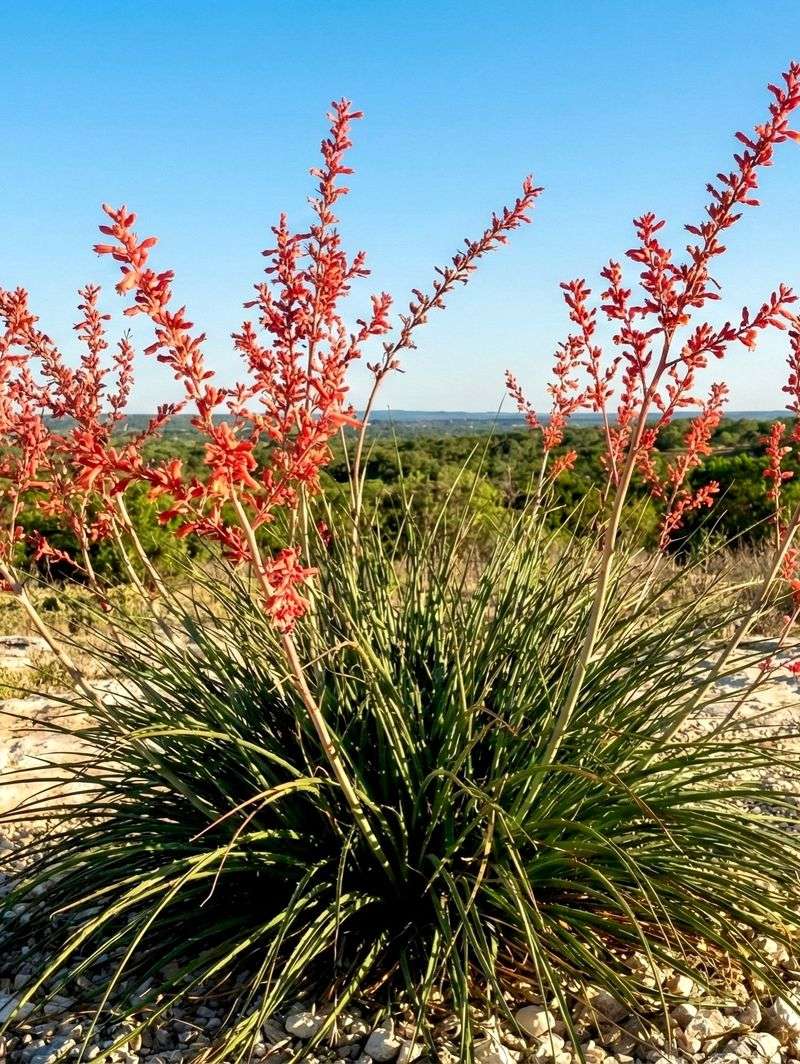
Red yucca might have yucca in its name, but it is actually a softer, friendlier plant than true yuccas. Instead of stiff, sharp spikes, it has grassy, arching leaves that sway in the breeze.
From spring into fall, tall stalks rise above the leaves and open coral, red, or yellow flowers. Hummingbirds treat these blooms like their own personal snack bar.
This plant is a champion of tough spots. It handles blazing sun, reflected heat, rocky soil, and long dry spells without complaint.
It stays fairly low, with leaves around two to three feet, while the flower stalks can shoot up four or five feet. That mix gives your foundation bed both texture and height.
Water needs are almost nonexistent once it settles in. In fact, overwatering is one of the few ways to make it unhappy, so a light hand is best.
Because it grows in a neat clump, it will not spread out and take over the bed. That tidy habit makes it easy to plan around.
It looks fantastic paired with rocks, gravel, or other drought-loving plants for a modern, low-water design. Many folks use it near driveways and hot walls where little else survives.
Cutting off the spent flower stalks keeps things neat, and that is about all the care it wants. Truly, this is a set-it-and-forget-it plant.
Deer and rabbits usually leave it alone, so your flowers stay safe. For a striking, worry-free accent along a scorching foundation, red yucca earns its spot.
6. Agarita
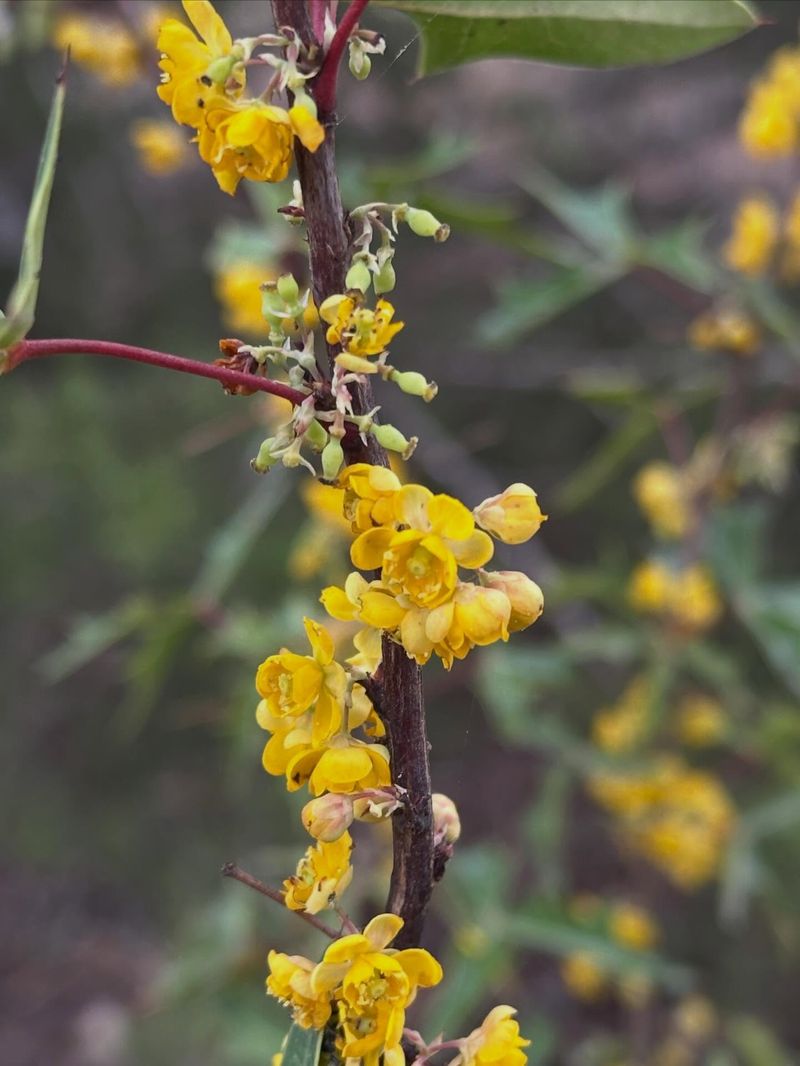
Agarita is the prickly protector of Texas gardens. Its stiff, holly-like leaves poke anything that gets too close, which makes it a natural fence against curious critters.
Do not let those spines scare you off, though. In late winter and early spring, the whole shrub lights up with sweet-smelling yellow flowers that hum with bees.
Later, small red berries appear. People have long used these tart berries to make jelly, and birds gobble them up too.
This shrub is built for dry, sunny, rocky places. It grows wild across the Texas Hill Country, so a hot foundation bed feels like home to it.
The blue-green leaves add a cool, unusual color to your planting. That silvery tone stands out nicely against a plain wall or darker plants.
Agarita is slow-growing and eventually reaches three to six feet. Its steady pace means less pruning and fuss for you over the years.
Because it is so drought-tough, it rarely needs watering once established. Skipping the hose is basically its favorite thing.
Those spiny branches make it a great security plant under windows, where you might not want anyone lurking. It quietly does the job while looking pretty.
Wildlife lovers enjoy the parade of bees, birds, and butterflies it attracts through the seasons. It gives back to the whole yard, not just your foundation.
Plant it where you will not brush against it often, since the leaves are sharp. Give it that respect, and agarita rewards you with beauty, berries, and toughness for many years.
7. Texas Lantana
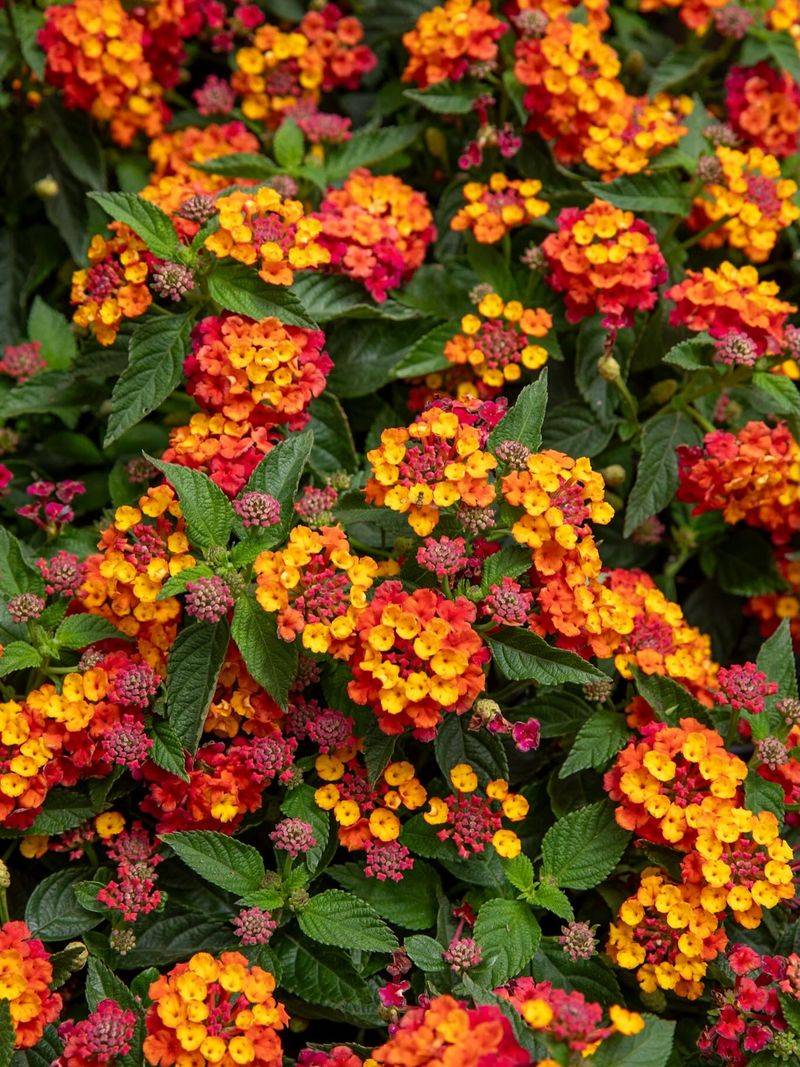
Bright, bold, and buzzing with butterflies, Texas lantana is a summer showstopper. Its flower clusters glow in fiery orange and yellow, changing shades as they age.
This native version is tougher and more heat-hardy than many fancy garden types. It was practically made for the punishing sun along a foundation wall.
Butterflies simply cannot stay away from it. On a warm afternoon, you might count several kinds fluttering over a single plant.
It grows fast into a rounded bush, often three to five feet tall and wide. That quick growth fills empty spaces in a hurry when you need coverage.
Heat and drought are no match for this plant. Once its roots dig in, it keeps blooming through the driest, hottest stretches of summer.
Full sun brings out the most flowers, so give it the sunniest spot you have. Skimping on light means fewer blooms.
In winter, it dies back to the ground in colder areas, but it returns strong each spring. A cleanup trim in late winter tidies things up before new growth.
Deer usually pass it by, and it handles poor soil without complaint. That combination makes it wonderfully low-maintenance.
Keep in mind that its berries are not for eating, so plant it thoughtfully if you have little ones or pets who nibble. A quick heads-up keeps everyone safe.
For sheer color and a nonstop butterfly parade all summer long, Texas lantana is hard to beat. Line a hot foundation with it and enjoy the lively, cheerful display it brings.