That Fast Many-Legged Bug in Your Kentucky Basement Is Venomous but Helpful
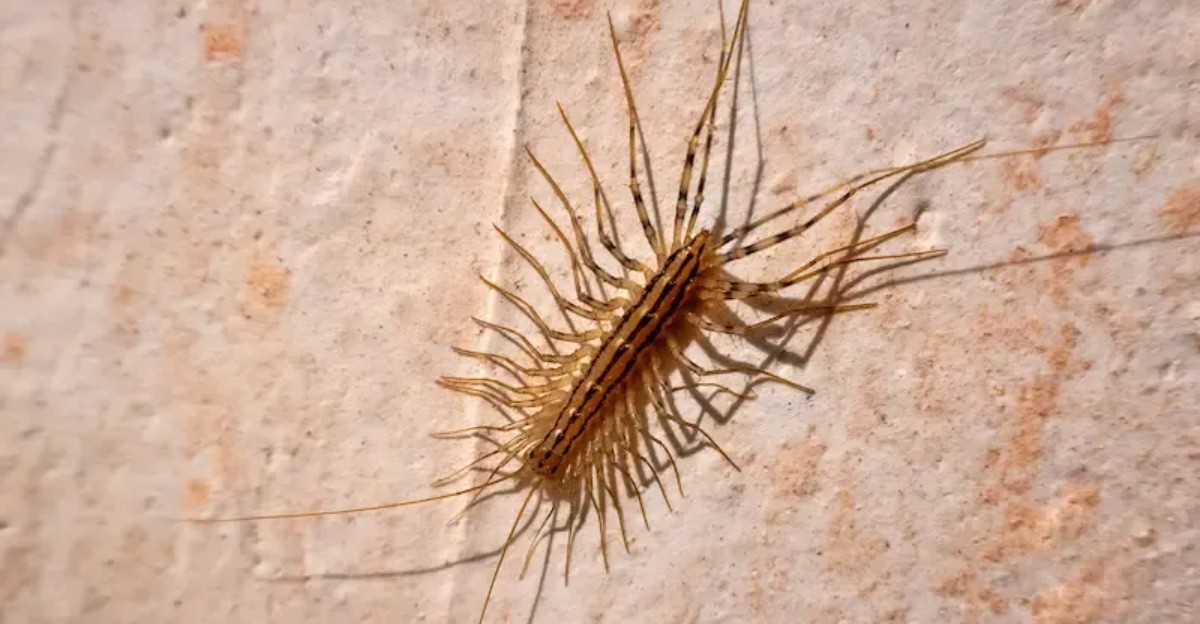
Fifteen pairs of legs can carry this basement sprinter about 16 inches in a single second. That is roughly the length of a loaf of bread, covered faster than you can gasp.
I’m the first to admit my old move was a yelp and a shoe. Truth is, I had no idea what I was swatting at or why it showed up in my Kentucky basement every spring.
Here’s what gets me. The critter carries real venom, yet it spends its nights hunting the very bugs most of us want gone. It stays shy, it hides by day, and it rarely bothers people at all.
So who is this leggy night hunter, and should you thank it or show it the door? The answer surprised me more than the creature itself.
That Striped Blur With Long Legs Has a Name
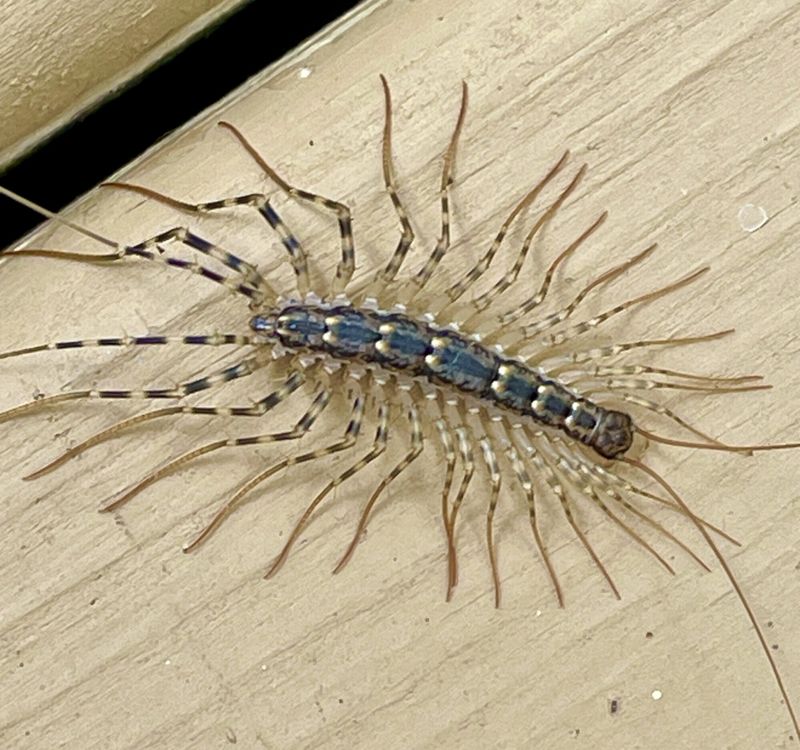
Flip on the basement light at midnight and you might catch it mid-dash. That fringe of legs belongs to the house centipede, known to scientists as Scutigera coleoptrata.
Adults usually measure 1 to 1.5 inches in body length. Their 15 pairs of long, banded legs make them look much bigger, almost like a feathery smudge on the wall.
Look closely and you will spot three dark stripes running down a yellowish-gray body. The back legs are extra long and can look like a second set of antennae, which helps confuse predators about which end is which.
Fun fact for your next family dinner. House centipedes likely came to North America from the Mediterranean region, and they now live across much of the country, including homes all over Kentucky.
They are not insects at all. Centipedes belong to a separate group of arthropods, related to millipedes but much faster and fully meat-eating.
Indoors, they can live for several years, which is a long life for a bug-sized hunter. Many people see the same few individuals cruising the basement season after season.
Once you know what it is, that blur starts to look less like a monster and more like a resident.
Those Pincer Fangs Are Meant for Bugs, Not Your Ankles
Venom sounds alarming, I know. Still, the house centipede saves its chemical punch for prey, not people.
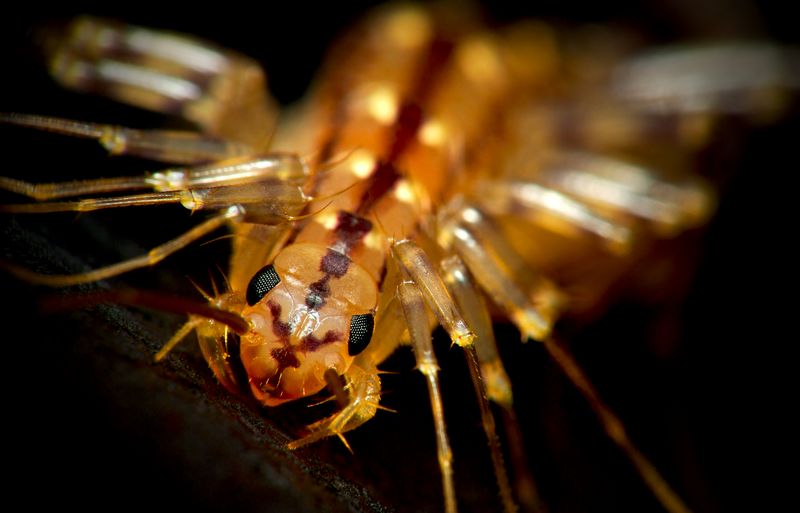
Right behind its head sits a pair of modified front legs called forcipules. They work like curved pincers, grabbing a meal and injecting venom that quickly calms it down.
Bites to humans are rare. These animals are skittish and would much rather run than fight, so most bites happen only when someone grabs or presses on one by accident.
When a bite does happen, it is commonly compared to a mild bee sting. You may notice a little pain, redness, and swelling that usually fades in a day or two.
Wash the spot with soap and water, then use a cold pack to ease the sting. Watch for unusual swelling, trouble breathing, or signs of infection, since people with insect allergies may react more strongly.
Small kids and pets are also unlikely targets. A curious dog or cat may chase one, and the centipede often sheds a leg to escape rather than bite.
My simple rule now is hands off. Use a jar and a piece of paper if you want to move one, and everyone stays happy.
Your Basement Centipede Works the Night Shift on Pests
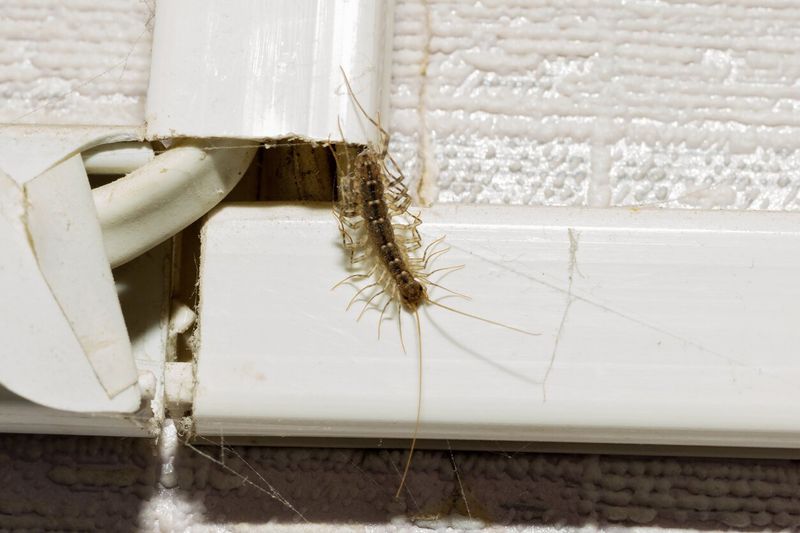
Call me converted, but I now see these speedy hunters as free pest control. They prowl at night and eat a surprising menu of unwanted guests.
Silverfish, firebrats, cockroaches, spiders, carpet beetle larvae, crickets, and flies all make the list. Researchers and extension experts also note they will take bed bugs, moths, ants, and even young termites when they find them.
Their hunting style is clever. Instead of only biting, a house centipede can lasso small prey with its long legs, wrapping it up before the venom does its job.
They are quick enough to catch insects that would outrun a spider. That speed, the same thing that startles us, is exactly what makes them such good hunters in dark corners.
They do not chew wood, eat stored food, damage fabric, or spread disease to people. That puts them in a very different category than roaches or pantry moths.
So if one lives quietly in an unfinished basement, letting it stay is a reasonable choice. Plenty of gardeners shrug and leave them alone for that reason.
Your comfort level matters, of course. Just know that the startling stranger is likely doing you a favor while you sleep.
Seeing Lots of Centipedes Often Means Other Bugs Are Around
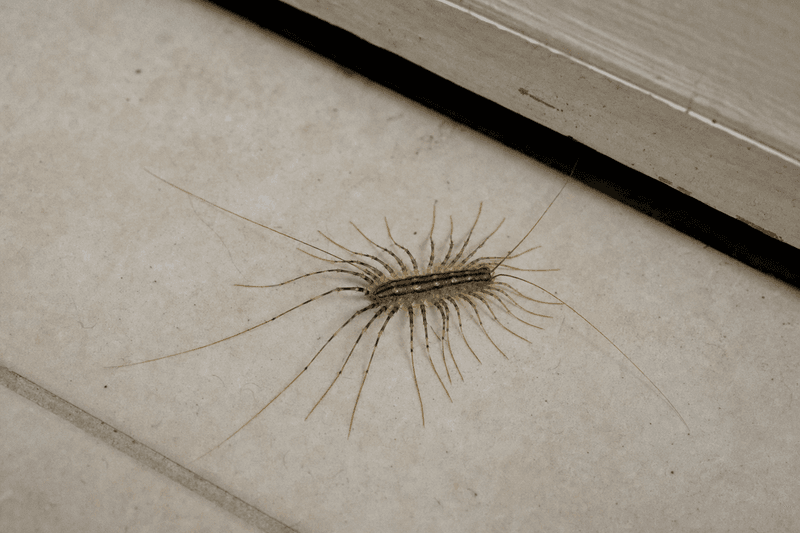
Spotting one centipede now and then is normal. Spotting several a week is a clue worth following.
House centipedes go where the food is. A steady crowd usually points to a healthy supply of silverfish, spiders, roaches, or other small insects hiding nearby.
Moisture is the second big draw. They lose water easily, so damp basements, crawl spaces, bathrooms, and laundry areas suit them well.
Kentucky’s humid summers make many basements feel like a sauna for bugs. Limestone foundations and older stone walls in parts of the Bluegrass can also hold moisture and leave plenty of cracks.
Seasons play a role too. Many people notice more activity in spring and fall, when outdoor temperatures shift and these animals move indoors or wander in search of mates and shelter.
Think of each sighting as a little report card for your home. Check around floor drains, sump pits, boxes stored on concrete, and cluttered corners where prey might be breeding.
Fix the food and water problem, and the centipede numbers usually drop on their own. That is a cheaper and smarter path than spraying every corner.
A Basement Dehumidifier Makes Centipedes Pack Their Bags
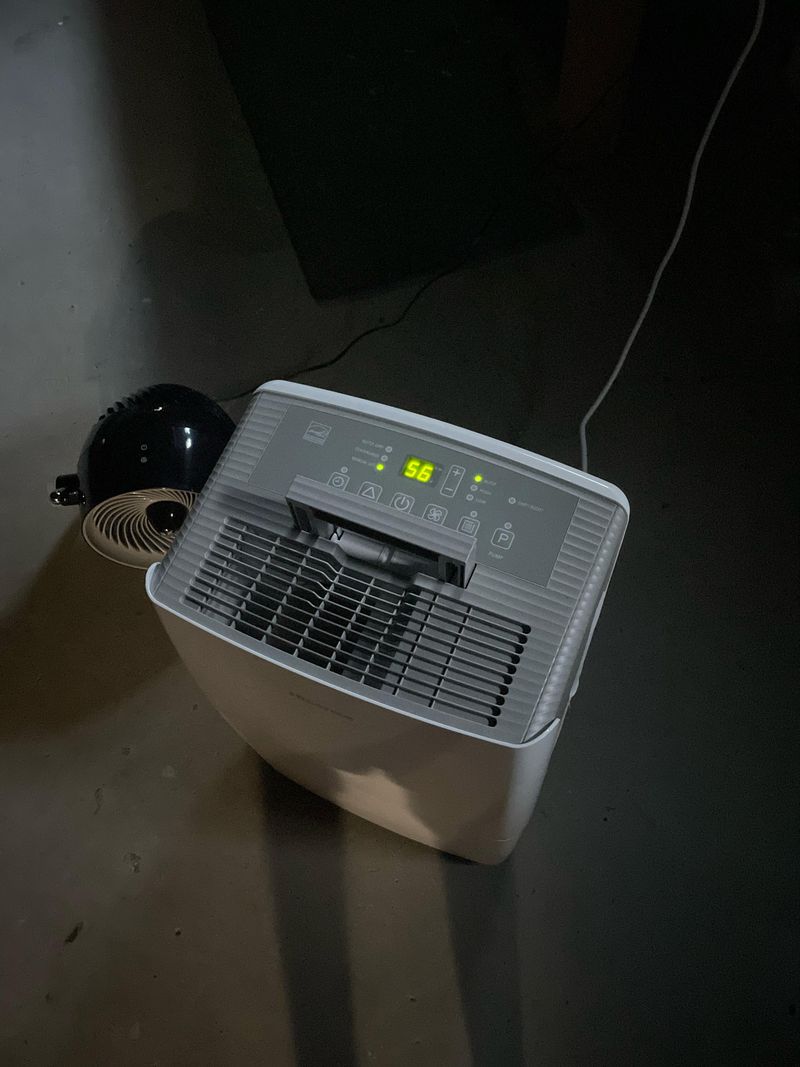
Moisture is the welcome mat, so pull it up. A dry basement feels unfriendly to centipedes and to the bugs they eat.
A dehumidifier is the hardest-working tool here. Many experts suggest keeping basement humidity below about 50 percent, and a cheap hygrometer will tell you where you stand.
Empty the bucket often or run a hose to a floor drain. A full tank shuts off the machine and lets humidity creep right back up.
Leaky pipes and sweating water lines deserve attention too. Wrap cold pipes with foam insulation and repair drips under sinks and around the water heater.
Store boxes on shelves or in plastic bins instead of cardboard on the floor. Damp cardboard traps moisture and gives silverfish a buffet, which then brings in hunters.
Outside, make sure gutters are clear and downspouts send water several feet from the foundation. Sloping soil away from the house helps keep basement walls drier after storms.
Glue traps placed along walls can catch wandering centipedes and show you where activity is highest. Most extension experts say routine spraying is rarely needed once moisture is under control.
Caulk Those Foundation Cracks Before Centipedes Sneak In
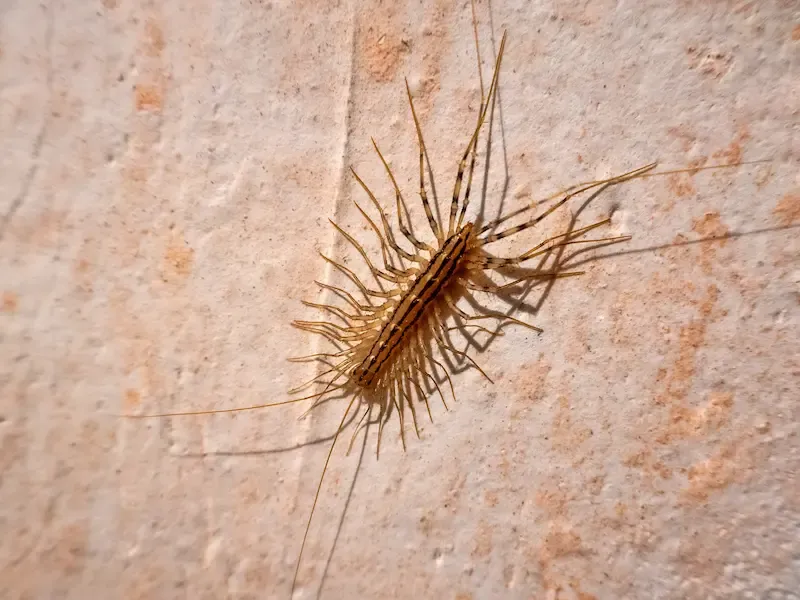
Flat bodies and flexible legs let these hunters squeeze through gaps you would barely notice. A thin crack in the foundation can be an open door.
Grab a flashlight and walk the basement slowly. Look at where walls meet the floor, around pipes and wires, near dryer vents, and along the edges of windows.
Seal small cracks with a quality silicone or acrylic caulk. For larger gaps around pipes, expanding foam or masonry patch works better and lasts longer.
Doors need love too. Add sweeps to exterior basement doors and replace worn weatherstripping so light does not shine through at the bottom.
Do not forget the sump pit. A tight-fitting lid keeps out moisture and blocks a favorite hiding spot right in the middle of the floor.
Floor drains can be covered with fine mesh screens that still let water pass. Window wells benefit from clear covers that keep out leaves and wandering critters.
Sealing work pays off twice. You cut down on centipede traffic and also block spiders, crickets, and ants, which leaves fewer meals for any centipedes already inside.
Moving Mulch and Woodpiles Away From Your Foundation Helps Too

Every fall, I rake leaves and notice how much life hides underneath. Centipedes love that cool, damp layer just as much as beetles and pill bugs do.
Outdoors, they shelter under rocks, logs, leaf piles, boards, and thick mulch. When those spots sit right against the house, the trip indoors is very short.
Pull mulch back a few inches from the foundation, or swap the closest strip for gravel. Keep mulch layers around 2 to 3 inches deep so they do not stay soggy.
Stack firewood well away from the house and off the ground. Bring in only what you will burn soon, and check pieces before carrying them through the basement.
Trim shrubs so air and sunlight reach the soil near your walls. Watering in the morning instead of evening also helps beds dry out before nightfall.
None of this means turning your garden into a desert. Leaf litter in far beds still feeds wildlife and pollinators, which many Kentucky gardeners want to support.
The goal is simple balance. Keep the habitat outside, keep the house dry, and let the occasional centipede finish its useful work.