That Little Green Frog Singing In Your Louisiana Yard Isn’t What You Think
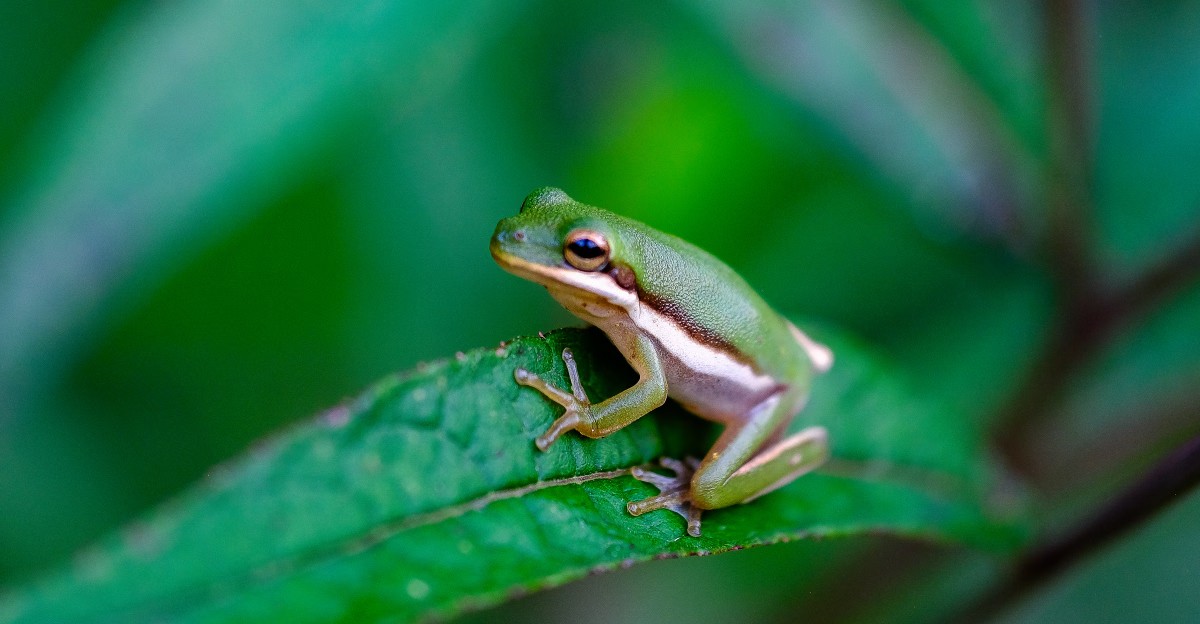
The tiny singer outside your bedroom window can repeat the same honking note over and over for hours, and only the males do it. Females stay quiet and simply listen. Every quonk is basically a dating profile shouted into the dark.
I used to blame the racket on the weather. Old-timers across Louisiana swore it meant rain was coming, and I believed them for years.
Turns out the real story involves romance, rival neighbors, and a big Caribbean stranger that has quietly moved into parts of Louisiana.
You might notice the chorus swell on muggy nights after a storm. You might also spot a sticky-toed visitor glued to your porch glass, snapping up moths under the light.
A little reading gave me a whole new respect for that pint-sized crooner. Friend or freeloader, the singer outside your window has earned your attention, so keep listening.
There’s a Reason That Green Treefrog Won’t Stop Honking After Dark
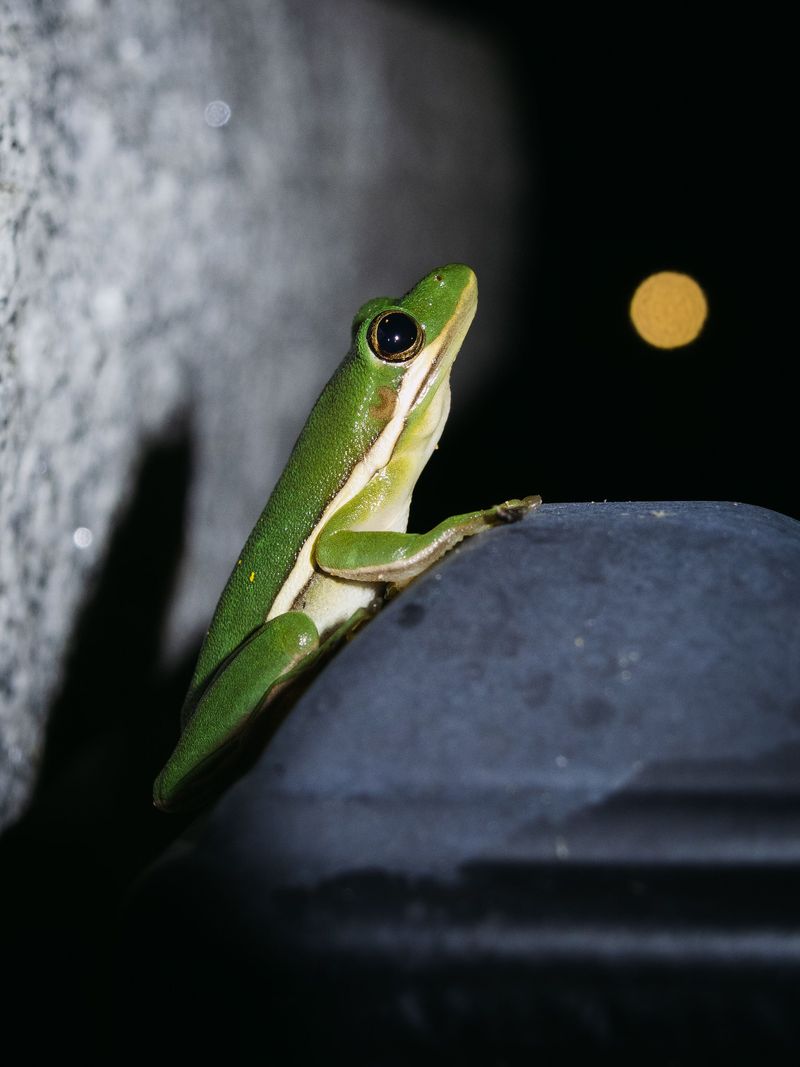
Only the boys sing. A male green treefrog fills a balloon-like throat sac with air and pushes out that nasal quonk to tell females where he is waiting.
Plenty of folks call these little guys rain frogs, and the nickname makes sense. Warm, damp nights after a storm fill ditches and low spots with fresh water, which is perfect for laying eggs.
The frogs are not forecasting weather, they are reacting to it, since wet conditions mean prime breeding time.
The calls also carry a social message. Researchers have found that males adjust their timing to avoid overlapping a neighbor, and they may switch to a quicker, harsher note when another male crowds their space.
Some quiet males even hang around loud callers, hoping to intercept a female on her way in.
In the Deep South, the chorus usually starts in spring and keeps going through the hot months, then fades as nights cool in fall. I find it oddly comforting to know the noise has a purpose.
Next time the racket keeps you awake, remember you are hearing a crowded singles scene playing out in your shrubs and ditches.
Most Backyard Singers Are the Official State Amphibian With a White Side Stripe
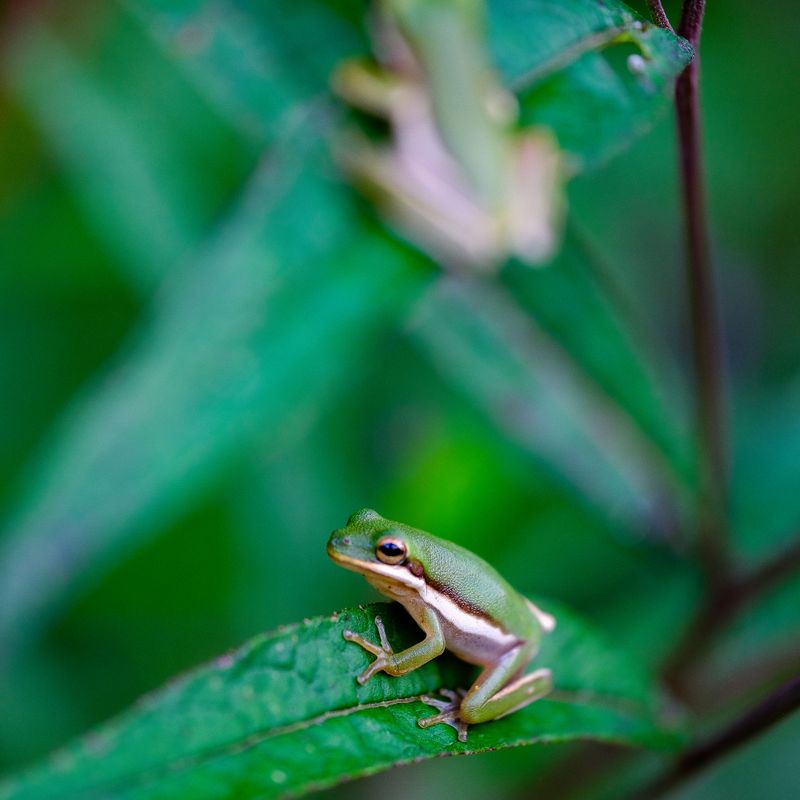
Louisiana lawmakers named the green treefrog the official state amphibian in 1993, and once you learn its features, you will see why it earned the title. Most of the bright little singers clinging to windows and crepe myrtles belong to this native species.
Adults are slim and smooth, usually about one and a half to two and a half inches long. Look for a crisp white or cream stripe running from the lip down the side, though a few individuals have a short stripe or none at all.
Many also show tiny gold flecks scattered across the back. Color can shift too. A frog that looks lime green on a leaf at night may turn duller olive or even grayish when it is cool, stressed, or resting in shade.
That flexibility fools a lot of people into thinking they are seeing two different animals. Big sticky toe pads let it cling to glass, siding, and slick leaves. Porch lights draw moths, beetles, and flies, so the frogs park nearby for an easy buffet.
They also chase mosquitoes and other small insects, which makes them handy neighbors for any gardener who likes sitting outside after sundown.
A Tiny Squirrel Treefrog Might Be the Raspy Voice on Your Porch
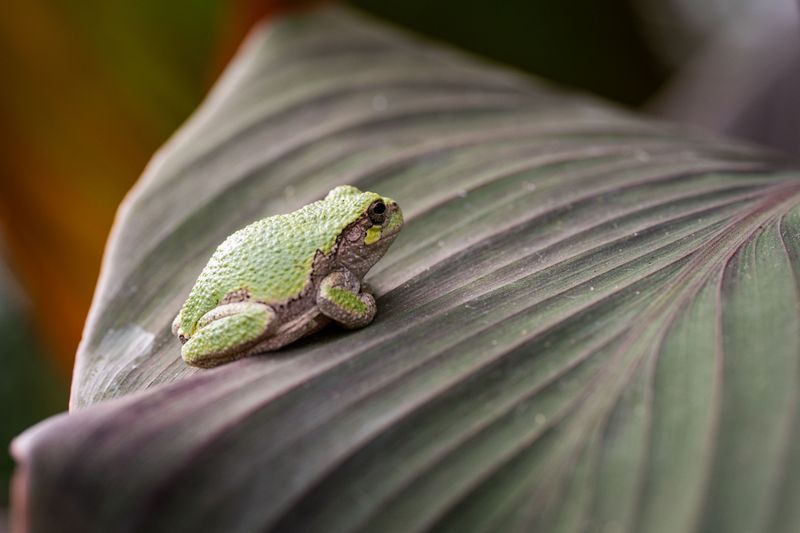
Not every small green singer is the same species. The squirrel treefrog is a close native cousin, and it turns up in yards, gardens, and around homes across much of the state.
Size is the first clue. Squirrel treefrogs top out around an inch and a half, so they look noticeably daintier than a full-grown green treefrog.
Their color changes fast, from bright green to brown, sometimes with darker spots, and many lack a sharp side stripe.
The voice gives them away. Instead of a clear honk, the breeding call is a raspy, ducklike waaak repeated in a series.
They also make a scolding chatter that sounds a lot like an annoyed squirrel, which is where the name comes from.
Like their cousins, squirrel treefrogs tend to call during and after rain, so they earn the rain frog label too. I mixed them up for a whole summer before I finally caught one under the porch light and compared photos.
If your mystery singer sounds rough and scratchy, check its size before you jump to conclusions, because a small, raspy frog is often this harmless native rather than an invader.
Big Cuban Treefrogs With Giant Toe Pads Are the Guests to Watch For
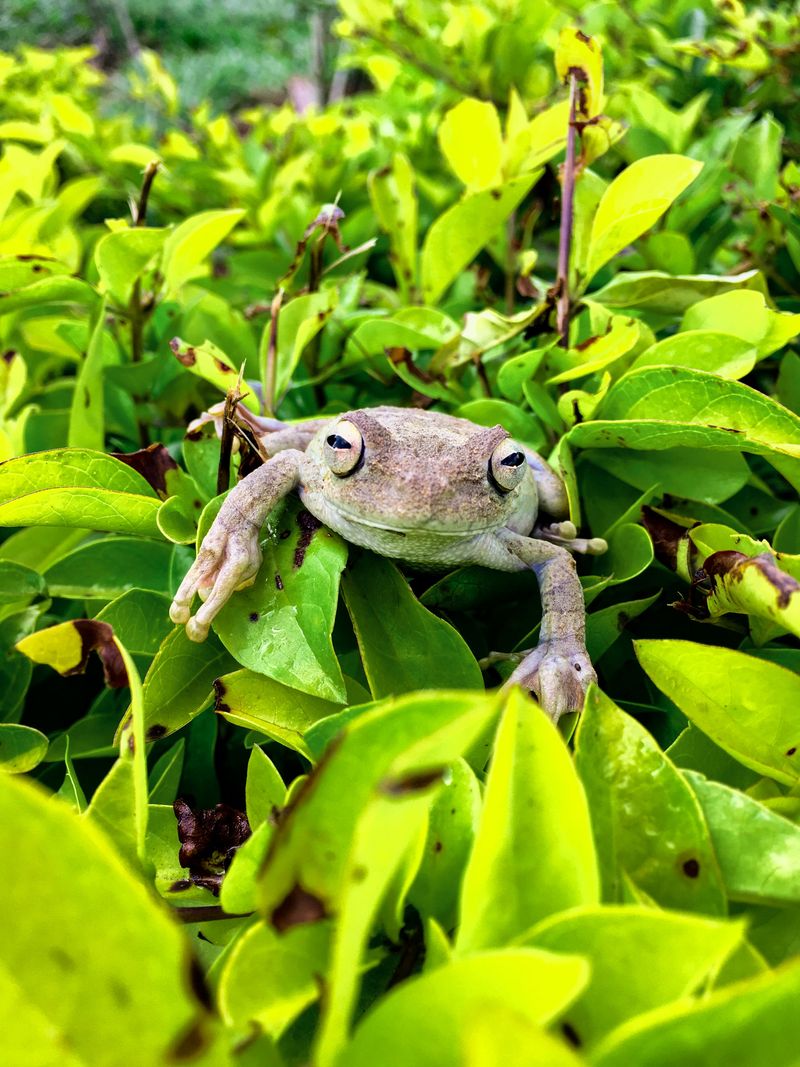
Some frogs that turn up on Gulf South porches are not local at all. The Cuban treefrog, native to Cuba, the Bahamas, and the Cayman Islands, spread through Florida decades ago and has since been confirmed in the New Orleans area.
These frogs are big. Females can reach about five inches, and even smaller males often outsize any native treefrog you are used to seeing.
Their toe pads are huge, almost like little suction cups, and their skin tends to look bumpy or warty.
Color is unreliable. Cuban treefrogs can be gray, tan, brown, olive, cream, or greenish, and one frog may change shades in a single evening. That shifting look is a big reason people mistake them for a well-fed native.
Most arrivals hitch rides in potted plants, landscape materials, boats, and vehicles. Their call is a rasping, snore-like croak, quite different from the clean honk of a green treefrog.
If you hear something like a creaky door or a snoring uncle near your gutters, grab a flashlight and take a closer look. Spotting one early makes a real difference in keeping this species from settling into new neighborhoods.
Check the Skin on That Frog’s Head Before You Decide
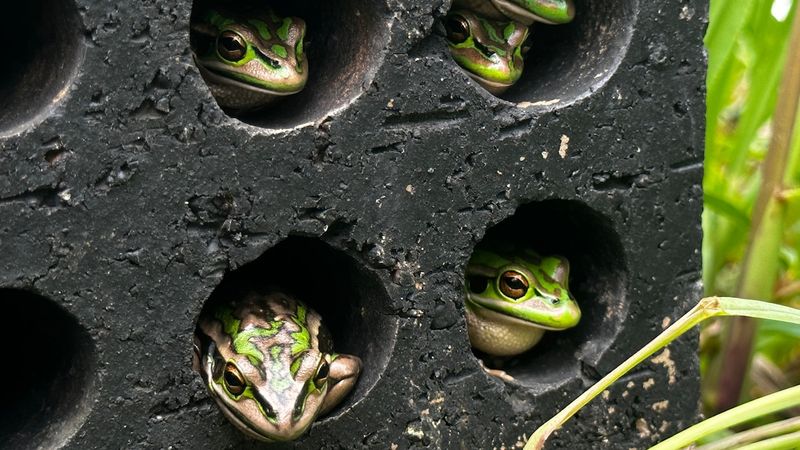
A quick look at the head often settles the debate. On a Cuban treefrog, the skin on top of the head is fused to the skull, so it will not slide when you nudge it with a gloved finger.
Native treefrogs have loose skin there that shifts easily. Other clues help too. Cuban treefrogs have a broad head, bulging eyes, and toe pads that look oversized for the body. Native green treefrogs look slender and smooth, with that tidy pale stripe along each side.
Wear disposable gloves or slip a plastic bag over your hand before touching any frog. Cuban treefrog skin gives off a sticky mucus that can sting eyes and irritate skin, and it may bother people with allergies.
Gloves protect the frog as well, since lotions, sunscreen, and bug spray on human hands can harm amphibians.
Photos are your best friend. Snap a clear picture from the top and side, and include something for scale like a coin or your gloved hand.
I keep an old jar lid on the porch rail for this exact purpose, and a good photo lets experts confirm the species so a native frog is not harmed by mistake.
Cuban Treefrogs Eat Native Frogs and Crawl Into Electrical Boxes
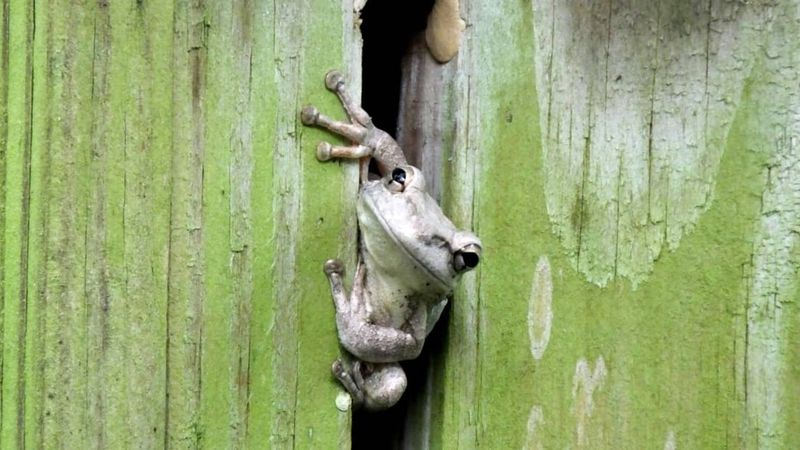
Cuban treefrogs eat almost anything they can fit in their mouths. That menu includes insects, spiders, lizards, small snakes, and native frogs like green and squirrel treefrogs.
In Florida, researchers have documented native treefrog numbers dropping in areas where Cuban treefrogs move in.
Their tadpoles also compete with native tadpoles for food and space in shared puddles and ponds. The result can be a quieter yard, with fewer of the familiar voices you grew up hearing.
The trouble does not stop at wildlife. These frogs crawl into electrical boxes, transformers, and utility switches, and they have caused short circuits and power outages in Florida. They also clog sink and toilet drains and hide in pool pumps, downspouts, and AC units.
Pets can get a mouthful of trouble too. A dog or cat that bites one may drool, paw at its mouth, or act uncomfortable, so rinse the mouth gently with water and call your veterinarian if symptoms continue.
Keeping pets inside at night during the warm months cuts down on run-ins. I think of Cuban treefrogs as messy houseguests that eat the other guests, which is a fair reason to stay alert.
Snap a Photo and Report That Suspicious Frog Instead of Guessing
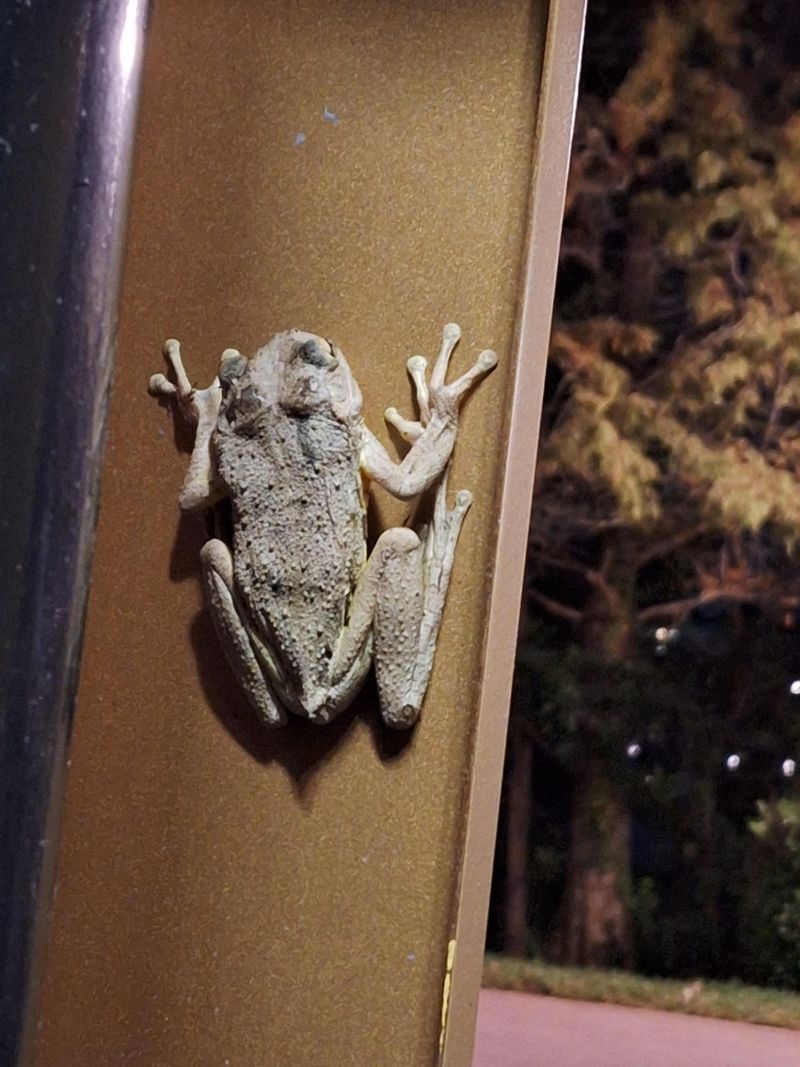
Louisiana wildlife officials want to know where Cuban treefrogs show up. Reports help biologists track how far the species has spread and where to focus attention.
Start with a photo, then contact the Louisiana Department of Wildlife and Fisheries or your local LSU AgCenter extension office. You can also upload sightings to iNaturalist or EDDMapS, two free tools scientists check for invasive species records.
Include the date, your parish, and where you found the frog. Removal is a sensitive step. Florida wildlife agencies describe humane methods for confirmed Cuban treefrogs, so ask local experts for guidance before you act.
Please do not release a captured Cuban treefrog somewhere else, since that only moves the problem to a new yard.
Prevention is simpler. Check potted plants from out-of-state nurseries before setting them in your beds, especially shipments from Florida. Look under leaves, inside pot rims, and in the drainage holes.
Switching outdoor bulbs to warm yellow LEDs reduces the insect swarms that pull big frogs toward your doors and windows. Small habits like these make your yard a lot less welcoming to hitchhikers, while your native singers carry on as usual.
Native Shrubs and a Fish-Free Pond Keep Green Treefrogs Singing

Green treefrogs reward a little effort. Give them shelter, water, and a steady supply of insects, and they tend to stick around season after season.
Dense native shrubs and vines offer daytime hiding spots. Wax myrtle, yaupon holly, American beautyberry, and crossvine all grow well in Louisiana and give frogs cool, shady perches.
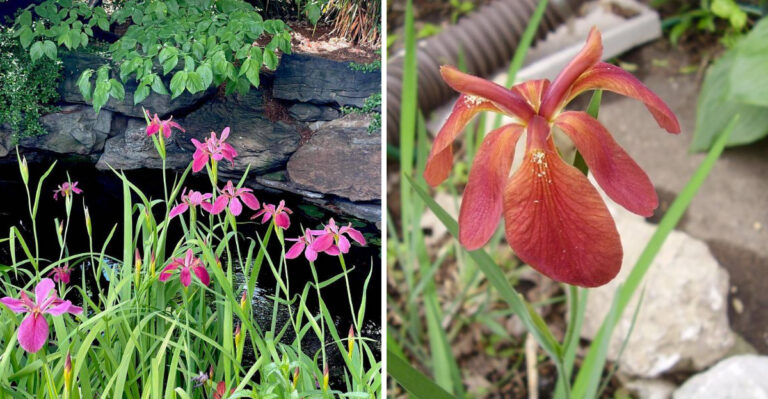
Tall clumps of Louisiana iris or pickerelweed around a pond edge work nicely too. A small, shallow pond without fish makes a fine nursery, since many fish eat eggs and tadpoles. Skip chemical treatments and let some leaf litter and plants soften the edges.
Ease up on broad insecticide sprays, which cut into the frogs’ food supply and can harm their sensitive skin.
Leave a few nighttime perches near windows rather than shooing every frog away. Then simply listen.
A clear, bell-like quonk chorus points to healthy native frogs, while a scratchy snore near the gutters deserves a flashlight check.
I have learned to treat each warm, rainy night as a chance to take roll call. Knowing who is singing turns that familiar summer noise into something you can understand, protect, and enjoy for many years.