That Mysterious Growth In Your New York Oak Tree This Fall Isn’t What You Think
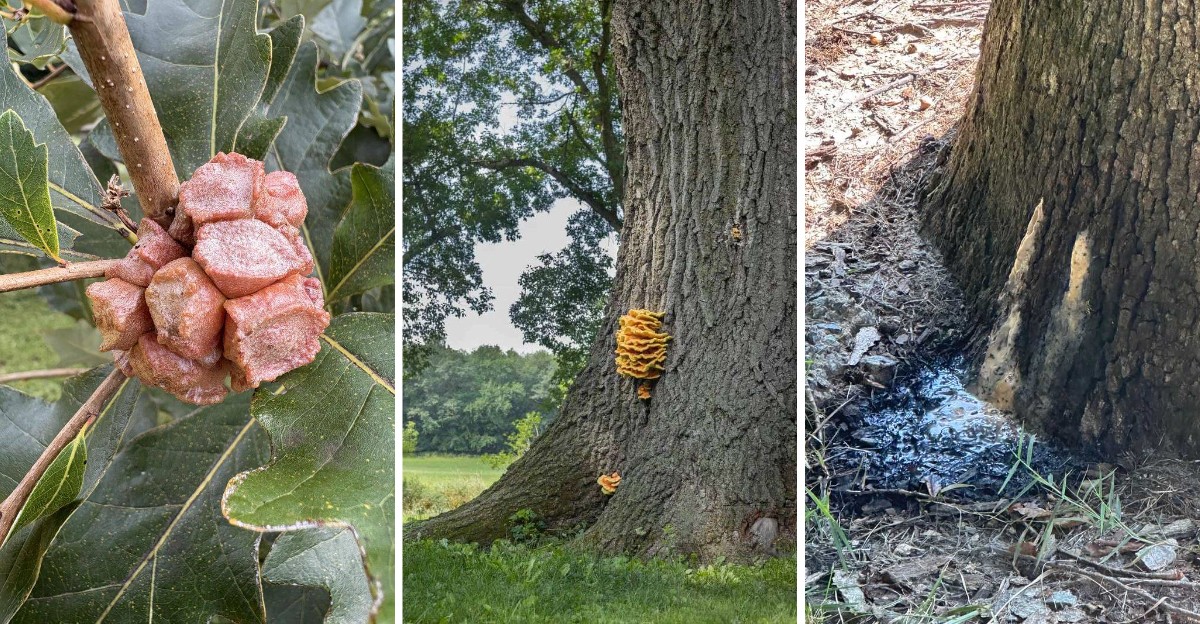
Something odd is hanging from your oak, and it wasn’t there in July. It might look like a tiny paper lantern, a fuzzy tan smudge, or a frilly mushroom hugging the roots.
Fall in New York has a funny way of pulling back the curtain on trees. As leaves thin out, all kinds of bumps, balls, and brackets suddenly come into view.
Some of these strange guests are harmless oddities with fascinating backstories. Others are quiet warning signs that deserve a call to an arborist.
Knowing the difference can save you money, worry, and maybe even a beloved shade tree. A slow walk around the yard is all it takes to start.
The guide below introduces common oak growths and what each one means. You’ll also find simple steps for handling them the smart way.
1. Oak Apple Galls Look Like Round, Papery Balls
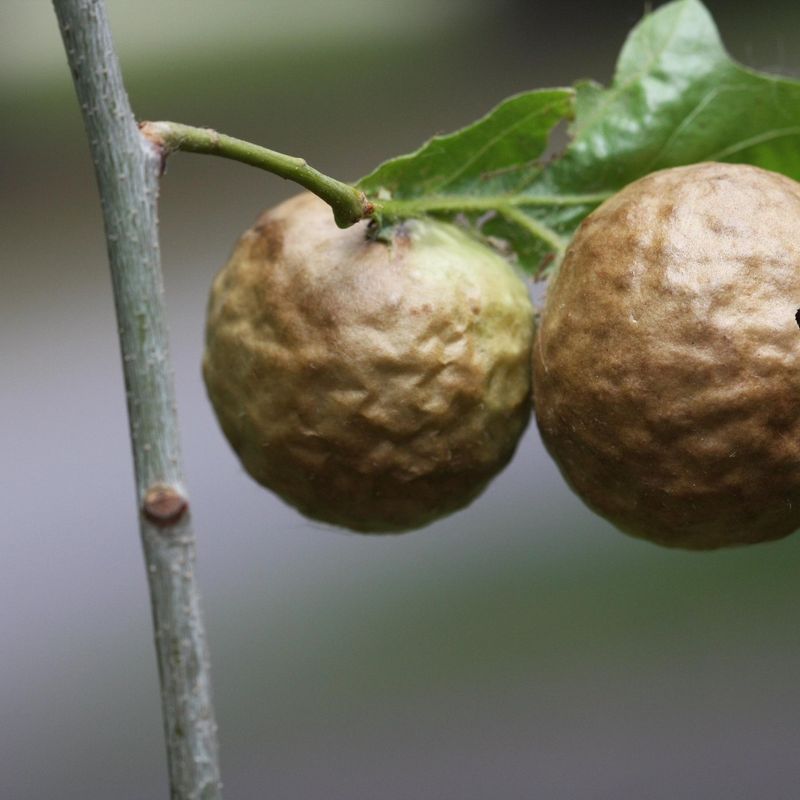
Picture a ping pong ball made of brown tissue paper, dangling from a twig. Kids in New York often find them on sidewalks and wonder if acorns went wrong.
Those odd spheres are oak apple galls, and a tiny wasp built them. Well, the wasp started the job, and the tree finished it.
Back in spring, a stingless gall wasp laid an egg inside a fresh oak leaf bud. Chemicals from the growing larva tricked the leaf into forming a round, spongy home.
Early in the season, the gall stays green and squishy, almost like a small apple. By fall, it dries into a light, papery shell that crackles when squeezed.
Crack one open and you will see mostly empty space inside. A hard, seed-like center sits in the middle, held in place by thin fibers.
Look for a pinhole on the outside of the gall. That little hole means the adult wasp already chewed its way out and flew off.
Here is the good news for worried homeowners. Oak apple galls rarely cause serious harm to a healthy tree.
Most of them drop on their own in late fall or winter. You can rake them up with the leaves if they bother you.
Sprays are not needed and usually do little good anyway. The wasp spends most of its life hidden inside, safe from chemicals.
Fun fact: people once crushed oak galls to make ink. Some famous old documents were likely written with gall ink.
2. Woolly Leaf Galls Cling To Leaf Undersides
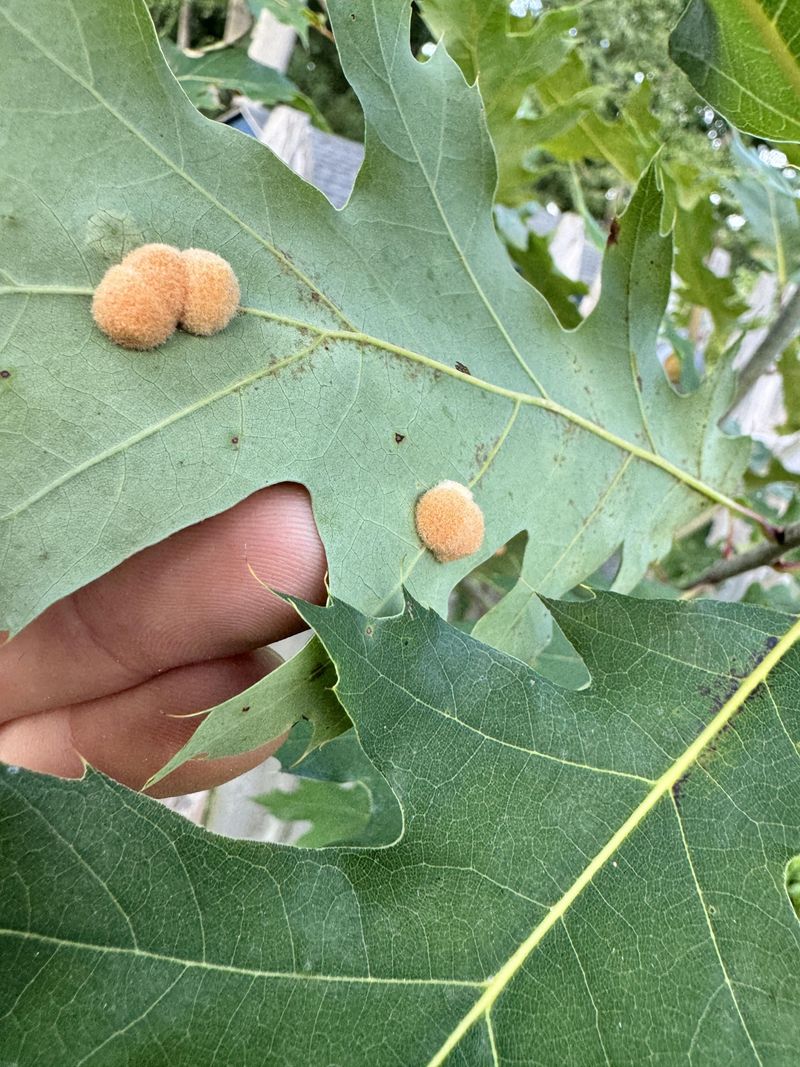
Flip an oak leaf over, and you might find what looks like a cotton ball glued in place. Some are creamy white, while others blush pink or rusty orange.
Woolly leaf galls are the fuzzy cousins of oak apples. Tiny gall wasps cause them, laying eggs right in the leaf tissue.
As the larvae grow, the leaf responds by sprouting soft, hairy fibers. Inside that fluff, small chambers protect each young wasp like a cozy sleeping bag.
White oaks seem to collect these fuzzy patches more than other oaks. You will often spot them clustered along the main leaf vein.
Your New York Garden Changes Every Week. Your Plan Should Too.
Gardening in New York changes quickly throughout the season. Every Friday you’ll receive a simple weekly plan showing exactly what to plant, prune, fertilize, harvest, and protect so you never miss the right timing.
Honestly, they are one of the cuter things you can find on a tree. Many nature lovers photograph them like little treasures.
Do they hurt the oak? In most cases, no, they stay a cosmetic quirk rather than a real threat.
A leaf with a few woolly galls still makes food for the tree. Even heavy clusters on some leaves rarely slow a mature oak down.
Your best move is simple observation. Snap a photo, enjoy the oddity, and let the leaves fall naturally this autumn.
Raking fallen leaves and adding them to compost works fine. Most wasps have already left by the time the leaves hit the ground.
Try this with curious kids: use a magnifying glass to peek inside. Tiny chambers show just how clever insects can be.
3. Twig Galls Cause Knobby Swellings On Branches
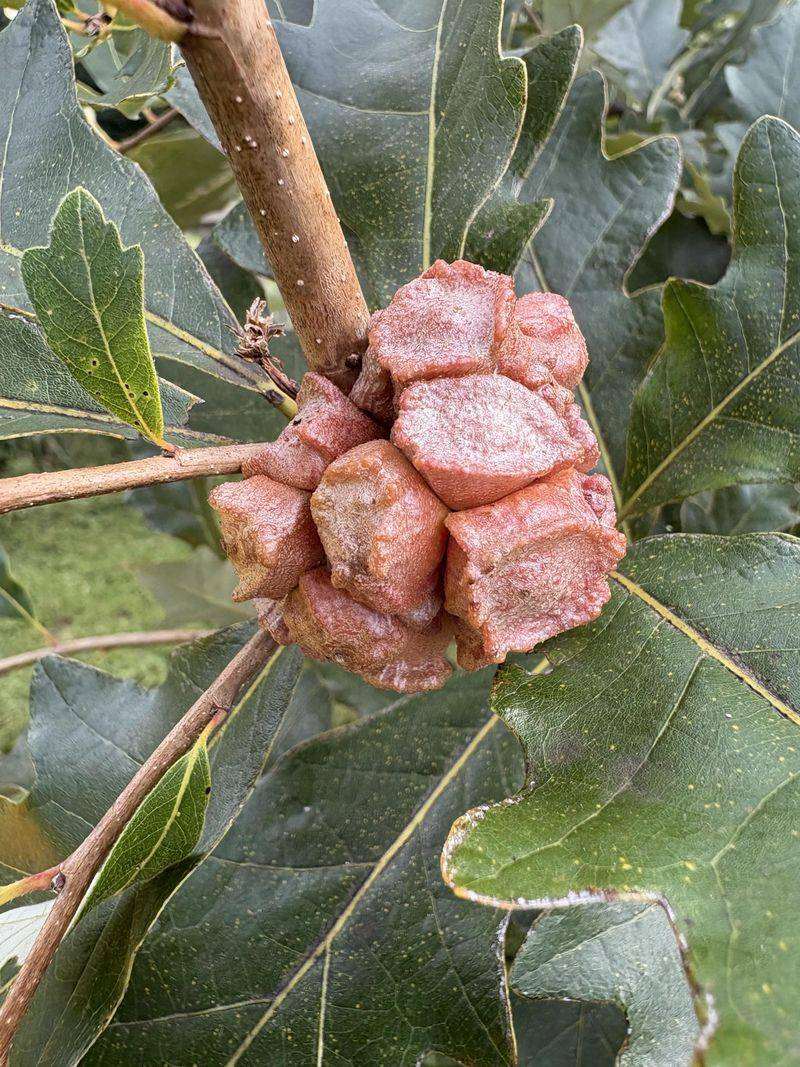
Run your hand along a low oak branch, and you may feel strange knuckles. These woody lumps can look like the twig swallowed a marble.
Twig galls form when small wasps or midges lay eggs inside woody tissue. The branch swells around the young insects, building a hard shelter.
Sizes vary quite a bit from tree to tree. Some bumps are no bigger than a pea, while others bulge like walnuts.
Fall makes them easier to spot as leaves drop away. Suddenly, those knobby branches stand out against the gray sky.
Most twig galls are more strange than scary. A healthy oak can carry many of them without much trouble.
Still, a few aggressive types can wrap around a stem and squeeze it. When that happens, the twig beyond the gall may brown out and decline.
Here is a smart, practical step for late fall or winter. Prune off small branches loaded with galls, cutting just below the swelling.
Bag those clippings for the trash instead of tossing them in a brush pile, or burn them only where state rules allow. Insects still inside could otherwise finish growing and fly back.
Use clean, sharp pruners for tidy cuts that heal well. Wiping blades with rubbing alcohol between cuts is a good habit.
Keep an eye on young trees especially. Small oaks have fewer branches to spare, so early pruning matters more.
4. Gouty Oak Galls Deserve A Closer Look
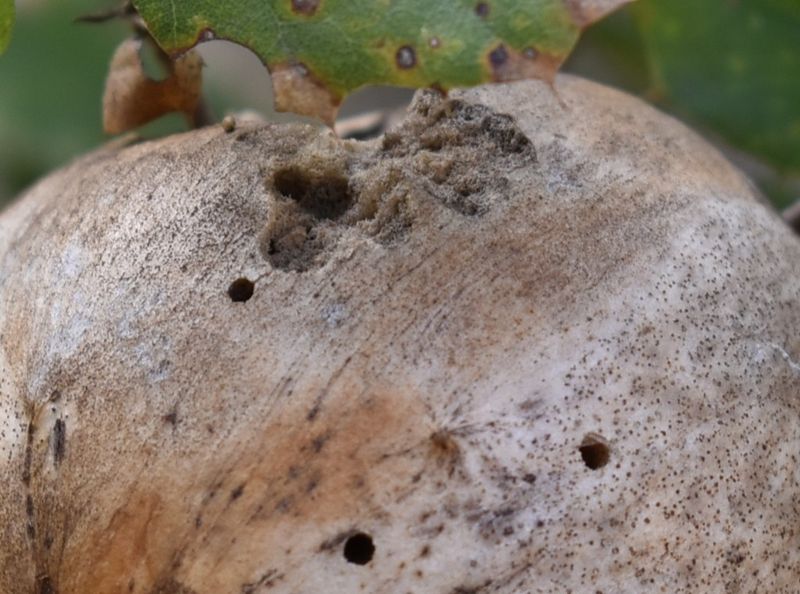
Gouty oak galls got their name from gout, an old ailment that causes swollen, lumpy joints. One look at an infested branch, and the name makes sense.
These galls are big, rough, and oddly shaped. They grow along stems and twigs, often in clusters that look like rocky growths.
Small wasps create them, much like the other galls on this list. The difference is how much damage they can sometimes cause.
For years, people treated gouty galls as just a looks problem. Newer observations show heavy infestations can girdle stems and weaken branches.
Pin oaks and scrub oaks seem to be favorite targets in many areas. Suburban yards often report outbreaks on younger trees.
So how do you tell if your tree needs help? Count the galls and check for brown, leafless branch tips beyond them.
A handful of galls is usually fine to leave alone. Dozens of galls with failing branches signal it is time for action.
Prune affected branches during the dormant season when possible. Removing them before spring can reduce the next wasp generation.
Large trees with major infestations need a certified arborist. They can judge which limbs to remove and suggest care plans.
Healthy trees fight back better, so water during dry spells. A layer of mulch around the base also keeps roots happier.
5. Hen-Of-The-Woods Mushrooms Cluster Near The Base
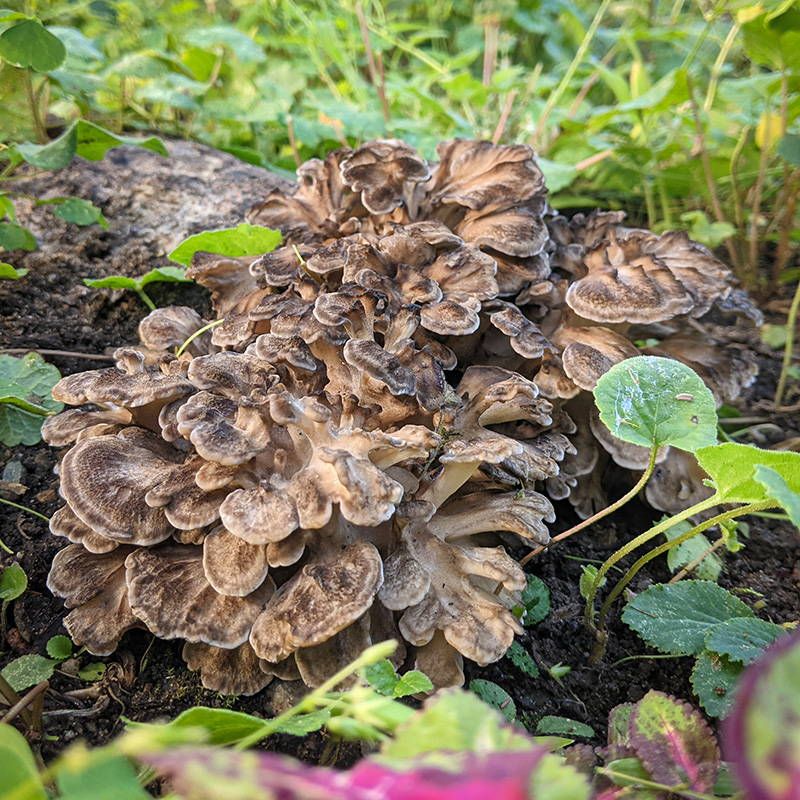
Foragers get downright giddy each September. That is when ruffled gray clusters pop up at the feet of old oaks.
Hen-of-the-woods, also called maitake, looks like a fluffed-up hen sitting on her nest. Others say it resembles a frilly head of lettuce.
Each cluster is built from many fan-shaped, wavy caps. Colors range from smoky gray to warm brown, often overlapping in tight layers.
These mushrooms can get huge, weighing several pounds. Some spread more than a foot wide, making them hard to miss.
Mature oaks across the northeast, including New York, are their favorite hosts. They tend to return to the same tree year after year in fall.
Exciting as they are, they carry a hidden message. Hen-of-the-woods signals white butt rot inside the roots and lower trunk.
Rot weakens the wood slowly, sometimes over many years. A tree may look fine above while its base softens quietly.
If maitake shows up near your house, call an arborist for an inspection. They can test wood strength and judge whether the tree is still safe.
Thinking about cooking them? Only eat wild mushrooms after an expert confirms the identity.
Look-alikes exist, and mistakes can make people very sick. Local mycological clubs often host free identification walks in autumn.
6. Chicken-Of-The-Woods Brackets Show Up On The Trunk
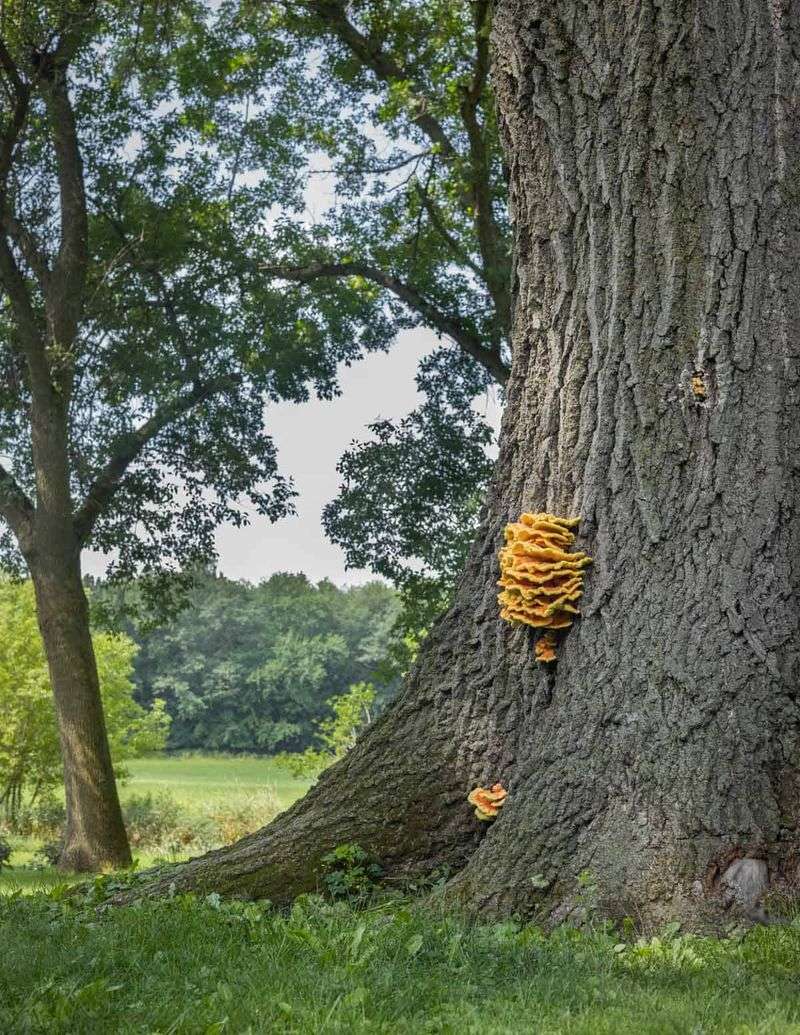
Talk about a showstopper. Chicken-of-the-woods glows on oak trunks like someone spilled orange sherbet down the bark.
These shelf-like fungi grow in thick, overlapping tiers. Their tops shine bright orange or salmon, while undersides flash sunny yellow.
Hikers in New York broadleaf forests spot them from late spring through autumn. Fall sightings often happen after a good soaking rain.
The name comes from the texture when cooked. Many people say it tastes and chews a bit like chicken.
Fun as they look, they bring sobering news for your tree. Chicken-of-the-woods causes brown rot, which makes wood dry and brittle.
By the time brackets appear, decay has usually spread inside. The fruiting body is just the visible tip of a larger problem.
Brittle wood can snap during storms or heavy snow. Trees leaning over driveways, sheds, or play areas deserve fast attention.
Knocking off the brackets will not fix the rot. The fungus keeps working inside the trunk where you cannot reach it.
An arborist may use special tools to measure hidden decay. Some trees can be pruned and kept, while others need removal for safety.
If you plan to taste one, get an expert to confirm it first. Specimens growing on certain trees may upset some stomachs.
7. Burls Create Large, Bumpy Trunk Bulges
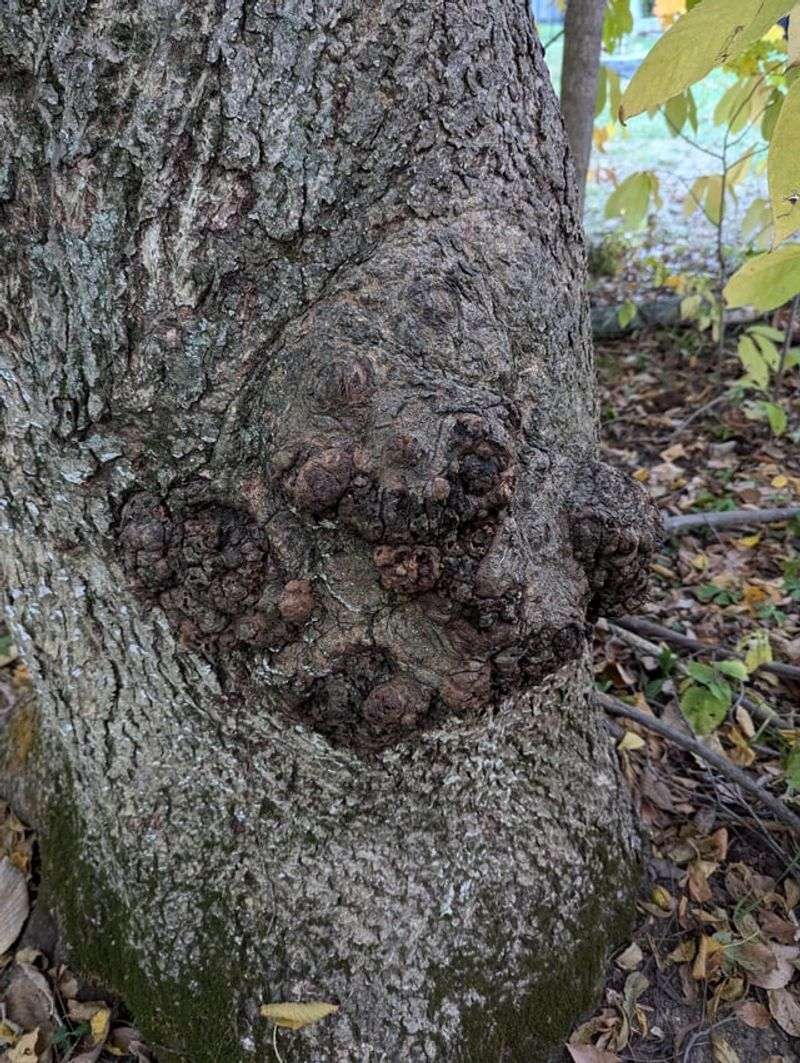
Some oaks look like they swallowed a boulder. A giant, bumpy bulge pokes out from the trunk, covered in bark and full of character.
That bulge is called a burl. It forms when stress throws off the tree’s normal growth hormones.
Insects, fungi, bacteria, or an old injury can all trigger one. Harsh weather and other tough conditions may play a part too.
Think of a burl as the tree’s version of a bandage. It piles up extra tissue around a stressed spot to protect itself.
Inside, the grain swirls in wild, twisty patterns. Woodworkers prize burl wood for bowls, tabletops, and fancy guitar trims.
So should you panic? Not at all, because most burls do not harm a tree’s overall health.
Many oaks in New York parks carry burls for decades without trouble. Some of the oldest, grandest trees are covered in them.
Please resist the urge to cut a burl off a living tree. Removing it creates a large wound that invites rot and pests.
Do check the bark around the burl now and then. Cracks, oozing, or mushrooms nearby could point to a separate issue.
Otherwise, enjoy your tree’s quirky feature. A burl gives your oak a story to tell and a face only you will recognize.
8. Spongy Moth Egg Masses Look Like Fuzzy Tan Patches
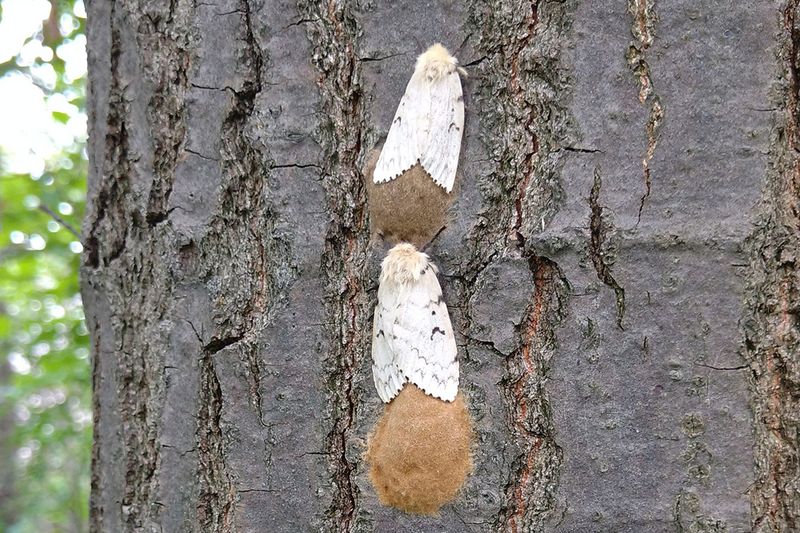
Here is the one growth on this list worth acting on today. Those fuzzy tan patches on your oak bark are spongy moth egg masses.
Formerly called gypsy moth, this pest has hit New York hard lately. The Finger Lakes and Hudson Valley saw major outbreaks in recent years.
Each patch measures about one and a half inches long. It feels soft and spongy, which is how the moth got its new name.
Inside one small mass, hundreds of eggs wait for spring. Some patches hold up to a thousand future caterpillars.
Hatching happens in late April or early May. The timing lines up perfectly with tender new oak leaves.
Hungry caterpillars can strip a tree bare in a few weeks. Repeated leaf loss weakens oaks and leaves them open to other troubles.
Check trunks, branches, firewood, patio chairs, and even the underside of grills. Masses can stay put from late summer all the way through spring.
Scrape each one into a jar of soapy water using a putty knife. Let it soak for a couple of days before tossing it out.
Do not just knock masses onto the ground. Eggs can still hatch from the soil or leaf litter.
Gather the neighbors and make it a fall project. Fewer egg masses now means greener, fuller oaks next summer.
9. Lichens Form Crusty Patches On Bark
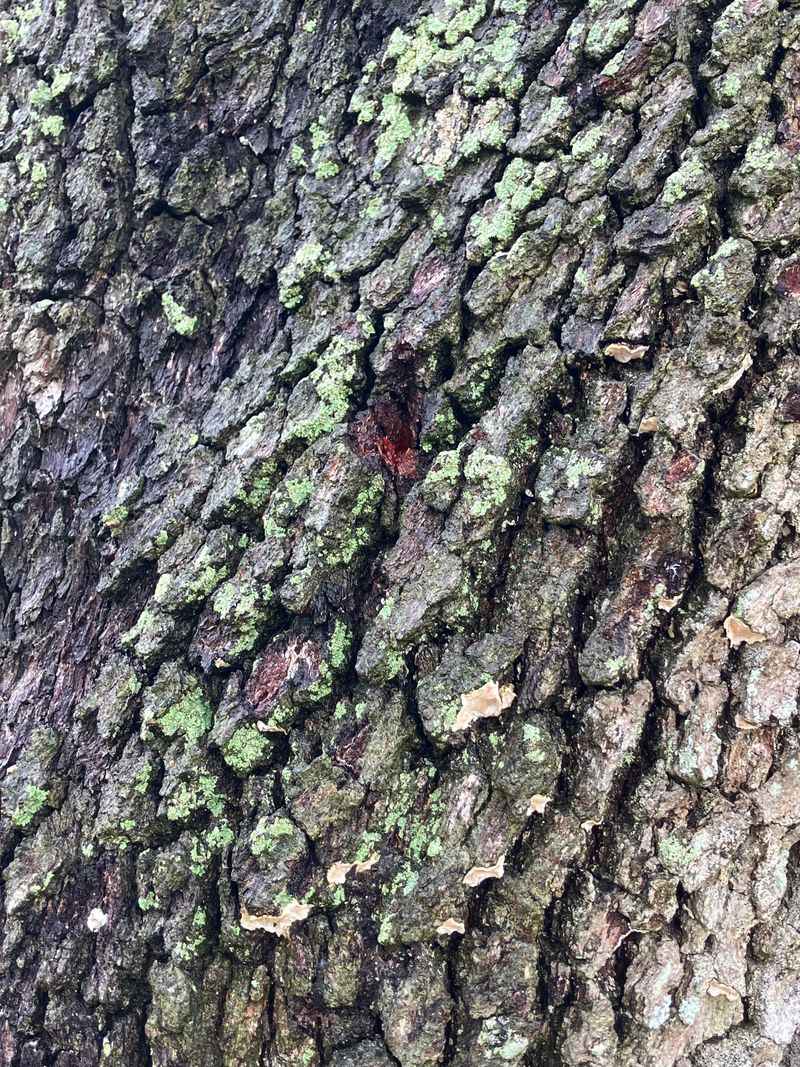
Gray-green crusts, frilly yellow flakes, and tiny shrubby tufts can all decorate oak bark. To many folks, they look like peeling paint or mold.
Meet lichens, one of nature’s best team players. Each one is a partnership between a fungus and an alga or cyanobacterium.
The fungus provides shelter and structure. Its partner makes food from sunlight, feeding both of them.
Lichens come in three main shapes. Crusty ones hug the bark, leafy ones curl up, and shrubby ones branch outward.
Colors range widely too, from green and gray to orange and black. A single trunk can host a whole patchwork quilt of them.
Best of all, lichens do not steal food from your tree. They gather everything they need from air and rainwater.
Spotting them in New York, even in the city, often means cleaner air. Many lichens cannot handle heavy pollution.
Some research hints that thick lichen cover might add stress to oaks already struggling. Healthy trees, though, rarely mind their crusty roommates.
Skip scrubbing or spraying them off. That effort can scrape bark and cause more harm than good.
Notice lichens suddenly covering bare, leafless branches? Look at the branch itself, since lichens grow faster where sunlight reaches a struggling limb.
10. Oozing Cankers Signal Problems Underneath
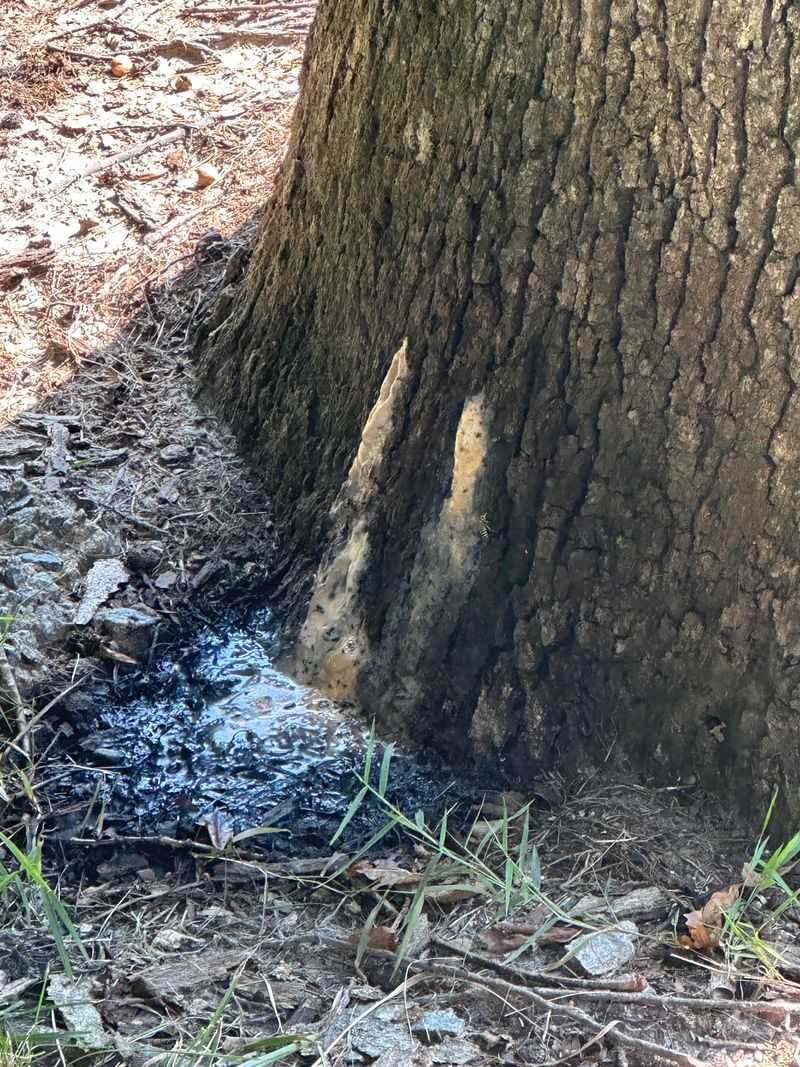
A dark, wet streak running down an oak trunk can stop you in your tracks. Lean closer, and you might even catch a sour, fermented smell.
Arborists call this slime flux or wetwood. It seeps from cracks and wounds where bark has been damaged.
The liquid often starts clear, then darkens as air hits it. Sometimes it turns frothy, like root beer foam sliding down the bark.
Underneath, a canker is usually at work. Cankers are patches of injured bark, often sunken or missing, exposing wood below.
Fungi and bacteria are the usual culprits. Hypoxylon canker attacks living bark, while bacterial wetwood creates the soggy, smelly ooze.
Stressed trees get hit hardest. Drought, root damage, and construction wounds all make oaks easier targets.
Wetwood alone is not usually an emergency. Still, it can lead to wilting leaves and weaker branches over time.
Watch out for flowers and grass beneath the drip. The ooze can harm plants growing around the base.
Avoid plugging or sealing the wound, which may trap moisture inside. Instead, water deeply during dry summers and protect roots from mowers.
Spreading cankers, peeling bark, or failing branches mean it is time for an expert. A quick visit now could add many healthy years to your oak.