That White Flower Creeping Into Your Pennsylvania Lawn Is Actually A Native Gem
Most Pennsylvania homeowners see a low growing white flower spreading through their lawn and reach for the herbicide. It doesn’t look like grass, it wasn’t planted intentionally, and the instinct to restore a uniform lawn surface kicks in quickly.
But before you treat it as a problem, it’s worth taking a closer look at what you actually have growing there. That white flower might be one of the most valuable plants in your yard.
What gets dismissed as a weed in countless Pennsylvania lawns is actually a native plant with a remarkable ecological resume.
It feeds pollinators, fixes nitrogen in the soil, stays low enough to coexist comfortably with grass, and has been growing wild in Pennsylvania’s meadows and open fields for generations.
The bees that visit it are not being inconvenienced. They’re being fed at a time when reliable forage is genuinely important to their survival. Understanding what this plant is and what it does changes the calculation entirely.
Meet Wild Strawberry – A True Pennsylvania Native
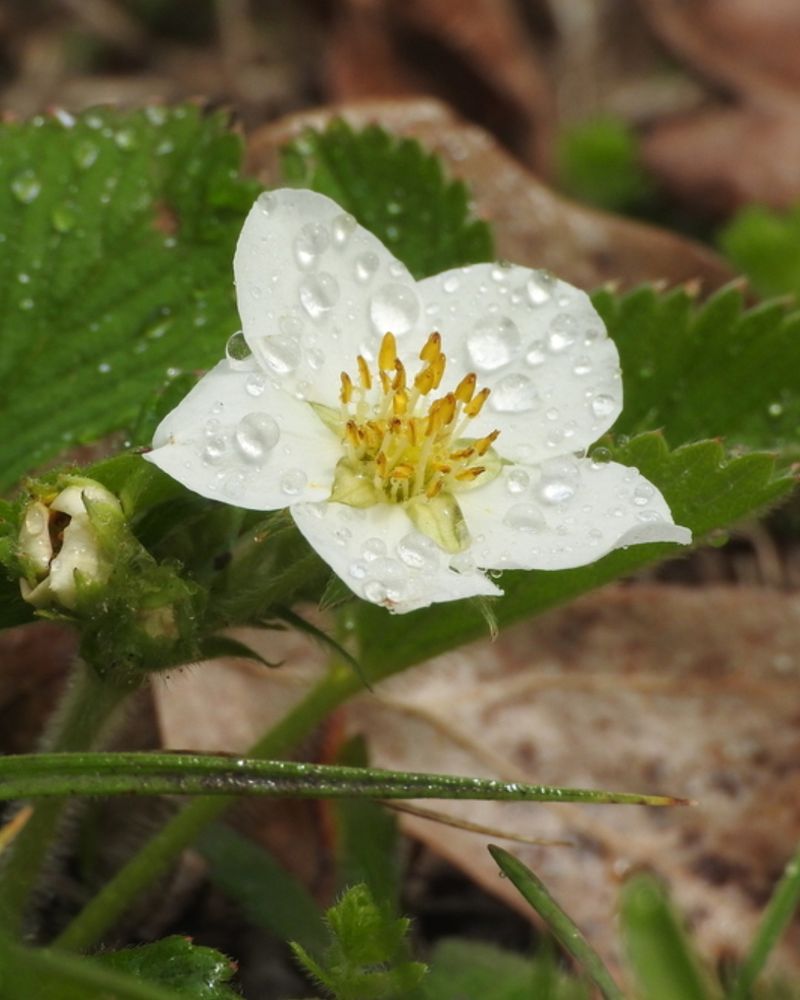
Most people walk right past it without a second glance. Wild strawberry, or Fragaria virginiana, is one of those plants that blends into your lawn so well that it almost disappears.
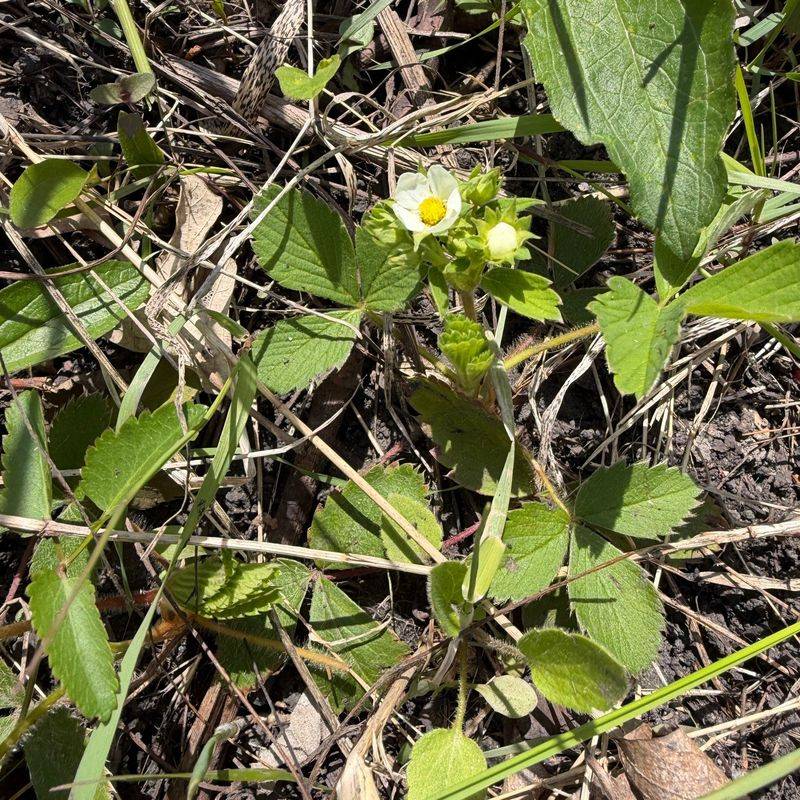
It grows low to the ground, hugging the soil with small clusters of toothed green leaves and delicate white flowers that are easy to overlook.
Fragaria virginiana is native to Pennsylvania and the broader eastern United States. It has been growing here for thousands of years, long before anyone was planting grass seed or worrying about a tidy lawn.
Because it stays close to the ground and spreads quietly, it gets lumped in with unwanted plants by most homeowners.
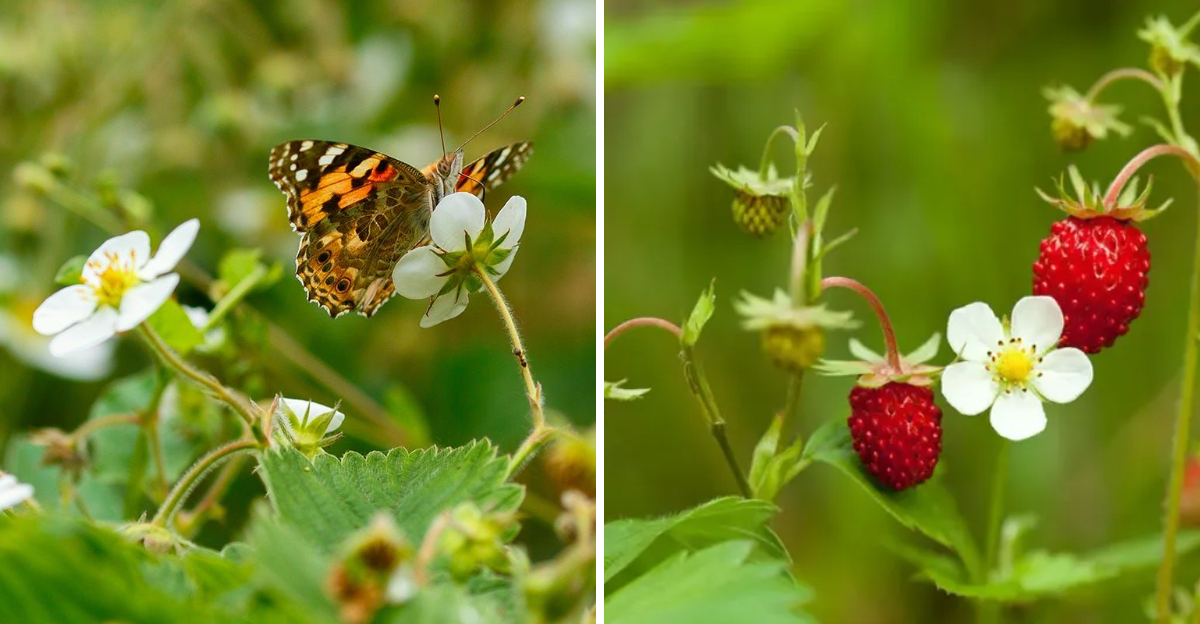
Each flower has five rounded white petals arranged around a bright yellow center. The leaves grow in sets of three and have distinctly serrated edges, almost like tiny saw blades running along each leaflet.
Up close, the plant is actually quite pretty. What makes wild strawberry stand out from truly invasive plants is its origin. It belongs here.
It evolved alongside Pennsylvania wildlife, local soils, and the region’s climate. That means it is naturally adapted to thrive without much help, making it one of the most low-effort plants you could ever have in your yard.
Spotting it correctly starts with the leaves. Look for that toothed edge and the three-leaflet shape.
Once you train your eye to recognize it, you will start seeing wild strawberry popping up in thin patches of lawn, along edges, and in lightly shaded spots all over your yard.
How It Spreads Through Your Lawn
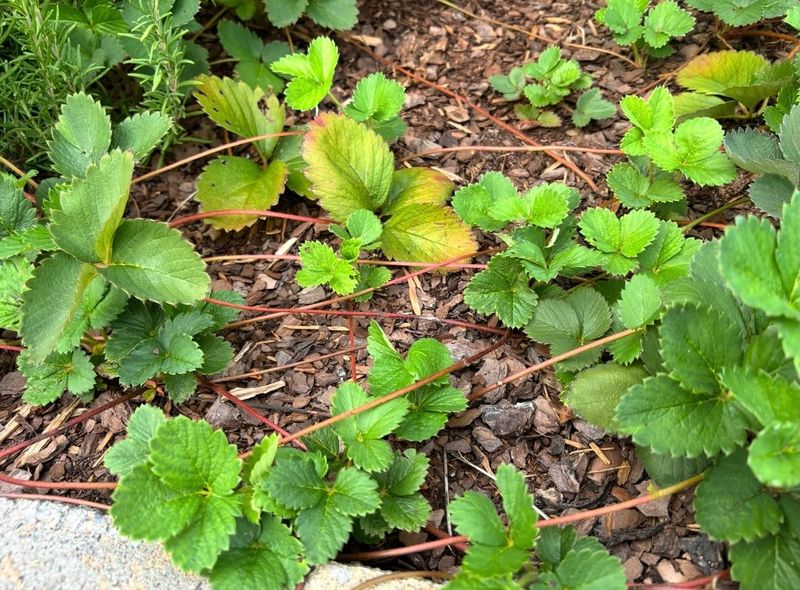
Ever notice how wild strawberry seems to appear in new spots without any help? That is because it travels.
The plant sends out long, thin horizontal stems called stolons that creep along the surface of the soil. As each stolon moves outward, it puts down roots at points called nodes, starting a brand new plant wherever it touches bare ground.
This spreading method is actually really efficient. Wild strawberry does not need seeds to colonize a new patch of lawn.
Your Pennsylvania Garden Changes Every Week. Your Plan Should Too.
Gardening in Pennsylvania changes quickly throughout the season. Every Friday you’ll receive a simple weekly plan showing exactly what to plant, prune, fertilize, harvest, and protect so you never miss the right timing.
It just reaches out, roots down, and grows. Over a single growing season, one plant can send stolons in several directions and produce multiple new plants from a single parent.
This is exactly why so many homeowners mistake it for something invasive. The creeping, spreading habit looks aggressive.
It fills in thin or bare spots in the lawn the same way non-native ground covers do. But there is a big difference: wild strawberry is supposed to be here.
Non-native creepers often outcompete everything around them and disrupt local ecosystems. Wild strawberry, on the other hand, fits into the existing environment.
It shares space with native grasses and other plants without bulldozing them out of the way.
If your lawn has thin or patchy areas, wild strawberry will naturally move in to fill those gaps. Instead of fighting it, consider letting it work.
It is essentially doing free landscaping for you. The stolons anchor the soil, which can also reduce erosion in areas where grass struggles to take hold. That spreading habit that looks like a problem is actually a built-in benefit.
The Lookalike It Is Often Confused With
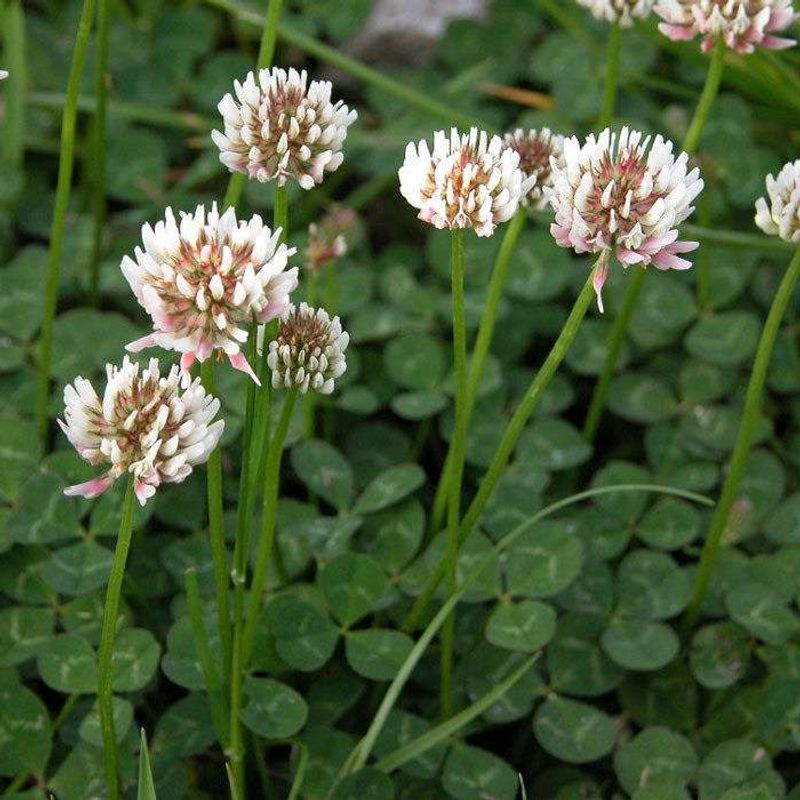
Here is something that surprises a lot of people: white clover is not actually native to Pennsylvania. It originally comes from Europe, North Africa, and Western Asia.
It was brought to North America by European settlers and has naturalized so thoroughly across the continent that most people assume it belongs here. It does not, at least not originally.
Wild strawberry and white clover are the two most common white-flowering creepers you will find in Pennsylvania lawns. From a distance, they can look almost identical.
Both stay low to the ground, both produce white flowers, and both spread into thin patches of turf. It is easy to confuse them, especially if you are just glancing across your yard.
The fastest way to tell them apart is by looking at the leaves. White clover has smooth, rounded leaflets, usually three per stem, with a pale whitish or silvery V-shaped marking across each leaflet.
The edges of clover leaflets are slightly toothed but very fine and almost smooth-looking compared to strawberry.
Wild strawberry leaves are more distinctly toothed, almost like little serrated edges running all the way around each leaflet. The leaflets also look more elongated and pointed than clover.
There is no V-mark on wild strawberry leaves. Once you know what to look for, the difference becomes obvious pretty quickly. Crouch down, pick a leaf, and check the edges.
Serrated and pointed with no marking means wild strawberry. Smooth and rounded with a pale V means clover.
Both plants have value for pollinators, but only one is a true native gem hiding in plain sight in your Pennsylvania lawn.
Why It Is A Genuine Pollinator Plant
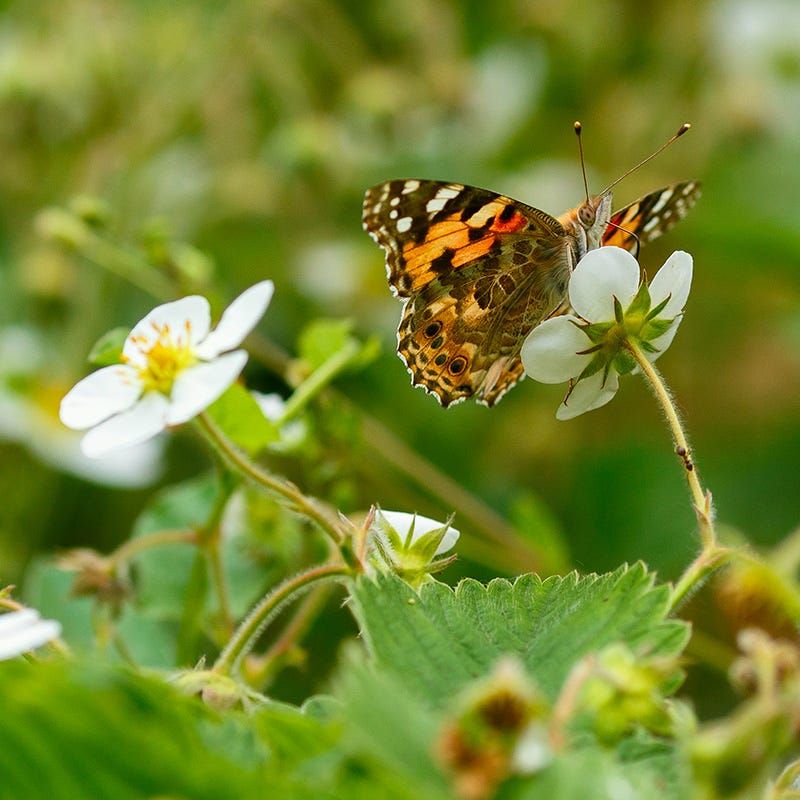
Pollinator gardens are having a real moment right now, and for good reason. Bees, butterflies, and other insects that carry pollen from flower to flower are essential to healthy ecosystems and food production.
Many homeowners are planting special gardens just to support them. What they may not realize is that wild strawberry is already doing that job quietly in the lawn.
The white flowers of Fragaria virginiana are genuinely attractive to pollinators. Native bees, including small sweat bees and mining bees, visit the flowers regularly to collect nectar and pollen.
Butterflies stop by as well. Because the flowers open in spring, they provide an early-season food source at a time when many pollinators are just becoming active and other flowers have not yet bloomed.
Early spring food sources are especially valuable. Many bee species emerge from overwintering with very little energy stored.
They need accessible, nutrient-rich flowers fast. Wild strawberry delivers exactly that, right at the right time of year, without any effort from you.
The flower structure is also well-suited for pollinator access. The open, flat shape of each bloom makes it easy for insects of many sizes to land and feed.
You do not need to be a specialized pollinator to use a wild strawberry flower, which means it supports a broad range of insect species.
Letting wild strawberry bloom instead of mowing it down immediately gives pollinators a reliable pit stop.
A lawn with a few patches of blooming wild strawberry is doing more ecological work than a perfectly uniform green carpet that offers nothing to local wildlife. Small choices like this add up to real environmental impact over time.
The Bonus Most Homeowners Miss
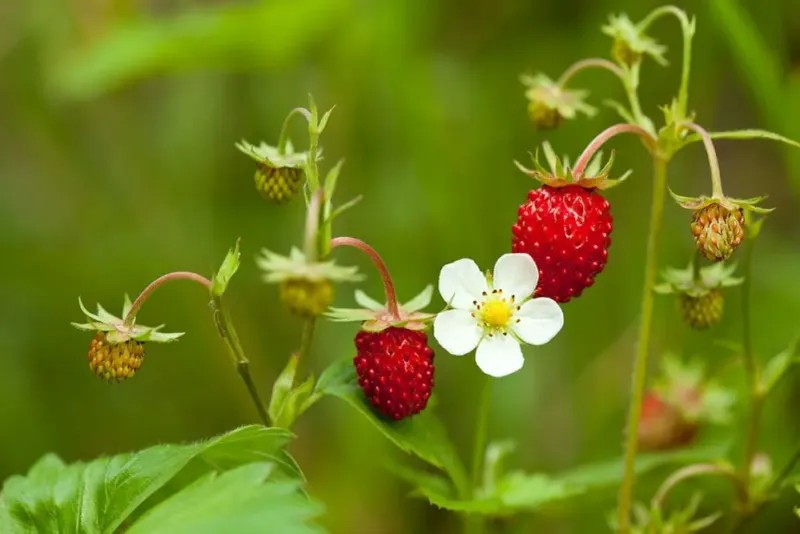
After the white flowers fade, something even more interesting happens. Wild strawberry produces fruit.
Real, actual strawberries, just very small ones. They are typically about the size of a pea or a blueberry, bright red when ripe, and surprisingly flavorful for something so tiny.
They taste tart and sweet at the same time, with an intense strawberry flavor that many people say is stronger than store-bought berries.
Most homeowners never notice the fruits because they appear after the flowering period ends, and they get eaten quickly. Birds are the biggest fans.
Robins, cedar waxwings, and various sparrow species actively seek out wild strawberry fruits during summer. Chipmunks, rabbits, and white-footed mice eat them too.
For small wildlife, a patch of fruiting wild strawberry in a lawn is like a snack bar that refills itself every year.
This makes wild strawberry a genuine wildlife food source, not just a pretty flowering plant. It contributes to the local food web in a real and measurable way.
That is something a standard turfgrass lawn simply cannot do. Humans can eat the fruits too. If you spot ripe ones before the birds do, go ahead and try one.
They are completely safe to eat and have a flavor that many people find far more interesting than the large, watery strawberries sold in grocery stores. Wild strawberry fruits have been eaten by Indigenous peoples in North America for centuries.
Having a plant in your lawn that feeds birds, mammals, and occasionally you, all without any planting or maintenance effort, is genuinely rare. Wild strawberry does all of that quietly and reliably every single year.
Why It Is Worth Leaving Alone
Gardeners actually pay money for this plant. That might be the most surprising fact of all. Fragaria virginiana is sold at native plant nurseries across Pennsylvania as a deliberate ground cover option.
Landscapers recommend it for slopes, shaded areas, and spots where regular grass refuses to grow well.
What shows up uninvited in your lawn is the exact same plant people are intentionally purchasing and planting in their gardens.
As a ground cover, wild strawberry checks a lot of practical boxes. It stays low, so it does not need frequent trimming.
It spreads on its own, filling gaps without replanting. Its root system holds soil in place, which makes it useful for controlling erosion on slopes or bare patches near walkways and driveways.
It also handles Pennsylvania’s climate without complaint. Hot summers, cold winters, periods of drought, and stretches of heavy rain do not slow it down much.
It has been adapting to this region for thousands of years, so local conditions are not a challenge for it.
Encouraging wild strawberry in your yard is simpler than it sounds. You can mow around patches to let them spread.
You can also transplant small clumps by carefully digging up a rooted stolon section and placing it in another spot. Water it for a week or two and it typically takes hold on its own.
Replacing high-maintenance lawn areas with native ground covers like wild strawberry reduces the need for watering, fertilizing, and chemical treatments. Less lawn care means less time, less money spent, and less runoff entering local waterways.
Letting this little plant do its thing is genuinely one of the easiest and most rewarding choices a Pennsylvania homeowner can make.