The 8 Ohio Shrubs Showing Heat Stress Warning Signs Right Now
August can make even a well-kept Ohio landscape look tired.
One afternoon, the shrubs look limp, dull, and crispy around the edges. By the next morning, some of them seem almost normal again. That back-and-forth is exactly what makes summer stress so confusing for gardeners.
Heat is often part of the story, but it is not always the whole story.
Dry soil, compacted roots, poor drainage, reflected heat, recent planting, pest pressure, and even herbicide drift can all create symptoms that look similar from a few steps away.
Watering automatically can make some problems worse. Fertilizing a stressed shrub can push tender growth when the roots are already struggling.
The better move is slower and smarter.
Check the timing. Feel the soil below the mulch. Look under leaves. Notice which side of the shrub is affected first.
So what are Ohio shrubs really telling you when they start showing heat stress signs right now?
Start with the plants most likely to droop, bronze, scorch, or crisp during midsummer, then match the symptom to the real cause before reacting.
1. Hydrangeas Wilt Before Dinner
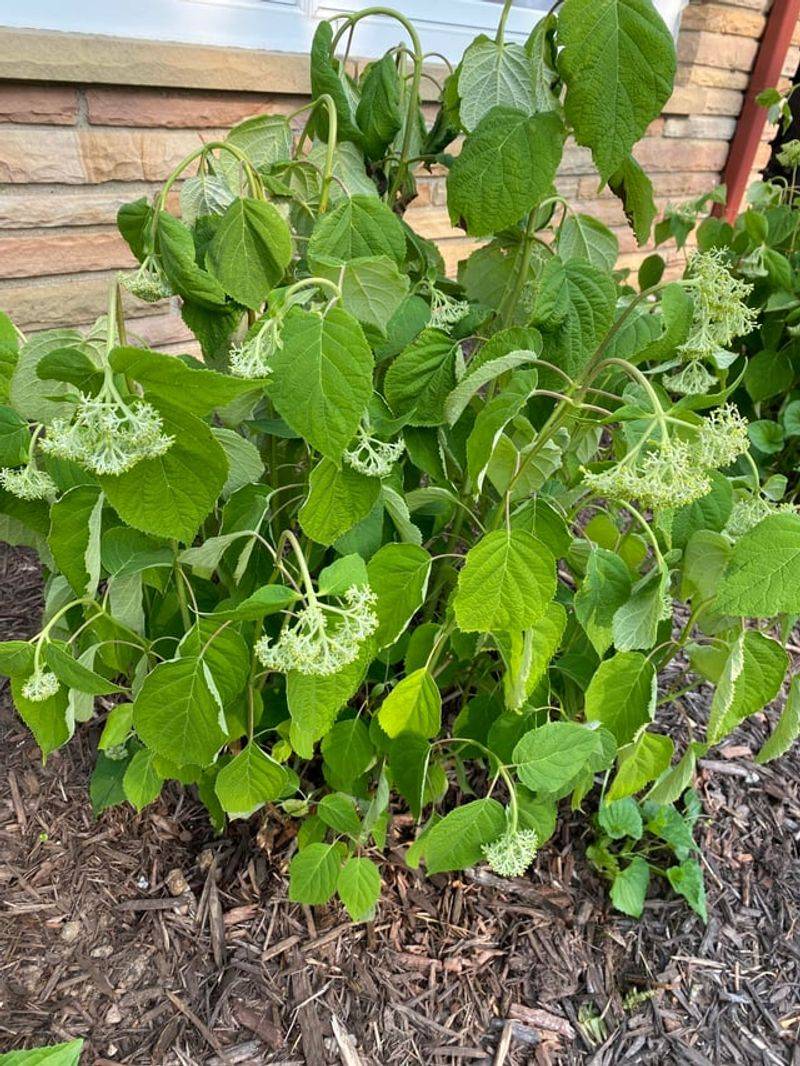
Hydrangeas are famous for afternoon drama.
Those big leaves can slump hard during Ohio heat, especially when the plant sits in strong afternoon sun. Bigleaf hydrangeas are usually the most theatrical because their broad, soft foliage loses moisture quickly when temperatures rise.
The timing matters. A plant that droops in midafternoon and perks back up by evening is often dealing with temporary heat stress.
That recovery is reassuring. It means the roots likely caught up once the sun eased and water demand dropped.
Check before watering. Push a finger, trowel, or soil probe several inches beneath the mulch near the root zone.
Cool, slightly damp soil means wait. The plant may not need more water, even though the leaves look tired.
Dry, crumbly soil means the roots need help. Water slowly and deeply so moisture reaches the full root zone rather than only the top inch.
Recently planted shrubs need a separate check. Their original root ball can dry out faster than the surrounding bed, which tricks gardeners into thinking the whole area is evenly moist.
Reflected heat raises stress fast. Walls, driveways, patios, dark mulch, and west-facing beds can make the plant wilt earlier in the day.
Mulch helps when placed correctly. A two-to-four-inch organic layer keeps soil cooler and steadier, but mulch should stay pulled back from the stems.
Persistent wilt is different. Leaves that stay limp at dawn or fail to recover after proper watering deserve closer inspection.
The leaves are not just being dramatic.
They are telling you to read the clock, the soil, and the planting site before grabbing the hose.
2. Rhododendron Leaves Droop And Scorch
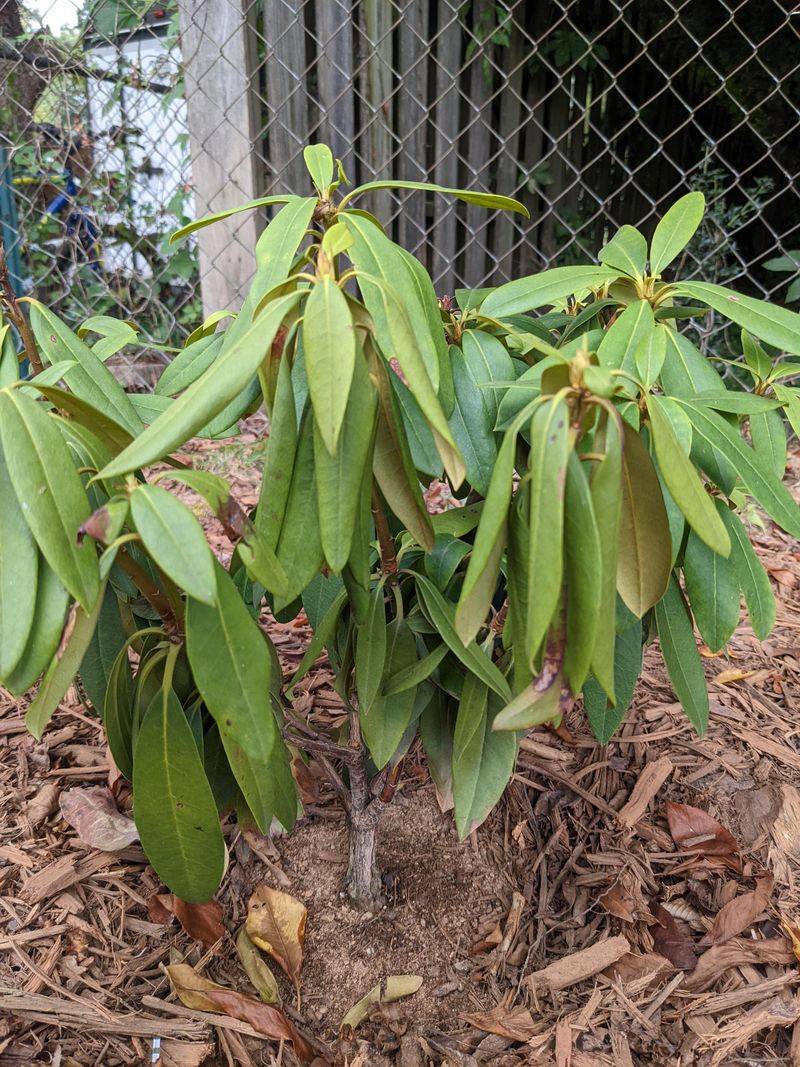
Rhododendrons show stress with their leaves first.
The foliage may roll downward, curl inward, or hang in a way that looks unmistakably uncomfortable. That curling is a water-saving response, and it helps reduce exposure to sun and wind during harsh conditions.
The roots explain a lot. Rhododendrons have shallow, fibrous root systems that sit close to the soil surface.
Your Ohio Garden Changes Every Week. Your Plan Should Too.
Gardening in Ohio changes quickly throughout the season. Every Friday you’ll receive a simple weekly plan showing exactly what to plant, prune, fertilize, harvest, and protect so you never miss the right timing.
That makes them sensitive to heat. Dry mulch, compacted soil, and exposed root zones can stress the plant quickly during midsummer.
Soil acidity matters too. Rhododendrons need acidic conditions to use nutrients properly, and alkaline soil can weaken the plant before heat even enters the picture.
Do not water from the surface alone. A light sprinkle may wet the mulch while the active roots remain too dry.
Use slow, deep irrigation when the root zone is dry. The goal is steady moisture, not soggy soil.
Keep mulch broad and loose. Organic mulch protects shallow roots, but it should not be piled against the crown.
Leaf scorch can look like drought. Brown margins and dull leaves may appear after heat, wind, root stress, or poor soil conditions.
Pests can complicate the picture. Lace bugs can cause pale stippling on rhododendron leaves, which may be mistaken for environmental stress.
Flip leaves when the color looks wrong. Dark specks, shed skins, or tiny insects on the underside point toward feeding rather than heat alone.
Avoid emergency fertilizer. A stressed rhododendron needs a stable root zone first.
Once leaf edges turn brown, that tissue will not green up again.
The goal is to protect the healthy foliage that remains and correct the root-zone problem before stress spreads farther.
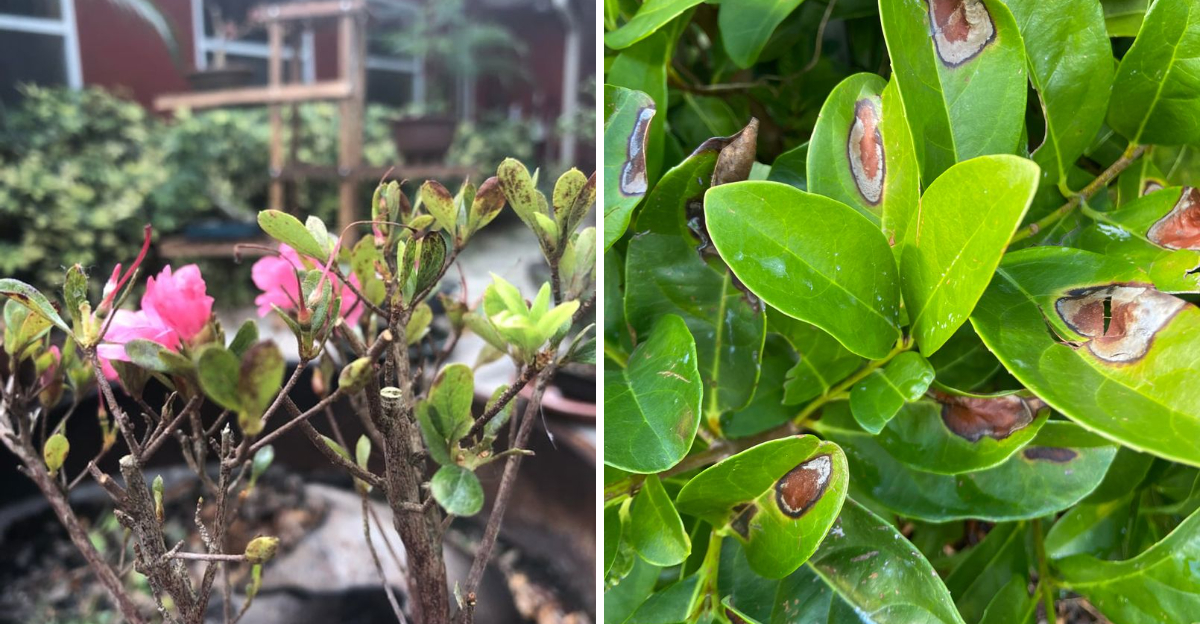
3. Azalea Tips Turn Brown At The Edges
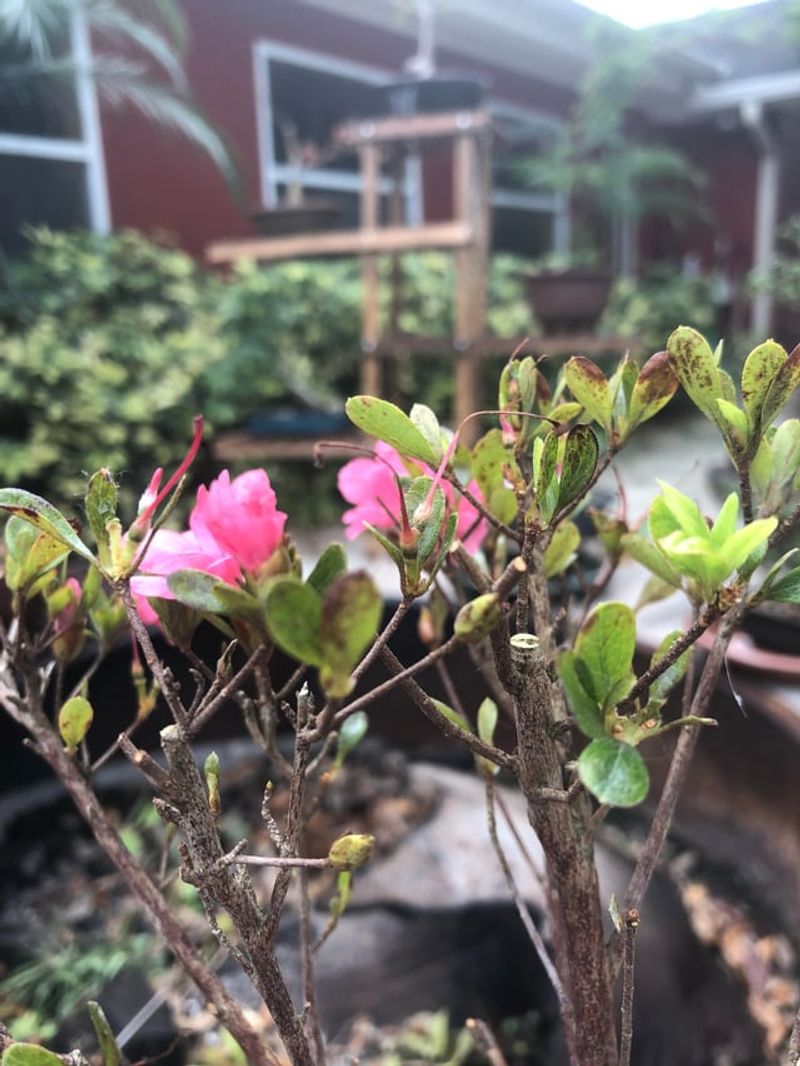
Azaleas often show stress at the leaf tips first.
The browning may begin along the outer edges, then creep inward during dry, hot stretches. In Ohio yards, this often happens where shrubs sit near foundations, walls, or pavement that reflect extra heat.
The site can make a mild summer day feel harsher. Brick, concrete, siding, gravel, and asphalt all add warmth around the leaves.
Azaleas have shallow roots. That means they react quickly when the upper soil dries or overheats.
New transplants are especially vulnerable. The root ball may be dry even while the surrounding garden soil feels moist.
Check both zones. Press into the original root ball and the nearby native soil before deciding the plant needs water.
Morning sun is usually kinder. Afternoon shade helps azaleas handle July heat with less leaf burn.
Thin mulch makes stress worse. Bare soil loses moisture quickly and heats up faster.
A fresh mulch layer can help. Use shredded bark, wood chips, pine bark, or leaf mold spread broadly over the root zone.
Keep mulch off the stems. Crowns need airflow, especially in humid summer weather.
Look for lace bug signs. Pale, silvery stippling on leaves with dark spots underneath suggests pest feeding rather than simple heat stress.
Salt and fertilizer burn can also affect margins. Brown tips after a heavy feeding or exposure to runoff may not be caused by weather.
Do not prune off every browned leaf immediately. Damaged tips are unattractive, but the remaining green tissue still helps the plant make energy.
Azaleas ask for gentle correction.
Steady moisture, afternoon relief, acidic soil, and a clean mulch layer do far more than a panicked soak or sudden feeding.
4. Boxwood Fades Into Bronze Patches
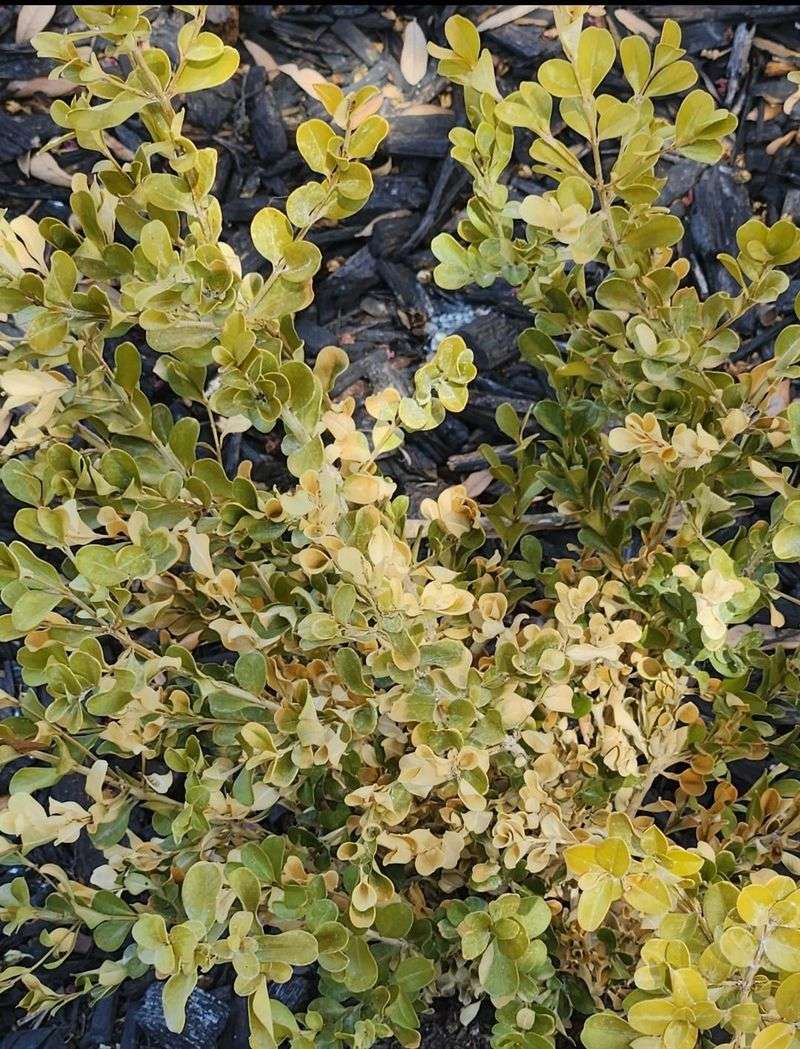
Boxwood bronzing can have several causes.
That is what makes it tricky. A shrub that looked deep green in spring may show bronze, yellowish, or straw-colored patches by summer, and heat stress is only one possible explanation.
Reflected heat is a real trigger. Boxwoods near sidewalks, driveways, stone walls, or south-facing foundations can dry faster than shrubs in open beds.
Roots may be struggling below ground. Poor drainage can create wilt-like symptoms because saturated roots cannot function properly.
Dry soil causes problems too. Boxwood roots are not deep enough to ignore a long hot stretch without support.
Check drainage and moisture. The plant may need water, or it may need relief from waterlogged soil.
Winter injury can linger into summer. Damage from cold months may become more obvious once heat adds another layer of stress.
Transplant stress can look similar. Recently moved boxwoods often discolor while their roots adjust.
Do not shear first. Removing foliage during stress can expose more interior growth and increase sun pressure.
Inspect for pests. Boxwood leafminer, mites, and other pests can create off-color foliage that looks like environmental damage.
Check stems and leaves closely. Distorted new growth, blistered leaves, webbing, or spreading patches deserve careful diagnosis.
Airflow matters. Crowded boxwoods hold humidity and may face more disease pressure.
Avoid fertilizer as a quick fix. Feeding a stressed shrub can push growth the roots cannot support.
Bronzed foliage may not return to green.
The useful work is stabilizing the root zone, checking for pests, and avoiding extra stress while the shrub recovers.
5. Arborvitae Scales Lose Their Green
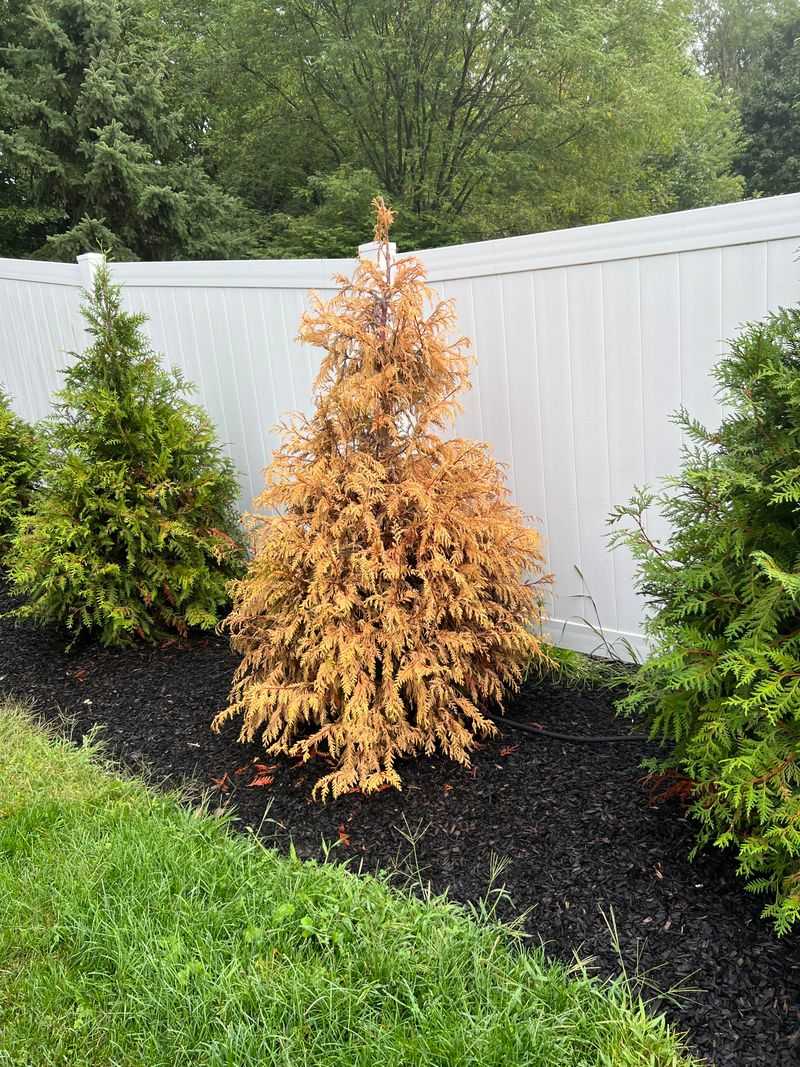
Arborvitae can fade quietly before the damage looks serious.
The scale-like foliage may turn yellow, tan, or brown in sections, sometimes starting near the tips and sometimes appearing inside the plant. Reading the pattern is the key.
Some inner browning is normal. Older interior foliage can shed as the plant grows.
Outer browning is more concerning. When green tips fade, the plant may be dealing with water stress, root trouble, pests, or site pressure.
New screens are especially vulnerable. Young arborvitae planted in rows often have limited root systems and high water demand.
The original root ball matters. Soil around the plant can feel moist while the nursery root ball remains dry.
Probe near the base. Check several inches down where the roots actually sit.
Wind increases water loss. Exposed hedges along property lines can dry faster than sheltered plantings.
Pavement adds heat. Arborvitae near driveways, roads, and sidewalks can face reflected warmth and faster soil drying.
Water deeply when dry. Slow soaking is better than frequent shallow spray that never reaches the root ball.
Hold off when soil is wet. Saturated roots can also cause decline.
Bagworms deserve a close look. Their small hanging bags can blend into the foliage and look like bits of plant debris.
Spider mites can add a dusty, stippled look. A white paper shake test may reveal tiny moving specks.
Browned arborvitae foliage does not green up again.
The question is whether the damage is limited, the roots are stable, and the growing tips still have enough strength to continue.
6. Viburnum Margins Crisp Before Centers
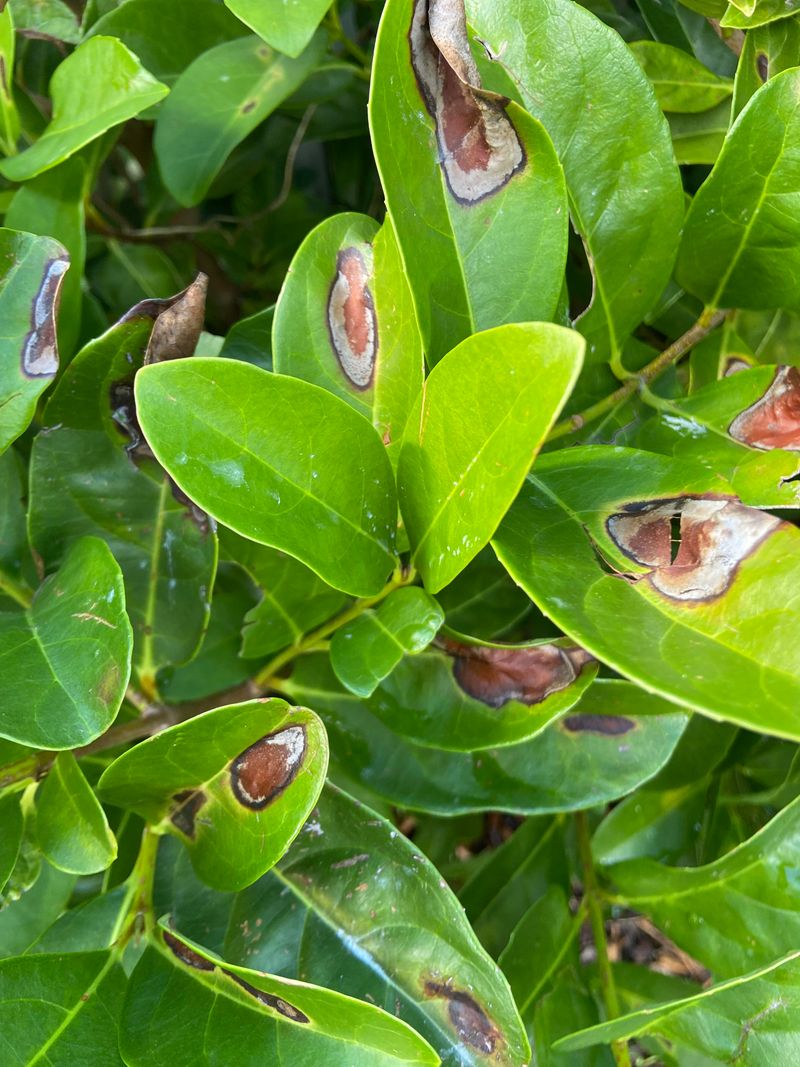
Viburnums often crisp from the outside inward.
Brown leaf margins, curled edges, and cupped foliage can all appear when the plant loses moisture faster than the roots can supply it. The pattern often starts at the edges because those tissues dry first.
Not all viburnums react the same way. Some species tolerate Ohio heat and dry spells better than others.
Arrowwood viburnum is generally more adaptable. Doublefile viburnum can be more sensitive to hot, exposed sites.
Know the plant before adjusting care. A one-size watering plan does not work well across the whole genus.
Soil compaction can make stress worse. Roots in tight soil cannot access moisture and oxygen efficiently.
Tree roots nearby can compete hard. A viburnum under a large shade tree may be losing the moisture race underground.
Check beneath mulch. Surface dampness tells you less than moisture several inches down.
Water slowly when the root zone is dry. A deep soak gives the plant a better chance than a quick splash.
Avoid wetting foliage late in the day. Damp leaves overnight can increase leaf-spot issues.
Look for feeding damage. Viburnum leaf beetle can chew and skeletonize leaves, creating stress that may be mistaken for scorch.
Herbicide drift can cause sudden browning. Damage that appears quickly after a lawn treatment deserves suspicion.
Leaf spots look different. Defined lesions with darker centers usually point away from simple heat stress.
Crisped margins will not repair themselves.
Healthy buds and interior growth are the parts worth protecting with better moisture, mulch, and site care.
7. Elderberry Wilts While Fruit Is Filling
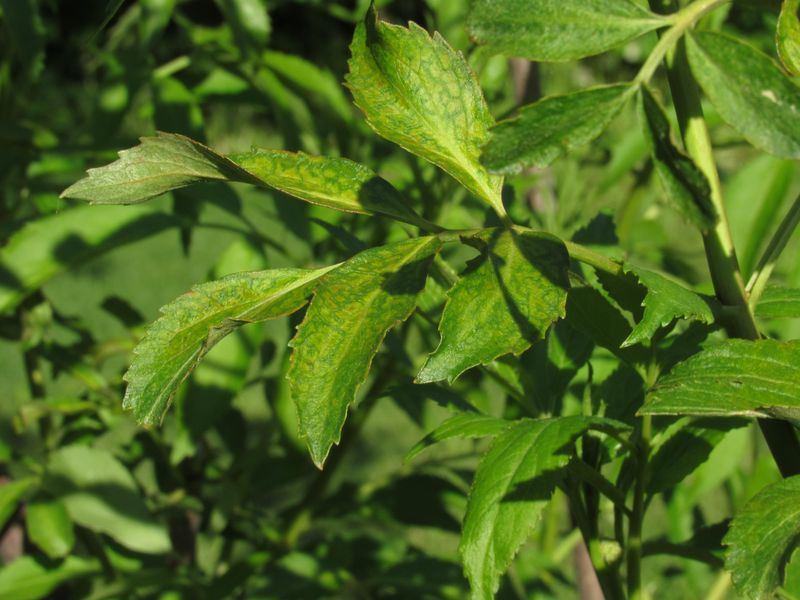
Elderberry moves water fast.
Its large compound leaves and fruit clusters create strong moisture demand in midsummer. When water falls short during fruit development, the shrub can wilt quickly and look drained by afternoon.
Afternoon limpness can be an early warning. Leaves may hang during heat but recover later when the root zone still has moisture.
Morning limpness is more serious. Wilt that appears before the day heats up often means the plant is truly struggling.
Fruit filling raises demand. The plant needs steady moisture while berries develop.
Weeds steal water. Growth around the base competes with elderberry’s shallow root zone.
Clear the base carefully. Pull weeds without digging deeply into the roots.
Water deeply and evenly. Elderberry responds better to consistent moisture than to long dry gaps followed by sudden soaking.
Drainage still matters. Low spots that stay saturated can cause wilting even though the soil is wet.
Probe the soil six inches down. Dry, damp, and soggy conditions can all lead to different decisions.
Check individual canes. A single wilted cane may point toward a stem problem rather than whole-plant drought.
Cane borers can cause sudden cane collapse. A hollow center or debris inside a cut stem is an important clue.
Heavy fruit clusters may bend stems. Bending is not the same as wilt, so look closely before pruning.
Elderberry wants moisture without swampy soil.
During fruiting, that balance can decide how well the shrub finishes the season.
8. Blueberry Leaves Turn Leathery And Brown
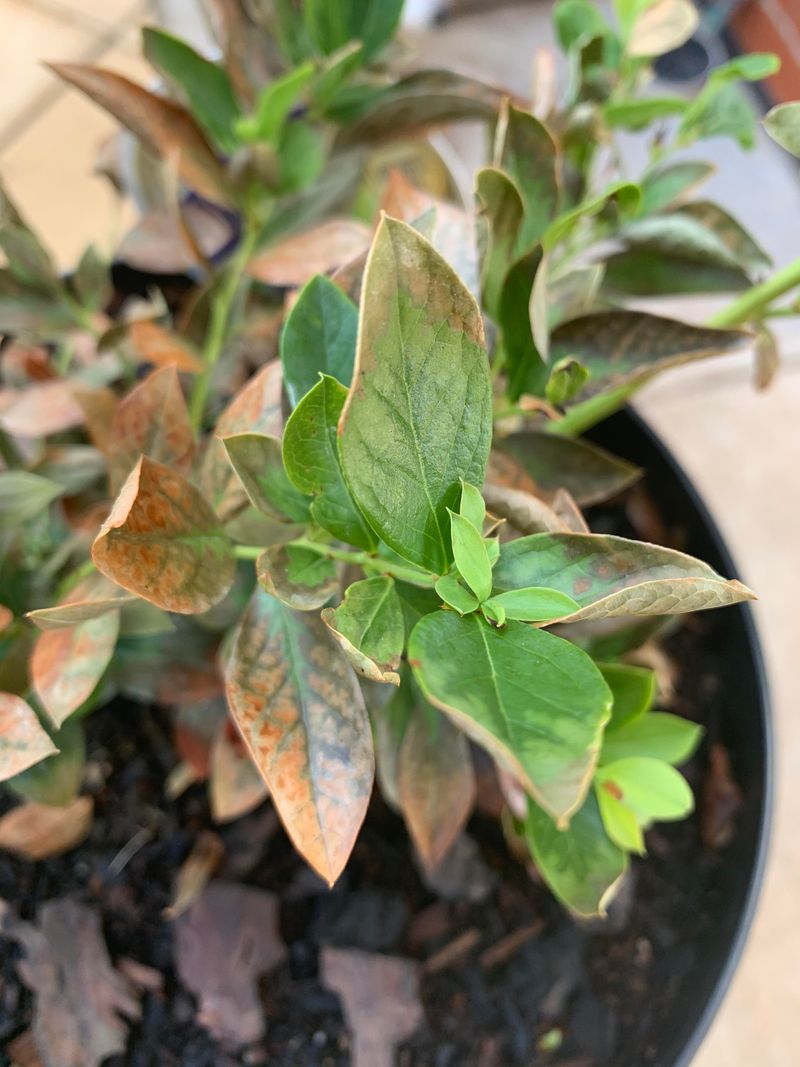
Blueberry leaves give a very specific warning.
Before they turn fully brown, they may feel stiff, leathery, or dry instead of soft and flexible. That texture often means the plant is losing more water than it can comfortably replace.
Blueberries have shallow, fibrous roots. They need consistently moist, acidic soil and dislike both drought and poor drainage.
Soil pH is critical. When pH rises too high, blueberries struggle to take up nutrients, especially iron.
That can mimic stress. Yellowing between leaf veins may look like heat trouble, but it can actually point to a soil chemistry problem.
Use a soil test when symptoms repeat. Guessing with acidifiers or fertilizer can create more trouble.
Containers dry fast. A potted blueberry in July can lose moisture quickly, especially on a patio or driveway.
Dry potting mix can repel water. Moisture may run down the sides instead of soaking the root ball.
Rehydrate carefully. A slow soak or temporary bottom-watering can help dry container mix take up moisture again.
Mulch helps in ground beds. Pine bark, pine needles, or other suitable organic mulch can keep shallow roots cooler.
Keep mulch away from stems. Crowded crowns stay damp and can invite problems.
Watch for branch-specific browning. One declining stem may point toward canker or root trouble instead of heat alone.
Consider drift exposure. Blueberries are sensitive, and nearby lawn treatments can cause curling or browning.
Blueberries do not forgive careless sites easily.
They need the right soil, steady moisture, gentle sun exposure, and careful diagnosis before any rescue attempt begins.