The Alabama Backyard Berry Ripening Right Now That Children Should Not Touch
August in Alabama smells like cut grass, hot pine, and warm dirt near the fence line. Somewhere back there, a tall volunteer has been growing all summer while nobody paid it any attention.
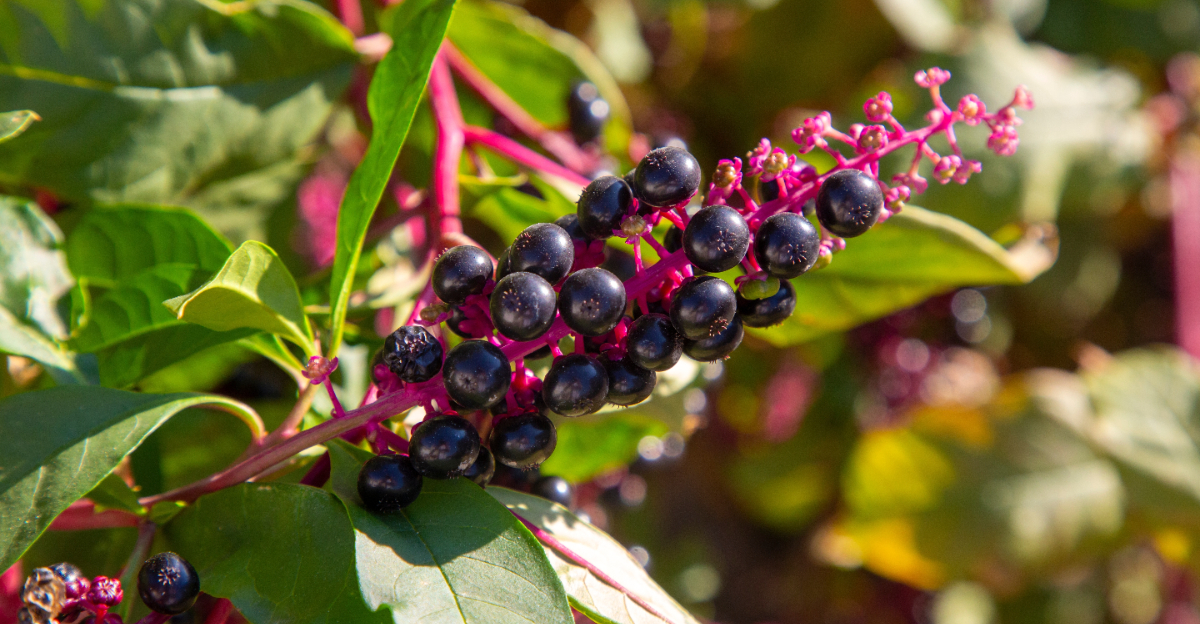
Now it is loaded. Long chains of glossy purple fruit dangle at exactly the height of a curious four-year-old.
The stalks look like somebody spilled grape juice on them, and the fruit inside stains everything it touches. Birds adore the stuff, which is precisely why it keeps reappearing in your flower beds each year.
What feeds a mockingbird can send a child to the emergency room. Learning to spot this plant, and what to do if small hands find it first, takes about five minutes of your afternoon.
Pokeweed Grows Like An Uninvited Giant Along Alabama Fence Lines
Walk any fence line in Alabama come August and you may meet a plant that behaves like it pays the mortgage. Its stalks glow magenta, its leaves spread wide, and it can rocket past your head in a single season.
American pokeweed, or Phytolacca americana, is the plant behind those glossy dark berries that catch a child’s eye. Older folks around here call it poke sallet, inkberry, or pigeonberry, depending on the county.
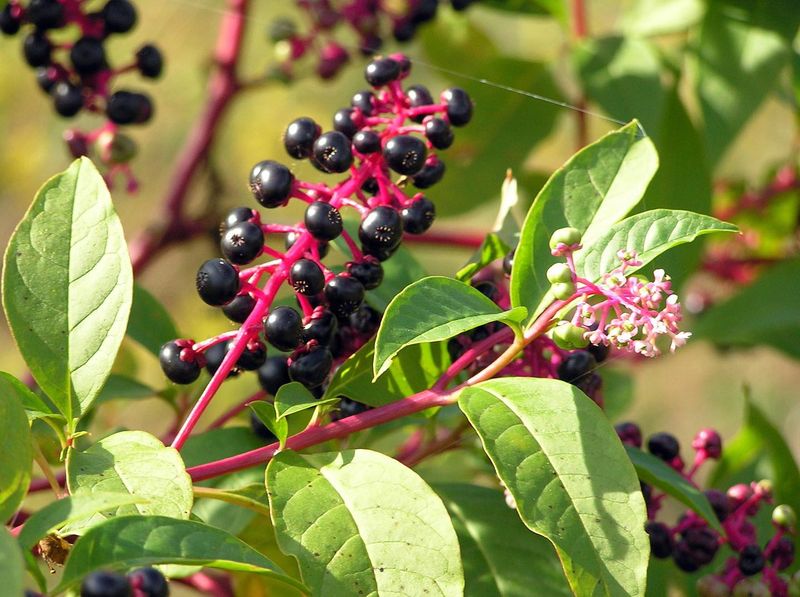
It is native to the Southeast, thrives in disturbed soil, and shows up beside sheds, compost piles, and forgotten flower beds. Identification starts with the stem, which is smooth, thick, and turns bright pink or purple as summer wears on.
Leaves grow large, oval, and pointed, often eight to twelve inches long, with a sharp smell when crushed. Small greenish-white flowers open on a drooping stalk, then give way to the fruit that causes all the concern.
Every part of this plant carries compounds that irritate the stomach lining, with the root strongest and the seeds close behind. Traditional poke sallet recipes call for boiling young shoots in several changes of water, a fussy process most gardeners skip.
Alabama’s long, humid growing season lets a single plant reach eight feet or taller by September. Once the silhouette clicks in your memory, you will spot it along roadsides, pastures, and the shady corner behind the garage.
Kids often describe it as the grape bush nobody planted, which is exactly the misunderstanding worth correcting early.
Berry Clusters That Fool Kids Into Thinking Grapes
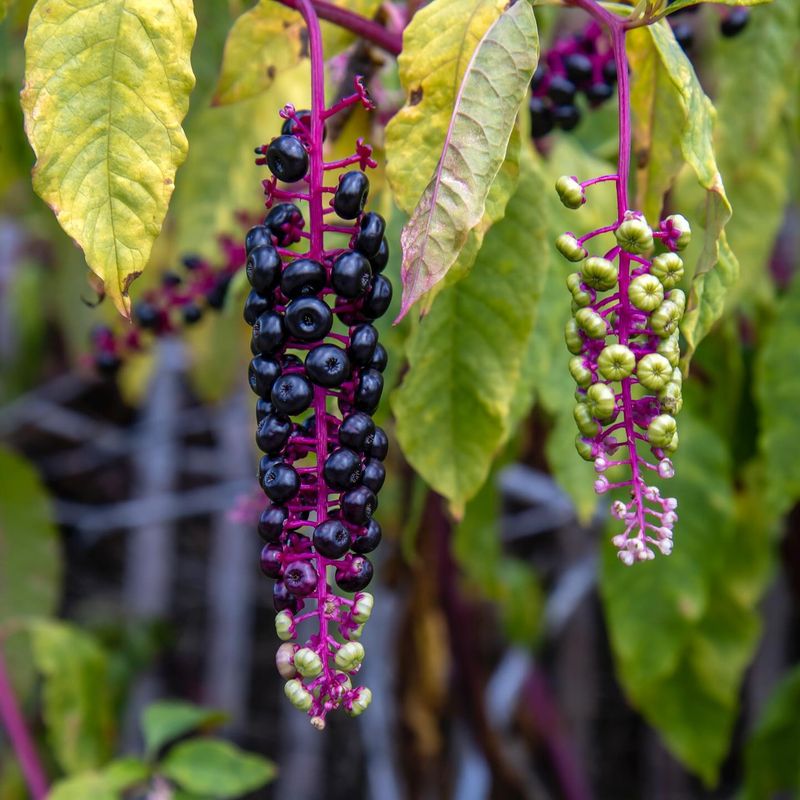
Ten or twelve berries hang in a tidy chain, each glossy, plump, and roughly pea sized. To a preschooler, that arrangement reads as snack.
Ripe fruit shifts from green to deep purple-black, and the juice inside runs a startling magenta. That juice stains fingers, T-shirts, porch boards, and the family dog.
Settlers used it as a rough ink, which is where the nickname inkberry came from, and old family letters were reportedly written with the juice. The resemblance to grocery store grapes is the whole problem.
Small children sort the world by color and shape long before they learn plant names. Each berry holds about ten small, lens-shaped seeds, and those seeds carry the heaviest load of irritating compounds.
Your Alabama Garden Changes Every Week. Your Plan Should Too.
Gardening in Alabama changes quickly throughout the season. Every Friday you’ll receive a simple weekly plan showing exactly what to plant, prune, fertilize, harvest, and protect so you never miss the right timing.
A berry swallowed whole often passes through with little fuss, while chewed seeds release far more. No parent wants to gamble on which version a toddler managed.
Purple smears around a mouth deserve a quick rinse and a phone call for advice. Keep the reaction calm, because a frightened child may stop telling you what happened.
Mockingbirds, cardinals, and cedar waxwings, meanwhile, feast on the clusters without any trouble at all. Their digestive systems handle the seeds differently, and they scatter them across the neighborhood in the process.
One mature plant can produce thousands of berries in a single autumn, so the seed supply is generous. That is why the same flower bed sprouts a fresh stalk every spring.
Late Summer Through First Frost Marks Peak Ripening Season
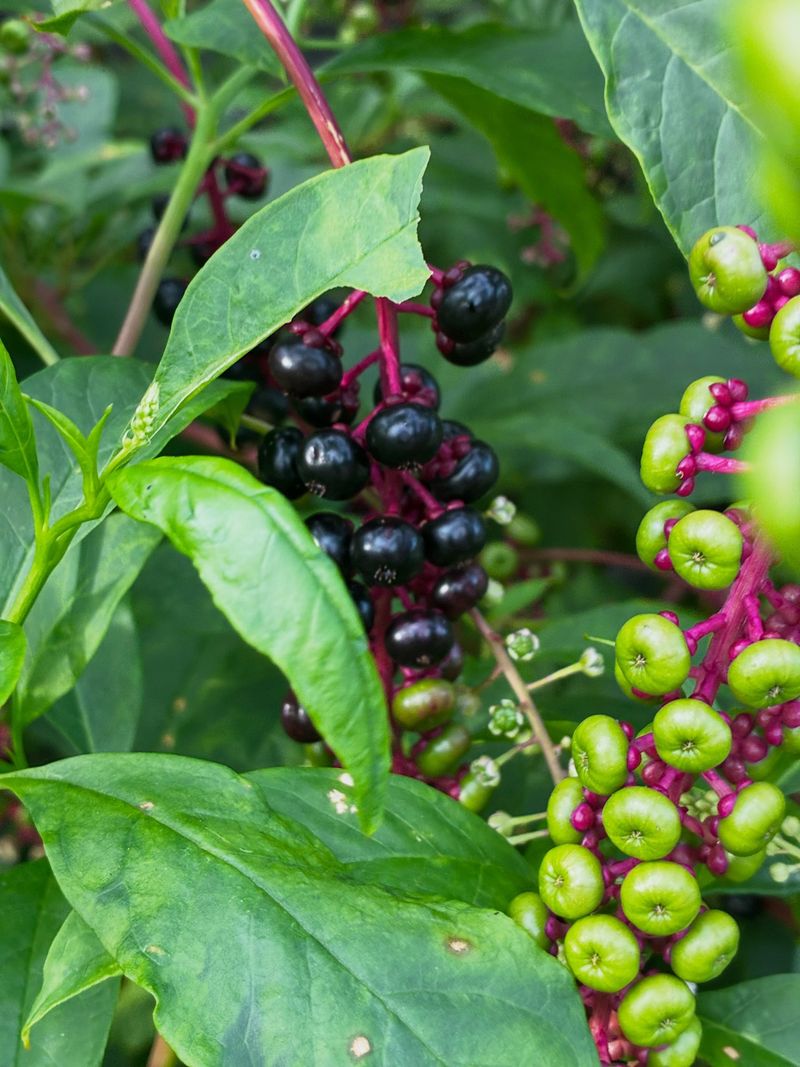
Timing explains why this plant sneaks up on families. Green fruit appears in July, and by mid-August the first clusters darken into inky purple.
Peak ripening across most of Alabama runs from late August into October. Along the Gulf Coast, where frost takes its time, berries can hang around even later.
A single stalk often carries green, reddish, and fully ripe fruit at once, stretching the tempting stage over many weeks. Rainy Alabama summers push growth even faster, so a plant mowed in June can be fruiting by September.
Backyard risk climbs during the exact months when families live outdoors. Cooler evenings, football Saturdays, and after-school play all overlap with fruiting season.
Fallen berries also carpet the ground beneath the plant in September, landing right where crawling babies and dogs explore. Raking that patch once a week keeps the mess from piling up.
Winter knocks the leaves back and the tall stalks slump into hollow brown canes. The taproot, though, waits underground and sends up a fresh plant next spring, usually thicker than the last one.
Seeds can rest in the soil for decades before sprouting, which is why the same corner keeps producing volunteers. Tie a ribbon on the fence or drop a pin on your phone map where you spotted a plant this year.
Come April, you can pull the seedling while it is still ankle high and pencil thin. Mark your calendar for a mid-July walk around the yard too.
Signs And Fast Steps If A Child Swallows One
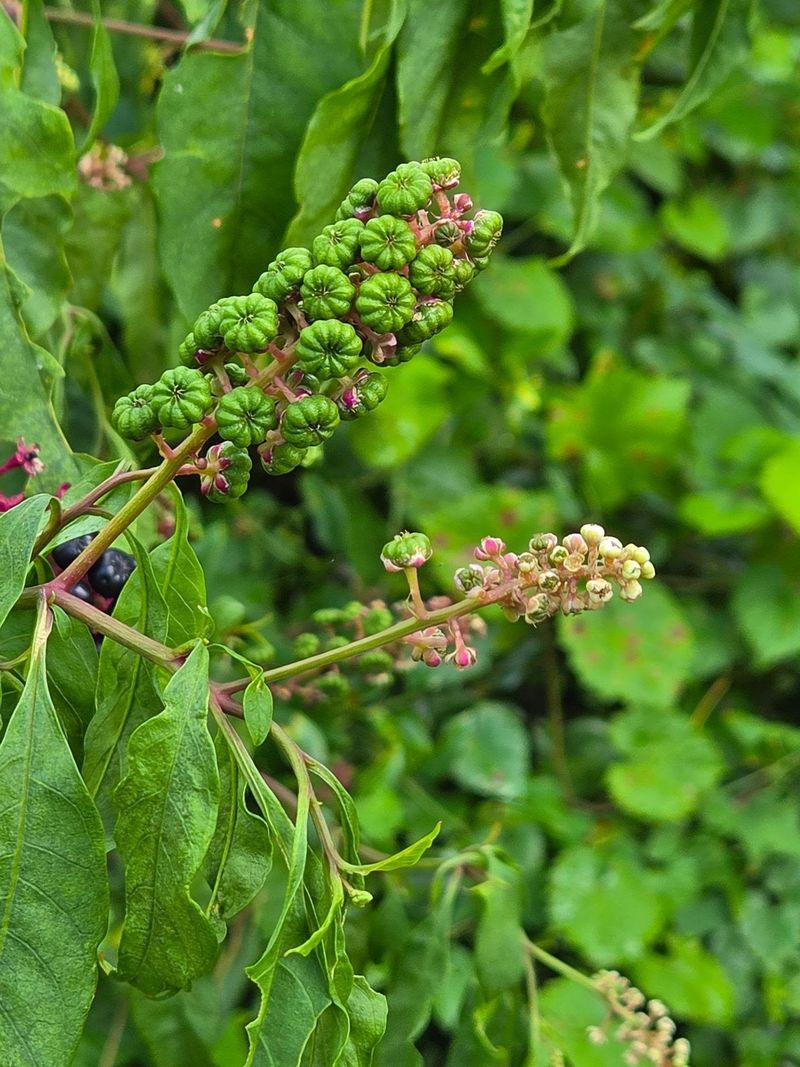
Poison centers field calls about this plant every fall, and most involve children under six. Most cases turn out mild, involving one or two berries and ending in brief stomach upset.
Trouble usually starts within one to six hours of swallowing. Common signs include mouth burning, nausea, stomach cramping, vomiting, and diarrhea.
Larger amounts can bring on headache, dizziness, weakness, and a rapid or irregular heartbeat. Root pieces, sometimes mistaken by adults for horseradish or parsnip, cause the most serious reactions.
If you suspect a child ate any part of the plant, call Poison Control at 1-800-222-1222 right away. The service is free, confidential, and staffed around the clock, and the Alabama Poison Information Center answers those calls locally.
Do not try to force vomiting, and skip home remedies you read about online. Wipe out the child’s mouth, offer a few sips of water, and save a sample of the plant or a clear photo.
That photo helps the nurse on the phone identify what was eaten within seconds. Head to an emergency room if breathing changes, if vomiting will not stop, or if the child seems unusually sleepy.
Skin contact matters too, since sap can irritate cuts and cause a rash on sensitive arms and hands. Wash exposed skin with soap and warm water after any tangle with the stems.
Keeping that poison control number on the refrigerator turns a scary moment into a manageable one.
Elderberry, Wild Grape, And Beautyberry Are Common Look-Alikes
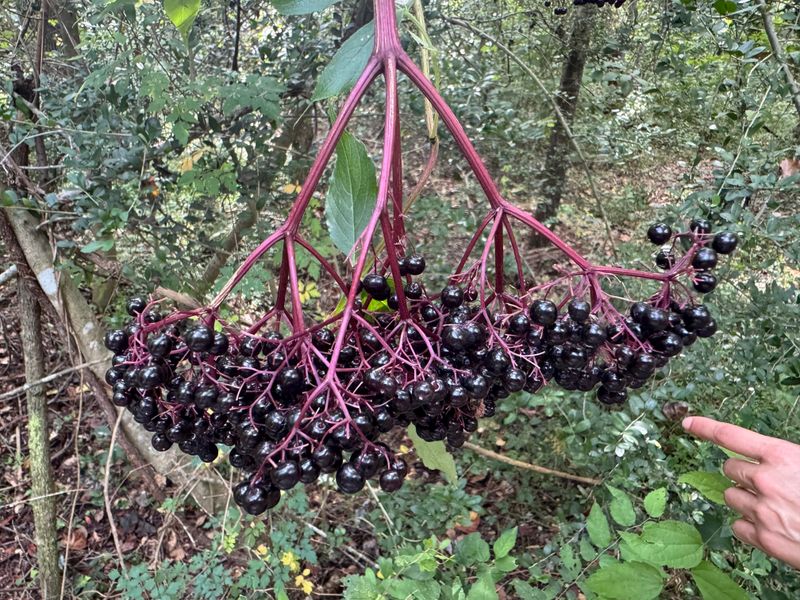
Confusion is the sneaky part, because Alabama grows several purple-fruited plants that share a family resemblance. Elderberry clusters sit flat and umbrella shaped, with woody stems and compound leaves made of several leaflets.
Pokeweed, by contrast, hangs its fruit in a single narrow chain from a soft, magenta stalk. Wild muscadines and summer grapes climb using tendrils and grow on twisting vines, never on a self-supporting stalk.
Grape leaves are lobed and toothed, nothing like the smooth ovals on the plant in question. American beautyberry, a favorite of southern gardeners, packs bright magenta fruit in tight rings hugging the branch.
Those berries are not a hazard, though they taste bland and chalky. Virginia creeper adds another wrinkle, with dark blue berries on red stems and leaves grouped in fives.
Its fruit is genuinely risky for children as well, so treat it with the same caution. The reliable tell for pokeweed remains the stem: thick, hairless, hollow with age, and washed in pink or purple.
No other common southern plant combines that stem color with a drooping chain of shiny berries. Foragers sometimes learn these differences the hard way, which is why the safest rule for kids skips identification entirely.
Teach a simple habit instead: nothing from the yard goes in a mouth without an adult saying yes. Even friendly backyard fruit like blackberries or figs should pass through that same checkpoint.
Consistency keeps the rule easy to remember when you are not watching.
Gloves, Loppers, And A Stubborn Taproot For Safe Removal
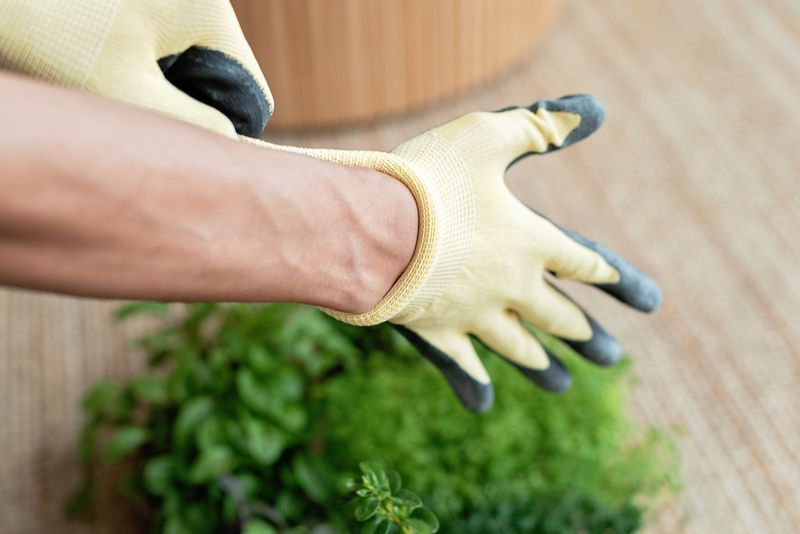
Removal day calls for long sleeves, waterproof gloves, and clothes you do not mind staining. Sap and juice both irritate skin, and the purple splashes are stubborn in the wash.
Timing helps enormously: cut the plant before berries form, ideally in late spring or early summer. If fruit already hangs there, clip the clusters into a bag first so berries do not scatter as you work.
Bag that fruit for the trash rather than tossing it in the compost pile, where seeds happily survive. Loppers handle the thick main stalk, which cuts almost like celery, wet and hollow.
Then comes the real job, because a fat white taproot anchors everything below. Water the ground well the evening before, then dig a wide circle and lever the root out with a spading fork.
Roots on older plants can weigh several pounds and reach a foot deep. Leftover root fragments resprout, so return in a few weeks and pull any new shoots while they are small.
Repeated mowing works along lawn edges, since the plant struggles when it cannot store energy underground. Avoid burning the stalks, because the smoke can irritate eyes and airways.
Send children and pets indoors while you work, and rinse tools afterward. Finish by mulching the bare spot heavily, which slows buried seeds from finding light.
One thorough removal plus a couple of follow-up visits usually settles the matter for the season.