The Arizona Native Plant That Thrives Along Hot Driveways And Walkways
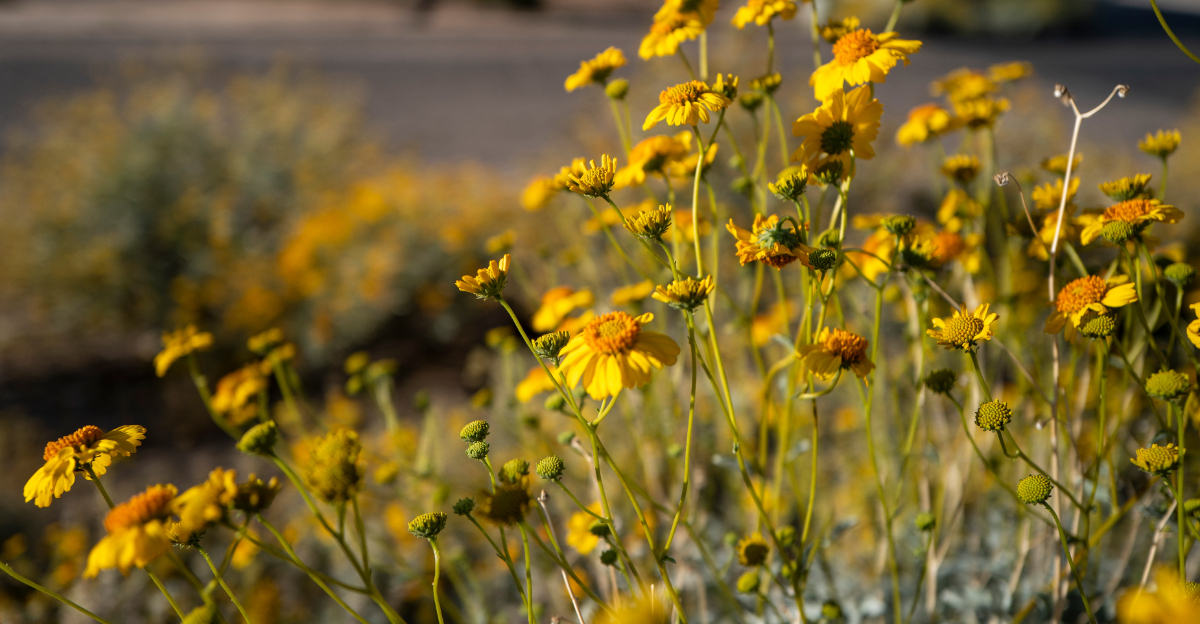
Some planting spots seem determined to challenge everything you put there. The narrow ground beside a driveway or walkway can become especially harsh once summer sunshine starts heating the surrounding pavement.
Yet one Arizona native is remarkably comfortable in these exposed areas. It handles intense sun, reflected heat, and dry conditions while bringing welcome color to spaces that can otherwise look bare.
That makes it worth considering when thirsty plants keep struggling near concrete. You can work with the conditions already there instead of constantly trying to make the location cooler or wetter.
Its natural toughness also fits landscapes where lower water use matters. Once established in the right setting, this plant does not need constant attention to look at home.
Even the hottest edges of your yard can become valuable planting space with the right native choice.
1. Desert Marigold Handles Hot Pavement Areas
Pavement radiates heat like a skillet in July. Most flowering plants wilt fast when placed near concrete or asphalt.
Desert Marigold barely flinches.
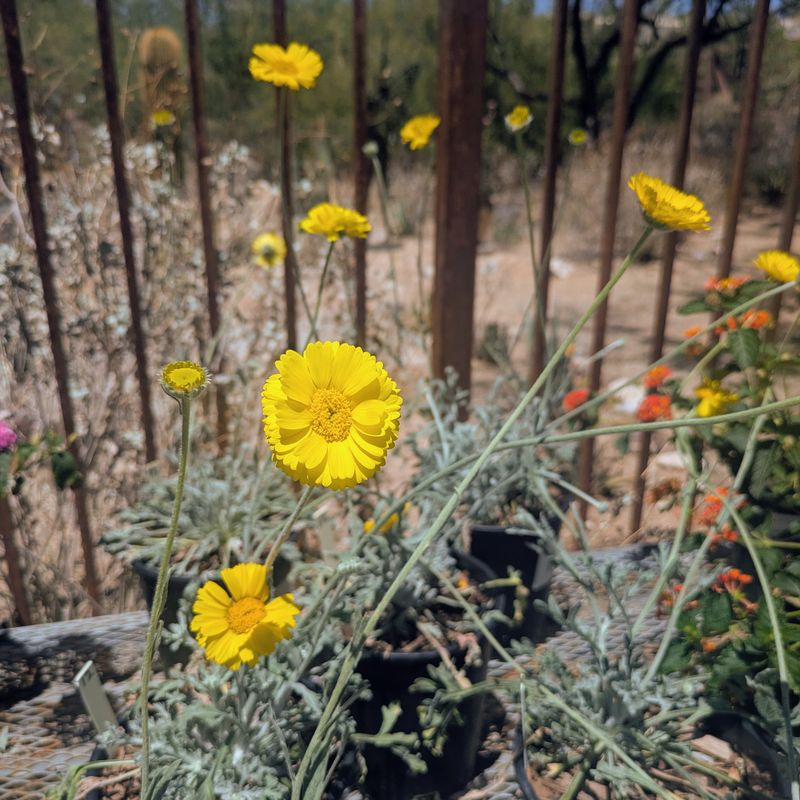
Baileya multiradiata, its botanical name, grows naturally in open desert flats where ground temperatures can spike well above air temperature. Placing it near a driveway mimics that habitat closely.
It does not need shade or shelter to hold up.
What makes this plant tough near pavement is its ability to reflect excess heat through its silvery leaf coating. That coating reduces moisture loss, which matters a lot when surrounding surfaces stay hot for hours.
Reflected heat from driveways can stress most ornamentals within days during peak summer. Desert Marigold handles that reflected heat without showing much visible stress, though extreme conditions can still take a toll over time.
Planting it within a foot or two of the pavement edge works well in most cases. Give it a little room to spread and it will fill the border naturally.
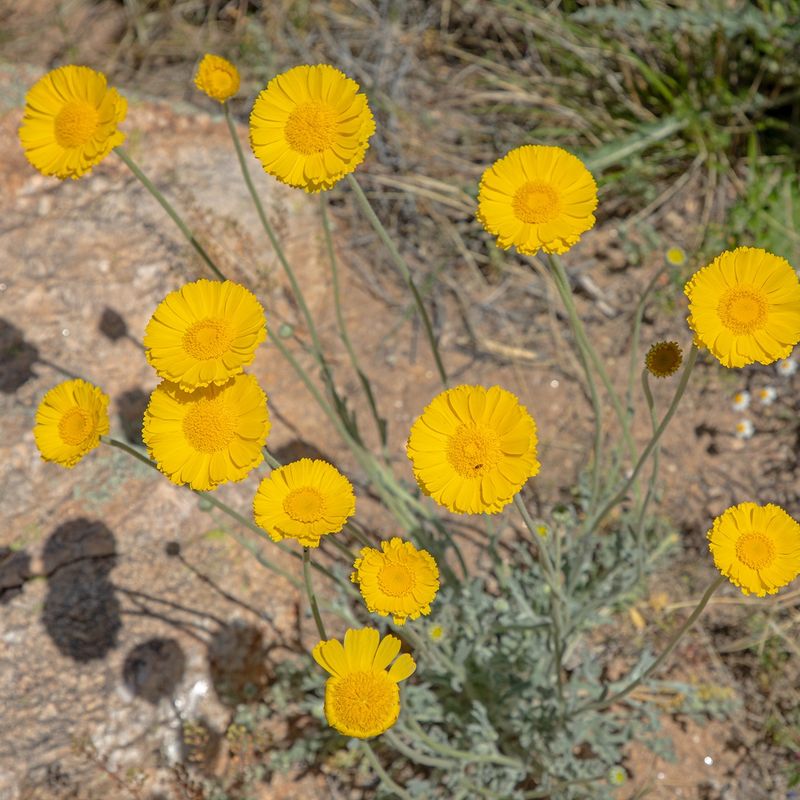
Blooms appear in waves from spring through fall, adding consistent color to a spot most plants avoid.
Pollinators love it too. Bees and butterflies visit regularly, which adds life to an otherwise harsh landscape zone near your driveway.
2. Full Sun Suits This Native Flower
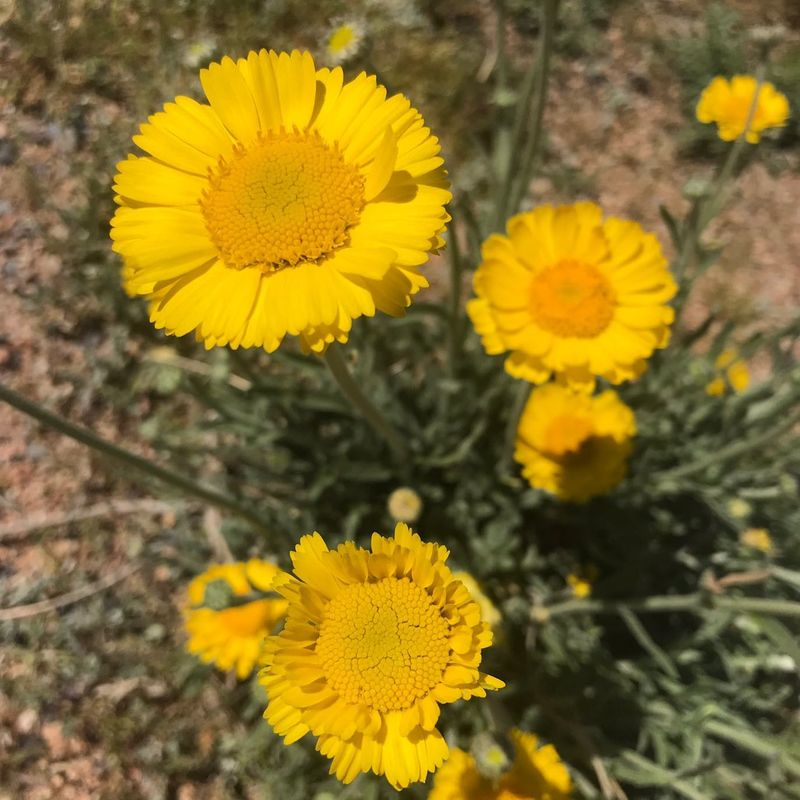
Shade lovers need not apply. Desert Marigold was built for direct, unfiltered sun and performs best when it gets as much light as possible throughout the day.
Six hours of sun is considered a minimum for most sun-loving plants. Desert Marigold often thrives with eight to ten hours without any sign of stress.
Partial shade can actually reduce bloom production and make stems stretch awkwardly toward light.
South-facing and west-facing exposures along walkways are ideal placements. Those spots receive the most intense afternoon sun, which suits this plant far better than it suits most others.
Gardeners sometimes worry that too much direct sun will scorch the leaves. With Desert Marigold, that concern rarely applies.
Its natural range includes open, exposed flats where cloud cover is minimal and sun intensity is high for most of the year.
One thing worth knowing: seedlings may need a short adjustment period if transplanted during the hottest weeks of summer. Established plants handle full sun with far more ease than newly planted ones.
Your Arizona Garden Changes Every Week. Your Plan Should Too.
Gardening in Arizona changes quickly throughout the season. Every Friday you’ll receive a simple weekly plan showing exactly what to plant, prune, fertilize, harvest, and protect so you never miss the right timing.
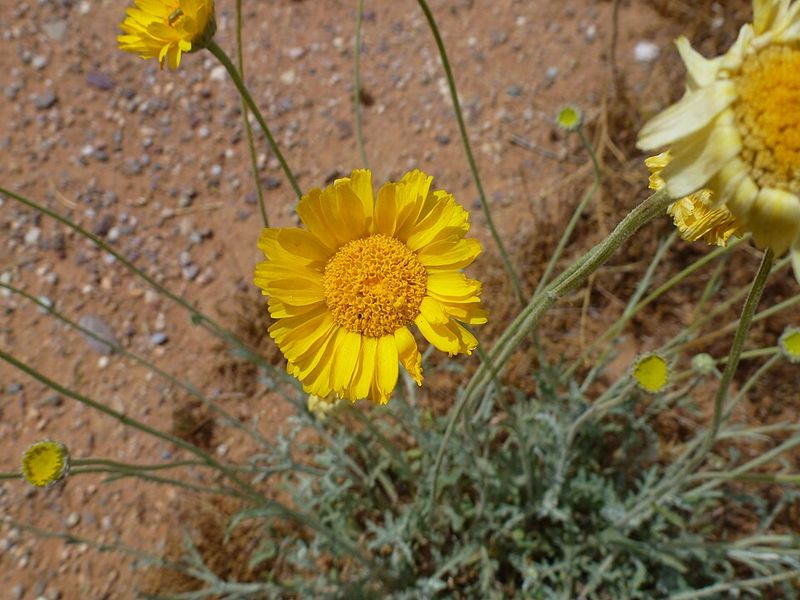
Once rooted in, the plant rewards full-sun placement with dense, consistent flowering. Bright yellow blooms stand out sharply against the pale, silvery foliage, creating a clean visual contrast that works well along paved paths and entry areas.
3. Gravelly Soil Matches Its Natural Habitat
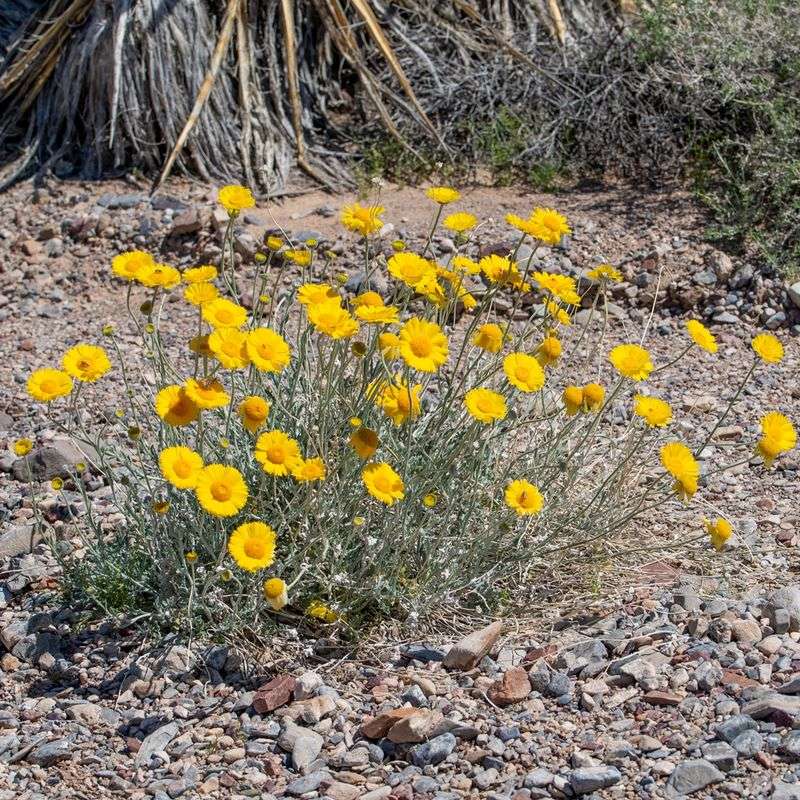
Rocky, gravelly ground is where Desert Marigold feels most at home. Rich, amended garden soil is not what this plant prefers, and heavy clay can cause problems fairly quickly.
In its native range across the desert Southwest, it grows in decomposed granite, sandy washes, and rocky slopes. Replicating that soil type in a landscape bed near your walkway gives it a real advantage from the start.
Decomposed granite is widely available at landscape supply yards across the region. Mixing it into existing soil or using it as a top layer creates drainage conditions that closely match what this plant naturally grows in.
Avoid adding too much compost or organic matter. Overly rich soil can push the plant toward leafy, floppy growth with fewer blooms.
Leaner soil tends to produce more compact, upright plants with better flower production.
Gravel mulch around the base also helps. It keeps the root zone from holding excess moisture after rain or irrigation, which can be a problem in low-lying spots along walkways.
If your driveway border already has rocky, poor-quality soil that other plants reject, that is actually a good sign for Desert Marigold. Soil that discourages most ornamentals often suits this native plant quite well, provided drainage is reasonable.
4. Low Water Needs Fit Dry Landscape Beds
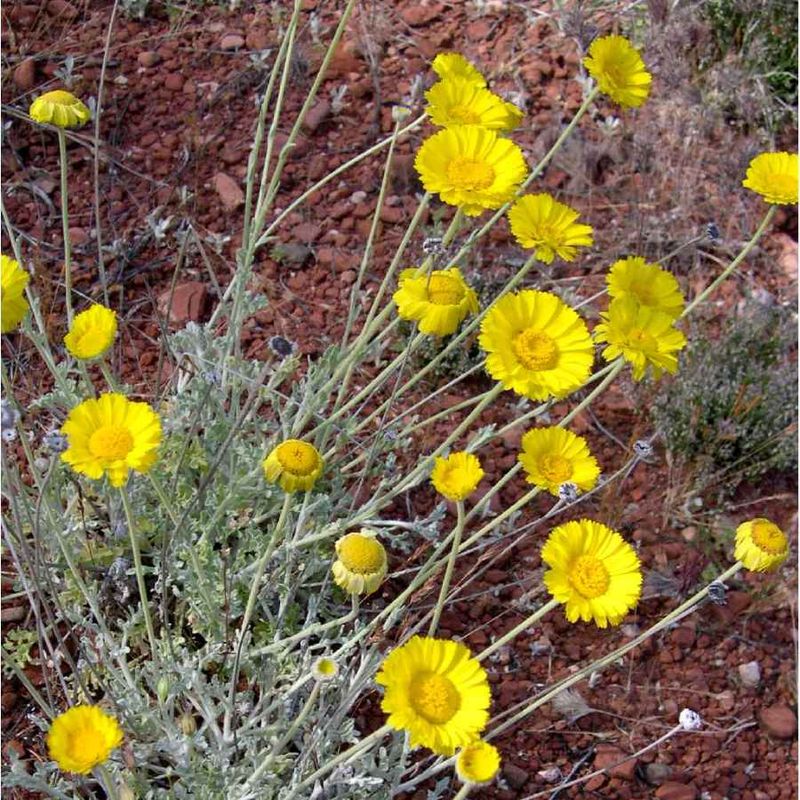
Water bills in desert cities add up fast, especially in summer. Choosing plants that need very little irrigation makes a real difference over time.
Desert Marigold is drought-tolerant once established, typically requiring only occasional deep watering during dry stretches. In areas with monsoon rainfall, supplemental irrigation may be minimal or unnecessary during that season.
The establishment period is the most water-sensitive phase. For the first few months after planting, regular watering helps roots spread deep into the soil.
After that, the plant becomes considerably more self-sufficient.
Overwatering is actually a more common problem than underwatering with this species. Soil that stays wet for extended periods can cause root issues.
Watering deeply but infrequently encourages roots to reach down rather than stay near the surface.
Drip irrigation works well for Desert Marigold in landscape beds. Setting emitters to run less frequently as the plant matures keeps moisture levels appropriate without overdoing it.
In Arizona, natural rainfall patterns often align well with this plant’s needs, particularly during the summer monsoon season.
During dry winter and spring months, occasional supplemental watering helps maintain healthy growth and consistent blooming without pushing the plant past what it can handle comfortably.
5. Silvery Leaves Handle Desert Conditions Well
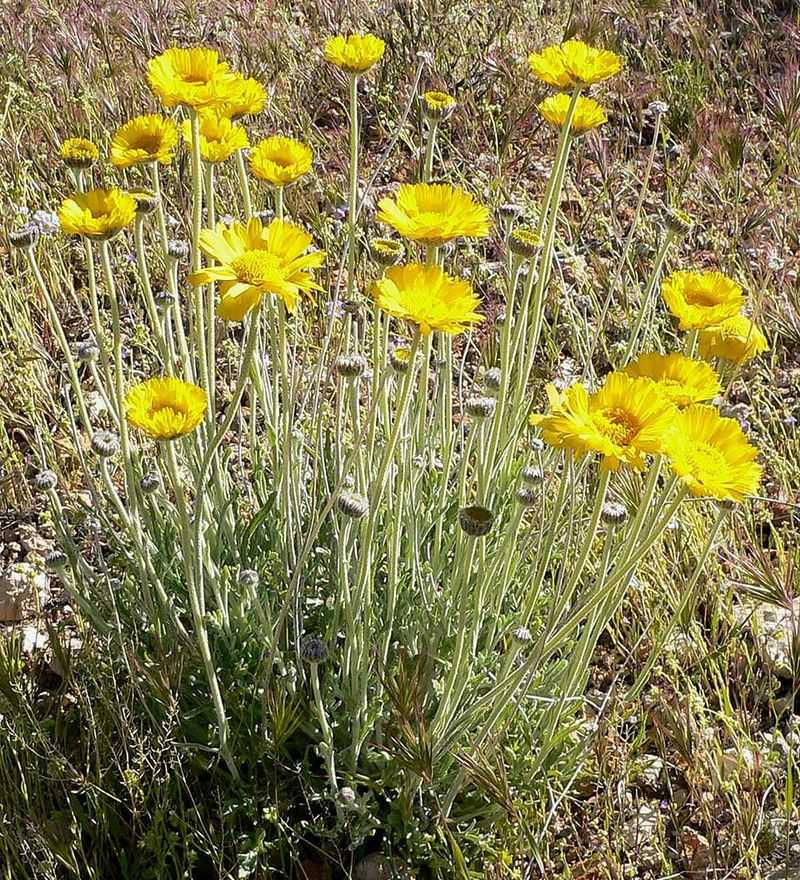
Not many plants wear their sun protection on the outside. Desert Marigold does, and it works remarkably well in harsh, exposed conditions.
The leaves have a soft, woolly texture covered in fine white hairs. That coating is not decorative.
It reflects intense sunlight, slows water loss, and helps the plant manage heat that would stress most other species in the same spot.
Botanists call this type of leaf covering pubescence. Many desert-adapted plants use a similar strategy.
In Desert Marigold, it gives the foliage a pale, silvery appearance that contrasts well with the bright yellow flowers.
From a design standpoint, the silvery leaves add year-round visual interest even when the plant is not in bloom. Along a walkway or driveway border, that texture and color provide a soft, natural look that works alongside gravel, rock, and concrete.
Worth noting: the leaves can cause mild skin irritation in some people. Wearing gloves when pruning or handling the plant is a reasonable precaution, especially for those with sensitive skin.
Beyond the irritation caveat, the foliage holds up well through intense heat and dry wind without wilting or browning at the edges. That kind of resilience is exactly what a tough driveway border calls for during the long desert summer months.
6. Compact Growth Works Along Narrow Walkways
Narrow walkways leave almost no room for sprawling plants. A shrub that spreads wide or sends up tall, floppy stems becomes a tripping hazard fast.
Desert Marigold grows in a tidy, clumping form. Most plants reach roughly one to two feet tall and about as wide.
That size fits comfortably along tight borders without crowding the path or requiring constant cutting back.
Flower stems rise above the foliage mound, which keeps the blooms visible without the base of the plant taking over the walking space. It is a practical growth habit for any area where foot traffic runs close to the planting bed.
Spacing plants about eighteen inches apart along a walkway creates a natural, connected border look without overcrowding. As plants mature, they fill in gradually and the border becomes more defined and fuller-looking over time.
Deadheading spent blooms encourages fresh flower production and keeps the plant looking tidy. Removing old flower heads also prevents excessive self-seeding, which can spread plants into areas where they are not wanted.
For gardeners in the desert Southwest who want a low-maintenance border that stays in bounds, Desert Marigold is a practical fit. It does not demand frequent reshaping to stay presentable along a narrow path or driveway edge.
7. Good Drainage Keeps Roots From Staying Wet
Wet feet are a problem for this plant. Poor drainage is one of the most reliable ways to cause serious stress to Desert Marigold in a landscape setting.
Roots sitting in waterlogged soil for extended periods can lead to crown rot and overall decline. Raised beds, sloped borders, or areas with naturally fast-draining soil help prevent that issue before it starts.
Along driveways and walkways, drainage is often better than in other parts of the yard. Water tends to run off paved surfaces quickly, and the soil nearby drains faster as a result.
That runoff pattern can actually benefit Desert Marigold when positioned correctly.
If the planting area stays soggy after rain, amending with coarse sand or decomposed granite improves drainage noticeably. Raised borders built even a few inches above grade also help excess water move away from the root zone.
Container planting is another option for spots with poor natural drainage. Using a fast-draining cactus mix and a container with adequate holes at the base keeps moisture at manageable levels.
In Arizona landscapes where monsoon rains arrive in concentrated bursts, good drainage planning matters more than most gardeners expect.
A well-placed, well-drained planting spot sets Desert Marigold up for long-term success without requiring much intervention afterward.