The Arizona Trees You Want In The Ground Before Halloween Arrives
Fall is the secret planting season in the Arizona desert, and most people miss it. When October cools things down, young trees can grow strong roots before the next 110-degree summer shows up.
Plant the right native tree now, and next year you could have more shade, a lower water bill, and a yard full of birds, bees, and bats. Here are ten tough trees worth getting in the ground before the trick-or-treaters knock.
1. Blue Palo Verde
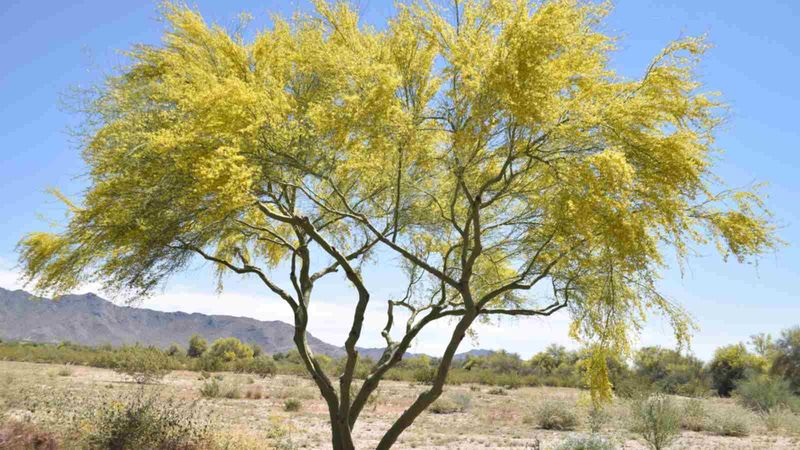
Arizona’s state tree does something most trees can’t. Its bright green bark makes food through photosynthesis, so the tree keeps working even after it drops its tiny leaves to save water during dry stretches.
Blue Palo Verde can reach 20 to 35 feet tall with an equally wide crown. The canopy is light and airy, casting dappled shade that cools a patio without blocking every ray.
That filtered light also lets smaller plants grow underneath, which is handy if you want a layered, habitat-rich yard.
Come spring, the whole tree erupts in yellow blossoms. Bees and butterflies swarm the flowers, while verdins, cactus wrens, and hummingbirds may tuck nests into the twiggy branches.
Roadrunners sometimes nest in palo verdes too, and those speedy birds are known to snack on scorpions and large insects.
Once settled, this tree needs very little extra water. A deep soak every few weeks during its first summers is usually enough, and established trees often get by mostly on rainfall.
Give it full sun, good drainage, and room to spread, away from walls and pools where its blooms and pods might pile up. Planting in October lets those roots dig in during the mild months ahead.
2. Foothill Palo Verde
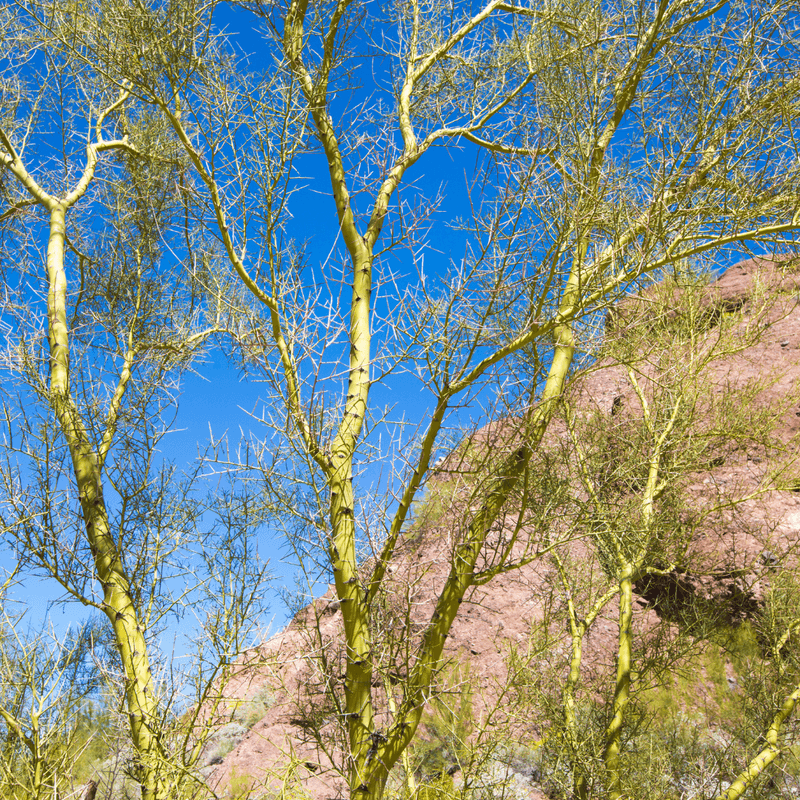
Picture a palo verde that grows slower, stays smaller, and handles brutal sun like a champ. That’s the Foothill Palo Verde, a native that shines on the rocky slopes around Tucson and Phoenix.
Reaching roughly 10 to 20 feet, it fits nicely in smaller yards, side yards, or narrow spaces where a big shade tree would be too much. Its branches are a yellow-green color and look sculpted, almost like living art.
Many desert gardeners love it for its slow, steady growth, which means less pruning and less mess over time.
Pale yellow flowers show up in spring, usually a bit later than its blue cousin. Native bees especially love them.
The tree’s dense, twiggy form also gives small birds a safe place to hide from hawks and the afternoon heat.
Water needs are about as low as a tree can get. After establishment, it can survive on natural rainfall in many low-desert spots, though an occasional summer drink keeps it looking fuller.
Plant it in full sun with fast-draining soil, and skip the rich amendments. Native rocky ground suits it just fine.
A fall planting gives you a sturdy, wildlife-friendly tree that barely asks for anything back.
3. Velvet Mesquite
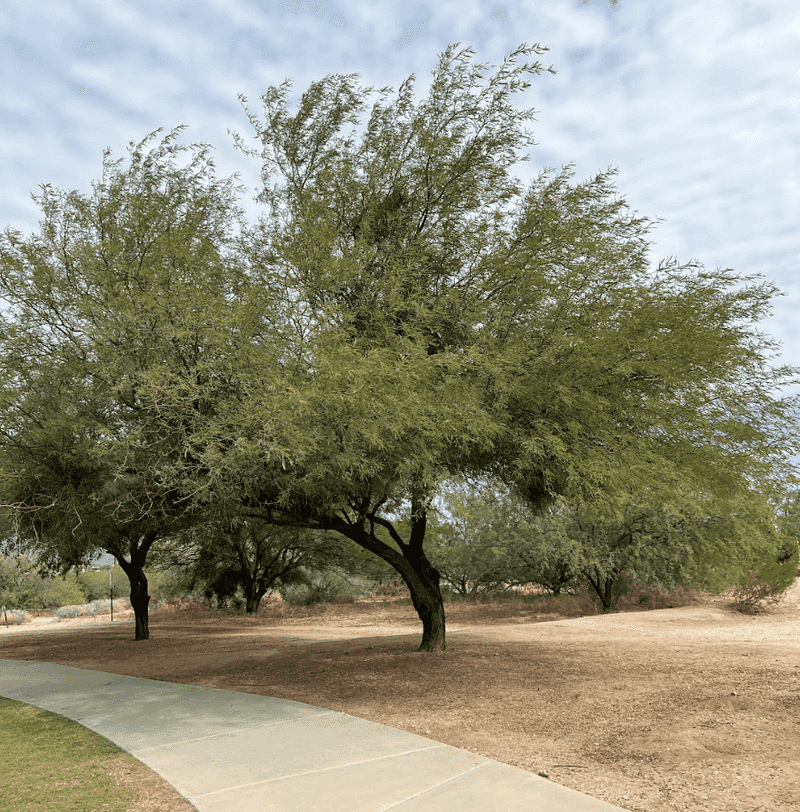
Some mesquite roots have been found tunneling more than 160 feet underground in search of water. That deep-diving habit is exactly why Velvet Mesquite stays green and steady when summer turns brutal.
Your Arizona Garden Changes Every Week. Your Plan Should Too.
Gardening in Arizona changes quickly throughout the season. Every Friday you’ll receive a simple weekly plan showing exactly what to plant, prune, fertilize, harvest, and protect so you never miss the right timing.
Growing 20 to 40 feet tall with a broad, fine-textured crown, this native makes a classic desert shade tree. Its filtered shade can noticeably cool a patio, a west wall, or a play area.
As a legume, mesquite also adds nitrogen to the soil, helping nearby plants grow better without extra fertilizer.
Wildlife love it. Late-spring flower spikes are loaded with nectar for bees, and the sweet seed pods feed birds, rabbits, and other small animals.
Roadrunners may nest in mesquites, and these birds happily hunt scorpions, tarantulas, and big bugs.
One tip for scorpion-conscious homeowners: keep the lower branches trimmed and the ground beneath clear of leaf piles and debris. Letting sunlight reach the soil makes the area less inviting to pests looking for dark hiding spots.
Water deeply but rarely once the tree is settled, since shallow, frequent watering can lead to weak roots. Fall planting lets it build that strong anchor before the monsoon winds arrive.
4. Desert Willow
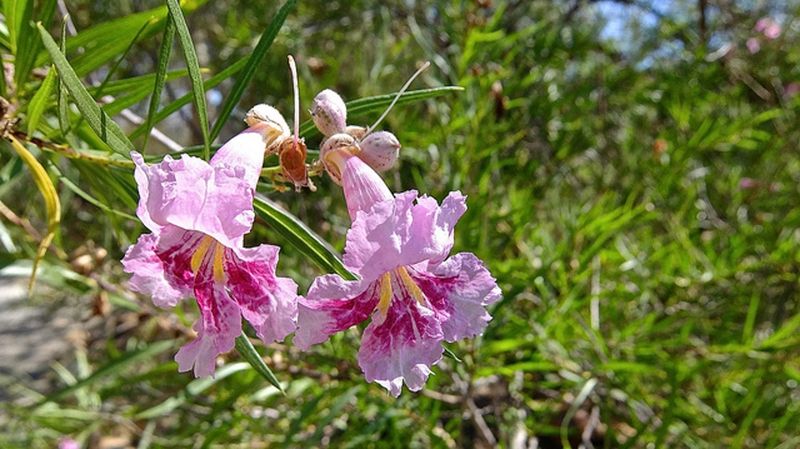
Here’s a fun twist: Desert Willow isn’t actually a willow at all. It just has long, skinny leaves that look like one, while it’s really a cousin of the trumpet vine.
Those trumpet-shaped flowers are the main event. From mid-spring through summer, blooms in pink, lavender, purple, or white cover the branches.
Hummingbirds treat this tree like a buffet, and bees and butterflies join in too. Goldfinches and doves may also nibble its seeds later in the season.
At 15 to 25 feet tall and 10 to 20 feet wide, it’s a perfect size for most backyards. It handles reflected heat from walls and driveways better than many trees, so it works well in hot, sunny corners.
Its roots aren’t considered invasive, which makes it a safer pick near patios and pathways.
Desert Willow goes bare in winter, letting warm sun reach your windows when you actually want it. Once established, it needs only occasional deep watering, though a little summer water keeps the flowers coming.
Plant it in October, and by next summer you may have hummingbirds zooming past your kitchen window. Few trees deliver this much color for so little effort.
5. Ironwood
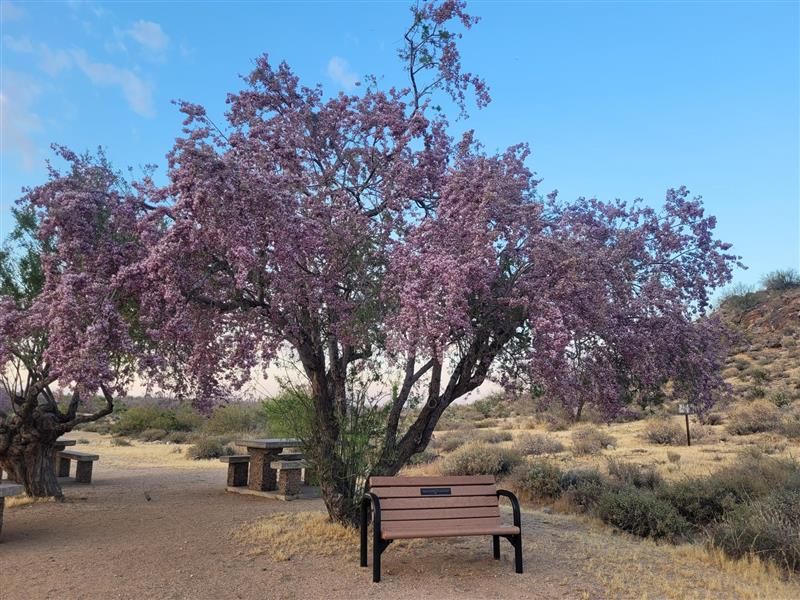
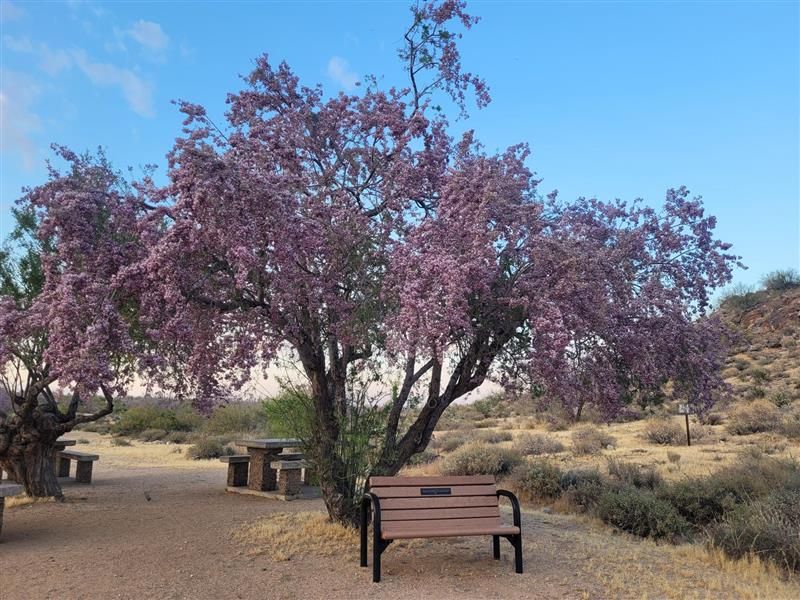
Out in the Sonoran Desert, Ironwood is called a nurse tree. Young saguaros and dozens of other plants often sprout under its protective branches, and some Ironwoods live for hundreds of years.
The wood is so dense it sinks in water, which is where the name comes from. In the yard, this native grows slowly to about 15 to 30 feet, forming a rounded, evergreen-looking canopy.
Its gray-green leaves usually hang on through most of the year, giving steady shade even in winter.
In late spring, lavender to pink pea-like flowers appear, drawing in native bees and other pollinators. Birds use the thick canopy for nesting and shelter, and quail and doves may feed on the seeds.
Its shaded footprint creates a cooler microclimate that many small creatures appreciate on scorching afternoons.
Ironwood is a little sensitive to hard frost when young, so it does best in warmer low-desert spots like central Phoenix and Tucson. Give it full sun, well-drained soil, and patience.
Water deeply during the first couple of summers, then cut back. Planting in fall gives it the gentlest possible start.
Think of it as a tree you plant for your grandkids as much as for yourself.
6. Texas Ebony
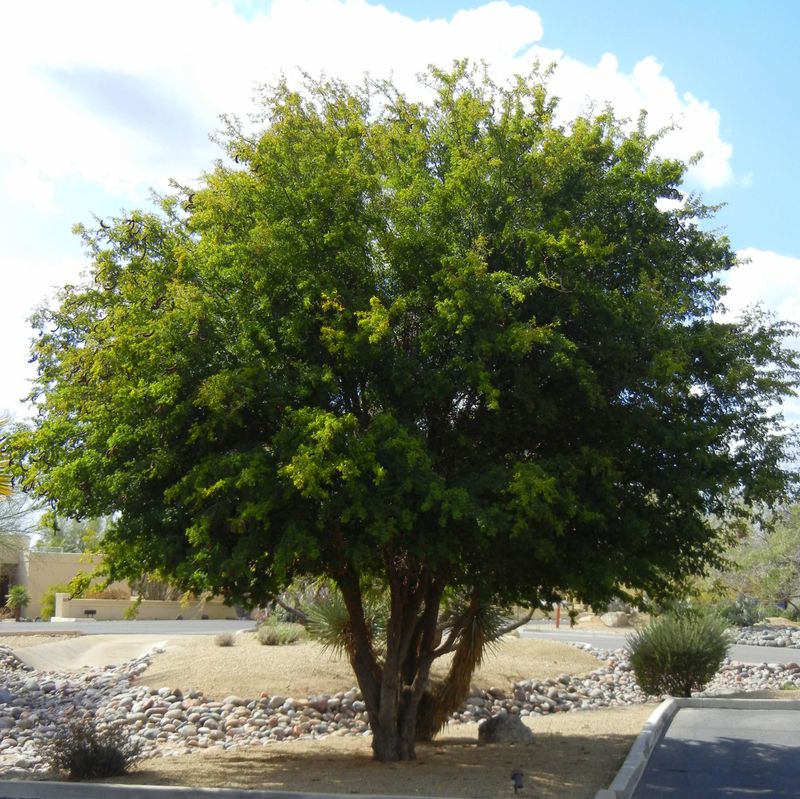
Want a tree that actually looks green all year in Phoenix? Texas Ebony delivers deep, dark foliage that stays put through winter, which is rare among desert-adapted choices.
Its small leaflets pack tightly together, creating a denser shade than most mesquites or palo verdes. Mature trees often reach 15 to 30 feet tall, growing slowly but steadily.
The zigzag branches have small thorns, so it makes a nice natural barrier along a property line or under a window.
Creamy, fuzzy flowers appear in late spring and summer, and bees are quick to find them. Thick seed pods follow, and the dense canopy offers safe cover for nesting songbirds.
Because the branches stay tight and evergreen, it’s a reliable shelter spot during both heat waves and chilly nights.
Though it hails from south Texas and Mexico, this tree handles low-desert heat beautifully. It needs only moderate water while getting established, then gets by on deep, occasional soaks.
Keep the lower limbs trimmed up and rake out fallen pods, which keeps the ground open and less inviting to scorpions. A fall planting helps protect young roots from summer stress.
Expect a tough, tidy tree with very little drama.
7. Desert Museum Palo Verde
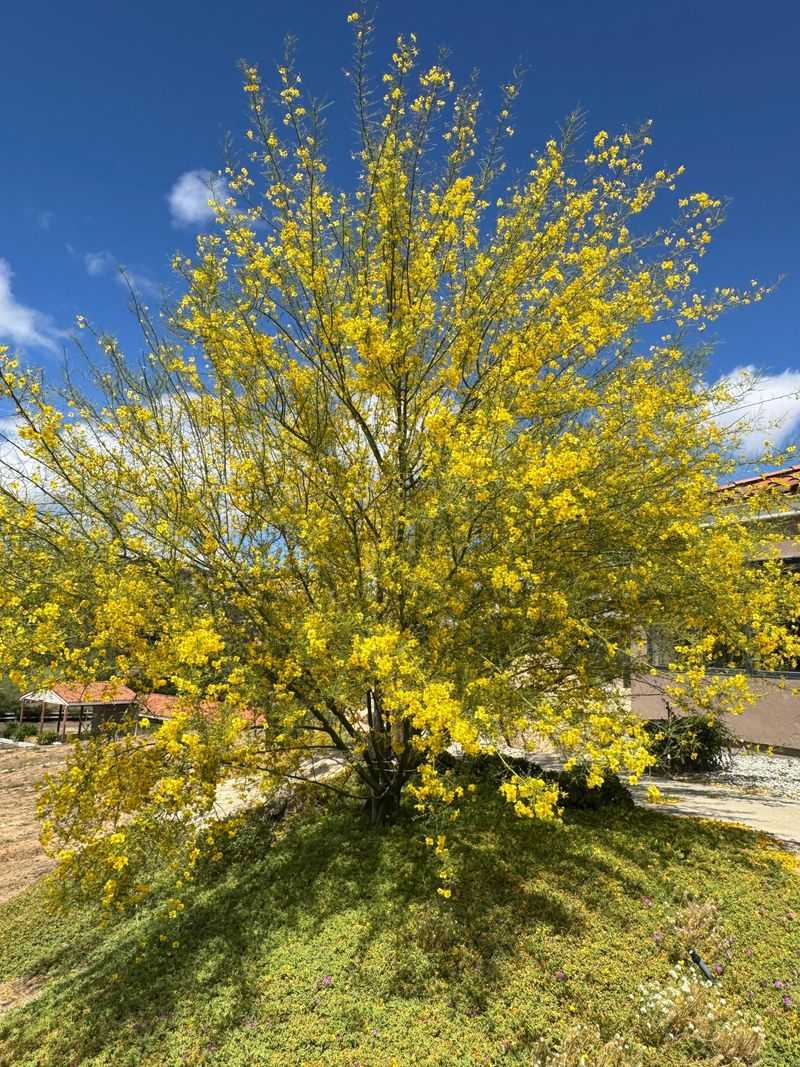
Born from a mix of three palo verde types, the Desert Museum hybrid is something of a desert superstar. Gardeners love it because it grows fast, blooms longer, and has hardly any thorns.
Thornless branches mean you can walk under it, prune it, and let kids play nearby without getting poked. It grows upright to around 20 to 30 feet, with smooth green bark and a graceful shape.
If you want shade quickly, this is one of the speediest native-style choices, often filling out in just a few seasons.
Spring brings big, bright yellow blooms that may keep going for weeks, sometimes with a second flush later. Bees and butterflies flock to the flowers, and birds use the branches for perching and nesting.
Its light canopy lets beneficial insects and lizards stay active underneath, helping keep bug numbers in balance.
Care is simple. Water deeply about once a week during its first summer, then stretch it out as the tree matures.
Avoid heavy fertilizer, which can cause floppy growth. Prune lightly in late spring or early fall to shape it.
Get it in the ground by late October and you’ll likely enjoy blooms within a year or two.
8. Chilean Mesquite Alternative: Screwbean Mesquite
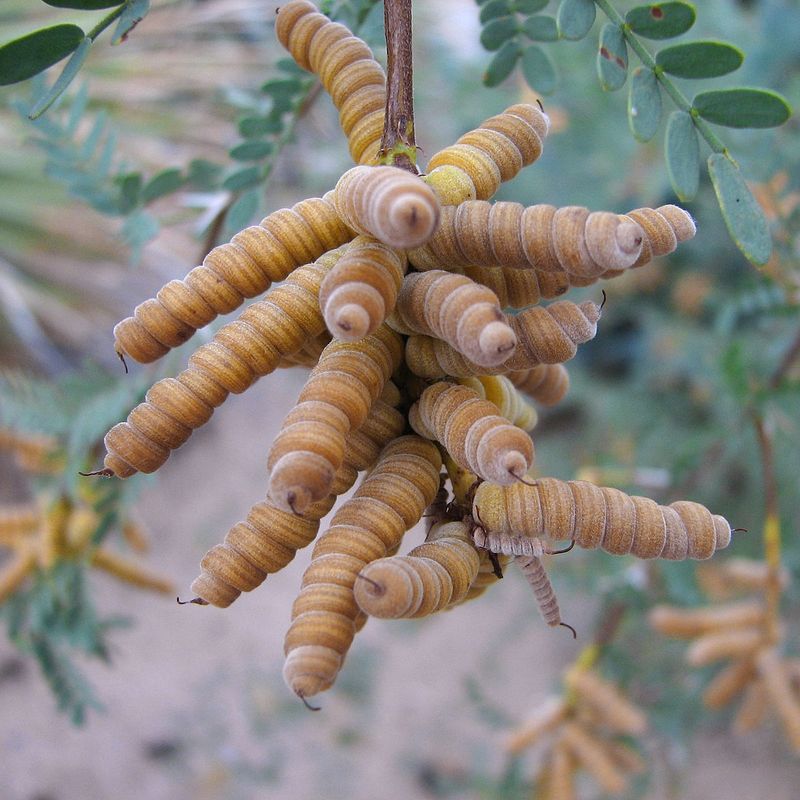
Kids tend to go wild over this one. Screwbean Mesquite grows seed pods that twist into tight little corkscrews, like nature’s own spiral pasta.
Native to Arizona’s desert washes and rivers, it’s smaller than Velvet Mesquite, usually reaching 10 to 25 feet. That makes it a smart swap for the popular Chilean mesquite hybrids, which can grow too fast and break apart in monsoon storms.
Screwbean grows at a steadier pace and often forms a shrubby, multi-trunk shape that suits smaller lots.
Its fuzzy yellow flower spikes arrive in spring and are a favorite of native bees. Those quirky pods feed birds, ground squirrels, and other wildlife, and the twiggy branches give quail and songbirds great cover.
Like all mesquites, it adds nitrogen to the soil, quietly helping neighboring plants.
This tree appreciates a bit more water than upland natives since it naturally grows near washes. Placing it in a low spot where rain collects is a clever way to give it what it wants without extra hose time.
Prune lower branches to keep the ground sunny and less appealing to scorpions. Fall planting helps it settle before spring growth kicks in.
9. Arizona Rosewood
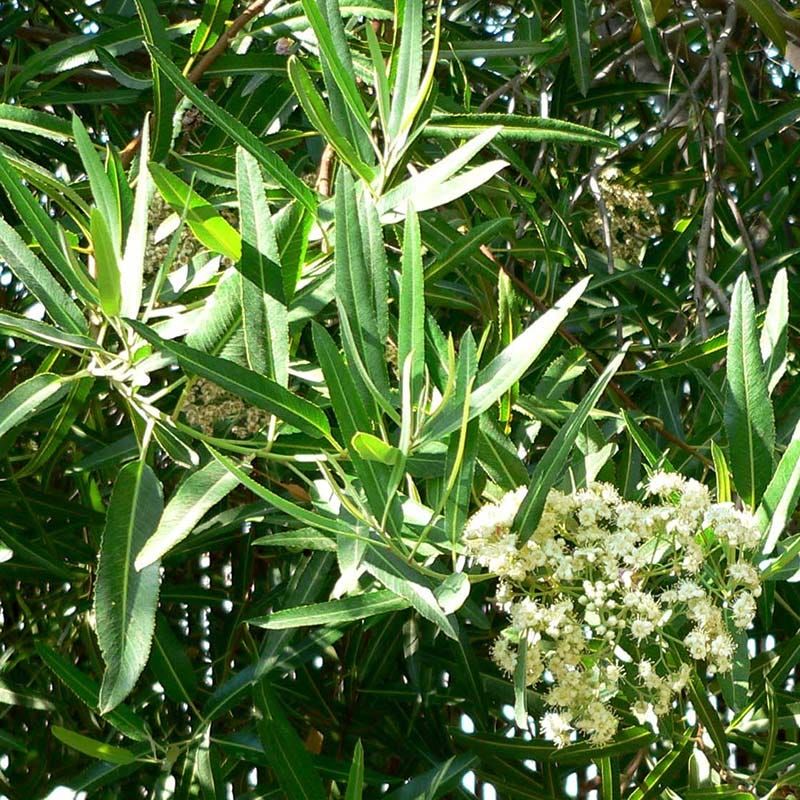
Neighbors peeking over the wall? Arizona Rosewood might be the friendliest fix, a native evergreen that doubles as a living privacy screen.
Technically a large shrub, it’s easily trained into a small, multi-trunk tree around 10 to 15 feet tall. The glossy, dark leaves stay on all year, and many folks plant a row of them along block walls to soften the look and block the view.
It also handles some cold, so it works across most low-desert neighborhoods.
Clusters of tiny white flowers appear in spring and buzz with bees and small pollinators. Later, small woody fruits form that some birds pick at.
The dense, leafy growth gives songbirds a protected place to roost and nest, especially when hawks are circling.
Rosewood is happy in full sun or part shade, which makes it handy on east-facing walls where other natives may sulk. It needs moderate water at first, then deep watering every couple of weeks in summer.
To keep scorpions from moving in, lift the lower branches a bit and avoid letting leaf litter pile up against walls. Plant before Halloween, and you could have a green, wildlife-friendly screen by next fall.
10. Netleaf Hackberry
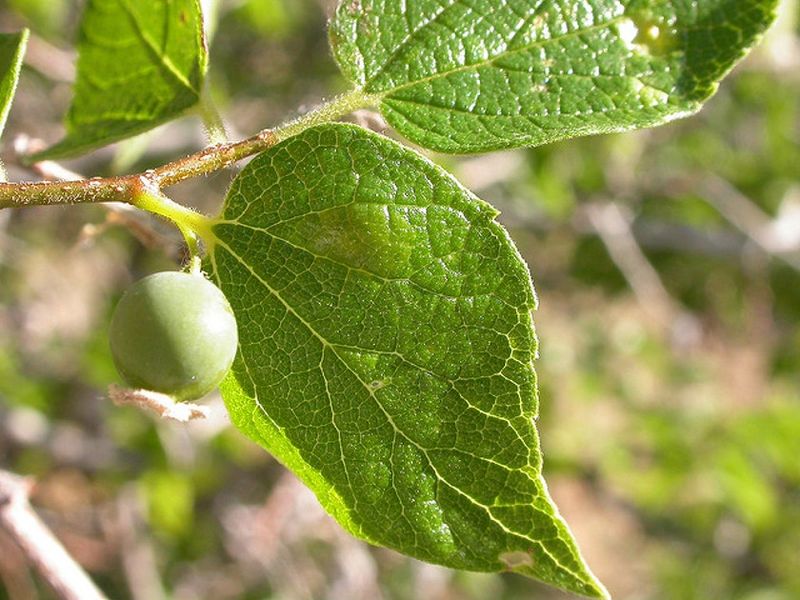
Bird lovers, this one’s for you. Netleaf Hackberry produces small orange-red berries that robins, thrashers, quail, and many other birds eagerly gobble up.
This native grows naturally along Arizona canyons and washes, usually reaching 20 to 30 feet tall. Its rough, textured leaves show a net-like pattern of veins, giving the tree its name.
It’s deciduous, so it offers summer shade and then lets winter sun warm your yard.
Beyond berries, the tree hosts several butterfly species, including the hackberry emperor, whose caterpillars feed on its leaves. That makes it a real habitat tree, not just a pretty face.
Birds also nest and hide in its branches, and more birds in the yard can mean more natural help with insect populations.
Netleaf Hackberry is tough and adaptable, handling alkaline and even rocky soils. It tolerates heat and drought well, though deep watering during summer keeps it fuller and greener.
Plant it where berry drop won’t stain a patio, such as along a back fence or in a natural corner of the yard. Getting it in the ground this fall gives roots time to spread, so by next season your feathered visitors may already be lining up.