The August Mistake That Can Leave Georgia Crape Myrtles With Fewer Blooms
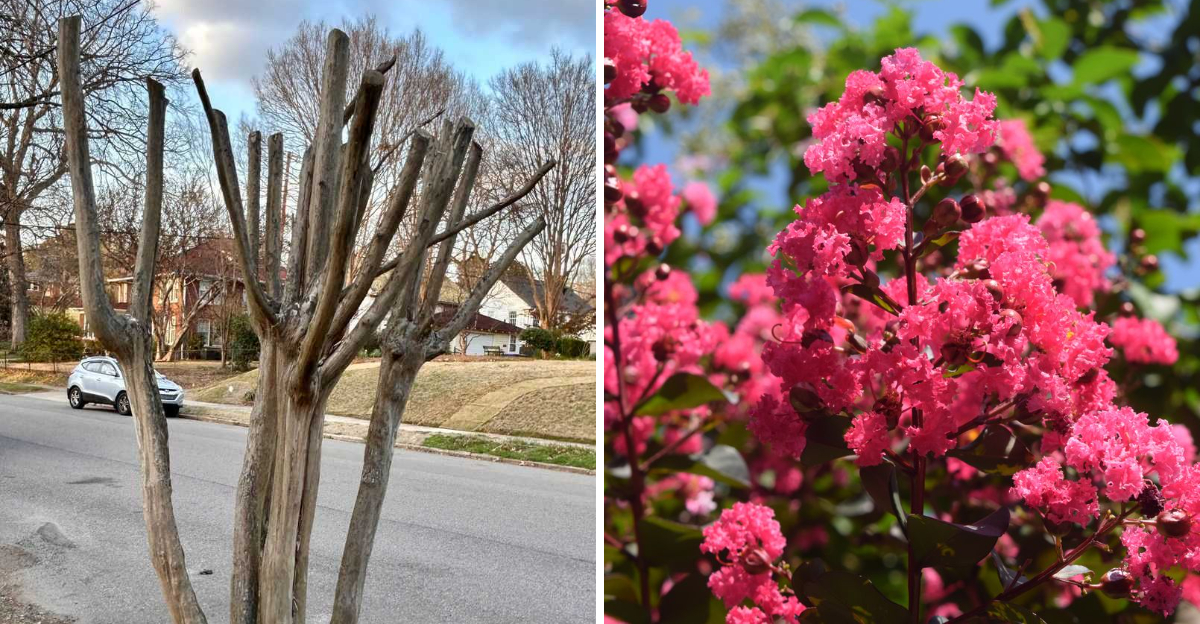
August is not the month to get overly ambitious with your crape myrtle, even when a few branches start looking untidy. One quick decision could cost you some color.
These trees are still putting plenty of energy into their summer display. Reaching for the pruning shears without thinking about timing can interrupt what the plant is doing.
That matters in Georgia, where crape myrtles can continue flowering well into late summer. Give yours a chance to finish the show before making unnecessary cuts.
You can still remove anything that truly needs attention. Just avoid treating August like the perfect month for a major cleanup.
A fuller canopy might look slightly less tidy for now.
Leave those healthy flowering branches where they belong, and enjoy the color instead. The bigger shaping job can wait until the timing actually makes sense.
1. August Pruning Can Reduce Late-Summer Blooms
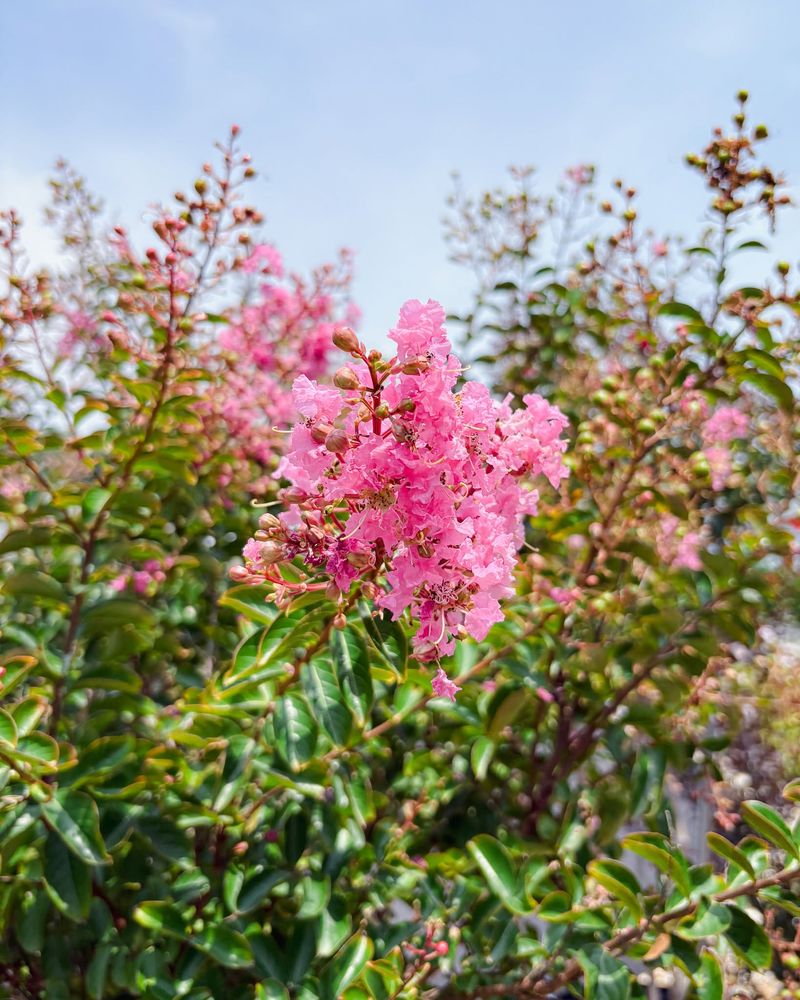
Pruning in August sounds productive, but it can quietly work against you. Crape myrtles push out their last rounds of blooms during late summer, and cutting branches mid-season interrupts that process at exactly the wrong time.
When you remove flowering wood in August, you are not just cleaning up the tree. You are removing the buds that were preparing to open.
Those blooms do not get a second chance once the wood is gone.
Georgia summers stretch long and hot, which actually gives crape myrtles extra time to produce flowers compared to cooler regions. Cutting during that window shortens the blooming season unnecessarily.
Most pruning guides focus on late winter for good reason. Pruning before spring growth starts lets the tree channel its energy into new wood, which is exactly where the blooms come from.
August pruning skips that natural rhythm entirely.
If you see branches crossing or a few damaged tips, light cleanup is generally fine. Avoid removing large sections of healthy wood.
Save major shaping for the dormant season when the tree is not actively growing or blooming.
Timing matters more than most people expect. A well-timed pruning schedule can keep a crape myrtle looking full and flowering strong through the end of summer without sacrificing next year’s performance.
2. Crape Myrtles Flower On New Season Growth
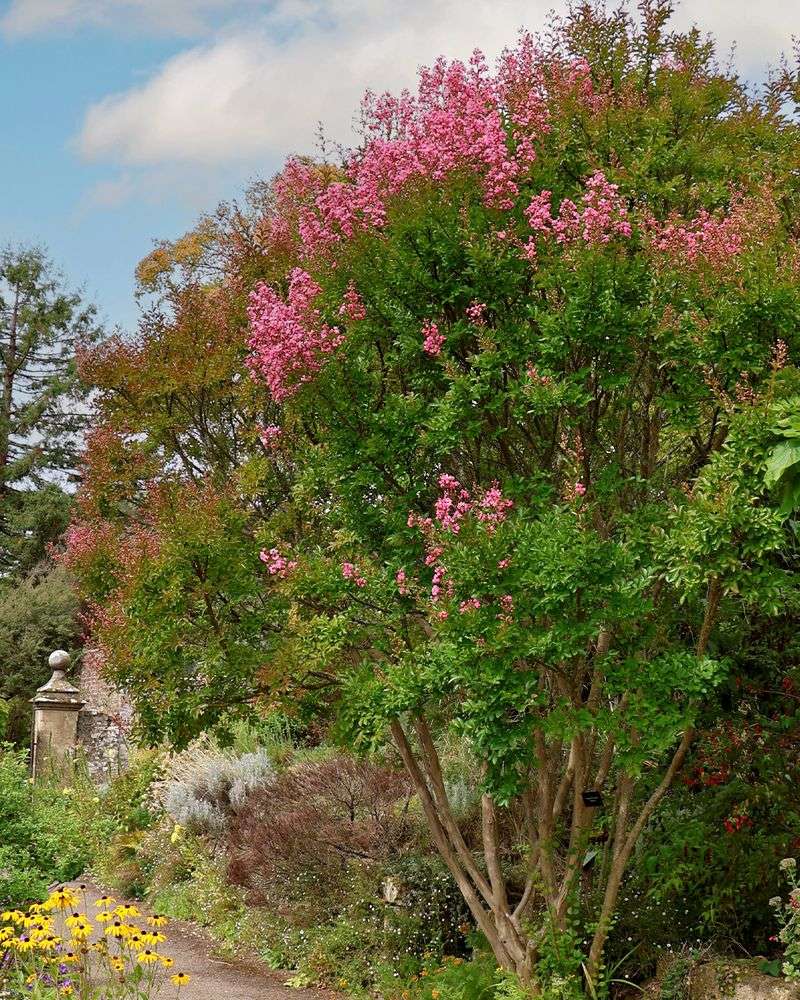
Crape myrtles are not like some shrubs that bloom on old wood year after year. Every summer, the flowers you see come from growth that started that same season.
New shoots push out, and those shoots carry the blooms.
Knowing this changes how you think about pruning and care. If new growth is cut back or stunted, the bloom count drops.
It is a direct cause-and-effect relationship that is easy to overlook until you notice fewer flowers.
Hot summers like those across the Southeast are actually well-suited to crape myrtles for this reason. Warm temperatures encourage steady new growth, which supports repeated rounds of flowering from late spring well into fall.
Stress can slow new growth down. Drought, root competition from nearby plants, or poor soil conditions can all reduce how much new wood the tree produces.
Your Georgia Garden Changes Every Week. Your Plan Should Too.
Gardening in Georgia changes quickly throughout the season. Every Friday you’ll receive a simple weekly plan showing exactly what to plant, prune, fertilize, harvest, and protect so you never miss the right timing.
Less new wood means fewer places for blooms to form.
Fertilizing at the right time supports that growth cycle. Early spring feeding gives the tree what it needs heading into the growing season.
Late-summer fertilizing, especially with high nitrogen, can push leafy growth instead of flowering wood.
Once you understand that flowers follow new growth, caring for crape myrtles becomes more straightforward. Support the growth cycle, and the blooms generally take care of themselves through the season.
3. Faded Flower Clusters Do Not Require Removal
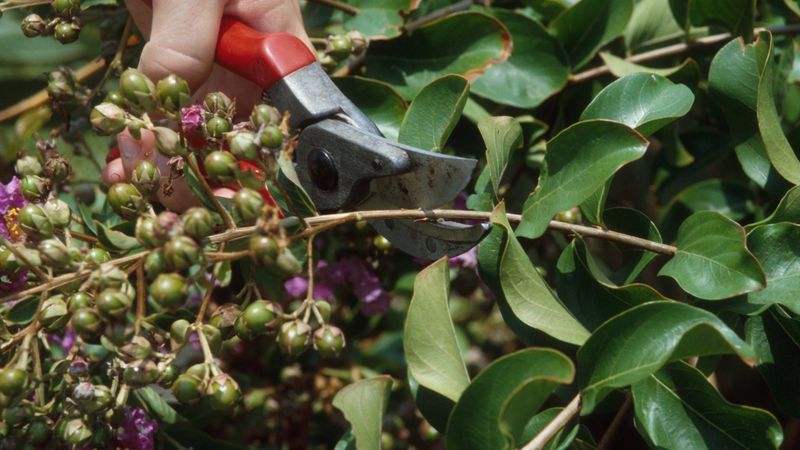
Spent blooms on a crape myrtle look a little rough, but removing them is not as urgent as many gardeners assume. Crape myrtles can rebloom from the same branch tips without deadheading, so skipping that task in August is not a problem.
Deadheading can encourage a fresh flush of blooms in some plants, but crape myrtles tend to rebloom on their own schedule regardless. Cutting off faded clusters in August may not produce the extra flowers you are hoping for.
Faded flower heads left on the tree turn into small seed pods. Those pods are not harmful to the tree.
Some gardeners actually appreciate the textural interest they add to the branches heading into fall.
If you do want to remove spent clusters, timing matters.
Doing it soon after flowers fade gives new growth more time to form and potentially flower before the season ends. Waiting until late August gives the tree little time to respond.
Removing seed pods does take some energy from the tree. Whether that results in noticeably more blooms depends on the individual tree, its health, and how much of the growing season remains.
Leaving faded clusters alone in August is a reasonable choice.
4. Too Much Nitrogen Favors Leaves Over Flowers
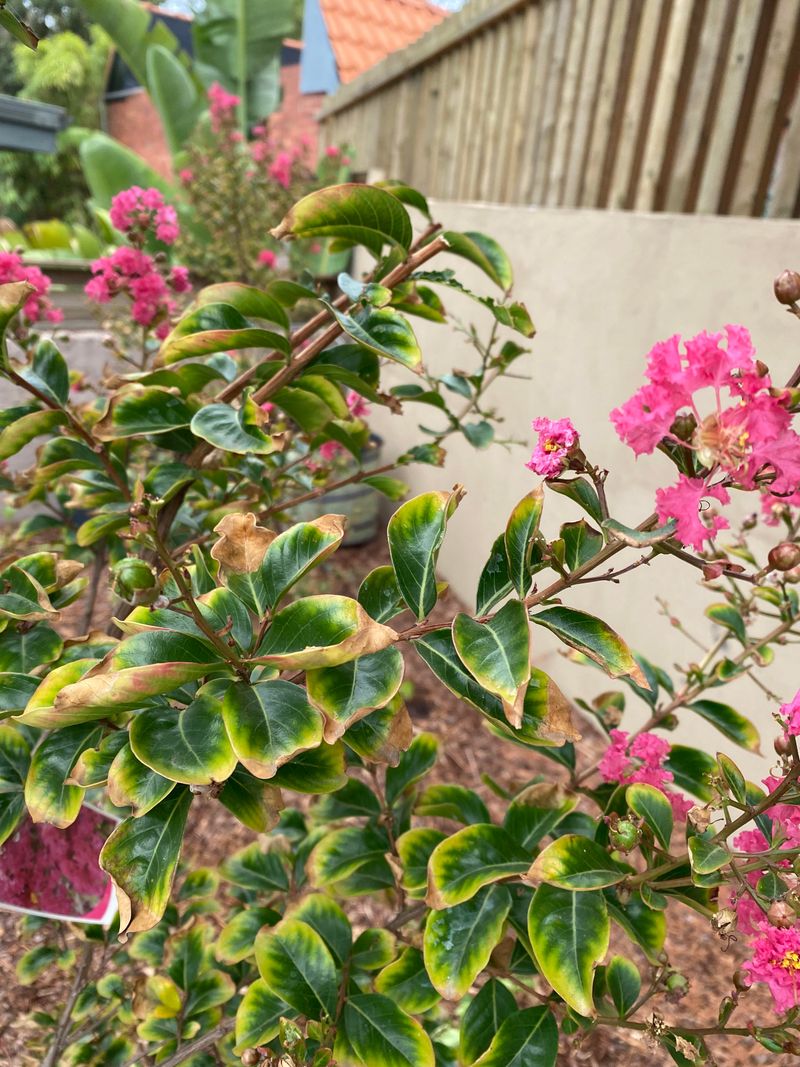
Nitrogen is the nutrient most associated with lush, green growth, and crape myrtles respond to it strongly. Feed them too much in August, and you may end up with a very leafy tree that puts out fewer blooms than expected.
High-nitrogen fertilizers push the plant to grow more foliage. That is useful in spring when you want the tree to establish strong new wood.
In late summer, that same push can redirect energy away from flowering and toward leaf production instead.
Crape myrtles generally do not need heavy fertilization in August. By mid-summer, the tree is usually well into its growth cycle.
Adding nitrogen at that stage can create a burst of soft, leafy shoots that are not well-suited for flowering.
Soil quality also plays a role. In Georgia, soils vary widely between regions, and some naturally hold more nutrients than others.
A soil test can tell you what your yard actually needs before you add anything.
Phosphorus supports root development and flowering, making it a more useful nutrient focus later in the season if any feeding is done at all.
Balanced fertilizers applied in spring tend to be a safer approach than high-nitrogen products used in August.
5. Heavy Cutting Can Interrupt The Blooming Cycle
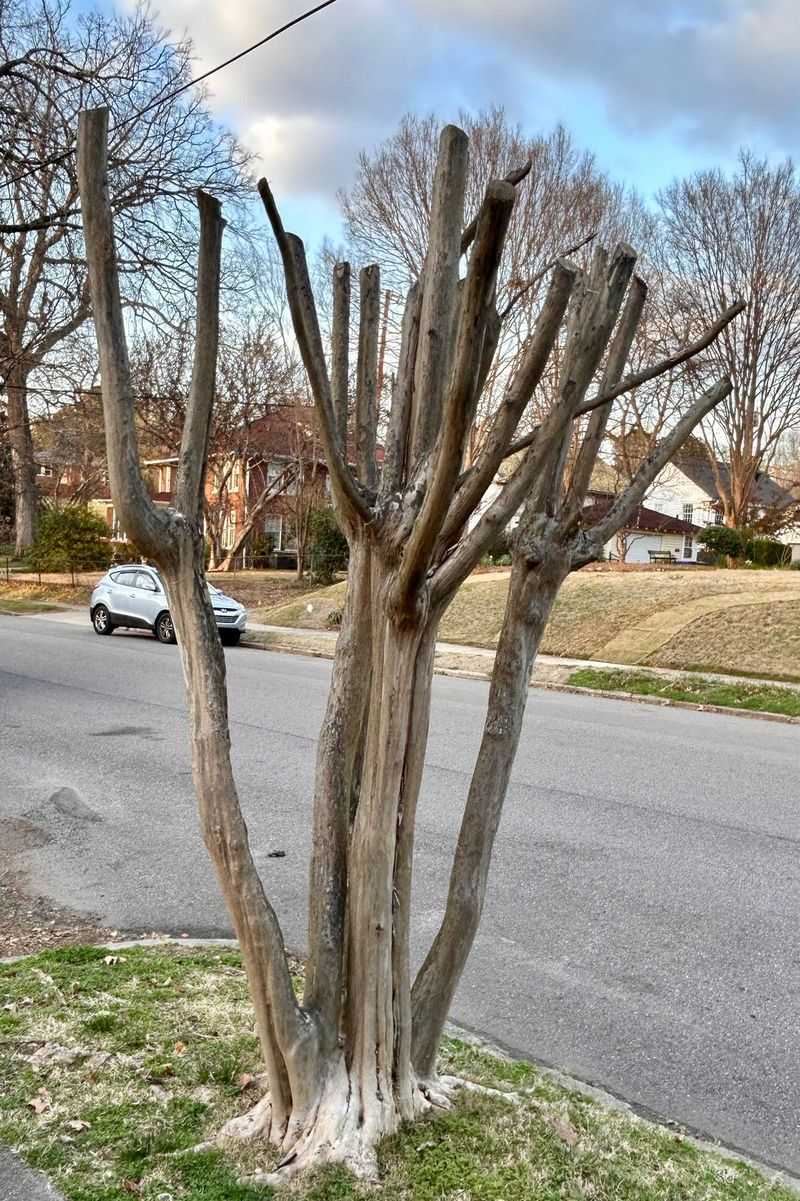
Aggressive cutting does visible damage fast. Heavy pruning removes the flowering wood before it gets a chance to bloom, leaving the tree in recovery mode instead of production mode.
Crape myrtles are resilient and can bounce back from hard cuts over time, but the season you cut heavily is usually the season you lose blooms. Recovery takes energy, and that energy gets pulled away from flower production.
Heavy cutting also encourages a flush of weak, fast-growing shoots from the cut points. Those shoots look bushy at first, but they tend to be structurally weak and more prone to drooping under the weight of flower clusters.
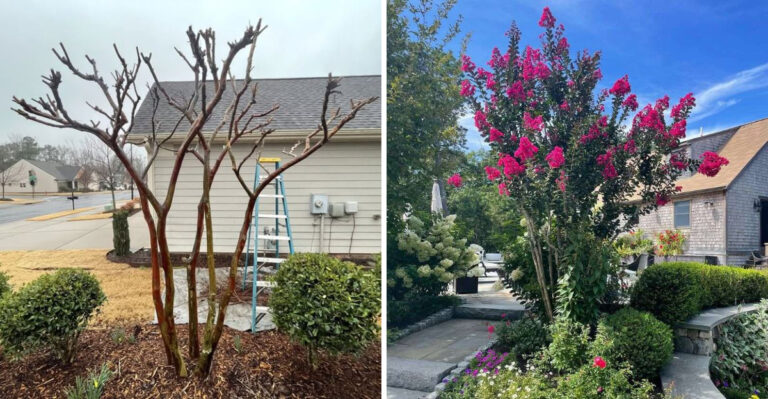
Across the South, a practice sometimes called “crape murder” involves cutting trunks down to stubs each year.
Most horticulturists advise against it because it disrupts the natural branching structure and reduces the tree’s ability to support full bloom clusters over time.
Lighter touch pruning, where you remove only crossing branches, seed heads, or damaged wood, keeps the tree’s structure intact. That approach preserves more of the flowering wood and keeps the blooming cycle on track.
When in doubt, cut less. Crape myrtles in good health and with proper structure rarely need heavy intervention.
Letting the tree grow naturally often produces better results than aggressive seasonal shaping.
6. Consistent Moisture Supports Blooms During August Heat
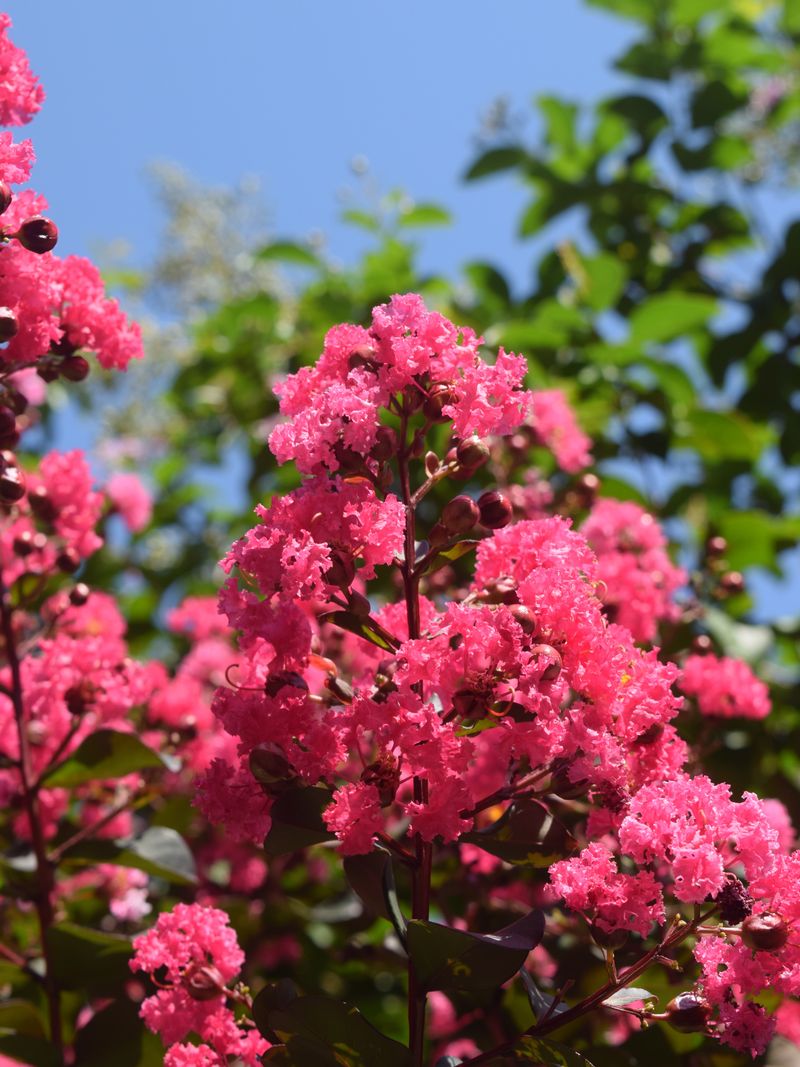
August heat across the South is no joke. Temperatures stay high, humidity is heavy, and rainfall can become unpredictable.
Crape myrtles handle heat well, but inconsistent moisture during bloom time can stress the tree and reduce flower production.
Water stress during August affects more than just the leaves. When a tree is struggling to maintain moisture, it pulls resources away from non-essential processes, and flowering can take a hit as a result.
Deep, infrequent watering tends to work better than shallow daily watering.
Getting water down to the root zone encourages roots to grow deeper, which helps the tree access moisture during dry stretches between rain events.
Mulch around the base of the tree helps retain soil moisture and keeps root temperatures more stable. A few inches of organic mulch pulled back slightly from the trunk can make a noticeable difference during dry weeks.
Established crape myrtles are reasonably drought-tolerant once their root systems are mature, but younger trees or recently transplanted ones are more vulnerable to moisture swings.
Consistent watering for at least the first couple of seasons sets up a stronger, more resilient root system.
Checking soil moisture a few inches below the surface gives you a better read than looking at the surface alone.
7. Major Shaping Is Best Saved For Late Winter
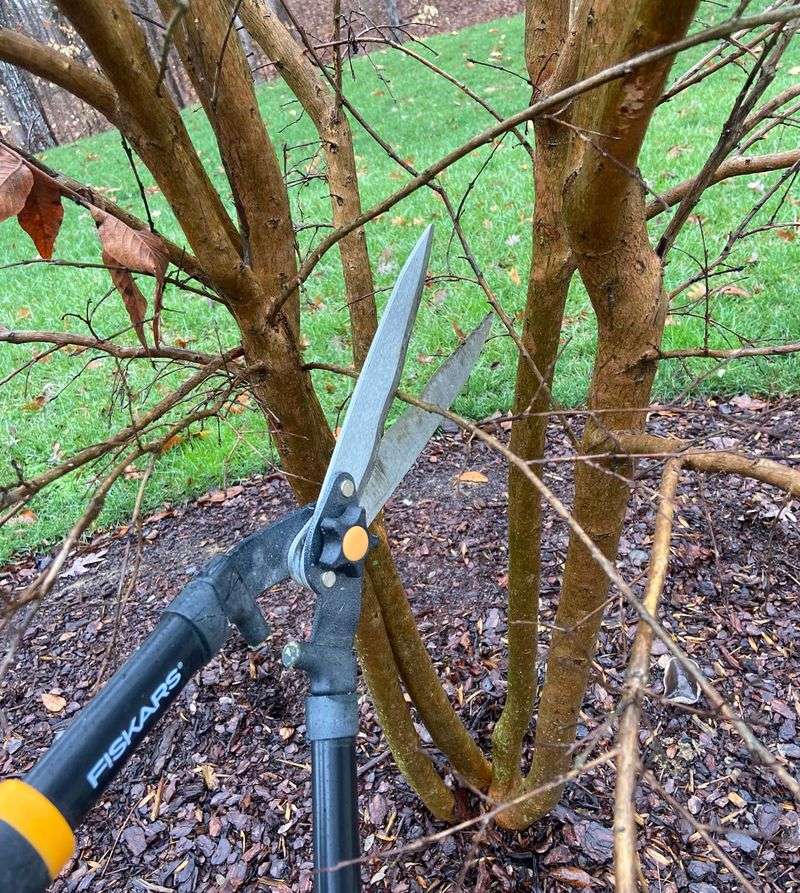
Late winter is the ideal window for shaping crape myrtles, and the reason is straightforward. The tree is dormant, growth has slowed, and you can see the branch structure clearly without leaves blocking your view.
Pruning during dormancy reduces stress on the tree. Cuts made in winter heal as the tree begins pushing new growth in spring.
That new growth comes in strong and well-positioned rather than scrambling to recover from mid-season cuts.
In Georgia, late winter typically falls between late January and early March, depending on the year. Waiting until after the last hard freeze before pruning gives the tree a clean transition into the growing season.
Major shaping done in August forces the tree to spend late-season energy on wound response rather than flowering. Even if the cuts look clean, the tree is working harder than it should be heading into fall.
Focus late-winter pruning on removing crossing branches, improving the overall silhouette, and clearing any wood that looks structurally compromised.
Avoid cutting into the main trunks unless there is a clear reason to do so.
Crape myrtles have a natural shape that is worth preserving.
Working with that structure rather than against it reduces how much pruning is needed each year and keeps the tree flowering reliably season after season.