The Best Native Michigan Shrubs For Shady Side Yards That Deer Usually Won’t Touch
Side yards are awkward. They’re often shady, sometimes narrow, and just neglected enough that nothing ever seems to thrive there for long.
Add deer pressure to the situation and most gardeners give up entirely, throwing down some mulch and calling it a day. But Michigan has a solid lineup of native shrubs that are genuinely built for exactly these conditions.
They handle low light without getting leggy, they don’t need much attention once established, and deer tend to pass right by them in favor of easier targets elsewhere in the yard.
Native shrubs also bring something non-natives can’t match: a real relationship with local wildlife, pollinators, and soil that makes the whole planting feel like it belongs.
That shady side yard might actually be more workable than you’ve been giving it credit for.
1. Spicebush
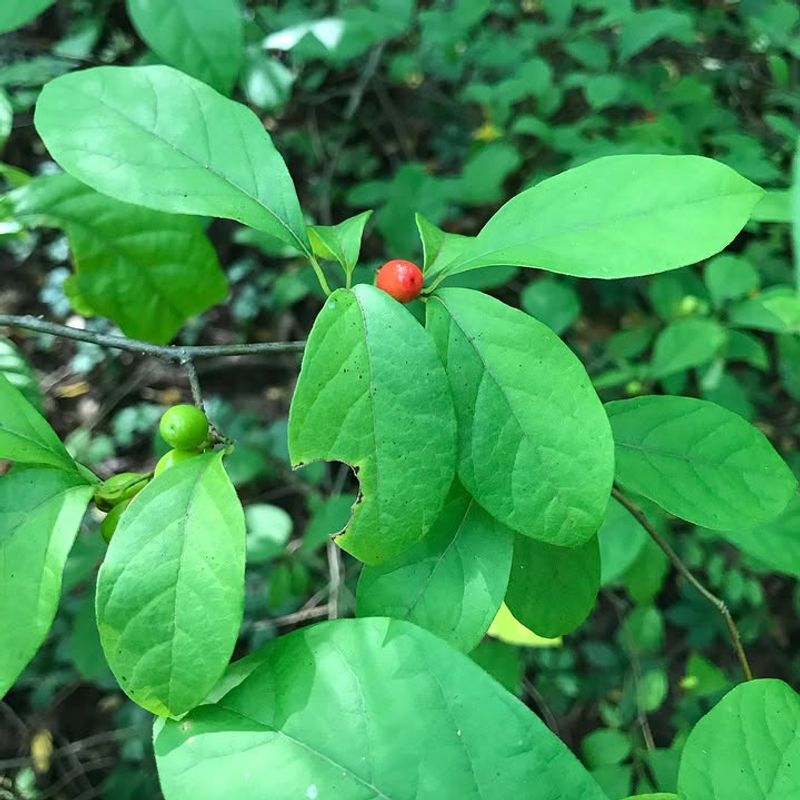
Walk past a spicebush on a warm spring morning and you’ll catch a spicy, citrusy scent that stops you right in your tracks. That aroma is actually the shrub’s best defense.
Deer strongly dislike the intense fragrance from the leaves, stems, and berries, which makes spicebush one of the most reliable deer-resistant native shrubs you can plant in Michigan.
Spicebush grows naturally along shaded stream banks and forest understories throughout Michigan, so a dim side yard feels completely like home to it. It handles moist to average soil beautifully and can reach six to twelve feet tall when it’s happy.
The soft yellow flowers appear very early in spring, often before most trees have even budded out, giving you a welcome pop of color when you need it most.
Beyond its looks, spicebush supports local wildlife in a big way. Spicebush swallowtail butterfly caterpillars rely on it as their primary host plant, and birds flock to the bright red berries in fall.
Planting a few together creates a dense, layered screen that fills in nicely over time. It prefers consistent moisture, so adding a layer of leaf mulch around the base helps keep the roots happy through dry summer stretches.
For a shady Michigan side yard, this shrub checks every box with style.
2. Mapleleaf Viburnum
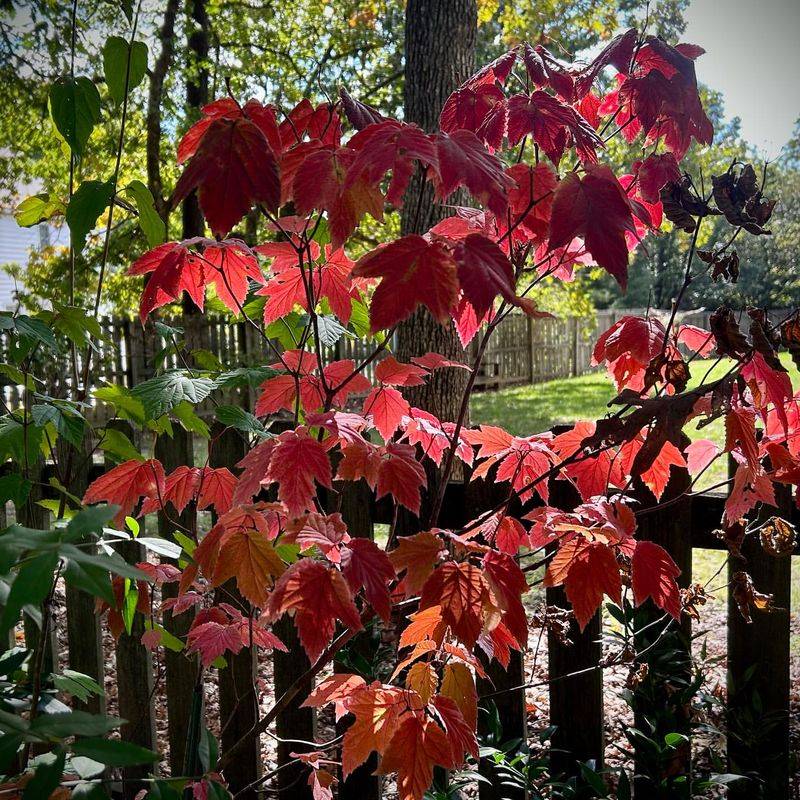
If you’ve ever wanted a shrub that looks fantastic in every single season, mapleleaf viburnum is ready to impress.
Spring brings creamy white flower clusters, summer shows off bold maple-shaped leaves, and fall transforms the whole plant into a stunning display of pink, purple, and red foliage.
It’s honestly one of the most underrated native shrubs growing in Michigan’s forests.
Deer avoid this one pretty consistently, partly due to the slightly bitter taste of the foliage. That makes it an excellent candidate for side yards where deer pressure is a real problem.
Mapleleaf viburnum naturally grows in dry to medium woodland soils and tolerates deep shade better than almost any other native shrub on this list. Tough, sandy, or clay-heavy soils don’t slow it down much either.
The mature size stays manageable, usually reaching three to six feet tall and wide, so it fits well in tighter spaces without constant pruning. Small dark blue-black berries ripen in late summer and attract birds, adding another layer of life to your yard.
Your Michigan Garden Changes Every Week. Your Plan Should Too.
Gardening in Michigan changes quickly throughout the season. Every Friday you’ll receive a simple weekly plan showing exactly what to plant, prune, fertilize, harvest, and protect so you never miss the right timing.
Because it spreads slowly by root sprouting, a single planting can gradually fill in a bare, shaded strip along a fence or foundation wall.
Pairing it with taller native shrubs creates a layered, natural-looking border that feels intentional and polished rather than wild or overgrown.
3. Leatherwood
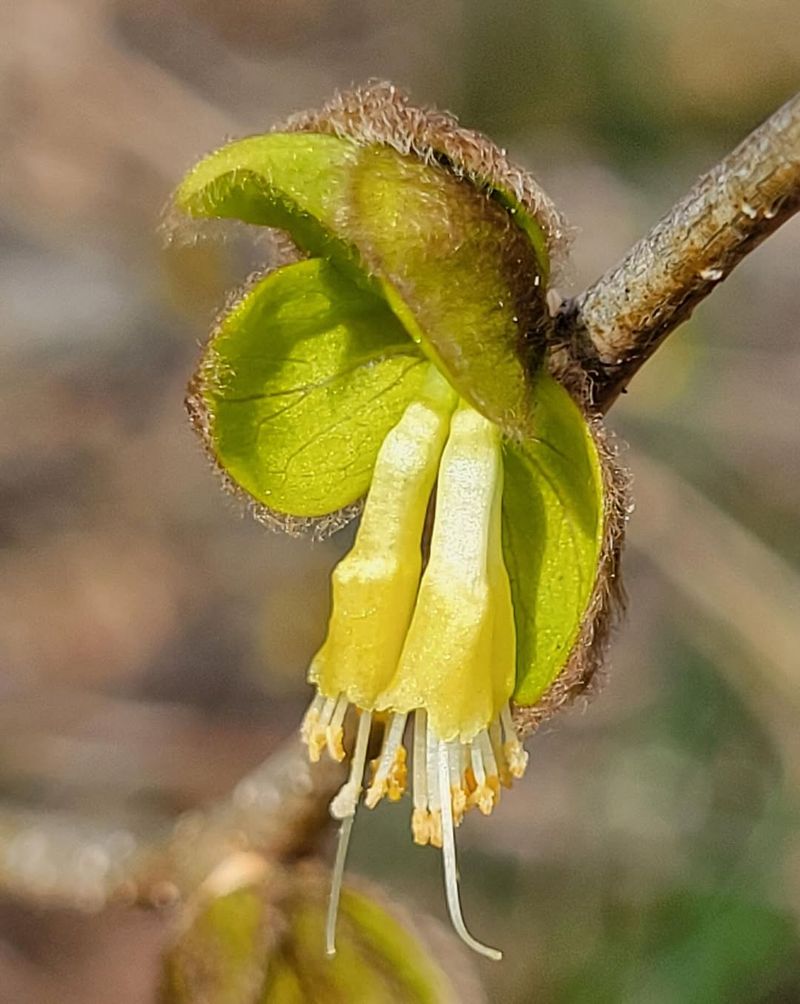
Leatherwood is one of those plants that true native plant enthusiasts get genuinely excited about, and for good reason. It’s rare, beautiful, and perfectly suited for the kind of moist, deeply shaded spots that most shrubs simply refuse to grow in.
Before the snow has fully melted in Michigan, leatherwood is already pushing out small, pale yellow tubular flowers that dangle from bare branches like tiny ornaments.
Deer leave leatherwood alone almost entirely, likely because of the plant’s slightly toxic bark and foliage. That natural protection makes it a smart pick for yards where deer regularly pass through.
The flexible, almost rubbery stems are incredibly tough and were historically used by Indigenous peoples to make rope and bindings, which is exactly how the shrub earned its memorable name.
Growth is slow and steady, typically reaching three to six feet tall over many years, so patience pays off here. Leatherwood thrives in consistently moist, rich woodland soils with good organic matter and does best in spots with full to partial shade.
Once established, it needs very little attention and holds its graceful, rounded shape naturally. The foliage turns a soft yellow in autumn, adding one more season of quiet beauty.
For a shady, damp side yard where nothing else seems to work, leatherwood is a genuinely special find worth seeking out at a native plant nursery.
4. Witch Hazel
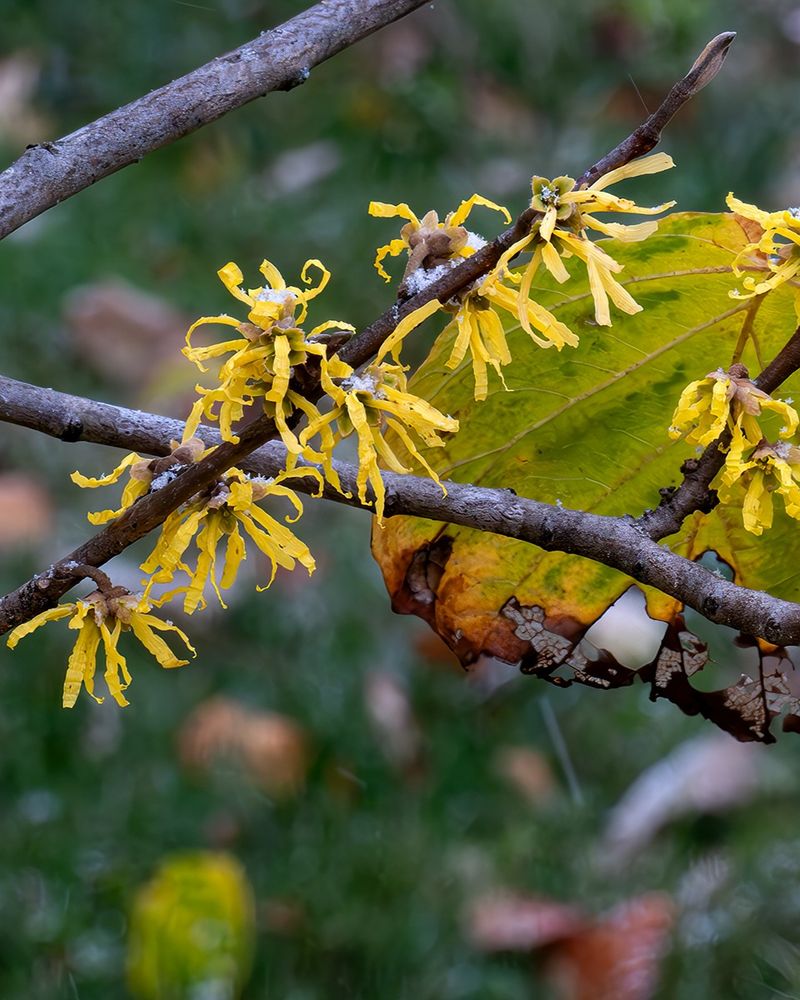
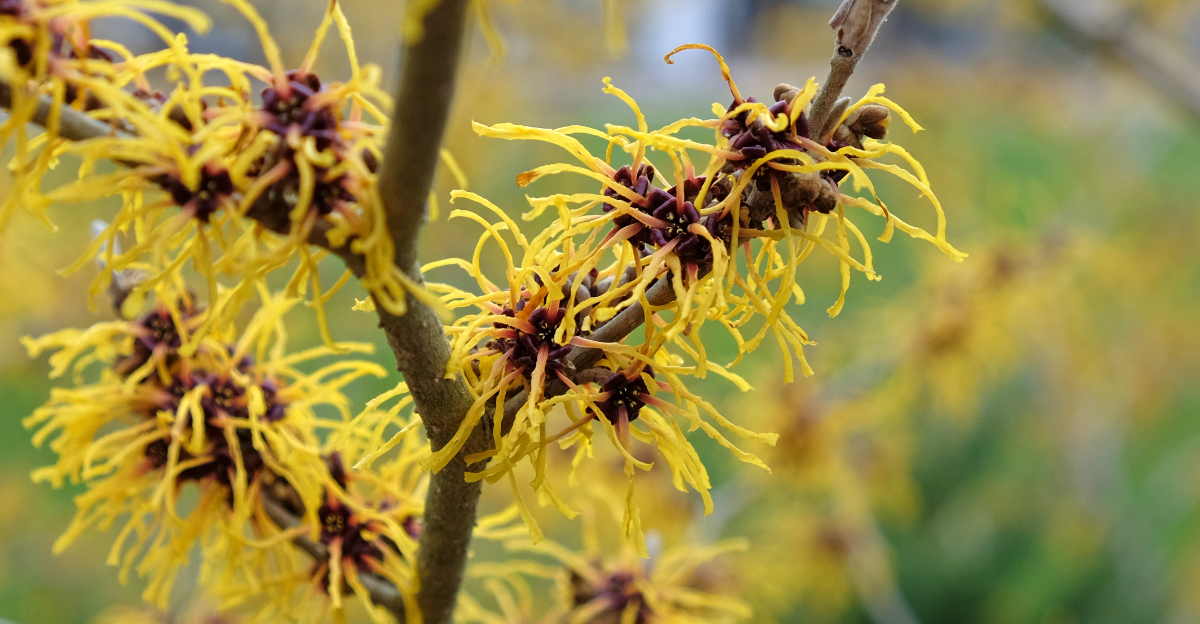
Witch hazel has a trick up its sleeve that no other shrub in Michigan can match. It blooms in late fall, sometimes even after the first frost, sending out bright yellow ribbon-like petals when the rest of the garden has gone completely quiet.
That alone makes it worth every inch of space in a shaded side yard.
Deer tend to browse witch hazel only lightly compared to many other shrubs, and in most Michigan yards it escapes significant damage.
The shrub grows naturally in moist woodland edges and stream-side forests, so a shaded side yard with decent soil moisture suits it very well.
It can grow quite large over time, reaching ten to fifteen feet tall, which makes it excellent for creating privacy or blocking an unsightly view along a property line.
Beyond the fall flowers, witch hazel offers year-round structure with interesting zigzag branching and bold, textured leaves that turn golden yellow in autumn.
Birds and pollinators benefit from the late-season blooms when almost no other food sources remain available.
Witch hazel prefers slightly acidic, moist, well-drained soil and performs best with minimal pruning. It’s also the source of the well-known witch hazel extract used in skincare products, so there’s a satisfying bit of history growing right in your yard.
For a dramatic, four-season native shrub that handles shade like a champion, this one is hard to beat.
5. Bladdernut
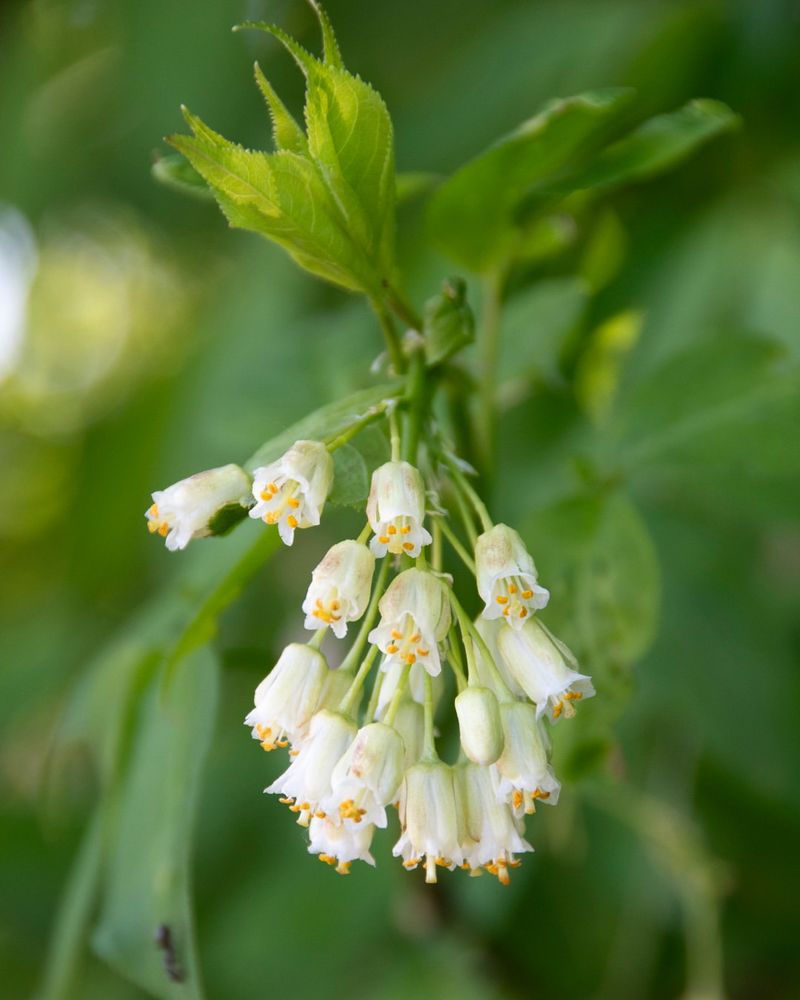
Few native shrubs spark as much curiosity as bladdernut, and the name alone is enough to get people asking questions.
The papery, inflated seed pods that appear in late summer are completely unique and make a satisfying rattling sound when shaken, which kids absolutely love.
Those pods hang on the branches well into winter, giving the shrub an interesting look even after the leaves have dropped.
Deer generally pass on bladdernut without much interest, making it a solid choice for side yards that see regular deer traffic.
It grows naturally in moist, shaded woodland edges and along stream banks across Michigan, thriving in rich, well-drained soil with consistent moisture.
The pendulous clusters of white bell-shaped flowers arrive in mid-spring and are genuinely pretty, attracting early pollinators at a time when blooming plants are still scarce.
Bladdernut can reach eight to fifteen feet tall and spreads gradually by suckering, forming a dense colony over time that works wonderfully as a natural privacy screen or woodland border.
It handles both partial and full shade without complaint and adapts well to clay soils, which is a real bonus in many Michigan yards.
Pruning is rarely necessary unless you want to manage its spread. The fall foliage turns a pleasant yellow-green before dropping.
For a conversation-starting, wildlife-friendly shrub with genuine staying power in shady spaces, bladdernut earns its spot on this list easily.
6. Pagoda Dogwood
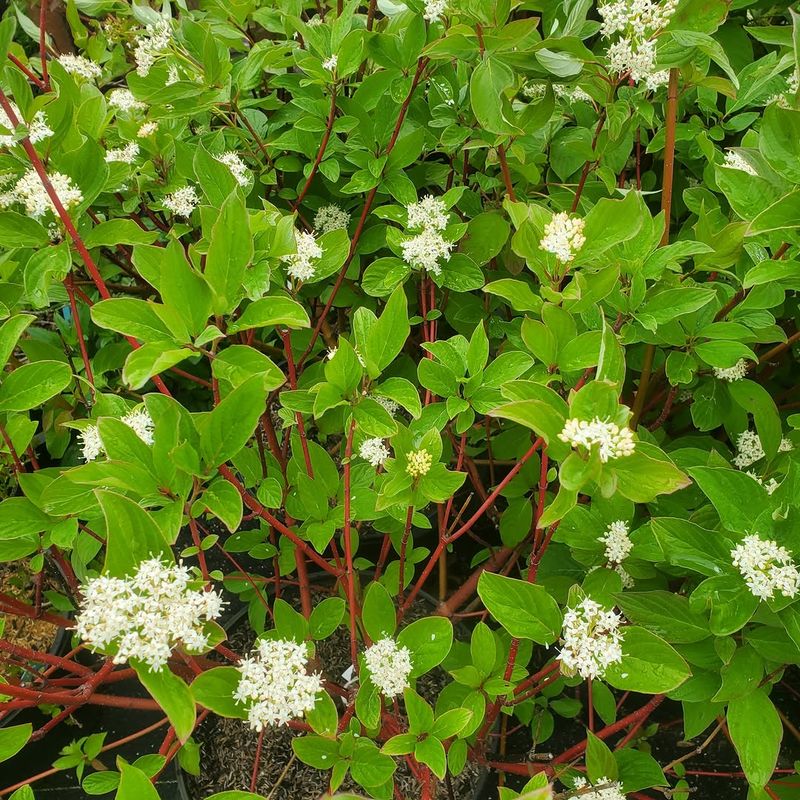
The moment you see pagoda dogwood’s dramatic horizontal branching, you understand exactly why it earned that name. The layered, tiered structure looks almost architectural, like nature designed it with a landscape architect in mind.
Even in winter, when every leaf is gone, the sculptural branching pattern makes this shrub one of the most visually striking plants you can grow in a shaded Michigan side yard.
Deer resistance is reasonably strong with pagoda dogwood, especially compared to its relatives like red-osier dogwood, which deer find quite tasty.
Flat-topped clusters of creamy white flowers cover the branches in late spring, followed by dark blue-black berries on bright red stems that birds go absolutely wild for.
More than 40 species of birds have been recorded eating the berries, making this one of the most wildlife-valuable native shrubs available in Michigan.
Pagoda dogwood grows well in partial to full shade and prefers moist, well-drained, slightly acidic soils rich in organic matter.
It can reach fifteen to twenty-five feet at maturity, so it works best in larger side yards where there’s room for it to spread its gorgeous horizontal arms.
Mulching generously around the base helps keep the shallow roots cool and moist during summer heat. The foliage turns red-purple in fall, adding one more season of color.
For structure, wildlife value, and year-round beauty in shade, pagoda dogwood is genuinely outstanding.
7. Prickly Gooseberry
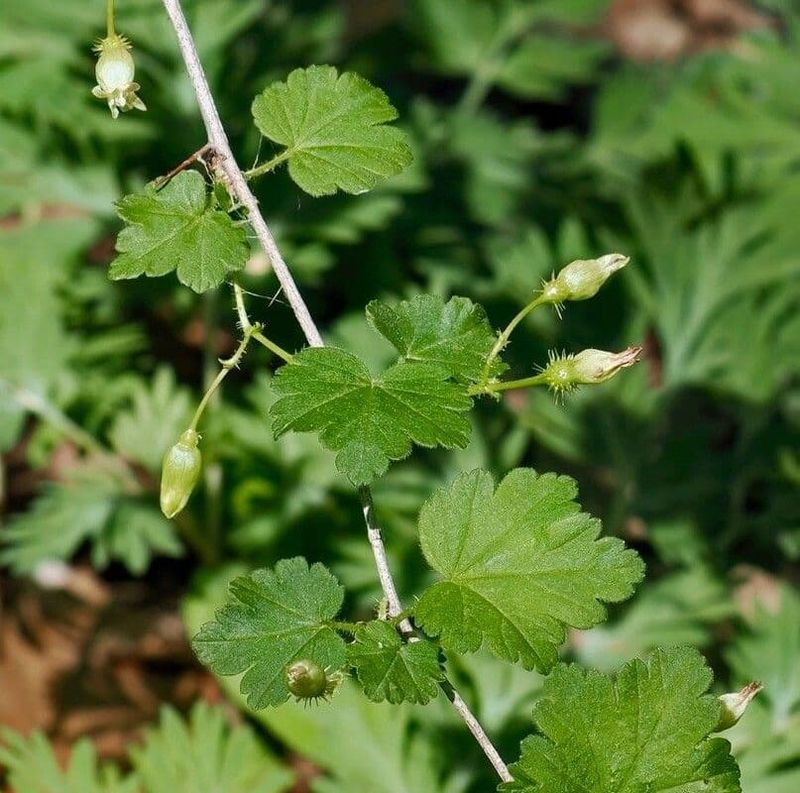
Prickly gooseberry brings something a little different to the table compared to the other shrubs on this list. The thorny stems are sharp enough that deer quickly learn to avoid them, which gives this native shrub a built-in physical defense that works around the clock.
That prickliness also makes it a fantastic barrier plant along fence lines or property edges where you want a natural deterrent.
Native to Michigan’s shaded forests and woodland edges, prickly gooseberry handles low-light conditions with ease. It grows best in moist to medium, well-drained soils and fits comfortably in spots where filtered or dappled light filters through overhead tree canopies.
The small greenish-white flowers in spring are modest but important for early native bees that are just waking up and searching for food sources.
The spiny berries that follow in summer are edible and tart, often used in jams and pies by foragers who don’t mind navigating the thorns. Birds and small mammals also rely on the fruit, so the shrub contributes meaningfully to local food webs.
Mature plants typically stay three to five feet tall and wide, making them easy to fit into a smaller side yard without overwhelming the space. Very little maintenance is needed once the plant is established in the right spot.
For a low-effort, deer-proof native shrub that actually produces food, prickly gooseberry is a genuinely clever choice.
8. Common Snowberry
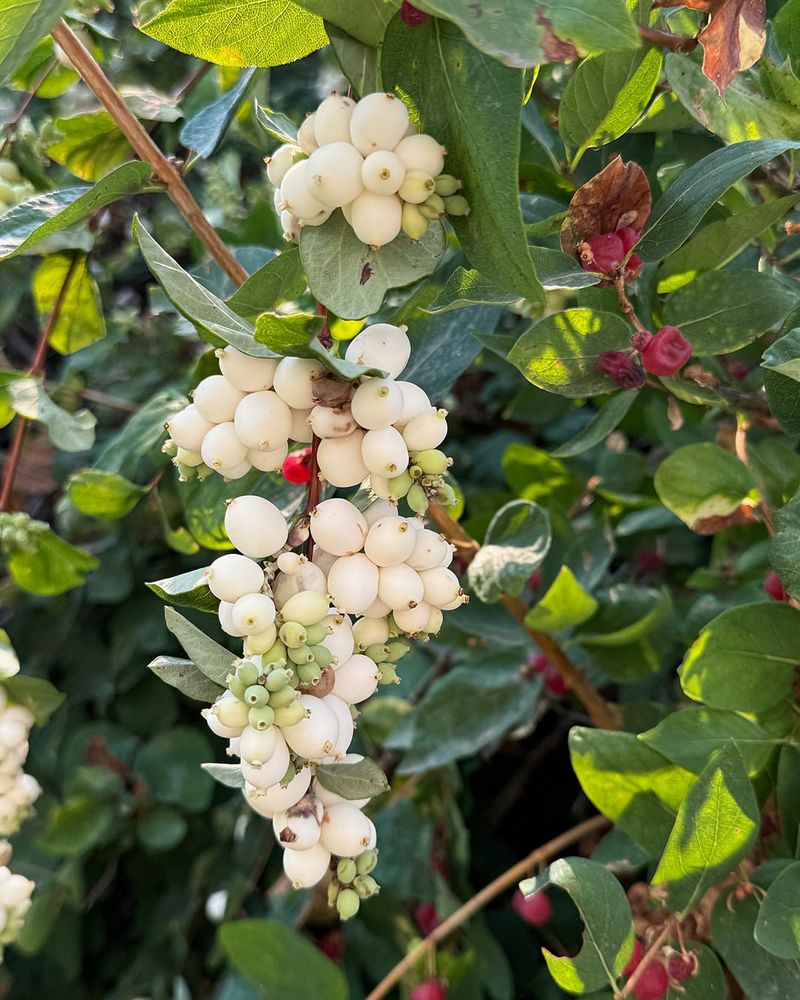
Common snowberry gets its name from the clusters of brilliant white berries that cover the branches from late summer straight through winter, and they are genuinely eye-catching against bare stems in a gray Michigan November.
While those berries are mildly toxic to humans, birds and other wildlife handle them just fine, and deer tend to avoid the plant fairly consistently thanks to the bitter, unpleasant taste of the foliage.
This shrub is incredibly adaptable and one of the easiest native plants to establish in a challenging side yard.
It tolerates deep shade, dry soil, clay soil, and even compacted ground, which puts it in a very small group of plants that can actually succeed in the worst spots of your yard.
Snowberry spreads steadily by underground runners, filling in bare areas over time and forming a dense, weed-suppressing ground-level thicket that looks tidy and natural at the same time.
Mature plants reach three to six feet tall and respond well to occasional pruning if you want to keep things neat. The small pink flowers that appear in early summer are subtle but beloved by hummingbirds and native bees.
Snowberry also provides excellent erosion control on slopes and banks, which makes it doubly useful in yards with uneven terrain.
For a tough, reliable, genuinely beautiful native shrub that handles shade and dry conditions without complaint, common snowberry is a true workhorse worth planting.