The Best Native Texas Plants For Attracting Cardinals
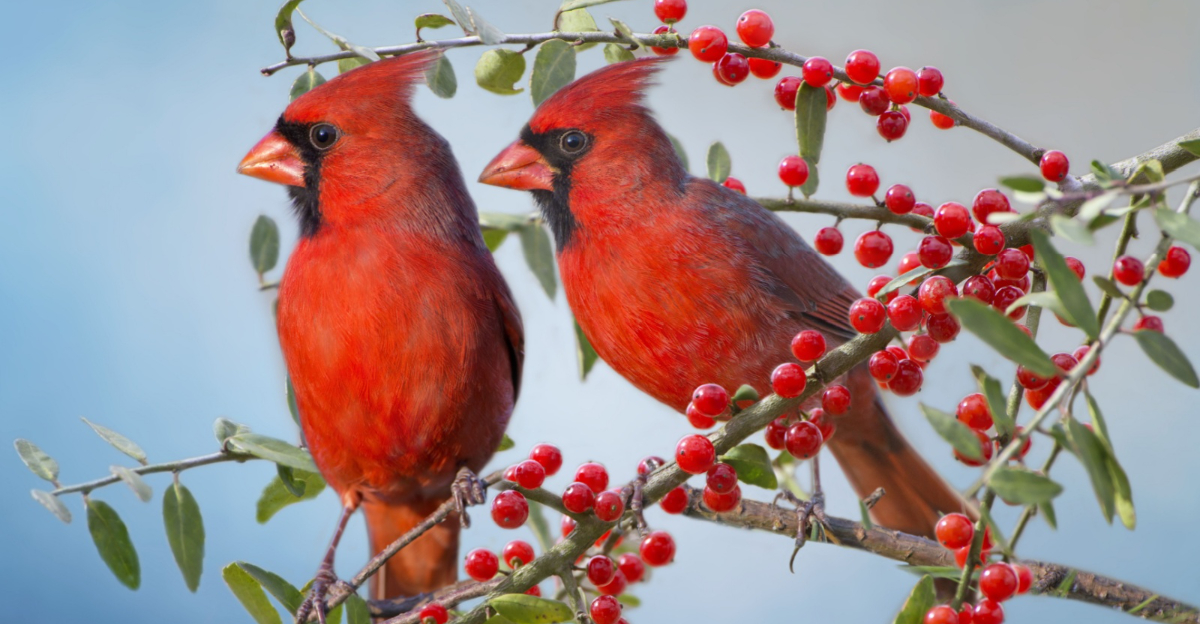
If there is one backyard visitor that makes Texas wildlife gardeners stop and reach for their binoculars, it is the northern cardinal.
That vivid red male perched on a branch is one of those sights that never really gets old, and the warm russet-toned female is just as beautiful once you start paying attention.
But here is something worth knowing: cardinals need a lot more than a feeder to genuinely thrive near your yard.
Dense cover, safe nesting spots, seasonal fruit, seeds, and a steady supply of insects when raising young are all part of what these birds are quietly looking for.
The good news is that Texas native plants can provide all of it, and combining several species with different heights, growth habits, and fruiting seasons creates exactly the kind of layered habitat cardinals seek out naturally.
1. Sugarberry Provides Fruit And Cover
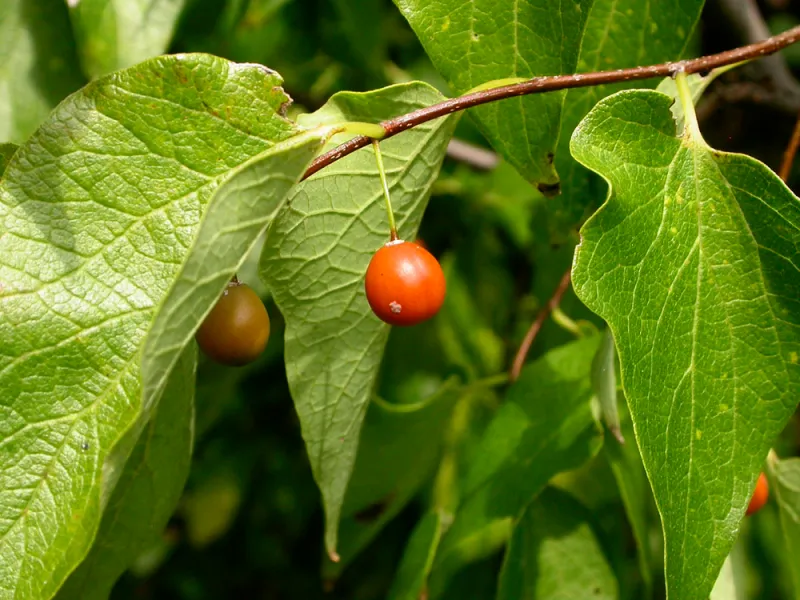
Watch a sugarberry tree long enough in late summer or fall and you may spot cardinals moving through its branches, picking at the small, dark fruits clustered along the stems.
Sugarberry, known botanically as Celtis laevigata, is a native hackberry species well adapted to moist bottomlands, stream edges, and low-lying areas across central and eastern Texas.
Its small, round fruits ripen from red to deep purple and attract cardinals along with a wide range of other fruit-eating birds.
Beyond food, the tree’s branching structure can offer useful cover and potential nesting spots for cardinals that prefer a bit of concealment.
Mature sugarberry trees can grow quite tall, so they work best in larger yards, woodland edges, rural properties, or naturalized areas where there is room to spread.
Gardeners in drier or more western parts should note that other native hackberry species, such as Celtis reticulata, may be better suited to those conditions.
Treating all hackberry species as interchangeable is a mistake worth avoiding. Choosing the species native to your local region gives the tree a stronger start and better long-term health.
Sugarberry grows well in full sun to partial shade and tolerates a range of soil types, including clay-heavy soils common in many Texas lowlands.
Pairing it with shrubby understory plants can strengthen the habitat value for cardinals and other wildlife visiting your yard.
2. Gum Bumelia Offers Berries And Shelter
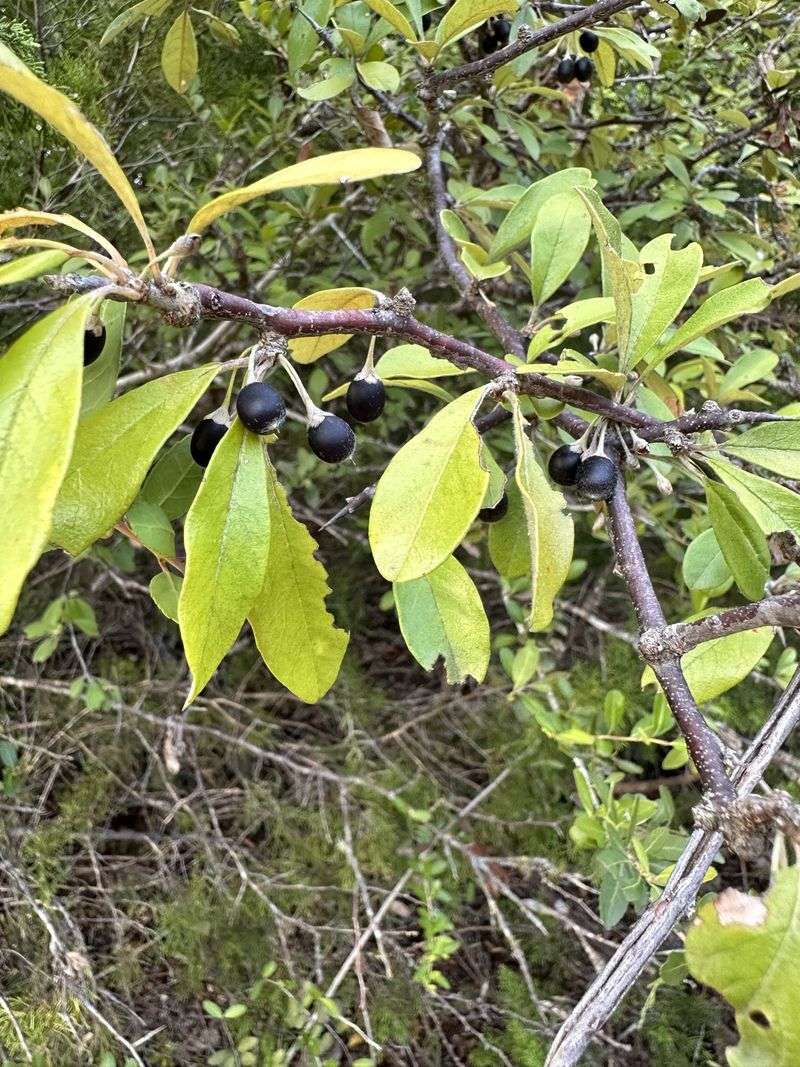
Tucked along fence rows, rocky hillsides, and woodland edges across much of Texas, gum bumelia is a native plant that often goes unnoticed until birds start gathering in its branches.
Known botanically as Sideroxylon lanuginosum, this native species produces small, dark fruits that cardinals and other birds find useful, particularly in late summer and into fall when food sources can become less predictable.
The plant’s dense, sometimes thorny branching is one of its most practical features for wildlife. Cardinals and other small birds can move through the interior of the shrub or small tree with a degree of protection that more open plantings simply cannot offer.
That combination of food and shelter in one plant makes gum bumelia a solid choice for wildlife-focused gardens in central and parts of southern Texas where it naturally occurs.
Your Texas Garden Changes Every Week. Your Plan Should Too.
Gardening in Texas changes quickly throughout the season. Every Friday you’ll receive a simple weekly plan showing exactly what to plant, prune, fertilize, harvest, and protect so you never miss the right timing.
Before planting, it helps to consider how large gum bumelia can become. Depending on site conditions and regional form, it may grow into a substantial shrub or a small tree reaching up to 30 feet in some settings.
Placing it at the back of a border, along a property edge, or as part of a mixed native planting gives it room to develop naturally. It generally prefers well-drained soils and full to partial sun.
Confirming that it is native and appropriate for your specific ecoregion before purchasing is always a smart step.
3. Wax Myrtle Creates Evergreen Cover
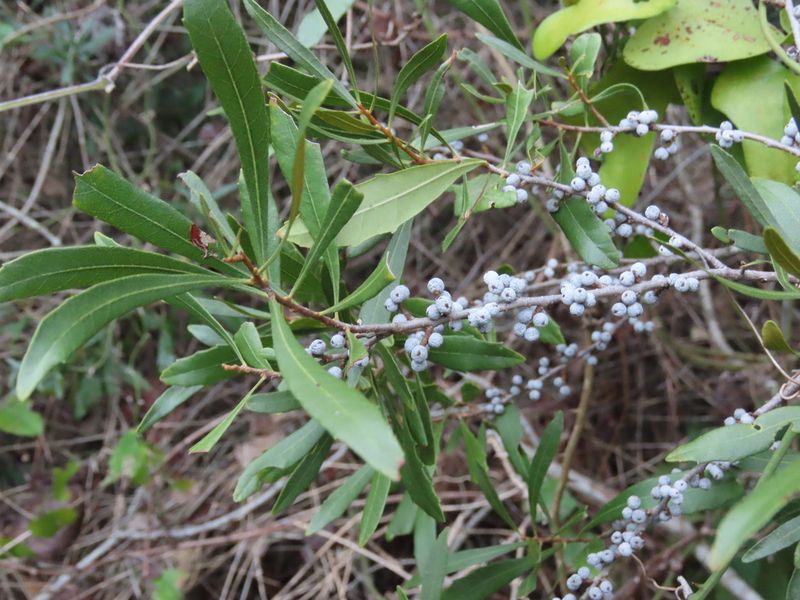
Dense, year-round greenery is something many Texas wildlife gardens lack, and wax myrtle fills that gap beautifully in the right setting.
Botanically known as Morella cerifera, wax myrtle is an evergreen shrub or small tree that can grow quickly into a thick, leafy mass that cardinals find genuinely useful for cover and, in the right conditions, nesting shelter.
The plant produces clusters of small, waxy, gray-blue fruits that cardinals and other birds may consume, particularly during fall and winter.
Wax myrtle is most at home in eastern and coastal Texas, where the climate tends to be more humid, soils are often acidic, and winter temperatures stay mild enough to support consistent evergreen growth.
It performs well near pond edges, rain gardens, and moist beds where water does not stand for extended periods.
Gardeners in central Texas may find it manageable with supplemental irrigation, but those in drier western regions should consider more drought-tolerant alternatives.
Left to grow naturally, wax myrtle can reach 10 to 15 feet or more, though it responds well to pruning if a more contained form is needed.
Planting it in groups or as an informal hedge can create the kind of layered, dense cover that cardinals use for both foraging and escape from predators.
Combining wax myrtle with lower-growing native shrubs adds habitat depth that benefits a wider range of wildlife beyond just cardinals.
4. Flameleaf Sumac Supplies Seasonal Fruit
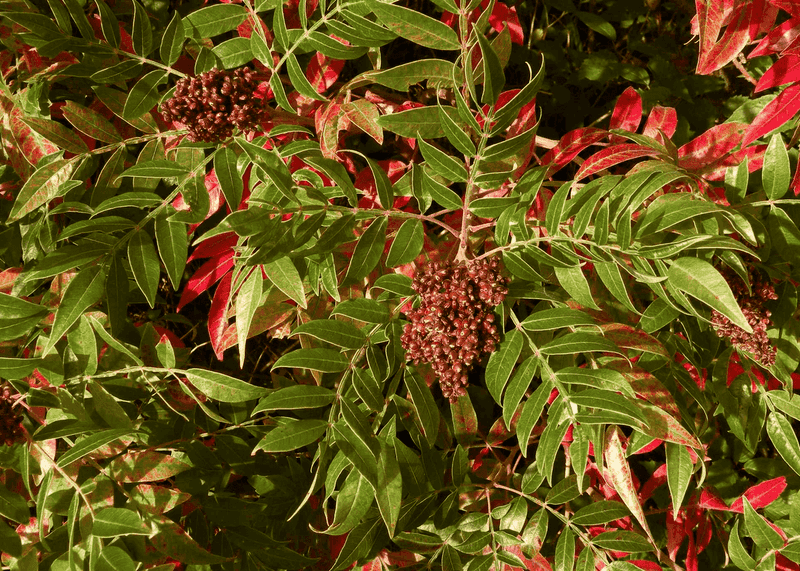
Few native Texas plants put on a more dramatic fall display than flameleaf sumac. The foliage turns a blazing crimson-red just as the dense clusters of dark, sticky fruits are ripening, making it both visually striking and ecologically useful at the same time.
Known botanically as Rhus copallinum, flameleaf sumac produces fruit that cardinals and other birds may consume well into winter, providing food during a season when fresh options are often scarce.
The plant tends to grow in spreading colonies, sending up new stems from the root system over time.
This spreading habit can create a thicket-like structure along garden edges, sunny slopes, or open woodland borders, which may serve cardinals as both a food source and a sheltered place to forage.
That low, branchy growth at the edge of a yard or naturalized area fits naturally into a layered habitat design.
Before planting, it is worth checking that flameleaf sumac is native to your specific part of Texas, because its range and performance vary across the state’s ecoregions. It grows best in well-drained soils with full sun and does not appreciate heavy, waterlogged conditions.
Gardeners should also be comfortable with its tendency to spread, as it can expand beyond its original planting area over several years.
Giving it space at the edge of a property or in a wilder section of the yard tends to work better than placing it in a tightly managed border.
5. Buttonbush Supports Cardinals In Moist Areas
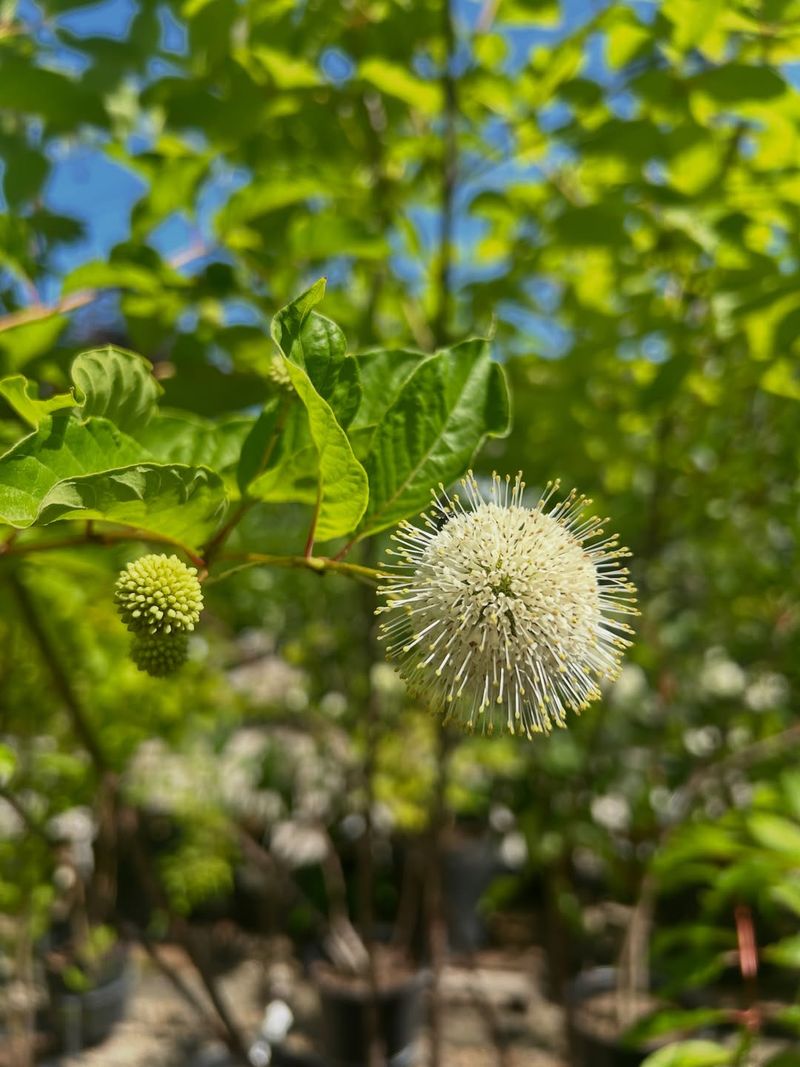
Not every Texas garden is dry, and for those with a rain garden, a low-lying bed, or a pond edge, buttonbush is a native shrub that earns its place in a wildlife planting.
Botanically known as Cephalanthus occidentalis, buttonbush is best suited to wet or consistently moist locations where many other shrubs would struggle.
Its unusual, globe-shaped white flowers attract a wide variety of insects during summer, and those insects can be especially valuable to cardinals when adult birds are actively feeding young.
After flowering, buttonbush produces clusters of small, hard fruits that some birds, including cardinals, may use as a food source.
The plant’s dense branching can also offer a degree of cover near water features, drainage corridors, and naturally moist garden areas.
In suitable locations across eastern, central, and parts of southern Texas, it can grow into a substantial multi-stemmed shrub reaching six feet or more in height.
Buttonbush is not a logical choice for a dry or average-moisture landscape. Attempting to grow it without adequate water tends to produce a weak, stressed plant that provides little value to wildlife.
Suitable sites include pond margins, seasonally flooded areas, constructed rain gardens, and low spots that collect runoff after rain events.
Pairing it with other moisture-tolerant native plants like wax myrtle or native sedges can create a richer habitat layer along wet garden edges that supports a broader range of wildlife throughout the year.
6. Coralberry Adds Fruit And Low Cover
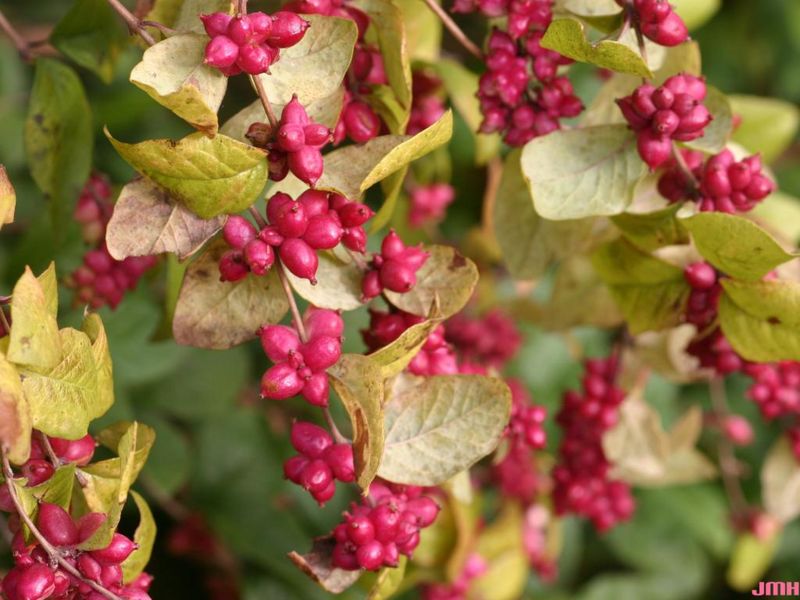
Low cover is one of the most overlooked elements in a wildlife garden, and coralberry fills that role with quiet reliability.
Botanically known as Symphoricarpos orbiculatus, this native shrub grows with an arching, spreading habit that creates a dense, low thicket useful for cardinals seeking concealment near the ground.
Its clusters of small, coral-pink to reddish-purple berries ripen in fall and may persist into winter, offering a food source during cooler months when other options thin out.
Coralberry works well along informal borders, shaded woodland edges, and naturalized areas where its tendency to spread by root suckers is an asset rather than a problem.
Cardinals and other ground-foraging birds may use it as a sheltered staging area before moving to feeders or other food sources nearby.
The plant’s low profile also makes it a practical choice for filling in the lower layer of a mixed native planting that includes taller shrubs and small trees.
Its performance and range across Texas are not uniform. Coralberry tends to do better in the central and eastern parts of the state, where soils and moisture conditions more closely match its natural habitat.
It tolerates partial to full shade reasonably well, which makes it useful beneath larger native trees. Before planting, consider how much room is available, because coralberry can spread steadily over time.
Giving it a defined area within a wildlife garden, rather than a confined bed, usually leads to better long-term results.
7. Yaupon Holly Provides Winter Berries
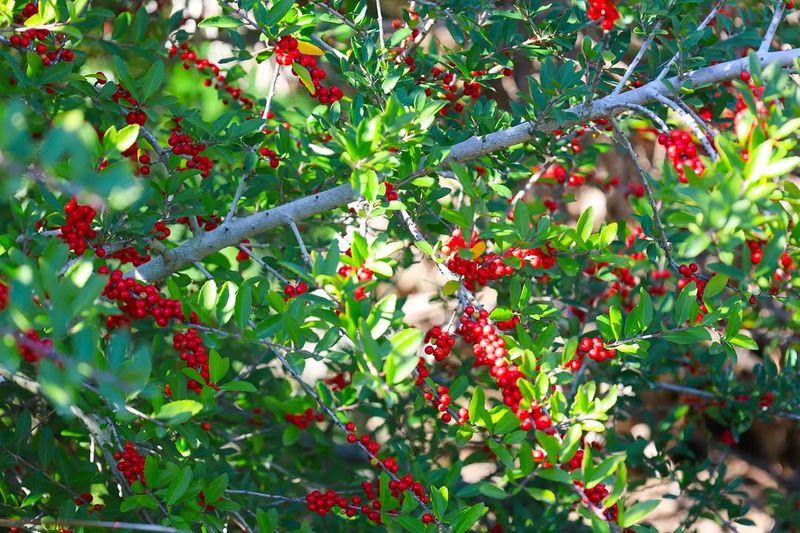
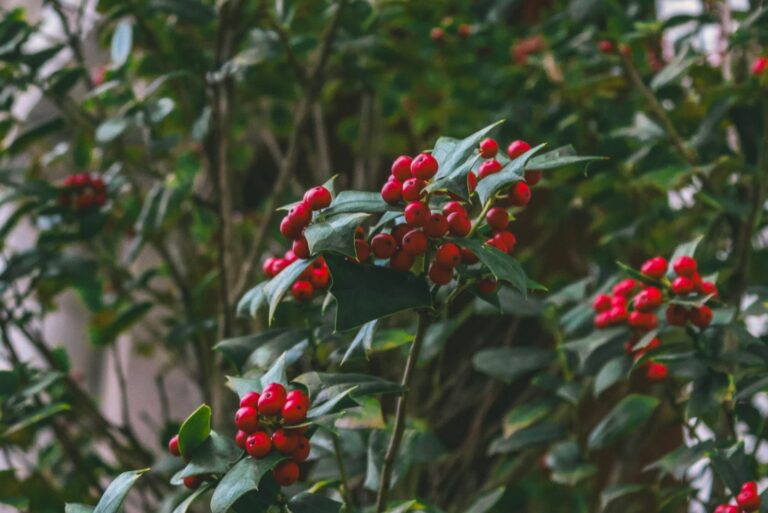
Red berries clinging to dark evergreen branches during a gray Texas winter are one of the more cheerful sights a native garden can offer, and yaupon holly delivers that scene reliably in the right conditions.
Known botanically as Ilex vomitoria, yaupon is a native evergreen shrub or small tree found across much of eastern and central Texas.
Its bright red berries ripen in fall and often remain on the plant well into winter, providing food for cardinals and a long list of other berry-eating birds during leaner months.
One detail worth understanding before planting is that yaupon holly has separate male and female plants. Fruit develops only on female plants, and a compatible male plant needs to be reasonably nearby for pollination to occur.
Buying a named female selection without also considering pollination can result in a plant that produces little or no fruit. Checking with a reputable native plant nursery about compatible pairings is a practical step that saves frustration later.
Yaupon also varies considerably in mature size depending on the form or cultivar selected. Standard plants can grow into large shrubs or small trees, while compact selections stay considerably smaller.
Beyond fruit, yaupon’s dense, twiggy branching offers excellent shelter and potential nesting structure for cardinals year-round.
It grows in a wide range of soil types, tolerates both sun and partial shade, and handles heat and humidity well, making it one of the more adaptable native plants available for eastern and central wildlife gardens.
8. Native Grapevines Offer Food And Shelter
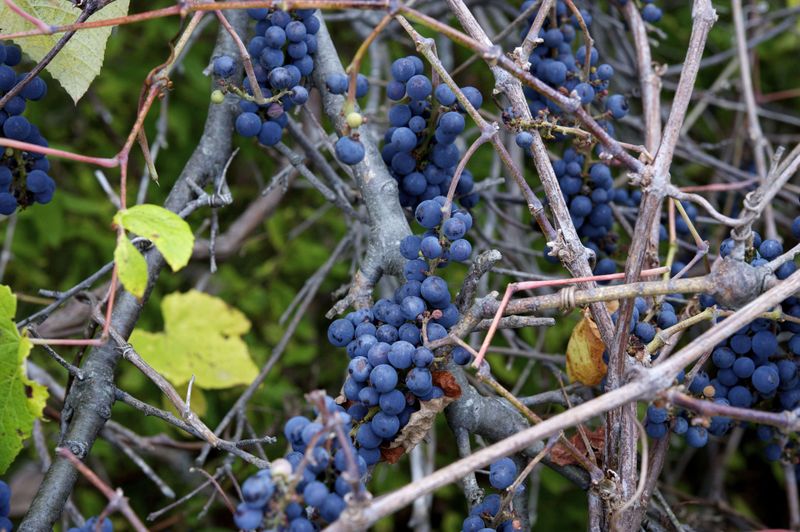
A tangle of native grapevine draped over a fence or climbing into the canopy of a small tree can transform a quiet corner of a Texas yard into active bird habitat.
Regionally native Vitis species produce clusters of small, dark grapes that cardinals and many other birds find highly appealing in late summer and early fall.
The dense, layered foliage of a mature vine also creates the kind of shaded, concealed space that cardinals use for foraging, resting, and occasionally nesting.
Texas is home to several native Vitis species, and they are not all the same in terms of habitat preference, mature size, and regional suitability.
Mustang grape (Vitis mustangensis), for example, is widespread across central and eastern Texas, while other species are more regionally specific.
Selecting a species native to your local ecoregion, rather than planting an unidentified vine purchased only by common name, gives the plant a better chance of thriving and provides more authentic habitat value.
Native grapevines can grow vigorously and need a sturdy structure such as a fence, arbor, or large trellis to support their weight over time. Planting one without adequate space or support often leads to a sprawling, unmanageable situation.
Given the right conditions, though, a native grapevine can become one of the most productive habitat features in a wildlife garden, supporting not only cardinals but also insects, other fruit-eating birds, and small mammals throughout the growing season.