The Best Shade Plants For Arizona Patios That Actually Survive Summer
Arizona patio gardening in summer is basically a test of both your plant knowledge and your personal resilience.
The heat bouncing off walls and pavers is intense, container soil can go from moist to bone dry in what feels like minutes, and even a spot that gets decent shade can still feel like the inside of a very decorative oven by three in the afternoon.
Not exactly ideal growing conditions.
But here’s what a lot of Arizona homeowners discover once they stop fighting the climate and start working with it: the right plants in the right spots can actually do surprisingly well out there.
Shaded corners, covered porches, protected entryways, and thoughtfully arranged container setups all create little micro-environments that open up some genuinely interesting planting possibilities.
You just need to know which plants are actually up for the challenge.
1. Elephant’s Food Handles Bright Shade In Patio Pots
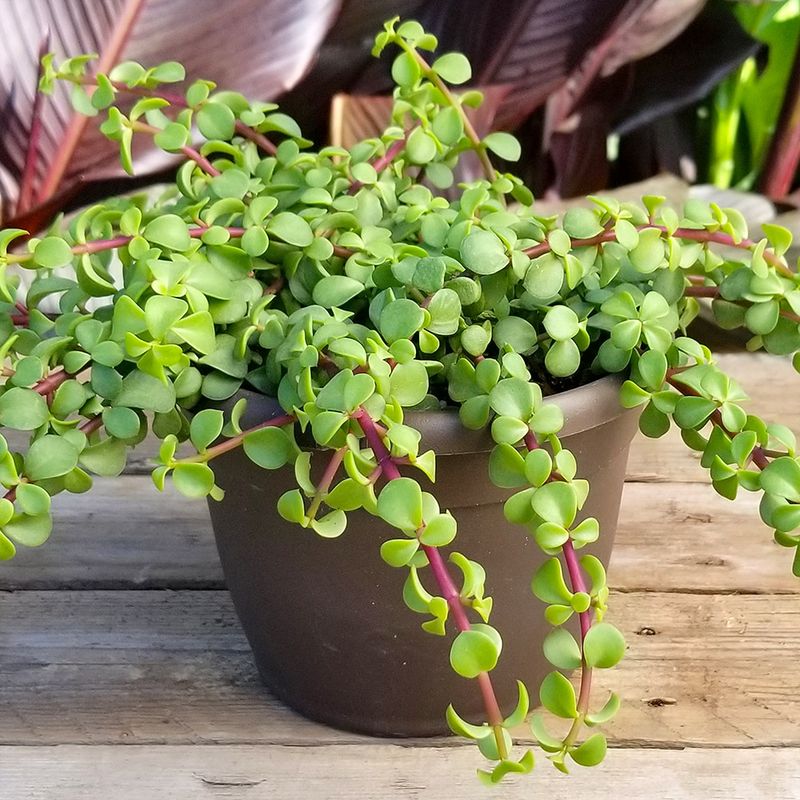
Tucked into a wide terracotta pot on a bright Arizona patio, Elephant’s Food looks almost too cheerful for the desert.
This South African succulent, known botanically as Portulacaria afra, carries small jade-green leaves on reddish stems that stay attractive through the hottest Arizona summers when given the right conditions.
It handles bright indirect shade well, making it a solid choice for covered patios that still receive good ambient light.
In containers, Elephant’s Food needs a well-draining cactus or succulent soil mix to avoid root problems from sitting moisture. Watering should be moderate during summer, allowing the soil to dry out somewhat between sessions.
Overwatering in a shaded patio container is one of the most common issues gardeners encounter with this plant.
It grows at a manageable pace and can be pruned lightly to keep its shape tidy on smaller patios. The stems are somewhat brittle, so placing the container somewhere it won’t get bumped frequently makes sense.
Elephant’s Food is considered mildly toxic to pets, so households with curious animals should keep that in mind before placing it at ground level on the patio.
Its rounded leaves also bring a softer look than many spiky desert plants, which can help a patio feel more relaxed and inviting. For best results, give it a spot with bright shade, good airflow, and a container that drains freely after each watering.
In very hot locations, a little protection from harsh afternoon exposure can help the plant keep its fuller, greener appearance.
2. Smooth Agave Adds Structure Without Much Fuss
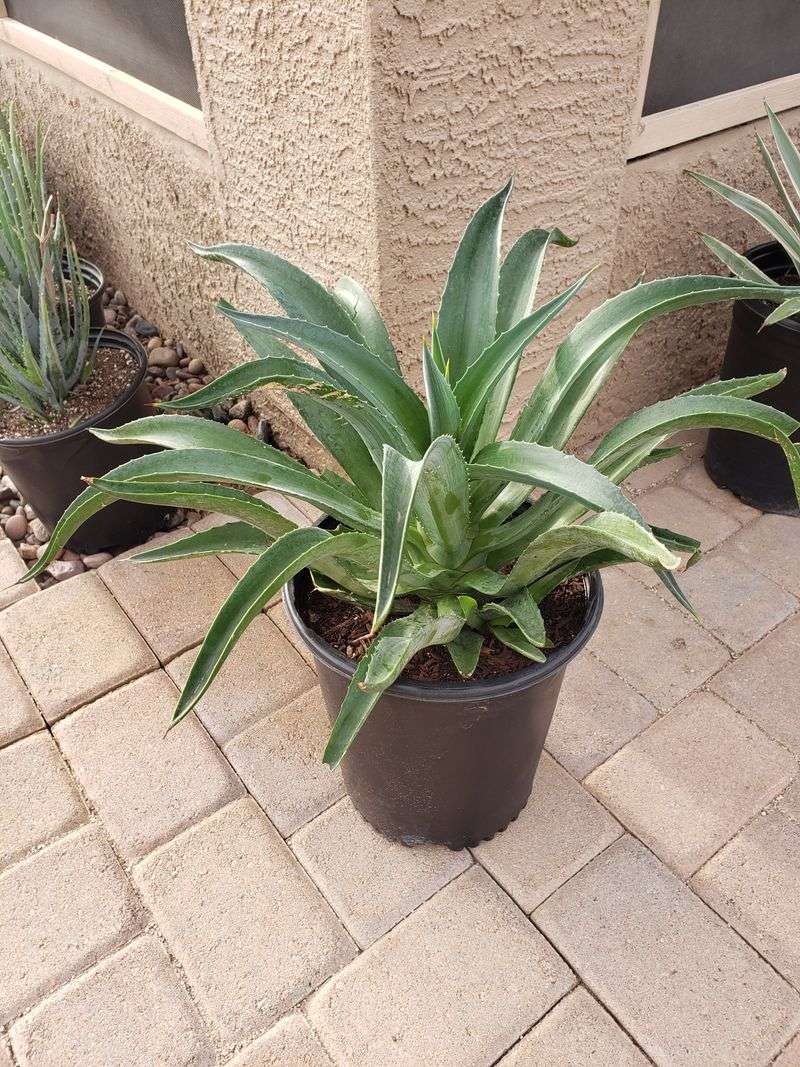
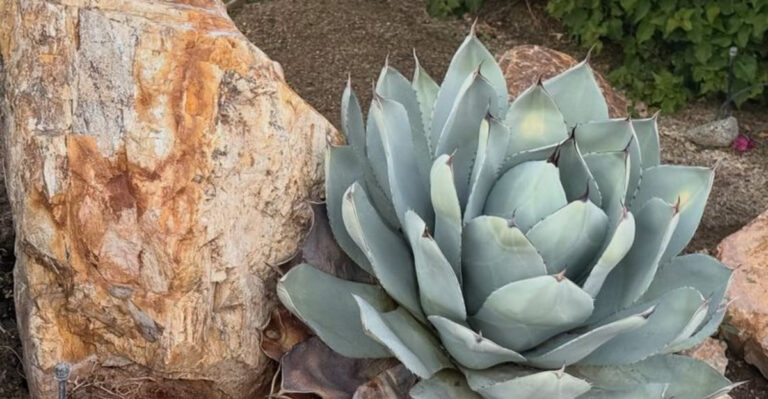
Not every patio plant needs to bloom to earn its spot. Agave desmettiana, commonly called Smooth Agave, earns its place through bold architectural form and a surprisingly tolerant nature in partially shaded Arizona patio environments.
Its wide, arching leaves have softer margins than many agaves, making it a more approachable choice for patios where people and pets move around regularly.
On shaded patios, Smooth Agave performs well in large containers with excellent drainage. The key is avoiding waterlogged soil, which becomes a real risk when a sun-loving plant is placed in reduced light and watered with the same frequency as an in-ground specimen.
Your Arizona Garden Changes Every Week. Your Plan Should Too.
Gardening in Arizona changes quickly throughout the season. Every Friday you’ll receive a simple weekly plan showing exactly what to plant, prune, fertilize, harvest, and protect so you never miss the right timing.
Adjusting the watering schedule to match the lower evaporation rate of a shaded container setup is essential.
Smooth Agave can reach a fairly impressive size over time, so choosing a container with room to grow prevents the need for frequent repotting. It offers year-round visual interest with its symmetrical rosette form, which fits naturally into modern Arizona patio designs.
Like all agaves, it will eventually produce a tall flower spike near the end of its life cycle, which can become a dramatic patio focal point before that stage arrives.
Its clean shape also pairs well with softer trailing plants, gravel mulch, or simple pottery when a patio needs structure without looking crowded. Because the leaves still have pointed tips, it is best placed where people are not brushing past it constantly.
In Arizona’s summer heat, bright shade or morning sun with afternoon protection can help it keep a stronger, less stressed appearance in containers.
3. White Plumbago Brings Flowers To Protected Shade
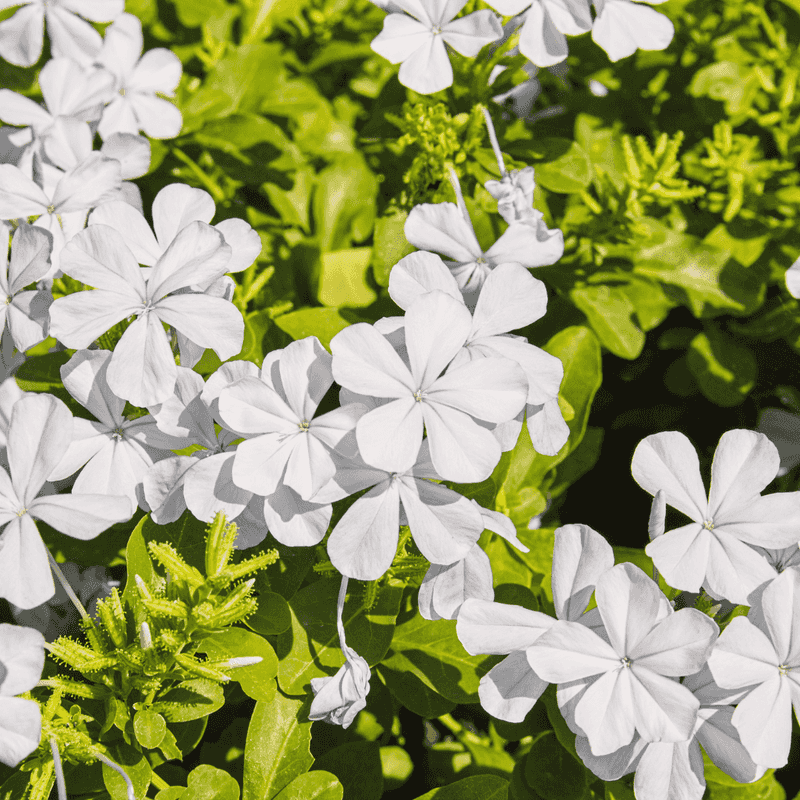
Soft clusters of white flowers against a shaded patio wall have a way of making the whole space feel cooler, even on a scorching Arizona afternoon.
White Plumbago, the pale-flowered form of Plumbago auriculata, is a shrubby perennial that can bring that kind of quiet beauty to protected patios when positioned thoughtfully.
It tends to perform best with morning light and afternoon shade rather than deep, unbroken shadow.
In Arizona, White Plumbago appreciates regular summer watering but should never sit in soggy soil.
On a covered patio or under a deep overhang, the plant may receive little to no natural rainfall, so supplemental irrigation becomes more important during the dry summer heat.
Containers with drainage holes and a quality potting mix help prevent moisture-related root issues.
The blooms attract pollinators and add a light, airy feel that many bold desert plants simply cannot offer. White Plumbago can be lightly pruned to maintain a tidy shape along a wall or railing.
It may go semi-dormant or drop some leaves during the coldest Arizona winter months, but it typically rebounds well once warmer temperatures return in spring. Patience through seasonal changes pays off with this one.
Its softer growth habit makes it especially useful where a patio needs flowers without a stiff or spiky look. Give it enough room for air movement so the foliage does not stay crowded against a hot wall.
In containers, checking soil moisture by feel can help prevent both underwatering during heat and overwatering in shaded conditions.
4. Grape Ivy Softens Shaded Patio Walls
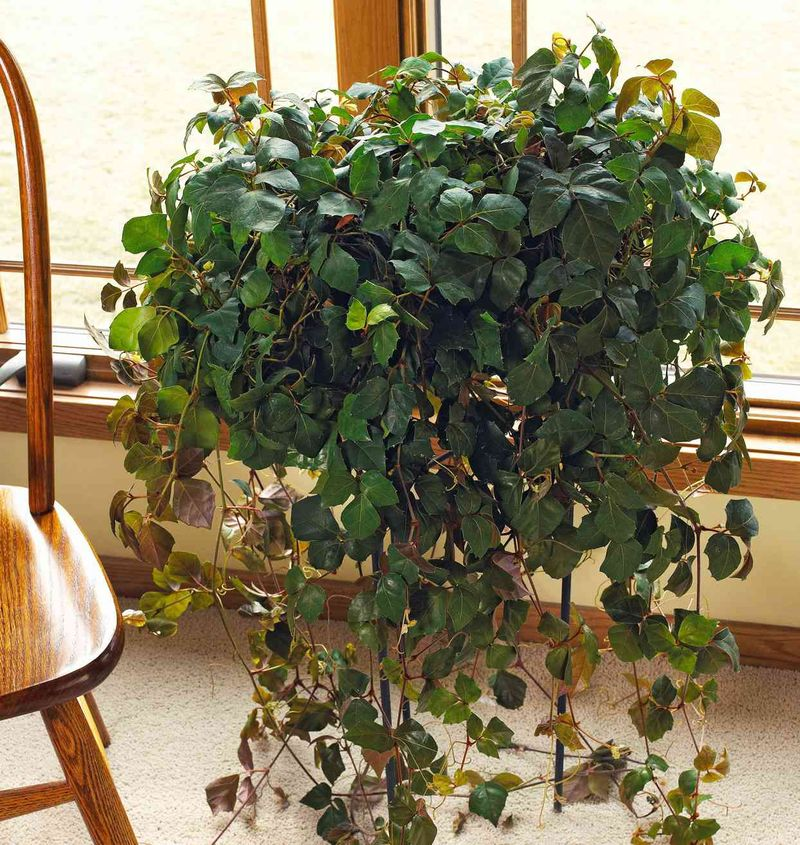
Few things soften a hard patio wall faster than trailing green vines, and Grape Ivy does exactly that without demanding full sun or excessive fuss.
Cissus rhombifolia, commonly called Grape Ivy, is a vigorous trailing plant with glossy, deeply lobed leaves that thrive in the kind of bright indirect shade that a covered Arizona patio or shaded entryway can provide.
It brings a lush, almost tropical feel that contrasts beautifully with the arid surroundings outside the shaded space.
Grape Ivy works well in hanging baskets, wall-mounted planters, or tall containers where the vines can drape naturally.
On an Arizona patio, keeping it out of harsh reflected afternoon sun is important because the foliage can scorch if exposed to intense heat for extended periods.
Consistent moisture is more important for this plant than for many desert-adapted choices, so checking the soil regularly during summer is a good habit.
Humidity levels on a covered Arizona patio can be quite low, which sometimes invites spider mites to settle on the undersides of leaves. Rinsing the foliage occasionally and maintaining adequate soil moisture helps keep those issues manageable.
With the right placement and attentive summer care, Grape Ivy can transform a bare shaded wall into something genuinely inviting and green.
5. Star Jasmine Works Best With Afternoon Shade
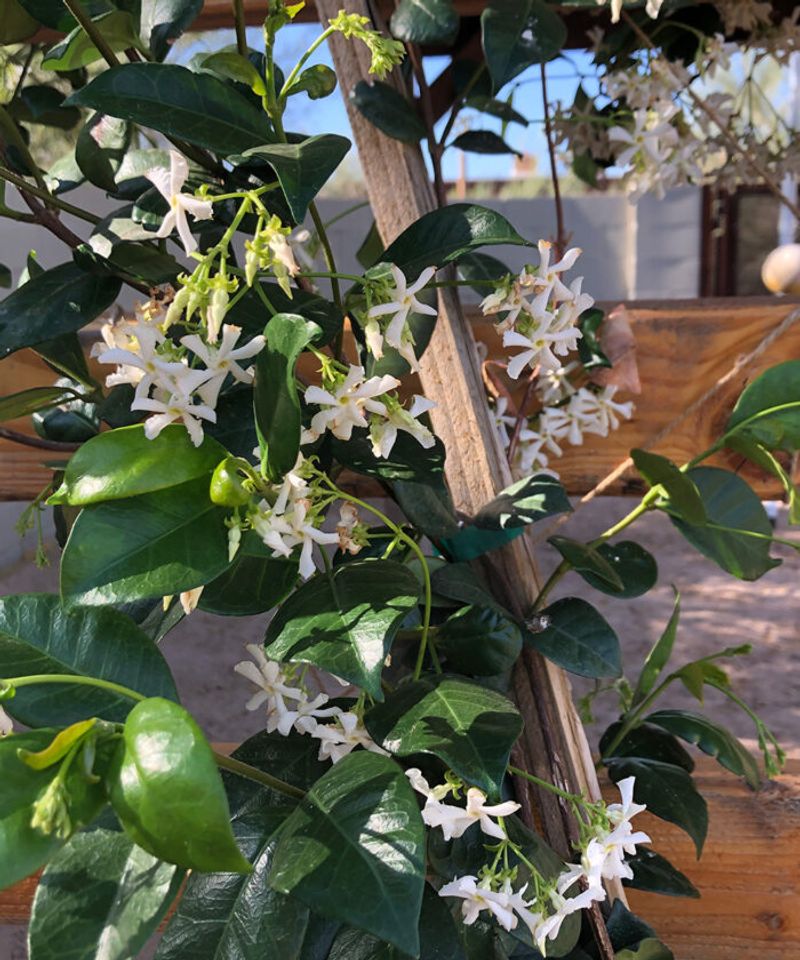
Walking past a patio covered in blooming Star Jasmine on a warm Arizona evening is one of those small pleasures that makes outdoor living feel worthwhile.
Trachelospermum jasminoides is a woody, twining vine prized for its intensely fragrant white flowers and glossy evergreen foliage.
On Arizona patios, it tends to perform best when it receives morning sun and is protected from the brutal afternoon heat that can stress even tough plants during peak summer.
Star Jasmine grows well on trellises, along patio railings, or trained up a courtyard wall where it can fill a vertical space with greenery and seasonal blooms.
In containers, it needs a larger pot to accommodate its root system and should be watered consistently through the summer months.
Allowing the soil to dry completely between waterings can cause leaf drop and stress the plant during Arizona’s hottest stretches.
Occasional feeding with a balanced fertilizer during the growing season supports healthy foliage and flower production.
Star Jasmine is generally considered low to moderate maintenance once established, but it does need some guidance and light pruning to keep it from becoming tangled or overgrown on a smaller patio.
The fragrance alone makes the extra attention feel like a reasonable trade for most homeowners.
A layer of mulch over the potting mix can help slow moisture loss without keeping the crown buried. It is also smart to place the container where reflected heat from walls or pavers will not bake the roots during long summer afternoons.
6. Sago Palm Creates A Bold Container Accent
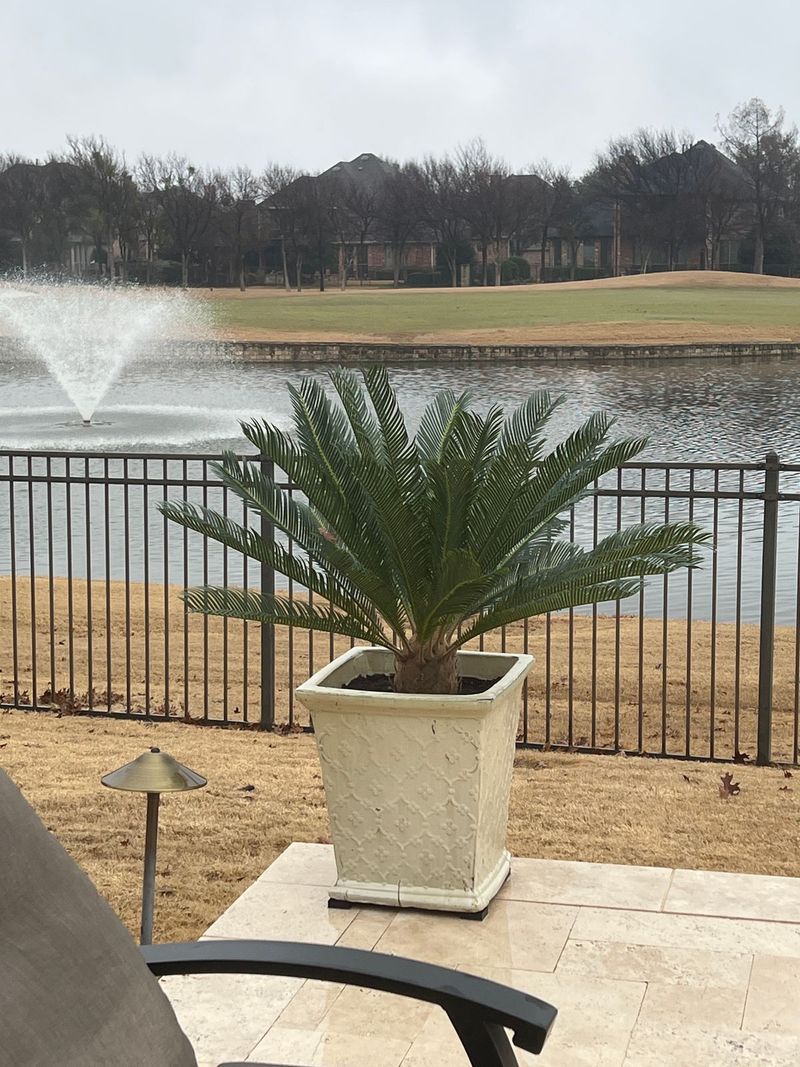
Symmetrical, architectural, and undeniably striking, the Sago Palm has been a popular container accent on Arizona patios for decades.
Despite the common name, Cycas revoluta is not a true palm but a cycad, an ancient plant group that has survived far longer than most modern landscapes can claim.
Its stiff, dark green fronds radiate outward from a central crown in a way that feels both formal and dramatic, making it a natural focal point on a shaded porch or covered entryway.
On an Arizona patio, Sago Palm handles bright indirect shade reasonably well, though some ambient light is important for keeping the fronds healthy and deep green.
In deep shade with poor air circulation, the plant can become sluggish and more vulnerable to scale insects, which are one of the more common issues gardeners encounter with cycads.
Inspecting the fronds regularly and treating early signs of infestation helps keep the plant looking sharp.
Watering should be moderate and consistent, with good drainage being non-negotiable in a container setting. Every part of the Sago Palm is toxic to people and animals, so placement on the patio should take household safety into careful consideration.
Despite that concern, its bold presence and low-fuss nature make it a long-standing Arizona patio favorite.
7. Liriope Fits Protected Mini-Oasis Corners
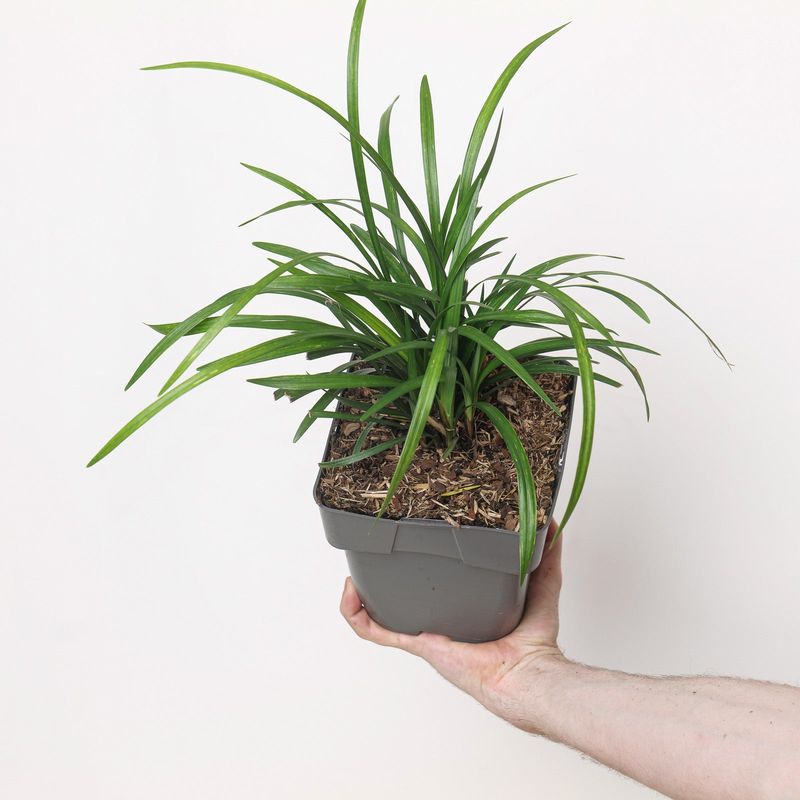
Quiet corners of a covered Arizona patio often get overlooked, but a clump of lush Liriope tucked into a protected mini-oasis setup can completely change the feel of that space.
Liriope muscari, sometimes called Lilyturf or Monkey Grass, is a grass-like perennial with arching dark green leaves and slender purple flower spikes that add a soft, layered look to shaded patio arrangements.
It is genuinely better suited to protected, well-watered Arizona patio corners than to open, sun-blasted desert landscapes.
In Arizona’s shaded patio environments, Liriope needs more attentive care than most drought-tolerant desert plants. Regular watering, good drainage, and a quality potting mix are all important factors for keeping it looking healthy through the summer.
Reflected heat from nearby walls or pavers can stress the foliage even in shade, so placing it away from high-heat surfaces helps maintain that appealing deep green color.
Liriope is not a rugged desert survivor, and treating it like one will lead to disappointing results. Instead, think of it as a rewarding mini-oasis plant that earns its beauty through consistent care.
It pairs well with other shade-tolerant container plants and can bring a cooler, almost garden-like atmosphere to a shaded Arizona patio corner that might otherwise feel bare and uninviting.
8. Coral Bells Add Color In Carefully Watered Shade
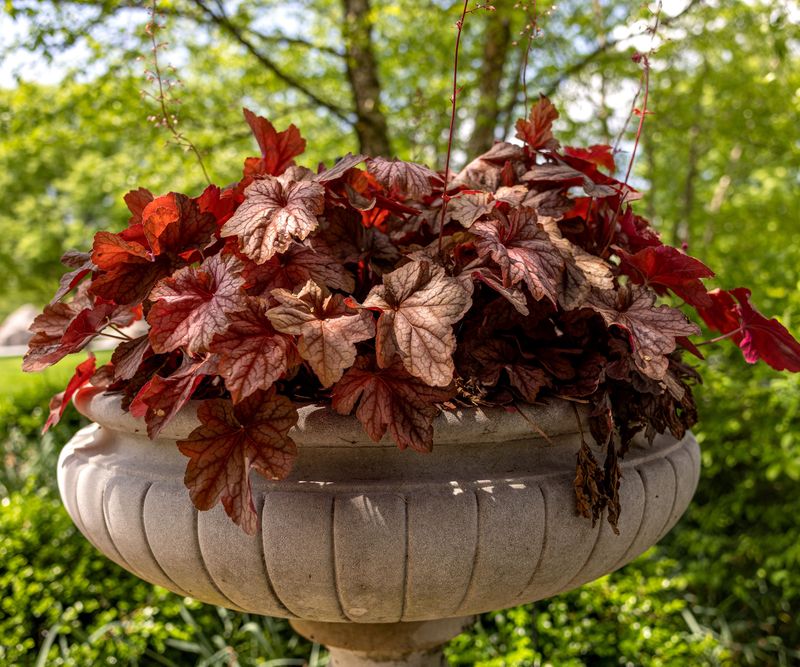
Burgundy, coppery-bronze, silvery-purple, and even lime green – Coral Bells offer some of the most eye-catching foliage colors available for shaded Arizona patio containers.
Heuchera varieties have gained popularity among gardeners who want color in protected spots without relying entirely on blooms.
The foliage itself carries the show through most of the growing season, with delicate flower wands rising above the leaves as a seasonal bonus.
Coral Bells are genuinely more demanding than desert-native plants, and that is worth acknowledging before bringing them onto an Arizona patio.
They need consistent moisture, well-draining soil, and protection from intense reflected heat and harsh afternoon sun.
In the right protected shade setting with attentive watering, they can look beautiful through summer, but they require more monitoring than a cactus or agave would.
Choosing heat-tolerant Heuchera varieties gives better results in Arizona than selecting cultivars bred primarily for cooler climates.
Mulching the top of the container soil helps retain moisture and keeps roots somewhat cooler during Arizona’s intense summer months.
Coral Bells work especially well in mixed container arrangements alongside other shade-tolerant plants, where their bold foliage colors add contrast and visual interest that makes a shaded Arizona patio feel genuinely curated and intentional.