The Best Time Of Day To Water Plants During A Michigan Heat Wave
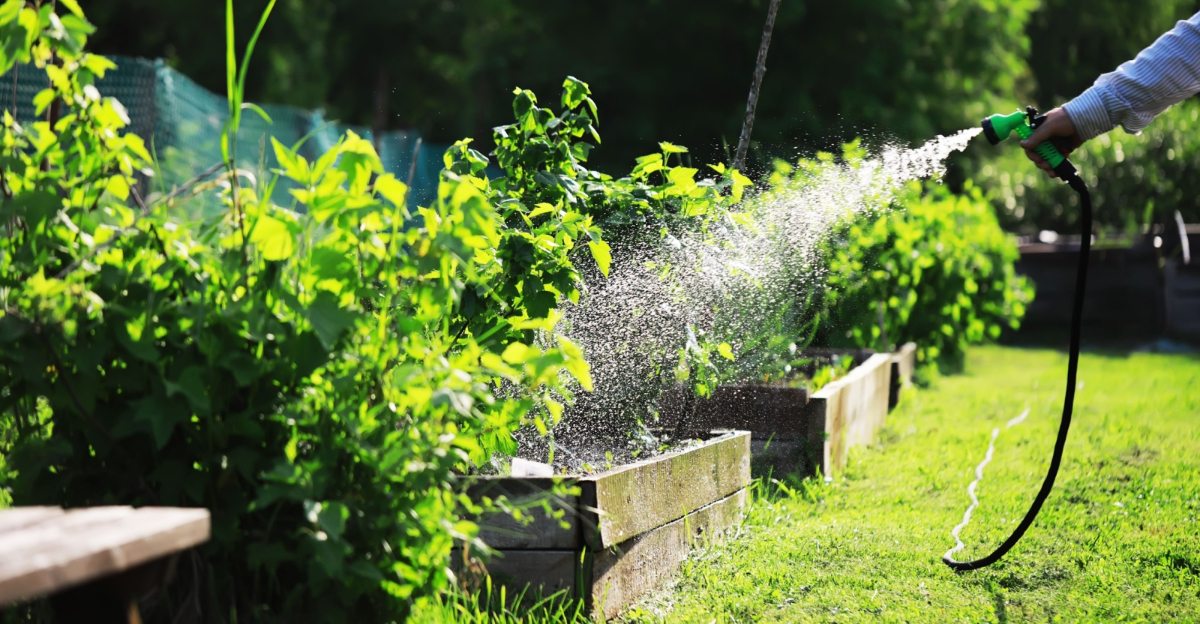
There is a particular kind of Michigan summer morning that tells you immediately it is going to be a long, hot day.
The air is thick before 8 a.m., the tomatoes already look a little uncertain, and the flower pots on the patio are giving you a look that says water, now, please.
Heat waves in July and August put real pressure on Michigan gardens, and the watering decisions made during those stretches matter more than at almost any other point in the season.
Getting water to plants early, before the hottest part of the day takes over, is one of the most effective habits a gardener can build.
Combined with deep watering and a solid layer of mulch, it changes how the whole garden handles the heat.
1. Before 9 A.M. Is The Sweet Spot
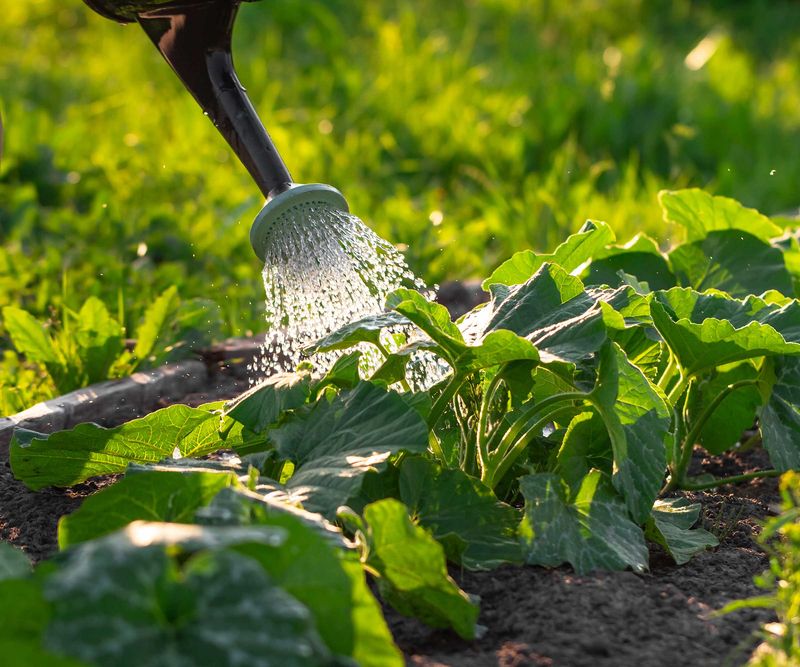
Step outside on a hot Michigan morning before the sun climbs too high, and you will notice the air still carries a bit of coolness left over from the night. That window before 9 a.m. is widely considered the most effective time to water your garden during a heat wave.
Soil temperatures are lower, the wind is usually calmer, and plants are ready to pull moisture upward before the midday heat sets in.
Watering in that early stretch gives roots time to absorb water steadily. Because the air is cooler and humidity tends to be slightly higher in the morning, less water evaporates off the soil surface right away.
That means more of what you pour actually reaches the root zone where plants need it most.
In Michigan, June, July, and August heat waves can push afternoon temperatures well above 90 degrees Fahrenheit, which puts serious stress on vegetable plants, flower beds, and container gardens.
Getting water down to the roots before that heat arrives gives plants a better chance of handling the afternoon without wilting badly.
Morning watering also allows leaves and stems to dry naturally as the day warms up. Wet foliage sitting through a hot afternoon is less of a concern when the sun and warmth work together to dry things off.
Starting your watering routine before 9 a.m. is a practical habit that fits well into most Michigan summer schedules.
2. Early Morning Helps Plants Handle Heat
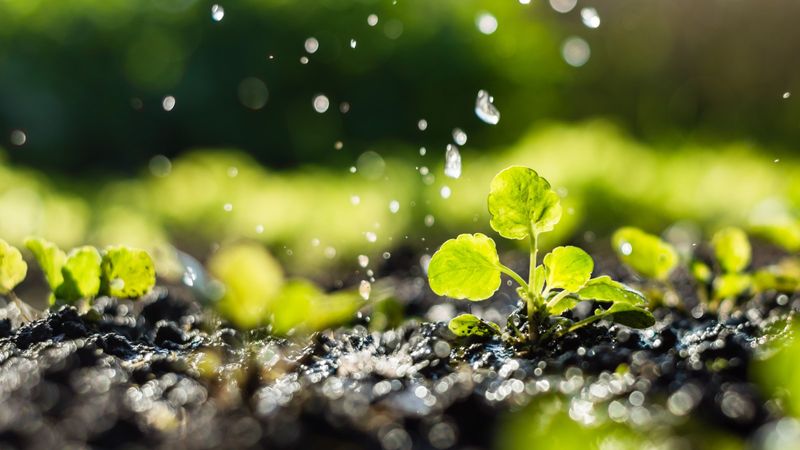
Watching your tomatoes stand tall through a brutal Michigan afternoon feels satisfying, and morning watering plays a real role in making that happen. Plants move water from their roots up through their stems and leaves in a process called transpiration.
When the soil around the roots is already moist before the heat of the day peaks, plants can keep up with that process more easily.
During a heat wave, plants work harder than usual to stay cool. They release moisture through tiny openings in their leaves, and if the soil runs dry before midday, that system starts to break down.
Leaves may curl or droop as a sign of stress, even if the problem is more about heat than actual drought.
Your Michigan Garden Changes Every Week. Your Plan Should Too.
Gardening in Michigan changes quickly throughout the season. Every Friday you’ll receive a simple weekly plan showing exactly what to plant, prune, fertilize, harvest, and protect so you never miss the right timing.
Getting water into the soil before 9 a.m. means roots have access to moisture during the most demanding hours of a Michigan summer day.
Vegetable crops like cucumbers, squash, beans, and peppers are especially sensitive to heat stress, and consistent morning watering can help them push through hot stretches without losing too much productivity.
It also helps to check your soil before watering rather than following a fixed schedule. Stick a finger about an inch into the soil near the base of the plant.
If it feels dry that far down, morning watering is a smart move. If it still feels moist, you may be able to wait another day before adding more water.
3. Midday Watering Loses More To Evaporation
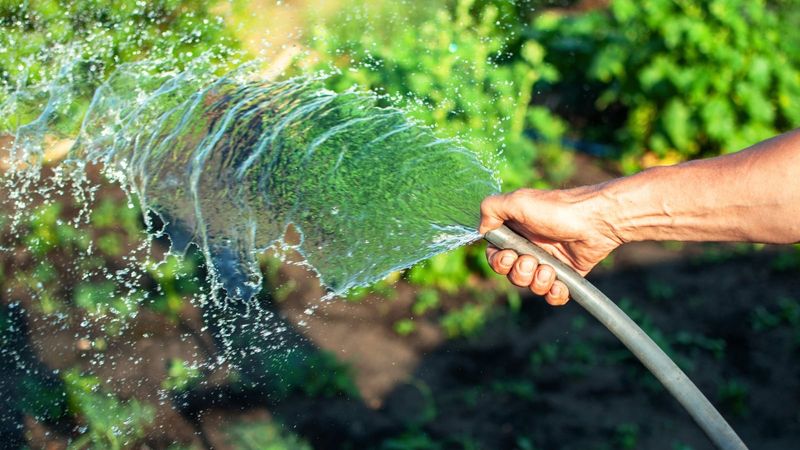
On a scorching Michigan afternoon, the pavement feels hot enough to fry an egg, and your garden soil is not far behind.
Watering during the hottest part of the day, roughly between 10 a.m. and 4 p.m., comes with a real drawback: a significant portion of the water you apply evaporates before it has a chance to soak into the root zone.
Evaporation happens faster when soil temperatures are high and direct sunlight is hitting the surface. Wind, which can pick up during Michigan summer afternoons, speeds up that process even more.
The result is that your hose runs longer, your water bill climbs, and your plants may still end up stressed by late afternoon.
That said, if your plants are showing serious wilt during the middle of the day and you have not watered yet, a gentle soak at the soil level is still better than leaving them without water.
The goal is to water the soil rather than the leaves, and to do it slowly enough that the water moves downward rather than running off.
Midday watering is not ideal, but it is not a disaster if it is the only option you have. Just try to aim the water at the base of the plant, keep it off the foliage as much as possible, and plan to shift your schedule earlier the next morning.
Consistency in timing matters more than any single watering session.
4. Evening Watering Can Keep Leaves Wet
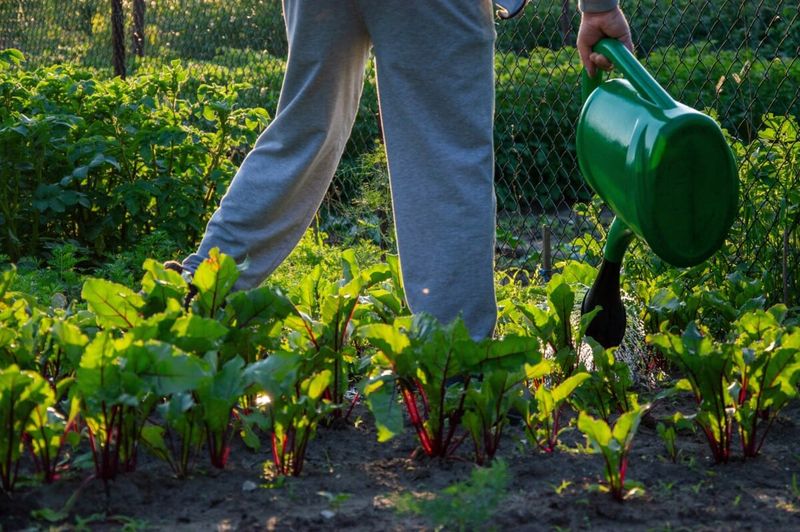
Cooling off in the evening after a hot Michigan day feels natural, and many gardeners reach for the hose right around sunset.
Evening watering can work, but it comes with one condition worth thinking about: if water stays on the leaves overnight, it creates conditions that some fungal diseases prefer.
Wet foliage sitting through the night provides a moist environment where problems like powdery mildew, leaf spot, and other fungal issues can develop more easily.
In Michigan’s humid summer climate, this risk is real, especially in years when nights stay warm and the air does not dry out much between dusk and dawn.
Evening watering directed at the soil rather than the leaves reduces that concern significantly. Using a soaker hose or drip line in the evening keeps moisture near the roots and away from the foliage.
That approach is much safer than using an overhead sprinkler that wets everything from the ground up.
If mornings are genuinely impossible for your schedule during a Michigan heat wave, evening soil-level watering is a reasonable second choice.
Just aim to finish before it gets fully dark so you can see what you are doing and check whether the soil is absorbing water or shedding it.
Containers and raised beds may dry out faster and could benefit from a late-afternoon check even if you watered in the morning.
5. Containers May Need A Second Check
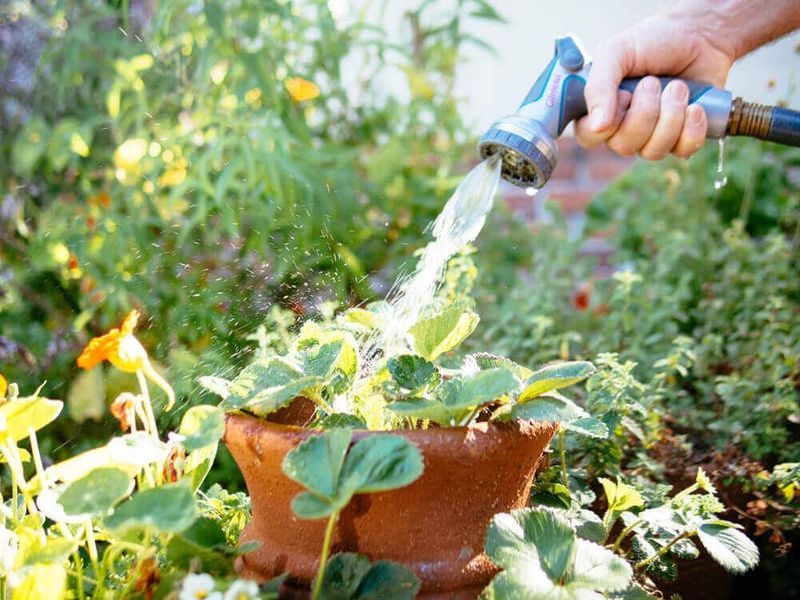
Pots sitting on a sunny Michigan patio can go from moist to bone dry faster than most gardeners expect. Unlike in-ground beds where surrounding soil holds some reserve moisture, containers are isolated.
The root zone is limited to whatever fits inside the pot, and heat builds up quickly in the walls of terracotta, plastic, and ceramic containers during a heat wave.
A container that felt adequately watered at 7 a.m. may feel dry by 2 p.m. on a day when temperatures push past 90 degrees.
Hanging baskets are especially vulnerable because they are exposed to sun and wind from multiple sides, which speeds up moisture loss significantly.
Small pots dry out even faster than large ones simply because they hold less soil volume.
Checking containers again in the late afternoon during a Michigan heat wave is a practical habit. Press a finger about an inch into the soil.
If it comes out dry, the plant likely needs more water even if you already watered that morning. Watering until water drains from the bottom of the pot helps ensure the entire root ball gets moisture rather than just the top layer.
Dark-colored pots absorb more heat than lighter ones, which can speed up drying even more.
During long hot stretches, moving heat-sensitive containers into afternoon shade can reduce how often they need water and help plants manage the stress of Michigan summer temperatures more comfortably.
6. Watering The Soil Works Better Than Wetting Leaves
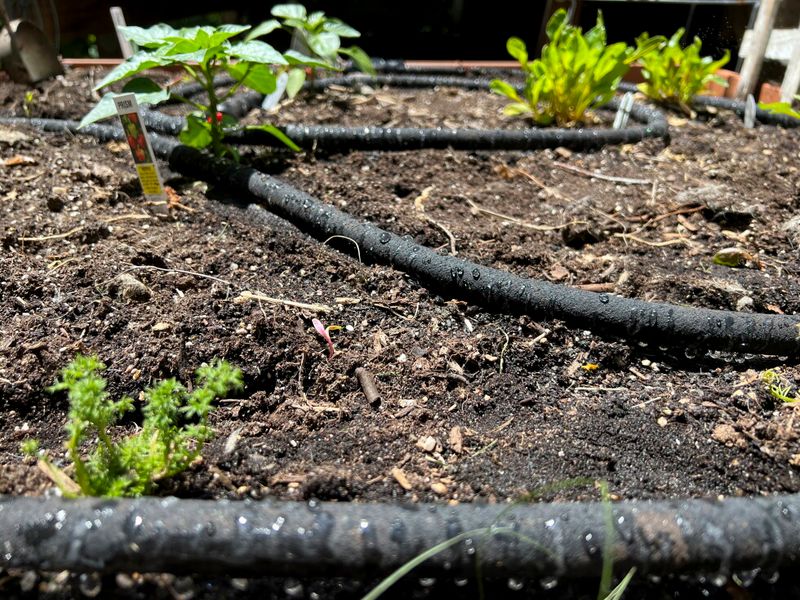
Roots are where plants actually take up water, and roots live in the soil, not on the leaves.
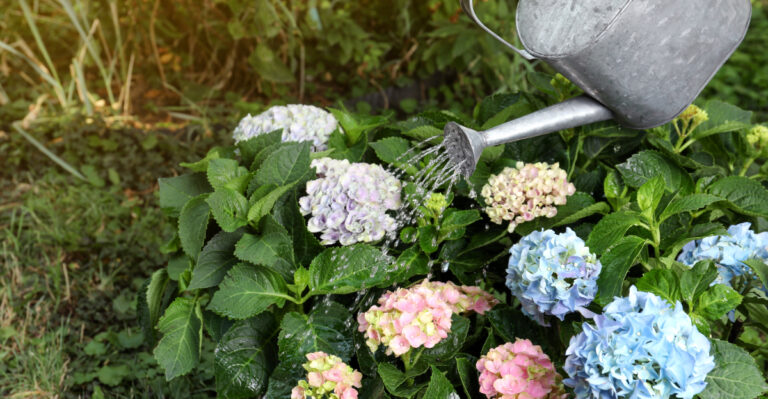
Focusing your watering efforts at the soil level rather than spraying foliage from above is one of the most reliable adjustments Michigan gardeners can make during a heat wave.
It sounds simple, but it changes how efficiently your watering efforts pay off.
Overhead sprinklers and spray nozzles scatter water across leaves, stems, and flowers in addition to the soil. Much of that water evaporates quickly, especially during a hot Michigan afternoon.
Wet leaves under strong sun can also cause some surface damage on sensitive plants, and as mentioned in earlier sections, wet foliage overnight encourages fungal problems.
Soaker hoses and drip irrigation lines deliver water slowly and directly to the root zone. They work well in vegetable rows, raised beds, and flower borders.
Even a simple garden hose held low and moved slowly along the base of each plant can be more effective than a sprinkler during a heat wave.
The goal is to get water to move downward into the soil rather than sitting on top or running off the surface. Watering slowly gives the soil time to absorb moisture rather than shedding it.
In Michigan gardens with sandy soil, water moves down quickly, so shorter and more frequent sessions may work better. Clay soils absorb water more slowly but hold it longer once it soaks in.
7. Deep Watering Helps Roots Reach Moisture
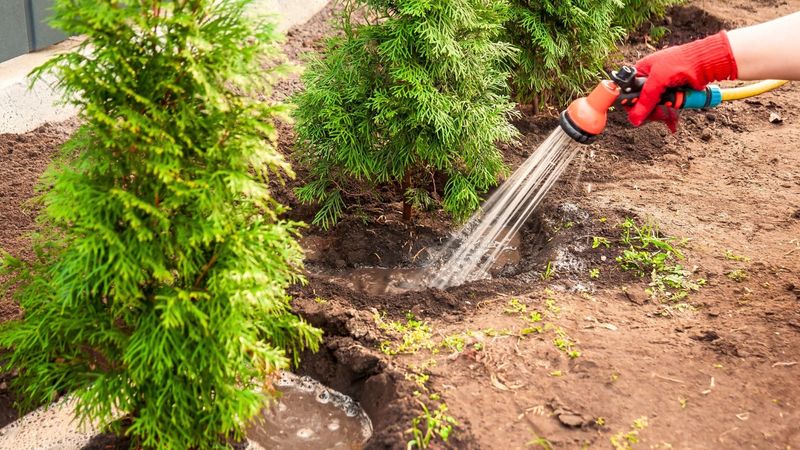
Shallow, frequent watering during a Michigan heat wave may keep the top inch of soil moist, but roots tend to follow the moisture.
If water rarely reaches more than an inch or two deep, roots stay near the surface where soil temperatures are highest and drying happens fastest.
That can leave plants more vulnerable during stretches of intense summer heat.
Watering more deeply and less frequently encourages roots to grow downward into cooler, more consistently moist soil layers.
For most vegetable plants and established flower beds, watering deeply a few times a week is often more useful than a light sprinkle every single day.
How deep water needs to go depends on the plant, the soil type, and how hot and dry conditions have been.
In Michigan, sandy soils drain quickly, which means water moves down fast but also dries out faster. Clay soils hold water longer but can become compacted and shed water if it is applied too quickly.
Raised beds often fall somewhere in between, depending on the mix used to fill them.
A practical way to check whether you are watering deeply enough is to use a trowel or stick to probe the soil an hour after watering. If the soil is moist four to six inches down, you are in good shape.
If it is still dry below the top two inches, your plants may benefit from longer watering sessions during morning hours before the Michigan heat peaks.
8. Mulch Helps Morning Water Last Longer
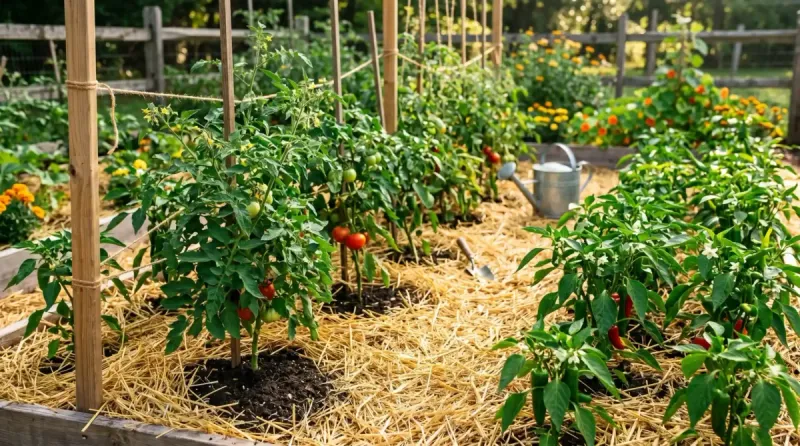
Laying down a few inches of mulch around your garden plants might be the single most useful thing you do before a Michigan heat wave arrives.
Mulch acts as an insulating layer between the sun and the soil, slowing down evaporation and keeping the ground cooler during the hottest parts of the day.
When you water in the morning, mulch helps hold that moisture in place longer.
Without mulch, bare soil in a Michigan summer garden can lose a surprising amount of water to evaporation within just a few hours of watering.
With a two-to-three-inch layer of straw, shredded leaves, wood chips, or grass clippings covering the soil, that same moisture stays available to roots much longer into the afternoon.
Mulch also moderates soil temperature. Roots prefer cooler conditions, and mulched soil tends to stay noticeably cooler than bare soil during a heat wave.
That can reduce the overall stress your plants experience even when air temperatures are extreme.
Applying mulch is especially useful in Michigan vegetable gardens, raised beds, and flower borders that get full sun during the afternoon hours.
Spread it around the base of plants without piling it directly against stems or trunks, which can trap moisture and cause problems.
Organic mulches break down over time and improve soil structure, so they offer long-term benefits well beyond helping your garden survive a single summer heat wave in Michigan.