The Best Trees To Plant In Georgia Before Halloween
Halloween might seem like an unusual time to think about planting trees, but your yard could benefit from getting new roots established before winter arrives.
Fall offers an opportunity to plant while the soil still holds warmth and cooler air reduces moisture loss.
Choosing the right tree matters more than simply getting something into the ground.
Consider how much sunlight your planting area receives and whether the soil drains properly. A tree that suits those conditions has a better chance of establishing itself without unnecessary stress.
Georgia’s mild autumn weather can provide favorable planting conditions for many deciduous trees, although local temperatures and rainfall still deserve attention.
Don’t overlook the space a tree will need as it matures. Planting thoughtfully now can help you avoid crowded branches, damaged structures, and difficult decisions years later.
1. Willow Oak Grows Into A Fast, Dependable Shade Tree
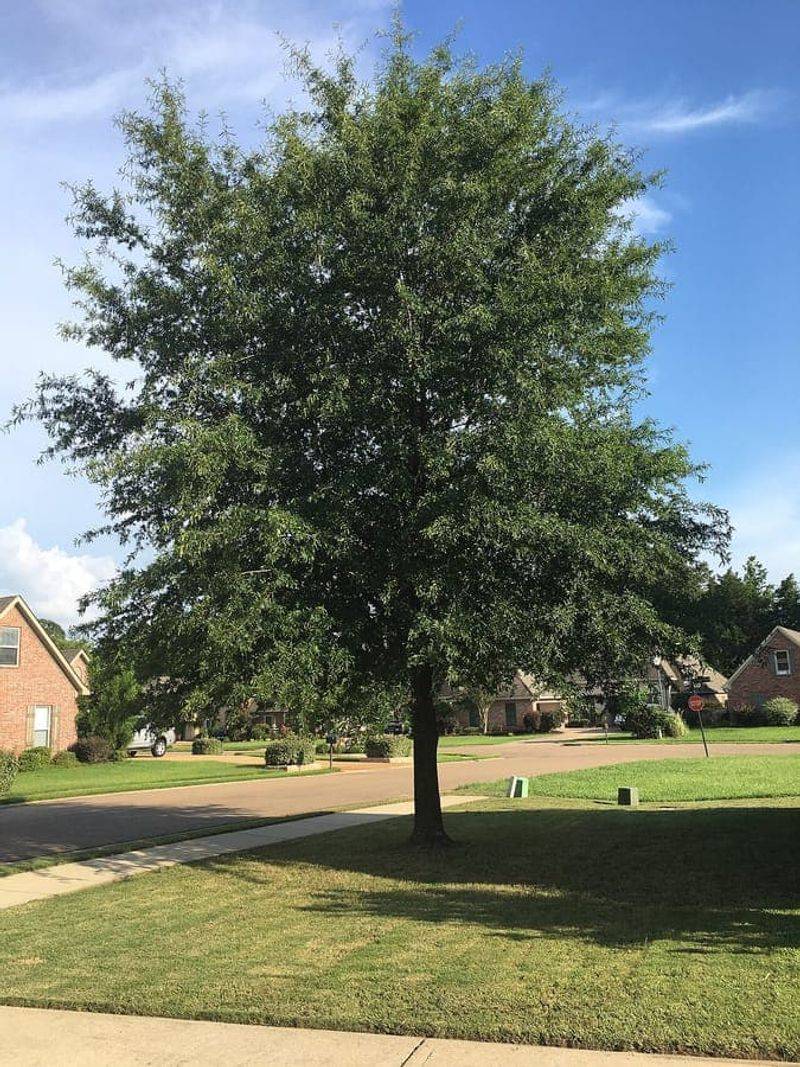
Shade arrives sooner than you might expect with a willow oak. Among oaks, it tends to grow fairly quickly, often putting on solid height each year in good conditions.
Its leaves are narrow and slender, a lot like willow leaves, which is where the name comes from.
You will find this tree lining streets in Atlanta, Augusta, and many smaller towns across Georgia. It handles city conditions reasonably well and tolerates both moist and average soils.
Space is the main thing to plan for before you dig.
A willow oak can grow into a big tree with a wide crown, so keep it well away from your house, power lines, and septic systems. Roots also spread wide, so give driveways and sidewalks some distance.
October planting gives roots time to settle in while the top of the tree slows down for winter.
Dig a hole two or three times wider than the root ball but no deeper. Setting the tree too low is a common mistake that can cause problems later.
Water deeply after planting, then keep the soil evenly moist during dry spells through the first couple of years. A ring of mulch helps hold moisture, but keep it a few inches away from the trunk.
Fall color is usually a modest yellow or bronze, depending on the year and location.
2. River Birch Shows Off Peeling Cinnamon Bark In Every Season
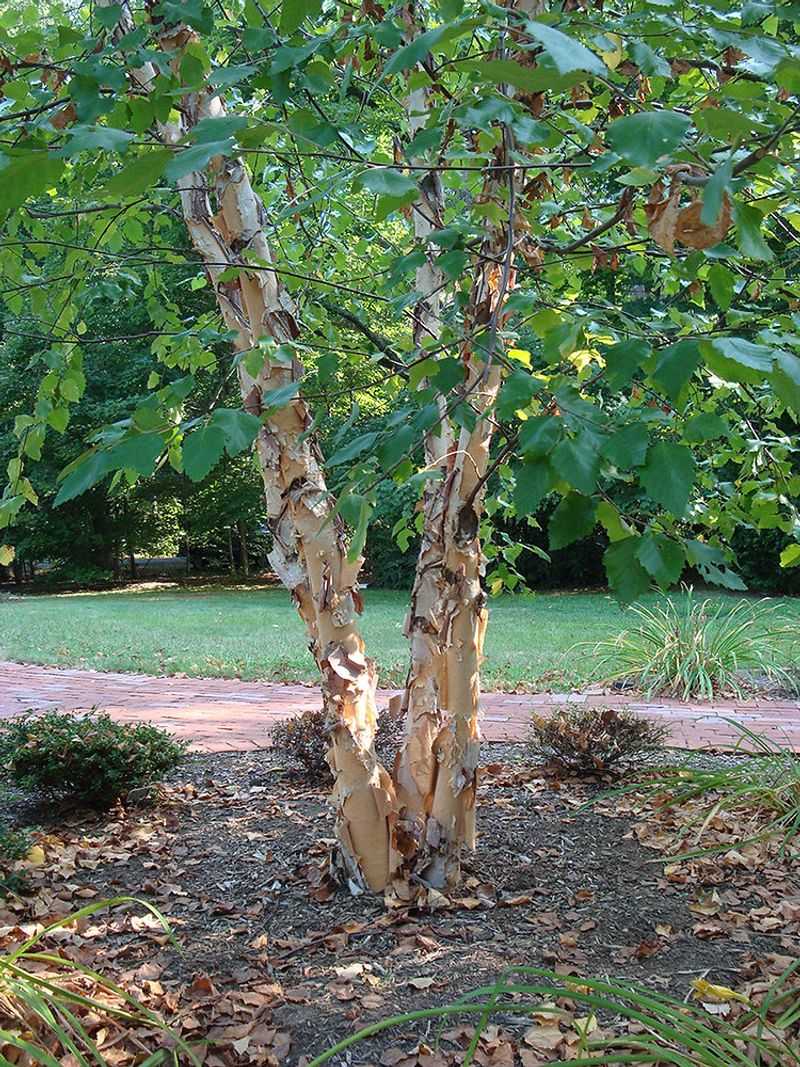
Bark is the star here, plain and simple. River birch peels in papery curls of tan, salmon, and cinnamon brown that look interesting even in the middle of winter.
Unlike some birches that struggle in southern heat, this native handles warm summers fairly well.
Wet ground does not scare it either. In the wild, river birch grows along streams and floodplains, so it can be a good pick for low spots where water sits after storms.
Still, it is not a tree that likes long droughts.
During hot, dry Georgia summers, young trees may drop some yellow leaves early. Regular watering in the first few years helps a lot, and a layer of mulch keeps roots cooler.
Multi-trunk forms are popular because they show off more bark at eye level.
Your Georgia Garden Changes Every Week. Your Plan Should Too.
Gardening in Georgia changes quickly throughout the season. Every Friday you’ll receive a simple weekly plan showing exactly what to plant, prune, fertilize, harvest, and protect so you never miss the right timing.
Look for cultivars such as ‘Heritage’ or ‘Dura-Heat’ at local nurseries if you want reliable bark color. Selections can vary in size and look, so read the tag before you buy.
Give it room to spread, since a mature tree can grow fairly wide and tall. Avoid planting right next to patios because small twigs and leaves drop often.
Fall planting works nicely because cooler weather cuts down on water loss while roots get established.
3. In Soggy Spots, Sweetbay Magnolia Rewards With Lemony Summer Flowers
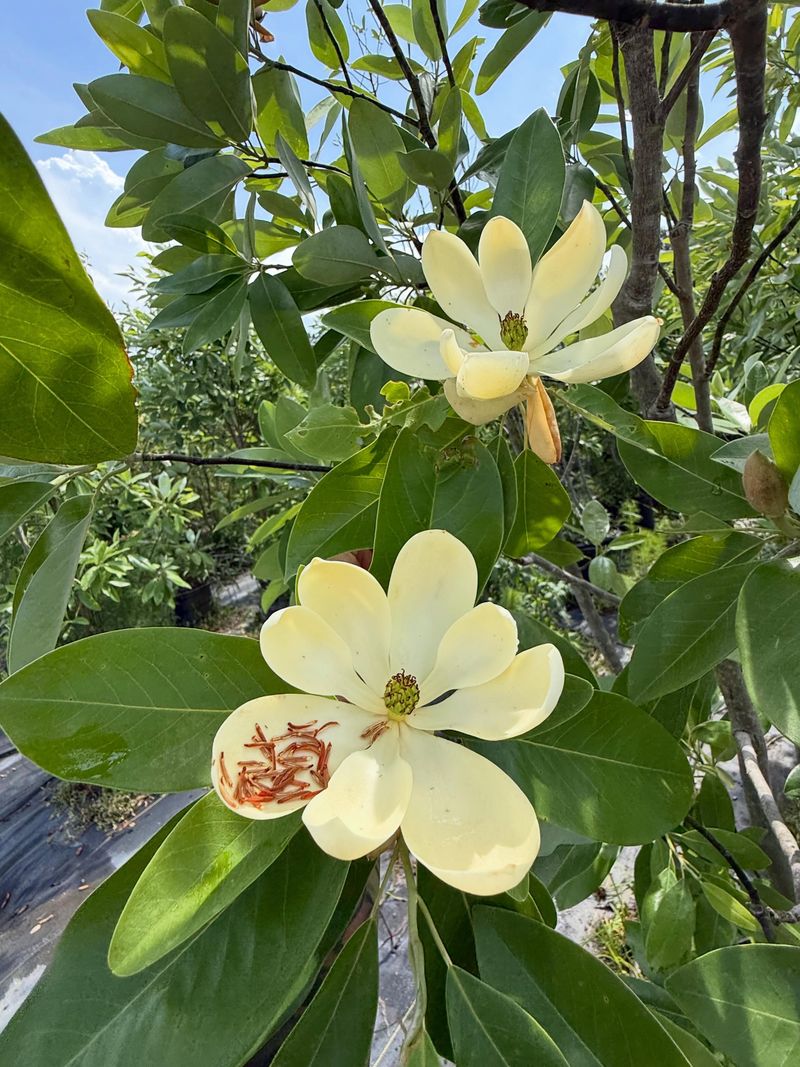
Got a corner of the yard that stays wet after every rain? Sweetbay magnolia might be the answer you have been looking for.
Native to swamps and wet woods across the Southeast, it handles damp, acidic soil better than most flowering trees.
Creamy white flowers open in late spring and early summer, and they carry a sweet, lemony scent. Blooms are smaller than a southern magnolia’s, but they often keep appearing for several weeks.
Leaves are green on top and silvery underneath, so a breeze makes the whole tree shimmer.
Size is far more manageable than its big cousin. Sweetbay often stays small to medium, and it may grow as a multi-stem shrub or a single-trunk tree depending on pruning.
In south Georgia, it tends to hold many of its leaves through winter, while trees farther north may drop more of them.
Part shade to full sun suits it fine, as long as the soil does not dry out for long periods. Sandy, dry spots are not a good match.
Plant it in October so roots can settle in during cool weather.
Water regularly the first year, even in naturally moist areas, since new roots are still short. Red seeds in late summer may draw birds to your yard.
4. Fringe Tree’s Fleecy White Blooms Fill Spring Borders
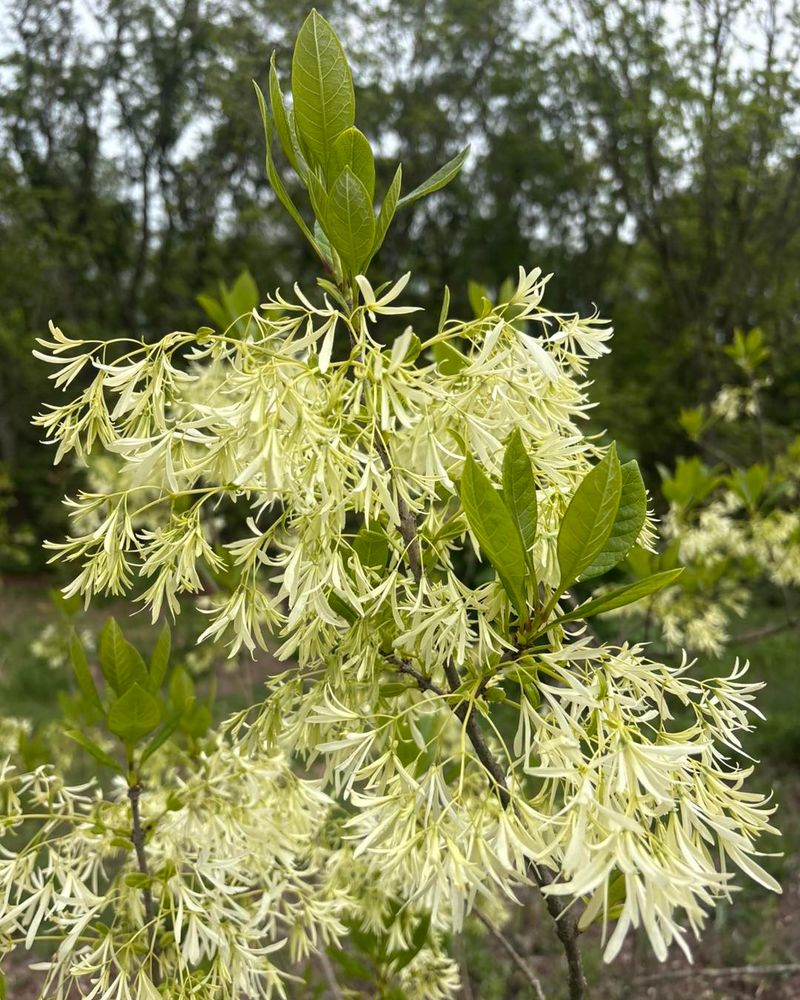
Picture a small tree draped in white cotton candy each spring. That is roughly what a native fringe tree looks like in full bloom.
Its flowers hang in loose, airy clusters of thin, strap-like petals that seem to float above the leaves.
Gardeners sometimes call it grancy graybeard, an old southern nickname that fits the fuzzy look. Bloom time usually lands in mid to late spring, depending on your part of the state.
Small yards benefit most from this tree.
It usually stays on the smaller side and grows slowly, so it fits well in borders, near patios, or as a focal point in a bed. Expect patience, since young plants may take a few years to bloom heavily.
Fringe trees grow across much of Georgia, from the mountains down into the Coastal Plain.
Sun to part shade works, and moist, well-drained soil keeps them happiest. Heavy clay that stays soggy can be tough on the roots.
Female trees can produce dark blue fruit in late summer, which birds tend to eat. Male trees often have slightly showier flowers but no fruit.
Be aware that fringe tree belongs to the olive family, and emerald ash borer has been found attacking it in some states. Keep an eye out for news from your local Extension office.
5. Plant Male And Female American Hollies For A Steady Berry Crop
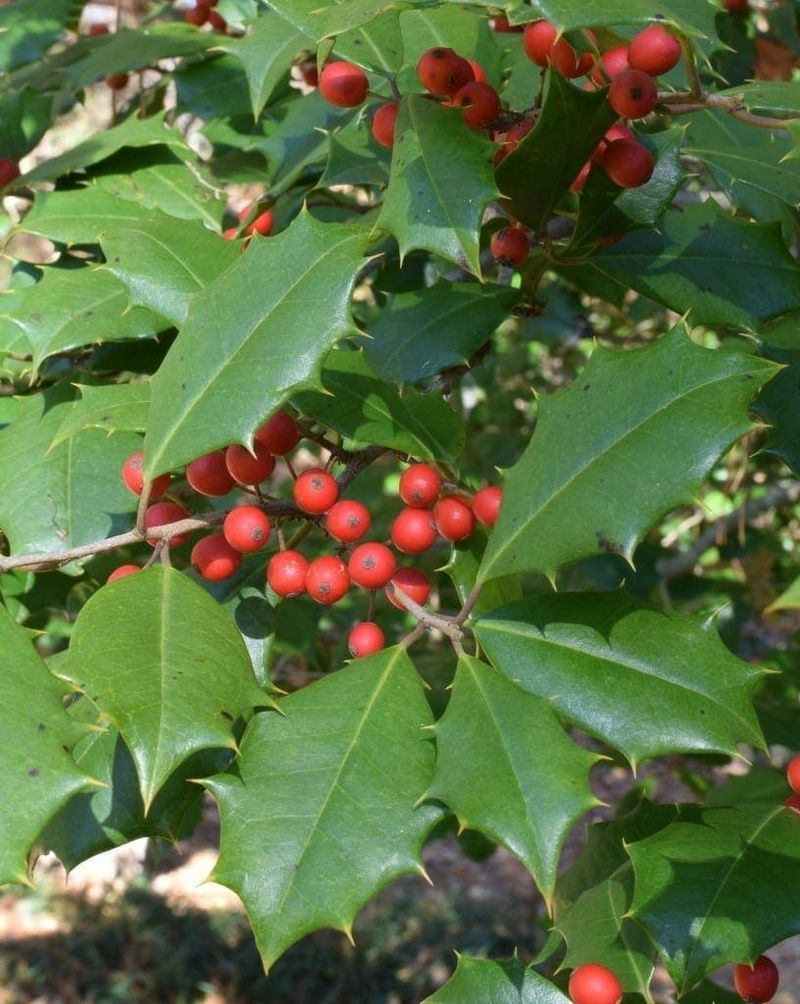
Red berries do not show up on every holly. American holly has separate male and female plants, and only the females produce fruit.
Even then, a female needs pollen from a compatible male plant growing reasonably close by.
Bees and other insects carry that pollen in spring. Without a male in the area, a female holly may set few berries or none at all.
Nurseries often label named cultivars by sex, so check tags before buying.
One male can usually serve several females nearby. If neighbors or nearby woods already have male hollies, you may get berries without planting your own, though that is harder to predict.
American holly is native across Georgia and handles sun or part shade. Slightly acidic, well-drained soil tends to suit it best.
Growth is slow, but the tree can eventually get fairly tall with a neat, pyramid shape.
Evergreen leaves give year-round screening, which makes it handy along property lines. Spiny leaf edges can be prickly, so keep it away from walkways where kids play.
Berries ripen in fall and often hang on into winter, offering food for birds when other options are scarce.
Planting in fall gives roots a chance to grow before summer heat. Water well through the first year and mulch the root zone.
6. Sourwood Pairs Summer Flower Sprays With Deep Red Fall Leaves
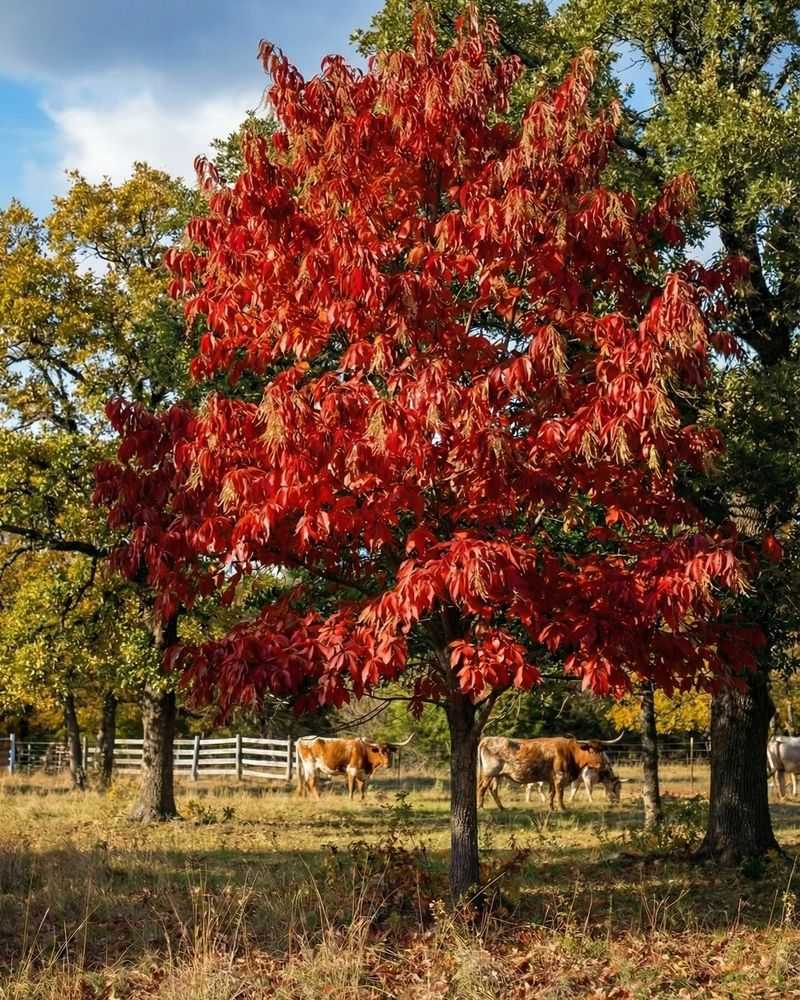
Mountain folks have prized sourwood for generations, and the honey bees make from its flowers is a regional favorite. Summer brings drooping sprays of tiny white bells that look like lily of the valley.
Fall is when the tree really turns heads with leaves that often shift to deep red or maroon.
Seed stalks linger after the flowers fade, adding a pale contrast against the colored leaves. Color can vary from year to year based on weather and sun exposure.
Sourwood is best suited to northern Georgia, where cooler temperatures and acidic soils match its natural range.
Gardeners farther south may find it harder to grow well. Heat, compacted soil, and poor drainage can all cause trouble for this tree.
Choose a smaller, container-grown tree whenever possible.
Sourwood has a reputation for being tricky to transplant, and larger field-dug trees often have a harder time settling in. Young potted trees usually adapt faster to a new spot.
Give it full sun to part shade for the best flowers and fall color. Soil should drain well and stay on the acidic side.
Keep the root zone mulched and avoid heavy foot traffic over it.
Water during dry spells through the first couple of years. Once settled, it grows slowly into a small to medium tree.
7. Eastern Red Cedar Handles Dry Ground And Feeds Winter Birds
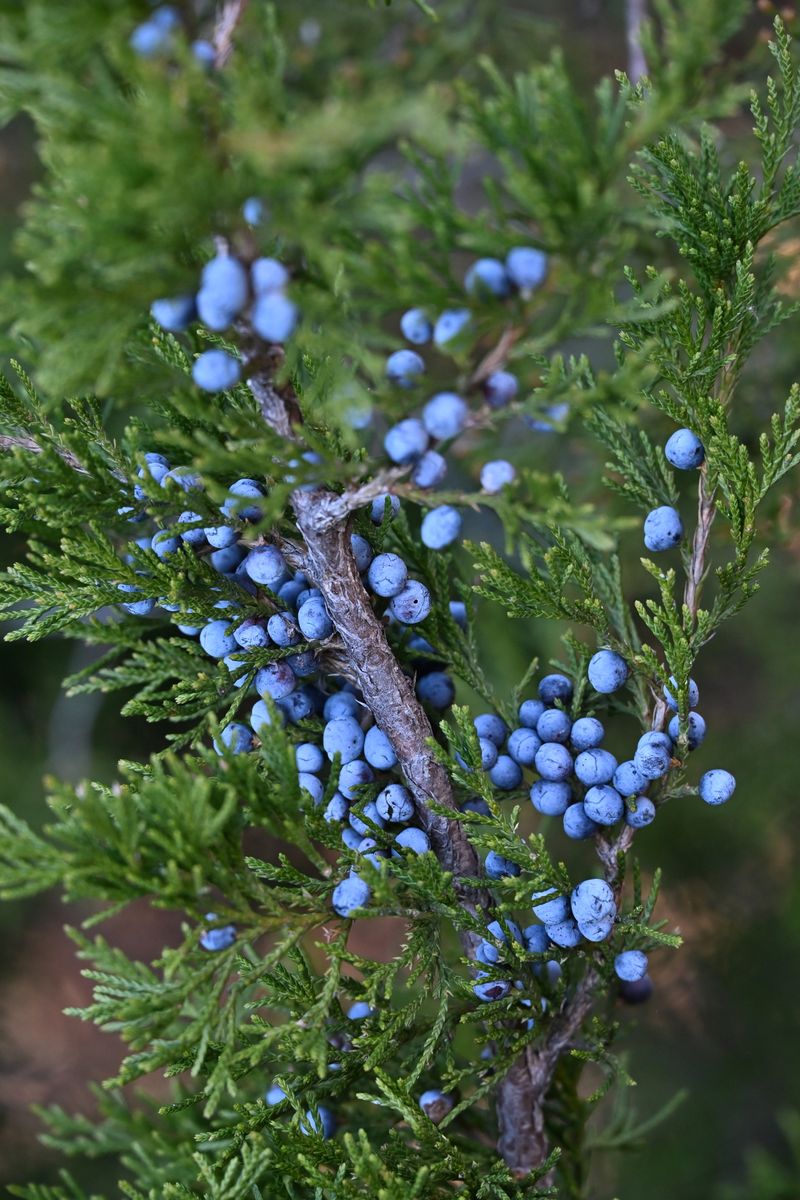
Tough sites need tough trees. Eastern red cedar grows in old fields, rocky slopes, and roadside banks where other trees often struggle.
Once established, it tolerates drought, poor soil, and full sun quite well.
Female trees produce small, waxy blue cones that look like berries. Cedar waxwings, bluebirds, and other birds often eat them through late fall and winter.
Dense evergreen branches also give birds shelter from cold wind.
Here is one catch worth knowing. Eastern red cedar can host cedar-apple rust, a fungal disease that moves between cedars and apple or crabapple trees.
Rust usually causes only minor harm to the cedar, but it can spot leaves and fruit on apples.
If you grow apples or crabapples in Georgia, plant your cedar well away from them. Choosing rust-resistant apple varieties can also help lower the risk.
Spacing matters for another reason too.
A mature cedar can get fairly tall and wide, so it makes a strong windbreak or privacy screen when given room. Crowding it near the house limits airflow and can invite problems.
Fall planting helps roots grow before summer dryness hits. Water young trees during their first summer, then cut back as they settle in.
8. Carolina Silverbell Dangles White Bell-Shaped Flowers In Spring
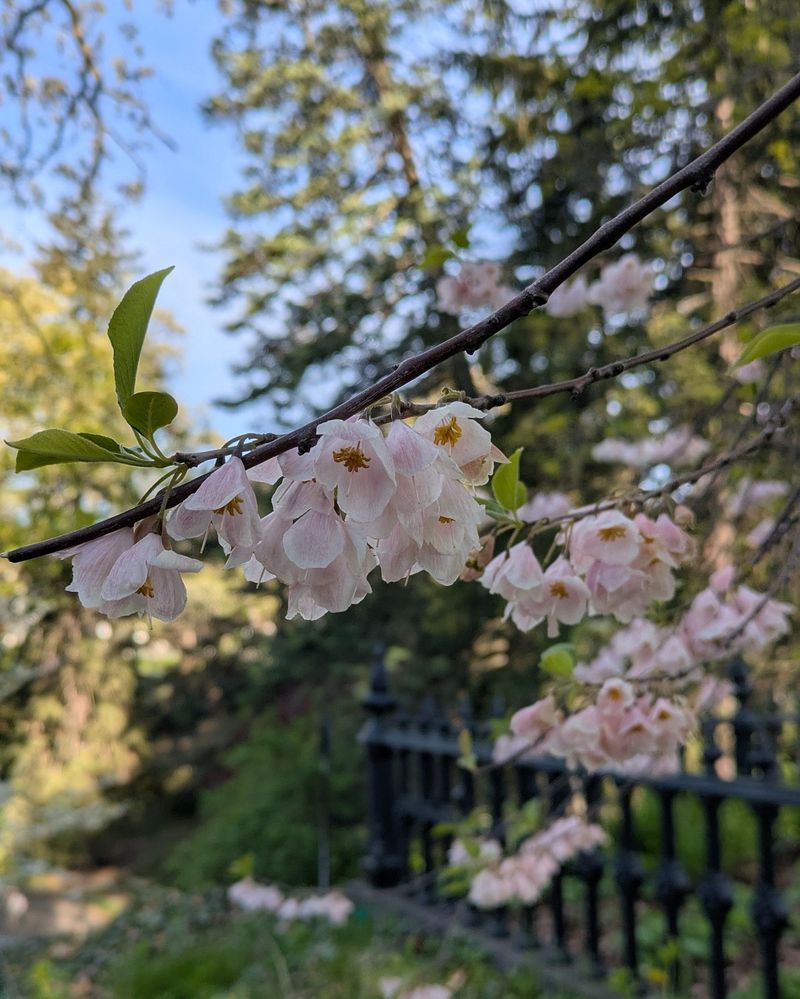
Walk under a silverbell in April and you may notice dozens of tiny white bells hanging along the branches. Each one dangles on a thin stem, so the tree looks like it is decorated for a party.
Bloom timing shifts a bit depending on elevation and weather, so early or late springs can move it around.
Carolina silverbell grows well in northern Georgia, especially in spots with partial shade and moist, acidic soil.
In the wild, it often shows up along stream banks and in mountain coves. Copying those conditions at home gives it the best shot at success.
Woodland gardens are a natural fit.
Plant it at the edge of taller trees where it gets morning sun and afternoon shade. Hot, dry, exposed sites may stress it, particularly during long summers.
Winged seed pods form after the flowers and hang on into fall.
Leaves often turn a soft yellow in autumn, though color is usually modest. Bark on older trees can develop light striping that adds interest in winter.
Compost worked into the planting area can help heavy clay drain better. Still, avoid deep amending only in the hole, since roots need to spread into native soil.
Mulch the root zone and water during dry spells for the first year or two.
9. Longleaf Pine Seedlings Spend A Few Years In A Grassy Stage
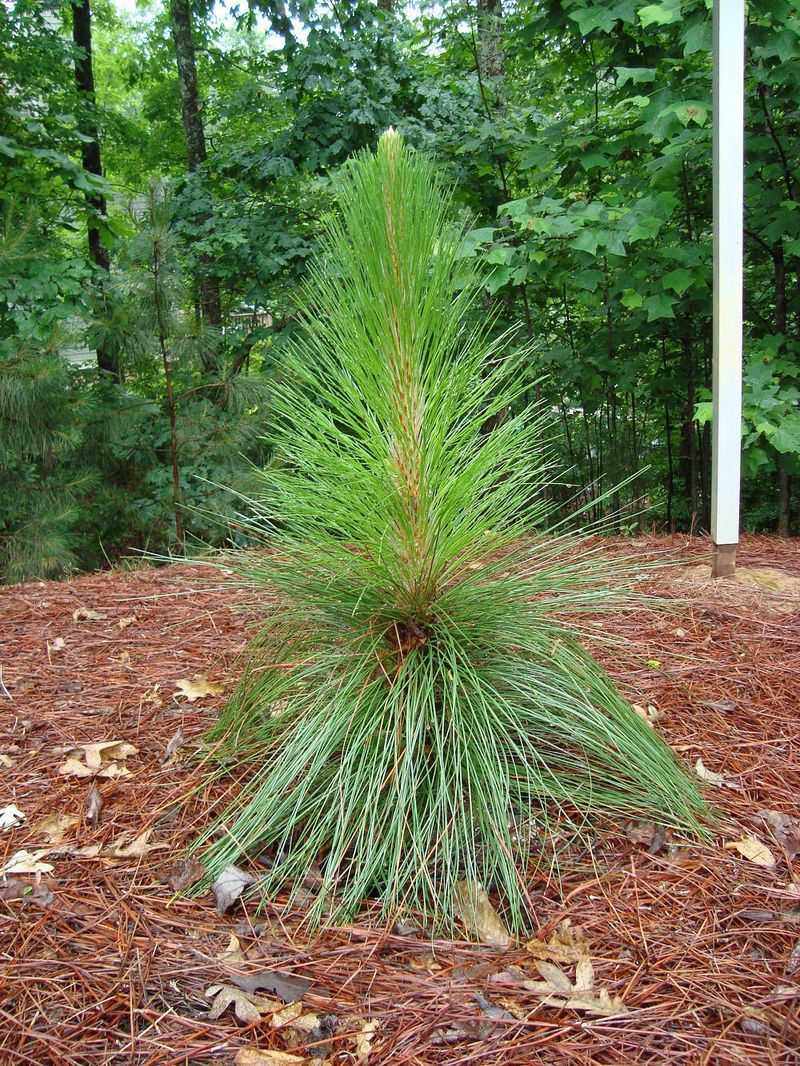
Plant a longleaf pine and you might think nothing is happening for a while. Young seedlings often sit low to the ground as a dense tuft of needles that looks more like a clump of grass than a tree.
During this grass stage, the seedling is busy building a deep taproot.
Length of the stage varies, often lasting a few years depending on soil, competition, and sunlight. Once roots are ready, the stem can shoot upward fairly quickly.
Longleaf pine once covered huge areas of the Southeast, including much of south Georgia.
Sandy, well-drained soils and full sun suit it best. Shade from other trees slows growth and keeps seedlings stuck in the grass stage longer.
Plan for size before planting anything.
Longleaf grows into a large, tall tree and needs plenty of room to mature. Keep it well away from homes, roofs, and power lines, and think about where long needles and big cones will land.
Container-grown seedlings are often easier for homeowners to establish than bare-root ones.
Plant so the bud stays at soil level, not buried. Keep grass and weeds pulled back from young seedlings so they do not compete for water and light.
Late fall into winter is a common planting window across the Coastal Plain.