The Big Black Snake Near Your Ohio Shed May Be Helping With A Rodent Problem
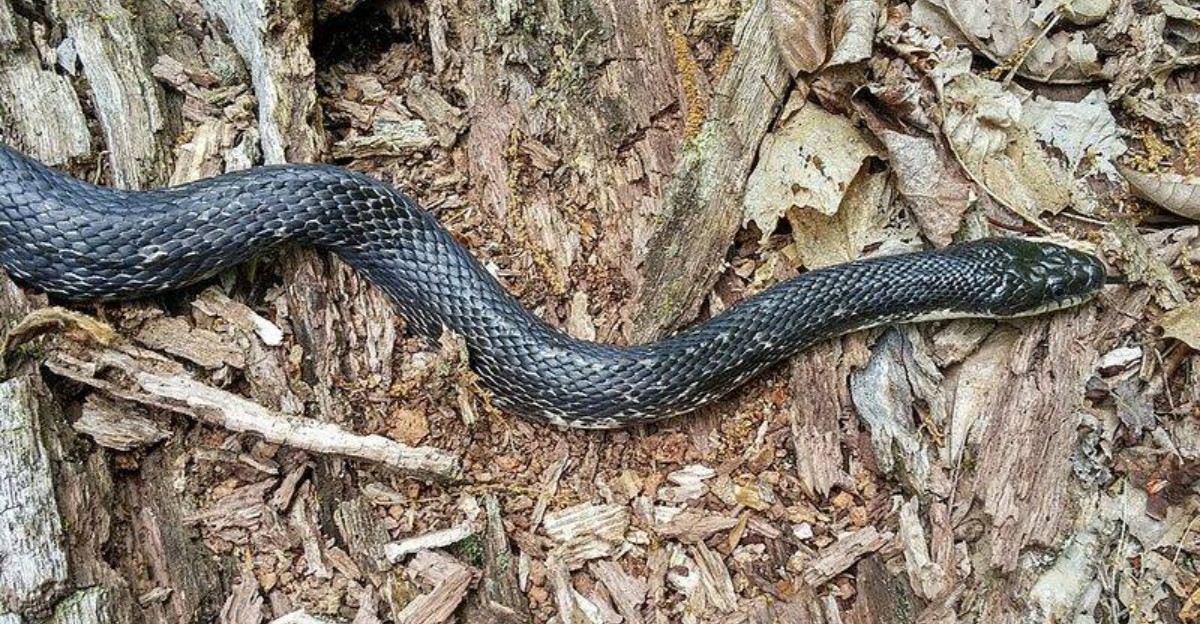
That black shape stretched out near the shed door is enough to make anyone freeze mid-step, especially when it’s easily five feet long and not moving away as fast as it probably should. Every instinct says get the shovel, or better yet, get someone else to deal with it.
Before doing either, it’s worth knowing what that snake’s actually been doing around the property, likely for longer than anyone’s noticed.
Ohio’s larger black snakes hunt rodents almost exclusively, working through mice and rats hiding in exactly the kind of clutter a shed tends to collect.
A shed with a rodent problem and a big black snake living nearby usually isn’t a coincidence. It’s one problem quietly solving another, no traps or bait required.
That snake showing up isn’t the emergency it feels like in the moment. What’s happening underneath the shed is usually the real story worth paying attention to.
1. Meet The Black Rat Snake Behind Many Ohio Yard Sightings
Ohio’s eastern black ratsnake is one of the state’s largest native snakes, with adults commonly reaching several feet in length. Large individuals can look surprisingly long when stretched out beside a shed or garden bed.
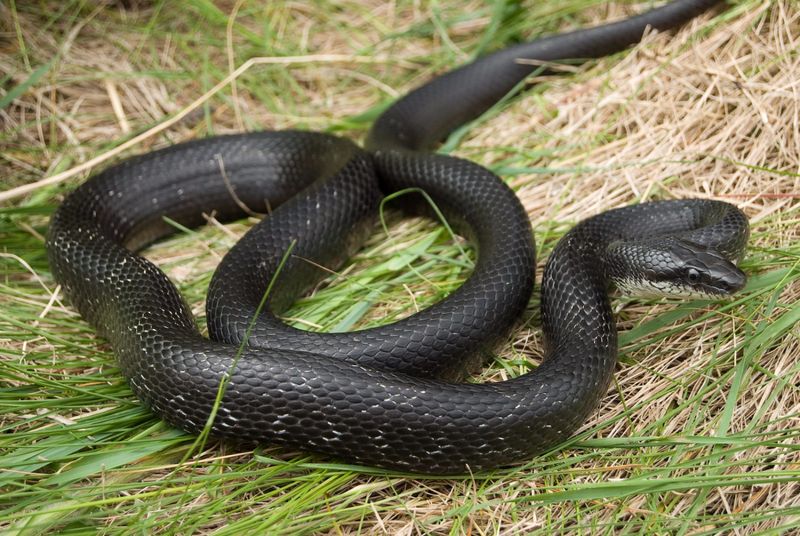
Known as the Eastern black rat snake, gray ratsnake, or pilot black snake, it shows up across most of the state. Look for shiny black scales, a pale belly that may be white or gray with mottled patches, and a bright white chin and throat.
Youngsters throw people off, since they wear blotchy gray or light brown patterns that fade as they grow. Plenty of folks mistake a juvenile for something dangerous when it is the same harmless species.
Eastern black ratsnakes are nonvenomous constrictors. They may bite defensively if handled or cornered, but they are not equipped with venom for subduing people.
Their favorite haunts include forests, rocky hillsides with mature trees, farm fields, overgrown lots, and suburban backyards. Barns, garages, and garden sheds land high on their list of hangouts.
Personality-wise, they lean shy. A startled one often freezes in place, hoping you walk right past, or slips into the nearest gap.
If cornered, it may release a musky smell that clings to skin like old gym socks. Give it room, and the drama ends quickly.
2. Follow The Rodents To Understand Why The Snake Showed Up
Snakes are not wandering around admiring your landscaping. They follow their stomachs, and their stomachs follow mice.
A black rat snake earned that name honestly. Mice and rats can make up an important part of its diet, but eastern black ratsnakes are opportunistic feeders that also take birds, bird eggs, frogs, lizards, and other small prey.
So when one takes up residence near your shed, it is basically holding up a sign about your yard. Somewhere nearby, small furry things are eating, nesting, and multiplying.
Think of the snake as a very honest home inspector. It found the buffet before you noticed the crumbs.
Your Ohio Garden Changes Every Week. Your Plan Should Too.
Gardening in Ohio changes quickly throughout the season. Every Friday you’ll receive a simple weekly plan showing exactly what to plant, prune, fertilize, harvest, and protect so you never miss the right timing.
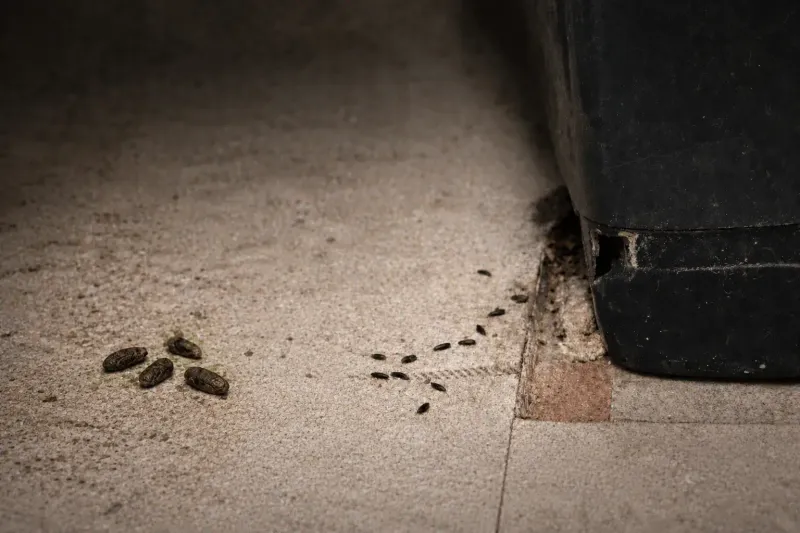
Go look for the clues yourself. Droppings that look like dark grains of rice, chewed cardboard, shredded insulation, gnaw marks on plastic bins, and greasy smudges along baseboards all point to rodents.
A rat snake sighting can be a reminder that your yard still supports a functioning food web, with predators following the prey animals that find food and shelter there.
Here is the part homeowners forget: removing the snake does nothing about the mice. The rodents simply continue their business with one less thing to worry about.
Tackle the food and shelter that drew the rodents in, and the snake usually loses interest and drifts elsewhere on its own.
3. Let This Natural Mouse Hunter Work From A Safe Distance
A single black rat snake can consume rodents over the course of a season, making its presence potentially useful around a shed or outbuilding where mice are active.
Free labor rarely comes with better reviews. Rodents carry illnesses that can spread to people and pets, so fewer of them around the property is genuinely good news for your household.
Eastern black ratsnakes are not a venomous threat to people, but any wild snake can bite when cornered or handled. Keep children and pets away and give the snake a clear path to leave.
The smartest reaction is also the laziest one. Stand back, watch for a minute, and let it go about its afternoon.
Trying to grab, poke, or chase a snake is how people end up bitten, and a rat snake bite is a defensive reaction, not an attack. Space solves the problem before it starts.
Teach kids the same rule with a simple phrase: eyes on, hands off. Turn it into a nature lesson instead of a panic moment, and they will handle future sightings calmly.
If one is sunning itself where you need to work, come back in an hour. They rarely stay put long.
For a snake stuck inside a structure, call a local wildlife removal service instead of improvising.
4. Check Rafters And High Ledges For This Surprisingly Good Climber
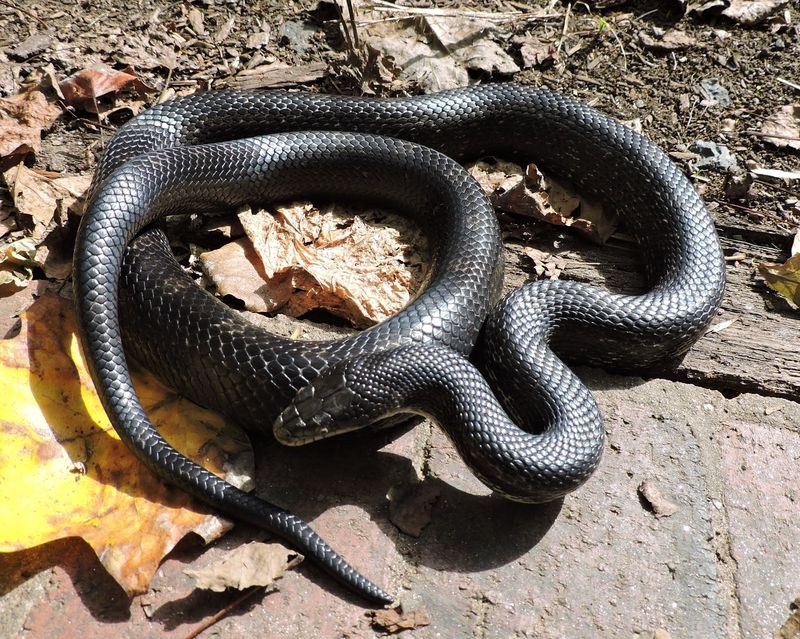
Picture a snake going straight up the side of a tree like it owes the bark nothing. Black rat snakes do exactly that, and they make it look easy.
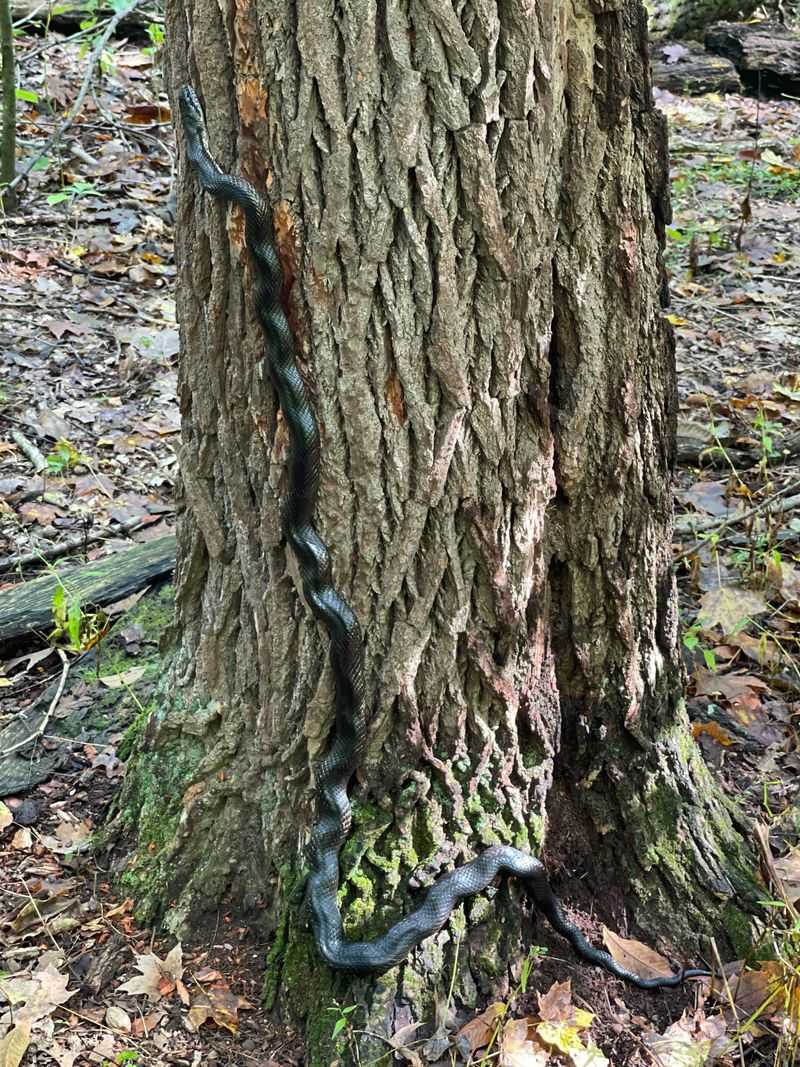
Strong body muscles plus textured belly scales give them serious grip. They can climb tree trunks, fence posts, rough walls, and other surfaces when moving through their habitat.
That talent explains a lot of surprise encounters. People spot one draped across a shed rafter or peering down from an attic beam and assume something unusual happened, when the snake simply took the high road.
Climbing gives them access to places that ground-dwelling predators cannot easily reach, including tree cavities, bird nests, and rodents using barns, sheds, and other elevated spaces.
Attics are especially appealing, offering steady temperatures and a reliable rodent population all in one spot. Barns and outbuildings serve the same purpose on a smaller scale.
When you check your shed, do not stop at eye level. Bring a flashlight and scan ceiling corners, the tops of shelving units, stacked lumber, and the gap above door frames.
Also look at what leads upward from outside. Overhanging tree limbs, leaning ladders, and climbing ivy all work as ramps to your roofline.
Trimming branches back several feet from the shed removes one of the easiest routes indoors, for snakes and for the rodents they follow.
5. Treat A Shed Snakeskin As Evidence Of Repeated Use, Not A Permanent Resident
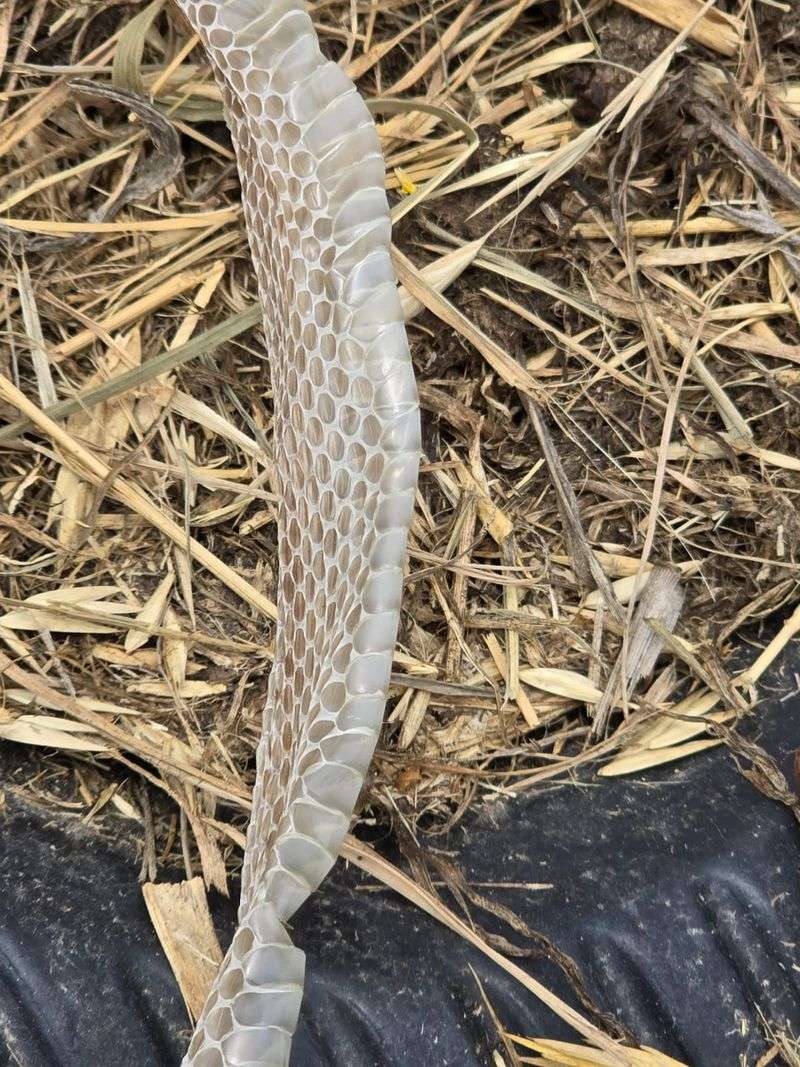
Finding a crinkly, translucent skin behind the lawn equipment feels like discovering a note from a ghost. It is really just a snake’s version of outgrowing last year’s jeans.
Biologists call the process ecdysis. Snakes shed several times a year to make room for growth, shake off parasites, and swap worn scales for fresh ones.
Often the whole thing peels away in one inside-out piece, which is why some look like a long paper tube. That detail alone makes them fun to examine.
Do not panic about the length, either. A shed skin can look surprisingly long because the loose, stretched material does not represent the snake’s exact body length.
Don’t use the skin alone to estimate how large the snake was.
One skin means a snake passed through and had a decent moment there. It does not prove anything has set up long-term housekeeping under your floorboards.
Several skins in the same spot tell a different story. Repeat visits usually mean steady meals nearby, which loops right back to a rodent situation worth checking.
Wear gloves when you pick one up, then wash your hands afterward. Handle it gently if you want to show the kids, since the scale pattern and eye caps are genuinely interesting.
Note the location, then start looking for the food source keeping visitors interested.
6. Identify The Snake From A Safe Distance Before Taking Action
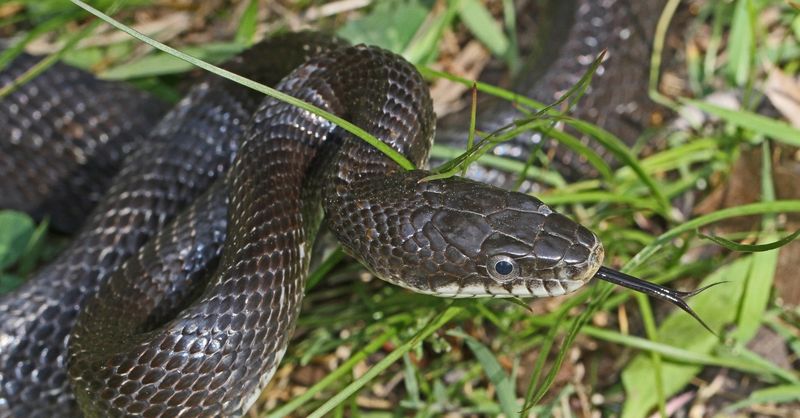
Identification beats assumption every single time. Before anyone grabs a tool or a phone camera at close range, take ten steps back and study what you are seeing.
Key features of an adult eastern black ratsnake include a mostly black body, a pale chin and throat, and a long, slender build. Juveniles look very different, with blotchy gray or brown patterns that gradually darken as they mature.
Juveniles complicate things with their blotchy gray or brown markings. Those patterns fade with age, but they fool plenty of homeowners into fearing the wrong thing.
Pupil shape can provide another identification clue when you can see the eyes clearly: ratsnakes have round pupils, while Ohio’s pit vipers have vertically elliptical pupils. Never move closer to a snake just to check this feature.
Copperheads do turn up in certain Ohio counties, which is exactly why the safe-distance rule matters. Use binoculars or zoom in with your phone camera rather than leaning closer.
Skip the handling entirely until you are confident about the species, and honestly, skip it even then. Photos work better for identification anyway.
Local extension offices, county wildlife agencies, and reptile identification groups can confirm a photo quickly. Many respond within a day.
If a snake is inside a building and you cannot identify it, contact a wildlife professional rather than experimenting. Knowing what you have turns a scary moment into a manageable one, and often into a harmless one.
7. Remove Birdseed, Pet Food, And Other Rodent Attractants
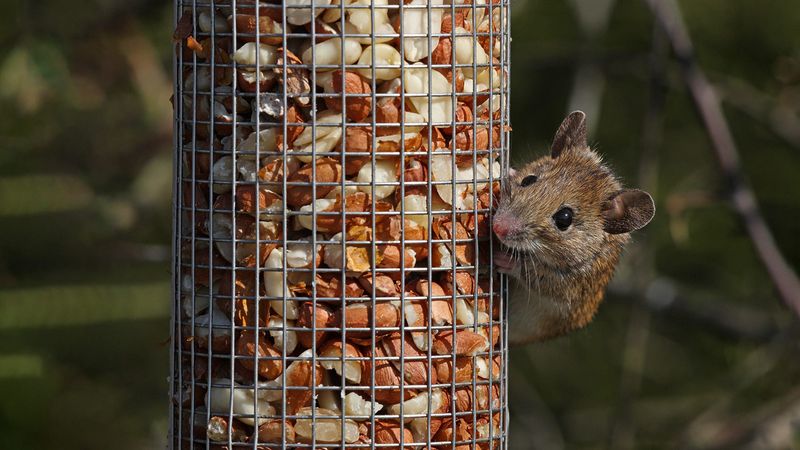
Bird feeders can become indirect rodent feeders when seed accumulates underneath them. Spilled seed under a feeder is basically a rodent food court operating around the clock.
Fallen fruit from backyard trees does the same job, as does an open bag of dog food sitting in the garage. Rodents show up, snakes follow, and suddenly there is a reptile sunning near your shed door.
Cleaning up the food supply attacks the whole chain at once. Fewer crumbs mean fewer mice, and fewer mice mean fewer reasons for a hungry hunter to patrol your yard.
Start with storage. Bulk pet food and birdseed belong in sealed metal containers with tight lids, since rodents chew through plastic and paper without much effort.
Feed pets indoors when possible, and bring bowls inside once the meal ends. Leftover kibble on a porch overnight is an open invitation.
Rake up seed hulls beneath feeders weekly, and pick fallen apples or pears off the ground before they ferment into a snack bar. Grills deserve a scrub too, since grease drippings attract more than you would expect.
If snake sightings keep happening, move feeders toward the far edge of the property. Pausing feeding for a few weeks also works, and the birds will forgive you.
8. Seal Shed Gaps After The Snake Has Moved Along
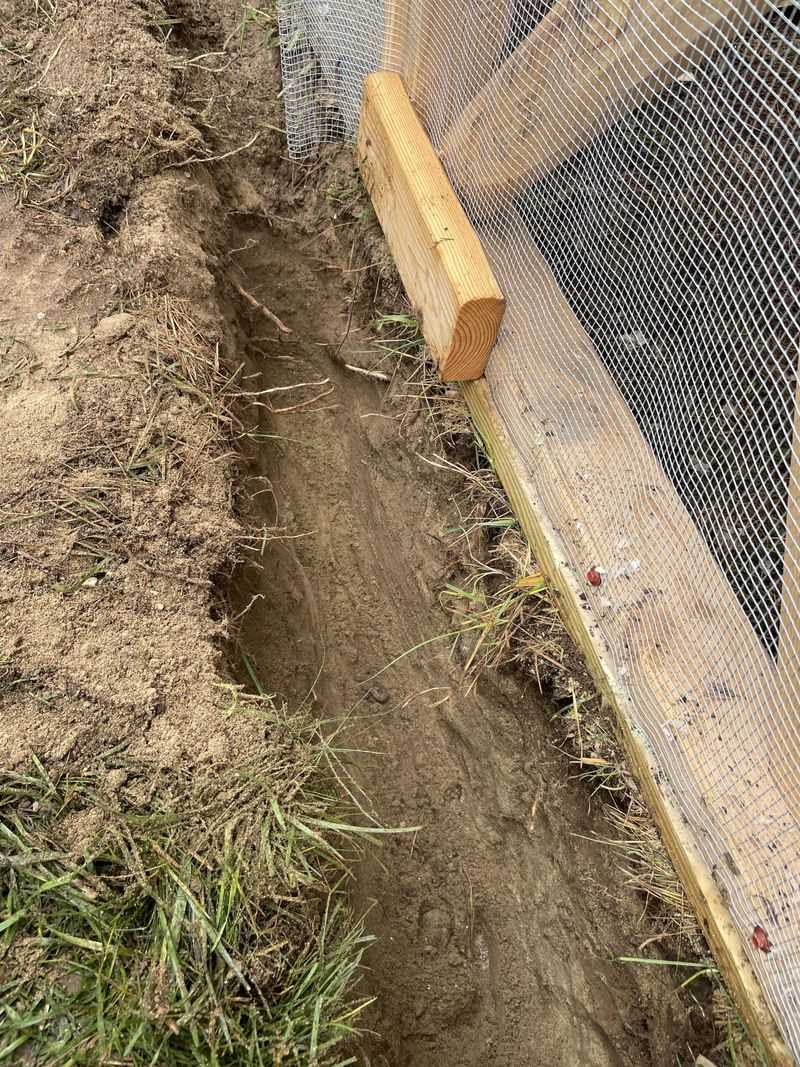
Small gaps around doors, foundations, vents, and wall joints can give rodents and other wildlife an entry point into a shed. Sealing those openings is one of the best ways to make the structure less attractive.
Timing matters more than materials here. Sealing a building while a snake is still inside traps it, which helps nobody, so confirm the structure is empty first.
Watch for a day or two, check rafters and floor corners with a flashlight, and look for fresh droppings or movement. Once things stay quiet, start closing gaps.
Walk the perimeter slowly and inspect the foundation, wall seams, door frames, window edges, and vent openings. Kneeling down gives you a much better view of the small stuff.
Silicone caulk handles narrow cracks nicely, while mortar suits masonry foundations. Larger openings can be covered with durable materials such as sheet metal or appropriately sized hardware cloth, secured firmly so rodents cannot push or chew their way through.
Expanding foam fills awkward gaps, though determined rodents chew through it, so pair it with metal mesh where chewing is likely.
Doors deserve attention too. Add weather stripping, adjust hinges so panels close flush, and fit a sweep along the bottom where daylight peeks through.
Recheck your work each spring and fall, because wood shifts and seals crack over time. A tight shed keeps mice out, which quietly removes the reason snakes visited in the first place.
9. Clear Clutter And Woodpiles To Make The Area Less Inviting

Messy corners are where wildlife stories begin. Cool, damp, dark hiding spots appeal to snakes and rodents alike, and most yards offer plenty without meaning to.
Leaf piles, brush heaps, scrap lumber, old flowerpots, rock stacks, and tall grass all qualify. Clear them out and the neighborhood suddenly feels less hospitable to unwanted guests.
Spend a weekend with a rake and a wheelbarrow. Haul off fallen sticks, retired building materials, and that mysterious tarp-covered pile nobody has touched since 2019.
Keeping grass and vegetation trimmed around the shed reduces hiding cover for rodents and makes the area easier to inspect. It will not eliminate wildlife by itself, but it removes one source of shelter.
Firewood needs a smarter setup. Stack firewood neatly on a raised rack when possible, and keep the pile away from the shed or house rather than creating a sheltered pile directly against the building.
Landscaping choices count too. Gravel or crushed stone near foundations offers less shelter than thick mulch beds or large decorative rocks, which create cozy pockets underneath.
Old burrows dug by groundhogs or chipmunks turn into ready-made snake shelters. Fill them in once you are sure nothing is home.
None of this harms the snake. It simply nudges the whole food chain toward the woods where it belongs, leaving your shed boring by comparison.