The Bright Orange Mushroom Growing On Missouri Oak Trunks Right Now
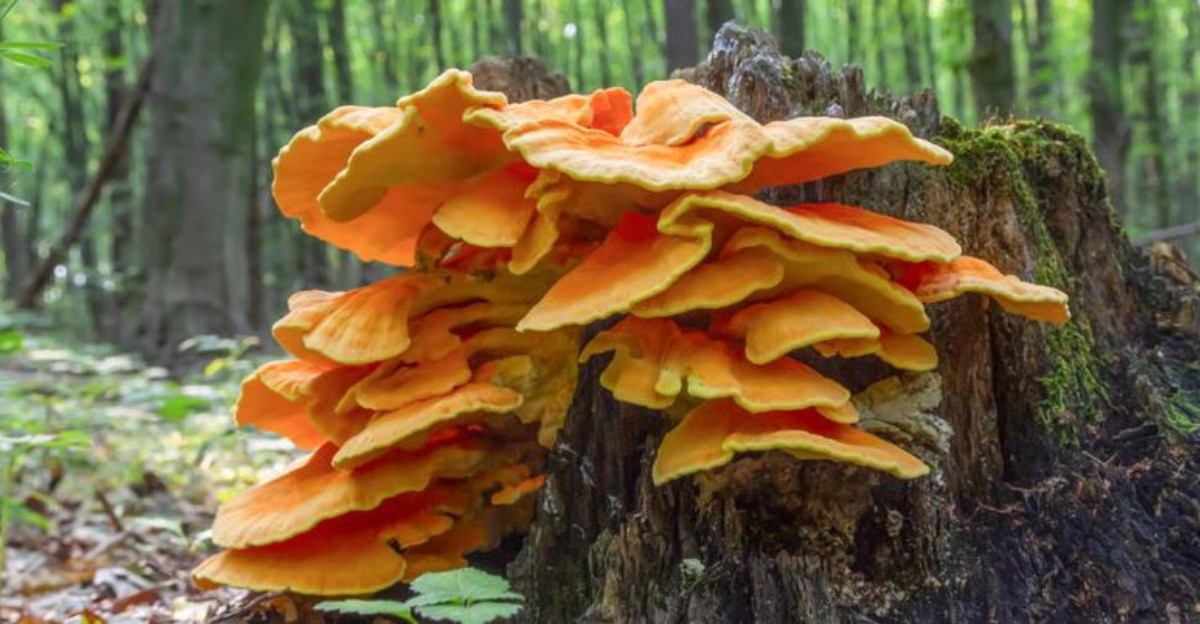
Walk through almost any Missouri woodlot in September and a burst of color can stop you mid-step. Something bright sits low on a rough, gray trunk, glowing like a freshly painted highway cone.
Hikers stop, pull out their phones, and argue in whispers about what they are actually looking at. Kids usually decide that somebody sneaked into the woods and spray-painted every tree overnight.
Up close, the stuff feels soft and rubbery, stacked in ruffled shelves like melted orange crayons. Warm rain from those late summer storms seems to wake the whole display up almost overnight.
Some folks grab a pocketknife and a basket, while others back away and snap careful photos. Both reactions make plenty of sense, though only one of them ends with butter and a hot skillet.
The Sulphur Shelf Fungus Behind That Blaze Of Color
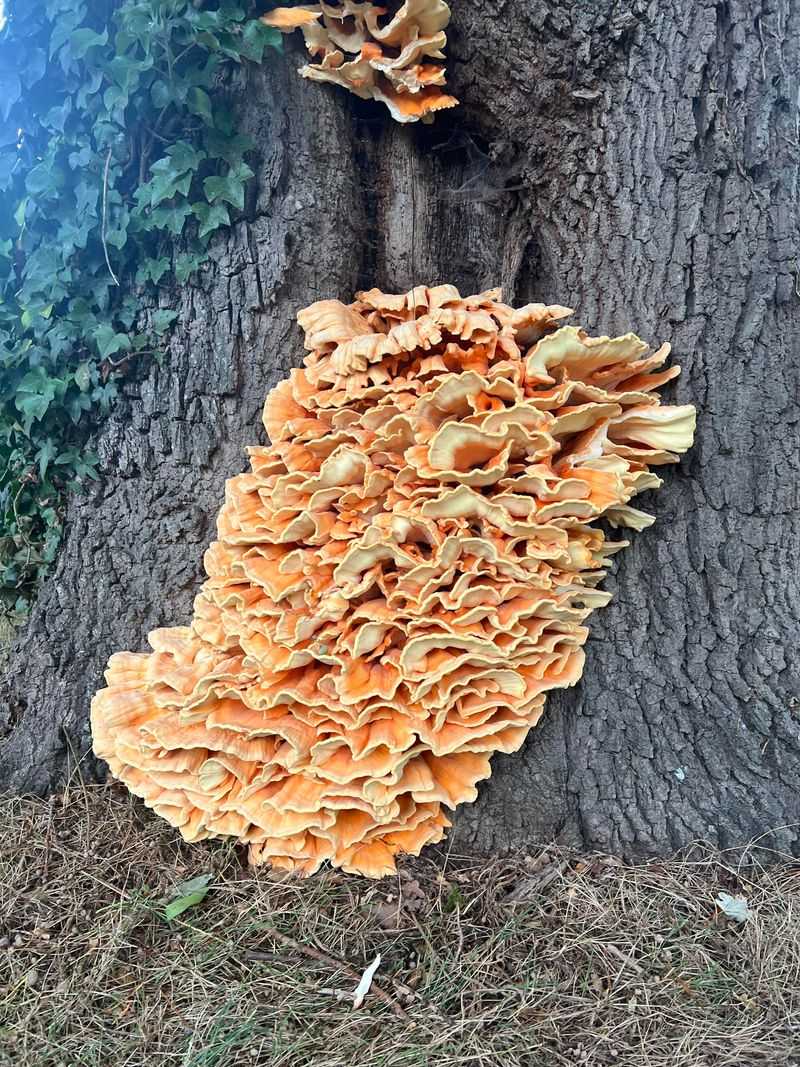
Foragers across the Ozarks recognize the shape instantly, and most of them still grin like kids. The fungus is Laetiporus sulphureus, known to nearly everyone as chicken of the woods.
Shelves grow in overlapping fans, glowing orange on top with a sulphur-yellow underside that almost hums. Younger edges feel soft, damp, and slightly rubbery, a bit like a wrung-out sponge.
Pores cover the underside instead of gills, so you see thousands of tiny holes rather than blades. That pore surface stays one of the fastest and most reliable clues in the field.
A single cluster can weigh several pounds and stretch nearly two feet across the side of a trunk. Missouri finds turn up on white oak, post oak, and weathered stumps in old pasture edges.
The common name points at texture, since cooked pieces pull apart dense and stringy like poultry breast. Nobody agrees if it truly tastes like chicken or simply chews in the same friendly way.
A close cousin, Laetiporus cincinnatus, fruits in rosettes near the tree base and shows a creamy white underside. Missouri woods hold both species, and both wear that same unmistakable sunset color.
Missouri’s humid river hollows make ideal habitat, especially where big oaks have stood for many decades. Old trees simply offer more wood for the fungus to work with.
Finding one feels a little like discovering a pumpkin bolted sideways onto a living tree. Once the shape lodges in your memory, September walks change forever.
September Weather And The Fruiting Window
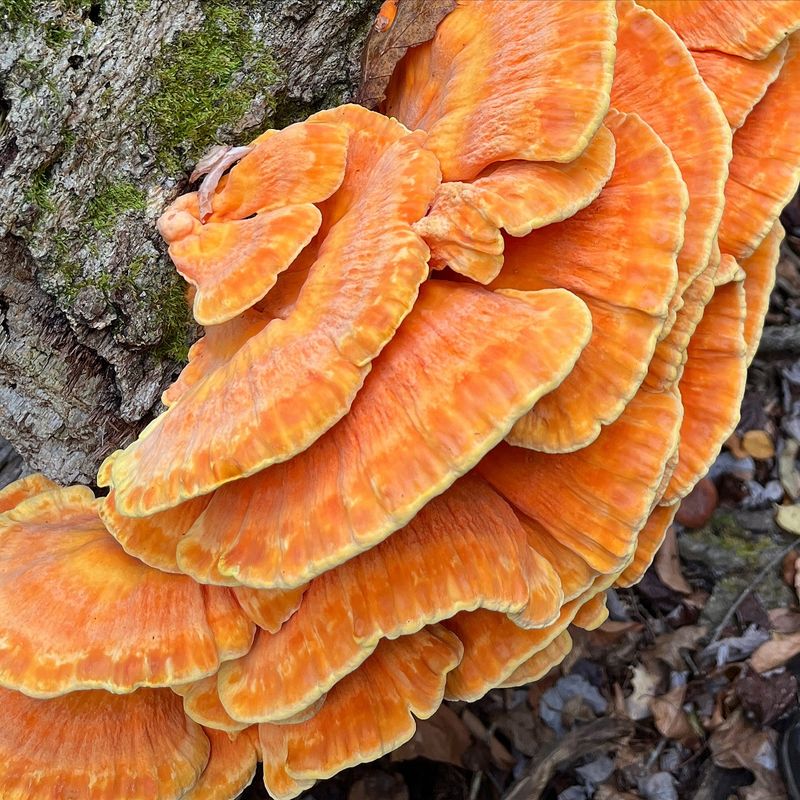
Timing rules everything with this fungus, and early fall across Missouri lands right in the sweet spot. Warm afternoons, cool nights, and one good soaking rain set the whole show in motion.
Most flushes appear after two or three inches of rain, generally within five to ten days. Temperatures in the sixties and seventies seem to push growth the fastest.
Spring flushes happen too, often in May and June after heavy thunderstorms roll through the state. Fall crops tend to be larger and easier to spot against fading green leaves.
Shelves can double in size overnight, then turn pale and brittle within a week or so. Checking a known tree every few days beats waiting for the weekend.
Your Missouri Garden Changes Every Week. Your Plan Should Too.
Gardening in Missouri changes quickly throughout the season. Every Friday you’ll receive a simple weekly plan showing exactly what to plant, prune, fertilize, harvest, and protect so you never miss the right timing.
Older brackets turn woody near the trunk while the outer inch stays tender and easy to bend. Harvest that soft outer margin and leave the leathery core right where it sits.
Missouri’s September humidity also invites beetles and tiny fly larvae into older shelves surprisingly fast. A bracket that looks flawless from ten feet away can hide unwanted guests inside.
Mark productive trunks on a map or phone, because the same tree fruits year after year. Fungus threads stay alive in the wood long after the shelves disappear.
Patience pays here, though September in Missouri rarely asks for very much of it. The woods usually deliver something bright within a few days of a decent storm.
Brown Rot At Work Inside The Heartwood
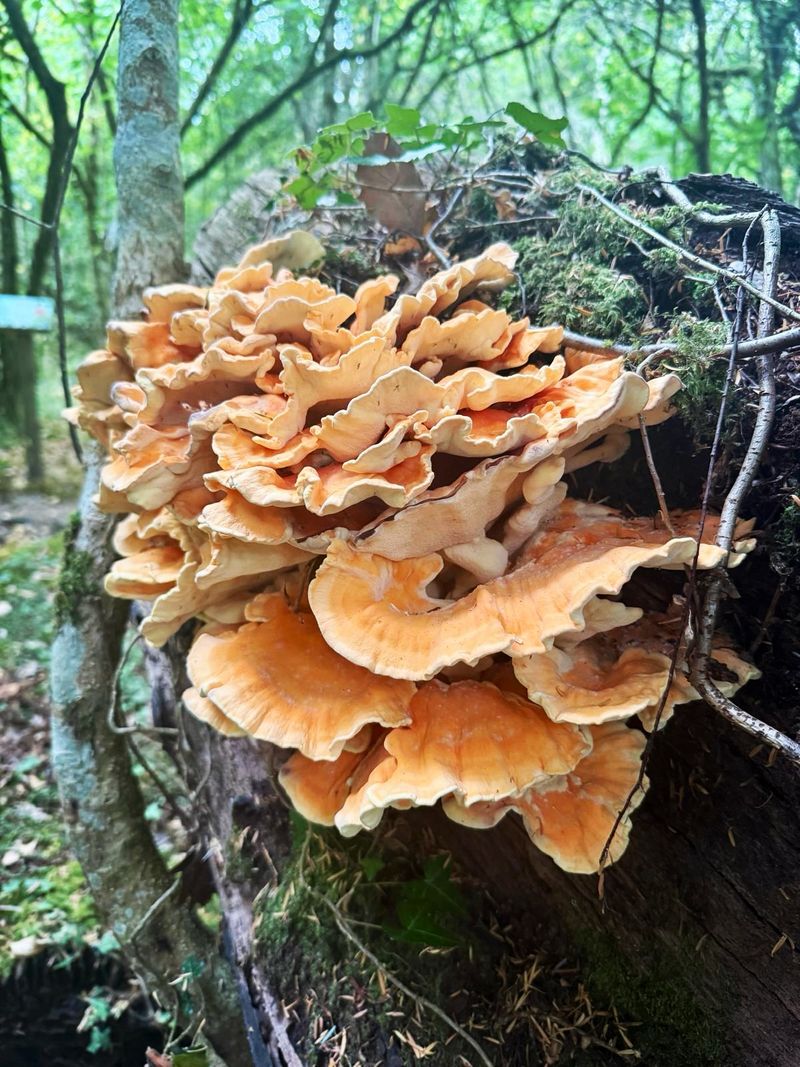
The shelf outside is only the visible fruit of something far larger hidden inside the trunk. Threads called mycelium have been quietly feeding on the oak’s inner wood for years.
Laetiporus causes brown cubical rot, breaking down cellulose and leaving crumbly brown blocks behind in the core. Squeeze a handful of that rotted wood and it crumbles apart like burnt toast.
Heartwood at the center of the trunk takes the damage first, which hides the problem well. Outer sapwood keeps moving water, so the canopy can look healthy for seasons.
Spores slip in through old pruning wounds, storm breaks, lightning scars, and roots injured by mowers. Mature oaks carrying past injuries face the highest risk of all.
By the time orange shelves appear, the fungus has usually worked inside for three to ten years. Fruiting marks a late chapter in the story, not the opening one.
Wood strength drops sharply inside rotted zones, sometimes losing most of its original load-bearing ability. That matters enormously for a trunk holding heavy horizontal limbs above a driveway.
Missouri storms in spring and fall test those weakened trunks with heavy wind and ice loads. A hollow oak can stand for decades, then fail during one bad night in March.
Understanding the rot changes the way you look at that cheerful orange bracket forever. It works as both a free snack and a serious warning label.
Look-Alikes That Fool New Foragers
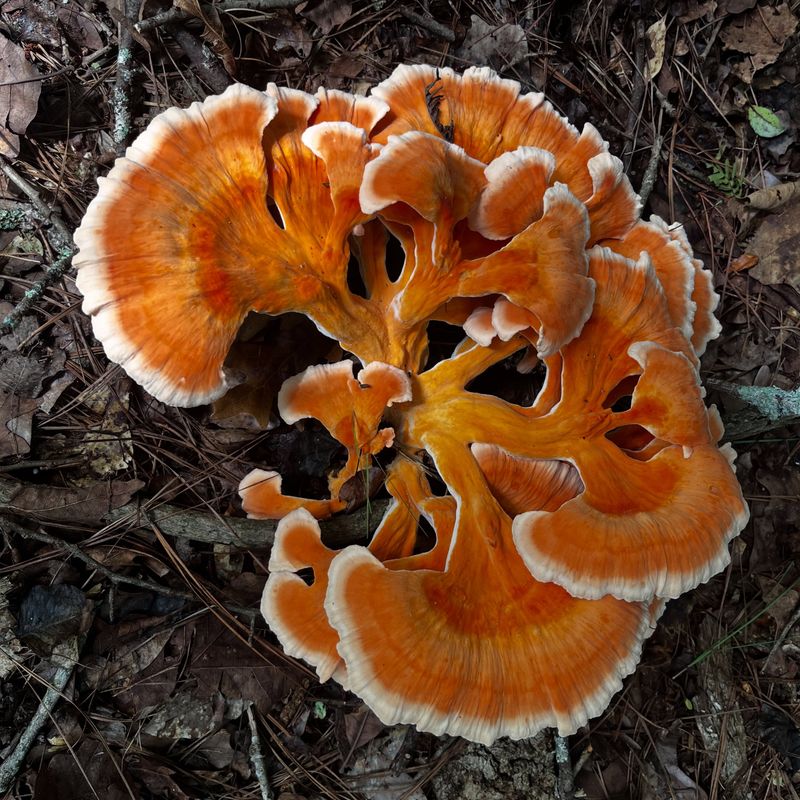
Bright orange in the woods does not automatically mean dinner, and one impostor causes genuine trouble. The jack-o-lantern mushroom sends plenty of hopeful people to Missouri emergency rooms every single fall.
Jack-o-lanterns rise in tight clumps from soil or buried roots, not as flat shelves on bark. They carry true gills, thin sharp blades that run down onto a distinct central stem.
Chicken of the woods offers no real stem and no gills anywhere on its underside. Fan-shaped shelves attach straight onto living bark, stacked and overlapping like weathered roof tiles.
Velvet-top fungus, sometimes called dyer’s polypore, shows brownish orange tones near conifer roots and stumps. Its texture feels fuzzy and firm instead of soft, moist, and slightly flexible under pressure.
Host tree matters enormously here, since oak-grown specimens remain the traditional Missouri favorite for the table. Shelves growing from conifers, eucalyptus, or black locust upset some stomachs quite badly.
Even perfectly genuine chicken of the woods disagrees with roughly one person out of ten. Cook a small portion thoroughly the first time, then wait a full day.
Photograph the underside, the host tree, and the growth habit before you touch anything unfamiliar. Missouri mushroom clubs and county extension offices confirm identifications for free and enjoy doing it.
Skipping that homework rarely ends well, and the woods hand out no refunds. When genuinely unsure, take the picture and leave the mushroom right where it sits.
A Safe Harvest And The Kitchen Test
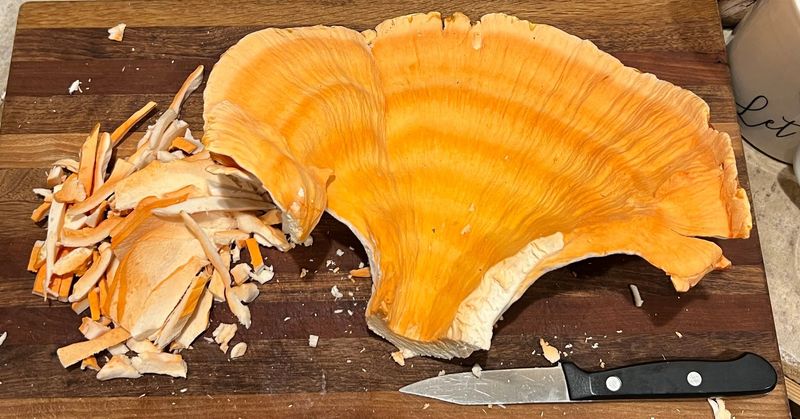
Pick young and pick clean, and this mushroom rewards you generously back at the stove. Older shelves turn chalky and sour, roughly as pleasant as chewing on damp cardboard.
Use a sharp knife and slice only the tender outer edge, about the outermost two inches. Leave the tough base attached so the remaining fungus keeps its shape.
Press a thumb gently into the flesh, which should feel damp, springy, and slightly cool. Dry, crumbly, or faded specimens belong right back on the tree where you found them.
Cut the haul into strips or chunks, then cook everything thoroughly for at least fifteen minutes. Raw or undercooked bites cause stomach trouble even with flawless specimens.
Butter, garlic, and a hot cast iron skillet handle most of the work honestly. Missouri cooks shred it into tacos, pot pie, gumbo, and Sunday sandwiches.
Freezing works beautifully after a quick saute, and packed portions keep well for many months. Dehydrating leaves the texture strangely leathery, so most experienced folks skip that route.
Avoid shelves growing beside busy roadways, old fence lines, or piles of treated lumber. Fungi absorb whatever the host wood absorbed across its long lifetime.
Missouri permits personal foraging on many conservation areas, though rules differ from property to property. One quick check online saves an awkward roadside conversation with a conservation agent.
Long-Term Care For A Compromised Shade Tree
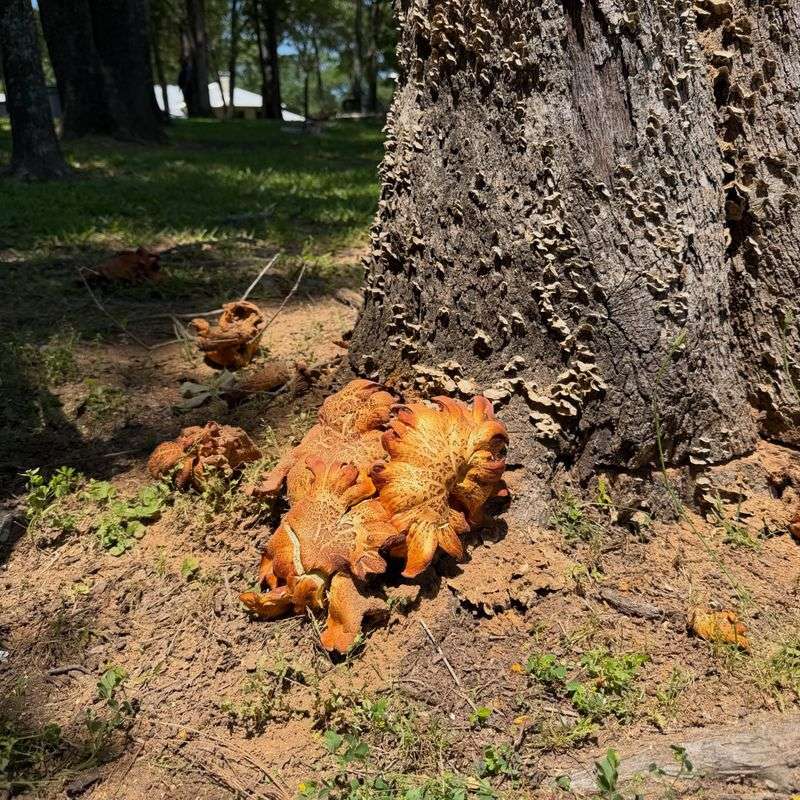
A yard oak wearing bright shelves deserves a professional look rather than a chainsaw panic. Certified arborists read hidden decay far better than any hopeful homeowner guess.
Fungicides accomplish nothing here, since the fungus already lives deep inside wood it has colonized. Scraping the shelves off the bark changes nothing happening deep inside the trunk.
Arborists use mallets, drills, and resistance tools to measure how much sound wood still remains. A trunk holding roughly one-third of its thickness solid often stands safely for years.
Reducing heavy end weight on long limbs lowers stress during Missouri ice and wind storms. Cabling and careful pruning sometimes buy extra years for a beloved shade tree.
Prevention begins with protecting bark from mowers, string trimmers, and careless construction equipment. Wounds serve as the doorway, and intact bark keeps that doorway firmly shut.
Mulch rings, deep watering during drought, and undisturbed roots keep oaks resilient for many decades. Stressed trees surrender to decay far faster than vigorous, well-tended ones.
Leave woodland specimens alone, because hollow trunks feed woodpeckers, owls, bats, and countless insects. Missouri forests need hollow trees far more than they need tidy ones.
Treat that orange bracket as free information instead of bad news about your tree. The oak has been telling its story, and somebody finally bothered to look up.