The Coffee Ground Habit Arizona Gardeners Swear By and What Desert Soil Experts Say

A cup of coffee takes minutes to drink, yet the leftover grounds raise big garden questions. I have to admit, I used to toss mine on the roses without a second thought.
Lots of folks hope those damp brown crumbs can feed plants, fix soil, or even chase off bugs. Here in Arizona, the real answer is more careful than the hype, and it might change what you do with your next filter.
Coffee Grounds Belong in the Compost Conversation
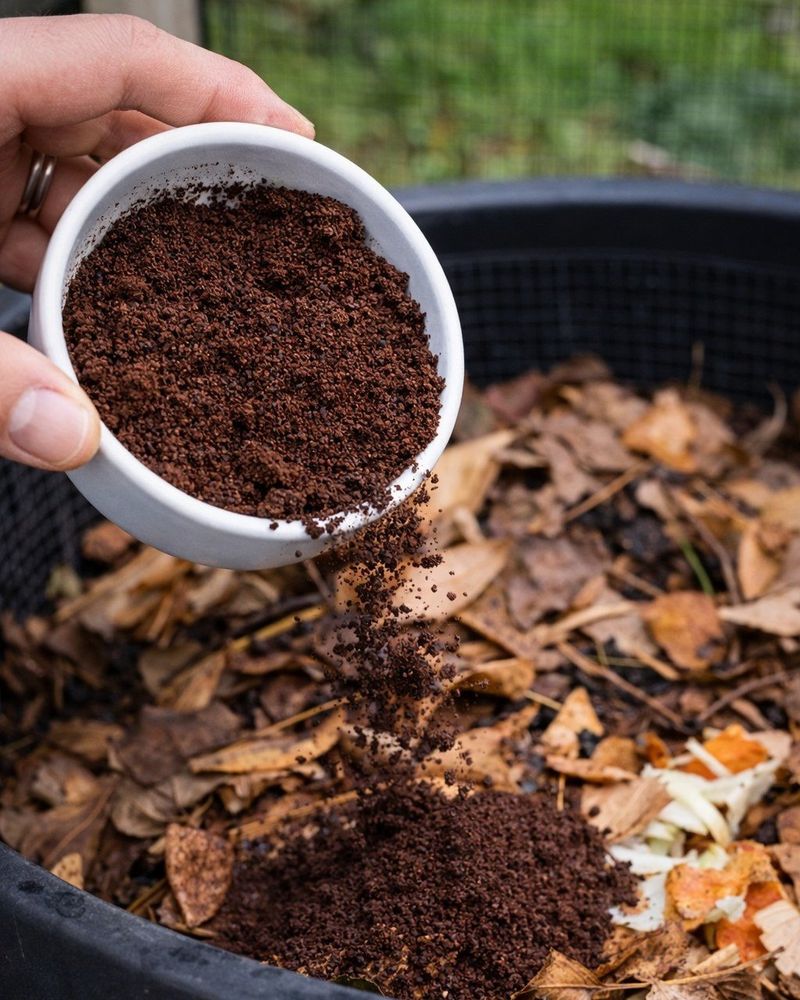
Let’s start with a plain answer: spent coffee grounds can be a fine compost ingredient. They are not a proven cure for desert soil.
Nothing in the sources I reviewed shows that Arizona gardeners widely swear by them, so the title’s big claim is more story than fact.
The better question is whether grounds belong in a desert garden at all. Used carefully, they can join a compost pile.
Arizona Extension guidance, found in a University of Arizona compost bulletin, advises against having more than 20% coffee grounds in a compost pile. It also notes that grounds have properties that may slow decomposition.
That points to the key split in this article. Composting grounds with other materials is the cautious use.
Scattering them straight onto beds is a different thing, and the research on that route raises red flags. Here, grounds mean spent grounds, the leftovers from brewing, and not unused grounds from the bag.
Think of grounds as one small ingredient in a bigger recipe. They are not a miracle fertilizer, and they are not a villain either.
How they act depends on the crop, the amount, and whether they were composted first.
Grounds Are Not a Complete Fertilizer
Coffee grounds do contain nitrogen, and that is why people call them plant food. Still, a plant needs more than one nutrient to thrive.
Grounds on their own are not a complete meal for your tomatoes.
Extension sources describe the nitrogen in grounds as limited, or not immediately available to plants. South Dakota State University Extension treats them as a compost ingredient rather than a stand-alone fertilizer.
So a sprinkle on the soil will not give a quick green-up.
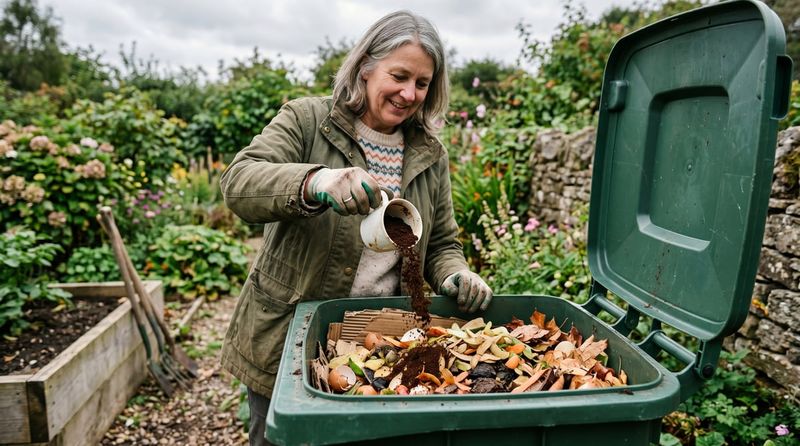
A handy rule is to pair grounds with other organic materials. Dry leaves, shredded paper, and vegetable scraps all balance the pile.
Mixed together, the pile breaks down into something more useful than grounds alone.
If your plants look pale, do not reach for the coffee pot first. A soil test and a proper fertilizer plan will tell you more.
Grounds can help the compost, but they should not carry the whole job.
Coffee Grounds Do Not Fix Arizona Soil pH
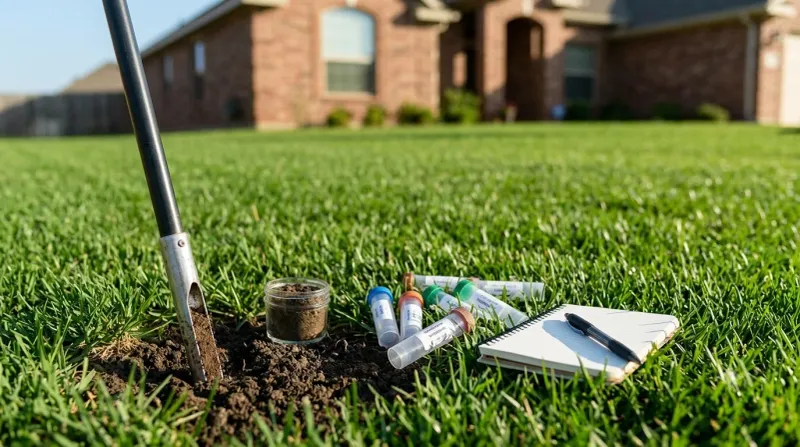
Many gardeners hope grounds will turn alkaline soil more acidic. The answer from Arizona Extension is no. The same compost bulletin says grounds do not appreciably acidify soil.
Arizona soil also varies from place to place. According to Extension advice on choosing plants, most state soils are alkaline, though neutral and acidic soils occur.
Many alkaline soils are calcareous, which makes them hard to acidify.
So guessing at your own yard is risky. A soil test shows what you actually have.
Local Extension guidance can then point you toward amendments that suit your garden.
One practical clue: if a plant struggles with chlorosis, yellow leaves with green veins, test before you treat. Coffee grounds will not be the quick fix you hoped for.
Directly Applied Spent Grounds Can Suppress Growth
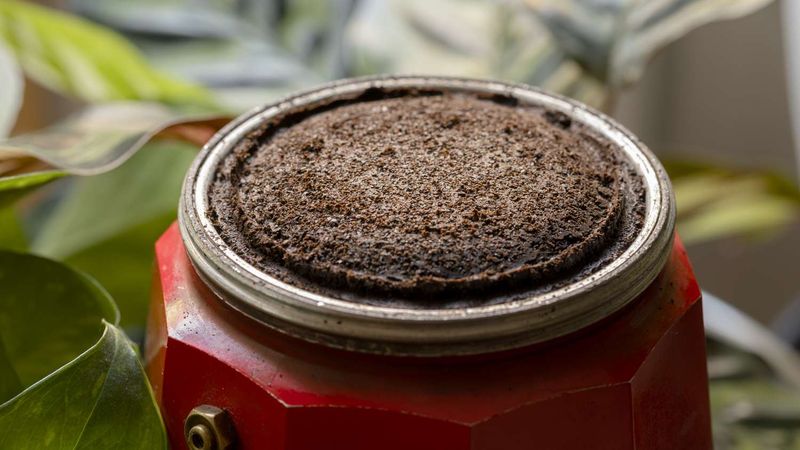
Researchers have tested what happens when you put spent grounds straight on soil. In this article, direct application means un-composted spent grounds, not unused grounds.
A peer-reviewed study found reduced growth across five garden crops, three soil types, and several application rates.
The scientists said the slowdown was not explained simply by pH or nitrogen availability. That makes it a real risk under the tested conditions.
It does not prove that every small sprinkle harms every plant.
Other work shows mixed results. A 2025 review reports some benefits at low rates and growth problems at higher rates.
Outcomes vary with crop, preparation, amount, and composting.
My takeaway is to skip thick or repeated layers, especially near seedlings. Fine grounds can also pack down and crust over.
Composting first is the safer path.
Use No More Than 20% of the Compost Pile
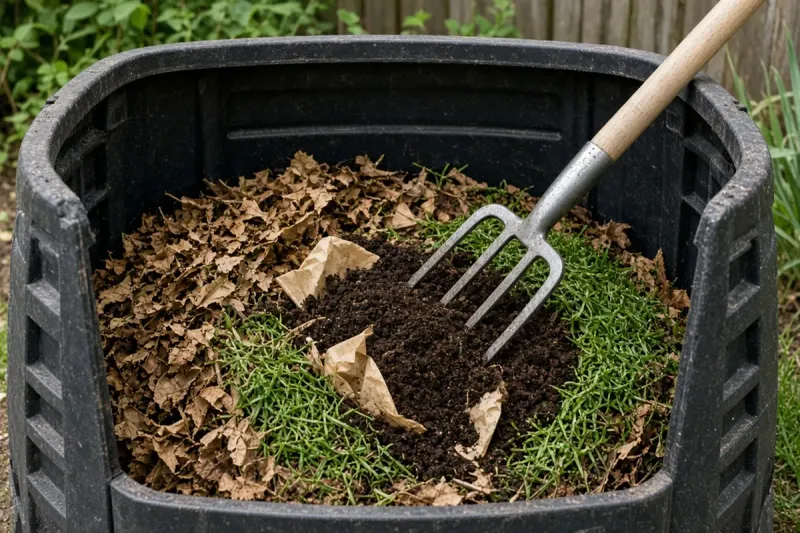
Here is the number to remember: no more than 20%. Arizona Extension advises against having more than that share of coffee grounds in a compost pile.
Put another way, about one-fifth at most.
The Arizona bulletin notes that grounds may inhibit decomposition. Mixing them with leaves, straw, and other scraps keeps the pile working.
A bucket of grounds should be balanced by several buckets of other material.
This limit applies to compost, not to garden beds. For beds, South Dakota State University Extension suggests composting grounds with other organic matter for several months before garden use.
A simple habit helps. Each time you add grounds, add a larger scoop of dry browns beside them.
Your pile will stay more balanced.
Keep an Arizona Compost Pile Moist and Aerated
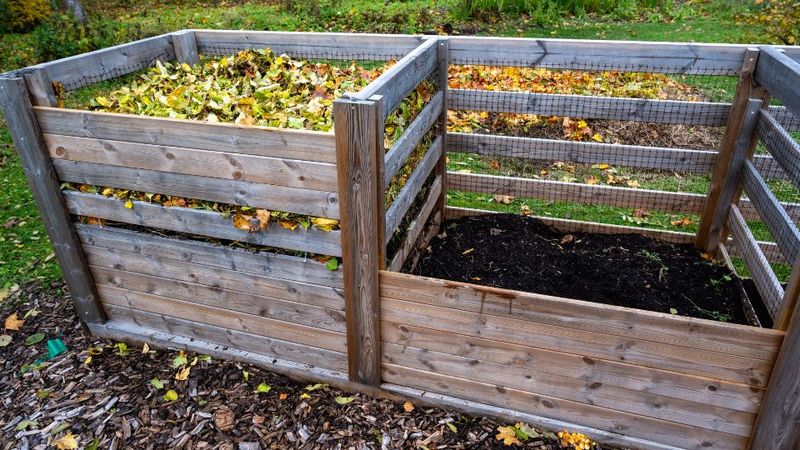
Desert heat can turn a compost pile into dry crumbs fast. Arizona Extension says compost tends to dry quickly here.
It also notes that organic matter decomposes more rapidly in the arid state.
The Arizona compost bulletin says the pile needs moisture and air. Aim for a wrung-out sponge feel.
Squeeze a handful, and it should be damp without dripping.
Turn the pile now and then to let air in. If it feels dry, add water slowly as you mix.
If it smells sour or looks soggy, add dry leaves and fluff it up.
Every pile and yard behaves a little differently, so check yours often. In October, as the heat eases, you may find it easier to hold moisture.
Results will still vary.
Do Not Count on Grounds to Repel Pests
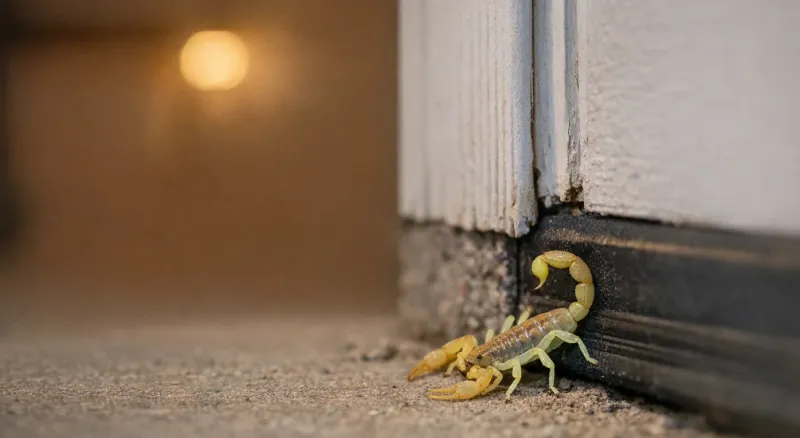
You may hear that grounds chase off scorpions, mosquitoes, or ticks. It is a popular tip, but the evidence is thin.
Ask Extension describes pest control with grounds as a home remedy without evidence of success.
So please do not count on them to make your yard safer. Other steps will do more for pest worries.
Local Extension offices can suggest better options.
Here is a simple rule to finish. Compost modest amounts of grounds with other materials and care for the pile.
Do not rely on grounds to feed plants, change soil pH, or control pests.
The best use for your leftover brew is a small role in a well-run pile. That is a quiet job, but it is a good one.