The Orange Beetles Swarming Maryland Siding Every Fall Were Released Here On Purpose
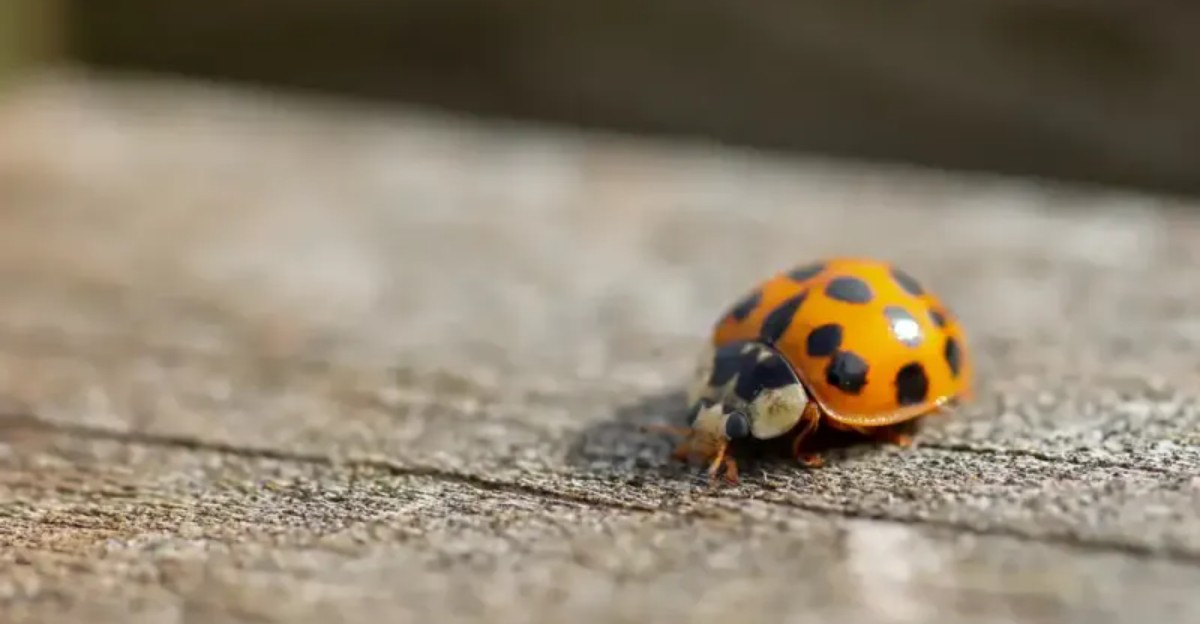
Federal scientists once raised orange beetles in labs and set them loose in American fields on purpose. Some of those releases happened right here in Maryland. Decades later, beetles of this same species crawl across my siding every October like they pay the mortgage.
Not going to lie, I used to call them ladybugs and shrug. Then a few dozen found their way into my bathroom window, and I noticed a faint smell when I swept them up. That was my first clue these guests were different.
You have probably seen them too. They pile onto the sunny side of the house on warm fall afternoons, then vanish into cracks you never knew existed.
So who invited them, and why does your house look so appealing to a bug from the other side of the world? The answer starts in Asian orchards and ends at your window trim.
Those Orange Beetles On Your Siding Have A Government Paper Trail
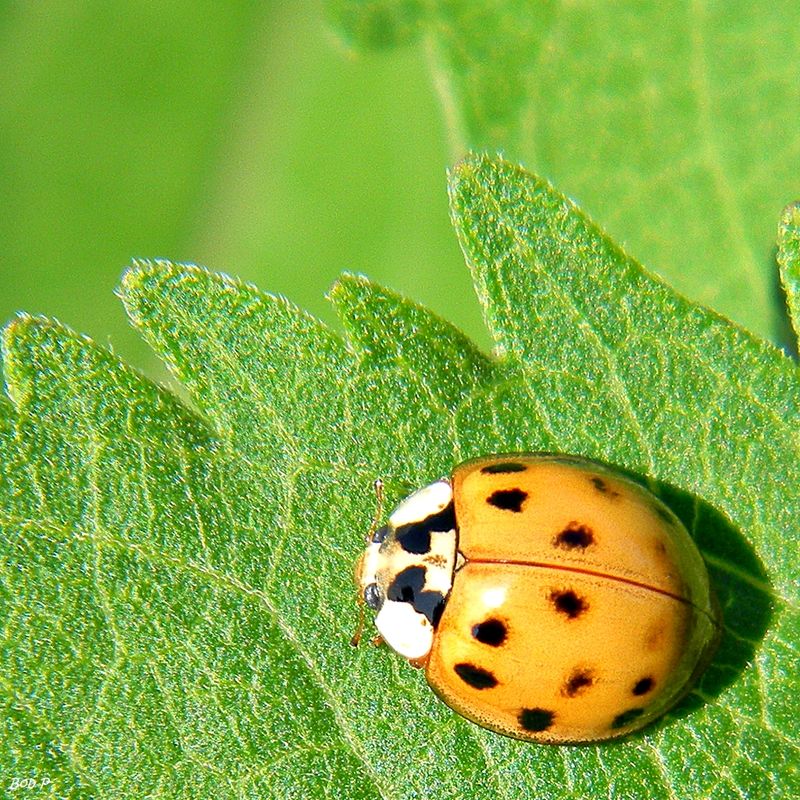
Believe it or not, the bugs on your porch light have roots in official pest control programs. The USDA and state agencies released multicolored Asian lady beetles, known to scientists as Harmonia axyridis, in the United States as early as 1916.
The goal was simple. Farmers needed help against aphids and scale insects, and a hungry predator seemed smarter than heavier spraying. More releases followed through the 1960s, 70s, and early 80s in several states.
Maryland was part of that effort. Records show releases here and in nearby states between about 1978 and 1981, with pecan orchards and other crops among the targets. A single adult beetle can eat dozens of aphids a day, so the plan made sense on paper.
For years, though, nobody saw much of a result. The released beetles did not seem to settle in, and researchers moved on to other projects.
Then something changed in the late 1980s. A wild population popped up and started spreading fast across the country.
So yes, the title holds up. People did bring these beetles here deliberately. The twist is that the swarms you see today may not come only from those planned releases, which leads to a bigger mystery.
A Louisiana Lady Beetle Sighting Changed The Whole Story

Scientists spotted the first established wild population of these beetles near New Orleans in 1988. From there, they moved north and east with surprising speed.
Here is the puzzle researchers still discuss. Many entomologists suspect the beetles that took hold may have hitched a ride on cargo ships arriving from Asia. Others think some planned releases simply survived quietly before booming.
Genetic studies have not settled whether the eastern U.S. population came from the planned releases, an accidental arrival, or both. In other words, the truth is a little messier than a single headline.
I find that oddly comforting. Our grandparents’ scientists may not be the only reason these beetles thrive, since an accidental arrival may have played a role too.
By the early 1990s, sightings stretched across the Southeast. Mid-Atlantic homeowners began noticing fall clusters on houses by the mid-1990s, and the beetle has been a seasonal regular since.
Today it lives in most of the lower 48 states, plus parts of Canada, Europe, South America, and Africa. Few insects have spread so widely in such a short time.
So when you swat one off your screen, you are looking at a world traveler with a complicated passport.
Sun-Warmed Walls Look Like Cliffs To These Beetles
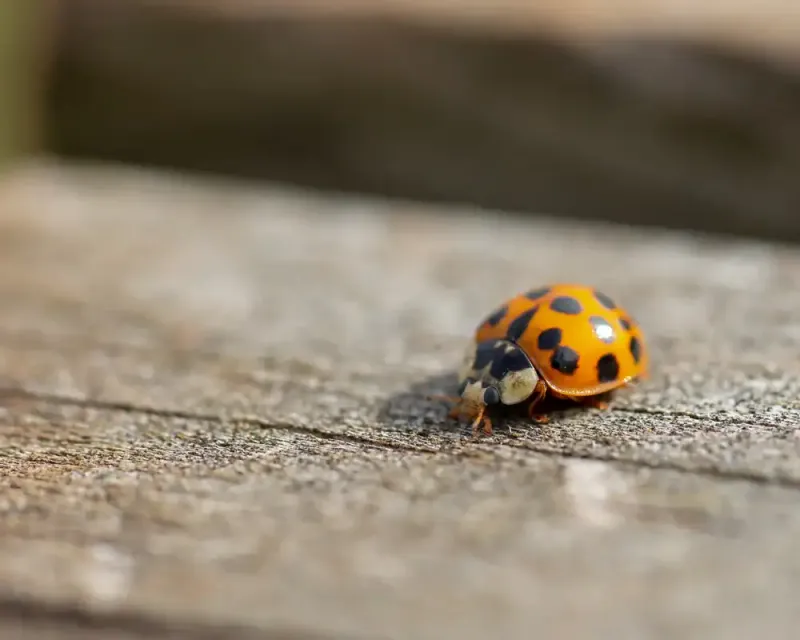
Back in their home range in China, Korea, and Japan, these beetles spend winter tucked into rocky cliffs and crevices. Your house, especially a pale wall facing south or west, is basically a cliff with gutters.
Every fall, I watch the pattern play out. After the first cool snap, a warm sunny afternoon in October brings them in by the hundreds.
Temperature drives the timing. When days drop into the 50s and then bounce back near 70, the beetles take flight to find a winter shelter.
Light colors and contrast seem to attract them. Extension specialists note that houses near woods, fields, or soybean and orchard land often see bigger crowds.
They also leave a chemical trail behind. Scientists believe the beetles use scent cues, so a spot used one year can draw new visitors the next.
That explains why some neighbors get hammered while others barely notice. Location, color, and history all play a role.
Once they land, the beetles crawl into gaps behind siding, window trim, and soffits. Some stop in the wall, but plenty keep going until they reach your warm living room.
Spot The Tiny M Behind The Head Before You Blame A Ladybug

Grab a magnifying glass, or just your phone camera, and zoom in. Look at the white area right behind the beetle’s head.
Most multicolored Asian lady beetles carry a black mark shaped like an M or a W there, depending on which way you hold it. Many native lady beetles show a different pattern.
Color is a weak clue on its own. These beetles range from pale tan to orange to deep red, and some have up to 19 spots while others have none.
Size and shape help too. They are about a quarter inch long and a bit more oval than many native species.
Behavior gives them away fast. Native lady beetles rarely invade homes in big numbers, so a crowd on your siding is a strong hint.
Don’t laugh, but I keep a photo on my phone just to compare. It helps when kids bring me a bug and ask if it is the good kind.
For extra confidence, the University of Maryland Extension and other extension offices post clear identification photos online. A quick check saves you from guessing wrong about which beetle you have.
Garden Aphids Have A Serious Enemy In These Orange Lady Beetles
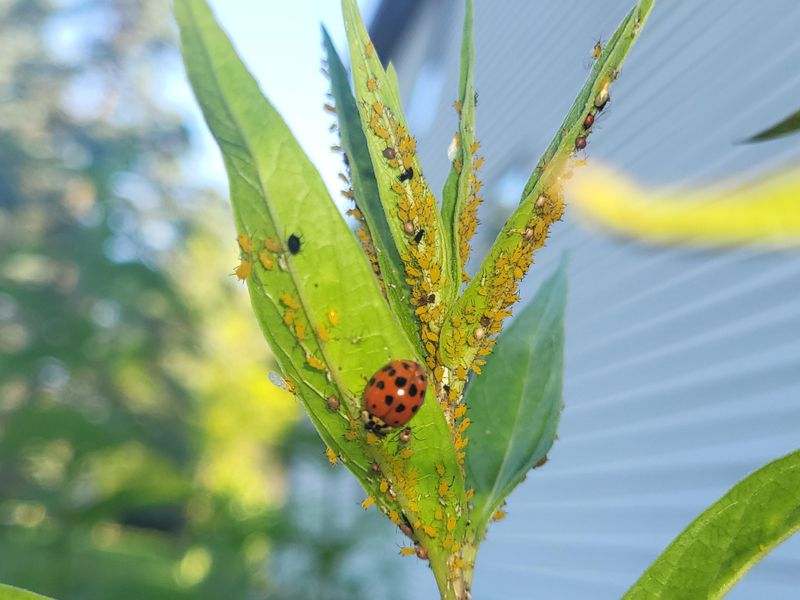
Credit where it is due. Out in the garden, these beetles still do the job they were hired for.
Both adults and the spiky, alligator-shaped larvae devour aphids. Research shows a single larva can eat hundreds of aphids before reaching adulthood.
Farmers have seen the payoff. Pecan growers, apple orchards, and soybean fields have all benefited from reduced aphid pressure, sometimes cutting the need for insecticide sprays.
In a home garden, you may notice fewer aphids on roses, milkweed, or young vegetables. I’m a sucker for watching a larva work its way down a stem like a tiny vacuum cleaner.
Learn to recognize the larva so you do not mistake it for a pest. It is black with orange markings and looks a little fierce.
The yellow egg clusters on leaf undersides belong to lady beetles too. Leave them alone if you want natural pest help.
So the summer version of this beetle is a helper. The fall version, crawling through your window frame, is the one that tests your patience.
Keeping both ideas in mind makes it easier to manage them without overreacting.
That Yellow Stain And Musty Smell Come From Reflex Bleeding
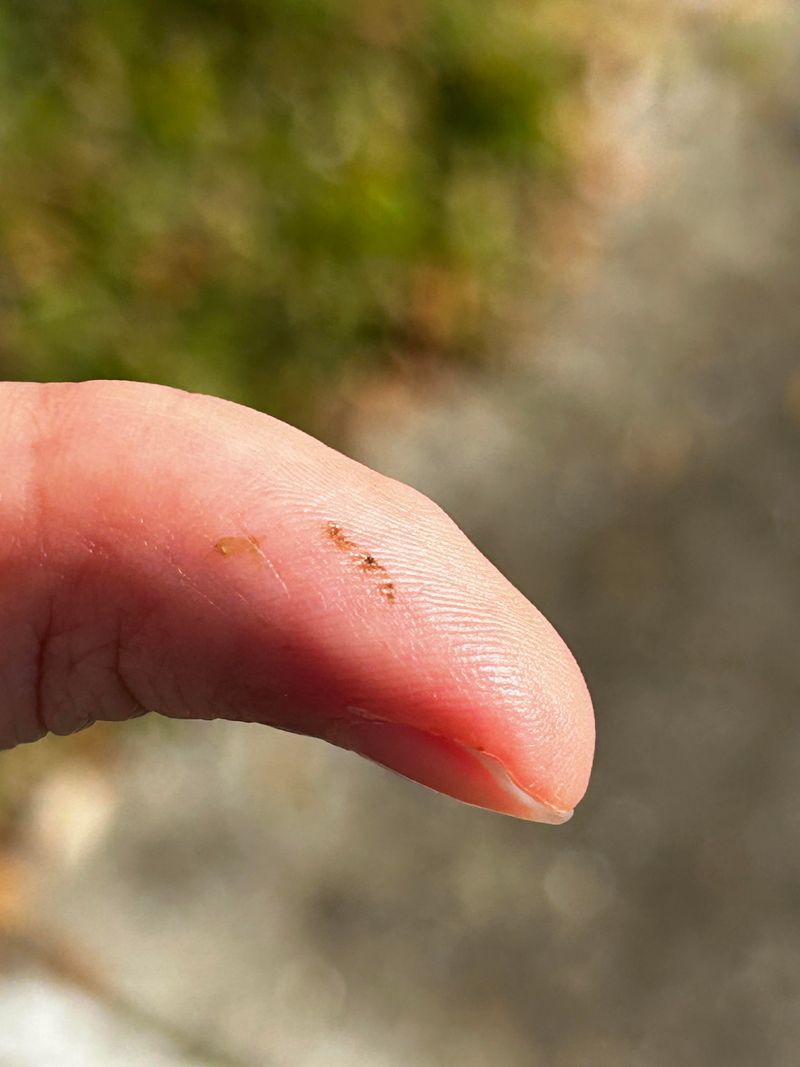
Fair warning, these beetles have a defense trick that surprises people. When you squeeze, swat, or startle one, it oozes a yellowish fluid from its leg joints.
Scientists call this reflex bleeding. The fluid smells musty and bitter, and it can stain light walls, curtains, and carpet.
Some people also notice a mild pinch. The beetles occasionally bite skin, though it feels more like a scratch and rarely causes harm.
A small number of people react to the beetles with allergy symptoms, including itchy eyes or sneezing. If clusters seem to bother your breathing, talk with a doctor.
Pet owners should know one odd fact. Veterinarians have reported rare cases of beetles stuck to the roof of a dog’s mouth, so check if your dog suddenly drools or paws at its face.
Winemakers have their own headache. Beetles crushed with grapes can taint the flavor, which made them a real concern for vineyards.
Beyond that, they do not eat wood, fabric, or food in your home. They do not breed indoors either. They are mostly an annoyance that wants to wait out the cold.
Caulk Window Gaps And Screen Vents Before The October Beetle Rush
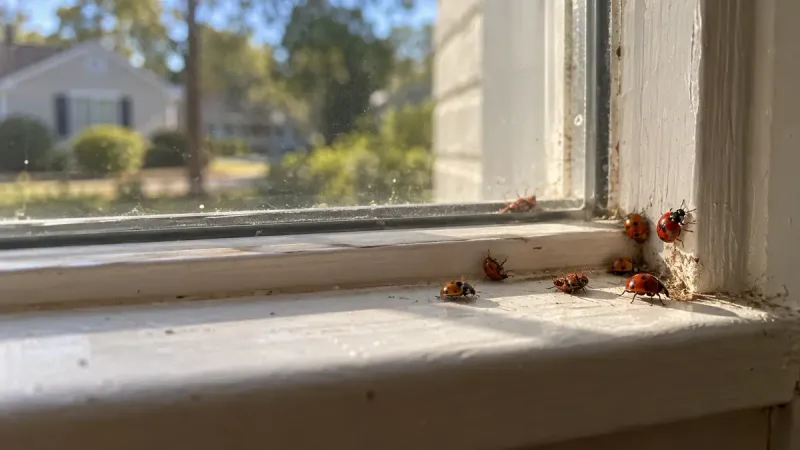
Trust me on this one, sealing beats chasing. Extension experts agree that keeping beetles out is far easier than removing them later.
Start in late August or September, before the big flights. Walk the sunny sides of your house and look for cracks around windows, doors, siding, and trim.
Use a good quality silicone or latex caulk on small gaps. Larger openings around pipes, cables, and dryer vents need expandable foam or fitted covers.
Check window screens for tears and replace worn weather stripping on doors. Install screening behind attic and soffit vents if it is missing.
Remember, these beetles squeeze through spaces about an eighth of an inch wide. Small fixes matter.
Some homeowners hire a pro to spray a barrier treatment on exterior walls in early fall. Results vary, and timing has to be precise, so ask about protecting nearby pollinators.
I’ll say this much, one afternoon with a caulk gun cut my indoor beetle count dramatically. You will likely see the same, plus lower heating bills as a bonus.
That is a pretty sweet trade for a few tubes of sealant.
A Vacuum With A Stocking Trick Handles Indoor Lady Beetles Best
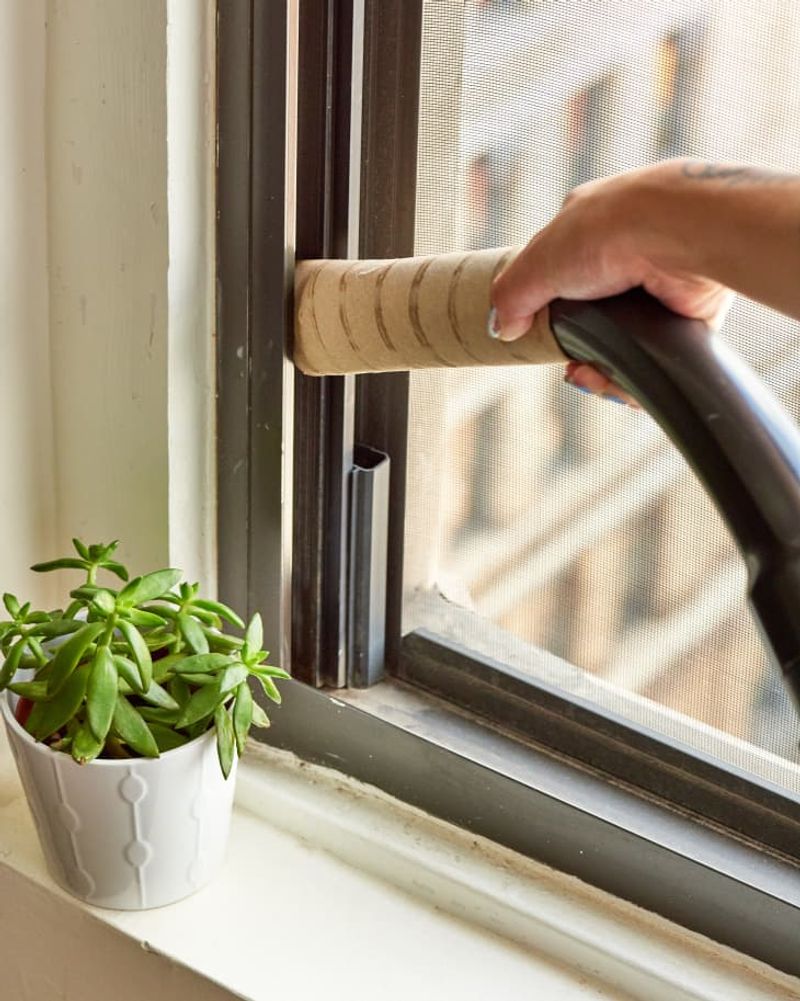
So a few slipped inside anyway. Skip the fly swatter and grab the vacuum.
Crushing them leads to stains and smell. Vacuuming lifts them cleanly instead.
Here is a clever extension trick. Slip a knee-high nylon stocking into the vacuum hose, secure it with a rubber band, and the beetles collect in the stocking.
Afterward, you can release them outdoors far from the house or seal the bag and toss it. Empty regular vacuum bags promptly so the smell does not linger.
Light traps made for these beetles can help in attics or dark rooms. Indoor bug sprays are rarely worth it, since dead-looking piles just attract carpet beetles later.
Patience helps too. In Maryland, many beetles go quiet in wall voids through winter, then wander out on warm days and again in early spring.
My biggest takeaway after years of this is simple. Respect the beetle outside, block it from your walls, and vacuum the stragglers.
These orange travelers arrived with a real job. A little planning each fall lets them keep doing it in the garden instead of on your curtains.