The Exact Week To Plant Garlic In Ohio (North vs. South)
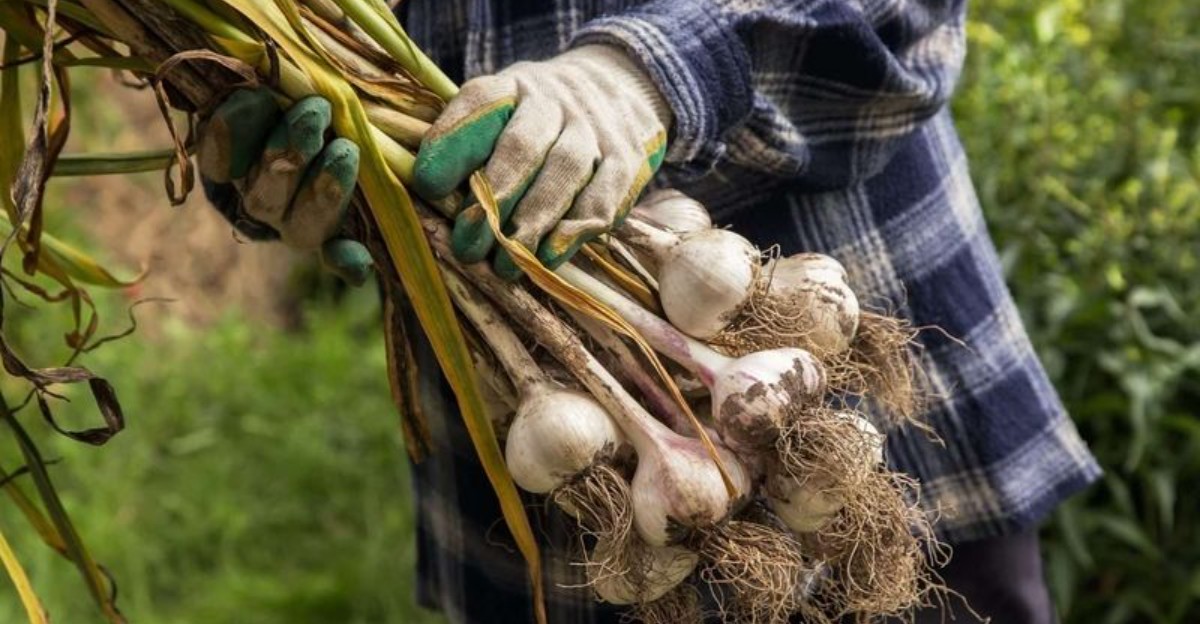
Two Ohio gardeners plant garlic on the same day, a few hours apart. One harvests fat, juicy bulbs next summer.
The other pulls up a bed of puny cloves.
The calendar did it. Garlic runs on a tight schedule, and a few hundred miles can change the answer by a surprising margin.
A gardener near Lake Erie works with a different clock than one near the Ohio River. Plant too soon and the shoots race ahead, only to meet a hard freeze.
Plant too late and the roots never get a proper start.
Most guides give you a vague range and wish you luck. That’s why so many beds end up disappointing.
The right week exists, and it depends on where you live.
Look at a map before you buy a single bulb. Your zip code holds the answer.
1. Fall Planting Grows Bigger Bulbs Than Spring Planting
Ask any longtime Ohio grower about spring garlic, and you might get a little sigh. Spring-planted cloves often turn into small bulbs or even single, undivided lumps called rounds.
The reason comes down to cold. Garlic needs a long stretch of chilly weather, called cold stratification, to split into those nice, chunky cloves.
Without enough winter chill, the plant gets confused and skips the dividing step.
Fall planting gives your cloves the full winter treatment. They sit in the cool ground for months, soaking up the cold they crave.
By the time spring arrives, they are ready to grow fast and form big, healthy heads.
Think of it like a long nap before a big race. Cloves planted in October or November get that rest, while spring cloves start the race tired.
The difference at harvest can be pretty dramatic.
There is also a timing bonus. Fall-planted garlic usually gets harvested in early to mid summer.
That frees up space in your beds for a late crop of beans or lettuce.
If you missed fall planting, spring garlic is still worth a try for green garlic or small bulbs. Just keep your hopes reasonable.
For the biggest bulbs, mark your calendar for autumn and plan ahead each year.
2. Aim For Leaves Peeking Up Before The First Hard Freeze
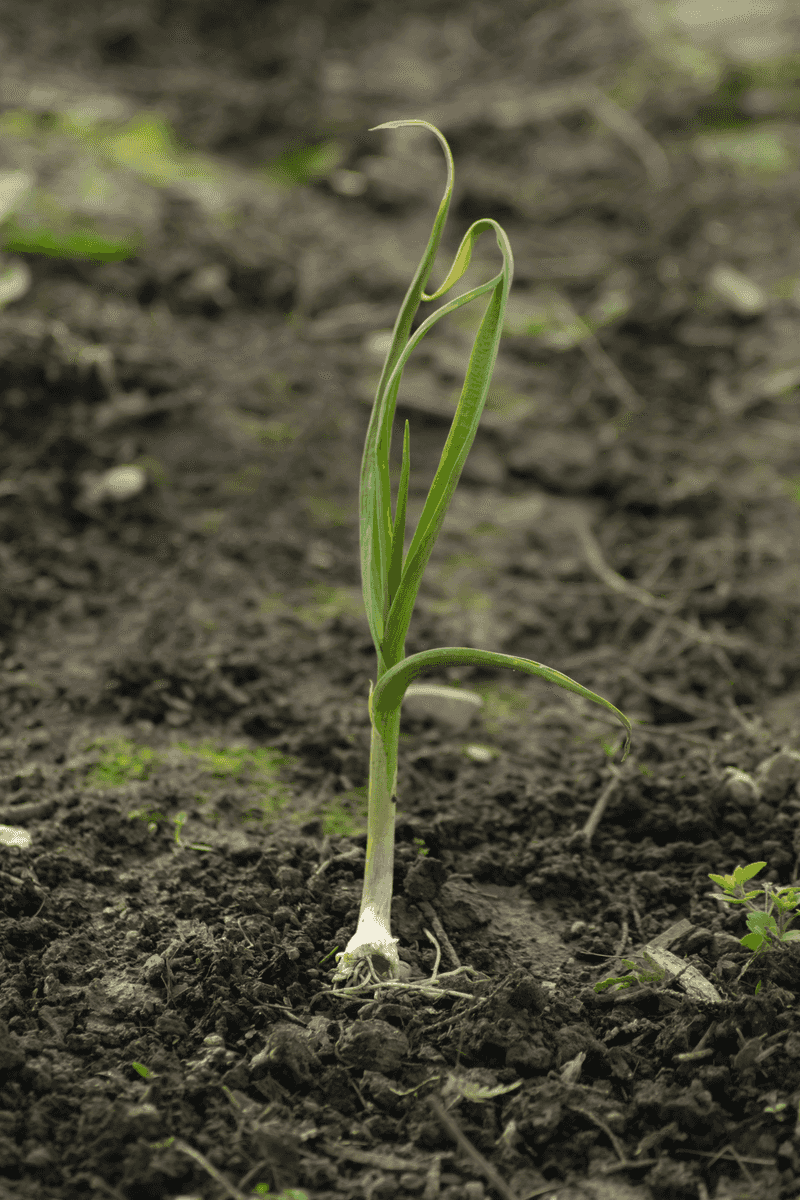
Here is a simple sign you nailed your timing. Tiny green tips poke up through the soil just before the ground freezes hard.
Underneath, a good root system should be forming. Roots anchor the clove and help it soak up water and nutrients through winter.
Most experts suggest planting about four to six weeks before your first hard freeze.
Soil temperature is another helpful clue. Aim for soil between 50 and 65 degrees Fahrenheit.
A cheap soil thermometer from a garden store makes checking easy.
Do not panic if those first leaves get a little brown or crispy in January. That is called winter burn, and garlic handles it well.
The plant simply sends up fresh leaves once spring warms things up.
Planting too early is the bigger worry. If cloves go in during warm September weather, they may push out lots of tall leaves.
That soft, leafy growth is more likely to get damaged by harsh winter winds and ice.
Planting too late has its own problem, since roots need time to settle in. If the ground freezes a few days after planting, your cloves may struggle.
The sweet spot is a short sprout and strong roots heading into winter.
3. Most Ohio Gardeners Plant Between Early October And Early November
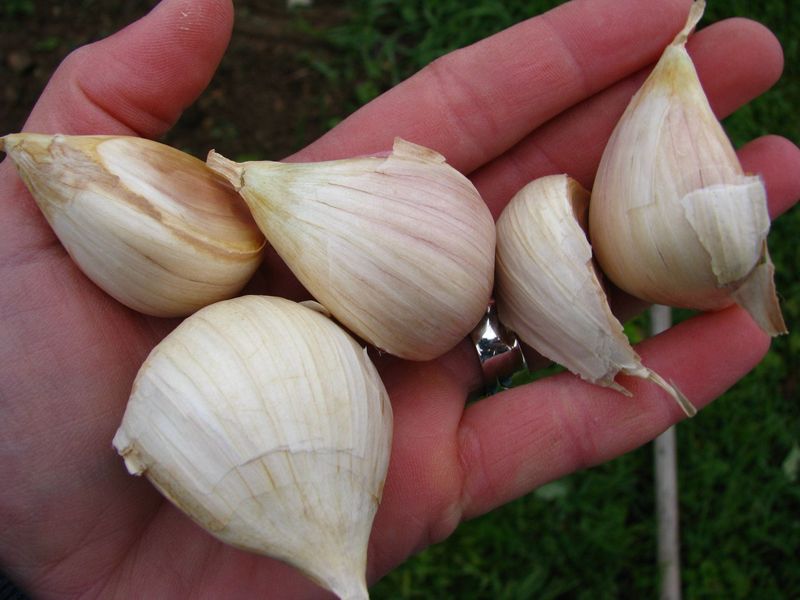
Carve the pumpkin, then grab the garlic. For lots of gardeners, the weeks around Halloween are the classic planting season.
That window lines up nicely with cooling soil across much of the state. Roots grow happily, but the weather stays too chilly for wild leafy growth.
Some folks keep planting right up until the ground freezes solid.
Still, your exact week depends on where you live. Northern Ohio, especially inland and in the snowbelt, often plants in early October, while gardens right along the Lake Erie shore can usually wait a little longer.
Central region, around Columbus, usually aims for October 10 through November 1.
Head south toward Cincinnati and Dayton, and the window slides later. Southwest region often works best from about October 15 to November 5.
Some southern gardeners push into mid November during mild years.
A handy rule is to watch your local forecast. When nights dip steadily into the 30s and days stay cool, it is go time.
Your county extension office can also share average freeze dates.
Holiday reminders make it easy to remember, too. Northern growers might plant the week after Columbus Day.
Southern growers can plant the week after trick-or-treaters finish their candy hunt.
4. Northern Ohio Gardeners Can Grow Rocambole Hardnecks
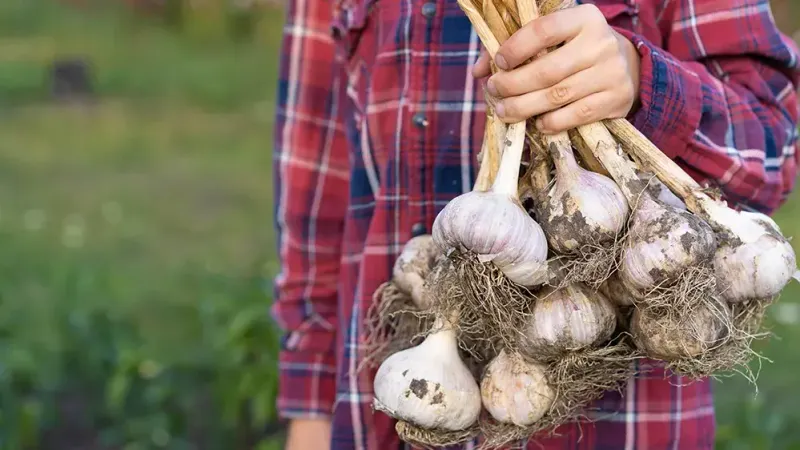
Lake-effect snow has a surprising upside for garlic lovers. Northern Ohio’s long, cold winters create perfect conditions for Rocambole hardneck garlic.
Rocamboles are the flavor stars of the garlic world. Many cooks describe them as rich, complex, and full-bodied.
Their papery skins peel off easily, which makes kitchen prep a breeze.
These garlics love a distinct, frosty winter followed by a cool, slow spring. Places like Northeast and Northwest region deliver that combo well.
Hardneck types handle frost better than softnecks, so they shrug off heavy snow.
One popular choice is ‘German Red,’ a Rocambole that grows well in the state. Each bulb usually holds big, easy-to-peel cloves.
Gardeners near Cleveland and Toledo often report strong harvests with it.
Hardnecks also give you a bonus crop called scapes. These curly flower stalks pop up in late spring.
Snip them off and toss them into stir-fries, pesto, or scrambled eggs.
There is one small trade-off to keep in mind. Rocamboles do not store as long as other types, often lasting only a few months.
Enjoy them in fall and early winter, then switch to longer-keeping garlic later.
5. Southern Ohio Is Often Too Warm For Rocambole
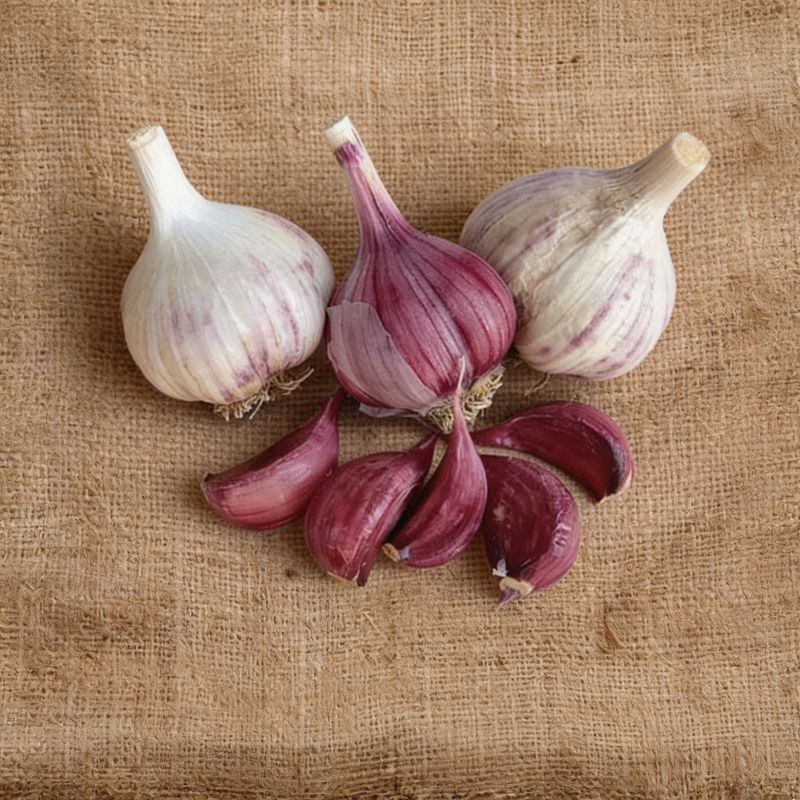
Picture a garlic that sulks when winter gets lazy. That is Rocambole in a mild southern Ohio winter.
Southwestern Ohio sits mostly in USDA Zones 6a and 6b. Winters there tend to be gentler, with more thaws and fewer deep freezes.
Springs can also warm up quickly, which Rocamboles do not enjoy.
When the cold is not steady enough, Rocamboles may form small bulbs. Some gardeners notice weak cloves or bulbs that do not divide well.
It can feel frustrating after months of waiting.
So what should a Cincinnati or Portsmouth gardener do? Try other hardneck groups that handle warmer swings, like Porcelain or Purple Stripe types.
Softneck garlic is another smart pick for these areas.
You can still experiment with a Rocambole or two if you are curious. Plant them in the coolest spot of your yard, maybe on a north side.
Thick mulch can help keep soil temperatures more even.
Keep notes each season about what grows best. Garlic slowly adapts to local conditions when you replant your own cloves year after year.
Over time, you might build a strain that feels right at home in southern region.
6. ‘Music,’ ‘Georgian Fire’ And ‘Georgia Crystal’ Are Proven Ohio Hardnecks
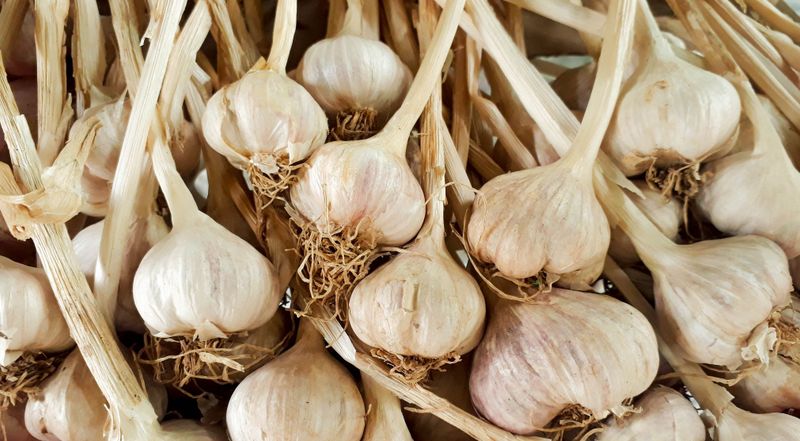
Some garlic varieties are like dependable friends who show up every time. ‘Music,’ ‘Georgian Fire,’ and ‘Georgia Crystal’ have earned that reputation in state gardens.
‘Music’ is a Porcelain hardneck with huge, plump cloves. It usually has four to six big cloves per bulb, so peeling goes fast.
Its flavor is bold and warm, perfect for roasting.
‘Georgian Fire’ lives up to its spicy name. Raw, it brings a strong kick that shines in salsa and salad dressings.
Cooked, it mellows into a smooth, savory taste.
‘Georgia Crystal’ takes things in a gentler direction. Many people find it mild and buttery, great for folks who like garlic without the burn.
It also grows into large, attractive bulbs.
Fun fact: despite the names, the two Georgia varieties trace back to the country of Georgia, not the U.S. state. That region sits between Europe and Asia, where garlic has been grown for centuries.
Want more options? ‘Chesnok Red,’ ‘Russian Red,’ ‘Persian Star,’ and ‘German Extra Hardy’ also do well here. Try planting a few kinds side by side and taste-test them next summer.
7. ‘Broadleaf Czech,’ ‘Italian Late’ And ‘Red Toch’ Are Reliable Ohio Softnecks
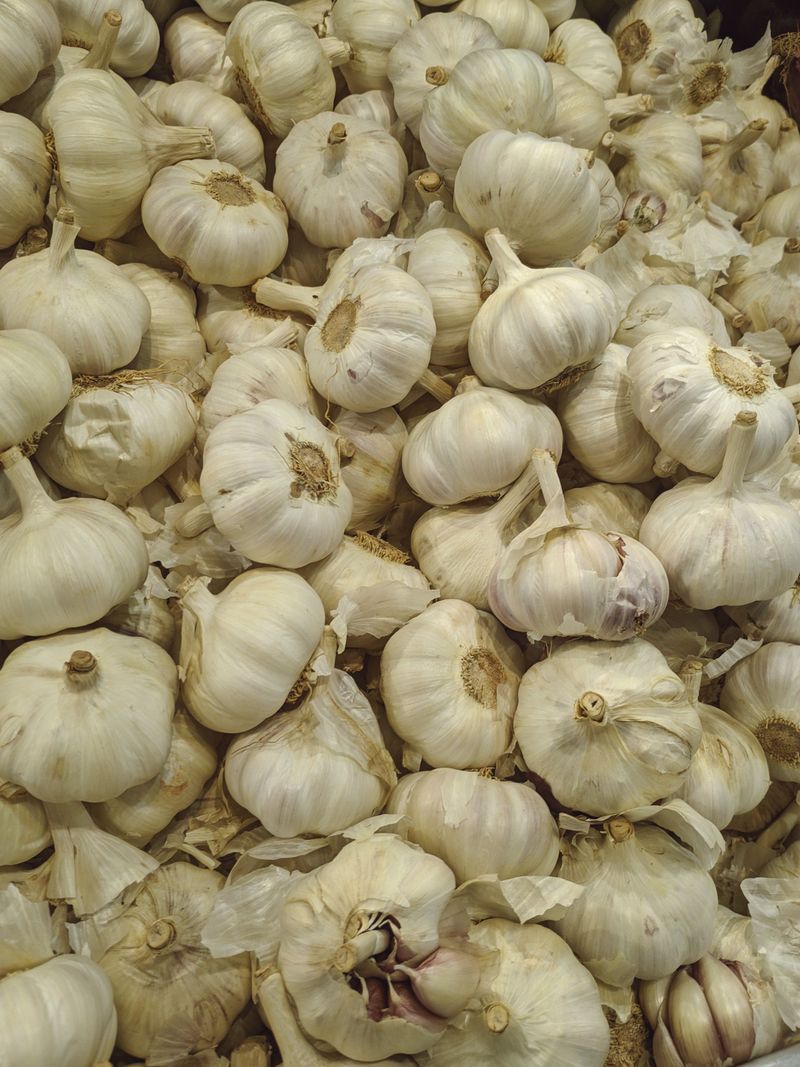
Ever seen those pretty garlic braids hanging in a kitchen? Those come from softneck garlic, and Ohio has a few reliable favorites.
‘Broadleaf Czech’ grows wide leaves and sturdy bulbs. ‘Italian Late’ matures a bit later in summer and stores wonderfully. ‘Red Toch,’ from the country of Georgia, has a mild, sweet flavor with pretty pink-streaked cloves.
Softnecks shine in central and southwestern region, where winters stay milder. They do not send up stiff flower stalks, so the leaves stay soft.
That flexible neck is exactly what makes braiding possible.
Storage is where softnecks really win. Many last six to nine months in a cool, dry spot.
You could be cooking homegrown garlic well into next spring.
Northern gardeners can grow softnecks too. Just add a thick layer of straw or shredded leaves after planting.
About four to six inches of mulch helps protect cloves from harsh cold snaps.
Other good softneck choices include ‘Inchelium Red,’ ‘Messidor,’ ‘Castano,’ and ‘Garcua.’ Mixing in a softneck alongside your hardnecks spreads out your harvest. Then you get punchy flavor early and long-keeping bulbs later.
8. Elephant Garlic Is Closer To A Leek Than True Garlic
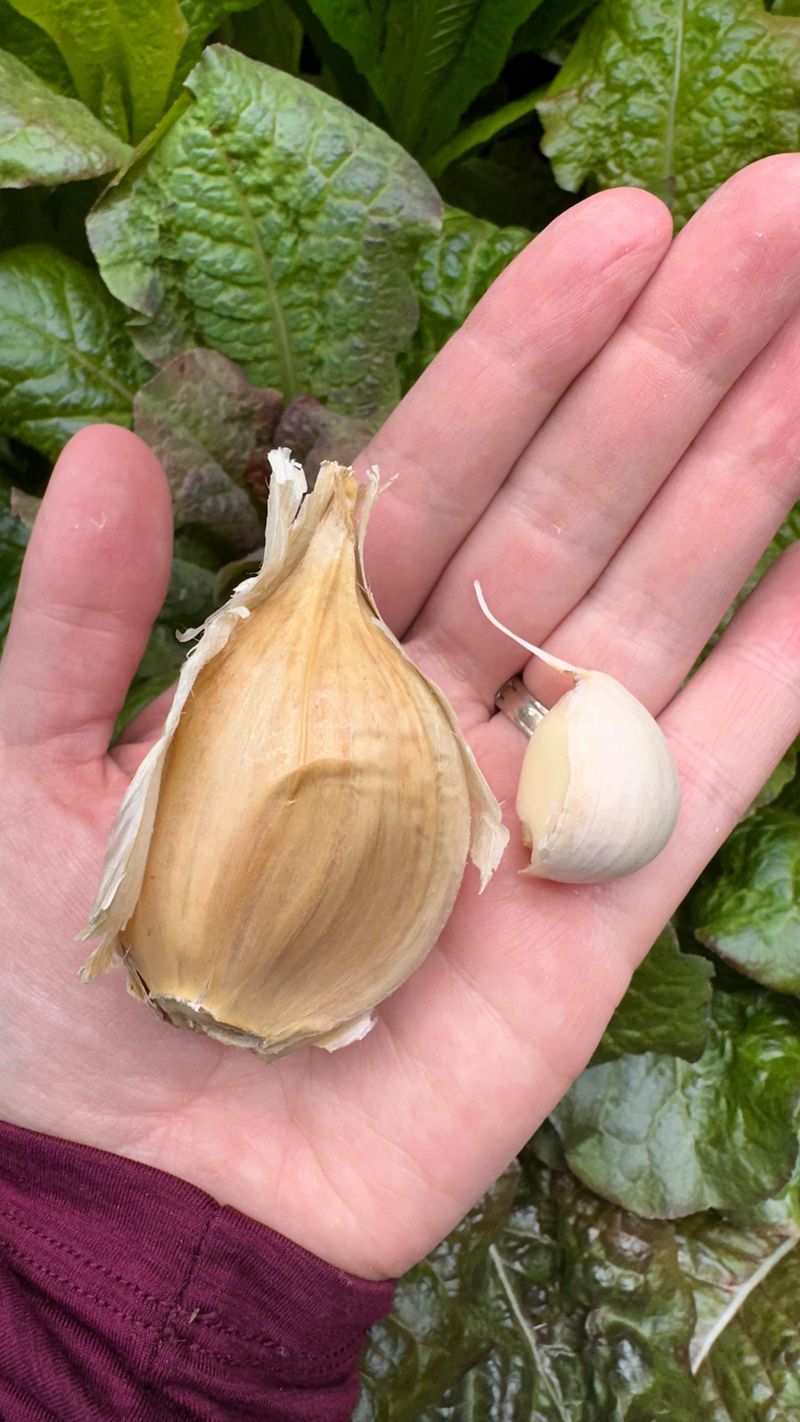
Surprise! The biggest garlic at the farmers market is not really garlic at all.
Elephant garlic is actually a type of leek wearing a clever disguise.
Scientists call it Allium ampeloprasum, while true garlic is Allium sativum. Both belong to the same Allium family, which also includes onions and chives.
They are cousins, not twins.
Size is the most obvious difference. An elephant garlic bulb can be as big as a baseball.
Each one usually holds five to eight giant cloves.
The flavor is softer too. Many people describe it as a sweet blend of onion and leek with just a hint of garlic.
Roasting it whole brings out a creamy, mellow taste that spreads like butter on bread.
Growing it in this state follows a similar fall schedule as regular garlic. Plant during the same window for your region.
Give each clove more elbow room, about eight to twelve inches apart.
Go a little deeper with these chunky cloves, about three to four inches down. That extra soil helps protect them through winter.
Next summer, you will have a showstopper bulb that impresses friends and family.
9. Plant Cloves 2 Inches Deep, Flat End Down
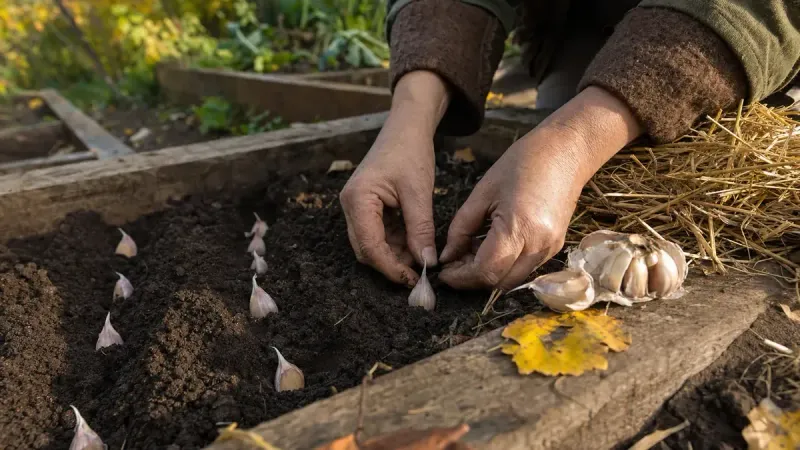
Getting garlic in the ground is easier than baking cookies. You just need to know which way is up and how deep to go.
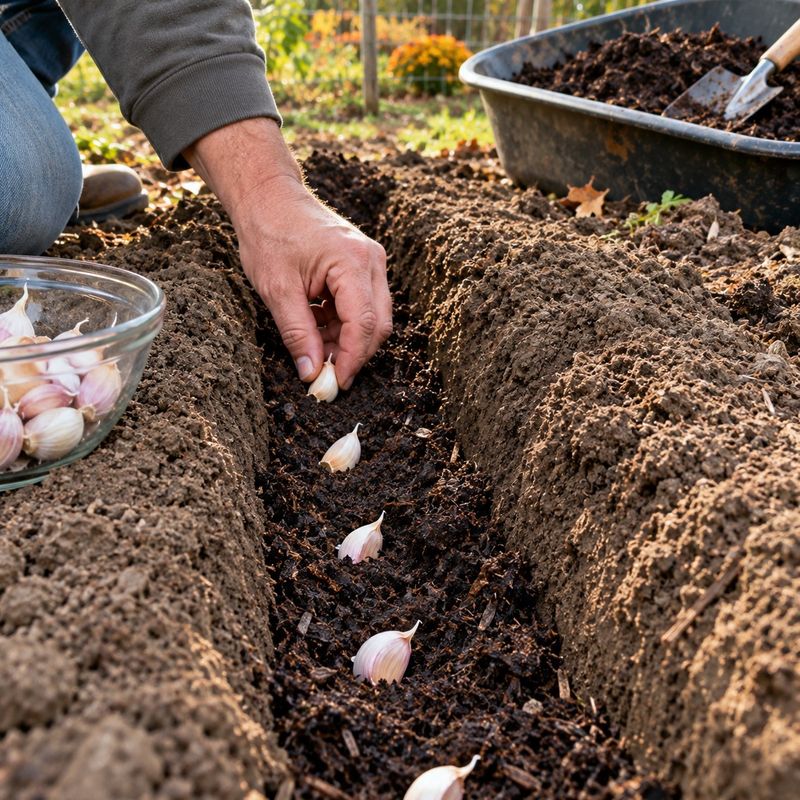
Every clove has a flat bottom and a pointy top. The flat end is the basal plate, where roots grow.
Set that side down, with the pointy tip aimed at the sky.
For most varieties, plant about two inches deep. That means two inches of soil sitting on top of the tip.
Space cloves around four to six inches apart in rows.
Gardeners in colder northern region may want to go a bit deeper. Three to four inches gives extra winter protection.
Elephant garlic also likes that deeper spot because of its size.
Depth matters more than you might think. Shallow cloves can get pushed up by freezing and thawing soil, a problem called heaving.
Planting too deep makes it harder for shoots to reach the surface.
Pick the biggest, healthiest cloves for planting, since big cloves grow big bulbs. Break the bulb apart only a day or two before planting.
Finish with a cozy layer of straw mulch, then let winter do the rest.