The Fall Armyworm Warning Every Texas Lawn Owner Should Heed Now
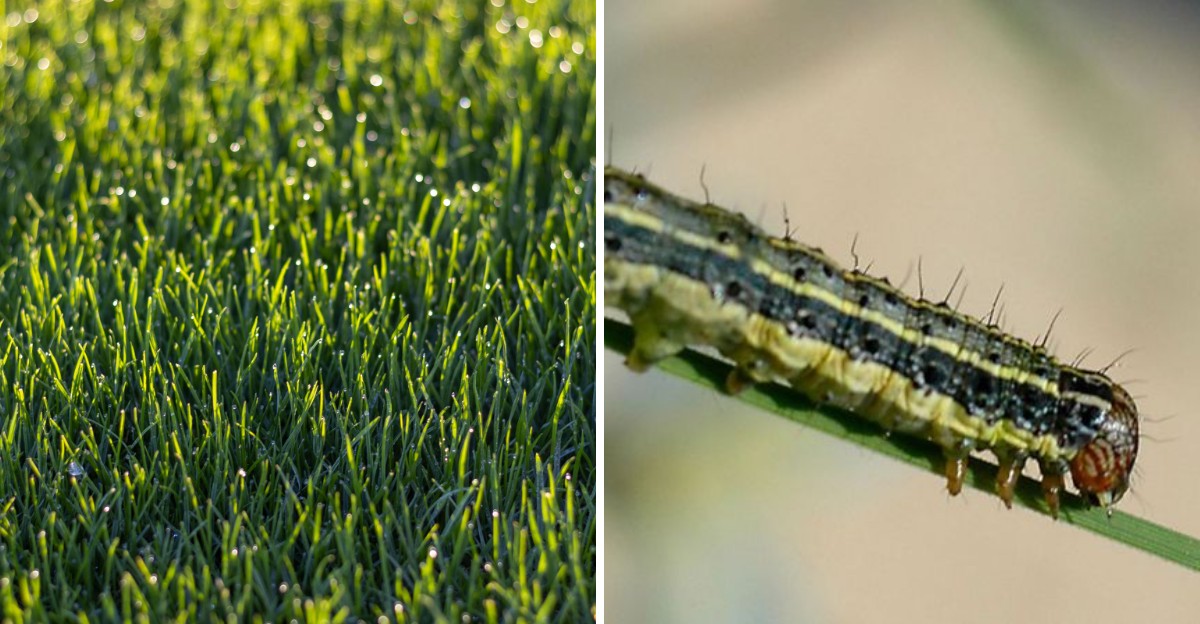
A healthy lawn can lose its green in about three days. Texas A&M AgriLife experts say a hungry crowd of tiny caterpillars can chew through turf that fast, and most of the eating happens after dark.
I find that part a little spooky. You water, you mow, you fertilize, and then one morning a patch looks scorched for no clear reason.
The culprits often arrive after late summer rains, when cooler nights roll in and the grass starts looking happy again.
Personally, I used to blame the sprinklers every time a brown spot showed up. Birds gave me the real clue, pecking at one section of yard like it was a breakfast bar.
Your turf might be sending the same signals right now. So what exactly is hiding down there in the thatch, and how do you catch it before your weekend plans turn into a reseeding project?
That Brown Patch On Your Lawn May Have Tiny Jaws
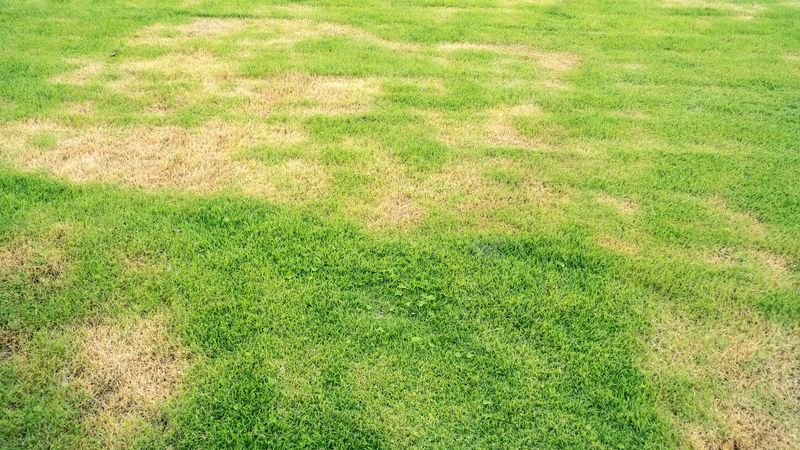
Brown grass in early fall usually gets blamed on heat or a broken sprinkler head. Sometimes the real answer is crawling around in the thatch instead.
Fall armyworms are caterpillars, the young stage of a gray-brown moth. They are a common lawn pest across the state, and Texas A&M AgriLife entomologists note that outbreaks often follow rain after a dry stretch.
Moths fly in, lay egg masses on grass, fences, and even walls, and the hatchlings start nibbling right away.
What makes them so sneaky is their timing. Small caterpillars eat very little, so early damage barely shows. Most of their feeding happens in the last few days before they burrow into the soil to pupate.
That is why a lawn can look fine on Friday and ragged by Monday. Large groups move across a yard together, much like a slow wave, which is how they earned the name armyworm.
I like to think of brown patches in September and October as a question, not an answer. Before you pull out the hose or call a repair crew, get down on your knees and part the grass. A quick look at the soil line can save you money and a lot of guessing.
A Bucket Of Soapy Water Reveals Hidden Armyworms
Dish soap is one of the best detective tools in your kitchen. AgriLife experts recommend a simple soap flush to see what is lurking under the blades.
Mix two to three tablespoons of lemon-scented or plain liquid dish soap into a gallon of water.
Pour it evenly over a patch about three feet by three feet, right along the edge where brown grass meets green grass. That border zone is where active caterpillars usually hang out.
Within a few minutes, the soapy water irritates any insects hiding there. Armyworms wriggle up to the surface where you can see and count them.
You might also spot sod webworms or cutworms, which helps you know what you are dealing with.
Here is the number to remember. If you find roughly two to three larvae per square foot that are half an inch or longer, treatment is usually justified.
Your Texas Garden Changes Every Week. Your Plan Should Too.
Gardening in Texas changes quickly throughout the season. Every Friday you’ll receive a simple weekly plan showing exactly what to plant, prune, fertilize, harvest, and protect so you never miss the right timing.
Fewer than that? Keep an eye on the area and check again in a couple of days. I enjoy this test because it takes about five minutes and turns a frustrating mystery into a clear yes or no. Try it in the morning or evening for the best results.
Act Fast When Armyworm Caterpillars Are Still Small
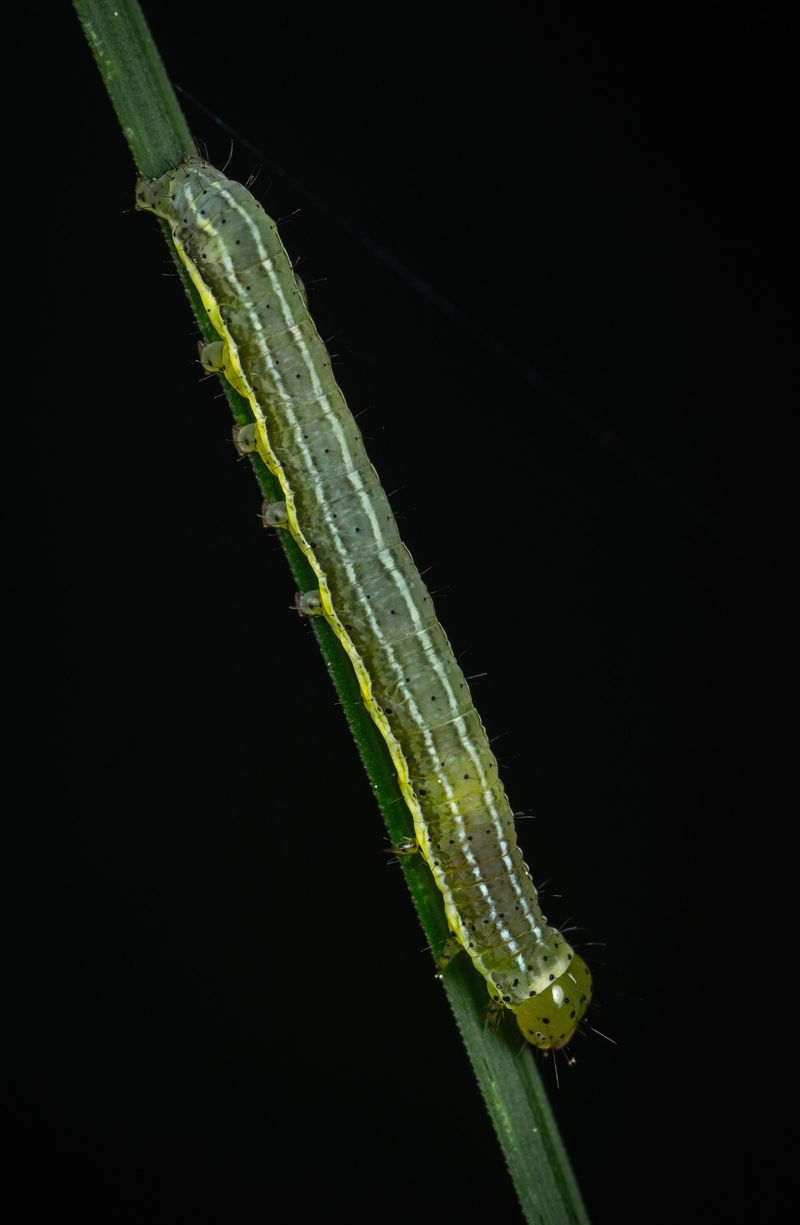
Speed matters more than strength with this pest. Young caterpillars are much easier to control than big ones that are close to finishing their meal.
For small larvae, many gardeners start with Bacillus thuringiensis, often called Bt. It is a natural bacterial product that works when caterpillars eat treated grass. Spinosad is another lower-impact option that Texas AgriLife lists for armyworms.
Larger caterpillars or heavy numbers may call for stronger products. Common lawn insecticides contain ingredients such as bifenthrin, lambda-cyhalothrin, carbaryl, or chlorantraniliprole.
Chlorantraniliprole tends to last longer and is gentler on many beneficial insects. Timing helps a lot. Spray late in the day, since armyworms feed mostly in the evening, at night, and on cloudy days.
Hold off on watering for at least a day afterward unless the label says otherwise, so the product stays on the leaves they chew.
Read every label carefully and follow it exactly. Keep kids and pets off treated grass until it dries. Personally, I treat only the infested area plus a buffer strip, rather than the whole yard, which saves money and spares helpful bugs.
Look For The Inverted Y On The Caterpillar Head
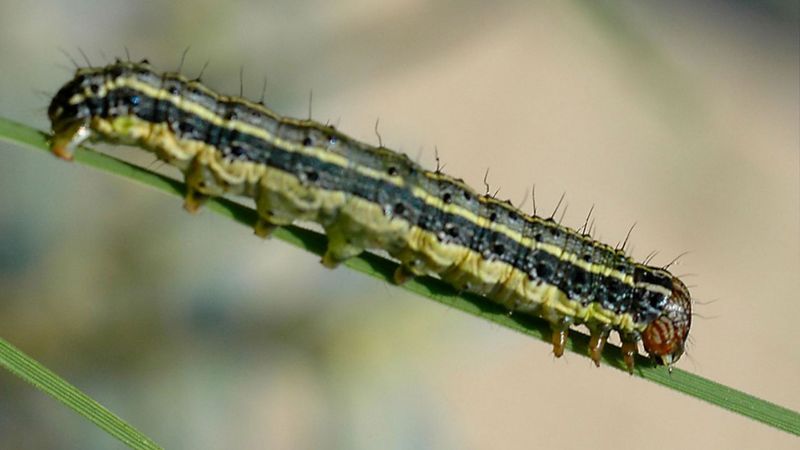
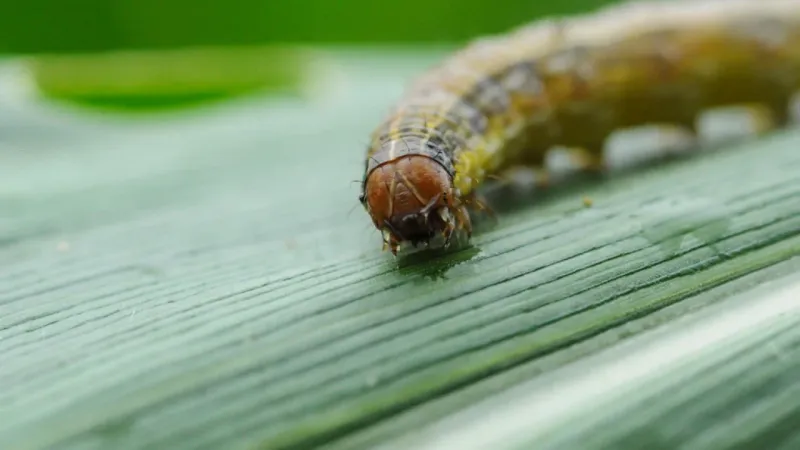
Every bug has a calling card, and this one wears it on its face. A pale, upside-down Y on the head is the classic mark of a fall armyworm.
Full-grown caterpillars reach about one and a half inches long. Their color ranges from green to brown to nearly black, with lengthwise stripes running down the body. Near the tail end, look for four dark spots arranged in a neat square on one segment.
Why bother with such a close look? Other lawn pests cause similar damage but behave differently. Sod webworms are smaller and spotted, while cutworms curl into a C shape when disturbed.
Knowing what you have helps you choose the right control and timing. It also keeps you from treating a problem that is not there.
A cheap magnifying glass or your phone camera zoomed in works great for this job. Snap a clear photo and compare it with pictures from your county Extension office.
Many offices will even help identify a specimen if you bring it in a sealed bag. I find it oddly satisfying to finally put a name to the culprit chewing up my Texas yard.
Windowpane Grass Blades And Busy Birds Give Early Clues
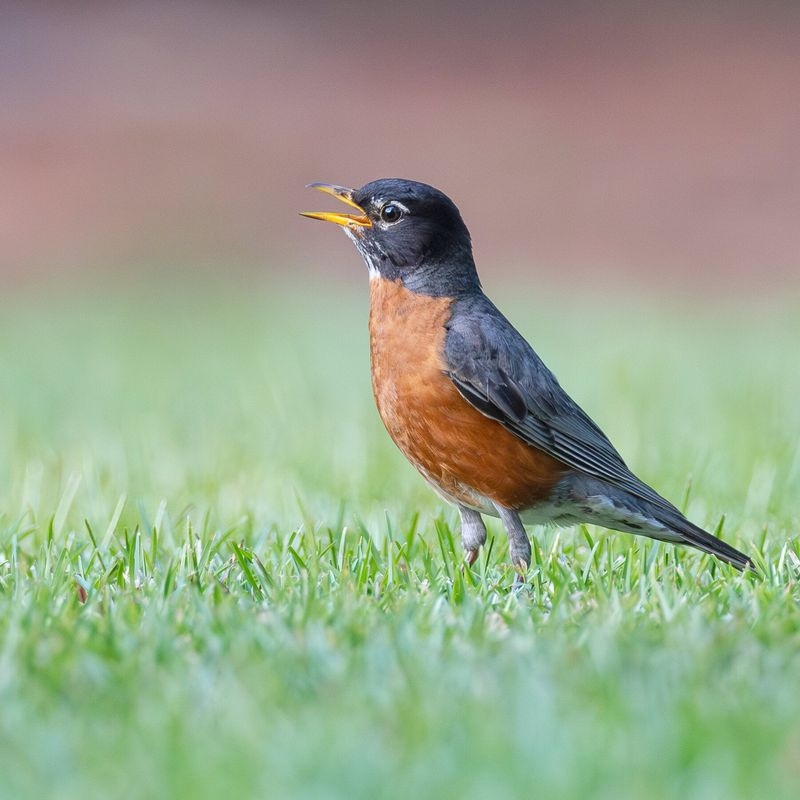
Grackles and starlings know about armyworms before most of us do. When flocks keep returning to one spot on your lawn, they are often snacking on caterpillars.
Leaf damage offers another early hint. Tiny young larvae scrape away the green layer of grass blades and leave a thin, see-through skin behind. Experts call this a windowpane look, and it shows up best when you hold a blade up to the light.
As caterpillars grow, damage changes fast. Blades get chewed down to ragged stubs, and patches turn brown or straw colored. In bad cases, only stems and runners remain.
You might also notice small green droppings near the soil line. Moths fluttering around porch lights at night can be another sign that egg laying is underway nearby.
Make a habit of walking your yard every few days from late summer into fall. Pay special attention after a good rain, since that is when populations often jump.
Catching the windowpane stage gives you the best shot at quick, simple control. Honestly, I now thank the birds whenever I see them gathered in one corner. They have saved my grass more than once.
Lush Bermudagrass Lawns Are The Favorite Fall Feast
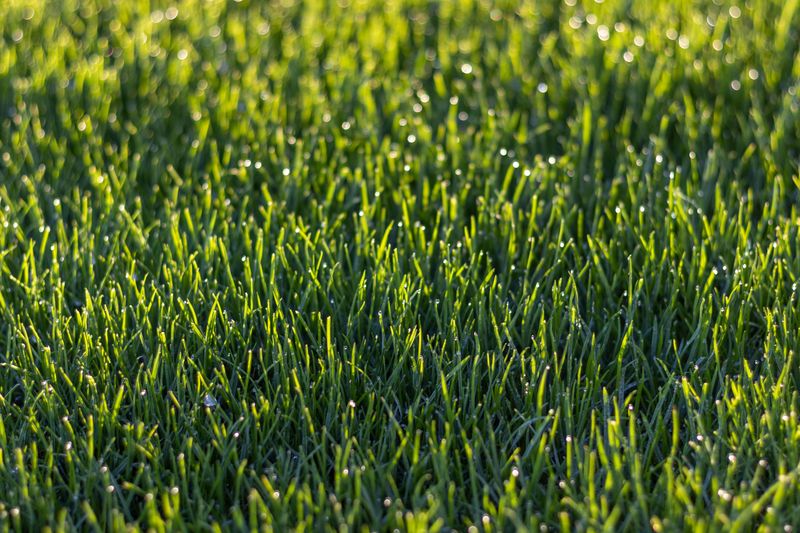
Here comes the frustrating twist for proud lawn keepers. Thick, well-fed, freshly watered turf is exactly what fall armyworms love most.
Bermudagrass ranks near the top of their menu. They also feed on ryegrass, fescue, and other turf types, plus crops like sorghum, wheat, and hay fields. St. Augustine and zoysia can be hit too, though many homeowners report heavier trouble on bermuda.
Season plays a big role. In Texas, activity usually builds from late summer and can last until the first hard frost, often around October or November depending on where you live.
South Texas and the Gulf Coast may see pressure longer, while the Panhandle often cools off sooner.
Weather matters as well. Rain after a dry spell brings tender new growth, and moths take full advantage.
So should you stop caring for your lawn? Not at all. Just pair that care with extra scouting during peak months. Go easy on heavy nitrogen in early fall, since super soft growth can draw more feeding.
Neighbors and nearby pastures also influence what flies into your yard, so swapping notes with folks down the street can give you a helpful heads up.
Water And Wait Before Reseeding Chewed Up Turf
Chewed grass often looks far worse than it really is. Warm-season lawns like bermuda usually bounce back because armyworms eat the leaves, not the roots or runners.
Once the pests are under control, give your lawn a deep watering. Moist soil helps the turf push out fresh blades from its crowns and stolons. Many yards start greening up again within a week or two if the weather stays warm.
Skip reseeding right away. Wait a couple of weeks to see what regrows on its own, since bare spots often fill in naturally. A light fertilizer feeding can help recovery, but avoid heavy doses late in the season as winter approaches.
Keep scouting too. Fall armyworms can produce several generations in a year, and a second wave may show up a few weeks later.
Protecting helpful predators pays off over time. Ground beetles, parasitic wasps, and birds all eat armyworms, so limit broad sprays when you can.
My biggest takeaway after a rough fall is simple: walk your lawn, run the soap test when something looks off, and act early. A few minutes of attention now keeps your Texas yard green well into the cooler months.