The September Pest Texas Homeowners Mistake For Wasps (And Why It’s Actually Worse)
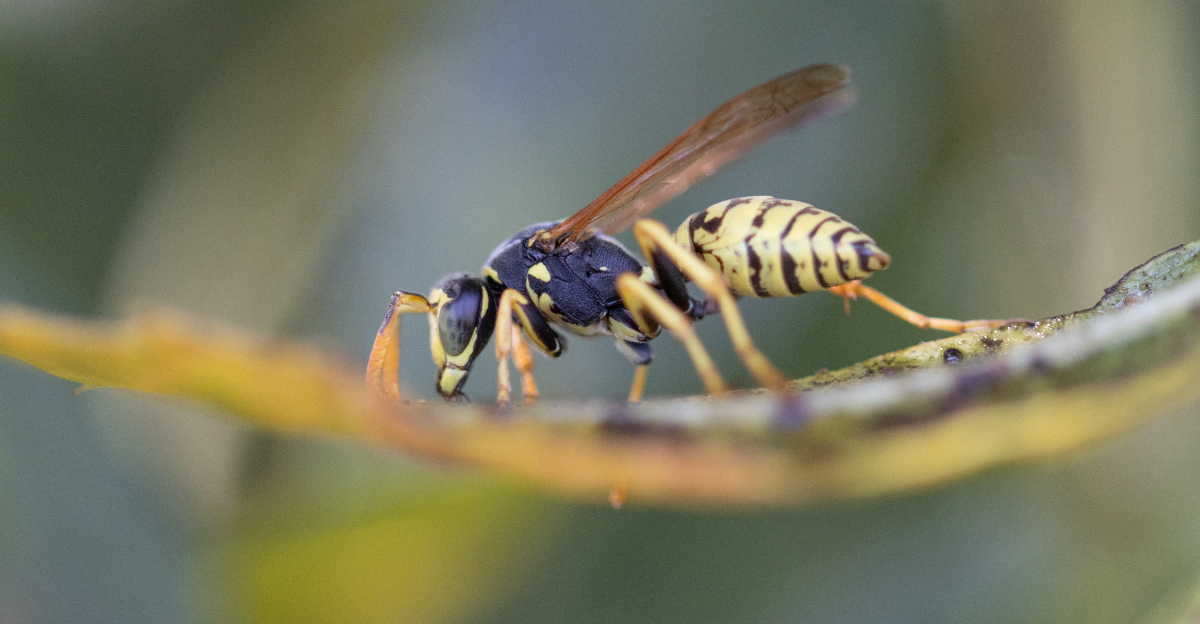
September in Texas has a sound all its own, somewhere between a ceiling fan and a lawn mower. The AC still hums, the grass still needs cutting, and something striped keeps buzzing the potato salad.
Most folks glance up at the porch ceiling, spot nothing, and blame wasps out of habit. The spray can comes out, the eaves get a soaking, and the buzzing carries on like nothing happened.
That is because the real source is probably not overhead at all, and it is not the insect most people picture. It may be tucked in the ground, behind the brick, or under the mulch by the front steps, with a few thousand roommates inside.
The difference changes how you handle it, and how your Labor Day cookout goes. Here is what is really going on in Texas yards this month, and the smarter way to deal with it.
Paper Wasp Or Impostor? Read The Details
Most sting stories in Texas start with a misidentification. A homeowner sees yellow and black, thinks paper wasp, and reaches for the same can of spray they used on the eaves in June.
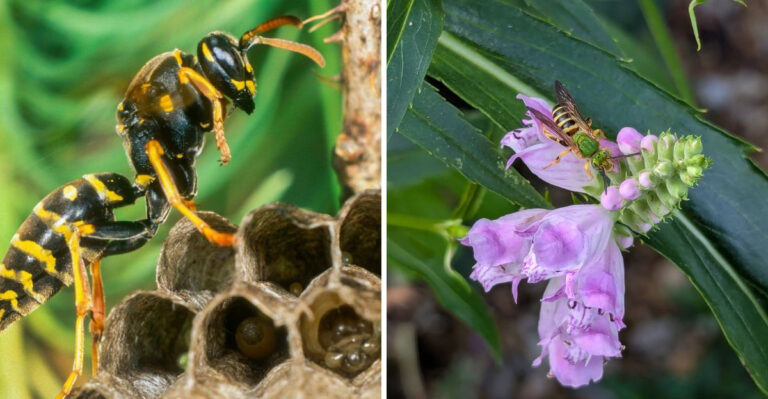
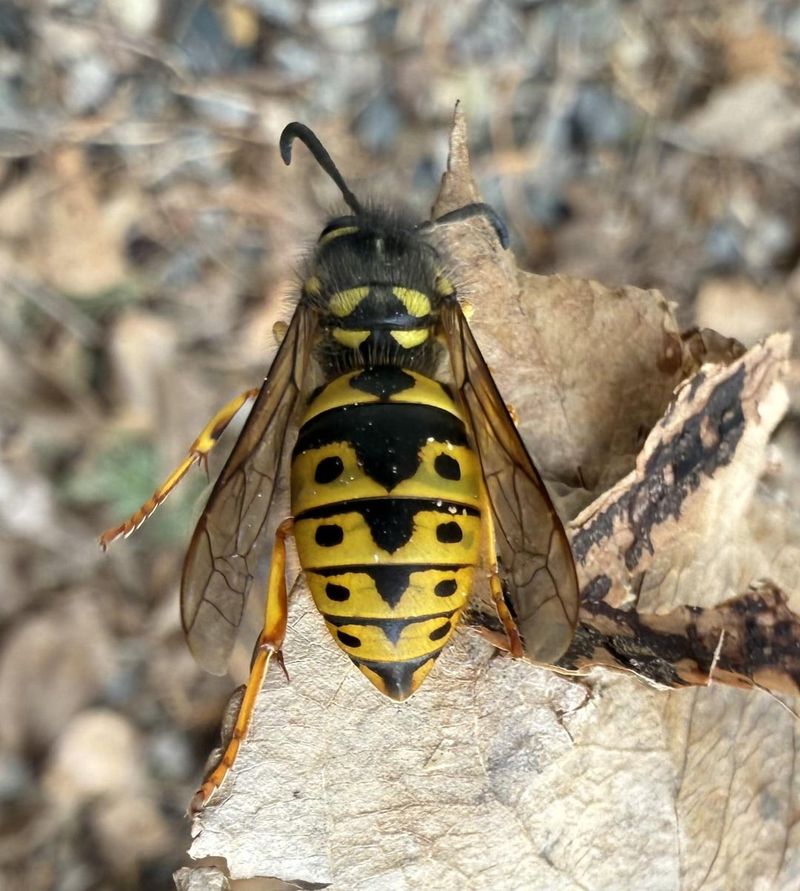
Body shape tells the truth: paper wasps are long and slender, with dangling legs and a floating flight path. Yellowjackets are shorter, thicker, and faster, with tucked legs and crisp yellow bands.
Nest style is the second giveaway: paper wasps build open combs you can see under porches or grill lids. Yellowjackets hide theirs in a papery shell inside a wall void, burrow, or old rodent tunnel.
Traffic patterns matter too: one or two wasps at an open comb is normal, but a steady stream through a small opening means hundreds inside. Yellowjackets fly in a straight, businesslike line.
Sound can help when sight fails. Press an ear near a suspect wall on a warm afternoon and you may hear a faint rustling or hum, similar to crumpling paper.
Take a photo from a safe distance instead of leaning close. Correct identification matters, since the fix for an open comb can backfire on a hidden colony.
Color also helps, since paper wasps often show more reddish-brown mixed into their pattern, while yellowjackets stick to bold black and yellow. A quick look at contrast can back up what body shape already suggests.
Time of day plays a role too, since paper wasps stay fairly calm in early morning, but yellowjackets near a hidden nest can already be active before the sun clears the treeline.
Late Summer Sugar Cravings Set The Stage
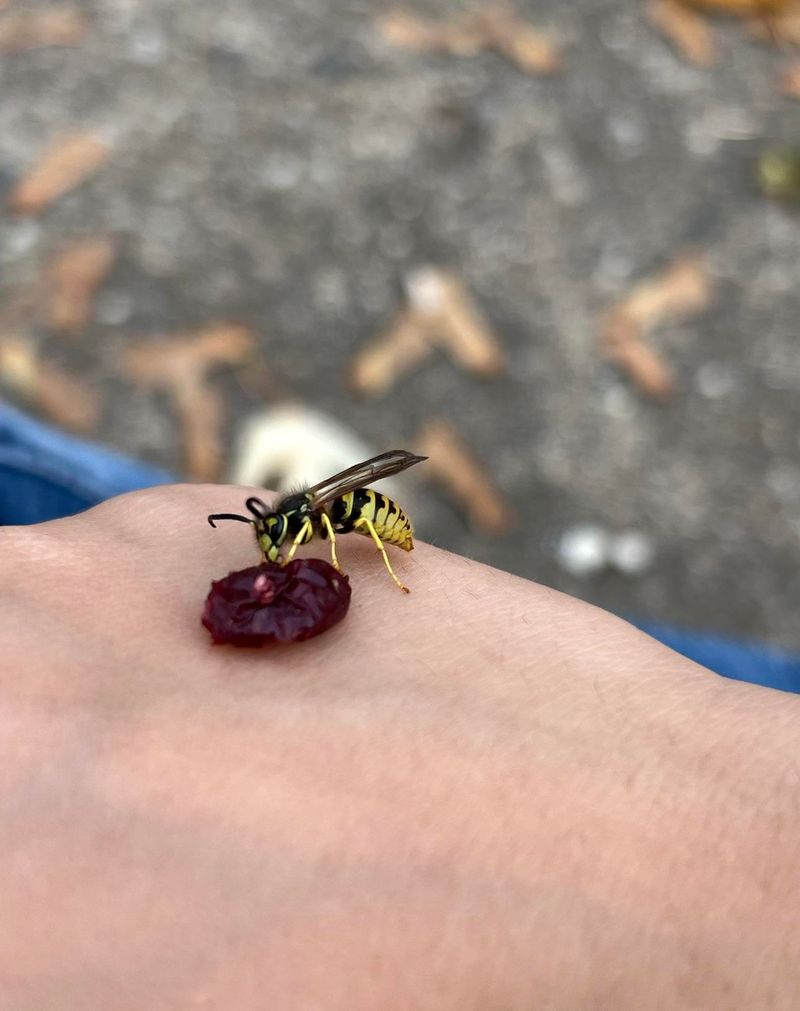
Picture a backyard cookout in early September, when the brisket is resting and the sweet tea is sweating on the table. Something small and striped shows up uninvited, and it is far more interested in your soda can than in the flowers by the fence.
That shift in appetite is the first clue: colonies feed mostly on protein through early summer to raise their young. By late summer the queen slows down, and workers switch to sugar.
Texas weather makes the change noticeable, as hot stretches and scattered rain send workers roaming farther for anything sweet. Fallen figs and open cups become fair game.
Your Texas Garden Changes Every Week. Your Plan Should Too.
Gardening in Texas changes quickly throughout the season. Every Friday you’ll receive a simple weekly plan showing exactly what to plant, prune, fertilize, harvest, and protect so you never miss the right timing.
Homeowners notice the traffic and assume paper wasps have moved in near the patio. Paper wasps, though, rarely crowd a picnic table or crawl into a drink, so that bold, food-focused behavior points somewhere else entirely.
Understanding the sugar season helps you plan: keep drink lids on, rinse recycling, and use trash cans with tight lids. Small habits like these lower your odds of a surprise sting while you reach for the tongs.
Curiosity pays off here. Watching where the visitors go after they grab a crumb often reveals the real address of the colony.
Hidden Nests Turn A Small Problem Into A Big One
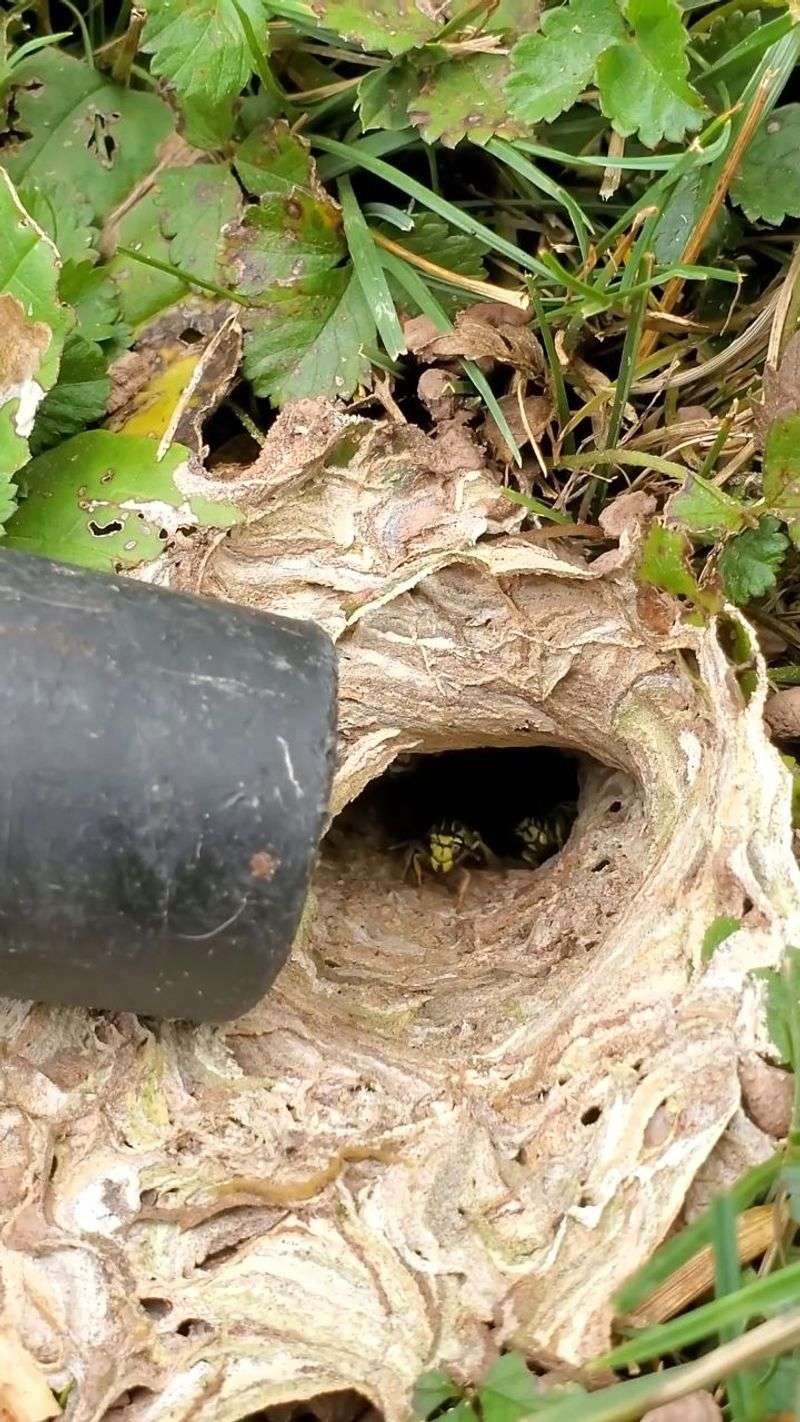
Here is the part that surprises people: the danger is not the insect itself but the address it chose.
A paper wasp comb under a porch light holds maybe two dozen residents, all in view. A September yellowjacket colony in Texas can hold several thousand workers, hidden behind siding or under mulch.
Guard behavior explains the rest: yellowjackets respond to their entrance as a group, and vibration alone can trigger it. A mower, trimmer, or footsteps near a nest can bring dozens out at once.
Their stingers are smooth, so one worker can sting more than once. That is why encounters often mean multiple stings, and why a sting allergy makes a hidden colony a medical concern.
Location raises the stakes: wall-void colonies chew through drywall paper as they expand, and waste can stain interior paint. Rarely, workers reach a hallway through a vent or light fixture.
Practical tip: walk your yard slowly in the morning and look for insects near ground holes, brick weep holes, or utility pipes. Mark the spot from a few feet away for later.
Pets can be an early warning sign, since dogs and cats often sniff or paw at a spot along the foundation before a person notices anything. A pet suddenly avoiding one corner of the yard is worth a second look.
Freshly disturbed soil near a fence line or garden bed can also point to an entrance, especially if small mounds of loose dirt keep reappearing in the same spot.
September Is The Colony’s Loudest Month
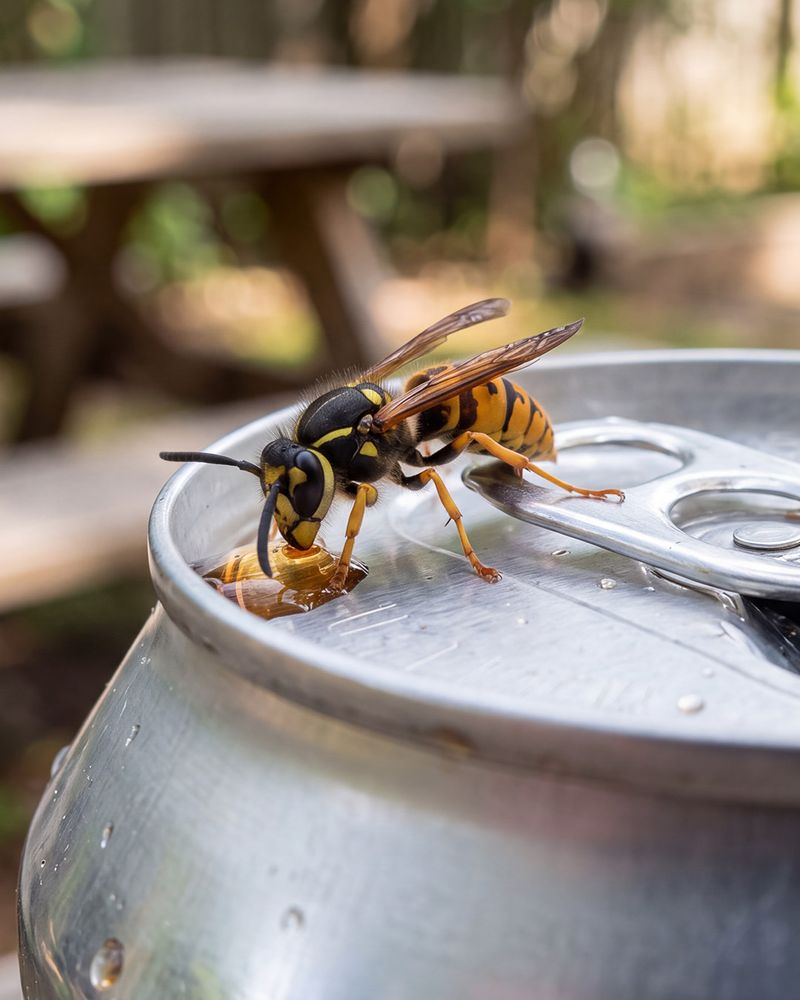
Timing is everything with these colonies, and September sits right at the peak of the curve.
The cycle starts small: one overwintered queen begins a nest alone in spring, raising a handful of workers. Those workers then take over, and the colony doubles through the warm months.
Texas gives them a long runway, since mild springs and warm falls stretch the growing season past what northern colonies get.
By September the nest hits maximum size just as food turns scarce, with flowers fading and calories running short. Hungry and crowded, workers get pushier around people.
That same month, the colony produces future queens and males that leave to mate. The extra flight traffic makes activity look even more alarming.
Calendar awareness pays off, since football parties, tailgates, and last cookouts of the season land right when colonies are largest.
A few insects near a flower bed in June can turn into a busy hub by September. Checking known spots around Labor Day beats scrambling once guests arrive.
Cooler mornings can be misleading, since a brief dip in temperature slows activity for an hour or two but does nothing to shrink the colony itself. Warmer afternoons bring the same crowded traffic right back.
Neighboring yards matter as well, since a nest near a shared fence line can send foragers into several properties at once, not just the one where it started.
Where the Spray-And-Run Approach Goes Wrong
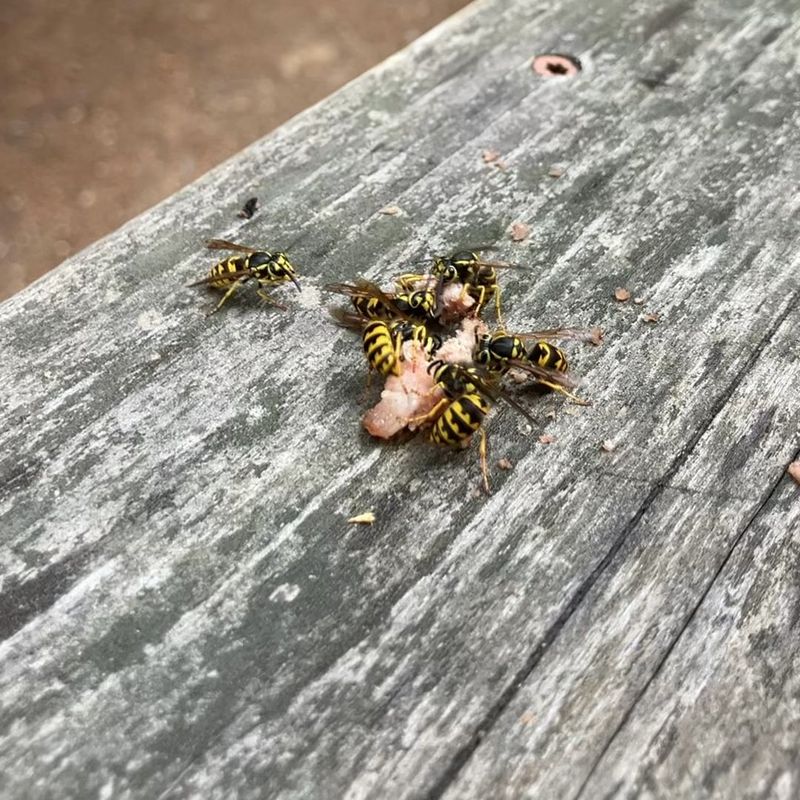
Ask around a Texas neighborhood and you will hear the same plan: grab a jet-spray can, aim at the hole, and sprint for the door.
Against an open paper wasp comb, that approach often works fine. Against a concealed colony, it usually creates two problems instead of solving one.
Surface spray reaches only the entrance, so most workers stay untouched while the ones near the door get agitated. Foragers then search for a new exit, sometimes into your home.
Sealing the hole first is an even rougher idea. Blocked workers chew sideways through insulation and drywall, and a colony that once faced the yard suddenly faces your hallway.
Other common missteps: spraying at midday when foragers are active, wearing shorts and sandals, using a white flashlight at night, or standing on a wobbly ladder.
Water is not the answer either. Flooding a ground burrow with a hose rarely reaches the whole nest and puts you within a few feet of an irritated guard force.
Better plan: back away, note the location, and pick a method suited to a hidden nest, a labeled dust at dusk, or a licensed pro who handles this weekly.
Reaching for a household cleaner instead of a labeled product is another common shortcut, and most cleaning sprays have no effect on a colony this size. They may irritate the workers without doing anything to the nest.
Approaching without a plan for retreat is a mistake too, since a clear path back to the house matters more than how close you get to the opening.
A Calmer Way to Handle It, and What Comes Next
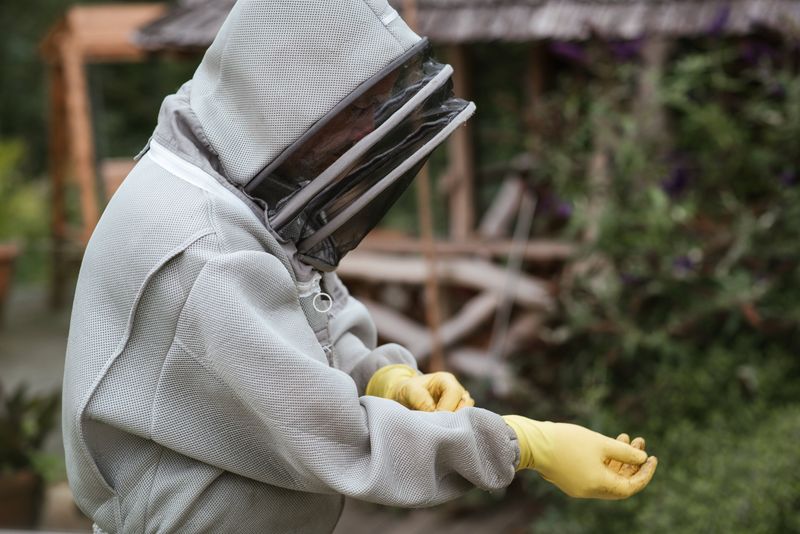
Here’s some reassurance for anyone reading this with one eye on the backyard: a hidden colony can be handled without drama.
Start with distance: mark the entrance from ten feet away in daylight, then plan treatment for dusk or after dark, when workers are inside.
Gear matters more than courage: long sleeves, tucked pants, closed shoes, gloves, and netting help, and a red-filtered light avoids drawing attention.
For ground nests, insecticidal dust beats liquid, since workers track it deep into the tunnel. Wall voids are trickier, and the wrong spot can push the colony inward.
Colonies inside walls or near play areas belong to a licensed technician. Texas pros carry protective gear and dust applicators for a single-nest visit.
Afterward, wait two or three days before sealing anything, then close the gap with caulk, copper mesh, or hardware cloth. Sealing too soon simply reroutes traffic.
Most colonies don’t reuse the nest, but Texas winters are mild enough that some survive and keep growing. Either way, prevention is the job: tight lids, sealed screens, and a spring check around the foundation.
Children and pets should stay indoors during any treatment, since even a well-planned approach can stir up a few stray workers near the yard. Keeping the area clear for an hour afterward is a simple precaution.
Multiple nests on one property are not unusual in a bad year, so a single treatment success is worth following with one more walk around the yard before calling the job finished.