The Fire-Resistant California Plants That Create A Defensible Space And Still Look Beautiful
Nobody moves to California dreaming of a gravel lot with a fire safety sign out front. Homeowners want yards that actually look beautiful, feel alive, and happen to be as smart as possible about fire risk at the same time.
The good news is that those two things are not mutually exclusive. Some plants naturally carry less fuel, stay lower to the ground, and fit into a well-thought-out defensible space plan without making your yard look like it gave up.
That said, let’s be clear about something important right from the start: no plant is fireproof. Not a single one.
Plant choice is just one piece of a much bigger picture that includes placement, spacing, pruning, debris cleanup, and serious attention to those first five feet around your home.
Get all of that right and your yard can be both gorgeous and genuinely smarter about fire.
1. California Fuchsia Adds Low Summer Color
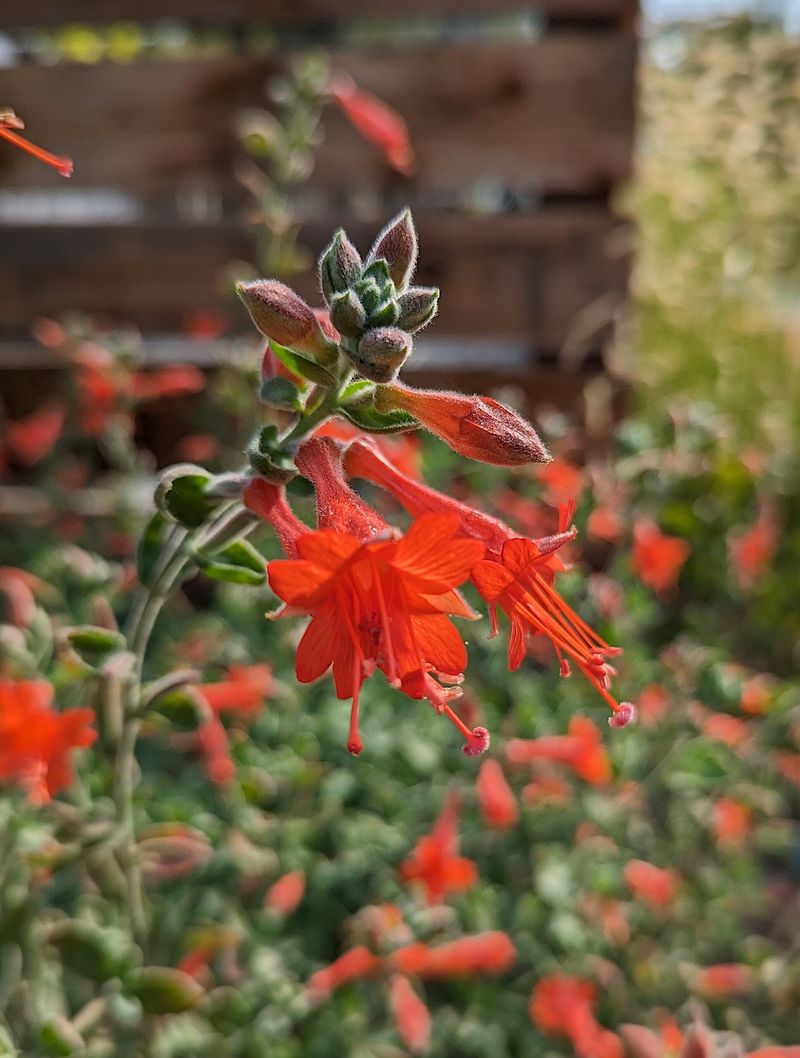
Dry summer yards in California can feel like a challenge to plant, but California fuchsia brings vivid color right when most other plants have gone quiet.
Its bright red-orange tubular flowers open from late summer into fall, giving hummingbirds a reason to visit and giving your yard a lively look during one of the driest and highest-risk seasons of the year.
This low-growing native spreads along the ground and stays under two feet tall in most garden settings, which makes it a reasonable fit for the lower zones of a defensible-space plan.
Keeping plants spaced apart, pruned back after flowering, and free of dry debris helps it stay lower-risk in a fire-smart landscape.
It is not fireproof, but its open, low form reduces the ladder-fuel effect that taller, denser plants can create.
California fuchsia handles dry conditions well once established, needing little summer water along the coast and moderate care inland.
It tends to spread by underground runners, so gardeners should plan for that and keep it from crowding other plants or creating dense mats of dry material.
Cutting it back hard in late winter encourages fresh, tidy growth.
Along dry borders, sunny slopes, or open edges of a native garden, California fuchsia earns its place as a colorful, low-growing option that still supports a thoughtful California defensible-space design.
2. Common Yarrow Covers Ground Lightly
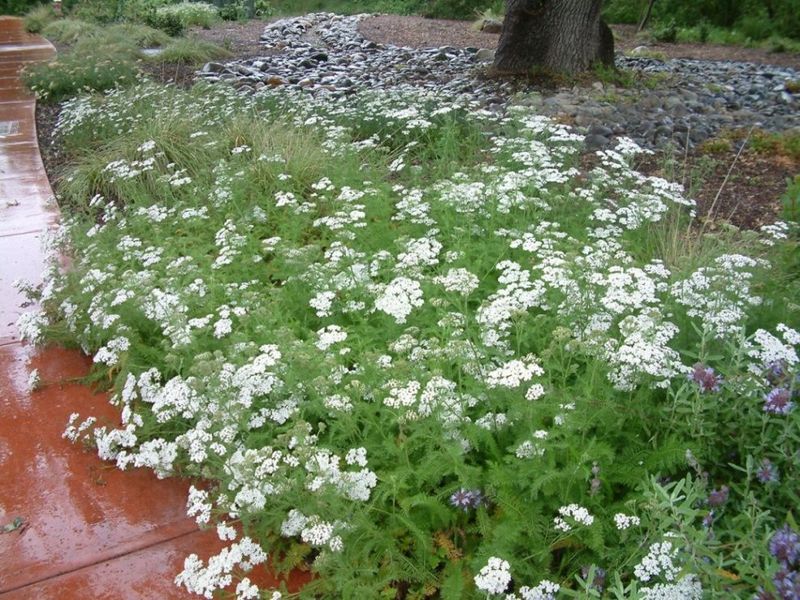
Feathery, flat-topped flower clusters and soft green leaves give common yarrow a delicate look that fits naturally into California native gardens and dry borders.
It grows close to the ground, spreads steadily without becoming aggressive in most settings, and offers seasonal color from late spring through summer.
Gardeners often use it to fill in open soil between shrubs, which helps reduce bare ground that can dry out and become a fire hazard on its own.
From a fire-smart landscaping perspective, yarrow stays low and does not build up heavy woody stems the way some shrubs do.
However, it can accumulate dry flower stalks and spent foliage if left unmanaged, so regular cleanup matters.
Removing old growth, especially before fire season, keeps the plant looking tidy and reduces the amount of dry material sitting near the soil surface.
Your California Garden Changes Every Week. Your Plan Should Too.
Gardening in California changes quickly throughout the season. Every Friday you’ll receive a simple weekly plan showing exactly what to plant, prune, fertilize, harvest, and protect so you never miss the right timing.
Yarrow tolerates poor, dry soils and needs very little irrigation once established in most California climates.
It works well in open, sunny spots in zones two and three of a defensible-space plan and can soften the look of gravel paths or rocky borders without adding significant fuel load when maintained properly.
Both white and yellow-flowering varieties are available, and the native California species, Achillea millefolium, is a solid choice for gardeners who want a low-water, low-growing option that still provides real visual interest through much of the growing season.
3. Coral Bells Brighten Shaded Edges
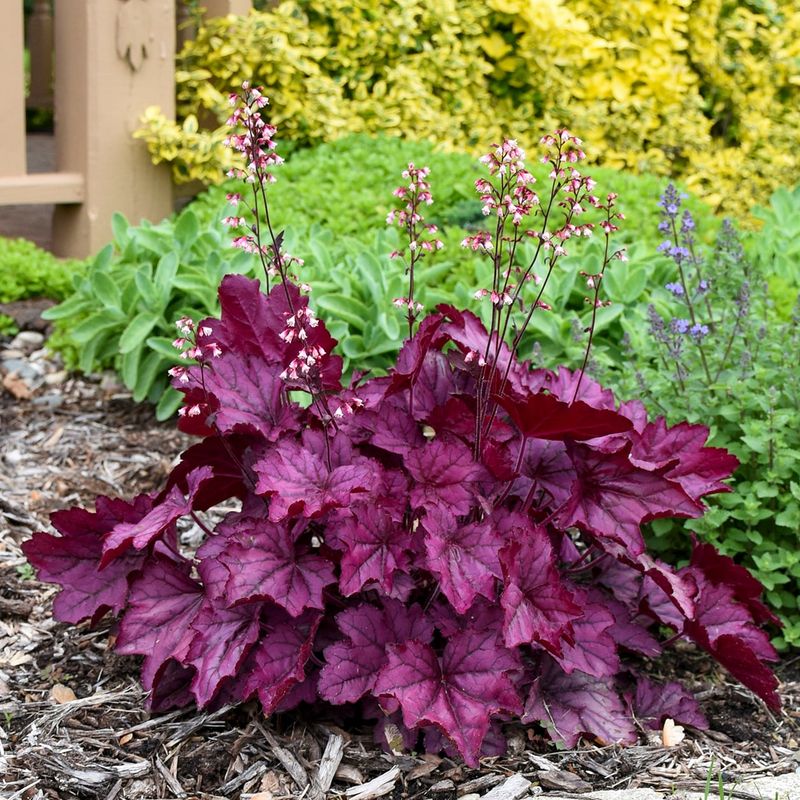
Shaded edges and dry slopes under oaks or along north-facing walls can be tricky spots in a California garden, but coral bells handle those conditions with quiet grace.
Known botanically as Heuchera, this native and near-native perennial forms low mounds of rounded, often richly patterned leaves with thin stems carrying small bell-shaped flowers in pink, red, or white.
The foliage alone makes it worth planting, even when it is not in bloom.
From a fire-smart standpoint, coral bells stay low and do not produce heavy woody growth or volatile oils that increase fire risk.
The plant stays relatively small, usually under eighteen inches tall, and its open form does not trap debris the way dense shrubs can.
That said, old leaves and spent flower stalks should still be cleaned up regularly, especially heading into the dry season, to keep the plant tidy and reduce dry material near the ground.
Coral bells appreciate well-drained soil and benefit from some shade in hot inland California gardens, where afternoon sun can stress the foliage. Along the coast, they often handle more sun without issue.
They pair well with other low-growing natives and work nicely along path edges, under trees, or at the border between a planted area and a hardscape surface.
Used thoughtfully with appropriate spacing, coral bells add real color and texture to shaded spots in a defensible-space planting plan without creating a high-fuel situation.
4. Wild Strawberry Softens Bare Soil
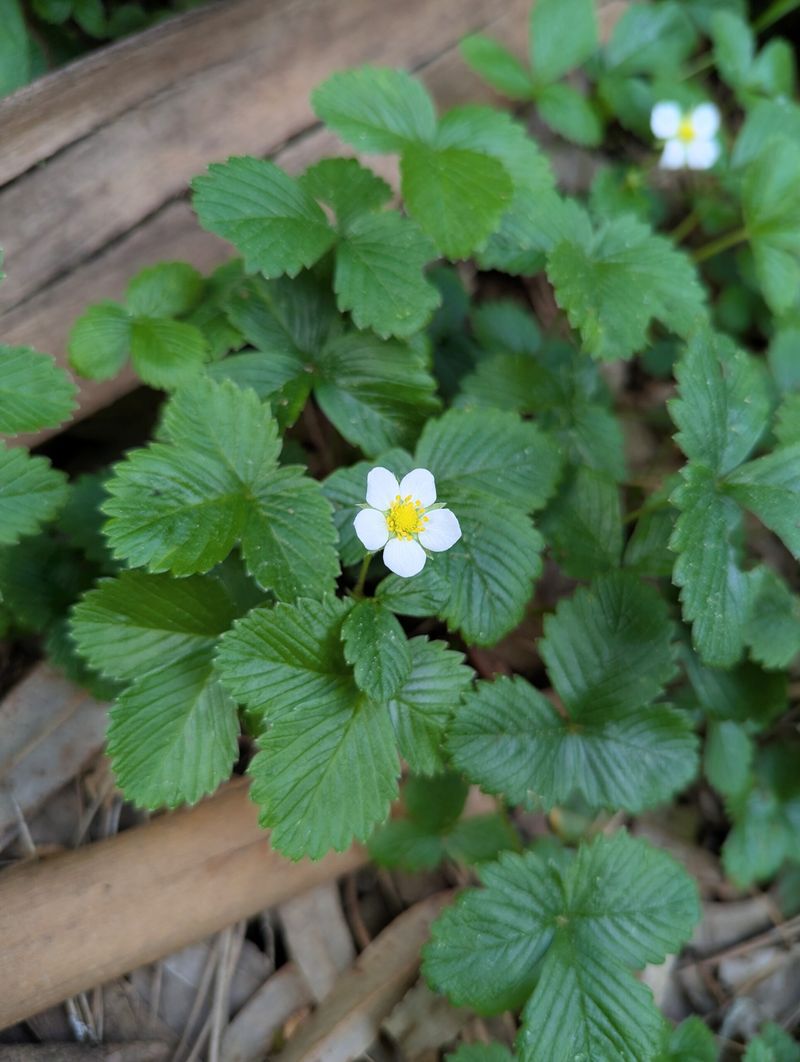
Open soil in a California yard is not just an aesthetic problem. Bare ground dries out quickly, can erode on slopes, and does little to slow the spread of fire across a property.
Wild strawberry, or Fragaria californica, is a low-growing native ground cover that addresses that problem while adding a charming, naturalistic look to the garden.
Its bright green leaves, small white flowers, and tiny red fruit make it genuinely attractive across several seasons.
This plant spreads by runners and stays close to the ground, rarely exceeding six inches in height. That low profile is one reason it can fit into a fire-smart planting plan, particularly in the outer zones of a defensible-space design.
It does not build up tall woody stems or dense thatch quickly, but it still needs regular attention. Dry runners and accumulated leaf litter should be cleared out before fire season to keep the plant from becoming a surface-level fuel source.
Wild strawberry grows well in partial shade to full sun and can handle the dry summers typical of many California regions once it is established.
It works especially well under open tree canopies, along shaded path edges, or on gentle slopes where something low and spreading is needed.
Gardeners who want a native ground cover that does real ecological work, hosting pollinators and supporting local wildlife, while also fitting into a defensible-space plan will find wild strawberry a practical and visually rewarding choice.
5. California Redbud Brings Seasonal Beauty
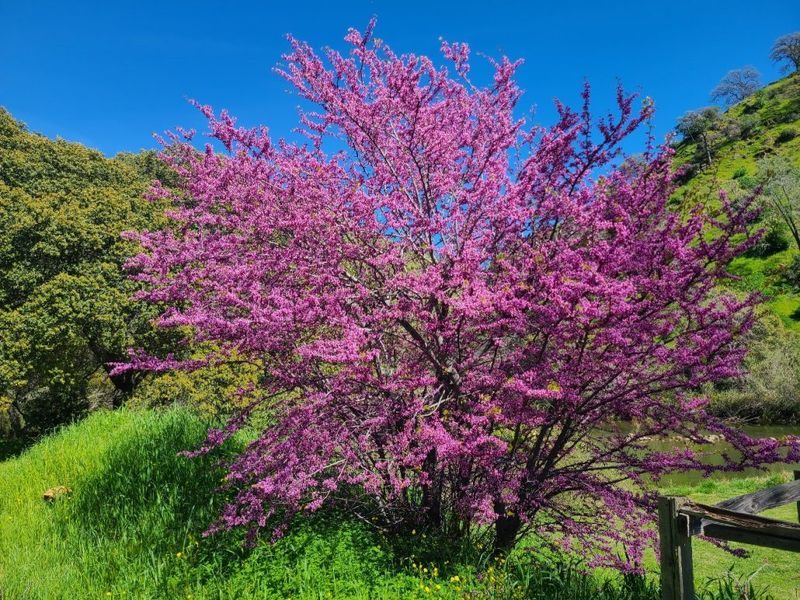
Few plants in a California garden make a more dramatic seasonal statement than California redbud. In late winter and early spring, before a single leaf appears, its bare branches erupt in clusters of vivid magenta-pink flowers that can stop people in their tracks.
After blooming, heart-shaped leaves emerge and turn the plant into a lush, rounded shrub or small tree through summer and fall, adding real structure to a native garden.
In a defensible-space plan, California redbud belongs in the outer zones, placed with adequate spacing between it and other plants, structures, and fences.
It can reach ten to fifteen feet tall and wide at maturity, so giving it room is important both for the plant’s health and for reducing fire risk.
Dense plantings of any shrub, including redbud, can create the kind of continuous fuel bed that fire-smart landscaping aims to avoid. Keeping the area beneath it clear of dry leaves, spent seedpods, and debris is part of good seasonal maintenance.
California redbud is drought-tolerant once established and tends to do best in inland California gardens with good drainage and full sun to light shade.
It does not need summer irrigation in most inland settings after the first couple of years, which keeps it from becoming lush and overgrown in a way that adds fuel.
For gardeners who want a native plant with genuine four-season appeal and a manageable footprint, redbud offers a lot of character for a relatively low-maintenance investment.
6. Toyon Works As A Well-Spaced Screen
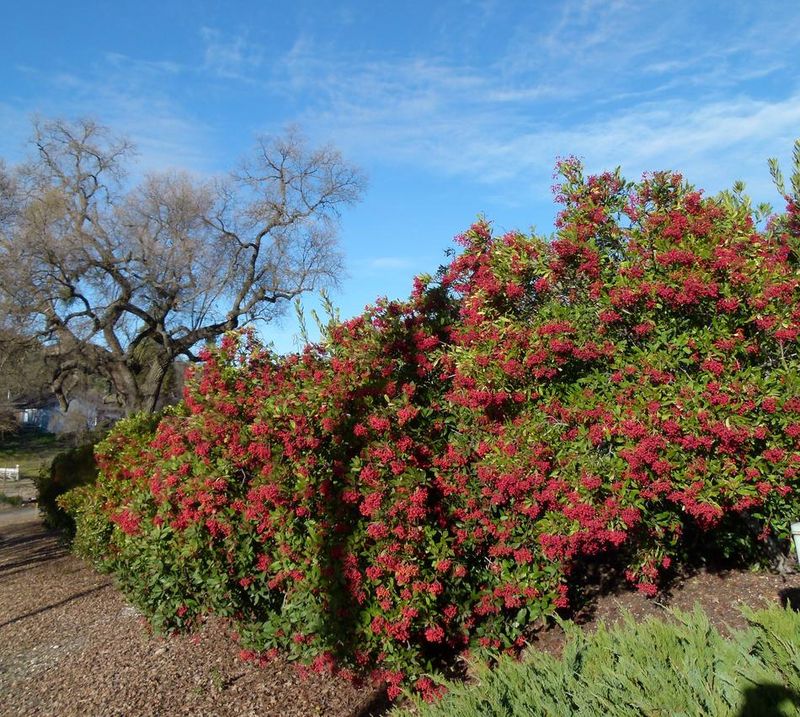
Toyon, sometimes called California holly, is one of the most recognizable native shrubs in the state and has been part of California landscapes for centuries.
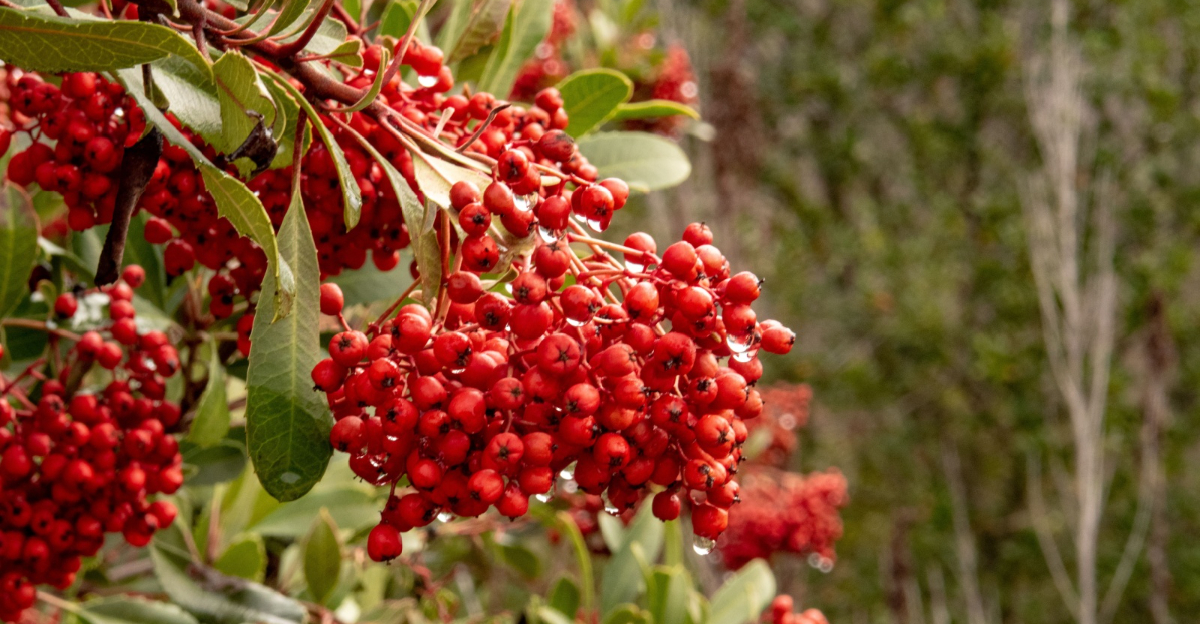
Its dark green leaves, creamy white summer flowers, and clusters of bright red winter berries give it strong visual appeal across all four seasons.
For homeowners who want a native screen or hedge with genuine presence, toyon offers a lot.
Using toyon in a fire-smart landscape requires careful thought about placement and spacing.
It is a large shrub that can reach six to ten feet or more at maturity, and like any sizeable woody plant, it carries real fuel if it becomes overgrown, crowded, or filled with dry debris.
Toyon works best in the middle to outer zones of a defensible-space plan, with generous spacing between plants and between the shrub and any structures.
Pruning out woody growth that has stopped producing, clearing dry leaves from inside the canopy, and keeping the base of the plant free of accumulated debris are all important maintenance steps.
Once established, toyon handles dry California summers with little to no supplemental irrigation in many regions, which helps keep it from putting on excessive new growth.
It supports birds, pollinators, and other wildlife, making it ecologically valuable as well as attractive.
Used as a well-spaced, well-maintained screen rather than a tightly planted hedge, toyon can add structure, privacy, and seasonal color to a California garden while fitting into a thoughtful defensible-space design.
7. Coyote Brush Needs Careful Placement
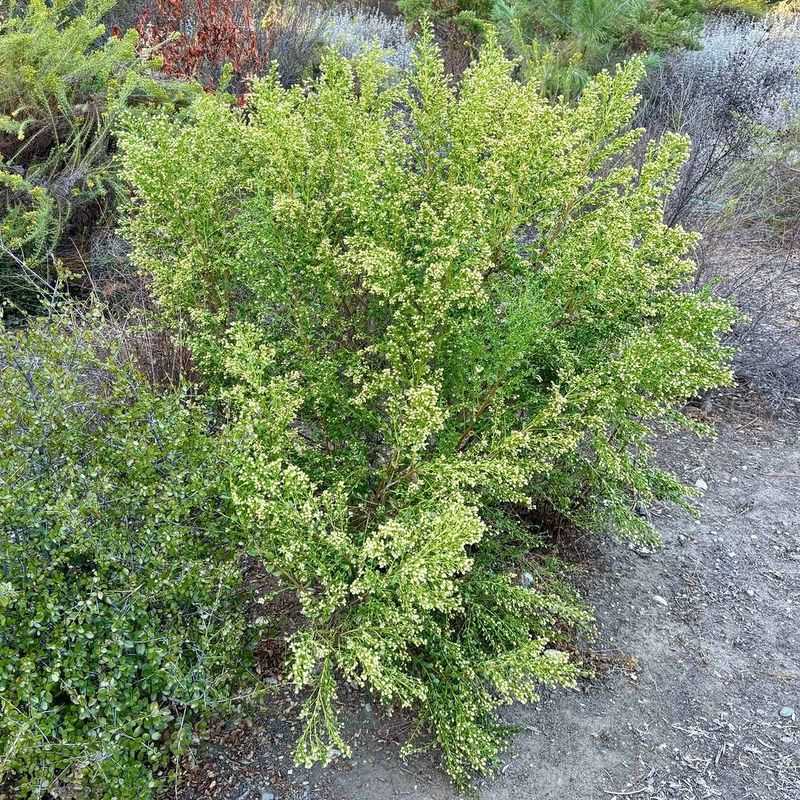
Coyote brush gets a complicated reputation in fire-smart landscaping conversations, and that reputation is worth understanding before planting it.
On one hand, it is a tough, adaptable California native that stabilizes slopes, supports native bees and other pollinators, and handles dry conditions with little help from a garden hose.
On the other hand, it can grow into a large, dense, resinous shrub that carries significant fuel if it is left unmanaged or planted in the wrong location.
The key with coyote brush is placement and maintenance. It does not belong close to structures or in densely planted groupings in fire-prone areas of California.
In the outer zones of a defensible-space plan, with plenty of space between individual plants and regular pruning to reduce dry and spent wood inside the canopy, it can serve as a useful slope stabilizer or wildlife habitat plant.
Gardeners should also clean up the dry, fluffy seed material that accumulates in and around the shrub, especially heading into fire season.
Coyote brush grows quickly, which means it can get out of hand if it is not checked regularly. Cutting plants back hard every few years helps keep them from becoming overly woody and dense.
In coastal California gardens, it often stays more compact than in hot, dry inland settings where it can put on aggressive growth.
Approached with realistic expectations and a consistent maintenance routine, coyote brush can earn its place in a thoughtful California native landscape.
8. Quail Bush Handles Dry Open Areas
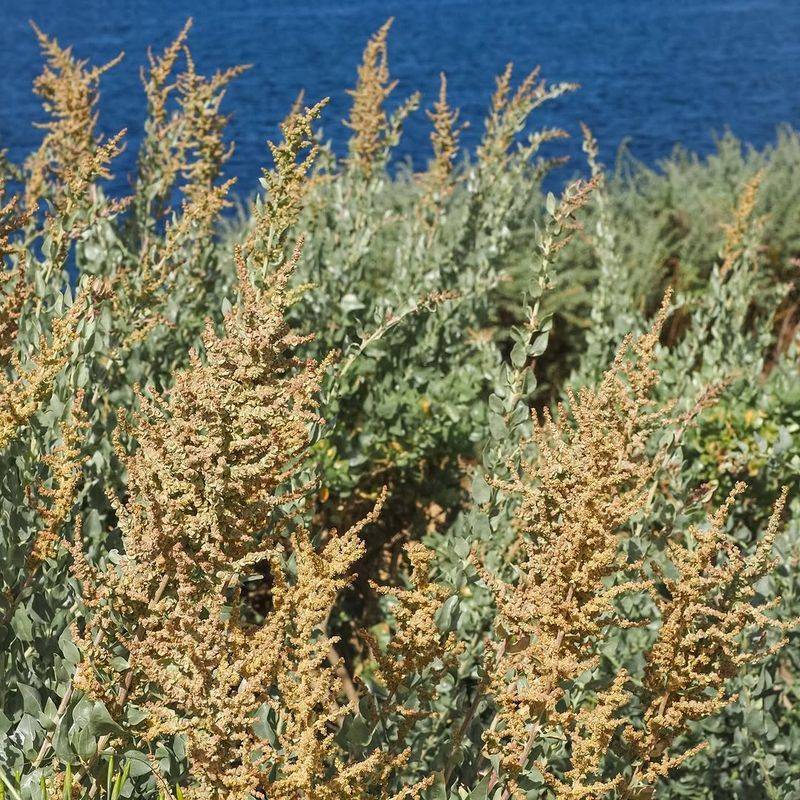
Open, sunny, and very dry spots in a California yard can feel like a planting puzzle with few good solutions. Quail bush, or Atriplex lentiformis, is one plant that actually belongs in those conditions.
Its silver-gray foliage reflects heat, its tolerance for alkaline and saline soils makes it useful in areas where other plants struggle, and its rounded form adds soft texture to dry open borders and property edges.
From a fire-smart landscaping perspective, quail bush has some qualities worth noting. Its silvery leaves contain relatively little volatile oil compared to some other shrubs, and it tends to hold moisture in its foliage longer than plants with darker, oilier leaves.
However, it can grow quite large, reaching six feet tall and wide or more, and like any substantial shrub, it needs spacing and maintenance to stay lower-risk.
Placing it well away from structures, clearing dry leaf debris from beneath it, and pruning out old wood regularly all help it fit responsibly into a defensible-space plan.
Quail bush is genuinely drought-tolerant once established and needs very little supplemental irrigation in most California inland and valley settings.
It provides real habitat value, offering cover and food for quail, songbirds, and other wildlife.
For gardeners dealing with difficult, dry, exposed areas where most plants give up, quail bush is a practical and ecologically useful option that still adds visual softness and structure to a challenging California landscape.