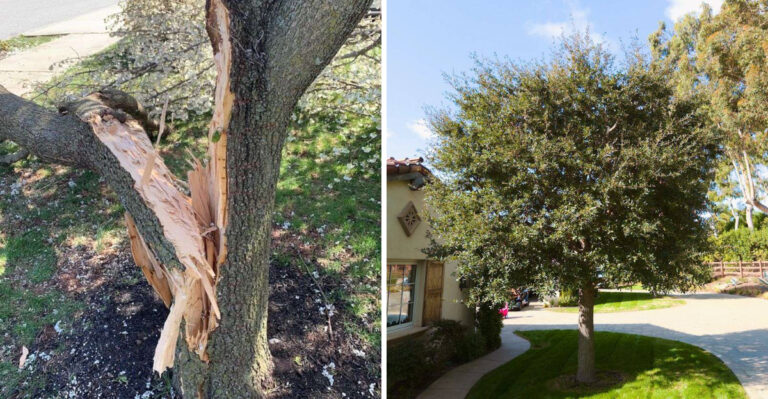
The Florida Shrub That Looks Like Holly But Is Actually One Of The State’s Worst Invaders
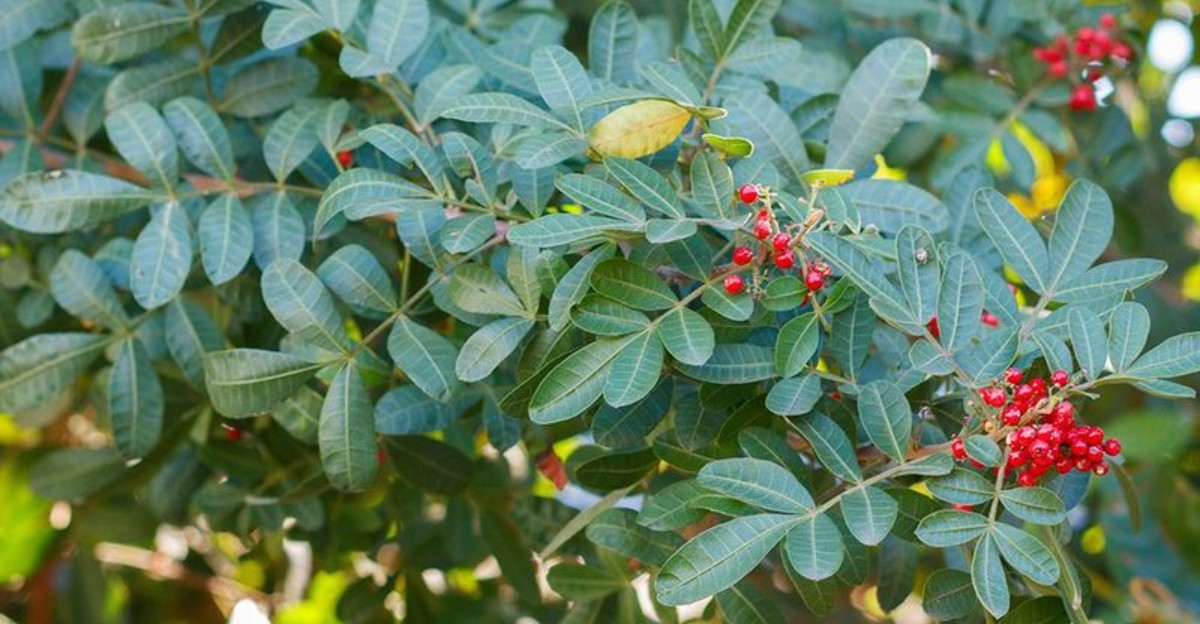
Something with bright red berries and glossy green leaves keeps showing up along fence lines and empty lots. It looks festive enough to seem almost intentional.
It’s not holly. It’s not something to leave alone just because it looks nice this time of year.
That resemblance does real damage. This plant spreads fast once established, pushing into natural areas and choking out native vegetation faster than most invasive species manage.
Its holly-like look is exactly why it gets ignored, admired, or even planted on purpose by people who have no idea what they’re looking at.
Florida has spent years and real money trying to beat this thing back. It’s still winning in plenty of places.
1. Meet Brazilian Peppertree, The Impostor Once Sold As Florida Holly
Back in the 1840s, Florida nurseries were selling a handsome South American shrub as a charming ornamental. Gardeners loved the glossy foliage and the scarlet fruit that appeared right around the holidays.
Sellers leaned into that charm with nicknames like Christmas berry and Florida holly.
Schinus terebinthifolia actually hails from Brazil, Argentina, and Paraguay, where natural controls keep it in balance. In the state it found warm weather, generous rain, and almost nothing to slow it down.
What started as a landscape favorite turned into one of the state’s most stubborn invaders.
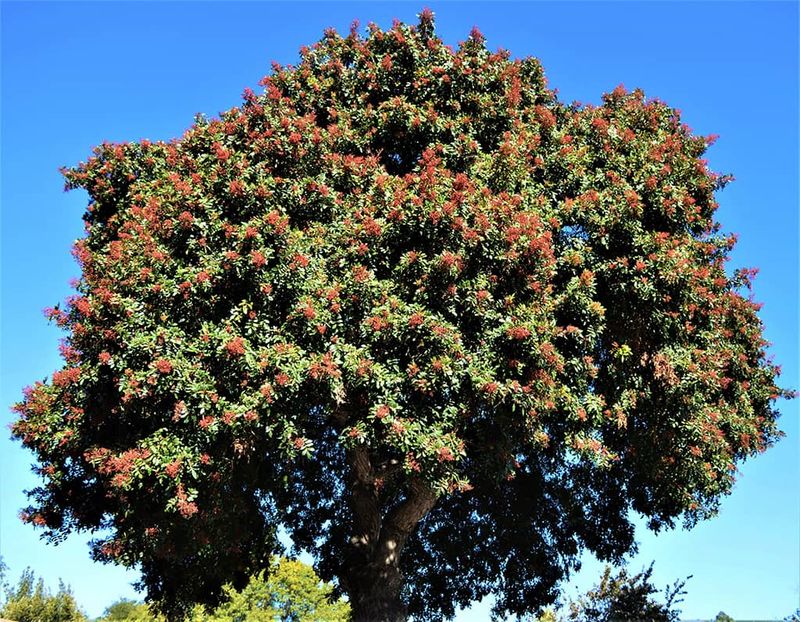
Size is the first surprise for anyone expecting a tidy hedge. Mature specimens can become large shrubs or small trees, often reaching several dozen feet tall in favorable conditions.
Branches lean, arch, and tangle until a single plant blankets a wide patch of ground.
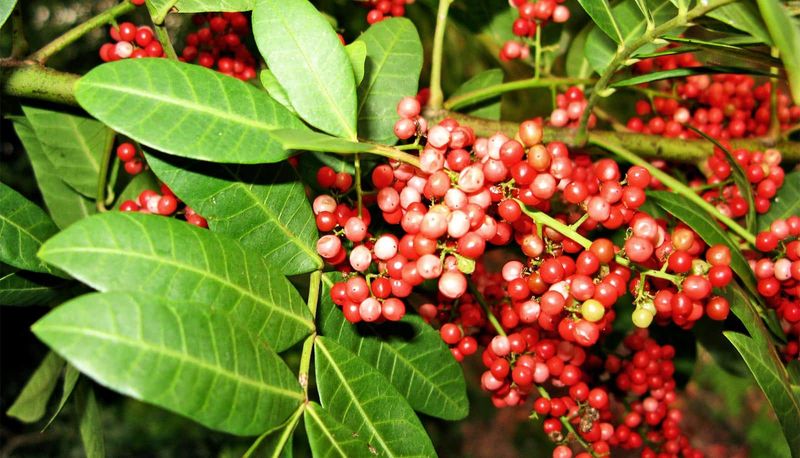
Leaves offer the clearest clue of all. They are alternate and pinnately compound, meaning several leaflets line up along a central stalk, and those leaflets usually carry fine teeth along their edges.
Crush one between your fingers and a sharp turpentine odor rises, something no true holly will give you.
Knowing the backstory makes the plant much easier to recognize on sight, and recognizing it early saves an enormous amount of labor later on.
2. Look Past Those Festive Red Berries Before Mistaking It For A Native
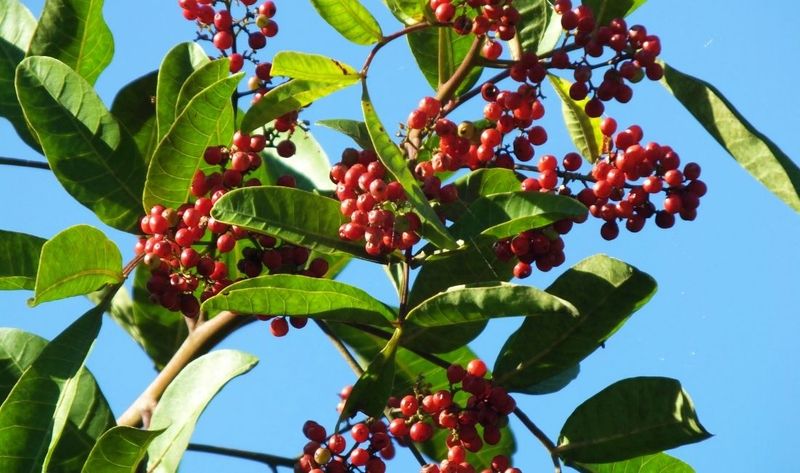
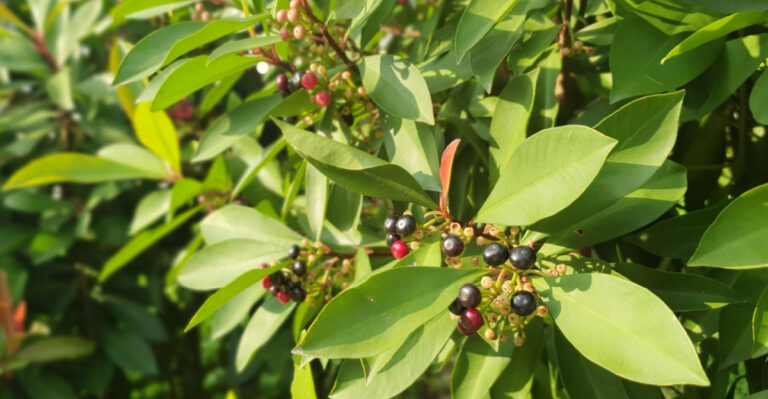
Those bright red clusters are exactly why so many people get fooled. The fruits ripen by December, glowing against dark green foliage like something printed on a greeting card.
Botanists call them drupes, though most folks simply say berries.
Flowering runs from September through November in Florida, with small creamy blossoms that hardly anyone notices. Fruit follows quickly, and one mature female plant can carry thousands.
That holiday timing is how the nickname Christmas berry stuck around for generations.
Here is the catch. Brazilian peppertree has zero family connection to true hollies, which belong to the genus Ilex.
The resemblance is skin deep, and the leaves give the game away every single time.
Check leaf structure before you decide anything. Native hollies carry simple leaves, meaning one blade attached to the stem, sometimes edged with small teeth or spines.
The impostor carries compound leaves with five to thirteen leaflets along a central stalk that often looks slightly winged.
Your Florida Garden Changes Every Week. Your Plan Should Too.
Gardening in Florida changes quickly throughout the season. Every Friday you’ll receive a simple weekly plan showing exactly what to plant, prune, fertilize, harvest, and protect so you never miss the right timing.
Bark provides another hint, since older peppertrees develop a grayish, somewhat rough surface on multiple leaning trunks. Overall shape helps too, because true hollies tend toward neat pyramid outlines while this one sprawls in every direction.
Spend ten seconds studying the leaves and you will rarely confuse the two again.
3. Watch Birds Turn One Berry-Laden Shrub Into A Much Bigger Problem
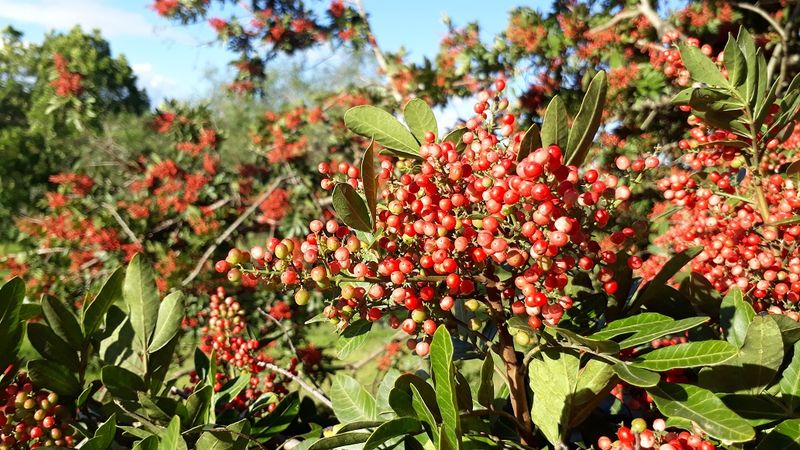
Picture a flock of cedar waxwings dropping into a fruit-heavy peppertree on a January morning. Twenty minutes later they lift off, and every bird carries seeds headed somewhere new.
That short visit is how one shrub becomes a hundred.
American robins, northern mockingbirds, and gray catbirds all feed on the fruit, while raccoons and opossums join in at ground level. Seeds pass through digestive systems intact and get dropped along fence lines, canal banks, and pasture edges.
Germination rates run high, and the seedlings hang on even in shade.
Wildlife does not exactly benefit from the meal. The fruit can affect wildlife in ways that are not fully beneficial, and large quantities may cause problems for some animals.
The berries carry compounds that upset stomachs and dull reflexes.
Shade tolerance is what makes the spread so hard to slow. Young plants can sit quietly beneath an oak canopy for years, growing slowly, waiting for a storm or a mower to open some light.
Once that gap arrives, they shoot upward in a hurry.
Homeowners can interrupt the cycle by taking out fruiting plants before December, ideally in late summer. Fewer berries means fewer free rides for seeds, and the neighbors benefit right along with you.
4. Expect Dense Thickets To Crowd Out The Plants Growing Around Them
Walk into an old peppertree stand and the quiet hits you first. Very little light reaches the soil, few wildflowers grow, and the tangled branches make walking nearly impossible.
Biologists sometimes describe these stands as green deserts.
Dense canopies are only half the trouble. Roots and fallen leaves release allelopathic chemicals, natural compounds that discourage other seeds from sprouting nearby.
Between the heavy shade and that chemistry, native grasses and wildflowers lose their footing.
Rare plants absorb the worst of it. Coastal strand species, scrub wildflowers, and marsh plants with nowhere else to go get squeezed out of the small habitat they still have.
Gopher tortoises lose the open, sunny ground they rely on for burrows and grazing.
Nesting birds struggle in these areas too. A thicket may look like shelter, yet it supplies fewer insects, fewer seeds, and poorer nesting structure than the varied native habitat it replaced.
Wildlife managers consistently rate such stands as low value for local animals.
If a patch is creeping toward your property line, treat it as a small project worth finishing now. A handful of seedlings pulled this spring beats a wall of trunks three years from now, and native seedlings usually fill the opening once sunlight returns.
5. Grasp Just How Much Florida Ground It Has Already Claimed
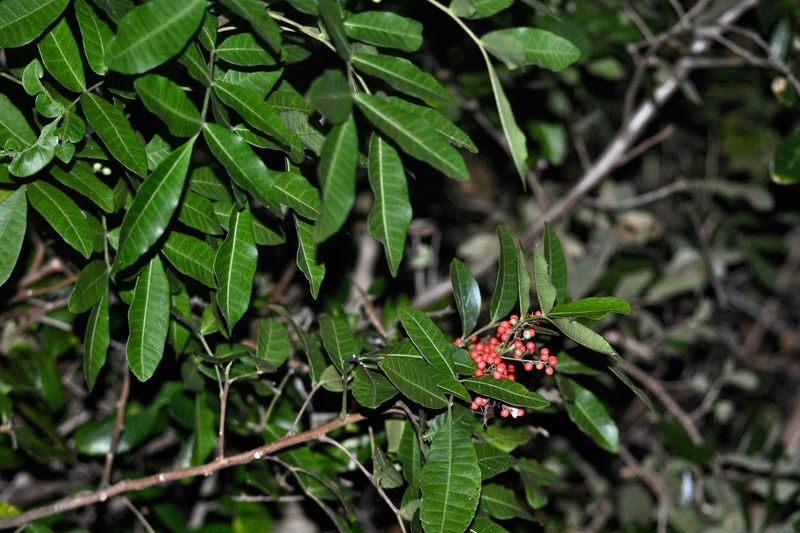
Numbers tell this story better than adjectives can. Land managers estimate that one species occupies hundreds of thousands of acres across the state, with figures above 700,000 acres frequently cited for the peninsula.
That is a staggering amount of territory for a former garden shrub.
South Florida carries the heaviest load by far. Everglades National Park, ranch lands, and abandoned farm fields around Lake Okeechobee host some of the thickest stands, and crews there have spent decades and millions of dollars pushing it back.
Cold weather acts as the main brake. Hard freezes damage tender young growth, so the plant is far more common in central and southern counties, though sheltered pockets in north Florida still support healthy specimens.
Money enters the picture quickly. Public agencies budget serious funding each year for removal on conservation land, and private landowners often hire contractors for the same job.
Every fruiting plant left standing adds to somebody’s bill next season.
Researchers have released biological control insects, including a thrips and a leaf-galling psyllid, to slow new growth naturally. Early results look encouraging, though nobody expects insects alone to settle the matter.
Understanding that scale explains why extension agents sound so serious about a single backyard shrub. Small landscape choices add up statewide.
6. Check Roadsides Ditches And Disturbed Ground For Its Next Foothold
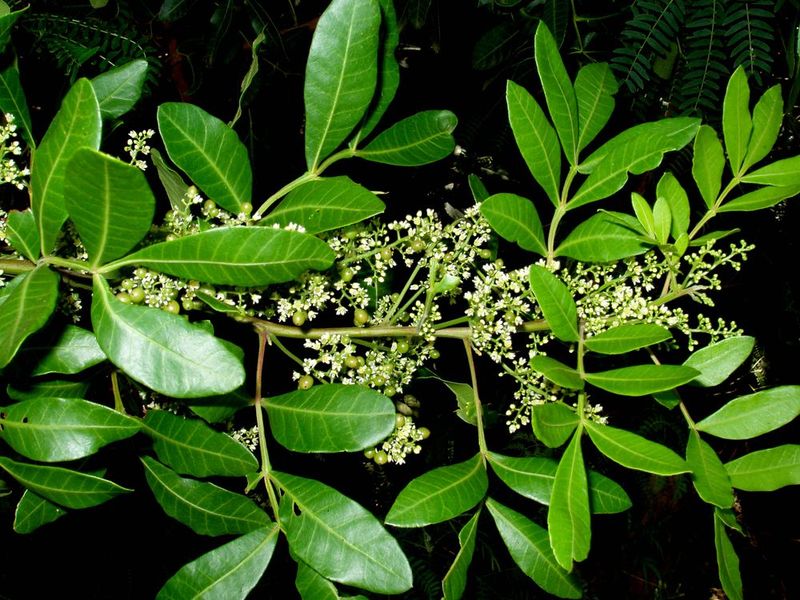
Disturbed ground is this plant’s favorite real estate. Highway rights of way, fallow fields, ditch banks, levees, and canal edges hand seedlings the bare soil and open sun they crave.
Drive almost any rural road in central Florida and you will start spotting them.
Construction sites and freshly cleared lots qualify too. Anywhere a bulldozer, a mower, or a storm strips away existing plants, seeds waiting in the soil get their opening.
Natural areas are hardly safe either. Pine flatwoods, coastal hammocks, mangrove fringes, scrub, and freshwater wetlands have all been invaded, which is unusual for a plant with such a broad comfort zone.
Salt does not bother it much, and soggy soil barely slows it either. That tolerance lets it move from a dry roadside into a tidal marsh without missing a beat, something most landscape shrubs could not manage.
Practical tip for property owners: walk your fence lines and ditch edges twice a year, once in spring and once in fall. Seedlings pull out easily while the soil is damp and the stem is still thin as a pencil.
Neighborhood teamwork pays off here. When several households along one street inspect their edges, an entire block stays clear with surprisingly little effort.
7. Do Not Expect A Cut Stump To Stop Brazilian Peppertree From Returning
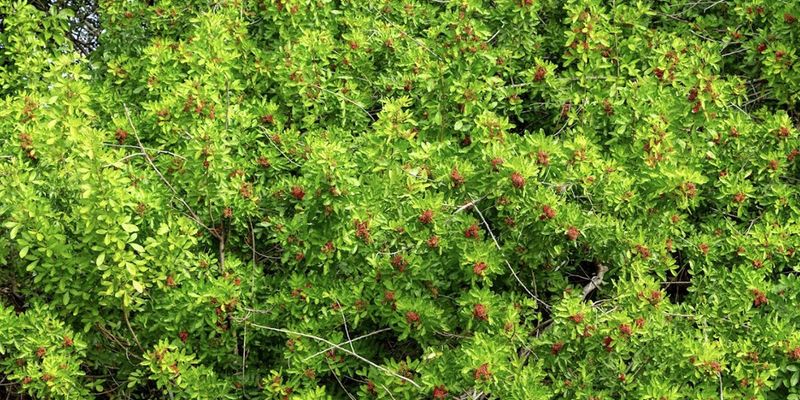
Cutting one down feels satisfying for roughly three weeks. Then a ring of fresh green sprouts rings the stump, and often more shoots pop up from roots several feet away.
One plant quietly becomes a cluster.
Resprouting is the plant’s superpower, which is why timing and follow-up matter far more than muscle. The cut stump method is the standard approach: saw the trunk as close to the ground as possible.
Apply an appropriate labeled treatment to the freshly cut stump according to the product directions, because timing and methods vary by situation
Wait longer and the cut surface seals over, blocking the product from traveling down into the roots.
Basal bark treatment offers another route, with herbicide applied around the lower trunk, often most effective in fall during flowering. Foliar sprays work well on seedlings and saplings when you can coat the leaves thoroughly.
Schedule the work outside of fruiting season so you are not scattering ripe berries across the yard. Late summer and early fall usually fit nicely.
Big infestations may call for heavy equipment, followed by patient monitoring for regrowth. Whatever method you pick, mark your calendar to recheck the site a few months later, since missed sprouts are the usual reason a project restarts.
8. Handle It Carefully Because It Shares A Family With Poison Ivy
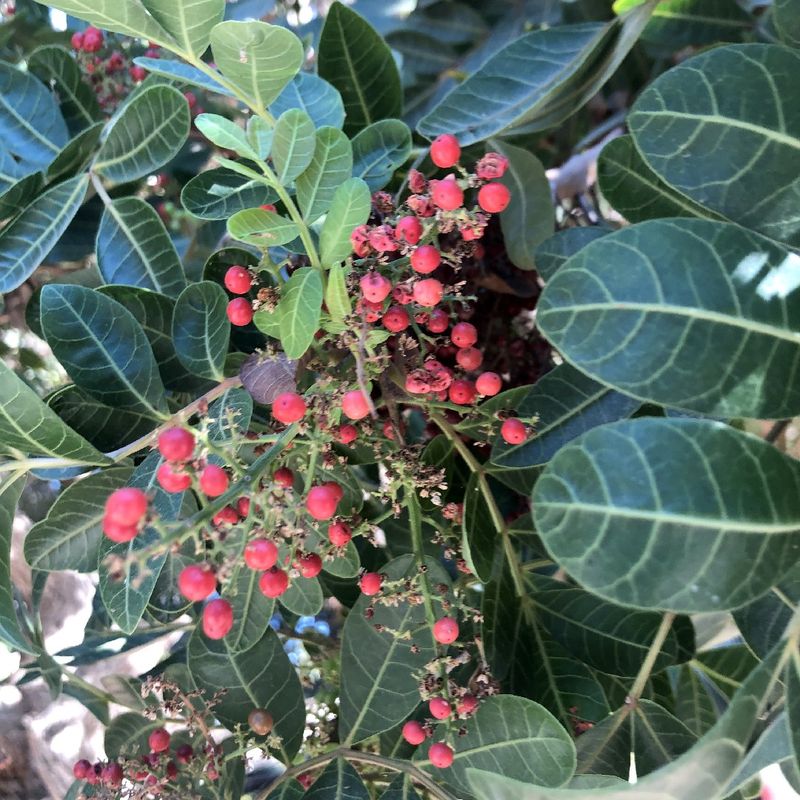
Family resemblance here runs deeper than appearances. Brazilian peppertree sits in the Anacardiaceae family alongside poison ivy, poison oak, and poison sumac, which explains plenty about how people react to it.
Sap causes most of the trouble. Contact can trigger allergic contact dermatitis in sensitive people, showing up as redness, itching, or a rash a day or two after pruning.
Not everyone responds, though plenty of Floridians do.
Airborne irritation catches folks off guard. During bloom, compounds released by the flowers and crushed fruit can set off sneezing, headaches, and asthma-like symptoms, especially for anyone working downwind with a chainsaw or trimmer.
Swallowing the fruit is a genuinely poor idea, with vomiting and diarrhea among the reported effects, and eye irritation is possible from splashed sap or drifting dust. Keep curious children and pets well away from berry-covered branches.
Gear up before starting. Long sleeves, sturdy gloves, eye protection, and a mask make a real difference, and washing your skin and clothing soon afterward helps a lot.
Skip burning the brush, since smoke from related plants can carry irritating compounds straight into your lungs. Chipping, hauling, or stacking the material is a safer plan, and many counties accept it as ordinary yard waste.
9. Know That The State Prohibits The Sale Of Brazilian Peppertree
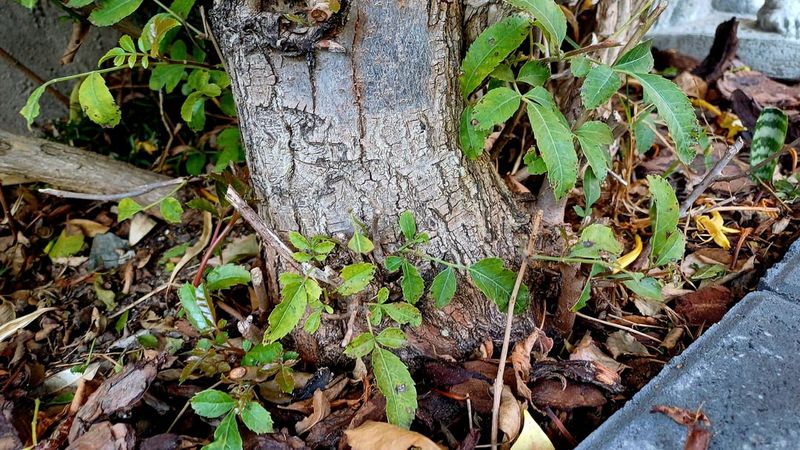
The state regulators do not treat this species gently. Brazilian peppertree is classified as a Class I prohibited invasive species and appears on the state noxious weed list, a designation that carries genuine legal weight.
Under those rules, introducing, multiplying, possessing, moving, or releasing any part of the plant without a permit breaks state law. Selling it or deliberately planting it is entirely off the table statewide.
Removal requirements vary by city and county. Some municipalities require property owners to take it out, particularly when a development or building permit is involved, while others simply encourage the work through outreach.
A few communities go much further. Sanibel and several other coastal towns have run dedicated eradication programs for years, complete with volunteer workdays and cost-share assistance for residents.
Nurseries stopped carrying it decades ago, yet old landscape specimens still linger in yards planted long before the ban.
If an established tree shades your patio, call your county extension office before deciding on next steps, because staff can point you toward local rules and disposal options.
Following the regulation is about more than paperwork. Each fruiting plant left standing ships seeds into parks, preserves, and neighboring yards, so the law really asks everyone to carry one small share of responsibility.
10. Replace The Impostor With A True Florida Holly Instead
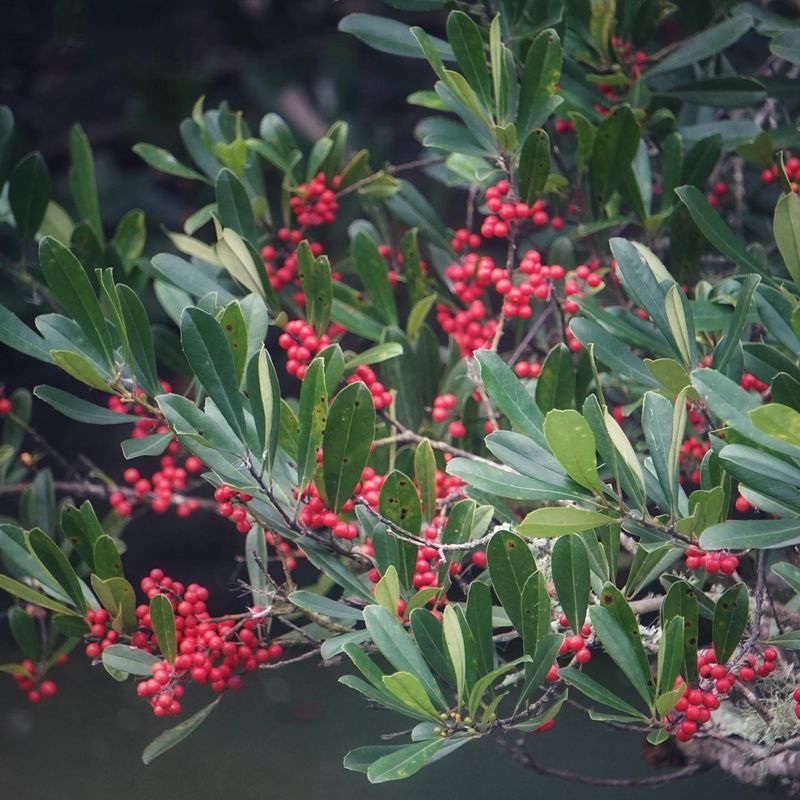
Good news for anyone who genuinely loves red berries at the holidays: Florida grows its own hollies, and they are beautiful.
Dahoon holly (Ilex cassine) tops most recommendation lists, forming a graceful pyramid with shiny green leaves and bright fruit. It handles moist soil wonderfully and can stretch toward 40 feet under good conditions.
Yaupon holly (Ilex vomitoria) suits smaller spaces, with glossy little leaves and cultivars ranging from dwarf mounds to weeping forms. Drought and salt spray hardly faze it once the roots settle in.
American holly (Ilex opaca) delivers the classic look, with spiny evergreen leaves and a tidy pyramidal outline that resembles the hollies on old greeting cards.
Inkberry, also called gallberry (Ilex glabra), stays medium sized and produces black fruit that pollinators and songbirds appreciate.
East Palatka holly (Ilex x attenuata) is a dependable hybrid with a triangular silhouette and reliable red berries.
One planting detail trips people up regularly. These hollies are dioecious, meaning male and female flowers grow on separate plants, so only females produce berries.
Ask the nursery whether the plant is male or female and choose compatible plants if berry production is your goal.
Birds get a nutritious meal, your yard gains winter color, and nobody wrestles a thicket five years down the road.