The Forgotten Pennsylvania Native Shrub That Makes Coyotes Less Welcome Along Backyard Borders
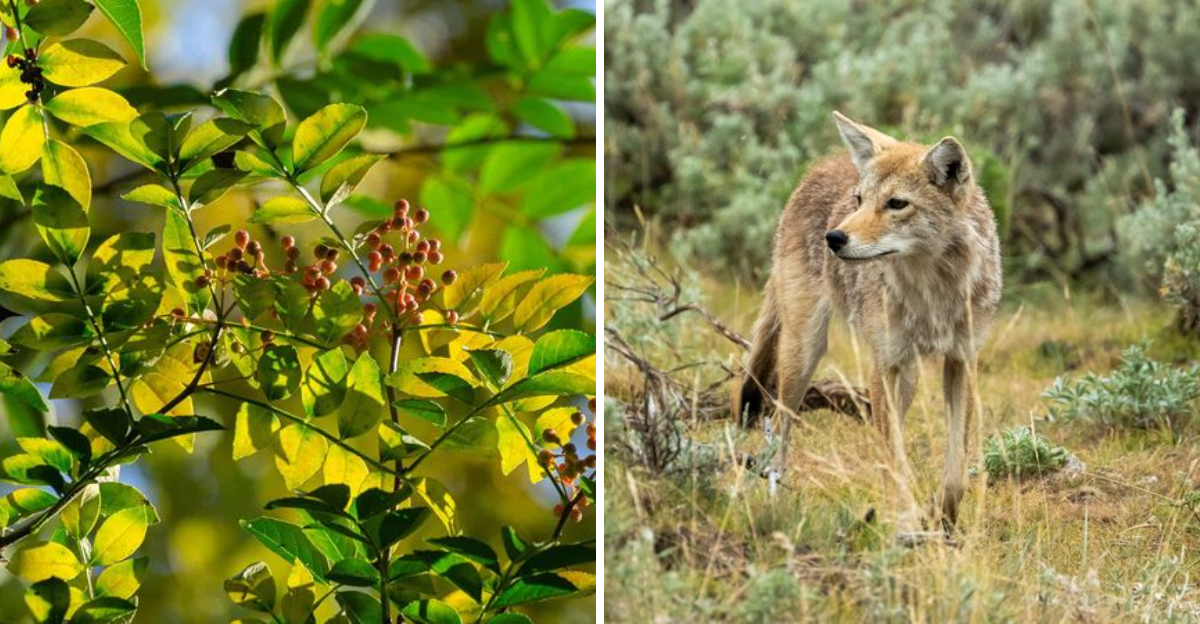
Coyotes showing up along backyard borders in Pennsylvania is becoming less of a rare occurrence and more of a regular reality for homeowners across the state.
They’re adaptable, they’re bold, and once they find a residential area that offers food or easy access, they tend to keep coming back.
For families with small pets or young children, that’s a situation that deserves a real solution. Most people think about fencing or deterrent sprays.
But there’s a native Pennsylvania shrub that takes a different and surprisingly effective approach. This forgotten native creates a dense, uninviting border that coyotes instinctively avoid.
It’s not just about physical barriers either. The way this shrub grows and the environment it creates along a backyard border naturally discourages coyotes from approaching or lingering nearby.
It also supports local wildlife, attracts pollinators, and looks genuinely beautiful through multiple seasons. Here’s the native shrub that could quietly make your backyard borders a lot less interesting to coyotes.
Northern Prickly Ash Makes Coyotes Less Welcome
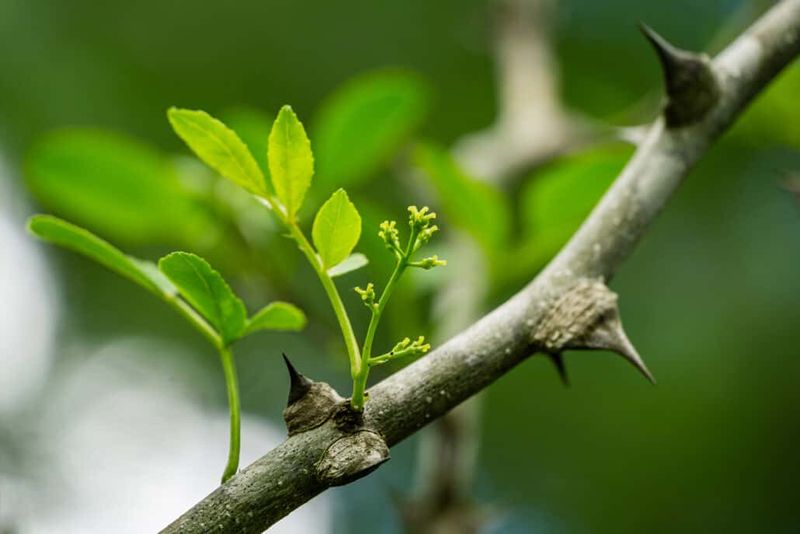
Not many people recognize northern prickly ash at first glance, but once you spot those sharp, paired spines along its stems, you will not forget it.
This native Pennsylvania shrub has been growing wild along forest edges, stream banks, and brushy hillsides for a very long time.
It is tough, adaptable, and surprisingly useful for homeowners who want a natural way to make their yard borders less comfortable for coyotes to pass through.
Northern prickly ash, known by its scientific name Zanthoxylum americanum, can grow anywhere from four to ten feet tall. Its stems are covered in stiff, pointed prickles that make it genuinely unpleasant to push through.
When planted in a row or cluster along a property line, it forms a rough, tangled barrier that most animals would rather go around than through.
It is worth being clear about what this shrub can and cannot do. Northern prickly ash is not a guaranteed coyote repellent.
Coyotes are smart, athletic animals that can jump fences and find creative routes through neighborhoods. What this shrub does is act as a physical deterrent.
It makes the border of your yard less inviting and less easy to move through casually. Think of it as one layer of a bigger strategy.
Combined with good yard habits and proper fencing, a dense planting of northern prickly ash can genuinely reduce how often coyotes choose your property edge as a travel route.
For a native plant that asks for very little care, that is a meaningful benefit worth considering.
Why Coyotes Move Along Backyard Borders
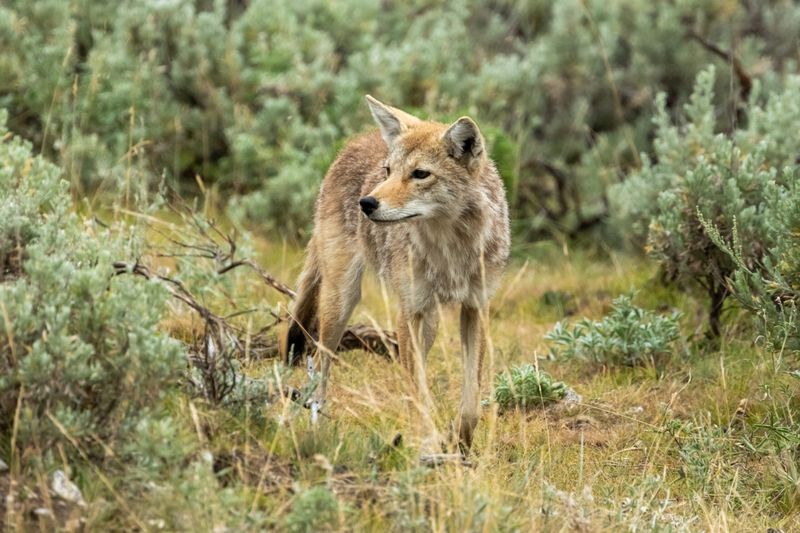
Coyotes are not random wanderers. They follow patterns, and those patterns often run right along the quiet edges of your yard.
Fence lines, wooded strips, hedgerows, and brushy property borders act like natural highways for coyotes moving through suburban and rural areas. These edges offer cover from open spaces, which makes coyotes feel safer as they travel.
Most of the time, a coyote moving along your backyard border is not looking for trouble. It is looking for an easy route between two points, a place to find food, or a spot near water or small prey animals.
Your Pennsylvania Garden Changes Every Week. Your Plan Should Too.
Gardening in Pennsylvania changes quickly throughout the season. Every Friday you’ll receive a simple weekly plan showing exactly what to plant, prune, fertilize, harvest, and protect so you never miss the right timing.
Coyotes are highly adaptable and have learned to live alongside human neighborhoods. They often move at dawn, dusk, or after dark, which is why many homeowners never see them even when coyotes pass through regularly.
Understanding why coyotes use these edges helps explain why a thorny, dense shrub barrier can actually make a difference. If a coyote’s usual travel route along your fence line suddenly becomes a wall of prickly, tangled growth, the path becomes less appealing.
Animals, like people, tend to choose the easiest option available. A border that is rough, uncomfortable, and hard to move through sends a clear message without any noise or chemicals involved.
Coyotes also tend to avoid areas where movement feels risky or restricted. A dense shrub planting changes the feel of that edge from open and easy to tight and uninviting.
That shift in environment can be enough to redirect foot traffic away from your property over time.
How Northern Prickly Ash Creates A Natural Barrier
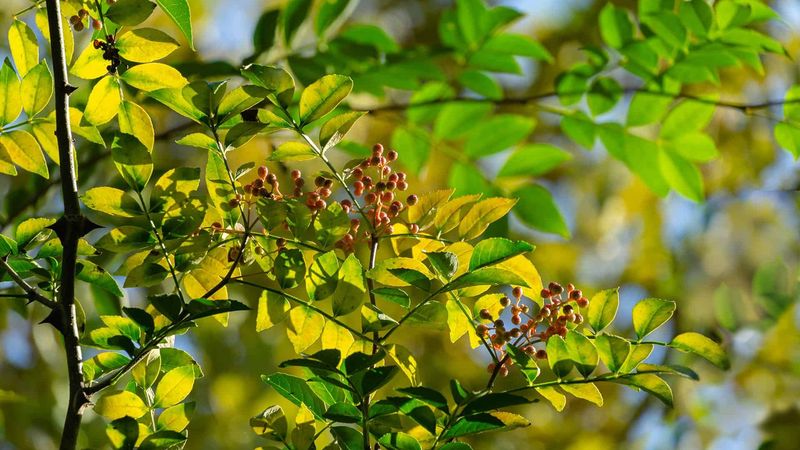
Sharp stems are just the beginning. Northern prickly ash has a growth habit that makes it especially effective as a barrier plant.
Over time, it spreads by root suckers, meaning it sends up new shoots from its underground root system. This creates a spreading thicket rather than a single isolated shrub.
A well-established planting becomes a dense, tangled mass of prickly stems that is genuinely difficult for animals to push through comfortably.
The stems of northern prickly ash are lined with paired, curved spines that can be quite sharp. Even young stems have them.
As the plant matures, the branches become increasingly interlocked with neighboring stems, creating a layered wall of growth. Unlike a smooth fence or a soft hedge, this shrub offers real physical resistance.
An animal attempting to squeeze through a mature thicket would face scratches and discomfort at every step.
Beyond the prickles, the dense canopy of northern prickly ash provides another benefit. It removes the open, easy sightlines that make a border feel safe and accessible to a passing coyote.
Animals that rely on clear movement paths tend to avoid tight, tangled spaces where escape routes feel limited. A properly established prickly ash thicket creates exactly that kind of uncomfortable environment along a yard edge.
It does not need to be a solid wall to be effective. Even a patchy, irregular row of these shrubs, planted close enough to fill in over a few growing seasons, can significantly change how your property border feels to wildlife moving through the area.
Where To Plant It For The Best Border Effect
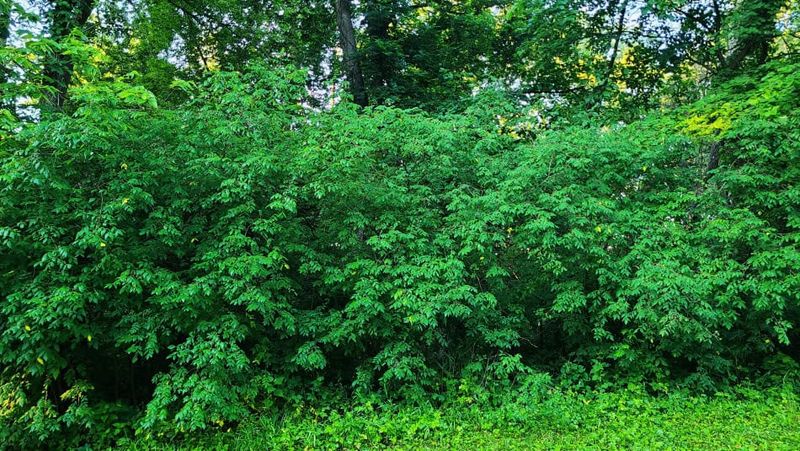
Placement matters a lot with northern prickly ash. Getting it right means thinking about where coyotes are most likely to approach and where a thorny barrier will do the most good.
The best spots are usually along back fence lines, woodland edges, large property borders, and low-traffic naturalized areas where the shrub has room to spread and fill in over time.
If your yard backs up to a wooded area, a stream corridor, or an open field, those are the edges most likely used by coyotes as travel routes. Planting northern prickly ash along those specific borders gives you the most effective deterrent where it counts.
A row planted just inside the fence line, or along the outer edge of a naturalized garden area, can fill in within a few growing seasons to create a meaningful physical barrier.
There are some spots where northern prickly ash should not go. Keep it away from walkways, play areas, driveways, and any narrow paths where people or pets move regularly.
The prickles are sharp enough to scratch skin and snag clothing, and the shrub spreads over time, so giving it space from the start is smart planning. It works best in larger yards where a naturalized border is welcome rather than a manicured edge.
Northern prickly ash tolerates a wide range of soil conditions, including poor, rocky, or dry soils, which makes it practical for many Pennsylvania properties.
It also handles partial shade well, so wooded or semi-shaded edges are perfectly suitable planting locations for strong, healthy growth.
Why This Native Shrub Belongs In Pennsylvania Gardens
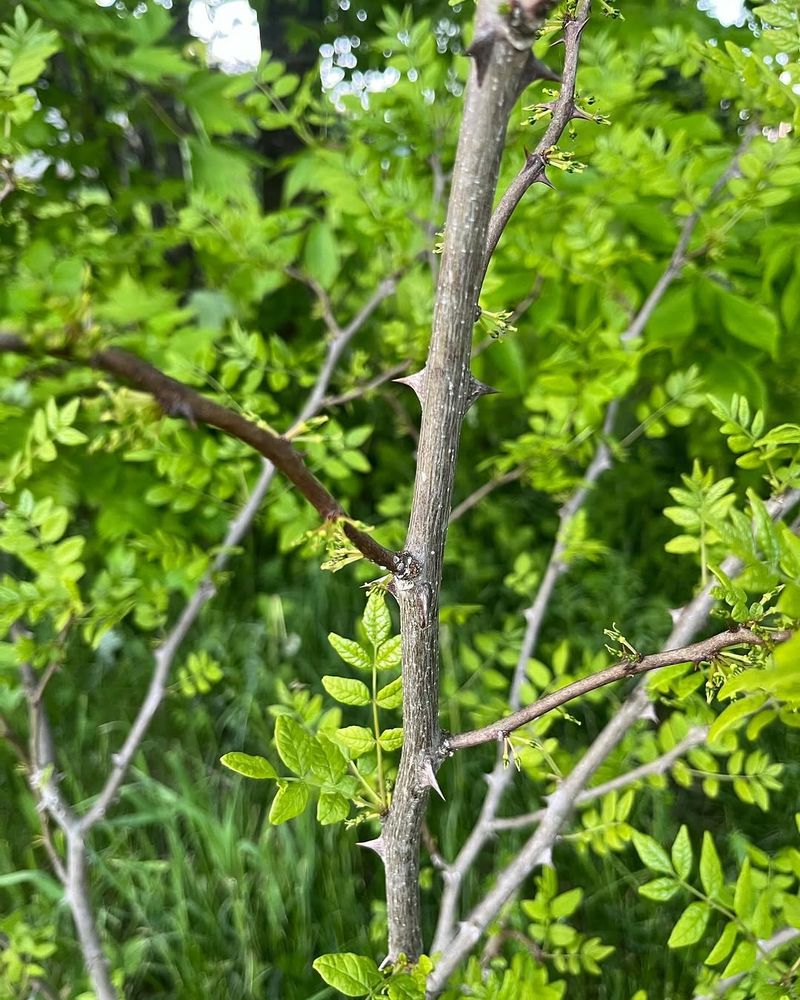
There is something satisfying about using a plant that actually belongs where you are putting it. Northern prickly ash is native to Pennsylvania and much of the eastern and midwestern United States.
That means it evolved here, adapted to the local climate, and supports the local food web in ways that non-native plants simply cannot match. Choosing it for your yard border is a decision that benefits more than just your property.
Pollinators love northern prickly ash. In spring, it produces small clusters of tiny yellow-green flowers that attract native bees, flies, and other beneficial insects before many other plants have leafed out.
Later in the season, the bright red berry clusters that follow are an important food source for birds, including cedar waxwings, robins, and wild turkeys. Its dense, thorny branches also provide excellent nesting cover for songbirds looking for a safe, sheltered spot.
From a garden design perspective, northern prickly ash fits naturally into informal hedgerows, habitat borders, and naturalized landscape edges. It has a relaxed, wild look that suits Pennsylvania’s rural and semi-rural properties especially well.
It does not need fertilizer, heavy pruning, or much attention once established. For gardeners interested in native plants, wildlife habitat, or low-maintenance landscaping, this shrub checks a lot of boxes.
The fact that it also discourages coyotes from lingering along your yard edge is a practical bonus on top of its ecological value. It is a plant that works hard in multiple ways, quietly and without much fuss, which is exactly the kind of garden plant worth knowing about.
What Else To Do To Keep Coyotes Away
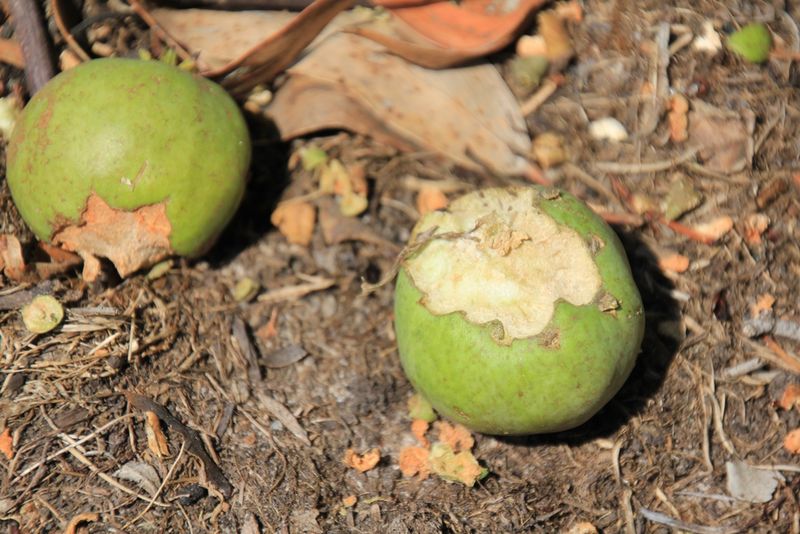
Northern prickly ash is a genuinely useful border plant, but it works best as part of a broader approach to keeping coyotes less interested in your yard.
Coyotes are drawn to neighborhoods by easy food sources, and removing those attractants is the single most effective thing most homeowners can do.
Secure your trash cans with locking lids, and bring them in promptly after collection day. Never leave pet food or water bowls outside overnight.
Fallen fruit from apple trees, berry bushes, or vegetable gardens should be cleaned up regularly. Coyotes are opportunistic eaters and will return to any yard that reliably offers easy calories.
If you have a compost pile, keep it enclosed in a secure bin rather than an open heap. Bird feeders can also attract rodents, which in turn attract coyotes, so consider their placement carefully and clean up spilled seed often.
Small pets are especially vulnerable and should always be supervised outdoors, particularly at dawn, dusk, and after dark when coyote activity tends to peak. Never leave small dogs or cats outside alone in areas where coyotes have been spotted.
Check your property for gaps under porches, sheds, or decks that could serve as shelter spots and close them off with hardware cloth or solid blocking material. Avoid leaving out anything that might attract wildlife to linger near your home.
A combination of good yard habits, secure fencing where needed, and a dense northern prickly ash border along vulnerable edges gives you a solid, layered approach to making your property genuinely less welcoming to coyotes over time.