The Giant Wasps Digging Holes In California Yards Are Not What Homeowners Think
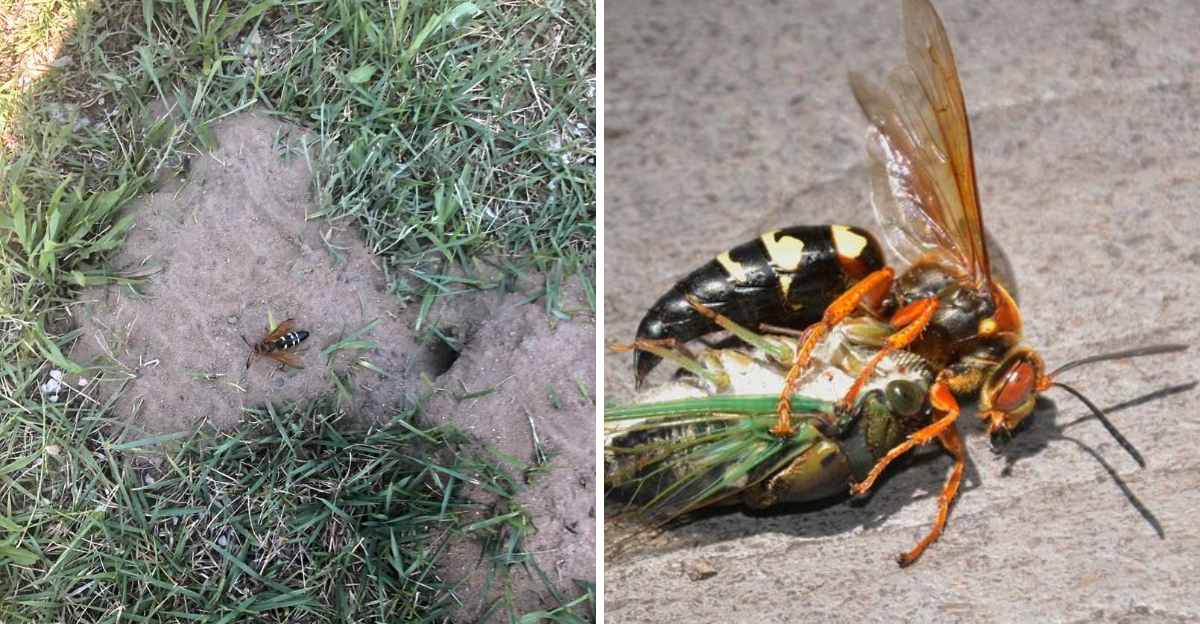
A hole appears beside the patio overnight.
Fresh dirt fans across the lawn. The neat round entrance looks suspicious. Then a wasp almost as long as your thumb cruises past, and suddenly the yard feels much smaller.
California homeowners can be forgiven for one quick thought: trouble.
This insect looks built for it. Its size gets attention. Its low flight adds drama. A few more holes nearby can make the scene look like an entire colony just moved in.
That is where appearances start to lie.
The wasp behind many of these summer burrows follows different rules from the yellowjackets people usually fear.
The soil pile has a purpose. The huge insect has a job. Even the one that flies straight toward you may offer more bluff than threat.
So what exactly moved into your California yard?
Before the spray can comes out, read the clues around the hole.
The strangest part of this backyard visitor happens underground, and it involves a catch almost as large as the hunter itself.
Meet California’s Giant Pacific Cicada Hawk
A wasp the size of your thumb deserves a second look before it earns a panic button.
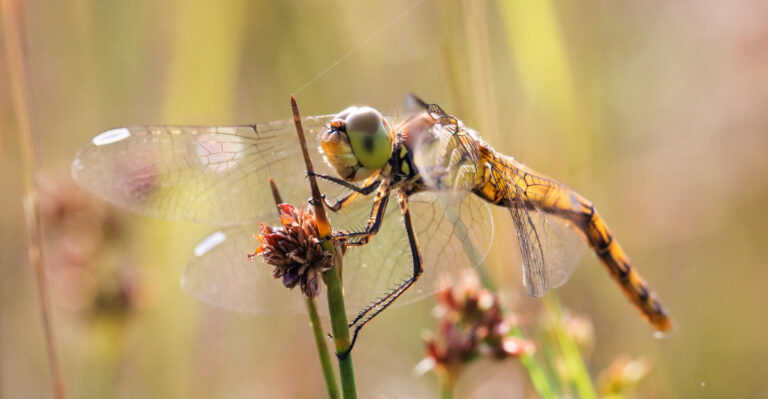
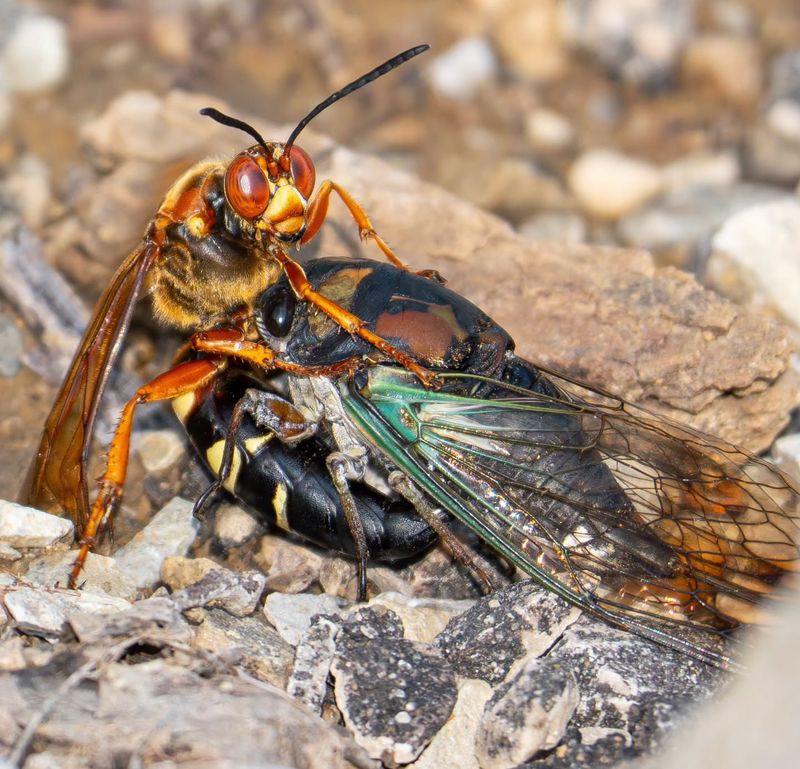
In California, the giant visitor may be the Pacific cicada hawk, Sphecius convallis. That matters because the eastern cicada hawk, Sphecius speciosus, is a different species.
The Pacific species occurs in the western United States and can reach about 1.5 inches long.
Its colors help with the ID.
Look for a reddish-brown to dark orange body, yellow markings across the abdomen, and amber-tinted wings. That combination can look fierce from six feet away, especially when the insect flies low over bare soil.
The surprise comes from its lifestyle.
This is a solitary wasp, not a hornet colony with workers ready to defend one shared nest. Females use underground burrows and spend much of their effort on cicadas for their young.
That huge body makes more sense once you know the job.
A female has to handle prey that can rival her in size, then get it back to the nest. Suddenly the heavyweight build looks less like backyard intimidation and more like specialized equipment.
Take a photo before you make assumptions.
California has other large wasps, so size alone is a terrible name tag.
This one may look like it arrived for battle.
Most of the time, it arrived for a cicada and a very specific patch of dirt.
Read That Dirt Mound As A Nursery Sign
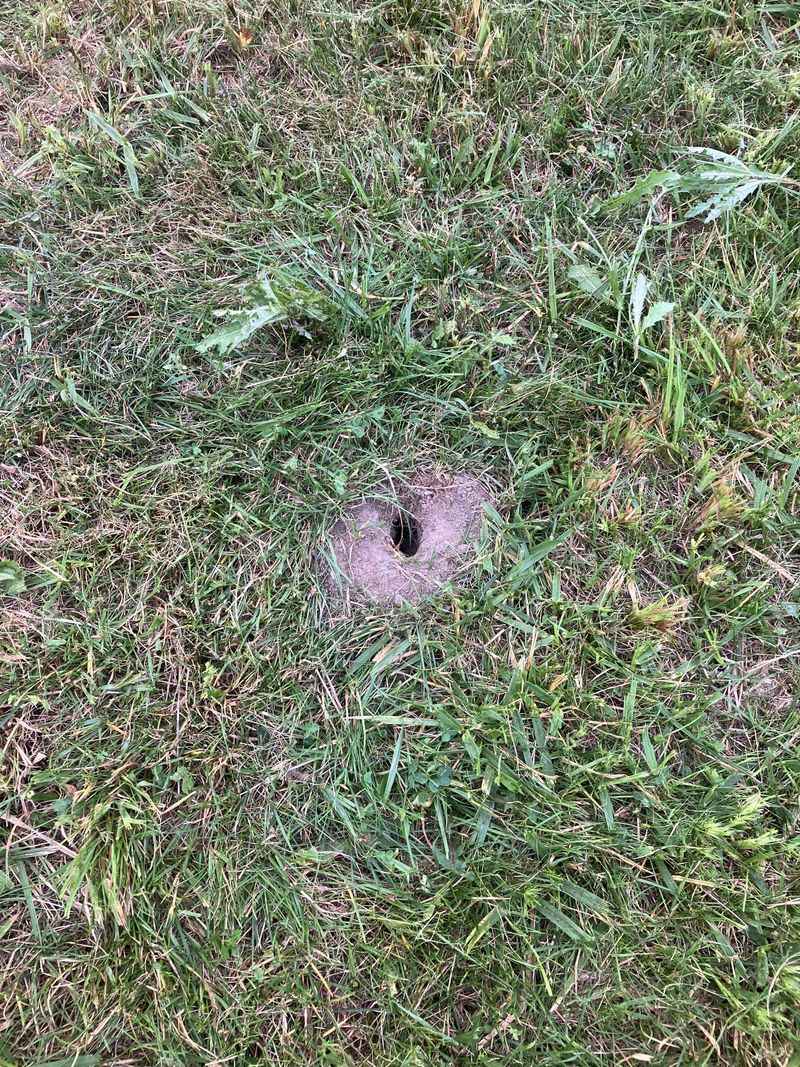
That little mound beside the lawn is not random excavation.
For a female Pacific cicada hawk, the hole leads to a private nursery underground. She chooses exposed, well-drained soil, often in full sun, then creates a nest with cells for her young.
The dirt outside gives away the construction project.
You may see loose soil pushed from the entrance, sometimes in a noticeable fan or mound. Bare lawn patches, sandy borders, slopes, and sunny edges can offer the kind of soil these wasps prefer.
Now comes the part that changes the mood.
Your California Garden Changes Every Week. Your Plan Should Too.
Gardening in California changes quickly throughout the season. Every Friday you’ll receive a simple weekly plan showing exactly what to plant, prune, fertilize, harvest, and protect so you never miss the right timing.
One burrow does not equal one social colony.
A single female provisions her own nest. She does not operate with a queen, worker force, or shared defense crew like a yellowjacket colony. Several nests can sit close together, but each female handles her own household.
That is a big distinction when a homeowner sees several holes and starts doing insect math.
Ten holes can look like one giant underground headquarters.
They may simply represent several independent mothers who all liked the same real estate.
Avoid stomping on the entrance or poking tools into it for curiosity. Give the area a little space and watch from nearby.
The dirt pile is not a warning sign from an underground army.
It is closer to a tiny maternity ward with terrible curb appeal and an impressive excavation budget.
Watch A Female Haul Home Her Giant Catch
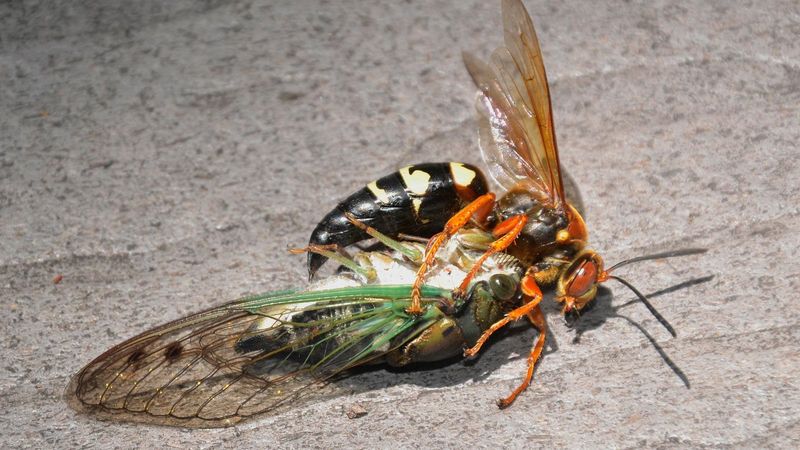
The wildest part of this wasp’s summer happens when she comes home with cargo.
A female Pacific cicada hawk searches for cicadas, uses her sting to paralyze one, then gets that bulky prize back to her underground nest. She places the cicada in a nest cell and lays an egg with the food supply.
That is the reason for the name.
The cicada stays available for the young wasp below the soil. Adult cicada hawks, by contrast, feed on flower nectar rather than sitting around the yard with a taste for people.
Seeing the trip in person can be startling.
The cicada may look nearly absurd beneath such a large wasp. A female can drag it across the ground or manage a difficult flight toward the burrow.
Give her room.
She has one destination in mind, and your ankle is not on the itinerary.
Females can sting people, so grabbing, stepping on, or trapping one against skin is a bad idea. Unprovoked stings are considered uncommon, and these solitary wasps lack the intense group defense familiar from many social wasps.
That makes observation much more interesting than interference.
Watch from a comfortable distance and you may see one of California’s stranger backyard deliveries unfold in real time.
No porch package has ever looked quite this dramatic.
The driver is enormous, the parcel has wings, and the address is underground.
Let The Loudest Males Keep Up Their Bluff
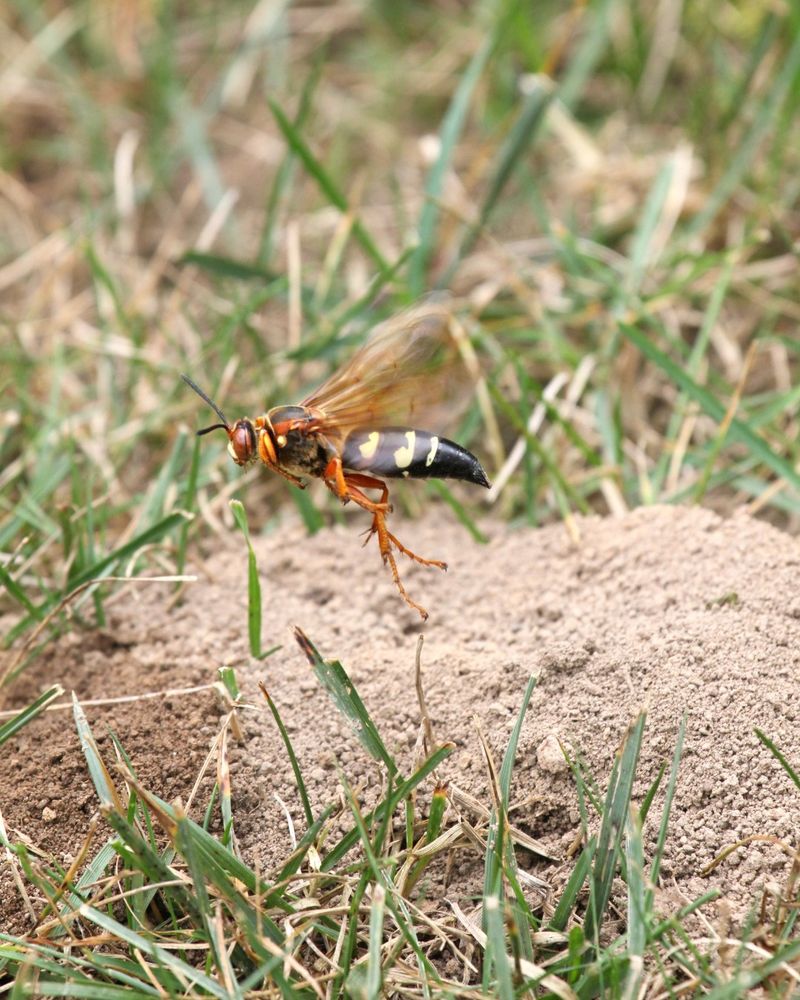
The wasp that acts toughest around the burrows may be the one with the least impressive weapon.
Male cicada hawks patrol nest areas and compete for access to females. Pacific cicada hawk research shows that males emerge before females and establish territories near places where females are likely to appear.
They may hover in one zone, race after another male, or fly directly toward a person who crosses that patch.
It feels personal. It usually is not.
Male wasps do not have a stinger. Their territorial display can look bold, but the dramatic approach carries more attitude than sting risk.
That fact makes the whole performance easier to read.
A male may zip toward your legs, veer away, then return to the same sunny patch a moment later. He is guarding a useful spot and checking movement around his territory.
You are basically a very large interruption.
Do not swat at him or turn the encounter into a backyard tennis match. Walk through calmly or give the zone some room. The male often returns to his patrol once you pass.
Females deserve more physical space because they can sting when trapped or handled.
The difference between the sexes explains why one giant wasp can look outrageously confrontational while another stays focused on soil and prey.
The loudest character in the yard may be bluffing.
He has confidence, speed, and excellent theater.
What he does not have is a stinger, which takes a lot of suspense out of the sequel.
Do Not Mistake Many Holes For One Colony
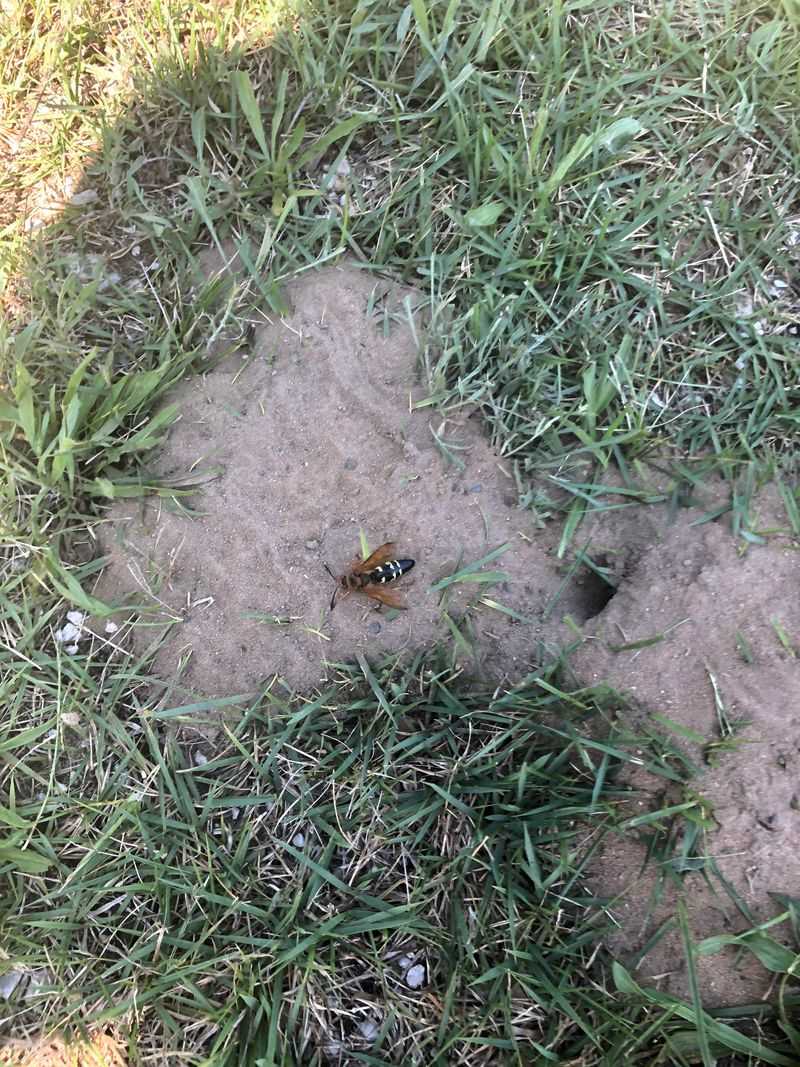
A dozen holes across one sunny patch can make the yard look like a wasp subdivision.
That description is closer than “colony.”
Pacific cicada hawks can form nest aggregations where many females choose the same favorable patch of soil. Each nest is still provisioned by one female, so the crowd does not function like a yellowjacket nest with one central social system.
The soil simply gets good reviews.
Well-drained, exposed ground in full sun can attract several females independently. A thin section of lawn, sandy slope, bare border, or warm patch near hardscape may offer exactly what they want.
That can make activity look intense for a while.
Several females may travel to separate holes. Males may patrol above them. Fresh dirt can appear in multiple spots over a short period.
It is busy, but it is not coordinated warfare.
Disturbance at one entrance does not summon every female in the area for a group response. That solitary behavior is one reason cicada hawks generally pose less defensive risk than social wasps.
Still, treat the area with respect.
Bare feet, curious pets, and children who love to poke holes can create unnecessary contact.
Many nests tell you something useful about the yard.
The wasps found a patch with excellent soil.
Apparently California real estate competition extends to insects too, and these tenants care most about sun, drainage, and a very small front door.
Give Quiet Burrows A Little Room
Not every giant wasp hole needs an emergency response.
A quiet burrow in a low-traffic corner can often be left alone for the seasonal activity to run its course. Pacific cicada hawks are solitary, and females generally focus on nest work rather than defense against nearby people.
That gives you several easy options.
Mark the area so nobody steps directly on an entrance. Redirect children and pets away from a busy patch. Wear shoes around active burrows and skip the urge to inspect one with a stick.
A little distance can solve most of the drama.
High-traffic locations deserve more thought. A burrow beside a doorway, play space, or narrow walkway creates more chances for accidental contact. In that case, professional identification can help before any control decision.
The bigger long-term clue sits in the soil.
Cicada killers favor exposed, well-drained sunny ground. A denser plant cover can make a site less like the open habitat these wasps tend to choose.
That approach changes the invitation rather than turning the yard into a spray zone.
Do not assume every giant wasp belongs to this species either. California has other large solitary wasps, including some with very different habits.
A clear photo can settle a lot before action starts.
The best response may be surprisingly boring.
Give the visitor space, protect the busy parts of the yard, and let this enormous summer contractor finish the underground project.