The Gray Bird Mewing Like A Cat In Florida Shrubs Just Arrived For Winter
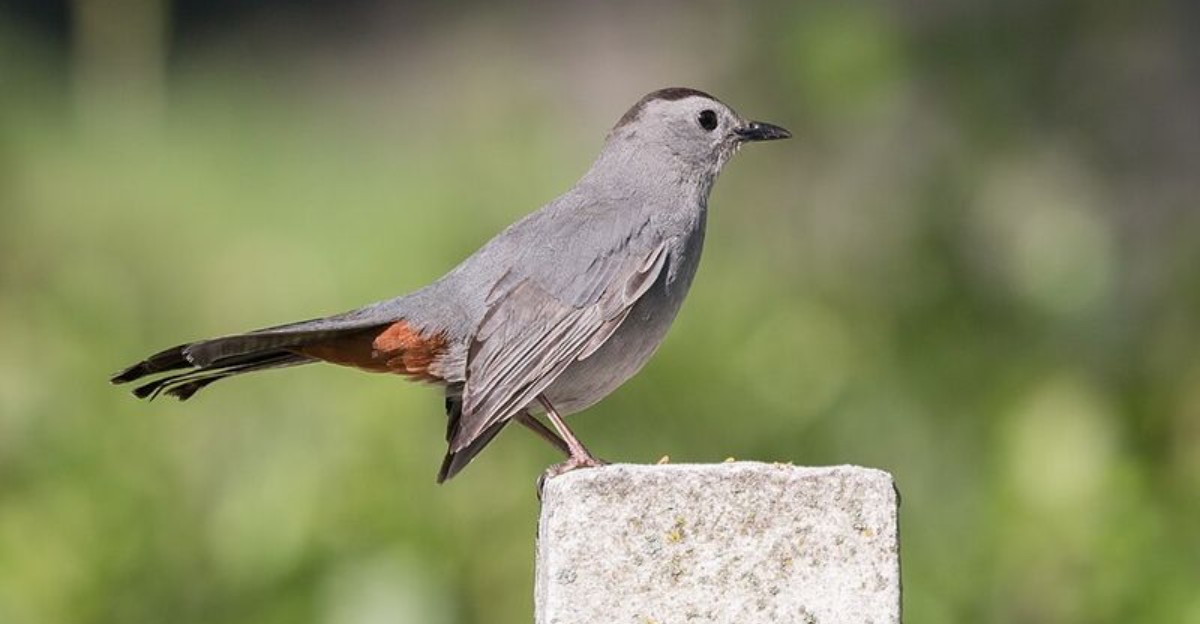
A strange sound is drifting through Florida yards, and it does not belong to a cat.
Gardeners have started noticing a small gray bird tucked inside shrubs, hedges, and dense patches of greenery, producing a call that sounds remarkably feline. At first, the noise can leave you searching the bushes for a wandering kitten.
Then the bird appears, and the mystery suddenly gets much more interesting.
The timing matters, too. As northern birds make their seasonal move south, Florida becomes a temporary refuge for species that spend the colder months in warmer surroundings.
Some arrive quietly. Others announce themselves with bizarre calls that grab attention from across the yard.
That odd little “mew” has a story behind it, and the bird responsible may be closer than you think. Once you know what to listen for, your backyard shrubs might never sound quite the same again.
1. Meet The Gray Catbird
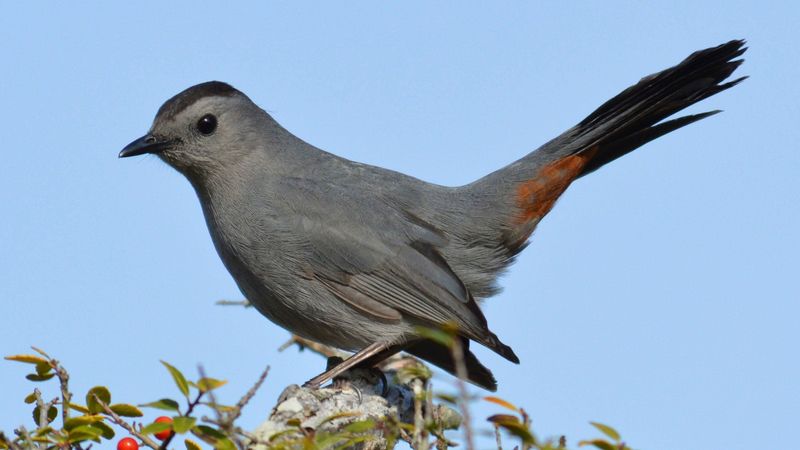
Picture a songbird dressed for a fancy dinner in a smooth gray suit. Say hello to the Gray Catbird, a winter guest that many Floridians hear long before they see it.
The bird is medium sized, a bit smaller than a robin. It has a slim body, a long tail, and a calm, even color from head to toe.
Catbirds breed across much of North America and spend the winter as far south as Central America and the Caribbean. They are perching birds, which means their feet are built to grip twigs and branches with ease.
You will often find them tucked inside thick bushes. When one does pop out, watch the tail, because it jerks and swings like a tiny conductor’s baton.
Here is a handy trick for new birders. Sit quietly near a hedge for five minutes and listen for rustling leaves low to the ground.
Catbirds are curious by nature. If you stay still, one may hop to the edge of the bush to check you out.
Keep a small notebook handy for your sightings. Writing the date and place helps you notice when your catbird shows up each fall.
Over time, you may see a pattern. Many backyard watchers spot the same favorite shrubs used year after year by these gray visitors.
2. Its Name Comes From A Cat-Like Mew
Mew. Mew.
If a hedge in your yard sounds like a lost kitten, you may have found your catbird.
That raspy, whiny call is the most famous sound this bird makes. It sounds so much like a cat that early naturalists named the bird after it.
Plenty of people have searched under bushes for a stray kitten. Pet owners sometimes report their own cats perking up at the noise, ears twitching with interest.
The bird’s science name is fun too. Its genus, Dumetella, means small thicket dweller, which fits its hiding habits nicely.
Catbirds often call from deep inside leaves. You hear them clearly, but spotting them takes patience and sharp eyes.
Want to test your ears? Try listening to recordings on a free bird app before heading outside.
Your Florida Garden Changes Every Week. Your Plan Should Too.
Gardening in Florida changes quickly throughout the season. Every Friday you’ll receive a simple weekly plan showing exactly what to plant, prune, fertilize, harvest, and protect so you never miss the right timing.
Once you know the sound, you will start noticing it on walks, at parks, and near school yards. It becomes hard to miss.
Families can turn this into a game. Whoever hears the first mew of the season gets to pick dinner, and kids love the challenge.
Remember to stay quiet when tracking the sound. Soft steps help the bird feel safe enough to keep chatting from its hiding spot nearby.
3. Look For A Black Cap And A Rusty Patch Under The Tail
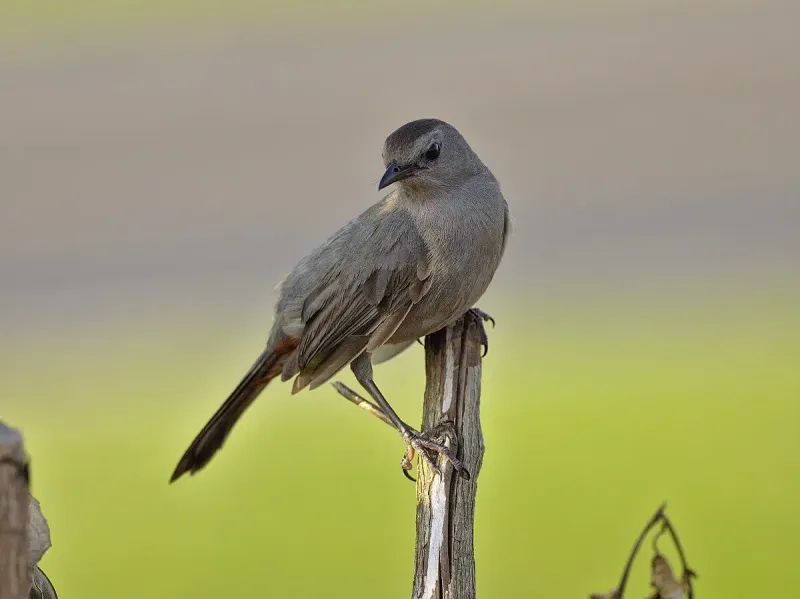
At first glance, the catbird looks plain. Look closer, though, and two clever details stand out like secret clues.
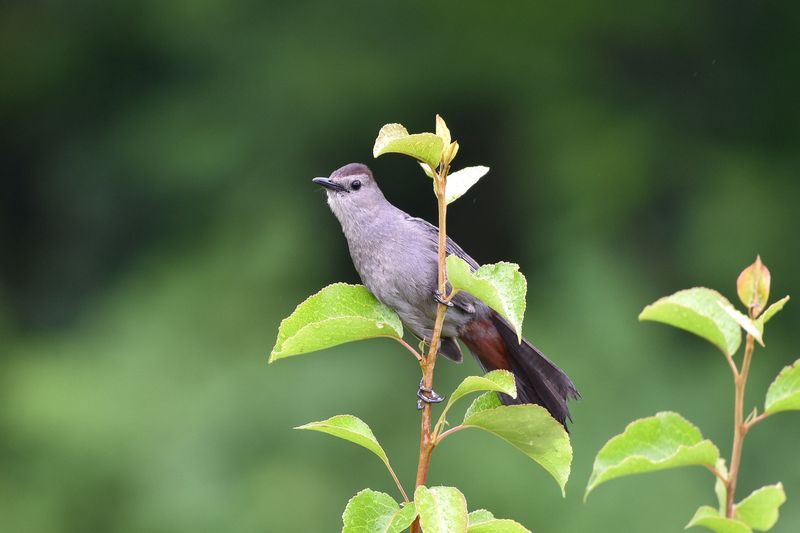
The first is a neat black cap on top of the head. It looks a bit like the bird pulled on a tiny beanie before leaving home.
The second clue is hidden below. Under the tail sits a patch of rusty, chestnut colored feathers that experts call undertail coverts.
You may only see that patch when the bird flicks or lifts its tail. It flashes for a second, so keep your binoculars ready.
Everything else is a soft, even gray. There are no streaks, spots, or bright wing bars to confuse you.
That plain look actually makes it easier to name. Few other Florida birds share this simple gray body with a dark cap and reddish bottom.
A Northern Mockingbird is also gray, but it has white wing patches. Comparing the two side by side is a great way to train your eyes.
Try snapping a photo when you can. Zooming in later often reveals that rusty patch you missed in the moment.
With practice, you can name a catbird from a quick glimpse. That moment feels like cracking a code.
4. Most Catbirds Winter In The Southern U.S. Or The Tropics
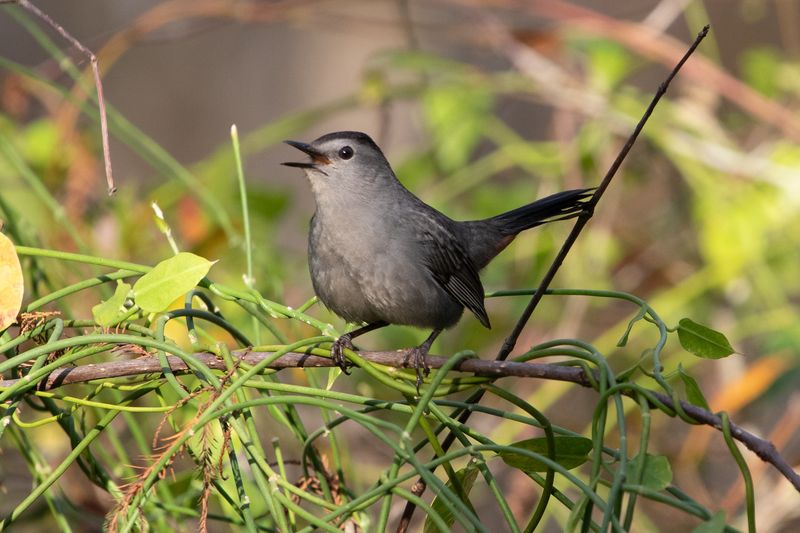
Some snowbirds drive down in RVs. Catbirds make the trip on their own wings, mostly under the stars.
These birds are migrants. When fall arrives, they leave northern breeding areas and head toward warmer places for the cold season.
Their winter homes include the southeastern United States, Mexico, Central America, and the Caribbean islands. Florida sits right on the travel path and makes a cozy stop.
The journey starts fairly early in fall. It often begins soon after young birds learn to find food on their own.
Most of the flying happens at night. Scientists think the cooler air and calm skies help small birds travel safely.
So one morning your yard is quiet, and the next it is full of mews. Migration can bring new catbirds through your neighborhood seemingly overnight.
You can help tired arrivals. Keep a shallow birdbath clean and full, since fresh water is a big treat after a long flight.
Turning off bright outdoor lights during fall nights also helps. Strong lights can confuse migrating birds and pull them off course.
By spring, most catbirds head north again. Enjoy them while they stay, because their visit has a time limit.
5. A Few Stay To Breed In North Florida
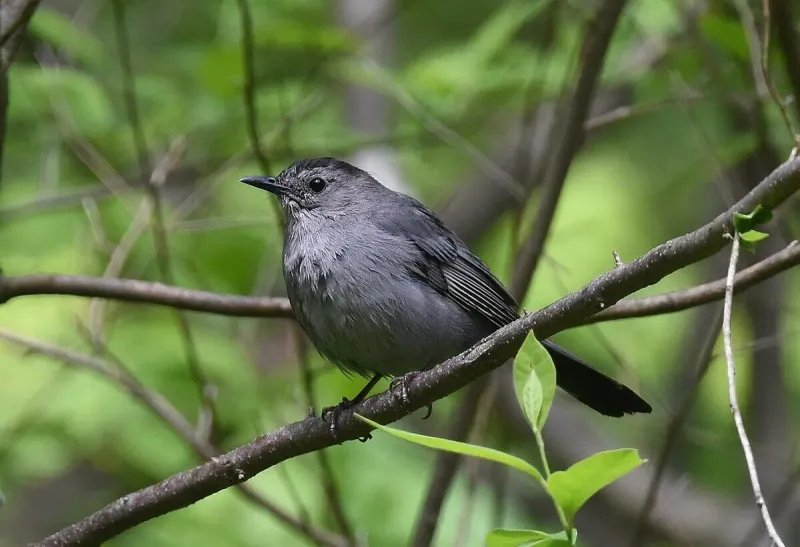
Not every catbird packs its bags in spring. A small group decides North Florida is good enough to raise a family.
Along the Atlantic coast, some catbirds stay all year. Their range reaches down into northern region and parts of the Gulf States.
Bird records, both old and new, show nests in this region. North Florida sits near the southern edge of the catbird’s breeding range.
That makes North Florida a special place for catbird fans. You might hear them in summer while friends farther south only hear them in winter.
Nests are usually cup shaped and tucked deep in tangled shrubs. The thick cover helps protect eggs from curious predators.
If you suspect a nest, give it plenty of space. Watching from a distance keeps parents calm and helps the chicks grow safely.
Gardeners can lend a hand by waiting to trim hedges until late summer. Cutting bushes in spring might disturb a hidden family.
Local bird clubs love hearing about summer sightings. Sharing your notes can help scientists learn how far south these birds nest.
Who knows? Your backyard could add a new dot on the catbird map.
6. Catbirds Love To Hide In Dense Shrubs
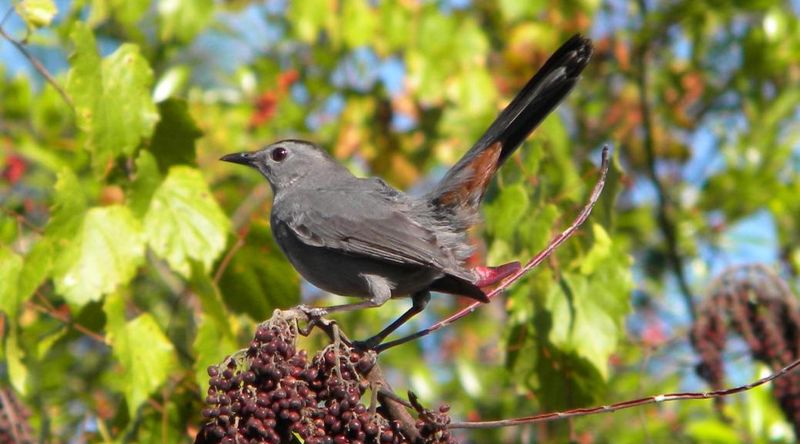
Think of the catbird as the champion of hide and seek. Thick bushes are its favorite place to play.
These birds prefer low, dense plants. You will find them in brush, thorny thickets, undergrowth, and leafy suburban gardens.
They also like the edges of woods and streams. Shrubby swamps, overgrown fields, and hedges suit them well too.
Big, open forests are less appealing. Catbirds usually skip unbroken forests and pine heavy woods.
Want them in your yard? Plant a mix of native shrubs and let a corner grow a little wild.
A tidy lawn offers almost nothing for a catbird. A messy patch of bushes, however, gives shelter, bugs, and berries all in one spot.
Layering helps a lot. Combine short plants, medium shrubs, and a few small trees to create cozy hiding levels.
Brush piles from fallen branches can work as bonus cover. They also attract insects that catbirds enjoy snacking on.
Kids can make a simple shrub map of the yard. Mark where catbirds appear most, and you will soon spot their favorite hangouts.
Giving them a safe hideout pays off. A happy catbird may return to the same bushes next winter.
7. Berries Make Up Much Of Its Winter Diet
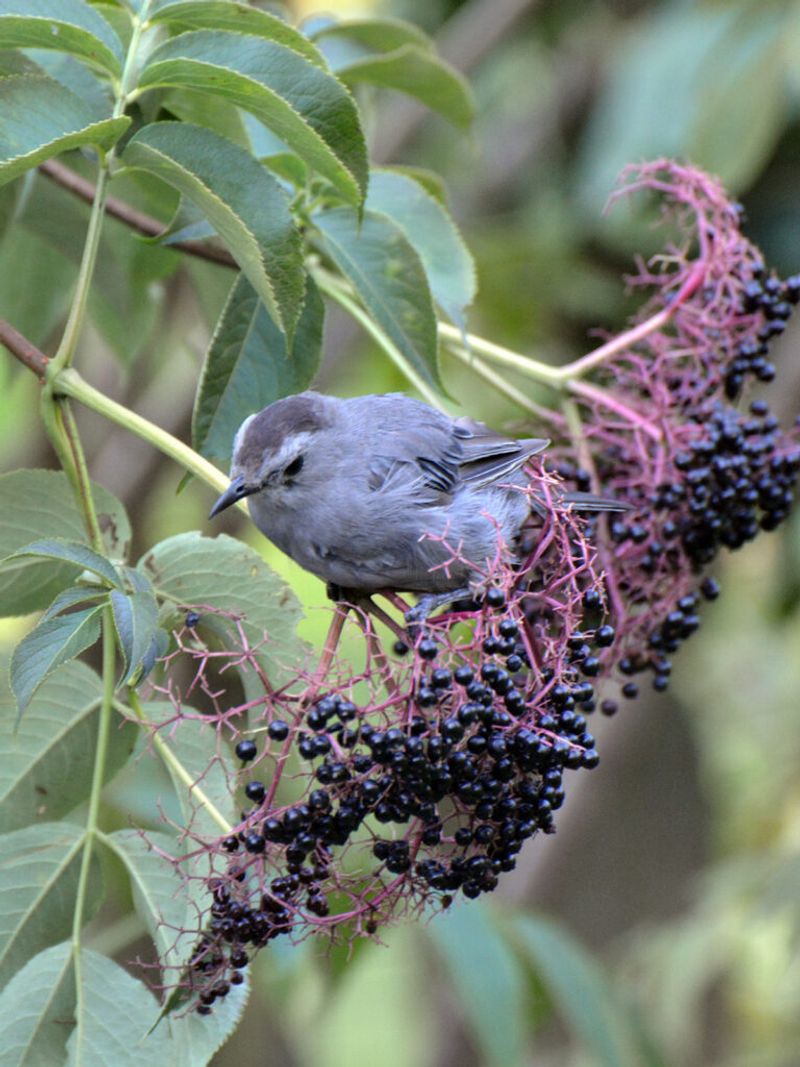
Fun fact: in fall and winter, plant foods become an especially important part of a catbird’s diet. Berries are the star of the menu.
Wild fruits top the list. Catbirds eat holly, wild cherry, elderberry, greenbrier, blackberry, and even poison ivy berries.
Yes, poison ivy. The berries do not bother birds, so they gobble them up without a fuss.
Catbirds will nibble garden fruit sometimes. Still, they usually choose wild berries when they can find them.
They also hunt for insects and spiders. You might see one tossing leaves on the ground or poking through foliage for a crunchy bite.
Here is a smart planting tip. Add native berry shrubs like yaupon holly, American beautyberry, or elderberry to your yard.
These plants feed catbirds and many other birds through the cool months. They also look pretty with bright fruit clusters.
Some people offer chopped apples, raisins, or grape halves on a low tray. Catbirds rarely visit seed feeders, but fruit can tempt them.
Skip pesticides when possible. Fewer chemicals mean more insects for hungry birds and a healthier garden overall.
Feed them well, and your yard becomes their favorite winter diner.
8. It Belongs To The Mockingbird Family
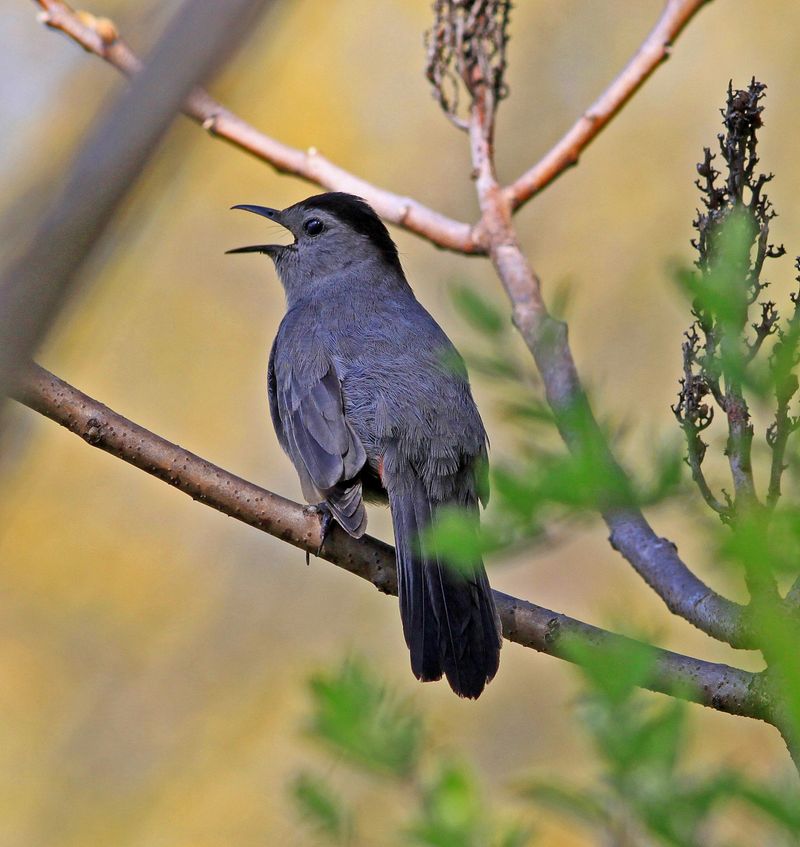
Every family has its talkers, and the catbird’s family has plenty. It belongs to a group called Mimidae, also known as mimids.
People sometimes call these birds mimic thrushes. The name fits, because many of them copy sounds they hear around them.
Florida’s state bird, the Northern Mockingbird, is a close cousin. So is the Brown Thrasher, a reddish bird with a long, curved bill.
All three share slender bodies and long tails. They also like to sing loudly and boldly, often for long stretches.
Spotting all three makes a fun backyard challenge. Mockingbirds love open perches, thrashers scratch in leaf litter, and catbirds lurk in shrubs.
Each cousin has its own style. Learning their habits helps you guess who is singing before you even look.
Think of it as a bird family reunion in your neighborhood. Some relatives show off, while others stay quietly in the corner.
Teachers can use this group for a simple science lesson. Comparing feathers, tails, and songs helps students see how relatives can differ.
Once you know the family, sounds in your yard start making more sense. The singers suddenly have names and faces.
9. It Can Mimic Other Birds’ Songs
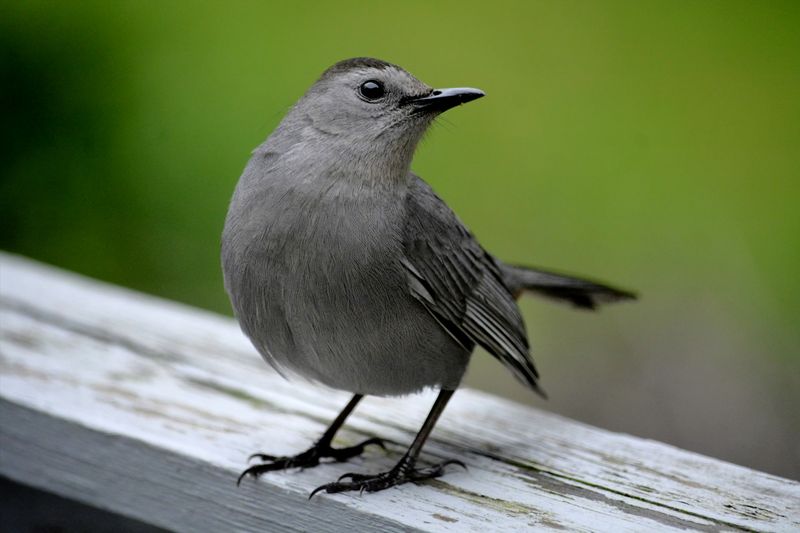
Imagine a singer who borrows lines from every song on the radio. The catbird does just that, only with nature’s playlist.
Like its mimid cousins, it copies songs from many other birds. It can also imitate tree frogs and even mechanical noises.
Its full song is long and jumbled. Musical notes mix with squeaks, chirps, and odd little clicks.
There is a neat trick to tell it apart from relatives. A catbird usually sings each phrase only once before moving on.
A Northern Mockingbird often repeats phrases several times before moving on. A Brown Thrasher typically repeats a phrase twice.
So try counting the next time you hear a busy songbird. One and done points to a catbird, while repeats point to its cousins.
Recording songs on your phone helps too. Playing them back slowly lets you hear borrowed sounds you might have missed.
Some listeners claim catbirds copy car alarms or squeaky gates. Whether true or not, it makes for great backyard stories.
Spring is the best time to catch full performances. Birds that stay to nest sing the most, often from hidden perches.
Listen closely, and you may hear a whole neighborhood squeezed into one small gray singer.