Native Florida Shrubs Replacing Podocarpus That Actually Belong Here
Podocarpus became a Florida landscaping default for one simple reason. It grows fast, stays neat, and nobody has to think too hard about it.
Hedges, foundation plantings, privacy screens – podocarpus ended up everywhere. But it is not from here.
And gardeners paying closer attention to what their landscape actually does for local wildlife are starting to ask a fair question. Why is the whole yard full of a plant that birds and pollinators essentially ignore?
Native shrubs that fill the same structural role as podocarpus are gaining serious ground right now, and for good reason.
Better wildlife value, honest growth habits suited to Florida’s climate, and none of the scale insect pressure that podocarpus owners deal with on a regular basis.
Your hedges and privacy screens can do the same job and actually belong in a Florida landscape at the same time.
1. Plant Florida Privet For A Softer Native Hedge
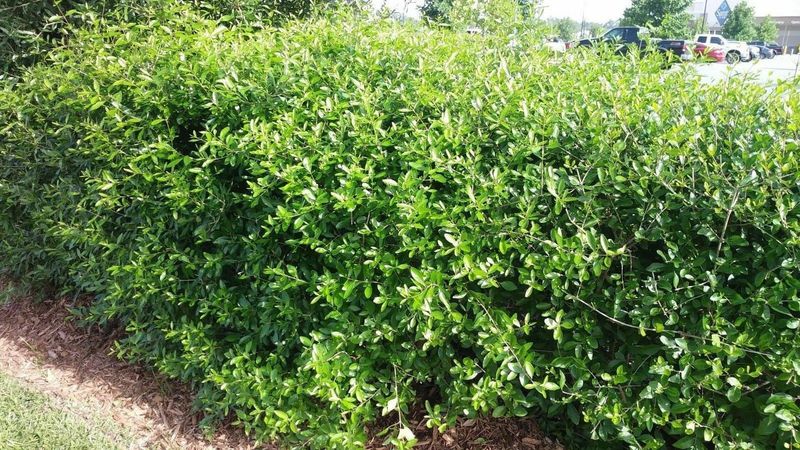
Swap out that stiff, clipped row of non-native greenery and picture something softer standing in its place. Florida privet, known botanically as Forestiera segregata, is a native shrub that can fill hedge and screen roles without looking like it was stamped from a mold.
According to UF/IFAS, it grows well in a range of soil types and tolerates both sun and partial shade, making it fairly adaptable across many local landscapes.
Its small, glossy leaves give it a fine texture, and it produces tiny flowers that attract pollinators followed by small dark fruit that birds enjoy.
UF/IFAS notes it can be pruned into a more structured form, though its natural habit is loose and layered rather than rigid.
That softer look is actually a feature for homeowners who want a native feel along a fence line or property edge.
Florida privet is generally better suited to central and southern regions, though sources suggest it has some cold tolerance. Give it room to breathe and plan for light pruning near walkways or entries.
Buy from a reputable native nursery and confirm the botanical name, since the common name privet can refer to several unrelated plants. Your county Extension office can confirm regional fit.
2. Choose Myrsine For A Podocarpus-Like Evergreen Shape
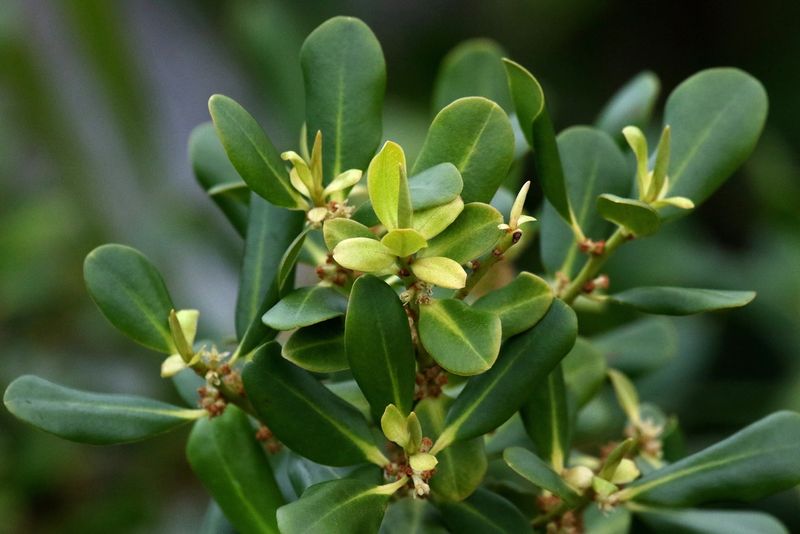
Someone standing in the nursery, staring at a podocarpus row, and thinking there has to be a native version of this, might be surprised to learn that myrsine comes pretty close.
Myrsine cubana, sometimes listed as Rapanea punctata, is a native evergreen shrub with upright growth and dense, dark foliage.
It can mimic the clean vertical presence of podocarpus in a landscape. UF/IFAS lists it as a useful hedge and screen plant for warmer parts of the state.
It handles full sun to partial shade and tolerates a range of soil conditions, including moist sites. Mature height can reach ten feet or more depending on conditions, so spacing matters.
UF/IFAS recommends considering its ultimate size before planting. Avoid placing it near tight walkways, narrow driveways, or foundation walls where regular pruning would be constant work.
Your Florida Garden Changes Every Week. Your Plan Should Too.
Gardening in Florida changes quickly throughout the season. Every Friday you’ll receive a simple weekly plan showing exactly what to plant, prune, fertilize, harvest, and protect so you never miss the right timing.
Myrsine works well in southern and central regions and is considered moderately salt tolerant, which helps in coastal yards. It can be pruned into a more formal shape or allowed to grow with a looser natural outline.
Check with a native plant nursery for regional availability and confirm the botanical name, since labeling can vary. Local Extension offices often carry helpful regional planting guides for this species.
3. Use Marlberry For Shady Screening In Warm Regions
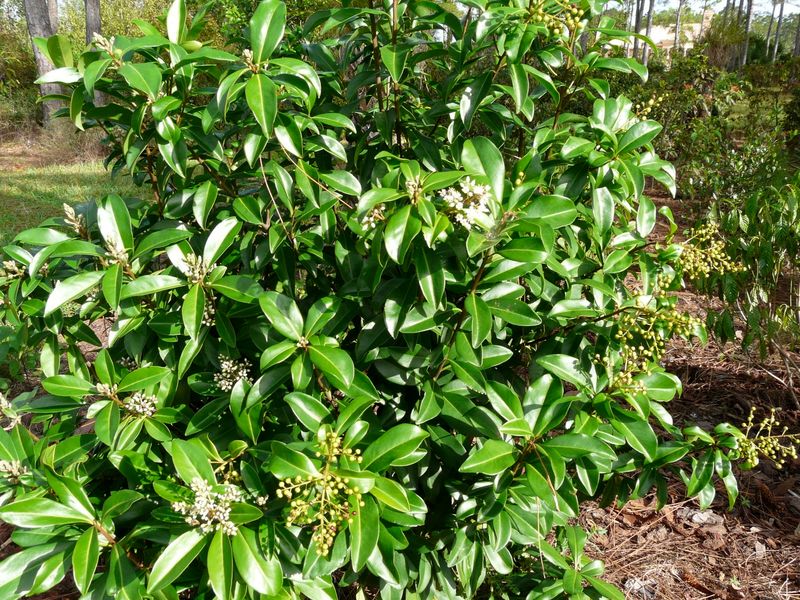
Picture a shaded side yard between two houses where privacy matters but the sun barely reaches. That is exactly the kind of spot where marlberry earns its place.
Ardisia escallonioides is a native shrub or small tree that thrives in shade and partial shade. That makes it a strong candidate for understory screening where most formal hedge plants struggle.
UF/IFAS notes that it performs best in southern regions and warm, protected microclimates.
Its large, glossy leaves create a lush, tropical feel that reads as a privacy layer without needing to be clipped into a formal shape. White flowers appear in clusters and attract pollinators, and the small dark berries that follow are eaten by birds.
UF/IFAS confirms its value as a wildlife plant, which makes it useful in layered native plantings along shaded fence lines or property edges.
Marlberry is not a good fit for exposed, dry, or cold sites. It belongs in warm, humid, sheltered spots that match its natural range.
Homeowners in central or northern regions should check with their local Extension office before planting, since cold sensitivity is a real concern. Buy from a native nursery that can confirm provenance and give regional advice.
This is a plant that rewards the right placement with a genuinely beautiful result.
4. Plant Wild Coffee For A Glossy Understory Hedge
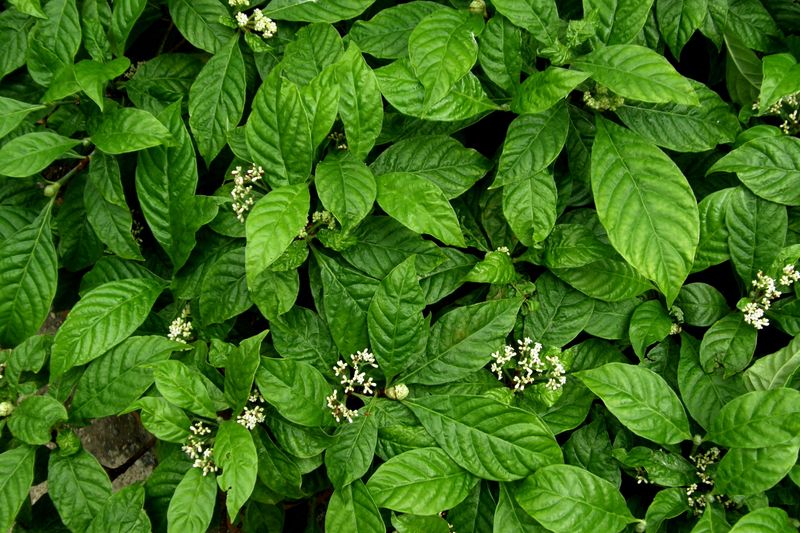
Few native shrubs look as polished in a shaded foundation bed as wild coffee. Psychotria nervosa carries glossy, deeply veined leaves that catch whatever light filters through a canopy and turn it into something genuinely attractive.
UF/IFAS describes it as a shade-tolerant native shrub. It is well suited to understory plantings, sheltered fence lines, and partly shaded landscape beds in warmer parts of the state.
Small white flowers appear seasonally and attract butterflies and other pollinators. The red berries that follow are eaten by birds, including several species that nest in residential yards.
UF/IFAS confirms its wildlife value, which makes it a strong choice when a planting needs to do more than just block a view. It layers well with taller native canopy trees or other mid-story shrubs in a mixed privacy screen.
Wild coffee is best suited to southern regions and warm, protected microclimates. It can struggle in cold snaps that reach into northern regions, so placement matters.
Full shade to partial shade works best, and it does not perform well in hot, dry, exposed spots. Mature height typically ranges from four to eight feet.
Confirm the botanical name at purchase and ask your nursery about cold hardiness for your specific zone before committing to a full hedge planting.
5. Choose Necklace Pod For Yellow Flowers And Coastal Toughness
A sunny coastal fence line that takes salt spray, reflected heat, and the occasional tropical wind needs something tougher than a typical hedge shrub.
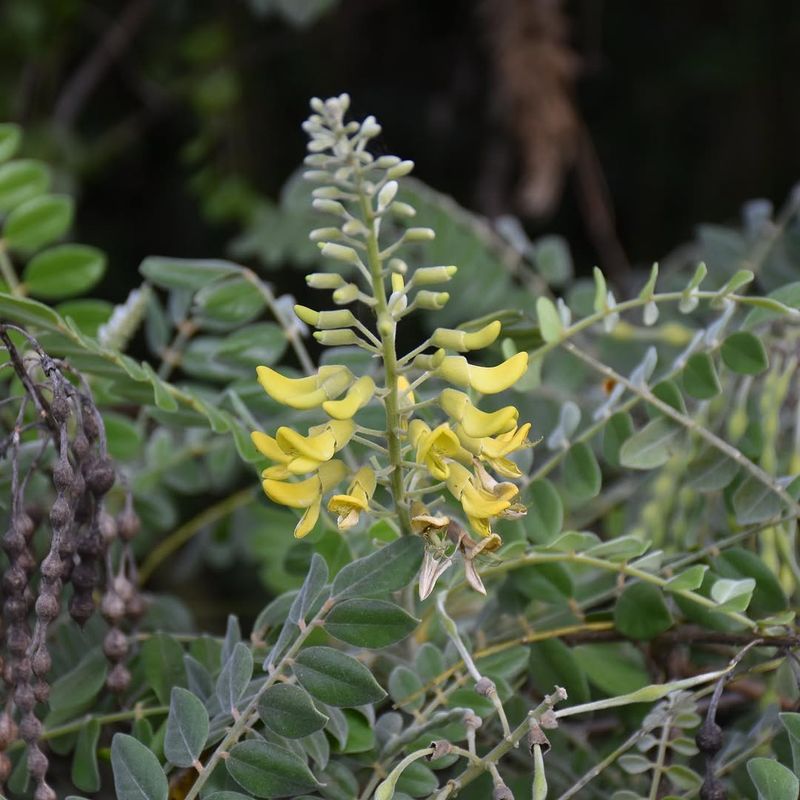
Sophora tomentosa, commonly called necklace pod, is a native shrub that handles those conditions with a kind of easy confidence.
UF/IFAS notes its strong salt tolerance and drought tolerance once established, making it a practical choice for exposed coastal yards in warm regions.
Bright yellow flowers appear on long spikes and attract butterflies, including the cloudless sulphur, which uses it as a larval host plant. The twisted seed pods that give it its common name add visual interest after flowering.
Its silvery-green foliage has a soft texture that reads as informal and naturalistic rather than clipped and formal. That makes it best for loose screens, mixed native borders, or coastal property edges.
Necklace pod is not a tight, manicured hedge plant. Expect a relaxed, spreading form that needs room to express itself.
It is better suited to southern regions and warm coastal landscapes than to colder inland sites. Mature plants can reach six to eight feet tall and wide, so plan spacing accordingly.
Check with your local Extension office about cold hardiness in your specific zone before using it as a primary privacy screen.
6. Use Rouge Plant For A Small Native Shrub With Wildlife Value
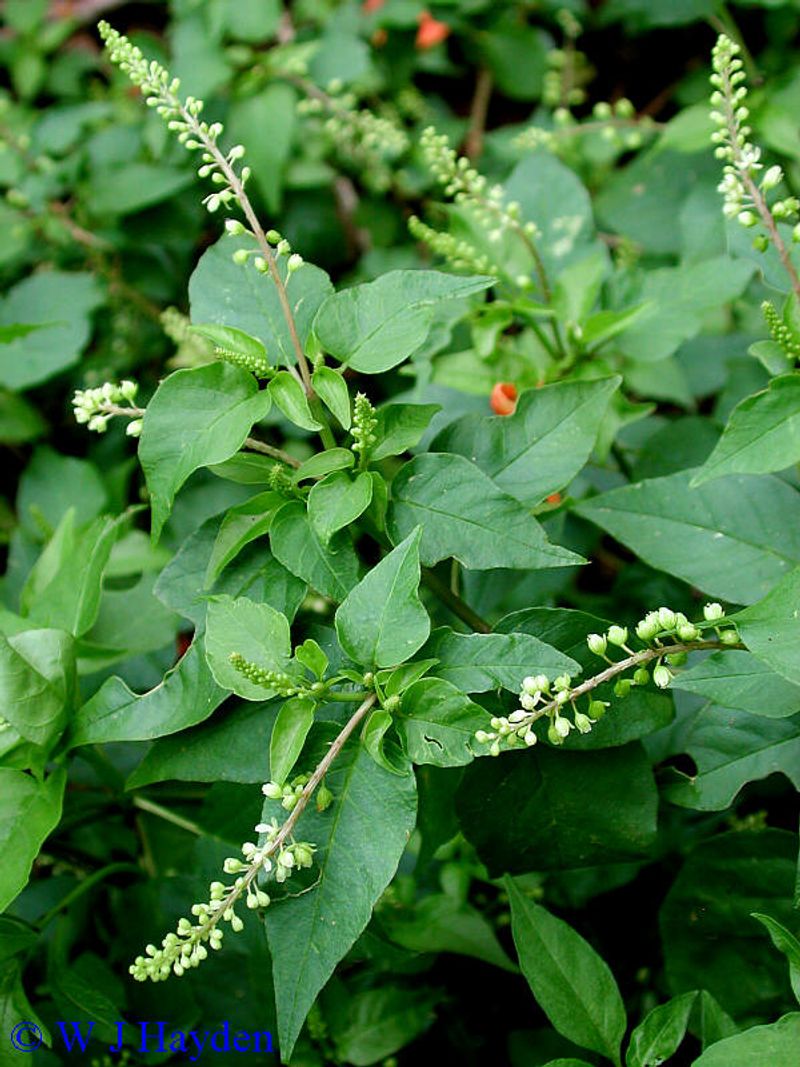
Low, shaded planting areas along a fence or under a tree canopy often get ignored or filled with the same tired groundcovers. Rouge plant, known as Rivina humilis, is a small native shrub that brings real wildlife value to those forgotten corners.
UF/IFAS describes it as a shade-tolerant native that produces small white to pinkish flowers followed by bright, glossy berries that birds find irresistible.
Its compact size makes it better for layered plantings, low native hedges, or naturalized understory beds than for tall privacy walls.
Mature height typically stays between two and four feet, which is genuinely useful in spots where a taller shrub would block windows or crowd a path.
It works well as the front layer in a mixed native screen, paired with taller shrubs behind it to build depth and visual interest.
Rouge plant is best suited to warm, humid, shaded sites in southern and central regions. It can be cold sensitive in northern regions, so local Extension guidance is worth checking before planting a large grouping.
Soil moisture matters too, as it prefers sites that do not dry out completely. Buy from a native nursery and confirm the botanical name, since common names for berry-producing shrubs can overlap with unrelated species in other regions.
7. Plant Fiddlewood Where A Fragrant Native Screen Fits
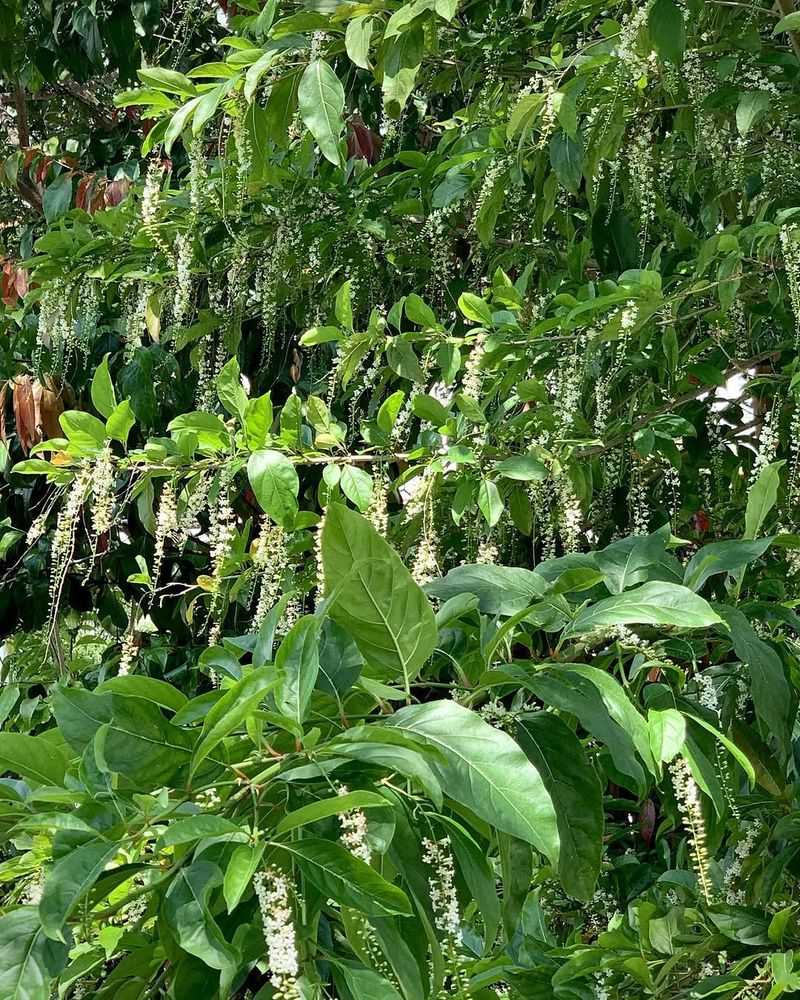
Tired of a flat green wall that smells like nothing and feeds no one? Fiddlewood brings a completely different kind of presence to a property edge.
Citharexylum spinosum is a native shrub or small tree that produces fragrant white flowers on long drooping clusters. Those flowers attract butterflies and other pollinators in numbers that make a real difference in the yard.
UF/IFAS confirms its value as both a wildlife plant and a screening option for warmer landscapes.
Its size is worth taking seriously. Fiddlewood can reach twenty feet or more under good conditions.
That means it is better suited to roomy fence lines, wide property edges, or informal native screens than to tight spaces near driveways or foundations. Pruning can keep it smaller, but plan for that maintenance before planting rather than after it has outgrown its spot.
Fiddlewood is most reliable in southern regions and warm, protected sites. Cold sensitivity limits its usefulness in northern regions, and UF/IFAS suggests checking zone compatibility before committing to it as a primary screen.
The fragrance alone makes it worth considering where space allows. Confirm the botanical name at purchase before buying multiple plants.
Also ask your nursery about cold hardiness, mature size, and pruning needs for your specific planting location.
8. Choose Cocoplum For Dense Privacy In Southern Regions
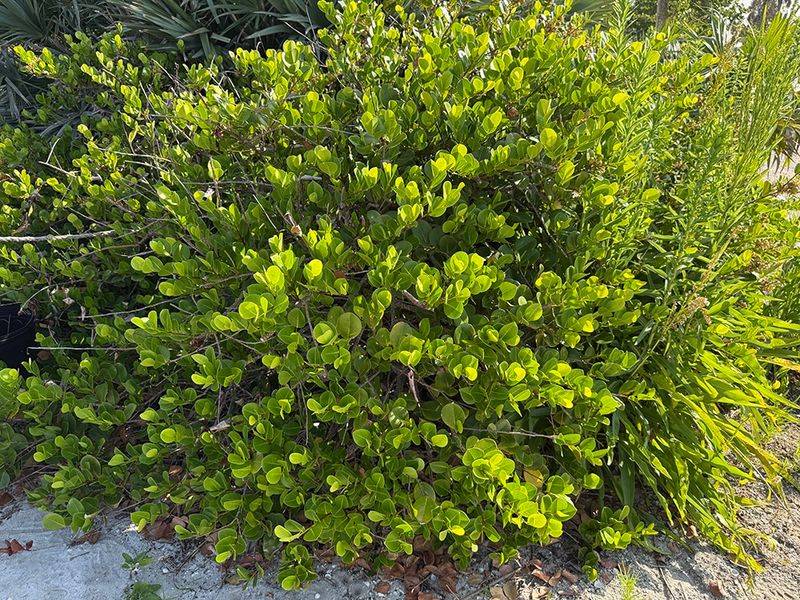
A warm coastal yard that needs dense, year-round privacy and can handle a shrub with real presence has a strong native candidate in cocoplum.
Chrysobalanus icaco is a native shrub that UF/IFAS describes as an excellent hedge and screen plant for southern regions.
It is prized for its thick, glossy foliage, tolerance of coastal conditions, and ability to be pruned into a formal shape or left to grow more naturally.
New growth often emerges with a reddish tint that adds color interest before maturing to deep green. Small white flowers are followed by edible fruit that wildlife enjoy, including birds and small mammals.
Salt tolerance and moderate drought tolerance once established make it a practical choice for coastal fence lines, driveway edges, and foundation plantings in warm yards.
Cocoplum is primarily a southern-region plant and can suffer cold damage in central regions and significant damage in northern regions.
Mature size varies by variety, with some selections staying compact and others reaching fifteen feet or more, so spacing and pruning plans matter.
Keep it away from narrow walkways if you are clipping it into a formal hedge, and allow root space at foundations. Always confirm the botanical name and buy from a reputable native nursery to ensure you get a locally appropriate selection.