The Invasive Frog Clinging To Florida Windows, And How To Tell It From A Native One
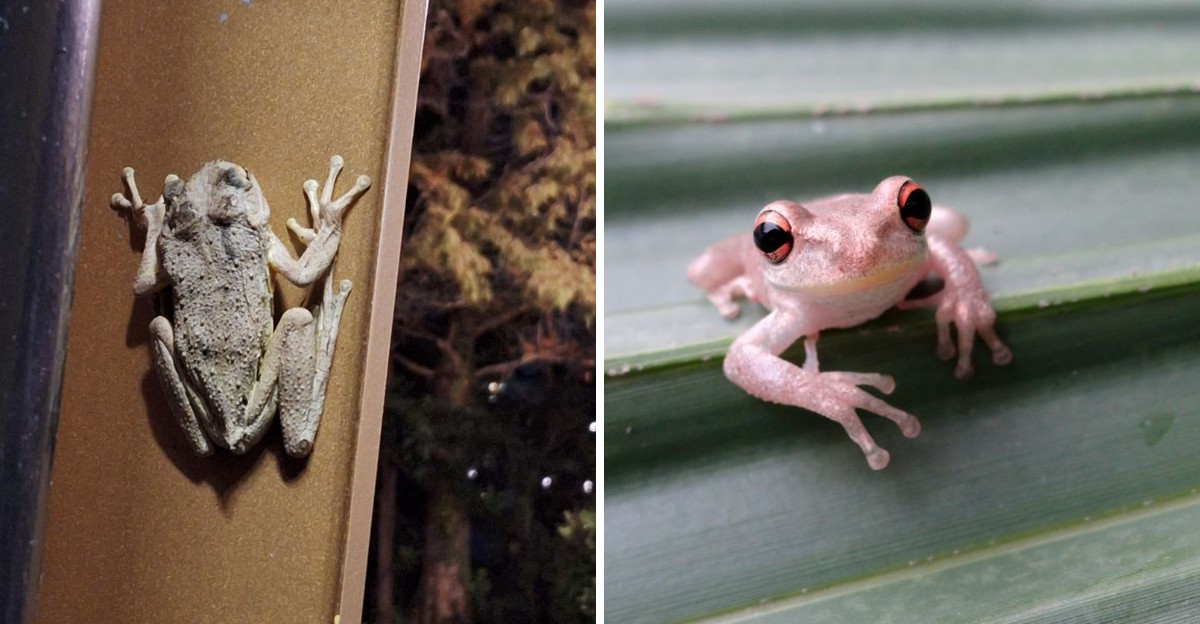
Something small and sticky is staring at you through the glass, and the fine print on its identity matters more than you’d think.
Florida windows collect plenty of frogs after dark, drawn by porch lights and the bugs they attract. Most are harmless residents that belong here.
One look-alike doesn’t. It arrived from somewhere else, took over, and now crowds out the locals that used to have the windowpane to themselves.
Telling them apart is easier than it sounds, but it requires a close look at a few features most people never check. Size, skin, and voice all give the game away, and the sounds in your yard at night tell you plenty before you even go outside.
Native frogs deserve protection, and the invader doesn’t.
Grab a flashlight and take a careful look at the next visitor on your glass. Don’t assume.
That Big Frog On Your Window Is Likely A Cuban Treefrog
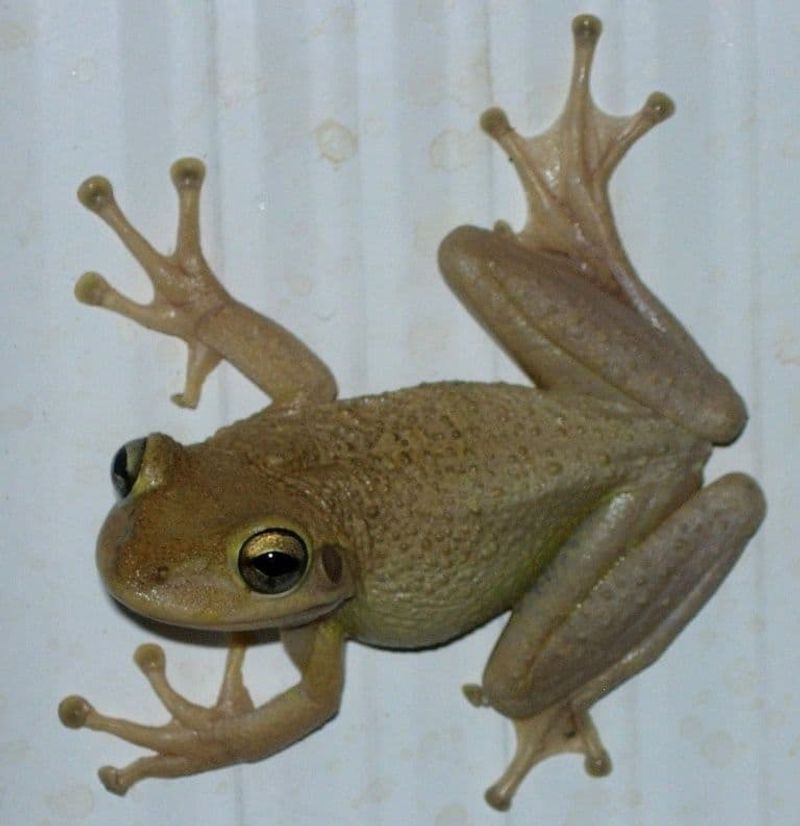
Picture a hungry diner parked beside the best buffet in town. That is the Cuban treefrog on a lit window, waiting for moths and beetles to drift toward the glow.
Known to scientists as Osteopilus septentrionalis, this frog is not from Florida at all. It came from Cuba and nearby islands, likely riding along on boats and plant shipments.
Now it thrives in cities and suburbs across much of the state.
Homes give these frogs nearly everything they need. Porch lights pull in a steady stream of insects at night.
During the day, the frogs tuck themselves into cozy hiding spots like gutters, shutters, mailboxes, and even toilet tanks.
So why should you care? Cuban treefrogs eat native frogs, including smaller treefrogs that people have enjoyed for generations.
Their tadpoles also compete with local tadpoles for food in ponds and puddles.
Here is a simple tip to start your detective work. If the frog on your window looks unusually big and bumpy, a Cuban treefrog is a strong guess.
Many Florida homeowners find several of them each summer evening.
Keep reading to learn the clues that confirm it. Once you know the signs, you will spot these window huggers in seconds, almost like recognizing a familiar face in a crowd.
It’s The Largest Treefrog In Florida
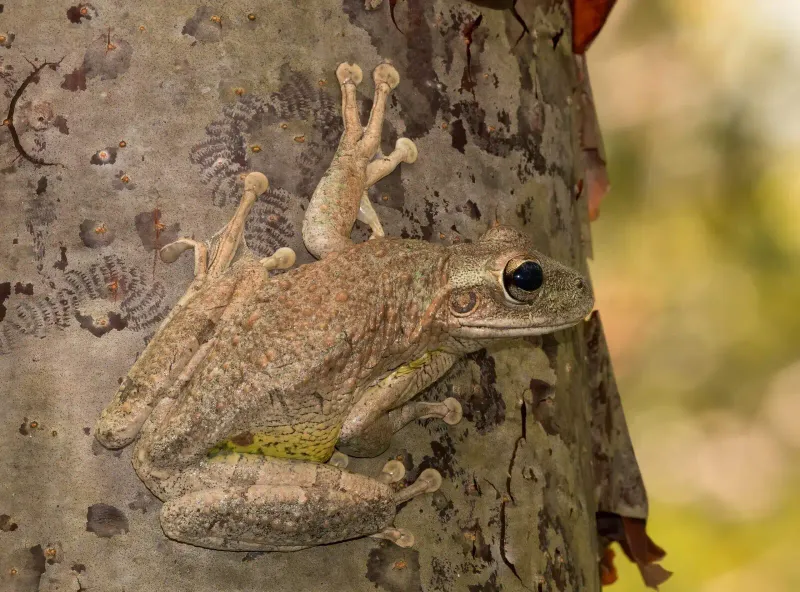
Size matters when you are trying to name a frog. In Florida, the Cuban treefrog wins the heavyweight title among treefrogs, and it holds that crown across North America too.
Most Cuban treefrogs measure about 1.5 to 2.5 inches long. The females, though, can grow much bigger.
Some reach more than 6 inches from nose to rear, which is about the length of a dollar bill folded in half the long way.
Native Florida treefrogs rarely grow past 2.5 inches. That means a frog stretching well beyond that size is almost certainly the invader.
If it looks like it could cover your whole palm, you have your answer.
Fun fact: female Cuban treefrogs are usually larger than males. A big lady frog can swallow smaller frogs, lizards, and even baby snakes.
Your Florida Garden Changes Every Week. Your Plan Should Too.
Gardening in Florida changes quickly throughout the season. Every Friday you’ll receive a simple weekly plan showing exactly what to plant, prune, fertilize, harvest, and protect so you never miss the right timing.
Her appetite is one reason scientists worry about her.
Keep in mind that young Cuban treefrogs start out tiny. A small frog is not automatically a native one, so size works best as a first clue rather than the final word.
A handy trick is to snap a photo with a coin or key nearby. Later, you can compare its size and check other clues without having to touch the frog at all.
Its Toe Pads Are Far Bigger Than A Native Frog’s
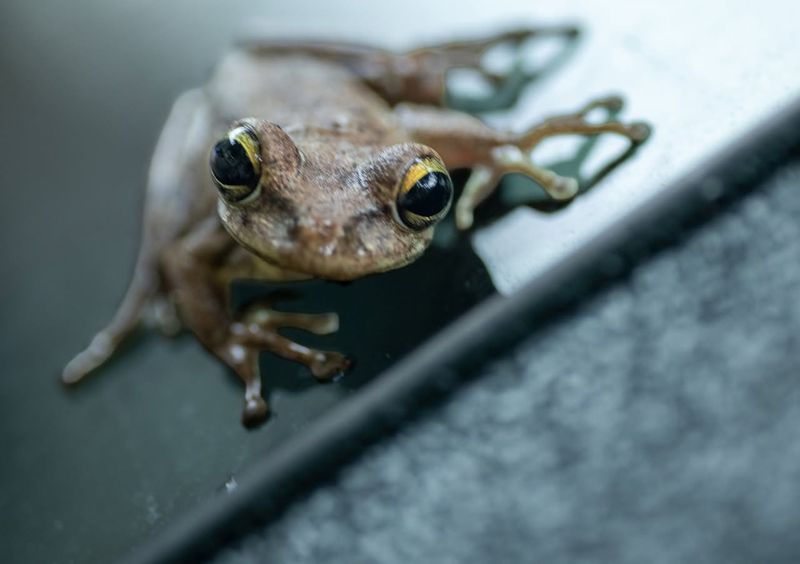
Ever watched a frog walk straight up slick glass like a tiny superhero? Those sticky moves come from toe pads, and the Cuban treefrog has some of the biggest around.
Every treefrog has rounded pads on the ends of its toes. They work a bit like suction and glue mixed together, helping the frog grip leaves, bark, and walls.
On a Cuban treefrog, though, these pads look oversized, almost like little round cushions.
Compare them with a native frog, and the difference jumps out. Native pads look neat and modest.
Cuban pads look wide and puffy, sometimes as large as the frog’s eardrum.
The best view comes from inside your house. When a frog clings to the window, look at its feet pressed against the glass.
You will see the pads spread out flat, almost like fingerprints on a mirror.
Those giant grippers explain why Cuban treefrogs love buildings so much. Smooth walls and windows that challenge other critters are easy for them.
They can hang upside down under eaves with no trouble.
Next time you spot a frog after sunset, grab a flashlight and peek from the inside. Big, bold toe pads are a strong hint that you have found the invasive kind.
Look For Warty Skin On The Back, But Not The Head
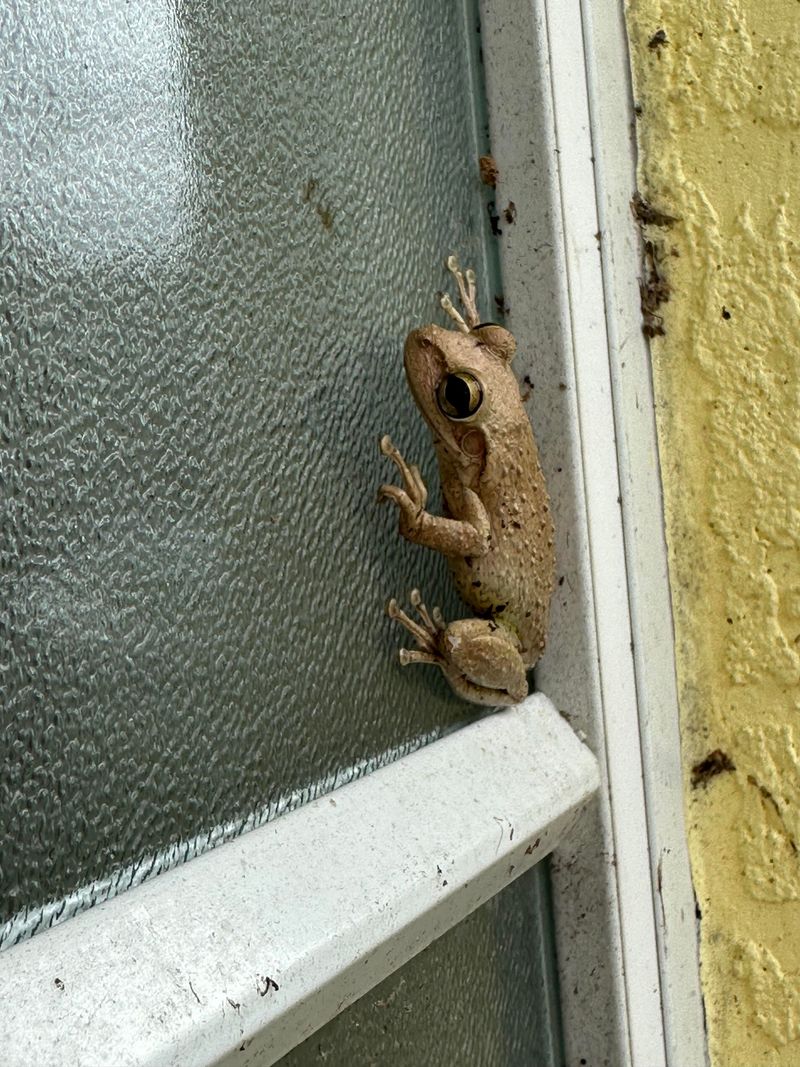
Run your eyes over a Cuban treefrog, and it might remind you of a lumpy potato. Bumps of all sizes are scattered across its back, giving it a rough, pebbly look.
Many people think warts mean a toad, but this frog breaks that rule. Its skin is noticeably bumpy compared with Florida’s native treefrogs, which tend to look smooth and shiny.
That texture is a helpful clue, especially in bright light.
Here comes the clever part. Look closely at the top of the head, between and behind the eyes.
On a Cuban treefrog, that area stays smooth without warts, even though the back is covered in them.
So the pattern looks like this: bumpy back, smooth head. It is a little like wearing a knobby sweater with a sleek cap on top.
Color can fool you, so do not rely on it. Cuban treefrogs can be white, gray, tan, brown, or even greenish, and they can change shades depending on mood, temperature, and surroundings.
Texture is more dependable than color for this reason. If you spot a frog with a rough back and a smooth crown, add one more checkmark to your Cuban treefrog list.
Then move on to the next clue to be extra sure.
A Yellow Wash Shows Up In The Armpits And Groin
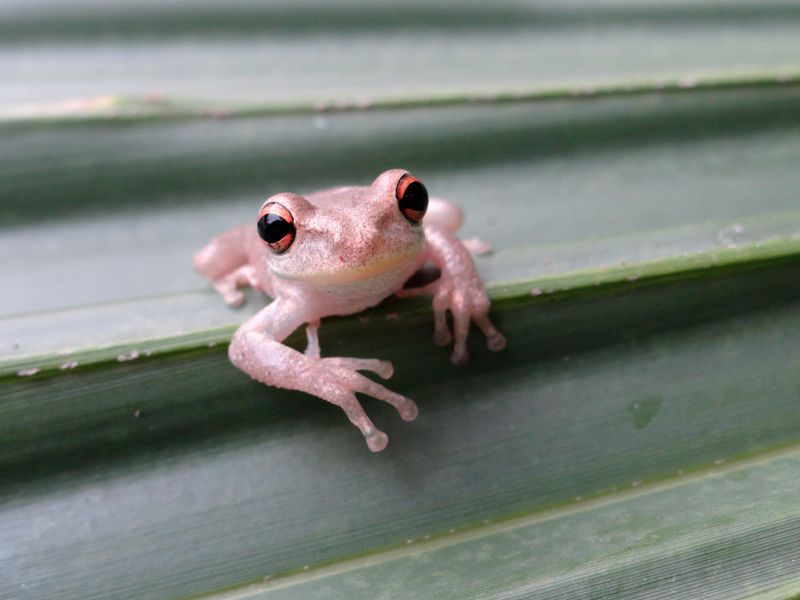
Some secrets only show up when a frog stretches. Watch a Cuban treefrog reach for a new spot, and you might catch a flash of yellow hiding where its legs meet its body.
Scientists call this a yellow wash. It looks like someone lightly brushed watercolor paint into the armpits and the groin area.
The color can be pale lemon or a richer golden tone.
When the frog sits tucked up, the yellow often stays out of sight. Once the front and back legs stretch out, the color becomes much easier to see.
Frogs climbing or leaping tend to give you the best view.
This clue is great for patient observers. Instead of grabbing the frog, just wait and watch.
Frogs shift positions often, especially while hunting bugs near a light.
A camera can help, too. Take a few quick photos as the frog moves, then zoom in later.
You might spot the yellow patch you missed in real time.
Keep in mind that the shade can vary from frog to frog, and young ones may show less color. Combine this hint with others like size, warty skin, and big toe pads.
Together, those clues paint a clear picture of the invader.
The Skin On Its Head Won’t Budge
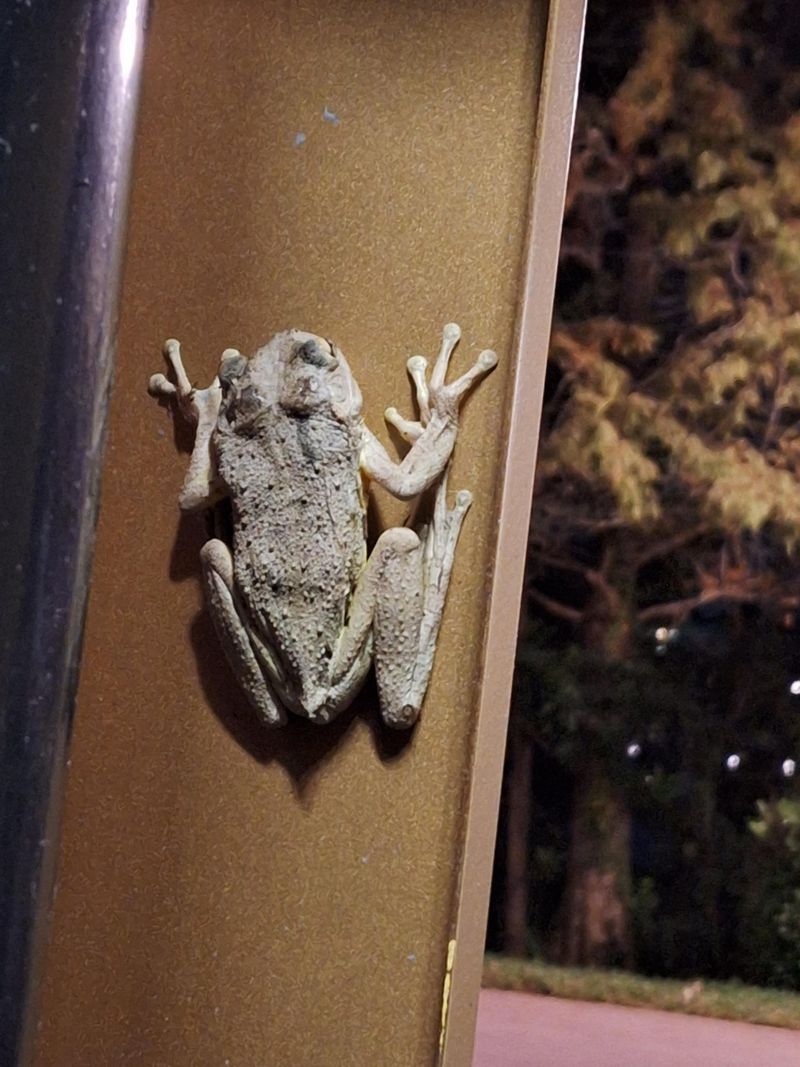
Experts have a neat trick that sounds almost like a magic test. It involves the skin on top of the frog’s head, and it works on Cuban treefrogs about 1 inch long or bigger.
On these frogs, the head skin is fused to the skull underneath. That means it is attached tightly, with no wiggle room.
Native treefrogs have loose head skin that slides a little when touched.
To try the test, put on gloves or use a clean plastic bag over your hand. Gently rub the skin between the frog’s eyes with a fingertip.
If the skin does not shift at all, you are likely holding a Cuban treefrog.
Be kind and careful while doing this. Use a soft touch, and keep the test short so the frog does not get stressed.
A light press is plenty.
Here is a fun bonus fact. That fused skin may help the frog hold onto water, which is useful during dry spells.
It acts a bit like a built-in helmet that keeps moisture locked in.
This clue is one of the most trusted ways to tell the frogs apart. When the other signs leave you unsure, the head test usually settles the question quickly.
Native Green Treefrogs Are Smaller, Smooth And Striped
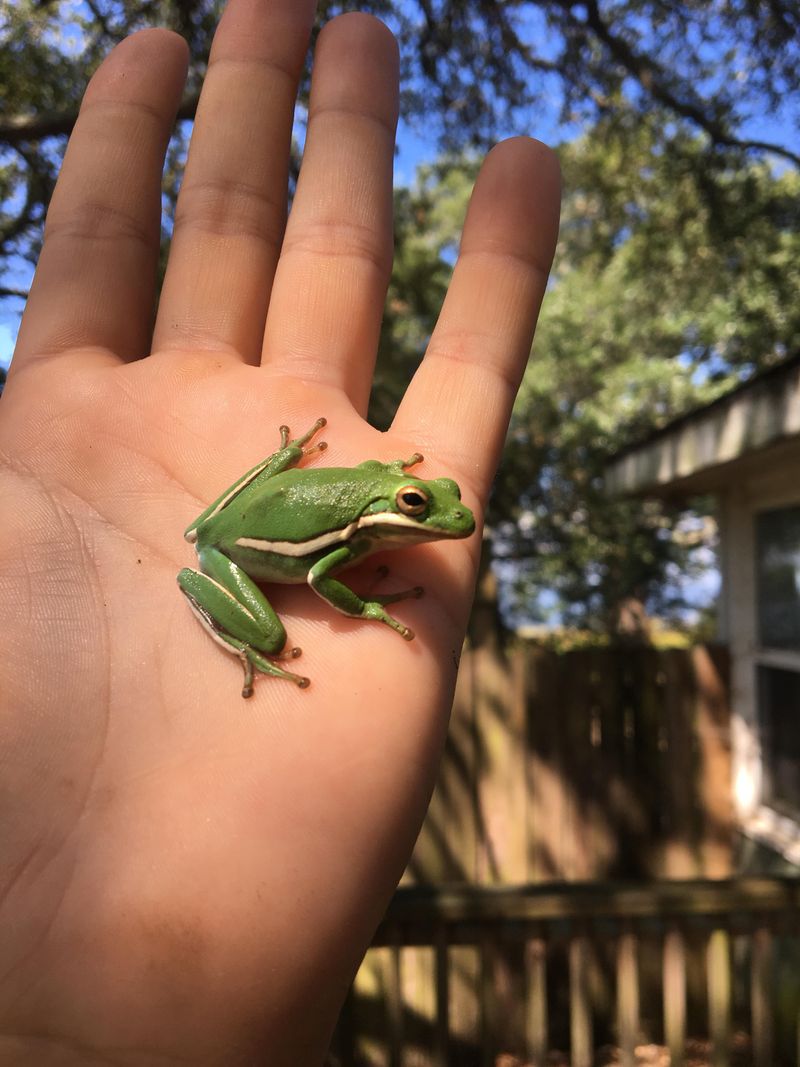
Bright as a lime and sleek as a jelly bean, the green treefrog is one of Florida’s most charming locals. Many people grew up hearing its loud, honking calls on rainy summer nights.
Known as Hyla cinerea, this native frog usually measures 1 to 2.5 inches long. Its body looks slim and graceful, not chunky.
The skin feels smooth, with no warty bumps on the back.
Most green treefrogs wear a vivid emerald color. They can shift toward yellow or gray when they are cool, resting, or hiding, so do not be surprised by a duller one.
The best clue is the stripe. A light, often whitish line runs along each side, from the upper lip down toward the back legs.
Sometimes a thin dark border outlines it, making it pop.
Green treefrogs do have sticky toe pads, too, and they may visit your windows. Their pads look much smaller than a Cuban treefrog’s, though.
If you find one, give yourself a pat on the back. These frogs gobble up mosquitoes and other pests around your yard.
Leave them be, enjoy their cheerful songs, and consider adding native plants that give them safe places to rest.
Native Squirrel Treefrogs Are Even Smaller
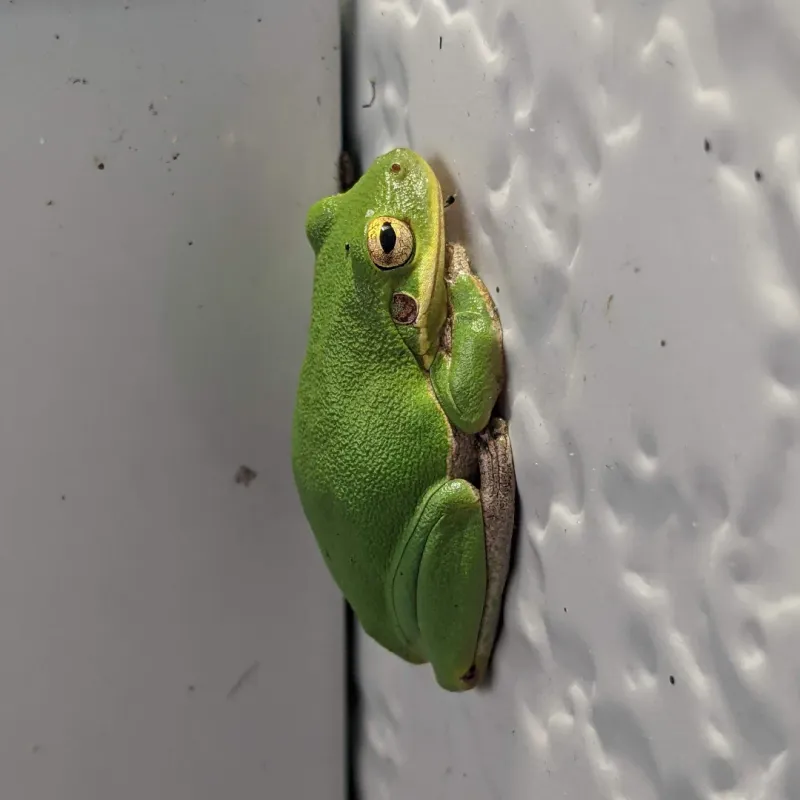
Small enough to perch on a thumbnail, the squirrel treefrog is a pocket-sized Florida native. Its name comes from its raspy call, which some folks say sounds like a scolding squirrel.
Hyla squirella usually reaches only 1 to 1.5 inches long. Next to a full-grown Cuban treefrog, it looks like a little kid standing beside a giant.
That big size gap makes this frog easier to rule out.
Squirrel treefrogs have smooth skin, just like their green cousins. Their color, however, can change a lot.
You might see one that is brown, another that is yellow-green, and another that is bright green with a few dark spots.
Some show a faint light stripe on the upper jaw or along the sides. That line tends to be blurry and less bold than the crisp stripe on a green treefrog.
They have climbing toe pads, but nothing like the giant pads of the invader. Squirrel treefrogs also love porches and windows, so they often get mistaken for young Cuban treefrogs.
When in doubt, check the skin texture and try the head test. A smooth, tiny frog with loose head skin is a native friend worth protecting.
Wash Your Hands After Handling One

Here is a lesson many curious kids learn the hard way. Touch a Cuban treefrog, rub your eyes, and you may feel an unpleasant sting moments later.
These frogs coat their skin with a slimy mucus that protects them from predators. To people, that slime can be irritating.
It is especially bothersome if it reaches your eyes, nose, or mouth.
Some people feel burning or itching after contact. Others get sneezy, watery, allergy-like reactions that can last for a while.
It is not fun, but it is easy to avoid.
The best plan is to handle these frogs as little as possible. If you need to move one, wear gloves or slip a plastic bag over your hand first.
Many Florida families keep a pair of garden gloves near the door for exactly this.
Afterward, wash your hands well with soap and warm water. Scrub for about 20 seconds, the length of singing a short song twice.
Keep your hands away from your face until you have washed up. Remind younger kids, too, since they love to grab frogs.
Pets can also react to the slime, so watch dogs and cats around them. A little caution keeps frog watching safe and fun for everyone.