The Invasive Insect Now Established In Eighteen Kentucky Counties
Something new has been hitchhiking across Kentucky, and it travels first class on car bumpers and rail cars. Most folks meet it by accident, usually in late summer when the air smells like warm grass and sticky sap.
It does not bite or sting, yet farmers and backyard gardeners are watching it closely. Eighteen counties have now filed reports, and that number keeps nudging upward.
You might notice the sign before the culprit itself, a shiny film on a patio table or a black smudge climbing a tree trunk. Wasps and bees show up in crowds, drawn to the sweetness like kids to a snow cone stand.
Early detection makes a real difference. A closer look around the yard, at the right times of year, turns an ordinary walk into helpful detective work for the whole state
Kentucky’s Uninvited Guest Explained
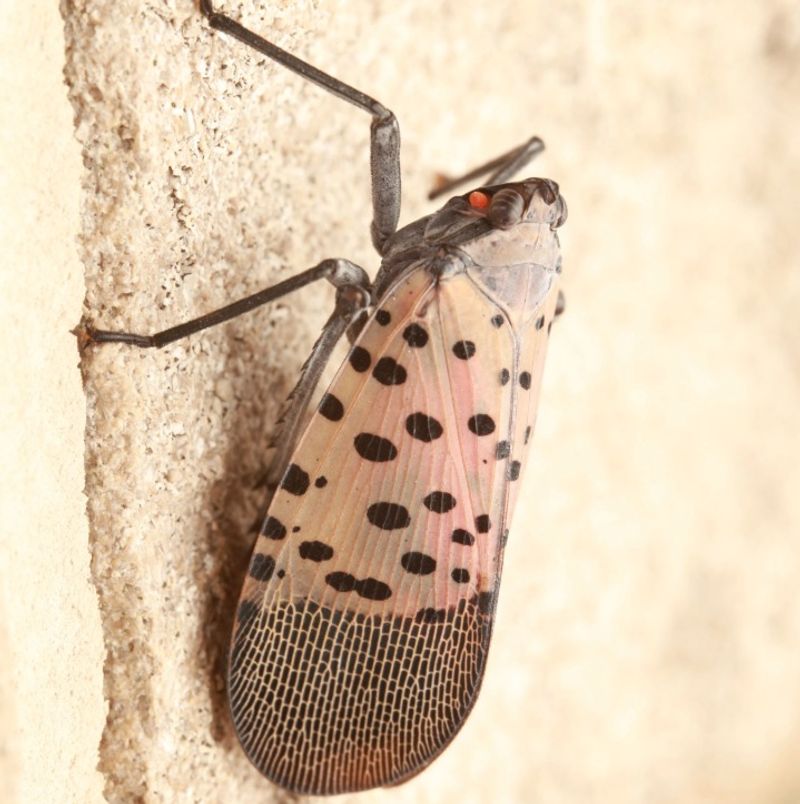
Picture a moth-sized planthopper wearing polka dots, and you have the spotted lanternfly. Native to parts of Asia, it first showed up in Pennsylvania around 2014 and has been working its way west ever since.
Kentucky’s first confirmed find came in 2023, and reports have since spread across eighteen counties. Officials with the state Office of the State Entomologist and the University of Kentucky have been tracking each new sighting carefully.
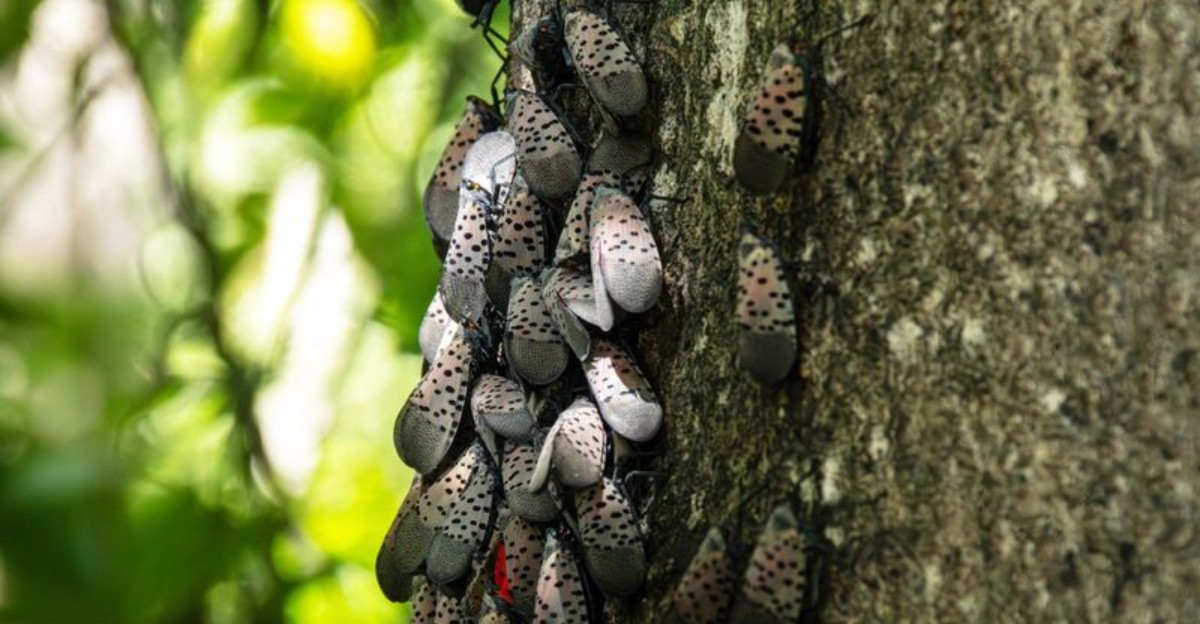
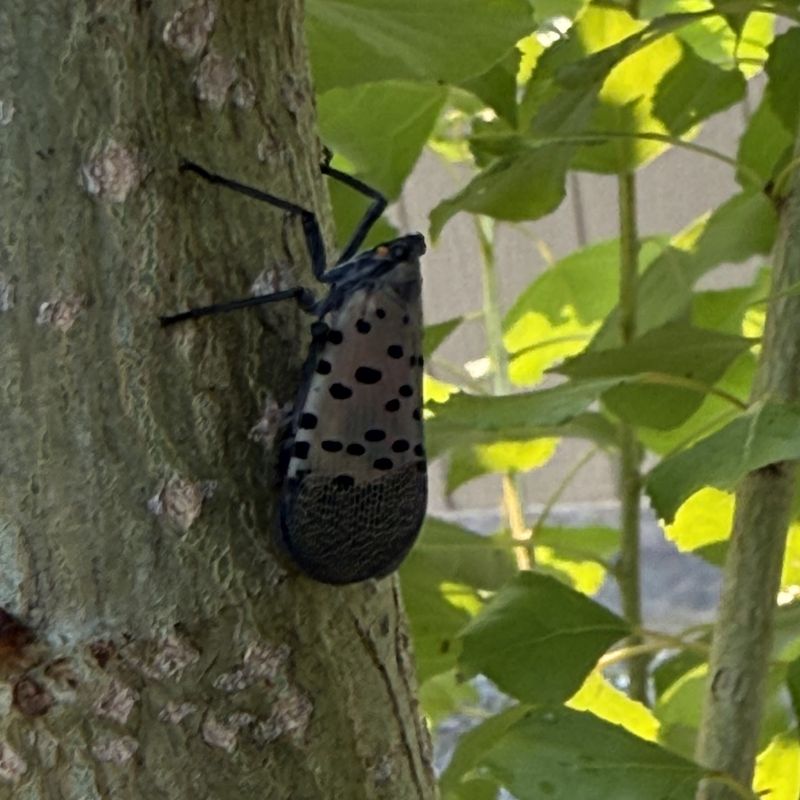
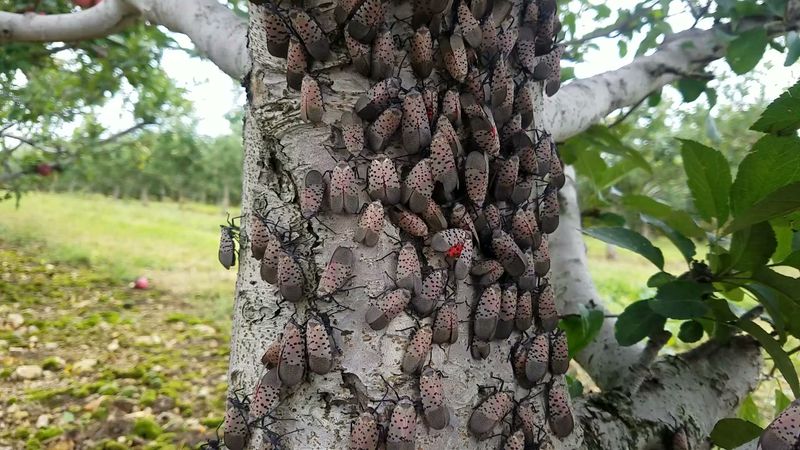
Adults measure about an inch long with folded gray forewings dotted in black. Startle one and it flashes bright red hindwings, which is honestly the easiest way to identify it on the spot.
Despite the name, it is not a fly at all. It belongs to a group of insects that feed by poking a straw-like mouthpart into plant stems and slurping sap, similar to aphids or cicadas.
What makes it a headache is appetite combined with numbers. Grapevines, young maples, black walnut, hops, and fruit trees all rank high on its menu, which worries Kentucky vineyards and orchards.
Homeowners feel it too. Heavy feeding leaves a sugary waste called honeydew that coats decks, cars, and lawn furniture in a sticky glaze.
Black sooty mold grows on that residue, turning surfaces dingy and coating leaves so plants struggle to soak up sunlight.
The insect does not harm people or pets, and it cannot bite. Still, entomologists ask residents to report sightings because early detection keeps populations manageable before they settle in for good.
Eighteen Counties And The Trail Of Spread
Follow the interstates and you can almost predict where this insect turns up next. Detections in Kentucky cluster near busy transport corridors, rail yards, and shipping hubs, which tells entomologists plenty about how it gets around.
Northern Kentucky counties near the Ohio River saw some of the earliest confirmations, an unsurprising outcome given how much freight moves through that region daily.
From there, reports fanned outward into north-central Kentucky, including counties near Lexington. Each new county on the list usually starts with a single alert homeowner who noticed something odd on a tree.
The insect is a weak flyer, hopping short distances rather than cruising for miles. Long trips happen when it lays eggs on trailers, pallets, firewood, patio furniture, or the back of a pickup truck.
Your Kentucky Garden Changes Every Week. Your Plan Should Too.
Gardening in Kentucky changes quickly throughout the season. Every Friday you’ll receive a simple weekly plan showing exactly what to plant, prune, fertilize, harvest, and protect so you never miss the right timing.
Egg masses look like smears of gray mud, roughly the size of a stick of chewing gum. Because they blend in so well, they ride along unnoticed for hundreds of miles.
Kentucky agriculture officials update the county list as confirmations come in, so the number eighteen may already be outdated by the time you read this.
Checking your vehicle before a road trip sounds fussy, yet it is one of the genuinely effective habits available to regular people.
Firewood deserves the same attention. Buying and burning wood close to where you camp keeps eggs from catching a free ride into an unaffected county.
Seasonal Timing And The Stages To Watch For
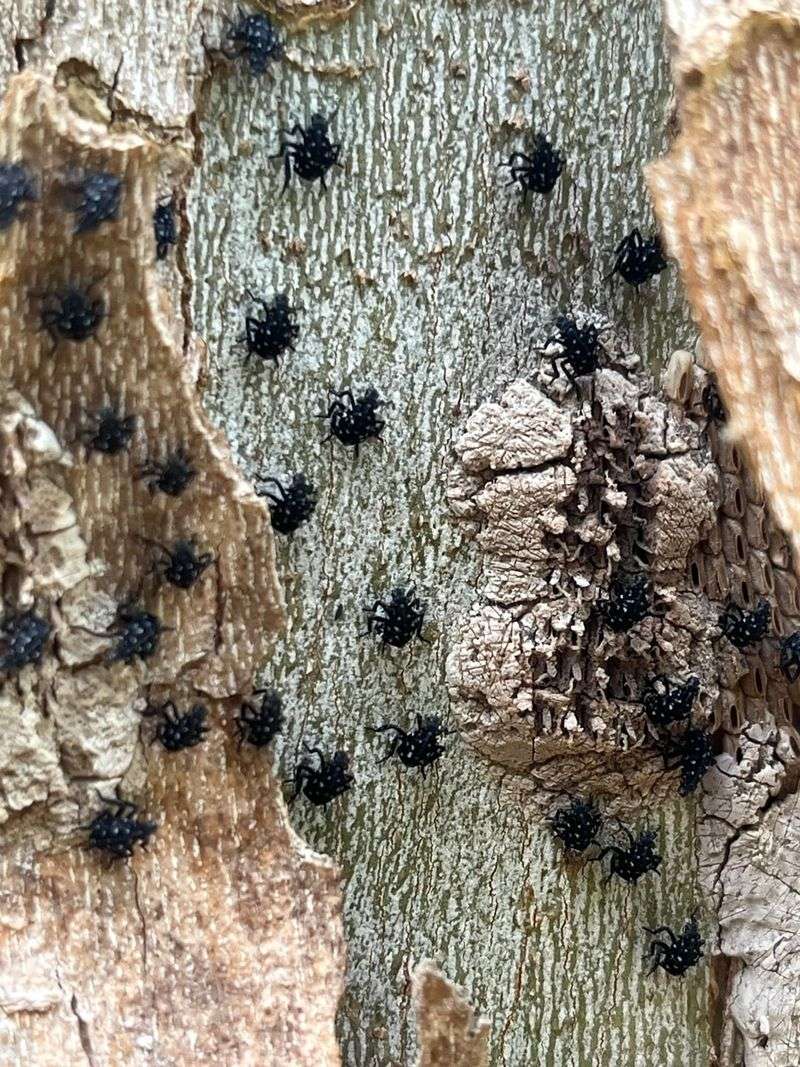
Timing changes everything with this pest, because it looks like four different bugs over a single year. Knowing the calendar helps you spot it before the flashy adult stage arrives.
Eggs sit tight through winter on bark, stone, metal, and just about any flat surface. They hatch in late spring, usually around May in Kentucky.
Young nymphs emerge jet black with crisp white speckles, tiny enough that people mistake them for ticks or beetles. They cannot fly, but they jump with surprising force when disturbed.
By midsummer the nymphs molt into a striking red-and-black form with white dots, easily the most recognizable stage for casual observers.
Adults appear around July and stick around into fall. That is when reports spike, since the winged insects gather in noticeable clusters on trunks and fence posts.
Autumn brings egg laying, generally September through November. A single female can leave behind a mass holding thirty to fifty eggs.
Scraping those masses into a bag with isopropyl solution during winter cuts down next season’s numbers considerably. It is slow work, though oddly satisfying on a quiet weekend.
Late fall and winter walks around the property give you the clearest view, since bare branches make gray egg smears easier to notice.
Mark your calendar for May, July, and October. Those three checkpoints cover hatching, adult arrival, and egg laying, which is really all the schedule you need.
Tree Of Heaven And The Habitat Connection
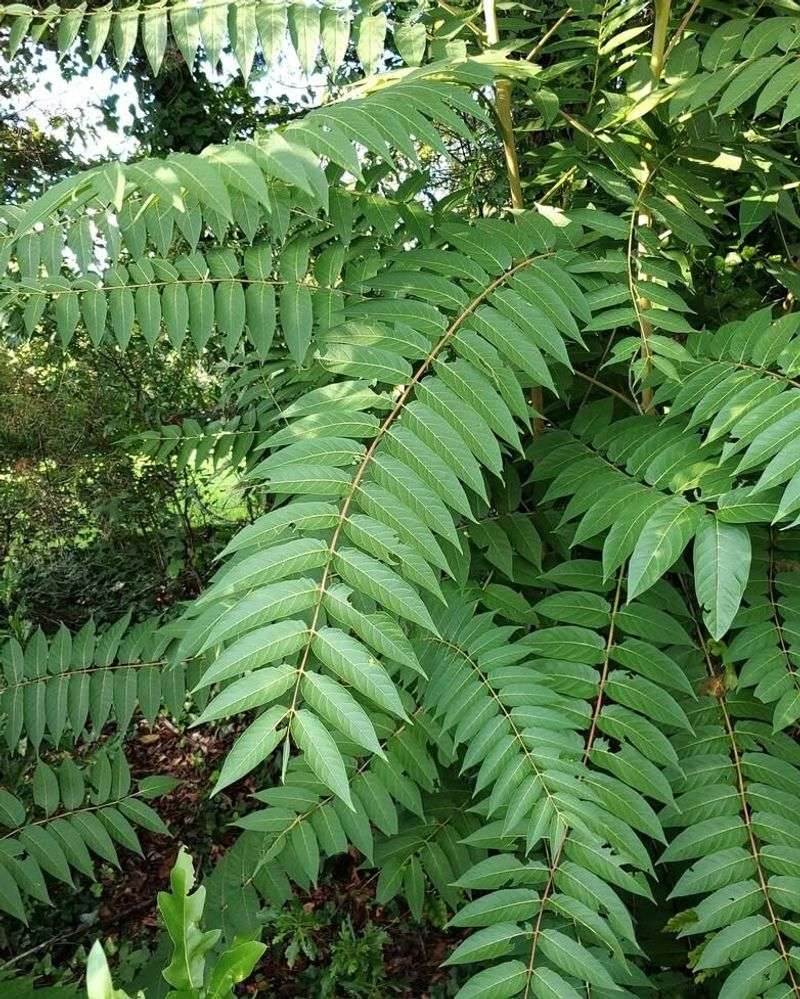
There is a plant partner in this story, and it grows along nearly every Kentucky roadside. Tree of heaven, or Ailanthus altissima, is itself an invasive species from Asia and happens to be the lanternfly’s favorite host.
Long compound leaves, smooth gray bark, and a sharp smell often compared to burnt peanut butter make it fairly easy to identify once you know the cues.
Where these trees grow thick, lanternfly populations tend to build faster. Vacant lots, railroad embankments, and highway shoulders offer exactly the conditions both species enjoy.
Landowners who remove tree of heaven can slow local buildup, though the job takes care. Cutting alone triggers aggressive root sprouting that leaves you with a dozen new stems.
Foresters generally recommend treating the tree with an appropriate herbicide before or instead of cutting, and county extension offices walk people through the process for free.
Some property owners leave one or two treated trees standing on purpose. Those become trap trees, drawing insects to a single spot where they can be monitored.
The lanternfly does not depend on tree of heaven alone. Grapes, hops, walnut, willow, birch, and maple all support it, which is exactly why growers stay alert.
Walking your fence lines in summer with an eye for that peanut butter smell turns out to be a practical starting point. Manage the host plant, and you make your property far less welcoming.
Common Missteps Homeowners Make In Response
Panic tends to be the first reaction, and it leads to some genuinely counterproductive choices. Homemade sprays top the list of regrets.
Mixtures of bleach, gasoline, or concentrated dish soap have damaged lawns, shrubs, and even pets in other states. Extension agents field these calls every season and wish they did not have to.
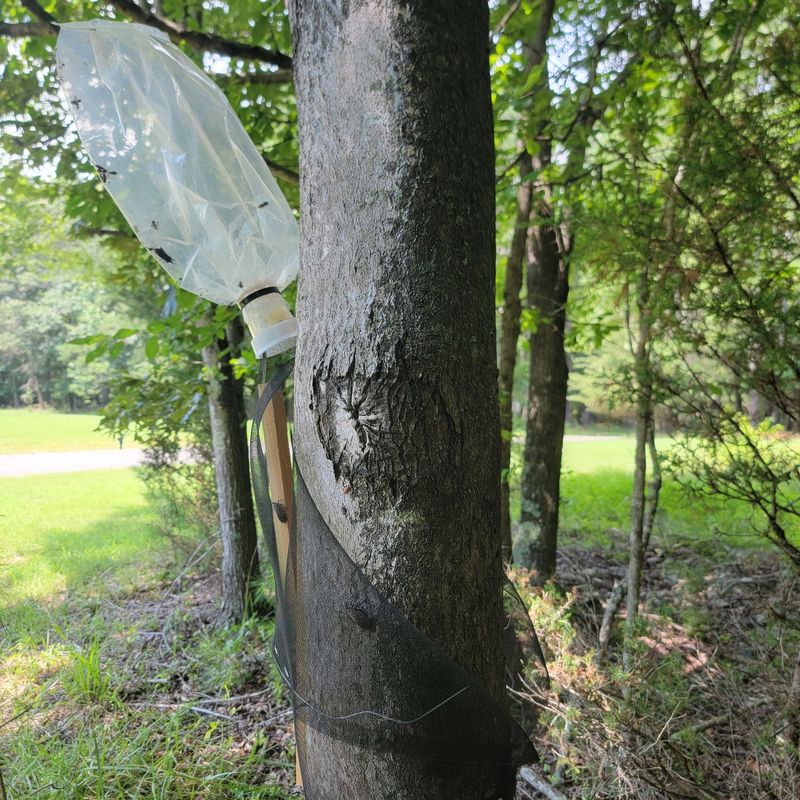
Sticky bands wrapped around trunks are another well-meaning idea gone sideways. Uncovered bands catch birds, squirrels, and helpful insects along with the target.
If you use a band, wrap wire mesh around the outside so wildlife stays clear. Better still, switch to a circle trap that funnels insects into a collection bag.
Misidentification causes plenty of unnecessary worry too. Native leafhoppers, boxelder bugs, and even the harmless spotted cucumber beetle get squashed by mistake.
Photographing the insect before acting solves that problem. A clear picture lets specialists confirm what you actually found.
Skipping the report is the quietest mistake of all. Assuming somebody else already called it in leaves gaps in the map that researchers rely on.
Kentucky residents can submit sightings through the University of Kentucky Entomology department or the Office of the State Entomologist, and photos with a location make the report far more useful.
One more thing worth remembering, treating a single backyard tree with strong chemicals rarely solves anything. Coordinated neighborhood effort and accurate reporting accomplish much more than a lone spray bottle ever will.
Looking Ahead For Kentucky Growers And Yards
Vineyard owners across the state have been watching this insect’s westward march for years, and now the waiting is over. Grapes rank among the crops most affected, since heavy feeding weakens vines and reduces harvests over consecutive seasons.
Kentucky’s wine industry has grown steadily, with dozens of commercial vineyards scattered from the Bluegrass to the western counties. Protecting those operations is a major reason officials track every new county report.
Hops growers, orchard managers, and nursery operators share similar concerns. Black walnut, a valuable timber species here, also shows up on the feeding list.
The outlook is not gloomy though. States dealing with this insect longer have seen populations surge, then settle into lower numbers as native predators, parasitic fungi, and management practices catch up.
Birds, spiders, and praying mantises have all been observed feeding on lanternflies. Researchers are studying native fungi that show real promise as natural controls.
For homeowners, the practical takeaway stays simple. Check vehicles and outdoor gear, scrape egg masses in winter, manage tree of heaven, and report what you find.
Nurseries and landscapers can inspect stock before it moves, which keeps eggs from spreading through the plant trade.
What happens over the next few seasons depends heavily on ordinary people noticing things. A photo snapped in a Kentucky driveway has already added counties to the map, and that kind of everyday attention genuinely matters.