The Invasive Vine Quietly Swallowing North Carolina Backyards Before Anyone Notices It Escaped
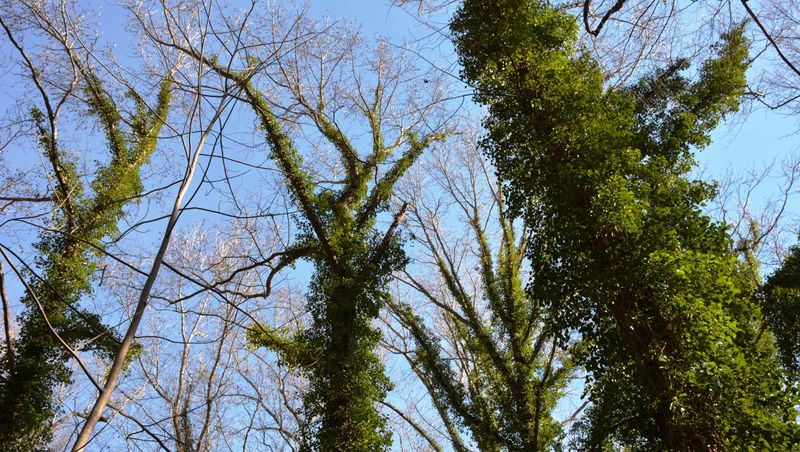
That glossy evergreen groundcover filling your shady bed might look tidy and low-maintenance, but it could be quietly working its way toward your fence, your trees, and your neighbor’s yard. The vine most likely behind this kind of slow creep in North Carolina is English ivy, Hedera helix, though a few other invasive vines can behave the same way. Catching it early makes the whole job a lot easier, and the steps are manageable for any homeowner willing to put in a few weekends of steady work.
English Ivy Fits the Clue, but Confirm It
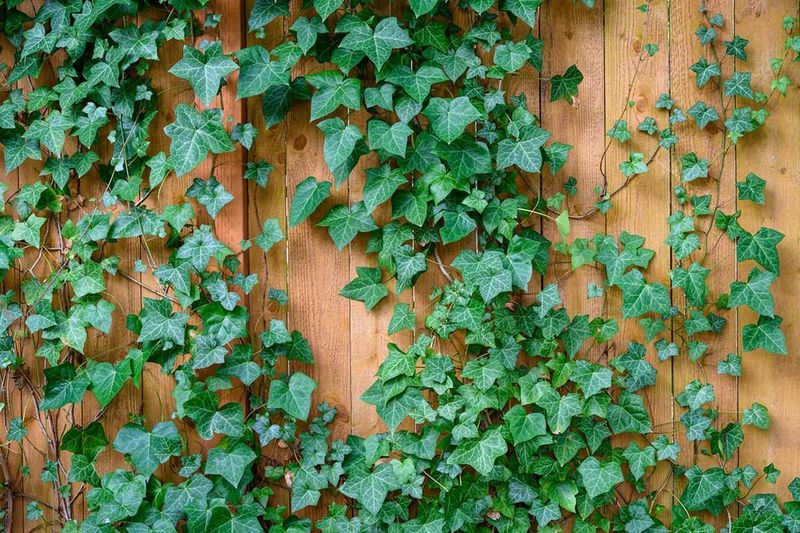
Somewhere between the back fence and the oak tree, a vine has been quietly doing its thing for a season or two, and now you are starting to wonder how it got so far. The plant that best fits that description in North Carolina is English ivy, Hedera helix, an evergreen groundcover sold at nurseries for decades because it fills shady spots without much fuss. NC State Extension lists English ivy as invasive in the state, with the potential to grow 20 to 80 feet high and 3 to 50 feet wide once it finds a vertical surface.
That said, English ivy is not the only possibility. Wintercreeper, Euonymus fortunei, is another invasive groundcover that transitions from a low mat to a climber in almost the same way, and periwinkle, Vinca minor or Vinca major, can also spread persistently beyond its original planting. NC State’s plant toolbox flags wintercreeper as invasive and notes that it climbs trees and structures just as readily as ivy does. Getting the identification right before you start cutting or spraying matters, because different plants can call for different approaches.
The spread is not dramatic or overnight. English ivy creeps steadily across the soil, roots where its stems touch the ground, and eventually finds a tree or fence to climb. Many Piedmont homeowners only notice it has moved when the vine is already several feet up a trunk. The good news is that persistent, manageable spread is also something you can actually push back against, one section at a time.
How a Groundcover Reaches Beyond Its Bed
Picture the original planting: a tidy patch under a dogwood, filling in a spot where grass would not grow. Over a few seasons, the stems creep outward, and wherever a node touches moist soil, a new root forms. That is the first and most reliable way English ivy moves, no seeds required, just contact with ground.
Stem fragments are the second pathway. A piece of ivy stem left on bare soil after weeding or mowing can take root if conditions are right. That is why bagging pulled material and keeping fragments off the ground matters more than it might seem at first. The third pathway is birds.
English ivy produces dark blue-black berries on its mature climbing stems, and birds eat them and deposit seeds in new locations, sometimes well beyond the original planting. The North Carolina Native Plant Society notes that English ivy has been documented in at least 33 counties and warns that incomplete records likely understate its true distribution across the state.
Your North Carolina Garden Changes Every Week. Your Plan Should Too.
Gardening in North Carolina changes quickly throughout the season. Every Friday you’ll receive a simple weekly plan showing exactly what to plant, prune, fertilize, harvest, and protect so you never miss the right timing.
The vine is most commonly reported in the mountains and Piedmont, where shaded slopes and moist soils give it ideal conditions. But it can occur in other parts of North Carolina, including portions of the Coastal Plain, so coastal homeowners should not assume they are in the clear. A vine that started in your grandmother’s shade bed twenty years ago may have already crossed the property line, and a quick walk around the yard is the fastest way to find out how far it has actually traveled.
Use the Leaves and Stems Before You Treat
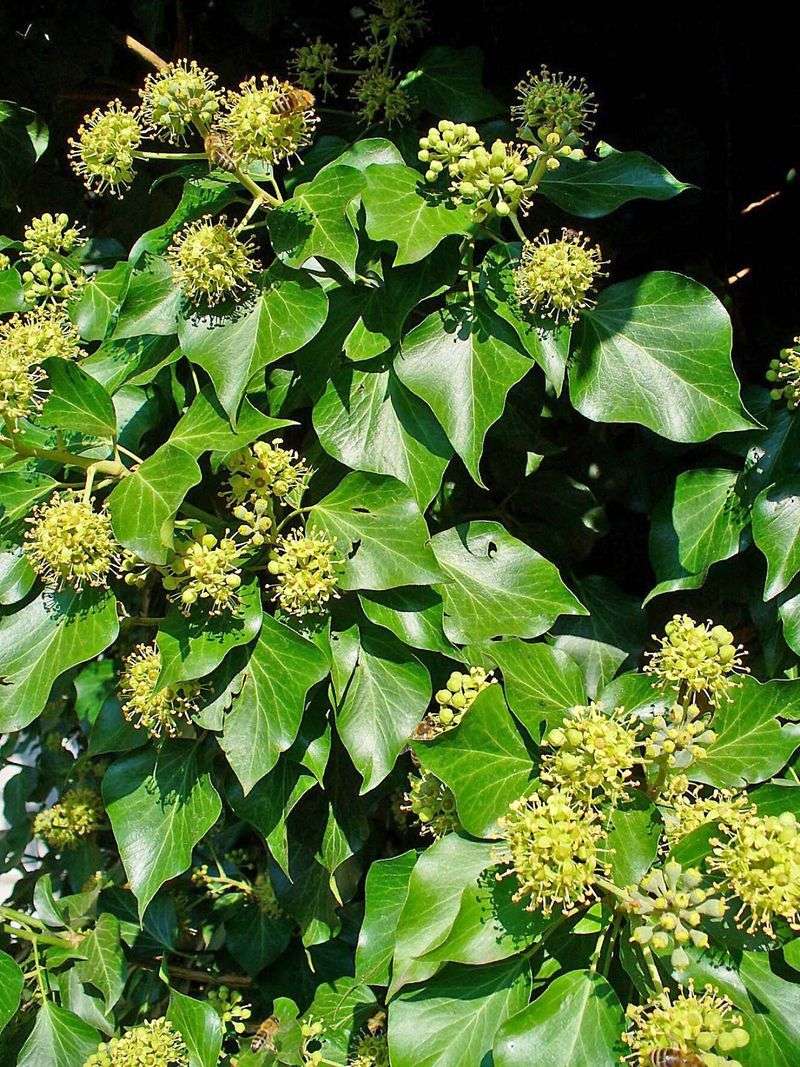
Before reaching for pruners or a herbicide label, spend five minutes actually looking at the vine. English ivy has glossy, evergreen leaves with a leathery feel. Juvenile stems, the ones running along the ground or climbing a short distance, typically carry three to five distinctly lobed leaves, the kind you would recognize from a garden center tag. Mature climbing stems are different: the leaves shift to a more oval or diamond shape, and those stems can produce small greenish-yellow flowers followed by clusters of dark blue-black berries in fall.
NC State Extension’s plant toolbox describes both growth stages and notes that juvenile and adult foliage can appear on the same plant at the same time.
One mix-up to avoid: English ivy is not poison ivy. Poison ivy, Toxicodendron radicans, has three leaflets per stem and causes a rash from urushiol oil on contact. English ivy has simple, often lobed leaves and is a different plant entirely. NC State’s tree identification guide is a useful cross-reference if you are uncertain about what you are handling.
Other vines worth ruling out before you commit to English ivy control include wintercreeper, periwinkle, Japanese honeysuckle, porcelain-berry, bittersweet, and several native vines that climb in similar ways. The NC Native Plant Society’s invasive plant booklet can help you sort lookalikes. Getting the identification reasonably right first saves you from applying English ivy guidance to a vine that needs a completely different response.
Cut Tree Vines Instead of Pulling Them
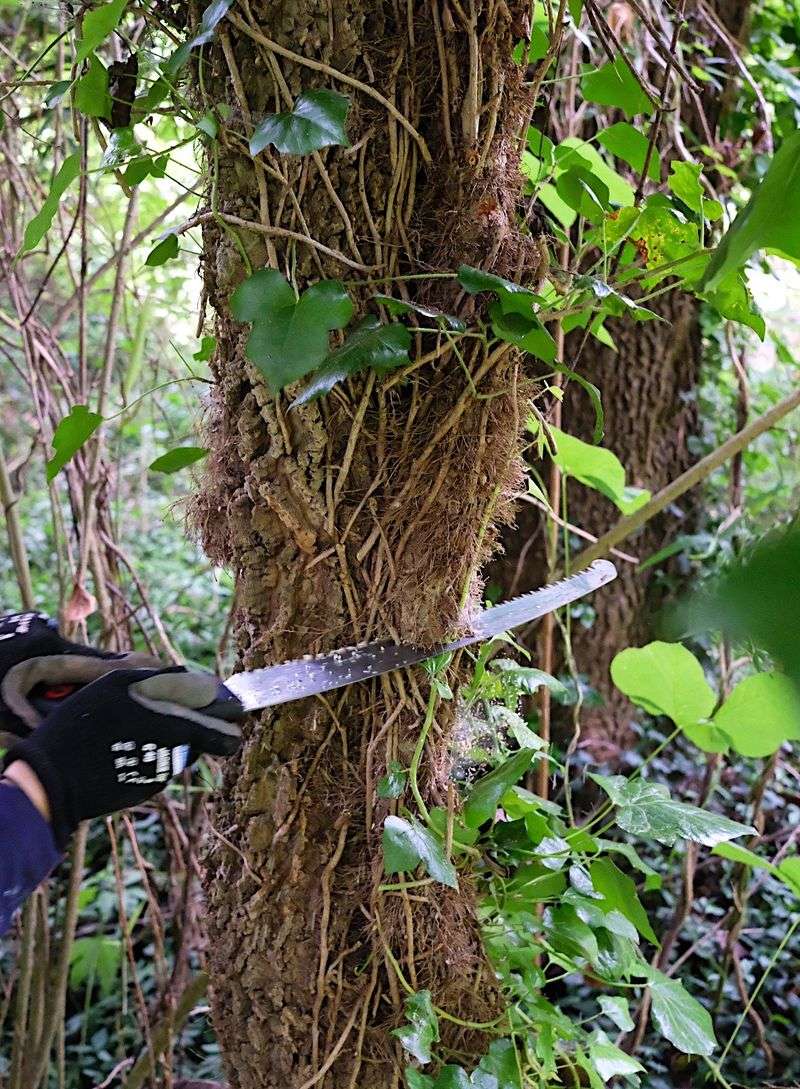
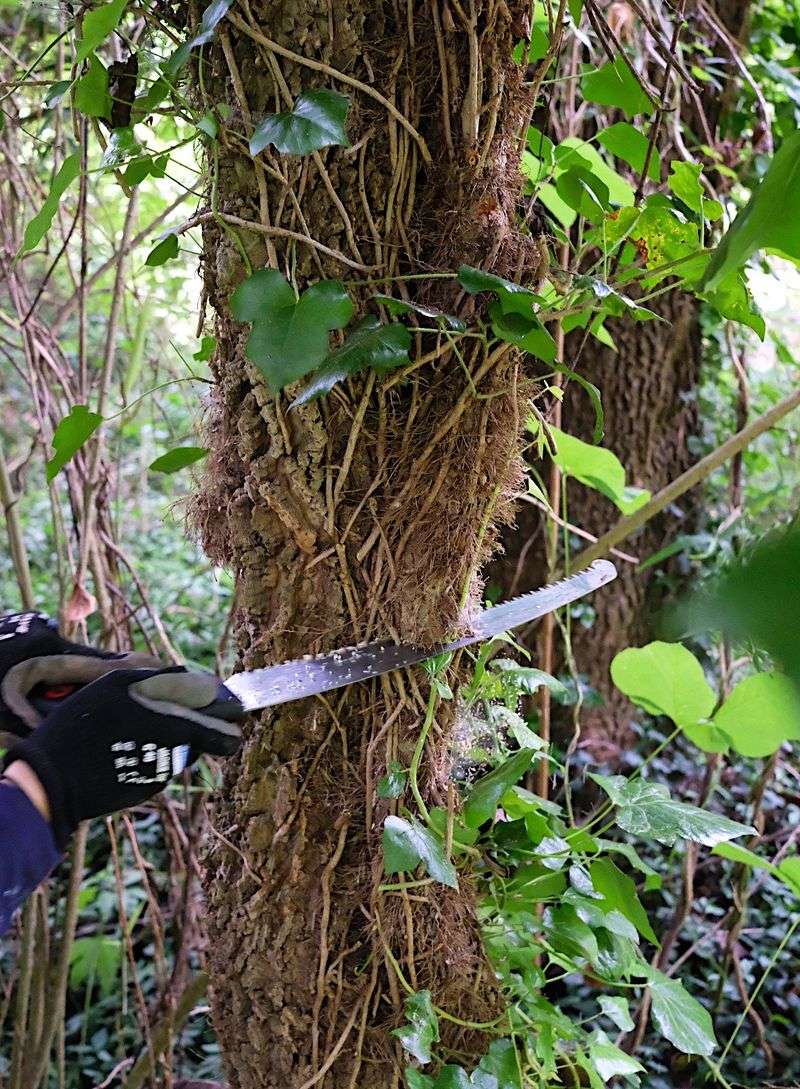
Finding ivy on a tree trunk is the moment most homeowners reach for the vine and start pulling. Resist that impulse. English ivy climbs using aerial rootlets that adhere tightly to bark, and yanking a thick vine from a trunk can strip bark with it, leaving the tree more vulnerable than the ivy ever made it. The safer move is to cut every ivy stem at ground level, as close to the soil as you can get without nicking the bark itself.
Use clean pruners, loppers, or a handsaw sized to the stem.
NC State Extension’s guide to controlling English ivy in urban landscapes advises removing only the detached vines you can safely reach from the ground once the stems are cut. The upper growth will die in place and eventually fall away on its own. Do not climb the tree, use an unsafe ladder, or try to pull vines down from high branches. Falling material is a real hazard, and branches weakened by heavy vine load can shift unexpectedly.
The risk ivy poses to trees is real but conditional. The US Forest Service’s species review for English ivy describes impacts as variable depending on vine load, host condition, canopy access, and weather. Established, heavy growth that reaches the canopy can add weight and shade branches, and it may increase a tree’s vulnerability to wind, snow, or ice damage. That risk grows with the vine, which is why cutting early is better than waiting.
Walls, siding, roofs, fences, and fragile shrubs are a different situation. University of Maryland Extension notes that pulling adhered vines from surfaces can damage masonry, siding, and paint. For anything attached to a structure, or for any growth near power lines or high above a walkway, hire a qualified professional rather than attempting removal yourself. The tree-cutting approach described here applies specifically to trees, not to everything ivy touches.
Remove the Ground Patch and Watch It
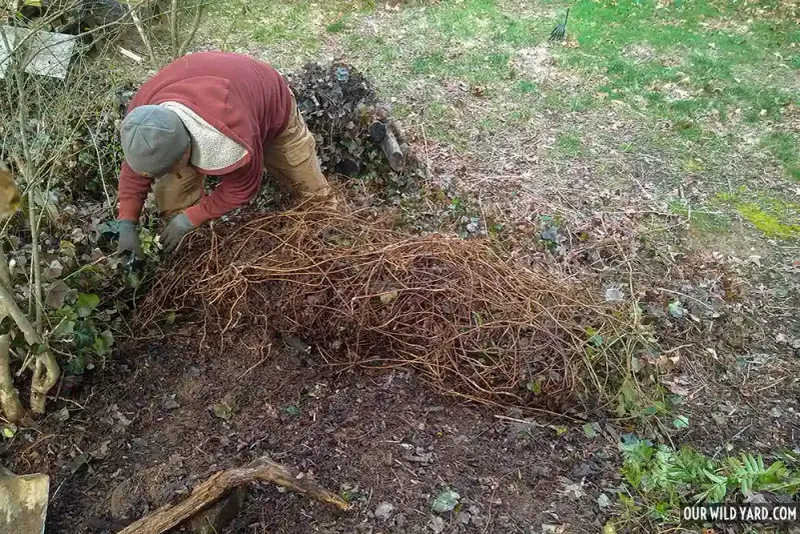
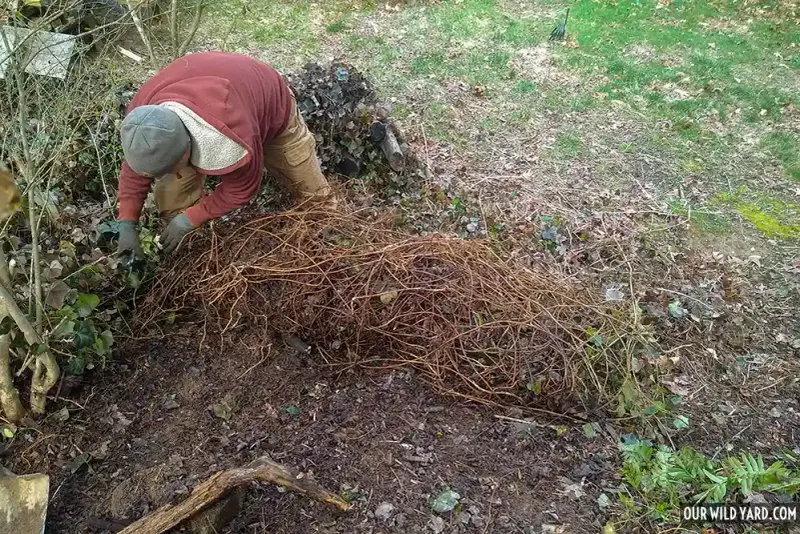
Once the climbing stems on a tree are cut, the ground patch still needs attention. Pull or dig ivy when the soil is moist, which in a North Carolina summer usually means the morning after a rain. Moist soil lets roots come up more cleanly instead of snapping off and staying behind. Work in sections rather than trying to clear everything at once, because this is genuinely labor-intensive and rushing leads to missed fragments.
NC State Extension describes hand removal as labor-intensive because small stem pieces and missed root sections can produce new growth. Remove rooted sections as completely as you can, and collect every vine fragment rather than leaving pieces on the soil surface. Do not place viable material in home compost, where it can survive and restart. Bag it for yard waste pickup or check with your municipality about disposal options.
Mowing is sometimes suggested as a shortcut, but occasional mowing only suppresses growth. To get meaningful control from mowing, you would need to mow frequently and cover the entire infestation every time, not just the edges. For most backyard patches, hand removal combined with follow-up monitoring is more practical than relying on a mower to finish the job.
Plan to check the cleared area again in four to six weeks. The NC Native Plant Society emphasizes that monitoring is not optional because ivy can resprout from fragments and roots you did not see the first time. Catching regrowth when it is small makes the second round far easier than the first.
Use Herbicide Only When the Label Allows It
Chemical control is a real option for persistent English ivy, but it is a tool with conditions, not a simple finish line. The first condition is plant identification: applying an herbicide before you know what you are treating wastes time and may harm plants you want to keep. The second condition is the product label, which is a legal document and the only reliable guide to how a specific formulation should be mixed, applied, and handled.
NC State Extension reports that spring applications generally work better for English ivy, particularly when new growth has two to four leaves. If you are starting in late summer, that timing has passed, so a spring treatment may deliver better results than a spray applied right now. Plan to check for regrowth about six weeks after any treatment and retreat if the ivy comes back, because one application rarely finishes the job.
Glyphosate is one of the herbicides used on English ivy, but it is nonselective, meaning it can injure or kill any green plant it contacts. NC State’s glyphosate guidance advises keeping people and pets away from treated areas until the label’s reentry conditions are met. Avoid spraying near azaleas, hydrangeas, dogwoods, pollinator plants, or edible gardens unless the label and site conditions specifically support that use.
A cut-stem or cut-stump application can reduce foliar drift when ivy is growing close to desirable plants.
EPA herbicide labels for this type of treatment emphasize wetting the freshly cut living tissue without runoff or puddling. Follow the current product label for protective equipment, runoff precautions, and reentry intervals, and do not copy dilution rates from one product to another, because formulations differ.Replant the Opening with a Site-Matched Native
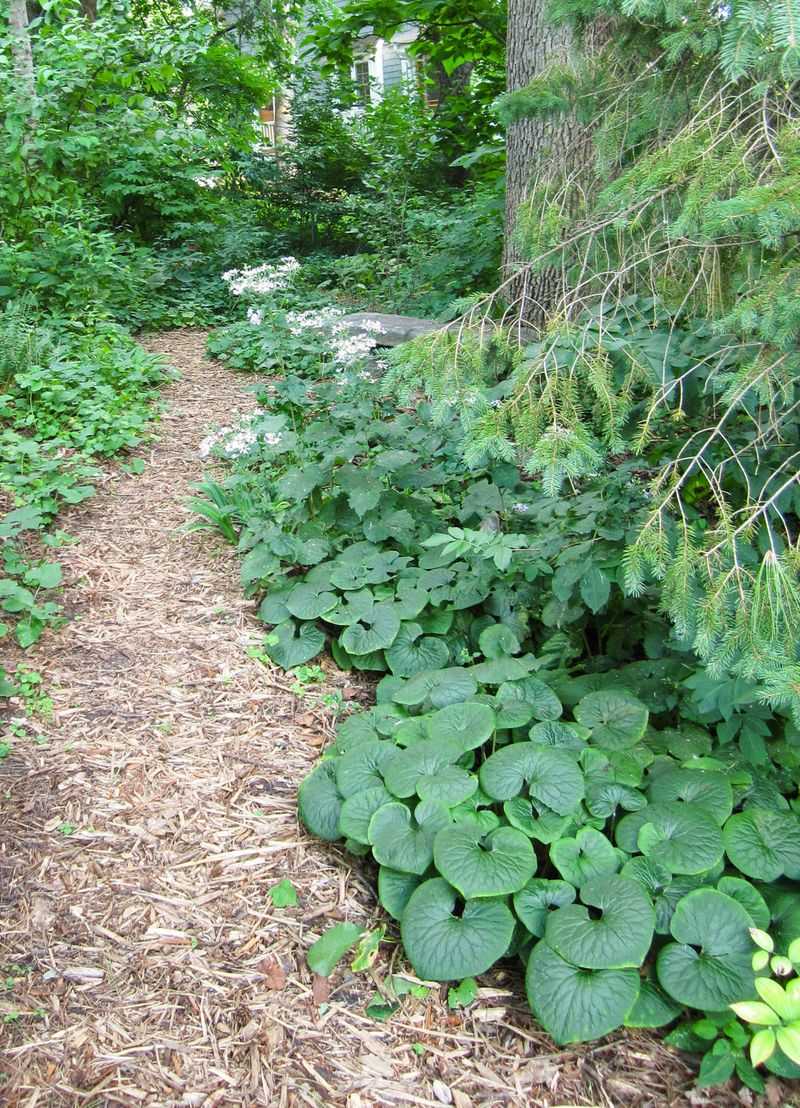
Bare soil left after ivy removal does not stay bare for long in a North Carolina summer. Weeds move in fast, and any ivy fragments you missed get an easier time in open ground. Replacing the cleared area with a native groundcover can restore cover and may reduce the open space available for weeds, though it is not a guarantee that reinvasion will not happen. Follow-up monitoring still matters even after new plants are in the ground.
NC State Extension’s native plants handbook lists options suited to different North Carolina regions, including partridgeberry, Allegheny spurge, creeping phlox, heartleaf foamflower, and creeping blueberry. These are possibilities, not interchangeable choices. Each plant has its own preferences for light, moisture, soil type, and regional climate, and putting the wrong one in the wrong spot just creates a different problem.
For shaded beds in the Piedmont or mountains, wild ginger, Asarum species, works well in moist, humus-rich soil with deep shade. Heartleaf foamflower, Tiarella cordifolia, tolerates similar conditions and spreads by runners to fill gaps over time. Green-and-gold, Chrysogonum virginianum, handles more light variation and is a reliable performer in Piedmont beds with moderate moisture.
Match the replacement plant to your actual site conditions: how much shade the bed gets by midday, whether the soil stays moist or dries quickly between rains, and what your region’s winters actually look like. Installing another uniform groundcover everywhere without checking those details is how a well-intentioned fix becomes the next project.
A Manageable Backyard Response
The honest version of this story is not a dramatic takeover but a slow, easy-to-overlook creep that becomes genuinely harder to manage the longer it goes unaddressed. English ivy has been documented in at least 33 North Carolina counties and may occur more widely, including parts of the Coastal Plain, so the plant is worth knowing regardless of where in the state you garden.
The action sequence is straightforward. Start by identifying the vine before you do anything else, because wintercreeper, periwinkle, and other invasive vines can look similar and may need different handling. Once you have confirmed English ivy, separate the tree work from everything else. Cut climbing stems at ground level without damaging bark, remove only the detached material you can safely reach from the ground, and leave high growth to die and fall on its own.
Do not climb, do not pull from above, and call an arborist for anything near power lines or high above a structure.
After the tree stems are cut, work the ground patch in sections, pulling in moist soil and collecting every fragment. Monitor the cleared area in four to six weeks and expect to repeat the process. NC State Extension’s ivy control guidance treats follow-up as a required step, not an afterthought. If you choose to use an herbicide, wait for spring when new growth has two to four leaves, read the full product label, and protect nearby plants from drift.
Replant cleared ground with a native suited to your actual site conditions, keep checking for regrowth, and resist the urge to declare victory after one afternoon. The US Forest Service notes that ivy impacts vary by location and host conditions, which is a useful reminder that steady, site-specific effort beats any single dramatic fix. Containment is the goal, and it is genuinely within reach.