The Lawn Damage New York Homeowners Often Blame on Drought but Shouldn’t
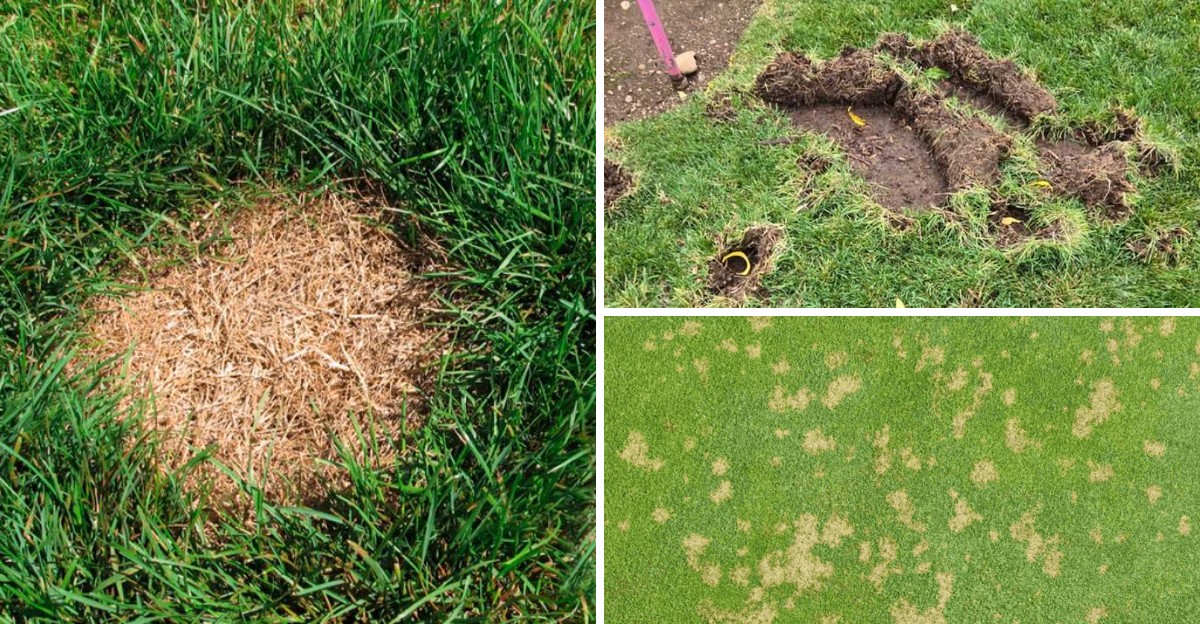
A single square foot of lawn can hide more than a dozen fat, C-shaped larvae chewing roots while you water the grass above them.
I learned that the hard way one August. I kept dragging the hose around, convinced my yard was thirsty, and the brown spots kept spreading anyway.
New York lawns are mostly cool-season grasses like Kentucky bluegrass, fine fescue, and perennial ryegrass. They handle cold winters beautifully, but summer heat brings a crowd of troublemakers that copy the look of dry turf almost perfectly.
Some of them feed underground. Some show up at night. A few actually get worse every time you turn on the sprinkler, which feels a little unfair.
So before you water again, how sure are you that thirst is the real problem?
Those Brown Lawn Patches Might Not Be Asking for Water at All
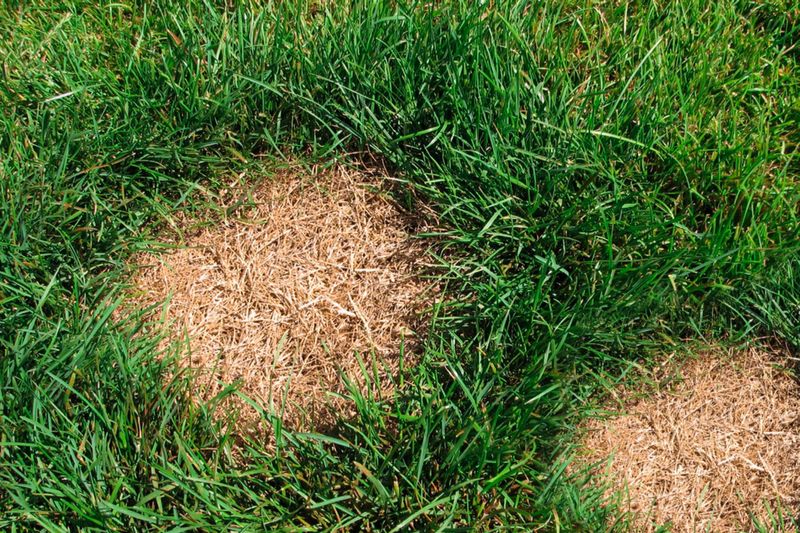
Real drought has a pattern, and once you know it, the imposters stand out. When grass simply lacks water, the whole lawn usually fades together, starting with sunny slopes and spots near hot pavement.
Drought-stressed turf also turns a dull blue-gray before it browns. Footprints stay pressed into the grass instead of springing back.
Cool-season grasses often slip into summer dormancy rather than giving up, and they usually green up again once rain returns.
Patchy damage tells a different story. Sharp-edged circles, spots that keep growing after a good soaking, or brown areas in shady corners point to something else at work.
Insects, fungi, compacted soil, and even dull mower blades can all create that crispy, straw-colored look.
I like a quick test called the screwdriver check. Push a long screwdriver into the soil near the brown area.
If it slides in easily and the soil feels moist a few inches down, thirst probably is not your culprit.
Look at the calendar too. If New York has had steady rain over the past week and the spots are still spreading, the hose will not fix them.
In some cases, extra water makes things worse.
Getting the diagnosis right saves money, time, and a lot of frustration. The next few sections cover the most common suspects, starting with the one hiding under your feet.
Grass That Peels Back Like a Rug Usually Means White Grubs
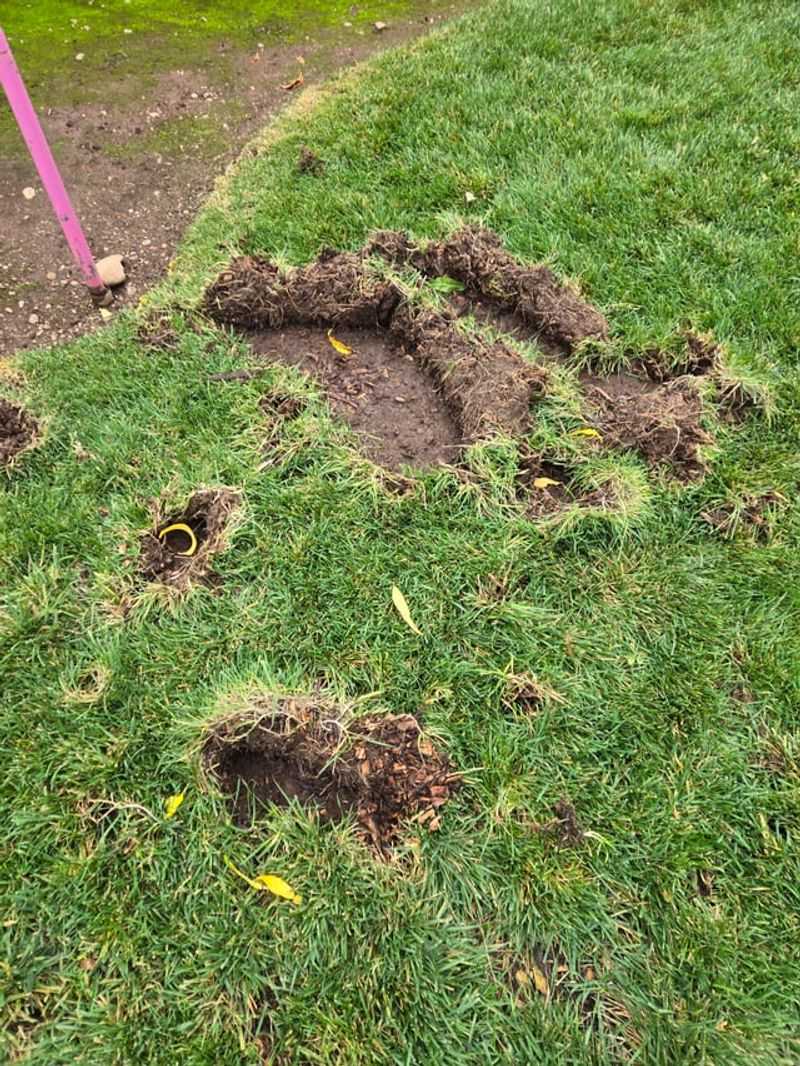
Grab a handful of brown grass and tug gently. If it lifts up like a loose carpet with almost no roots attached, you have probably found the most common drought imposter in the state.
White grubs are the larvae of beetles such as Japanese beetles, European chafers, and Asiatic garden beetles. Adults lay eggs in midsummer, and the young grubs feed on grass roots from roughly August into October.
With the roots gone, the grass cannot pull up water, so it wilts and browns even when the soil is damp.
Cornell Cooperative Extension suggests a simple count. Cut three sides of a one-foot square of turf, fold it back, and look in the top two or three inches of soil.
Healthy, well-watered lawns can often tolerate several grubs per square foot, but counts above roughly ten in that square usually signal trouble.
Watch for side clues too. Skunks, raccoons, and crows love digging for grubs, so torn-up sod is a big hint.
Timing matters if you treat. Preventive products work best applied in early to midsummer before eggs hatch, while curative options work on young grubs in late summer.
Beneficial nematodes are another option for gardeners who prefer a biological approach, applied when soil is warm and moist.
Sunny Spots Near the Driveway Could Be Hosting Hairy Chinch Bugs
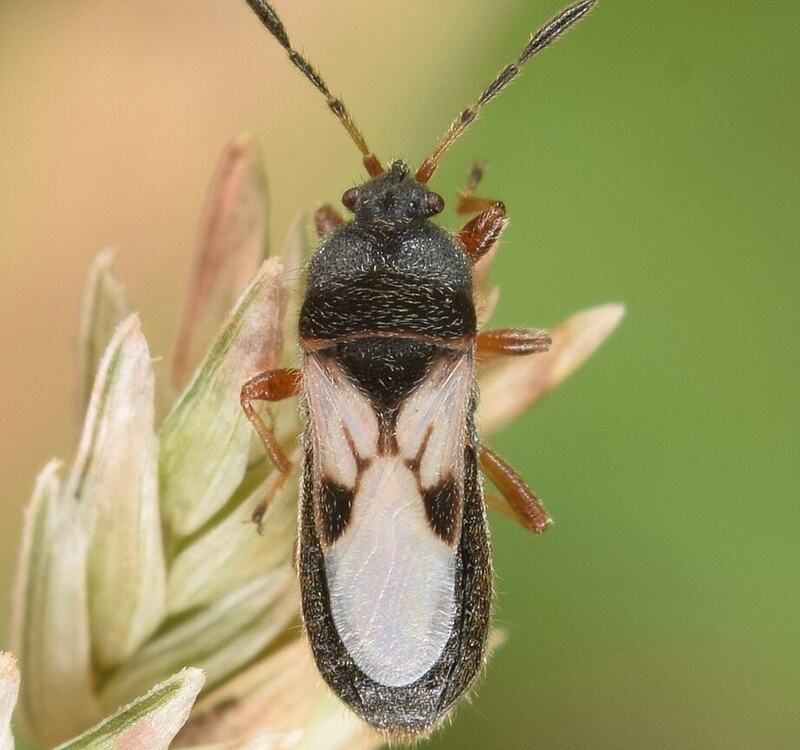
Funny thing about chinch bugs. They love the same hot, dry weather that makes us blame drought, so the confusion makes perfect sense.
The hairy chinch bug is the species New York lawns deal with most. Adults are tiny, about one-sixth of an inch long, with black bodies and white wings folded over their backs.
Young nymphs are reddish with a pale band. They suck juices from grass stems and leave behind yellowing patches that turn tan and spread outward.
Damage often starts in sunny spots along sidewalks, driveways, and south-facing slopes. Lawns with thick thatch are a favorite hangout.
You can check with a coffee can trick. Remove both ends of a can, push it a couple of inches into the soil at the edge of a yellowing patch, and fill it with water.
Within about ten minutes, any chinch bugs should float to the top.
A handful of bugs is not a crisis. Extension experts generally suggest action only when numbers are high.
Keeping the lawn reasonably watered during dry spells helps grass outgrow light feeding, and reducing thatch takes away their cozy shelter. Endophyte-enhanced fescues and ryegrasses also resist chinch bugs, which makes them a smart pick when you overseed.
Morning Cobwebs on the Grass Can Point to Sod Webworms
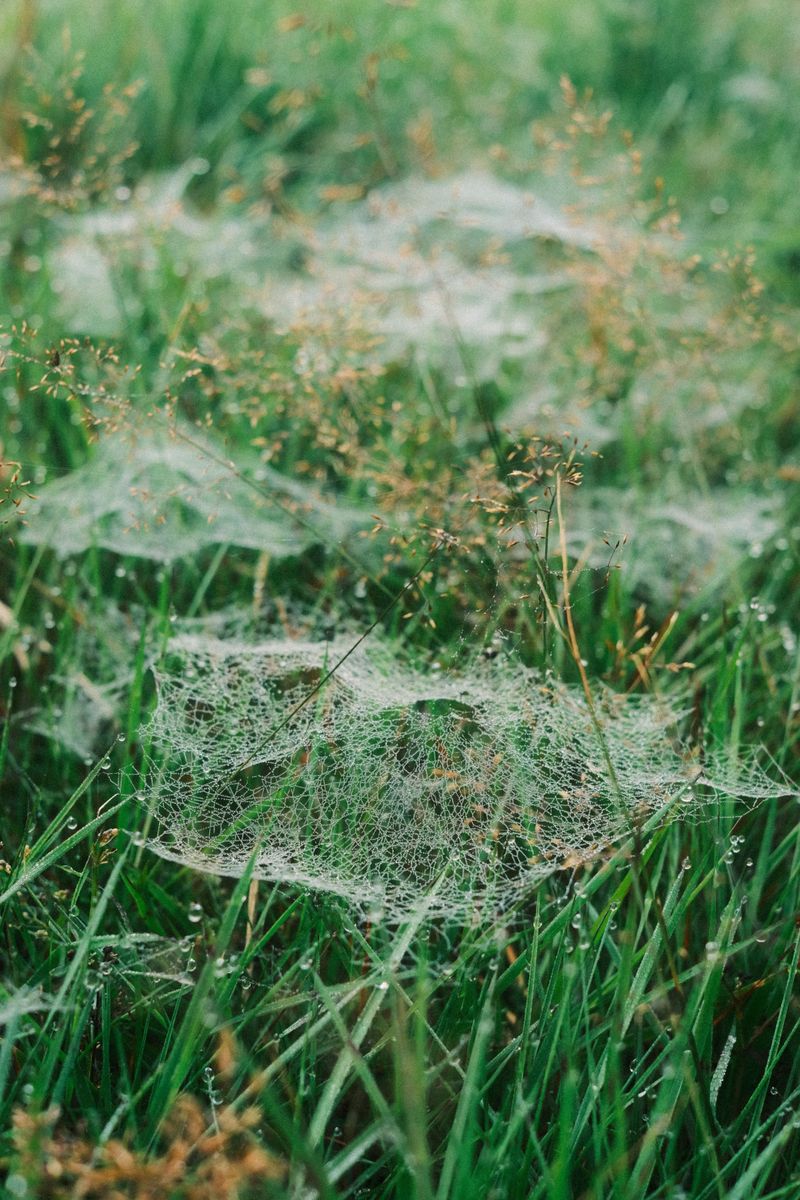
Early risers get a front-row seat to this clue. Walk across the lawn on a dewy morning, and you might spot fine, silky webbing stretched over small brown patches.
Sod webworms are the caterpillars of small tan moths that flutter up in a zigzag when you mow in the evening. The larvae hide in silk-lined tunnels in the thatch during the day and come out at night to chew grass blades down near the soil.
The result looks like the lawn was scalped by a tiny mower.
Patches often start about the size of a baseball and can merge into larger areas. Birds pecking at the turf over and over is another giveaway.
Try a soap flush to confirm. Mix about two tablespoons of dish soap in a gallon of water and pour it over a square yard of damaged grass.
Within a few minutes, the greenish-brown caterpillars wriggle to the surface.
Webbing alone is not proof, since spiders and dew create similar looks. Confirm the caterpillars before you treat.
For light infestations, steady watering and fertilizing help the grass recover because roots usually survive. Heavy numbers may call for a targeted product such as Bt, applied in late afternoon when caterpillars become active.
A Smoky Ring Around a Tan Circle Signals Brown Patch Fungus
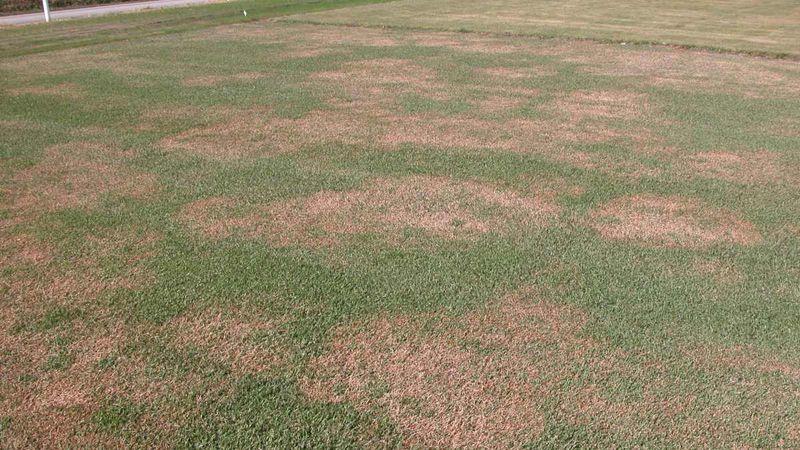
Hot, sticky nights are a fungus party. Brown patch, caused by Rhizoctonia solani, takes off when nighttime temperatures stay near or above 70 degrees and the grass stays wet for hours.
In tall fescue and perennial ryegrass lawns, which are common across downstate New York, it shows up as roughly circular tan patches from a few inches to several feet wide. On humid mornings, you may see a darker, grayish smoke ring around the edges.
Look closely at individual blades too. Tan lesions with dark brown borders are a classic sign.
Here is where the drought mix-up does real harm. Seeing brown circles, many homeowners water more, and often in the evening.
That keeps blades damp all night and feeds the disease.
You can tilt the odds back in your favor without much effort. Water early in the morning so grass dries by midday.
Skip heavy nitrogen fertilizer in summer, since lush growth is especially vulnerable. Improve airflow by trimming low branches or shrubs that trap moisture.
Crowns often survive, so patches can fill back in when cooler fall weather arrives. Fungicides are mostly a preventive tool for high-value lawns.
For most home yards, better watering habits do the heavy lifting.
Tiny Straw-Colored Spots the Size of a Coin Mean Dollar Spot
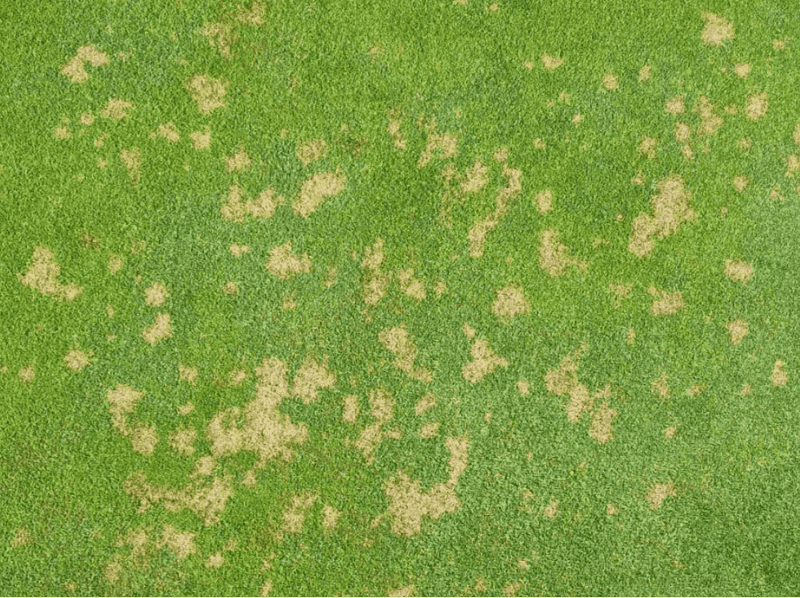
Think silver dollar, and you have the right picture. Dollar spot starts as small, bleached, straw-colored spots about two inches wide on short lawns, and a bit larger on taller home turf.
Left alone, those little spots can merge into big, ragged areas that look sun-scorched. Blades often show tan, hourglass-shaped lesions with reddish-brown edges.
On damp mornings, you might even notice cottony white threads, which some people mistake for spiderwebs.
The disease is active from late spring into fall when days are warm and humid and nights bring heavy dew. Kentucky bluegrass, perennial ryegrass, and fine fescues are all common hosts in New York yards.
Hunger plays a surprising role. Dollar spot tends to hit lawns low in nitrogen harder, so a sensible fall feeding schedule can make a real difference.
Cornell turf specialists generally favor feeding cool-season grass in late summer and fall rather than heavy spring doses.
Shorten the time grass stays wet, too. Water at dawn instead of dusk, and drag a hose across the lawn to knock dew off if you notice it lingering.
Mow with a sharp blade so cuts heal faster. Most lawns recover nicely once conditions improve.
Rock-Hard Soil and Spongy Thatch Can Fake a Thirsty Lawn
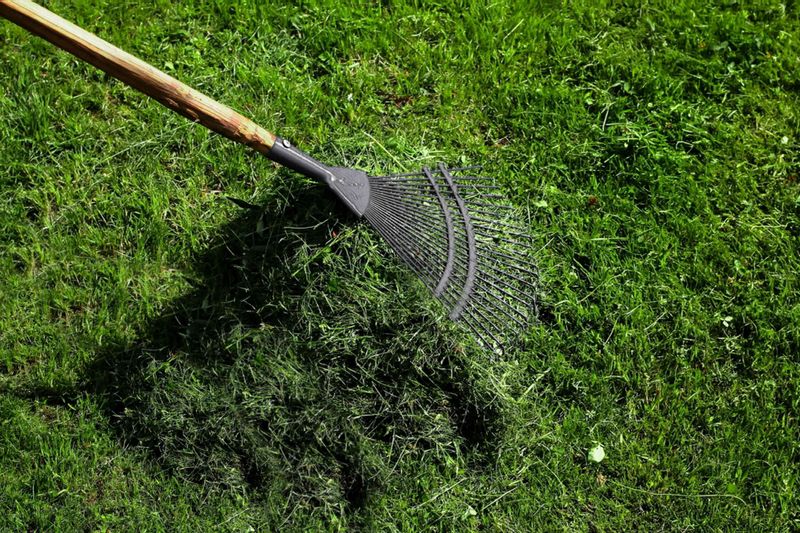
Sometimes the water is there, but it simply cannot get in. Compacted soil and heavy thatch are two quiet troublemakers that make a lawn act parched even after a soaking.
Compaction is common near paths, play areas, and new construction where heavy equipment rolled through. Tightly packed soil sheds water and squeezes out air, so roots stay short and weak.
Puddles that sit after rain, or a screwdriver that refuses to go in, are good hints.
Thatch is the spongy layer of stems and roots between green blades and soil. A thin layer is fine and even helpful.
Once it gets thicker than about half an inch, it can repel water, trap pests like chinch bugs and webworms, and keep roots growing up in the thatch instead of down in the soil.
Core aeration helps with both problems. It pulls small plugs of soil out of the ground, letting air, water, and nutrients reach the roots.
In New York, late summer to early fall is the sweet spot, when cool-season grasses grow fast enough to fill in.
Pairing aeration with overseeding and a light topdressing of compost gives the lawn a fresh start. Dull mower blades deserve attention too, since shredded tips brown quickly and invite disease.
Try This Simple Lawn Detective Routine Before Grabbing the Hose
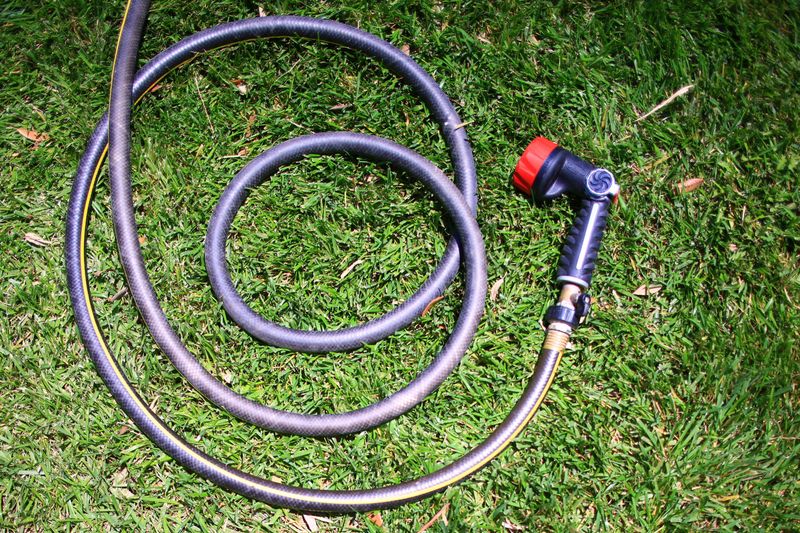
My favorite lawn tool costs about three dollars. It is a cheap rain gauge stuck in the yard, and it settles a lot of arguments about whether the grass actually needs water.
Cool-season lawns generally need about one inch of water per week from rain and irrigation combined, sometimes a little more in peak heat. If your gauge shows that much and spots are still browning, look for another cause.
Walk through a quick checklist. Tug the grass for grubs.
Try the coffee can for chinch bugs and the soap flush for webworms. Check blades for lesions or rings, and push a screwdriver into the soil to test moisture and compaction.
When you do water, go deep and infrequent, ideally early in the morning. Mow high, around three to four inches for most New York lawns, since taller grass shades the soil and grows deeper roots.
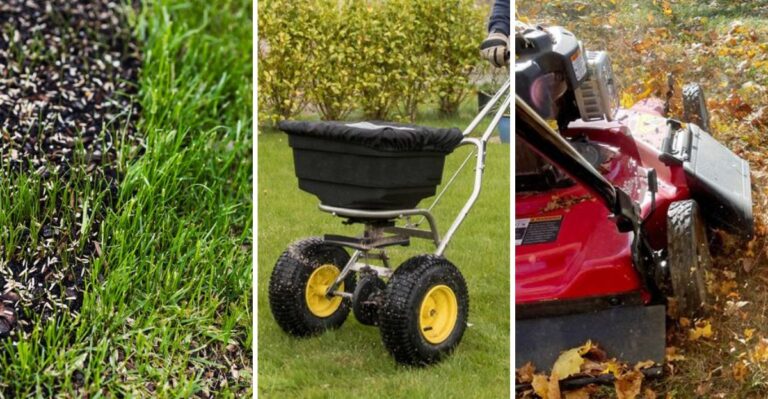
Plan bigger fixes for fall. Late August through September is prime time to aerate, overseed with resistant varieties, and feed the lawn.
Still stumped? Your county Cornell Cooperative Extension office can help identify samples, often for little or no cost.
A little detective work beats a bigger water bill every single summer.