The Lichens Growing on Virginia Trees Are Free Air Quality Monitors. Here’s How to Read Them
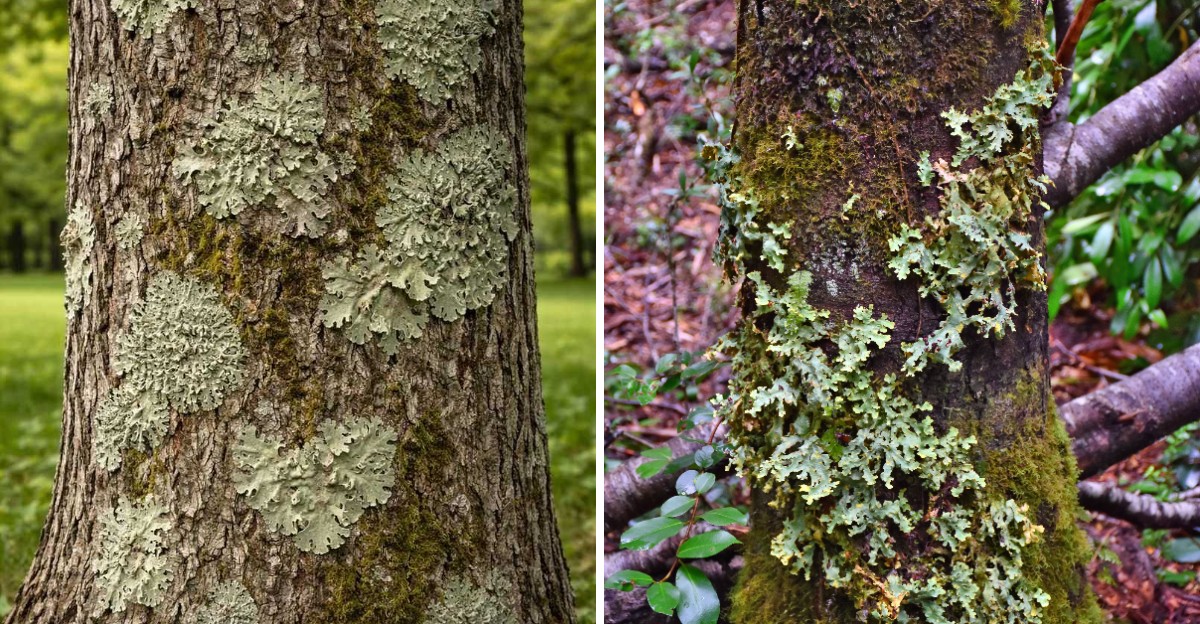
Some of the oldest living things in your yard have no roots, no leaves, and no mouths. They drink straight from rain and fog, and they keep a quiet record of everything floating past them.
I walked past them on my oak trees for years without a second glance. Now I check them the way some folks check the weather app. Scientists with the U.S. Forest Service and the National Park Service study these same crusty, leafy, and hairy patches on bark.
In Virginia, they have used them to track pollution drifting into places like Shenandoah and Prince William Forest Park.
Let me be straight with you. Nothing about them harms your trees, and you can read them with your own eyes. So what are the patches on your maple trying to tell you?
Those Gray-Green Patches on Your Tree Bark Hold a Secret
Funny thing about lichens. Each one is two or more living partners sharing one body, a fungus teamed up with algae or cyanobacteria.
The fungus builds the structure and holds water. The algae or cyanobacteria make food from sunlight, and both partners get to live in spots neither could handle alone.
Lichens have no roots, so they take nothing from your tree. The bark is just a sunny perch, like a porch railing for a bird.
Plenty of gardeners panic and scrub lichens off trunks. Don’t make that mistake, because the tree gains nothing from the cleanup.
Lichens also lack the waxy coating that protects most plant leaves. Whatever lands on them from the air, they soak right up through their surface.
That includes rainwater, fog, dust, and the gases drifting through your neighborhood. It also includes sulfur and nitrogen pollution from cars, power plants, and farms.
Over months and years, their health starts to mirror the air around them. Some kinds struggle quickly in dirty air, while others shrug it off.
Once you learn which kinds tolerate what, every tree trunk turns into a simple report card. You don’t need a lab, a sensor, or a subscription.
You just need a few minutes and a curious eye.
Hairy Beard Lichens Dangling From Branches Signal Cleaner Air
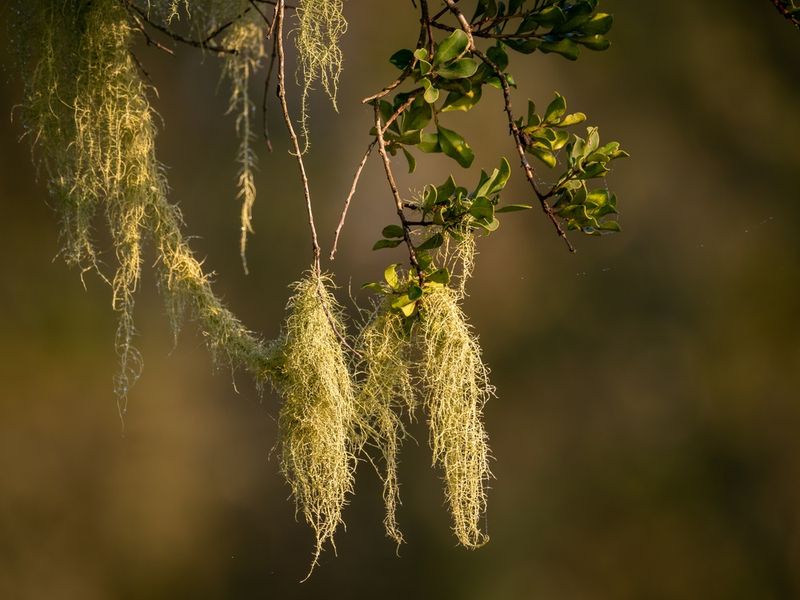
Spot a wispy, pale green tuft hanging from a twig like a tiny old man’s beard? Celebrate a little.
Those shrubby, branching lichens are called fruticose types. Old man’s beard, known to scientists as Usnea, ranks among the most famous.
Fruticose lichens have lots of surface area exposed to the air. That makes them some of the most pollution-sensitive lichens you will find.
Sulfur dioxide hits them especially hard by damaging their algae partners. Where that gas runs high, these beard lichens tend to fade out first.
In Virginia, your best odds of spotting them come in the mountains and quieter rural woods. Damp, foggy ridges in the Blue Ridge often carry them on oaks and other hardwoods.
Here’s a quick trick for confirming Usnea. Gently pull a strand apart, and you should see a stretchy white cord in the center.
Fallen branches after a windstorm make perfect viewing. You can study them up close without disturbing a living tree.
A few strands don’t prove your air is flawless, though. Moisture, shade, and tree age matter a lot too.
Still, healthy, abundant beard lichens are one of the most cheerful signs a nature lover can find.
Leafy Lobed Lichens Give You a Middle-of-the-Road Reading
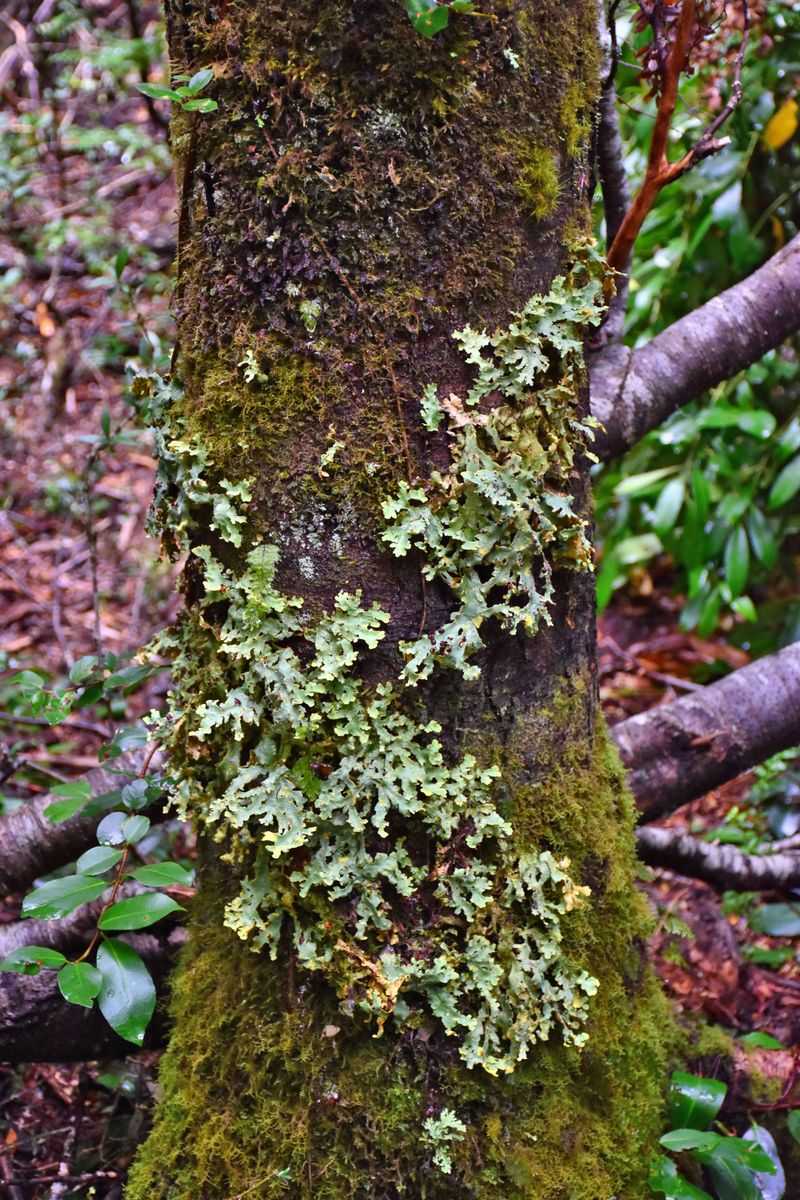
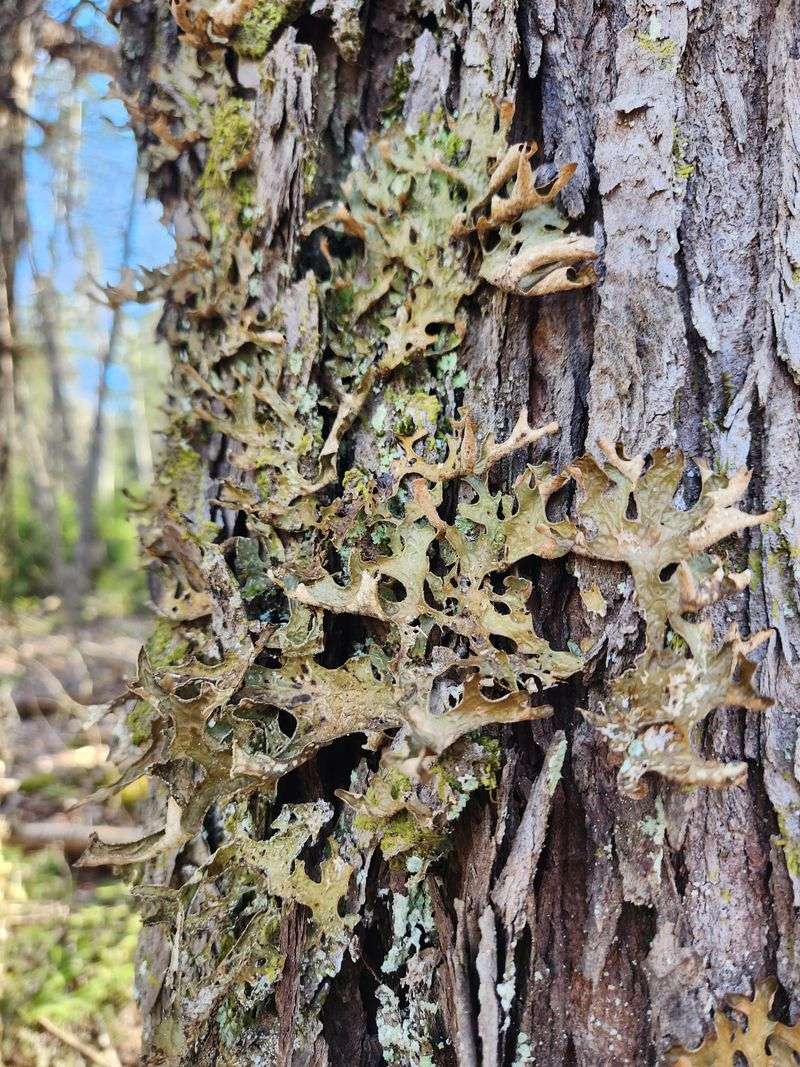
My favorite lichens look like crumpled lettuce glued to the bark. Those are foliose lichens, and they make up a big share of what Virginia gardeners see.
Foliose lichens have flat, leafy lobes with a distinct top and bottom. Many lift slightly at the edges, so you can slide a fingernail beneath a lobe.
Common greenshield lichen is one you will likely meet. It forms pale mint-green rosettes on oaks, maples, and even fence posts.
As a group, leafy lichens sit in the middle of the sensitivity scale. They handle more pollution than beard lichens but less than the flat crusts.
If your trees carry plenty of healthy, wide rosettes, your air is probably in decent shape. Ragged, shrinking, or sparse patches can hint at more stress.
Keep in mind that a few kinds love extra nitrogen. Bright orange and yellow lichens, like sunburst lichen, often thrive near farms, roads, and fertilized spots.
So a trunk dotted with orange can mean nitrogen is plentiful nearby. That’s a different story than sulfur pollution, and it’s worth noticing.
Snap a photo of each kind you find. Comparing them season to season turns your yard into a living notebook.
Flat Crusty Lichens on City Trunks Tell a Tougher Story
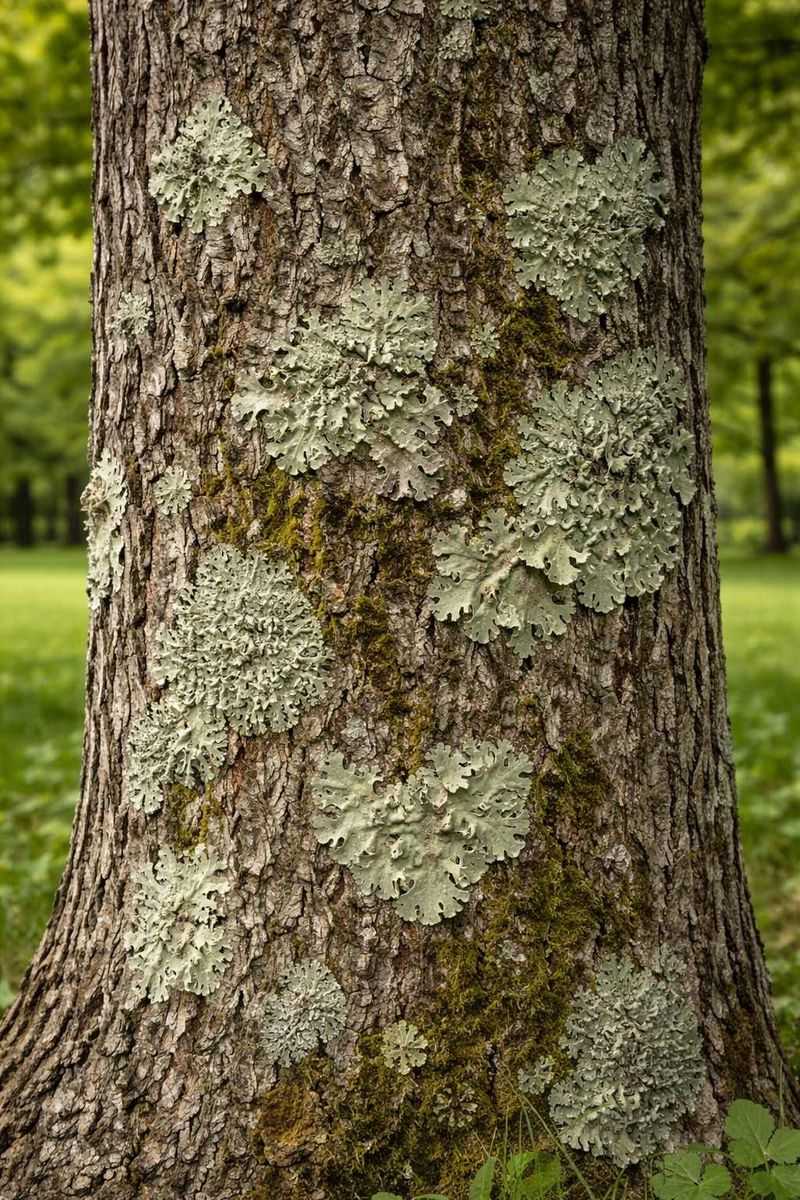
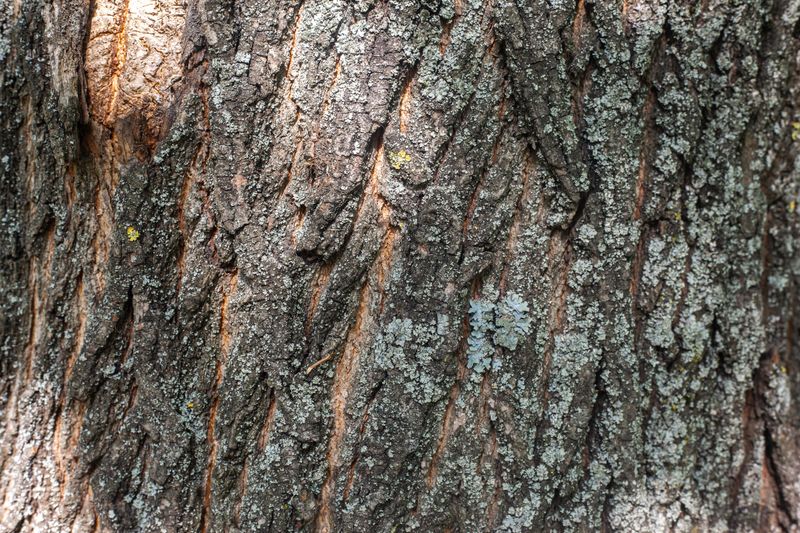
Crustose lichens are the tough guys of the lichen world. They hug the bark so tightly that you can’t peel them off without taking bark along.
They look like splashes of paint or dried crust. Colors range from gray and white to green, yellow, and even rusty orange.
Because they expose less surface to the air, crusts tend to tolerate pollution better. You’ll often find them on street trees in busy towns where leafy and hairy types have faded away.
Powdery dust lichens, which look like a fine green-gray flour, are another tough group. They show up on shady trunks in many urban areas.
If crusts and powdery patches are nearly all you see, your air may carry more pollutants. Busy roads and older industrial areas often show this pattern.
In the most polluted spots, trunks can be almost bare. Researchers have long called these areas lichen deserts.
One caution matters here. Bare bark can also come from heavy shade, dry conditions, smooth young bark, or recent tree pruning.
So treat crusts as one clue, not a final verdict. Look at several trees before drawing a conclusion.
Grab a Hand Lens and Survey the Oaks in Your Own Yard
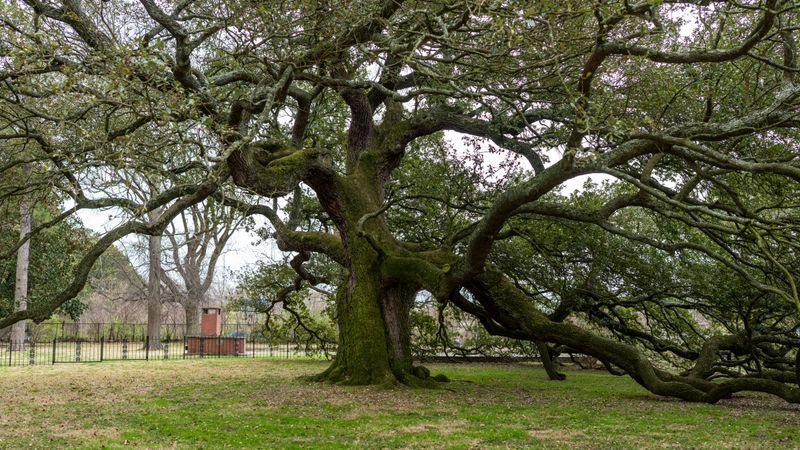
Ready to try it? A simple backyard survey takes about twenty minutes, and kids love helping.
Pick five or more mature trees with rough bark. Oaks, maples, and hickories work well, while smooth young trunks often carry fewer lichens.
Check each trunk at roughly chest height on all sides. A ten-power hand lens costs only a few dollars and reveals amazing detail.
Sort what you see into three buckets. Count hairy or shrubby types, leafy types, and flat crusts.
Next, note how much bark is covered. A trunk wrapped in many different kinds usually points to cleaner air than one with a single scrappy patch.
Variety matters more than any single species. More kinds, bigger patches, and more sensitive shapes generally mean healthier air.
Write down the date, tree type, and which side faces the road. Patterns jump out quickly when you compare notes.
Back in 2016, I found leafy lichens thriving on my back oak but only crusts on the tree by the street. That small difference told me the traffic mattered.
Your own yard may surprise you just as much, so give it a look this weekend.
Park Rangers and Forest Scientists Read Virginia Lichens Too
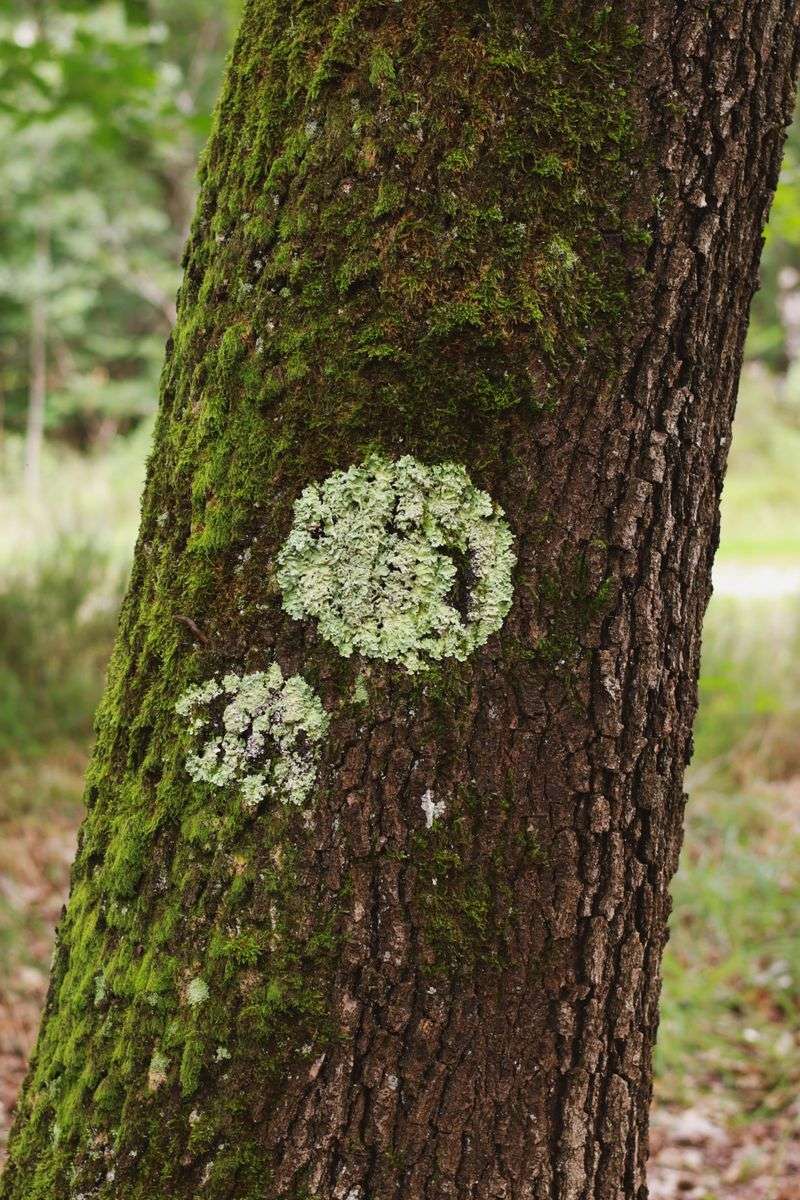
Your backyard survey has some serious company. The USDA Forest Service has sampled lichens across U.S. forests for decades through its Forest Inventory and Analysis program.
Crews record which lichens grow at each site. Some samples get tested for nitrogen, sulfur, and metals stored in the tissues.
Because lichens soak up air pollutants and hold onto them, their chemistry works like a slow-motion archive. It complements the air monitors run by state agencies.
The National Park Service has studied lichens in Virginia parks as well. Shenandoah National Park and Prince William Forest Park both appear in park air quality work.
Researchers found differences between sites closer to the Washington, D.C., area and more protected forests. Sites with more sensitive species generally pointed to better air conditions.
Lichens can’t replace official tools that measure ozone or fine particles each hour. Those readings still come from monitors listed on AirNow.gov.
What lichens offer instead is the long view. They reveal how air has treated a place over years, not just today.
Fun fact for your next walk: some lichen patches in old forests may be many decades old. Slow growth makes them patient record keepers.
Leave the Lichens on Your Trees and Watch Them Over Time
If you remember one thing, make it this. Lichens are guests on your trees, not pests.
Virginia Cooperative Extension and other extension services note that lichens don’t harm trees. Spraying, scraping, or power washing them only removes your free air monitor.
Sometimes a struggling tree looks covered in lichens. That usually happens because thinning leaves let in more light, which lichens love.
In other words, the lichens are a symptom of extra sunshine, not the cause of decline. Check the tree for root damage, drought stress, or disease instead.
Make your lichen check a seasonal habit. Late winter is a great time, since bare branches make trunks easy to see and damp weather brightens colors.
Photograph the same spots each year from the same angle. Changes in size and variety will tell their own story.
Want to help science? Upload your photos to iNaturalist, where experts can confirm identifications and researchers can use the records.
Planting native trees with rough bark, like white oak, gives future lichens room to settle in. Patience pays off here, since lichens grow slowly.
Your yard becomes both a garden and a quiet weather station for the air.