The Low-Water Plants That Make California Front Steps Look Welcoming
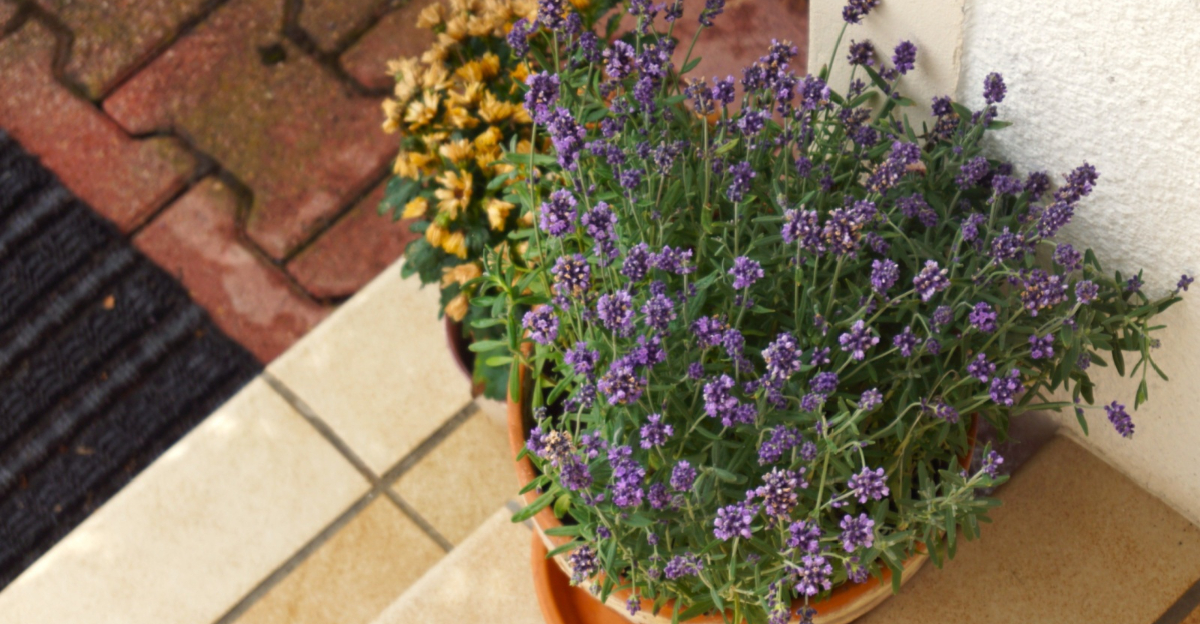
Picking plants for your California front steps sounds simple until you actually start thinking about it.
Reflected heat bouncing off concrete pavement, containers that dry out at an almost alarming rate in summer, and sun exposure that varies wildly depending on which direction your entrance faces all affect how well a plant performs near your front steps.
What thrives on a breezy coastal porch can completely struggle on a sun-baked inland staircase, which is why matching the right plant to your specific California microclimate matters more than most people realize.
There is a lot more going on than just grabbing something colorful at the nursery and hoping for the best.
The good news is that low-water plants can create a genuinely beautiful and welcoming entrance without demanding constant attention, and California has no shortage of options that look incredible in containers near a front door.
Just keep in mind that low-water is not the same as no water, especially when pots are involved during hot, dry, or windy stretches.
1. Compact Rosemary Adds Evergreen Structure And Fragrance
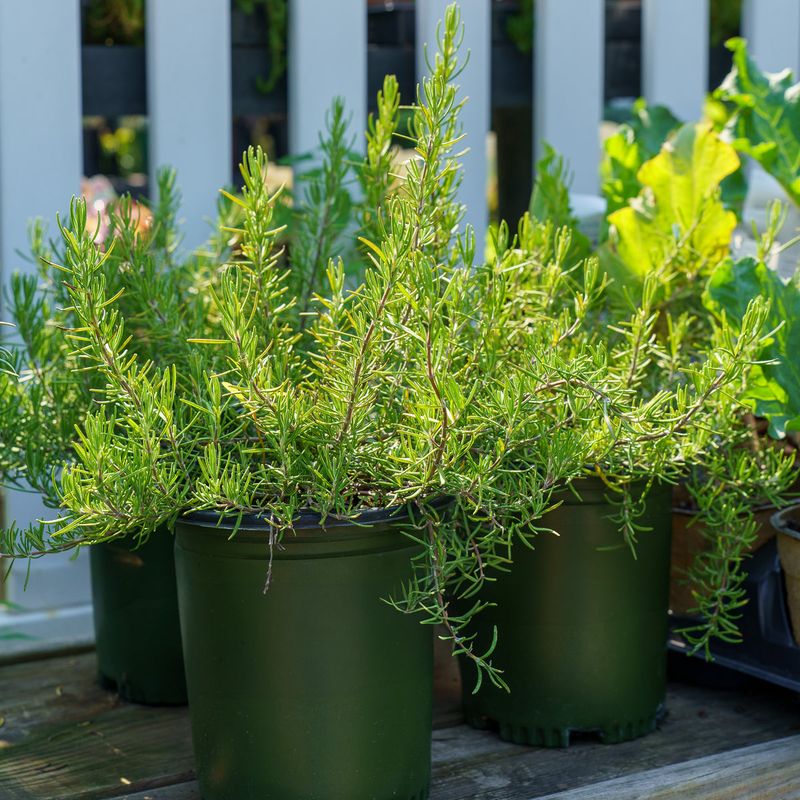
Walking past a pot of rosemary near the front door means catching that sharp, herby fragrance every time you reach for your keys.
Few plants offer that kind of sensory welcome while also holding their shape through dry California summers without much fuss.
Rosemary, known botanically as Salvia rosmarinus, is an evergreen shrub that brings structure, scent, and year-round greenery to a sunny entrance.
The key word for container growing is compact. Standard upright rosemary can eventually reach four to six feet tall, which may feel overwhelming beside narrow steps or in a smaller pot.
Gardeners should look specifically for dwarf or compact cultivars that stay more proportionate to the space. A genuinely compact selection can provide the same needle-like foliage and aromatic character without outgrowing its container too quickly.
Rosemary thrives in full sun and needs a container with unobstructed drainage holes and a fast-draining potting mix. Good airflow around the plant helps reduce problems with fungal issues, which can be a concern in more humid coastal parts of California.
Watering should be adjusted based on your local climate – inland gardeners may need to check container moisture more often during summer heat than those near the coast.
Even though rosemary is considered a low-water plant when established in the ground, a container limits root access to moisture.
Check the soil before watering rather than following a fixed schedule, and make sure the pot is not so heavy that it creates a hazard near your steps.
2. Compact Lavender Brings Soft Color To Sunny Entrances
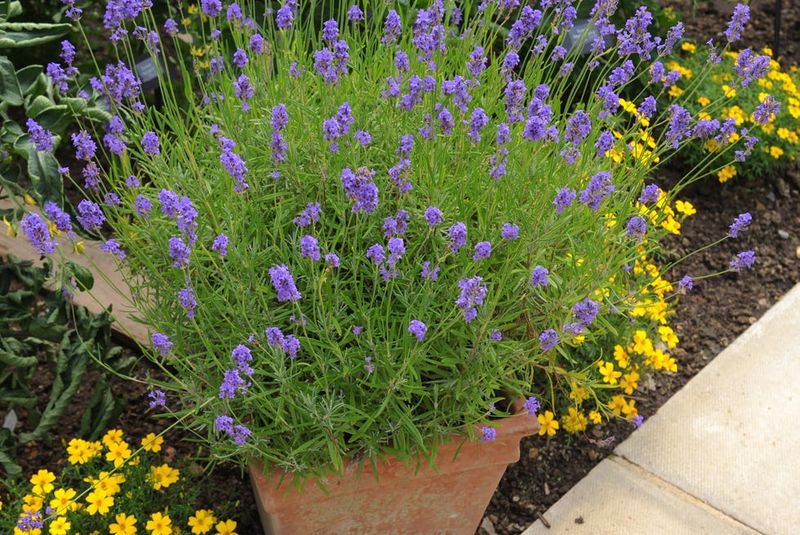
Silvery foliage catching the afternoon light and purple flower spikes swaying in a coastal breeze – that combination is hard to beat near a sunny California entrance.
Lavender has earned its reputation as a low-water plant, but growing it well in a container takes a little more attention than simply setting it in a pot and hoping for the best.
There are several lavender species and many cultivars available, and suitability can vary depending on your part of California.
Your California Garden Changes Every Week. Your Plan Should Too.
Gardening in California changes quickly throughout the season. Every Friday you’ll receive a simple weekly plan showing exactly what to plant, prune, fertilize, harvest, and protect so you never miss the right timing.
Some cultivars may struggle with the humidity found in certain coastal areas, while others may find very hot inland summers challenging without some afternoon protection.
Colder California communities should also consider cold tolerance before selecting a variety. Asking at a local nursery about which cultivars perform well in your specific region is a reasonable first step.
Full sun is generally important for lavender to flower well and maintain compact, healthy growth. A fast-draining potting mix is equally critical because persistently wet soil can lead to root problems.
Choose a container that gives the roots some room to develop without holding excess moisture, and make sure drainage holes are clear and functional.
Even low-water plants in containers need monitoring. During hot, dry summers, pots can lose moisture quickly, and lavender foliage may begin to look stressed before you notice the soil has dried significantly.
Check the container regularly and adjust watering based on current weather conditions rather than a rigid routine.
3. California Fuchsia Offers Warm Late-Season Flowers
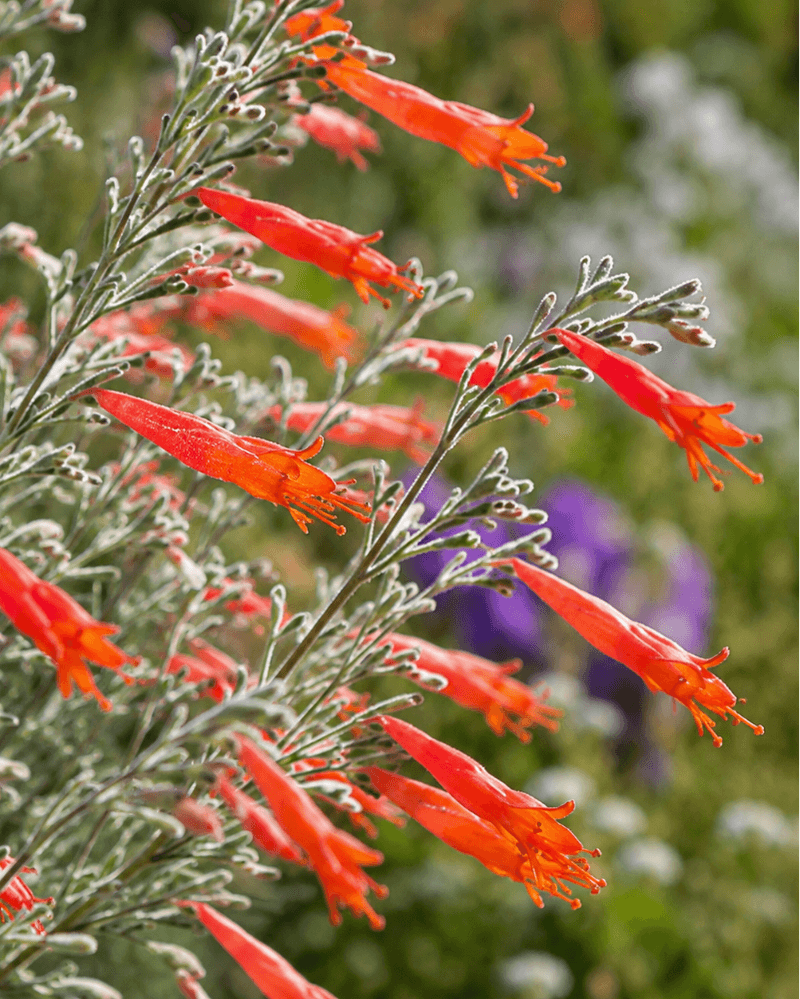
By late summer, many front-step containers start looking a little tired. That is exactly when California fuchsia steps in with a burst of warm color that can carry a display through fall.
Known botanically as Epilobium canum (formerly Zauschneria californica), this native produces narrow tubular flowers in shades of orange-red that are particularly attractive to hummingbirds.
Bloom season typically runs from late summer into autumn, which makes it a useful plant for extending seasonal interest near an entrance when other plants have finished flowering.
The foliage is often grayish-green, giving the plant a soft, silvery appearance even when not in bloom.
Compact cultivars are available and are more suitable for container growing than the straight species, which can spread broadly when grown in the ground.
Full sun and excellent drainage are important for container success. California fuchsia is considered drought-tolerant when established in garden soil, but a container limits how much moisture the roots can access between waterings.
During hot inland summers, supplemental irrigation may be needed more often than gardeners might expect based on the plant’s reputation in the ground.
Mature spread varies by cultivar, so checking the expected size before purchasing can help you choose an appropriately sized container. Keep pots positioned so that spreading foliage does not narrow a walkway or create a tripping concern near steps.
A container with clear drainage holes and a gritty potting mix can help this plant perform well across many California climates.
4. Nursery-Propagated Dudleyas Create Sculptural Container Displays
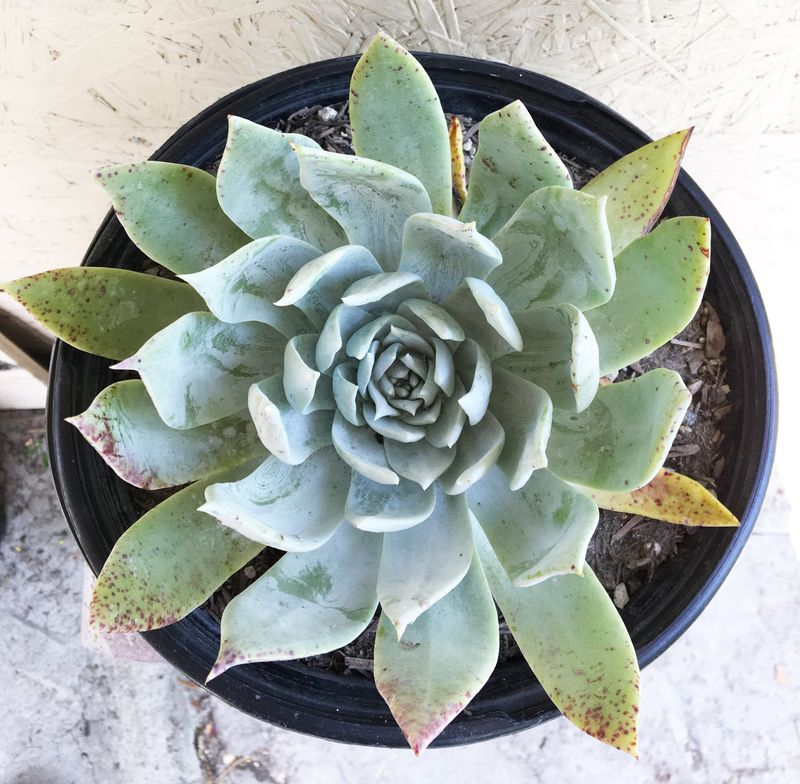
Sculptural, pale, and quietly dramatic, a well-grown Dudleya rosette can stop a visitor in their tracks before they even reach the front door.
These native succulents form layered rosettes that can range from compact and tidy to strikingly architectural, depending on the species.
That visual quality makes them genuinely interesting additions to a container display near a residential entrance.
One point that deserves emphasis: always purchase Dudleyas from reputable nurseries that propagate their plants legally and responsibly.
Wild-collected Dudleyas are protected under California law, and removing them from natural habitats causes serious ecological harm.
Reputable nurseries offer nursery-grown plants, and that is the only appropriate source. Not all Dudleya species have identical legal protections, growing requirements, or regional suitability, so research the specific species you are considering before buying.
Excellent drainage is non-negotiable for these plants. A coarse, fast-draining potting mix and a container with clear drainage holes help prevent moisture from sitting around the crown, which can cause rot.
Dudleyas also benefit from protection of their powdery coating – avoid handling the leaves more than necessary, as the coating can be difficult to restore once disturbed.
Watering habits may shift with the seasons depending on the species, so verify the growth cycle of your chosen plant before establishing a routine. Container-grown Dudleyas may need moisture checks even during drier periods.
Choose a species that suits your specific part of California, since regional differences in temperature, humidity, and sun intensity can affect performance significantly.
5. Cliff Maids Brighten Pots With Spring Flowers
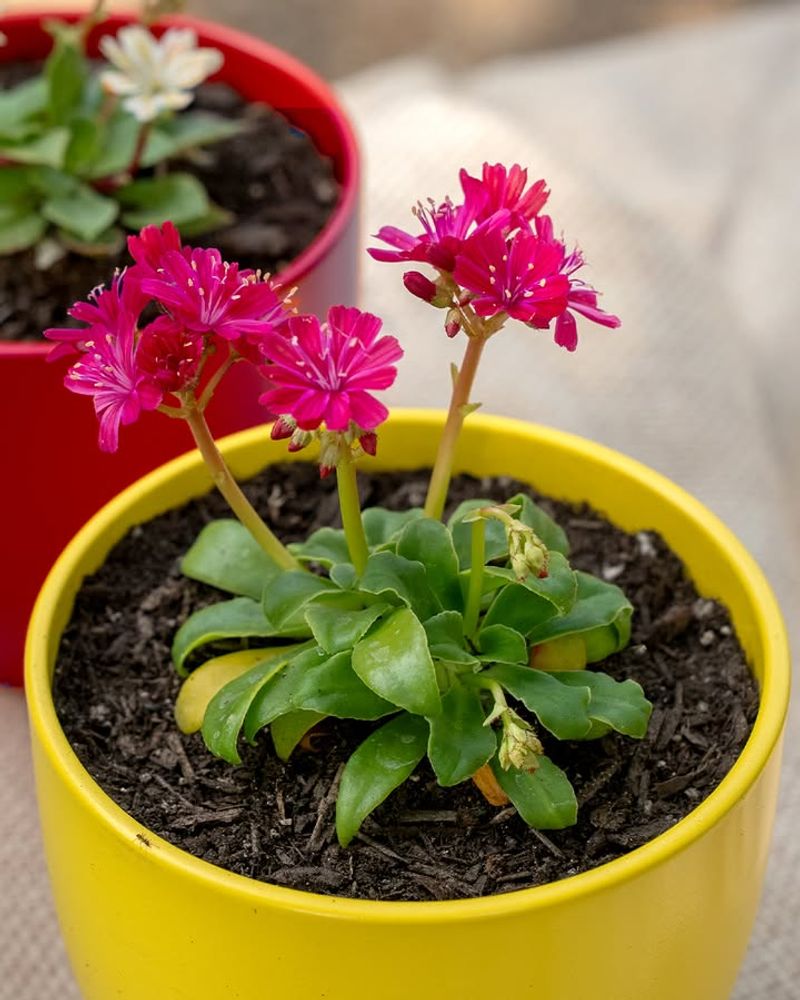
Tucked into a well-drained container, Lewisia cotyledon – commonly called cliff maid – can produce clusters of cheerful flowers in shades of pink, orange, white, and bicolor combinations that genuinely brighten a spring entrance display.
The flowers rise on short stems above compact, fleshy rosettes, creating a layered look that earns second glances from anyone passing by.
Cliff maids bloom primarily in spring, so they work well as a seasonal focal point before summer heat arrives. After flowering, the foliage remains as a compact rosette that holds its form without demanding much attention.
The plant naturally grows in rocky, well-drained conditions, and replicating that in a container is important for success.
Use a coarse, fast-draining potting mix and make sure the container has unobstructed drainage holes. Persistent moisture around the crown can cause problems, so the soil should dry somewhat between waterings.
This is not a plant that tolerates sitting in wet soil for extended periods. Sun exposure may need some adjustment depending on your California region.
In hotter inland areas, protection from intense afternoon sun during summer can help the plant manage the heat, while gardeners in cooler coastal or foothill locations may find that brighter conditions are well tolerated.
Cliff maids are not equally straightforward to grow throughout the entire state, and local conditions should guide how you position and care for your containers. Checking with a local UC Master Gardener program can provide region-specific guidance.
6. Compact Sedums Fill Small Containers With Textured Foliage
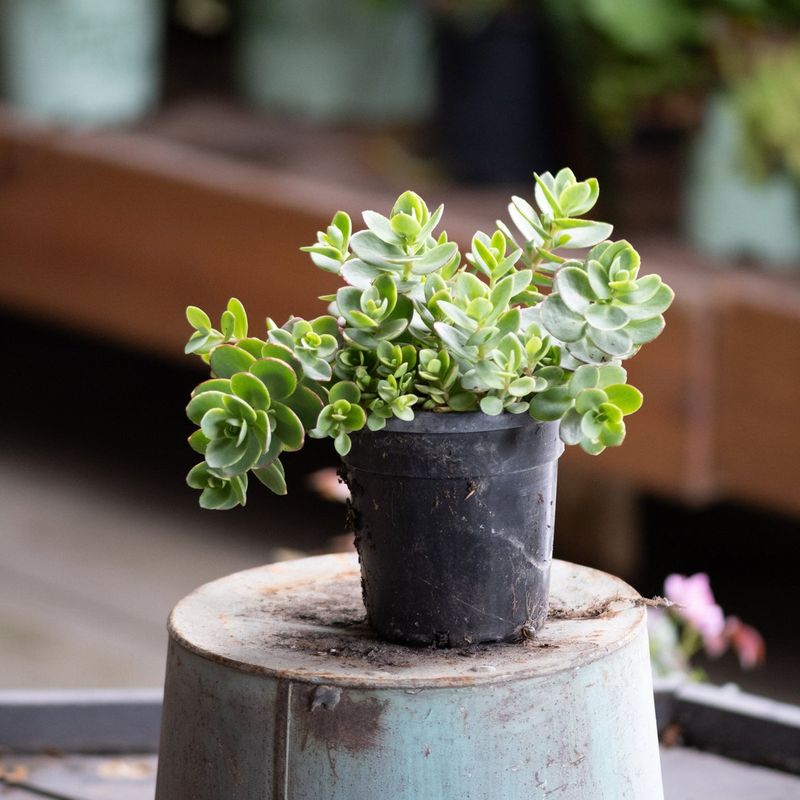
Small containers near front steps can be tricky to fill well – too large a plant and the pot looks overwhelmed, too small and it disappears visually.
Compact sedums often hit that middle ground nicely, offering textured, fleshy foliage in a range of greens, bronzes, reds, and silvers that can add visual interest without requiring a large container or frequent watering.
The sedum group is broad, and species and cultivars differ considerably in their heat tolerance, cold tolerance, preferred sun exposure, growth habit, and summer moisture needs.
Some sedums handle intense inland heat well, while others may prefer the milder conditions found in coastal California communities.
Selecting a locally appropriate species or cultivar matters more than choosing based on a low-water label alone.
A container with unobstructed drainage holes and a gritty or fast-draining potting mix suits most compact sedums well. Avoid combining sedums with plants that require consistently moist soil, since their needs can conflict.
Grouping separate pots with compatible plants allows you to water each according to its own requirements without compromise.
Even drought-adapted succulents in containers need monitoring. A small pot can dry out faster than you might expect during a hot California afternoon or when dry winds are blowing.
Check the soil moisture before watering rather than following a fixed schedule, and avoid overwatering, which can cause more problems for sedums than underwatering.
Keeping containers at a safe distance from the edge of steps also reduces the risk of accidental tipping or tripping hazards.
7. Low-Growing Yarrow Softens Front Steps With Flowers
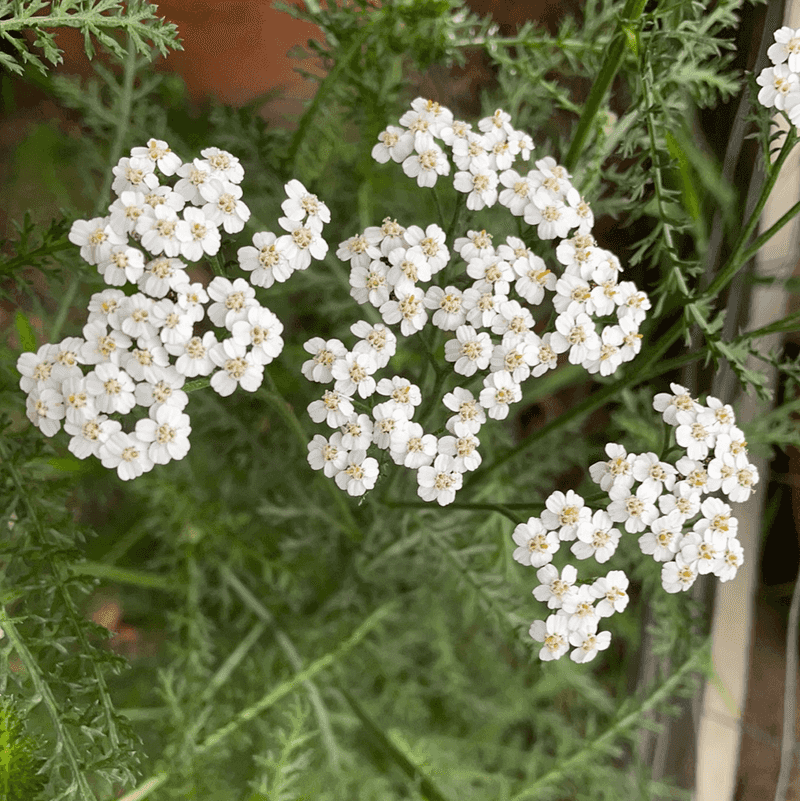
Feathery foliage and flat-topped flower clusters give yarrow a relaxed, meadow-like quality that can soften the hard edges of steps and pavement near a California entrance.
While common yarrow can spread quite broadly in the ground, selecting a compact cultivar makes it far more manageable in a container setting and keeps the display proportionate to the space.
Compact yarrow cultivars are available in shades of white, yellow, and soft warm tones. The foliage is often finely divided and aromatic, adding a textural contrast to other plants in nearby pots.
Flowers typically appear in the warmer months, though the timing and duration can vary by cultivar and climate.
Full sun and good drainage are important for yarrow in containers. A container wide enough to accommodate the cultivar’s mature spread without crowding will help the plant grow more naturally and reduce the need for frequent trimming.
Drainage holes should be clear, and the potting mix should not hold excess moisture around the roots.
Occasional grooming, such as removing spent flower heads, can encourage continued blooming and keep the container display looking tidy near the entrance.
Irrigation should reflect local conditions – inland gardeners may need to water more frequently during summer heat, while those in cooler coastal areas can often water less.
Avoid claiming that any single yarrow cultivar behaves identically across all California climates, since regional differences in temperature and humidity can affect growth, spread, and seasonal appearance considerably.
8. Hummingbird Sage Welcomes Color Into Partly Shaded Entrances
Not every California front entrance gets full sun all day, and shaded or partly shaded steps can be harder to plant attractively.
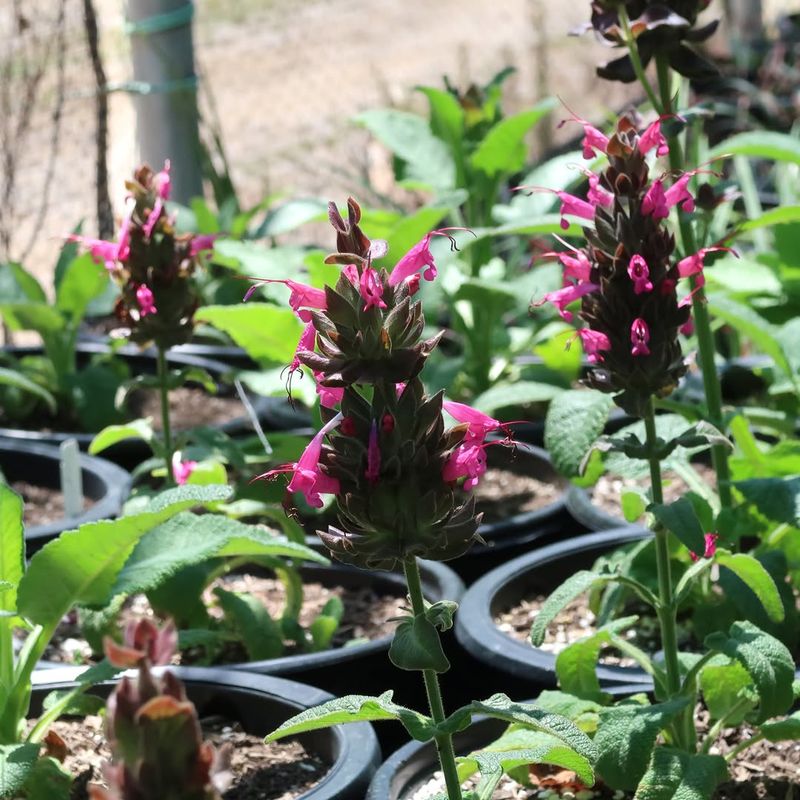
Hummingbird sage, known botanically as Salvia spathacea, is a California native that can add fragrant foliage and pink to reddish flower spikes to entrances that receive filtered light or partial shade, which makes it a genuinely useful option for those trickier spots.
The plant spreads through rhizomes, which means it can gradually expand beyond a small container if left unchecked. Choosing a wider container from the start gives the rhizomes room to move without immediately pushing against the pot walls.
Division or growth management may be needed over time, and that is worth planning for before the plant becomes crowded.
Hummingbird sage may be less suitable for intensely hot, fully exposed steps in inland California, where reflected heat and strong sun can stress the foliage. In cooler coastal areas or partly shaded foothill entrances, it tends to perform more comfortably.
Fragrance from the foliage is noticeable when leaves are brushed or disturbed, which can add a pleasant sensory element near a frequently used entrance.
Even in shade, containers can lose moisture faster than garden soil, particularly during dry or windy periods. Check the container regularly and adjust watering based on current conditions rather than assuming shade eliminates the need for moisture monitoring.
Make sure the pot has drainage holes and sits in a position where it does not obstruct the doorway, narrow the walkway, or create a tripping risk near the steps.