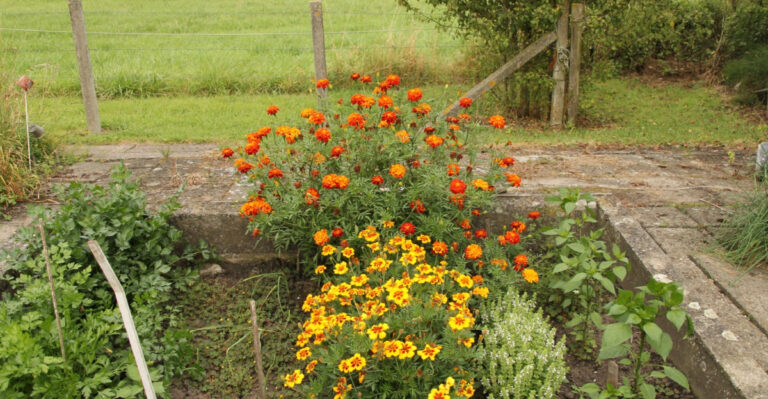
The Meaning Behind A Groundhog Living Under Your Ohio Porch
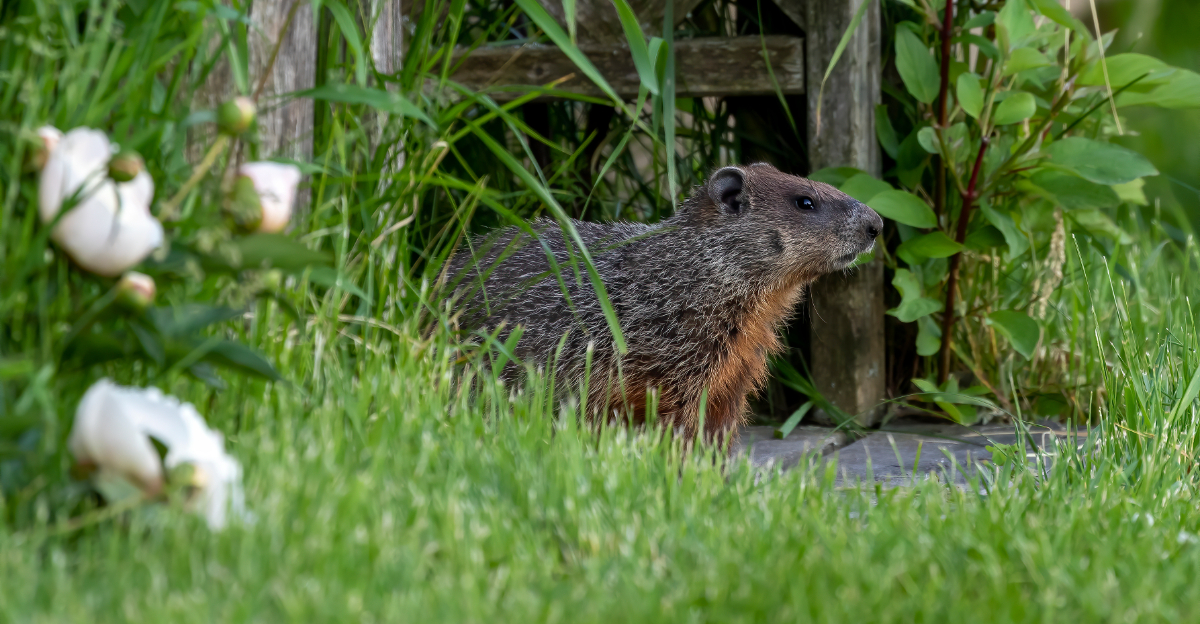
A groundhog under your Ohio porch is more than a random backyard surprise. That tucked-away space offers exactly the kind of shelter this animal looks for, and its choice can tell you a lot about what your property provides.
At first, you may notice only a fresh mound of soil near the foundation or a wide opening beneath the steps. Then the signs start to add up.
Groundhogs are strong diggers, and once one settles close to the house, the situation can become harder to ignore. The real question is not simply why it picked your porch.
It is what that choice could mean for the space underneath, the plants nearby, and the ground around your foundation. Ohio yards give groundhogs plenty of reasons to move in, but some porch setups are especially inviting.
The clues around the entrance can tell you how established your unexpected neighbor has become.
1. Your Porch Offers A Ready-Made Safe Zone
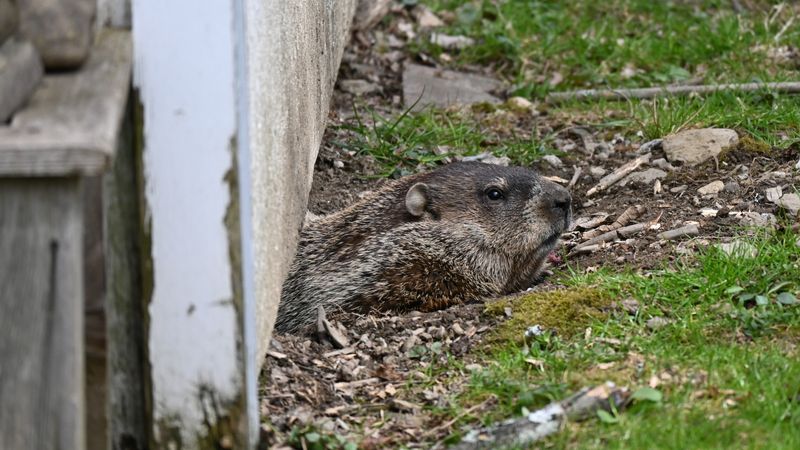
Picture the space beneath your porch: dark, dry, shaded, and tucked right against a solid foundation. To a groundhog searching for a safe place to dig, that spot checks every important box.
According to wildlife guidance from Ohio State University Extension, groundhog burrows commonly appear near building foundations, under porches, decks, and sheds.
Those structures naturally provide overhead cover and a degree of protection that open ground simply cannot offer.
Once a groundhog finds a sheltered location, it can dig deeper to create a proper burrow below the frost line. The structure above helps shield the entrance from rain, wind, and predators like foxes and hawks.
The animal is responding to useful habitat, not deliberately targeting your home. Open ground and nearby vegetation also matter.
A porch surrounded by lawn, garden beds, or weedy edges gives the animal both shelter and a short walk to food.
Groundhogs are active during the day and rely on a secure retreat they can reach quickly when danger appears. A covered foundation entrance makes that retreat fast and reliable.
The animal selected your porch because the location offered real advantages, not because it had any interest in the structure itself. Recognizing this helps shift the situation from feeling like an invasion to understanding it as a wildlife habitat decision.
2. Nearby Food Makes The Burrow Worth Keeping
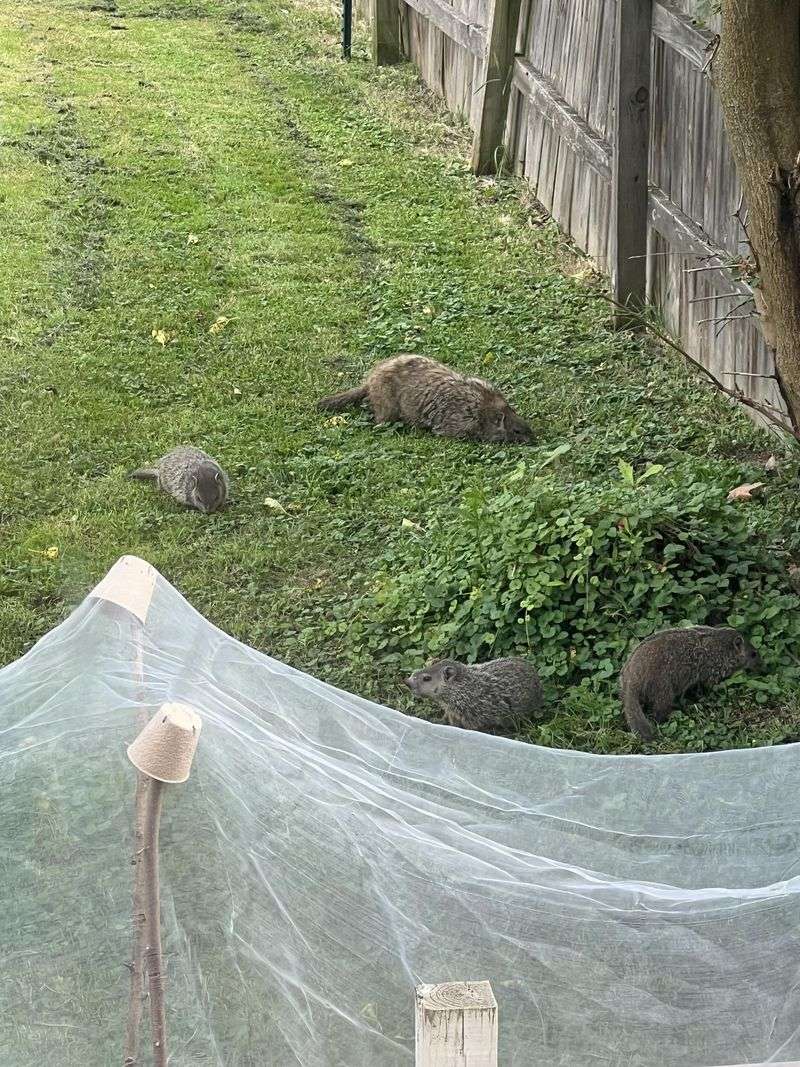
A short trip between a safe burrow and a reliable meal is a very good deal for any wild animal. Groundhogs are herbivores that feed mainly on plant material.
According to Ohio State University Extension, their diet includes grasses, clover, and a variety of garden vegetables and tender plants. A yard with a healthy lawn, weedy borders, or a vegetable garden can supply steady meals just a few feet from the burrow entrance.
The connection between shelter and nearby food is important. An animal that has to travel far to feed takes on more risk each time it leaves cover.
A porch that sits beside a garden, a clover-filled lawn, or even an overgrown fence line gives the groundhog both security and convenience.
Your Ohio Garden Changes Every Week. Your Plan Should Too.
Gardening in Ohio changes quickly throughout the season. Every Friday you’ll receive a simple weekly plan showing exactly what to plant, prune, fertilize, harvest, and protect so you never miss the right timing.
That combination is hard to beat from the animal’s point of view, and it helps explain why a burrow beneath a porch can persist through an entire season.
Lawns, field edges, dandelions, and weedy patches can all serve as feeding areas, not just formal gardens. So the presence of a groundhog does not automatically mean a vegetable bed is the draw.
Any accessible plant growth nearby can contribute. Understanding this connection between shelter and food helps explain why the animal keeps returning rather than moving on after just a few days.
3. Fresh Dirt Reveals The Main Entrance
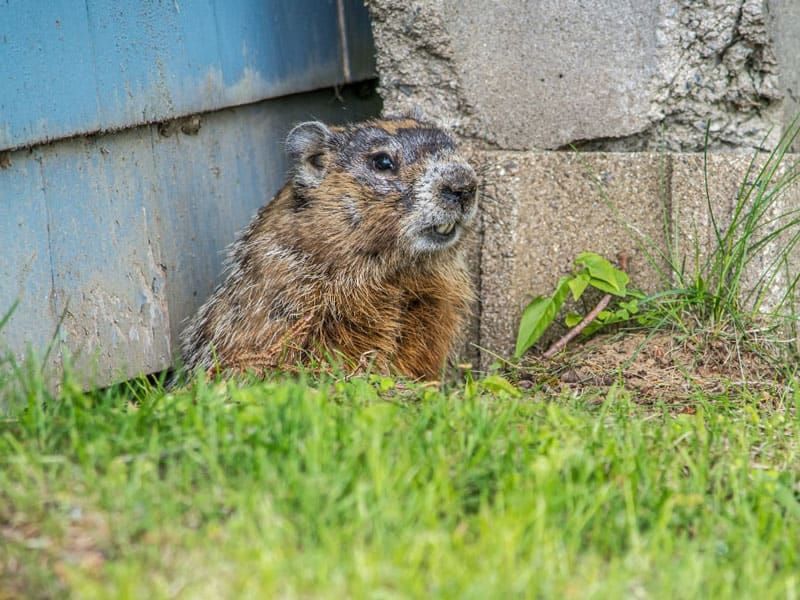
Fresh soil piled beside your porch is one of the clearest signs that a groundhog has moved in. The main entrance to a groundhog burrow is typically a large, round opening with a noticeable mound of excavated dirt nearby.
That mound comes from the animal pushing soil out as it digs, and it tends to be most visible right at the primary entrance. Secondary exits, which we will cover in the next section, usually lack that obvious soil pile.
Identifying a groundhog burrow rather than another animal’s hole requires a few additional clues. Hole size, nearby tracks, and direct observation of the animal can all help confirm what is using the space.
Other wildlife, including rabbits, skunks, and opossums, also use spaces beneath porches. So a large opening alone does not guarantee a groundhog is responsible.
Fresh digging combined with a sighting of the animal is the most reliable confirmation.
One practical note: do not put your hands or face near a burrow entrance to investigate. Observe from a respectful distance instead.
A trail camera placed nearby can capture footage without disturbing the animal or putting you at risk. Knowing where the main entrance sits is the first step toward understanding the full scope of the burrow and deciding what, if anything, needs to be done.
4. Hidden Exits Make The Den Bigger Than It Looks
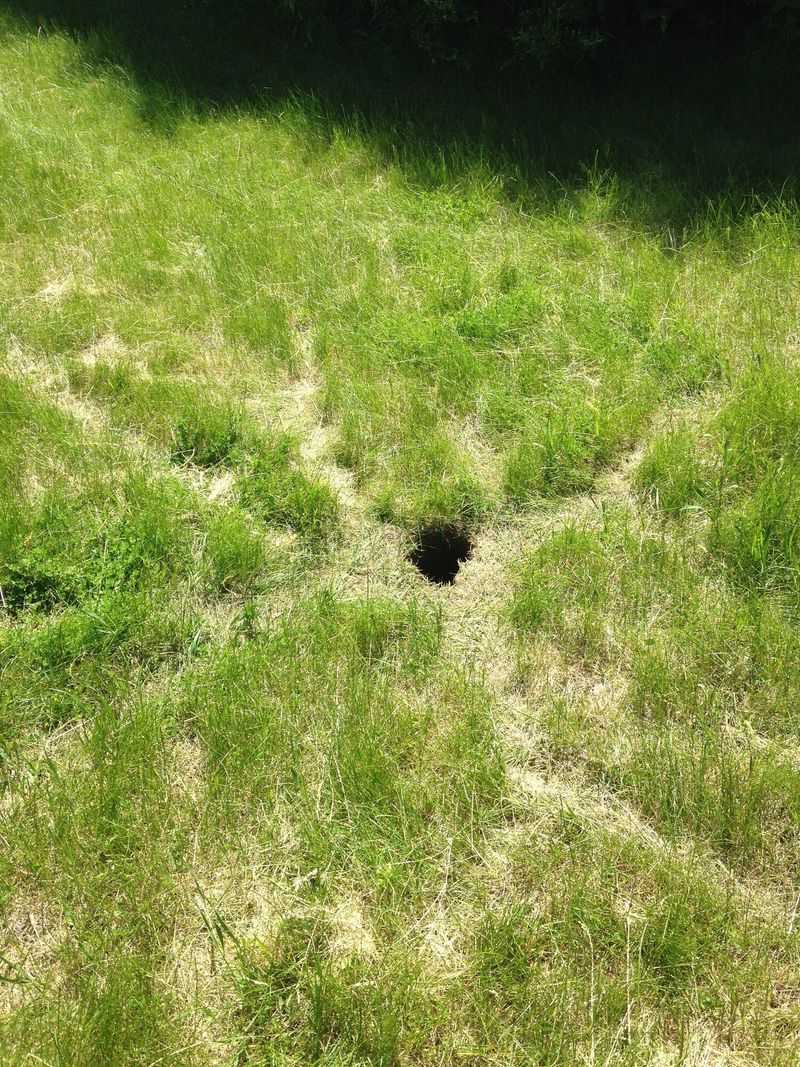
Spotting one hole beside your porch might make the situation seem simple. But groundhog burrow systems can include more than one entrance.
According to wildlife resources from Ohio State University Extension, burrows commonly have a main entrance and one or more secondary exits. Those extra openings give the animal an escape route if a predator blocks the primary door.
Secondary exits are usually less obvious because they tend to lack the large soil mound found at the main entrance.
Tunnels can extend a meaningful distance beyond the visible opening. The full underground footprint of a burrow may reach well past the edge of your porch and into surrounding soil.
That is why inspecting only the area directly beside the foundation can give you an incomplete picture. Walking the perimeter of your porch, deck, or nearby garden beds may reveal additional openings you had not noticed before.
Understanding the full layout of the burrow matters most if you are considering any kind of exclusion work later on. Sealing only the main entrance while leaving secondary exits open will not resolve the situation.
Every opening needs to be identified and considered before any action is taken. Taking time to map out what is actually underground, rather than assuming the burrow is small, leads to better decisions and fewer surprises down the road.
5. Garden Beds Can Become The Daily Buffet
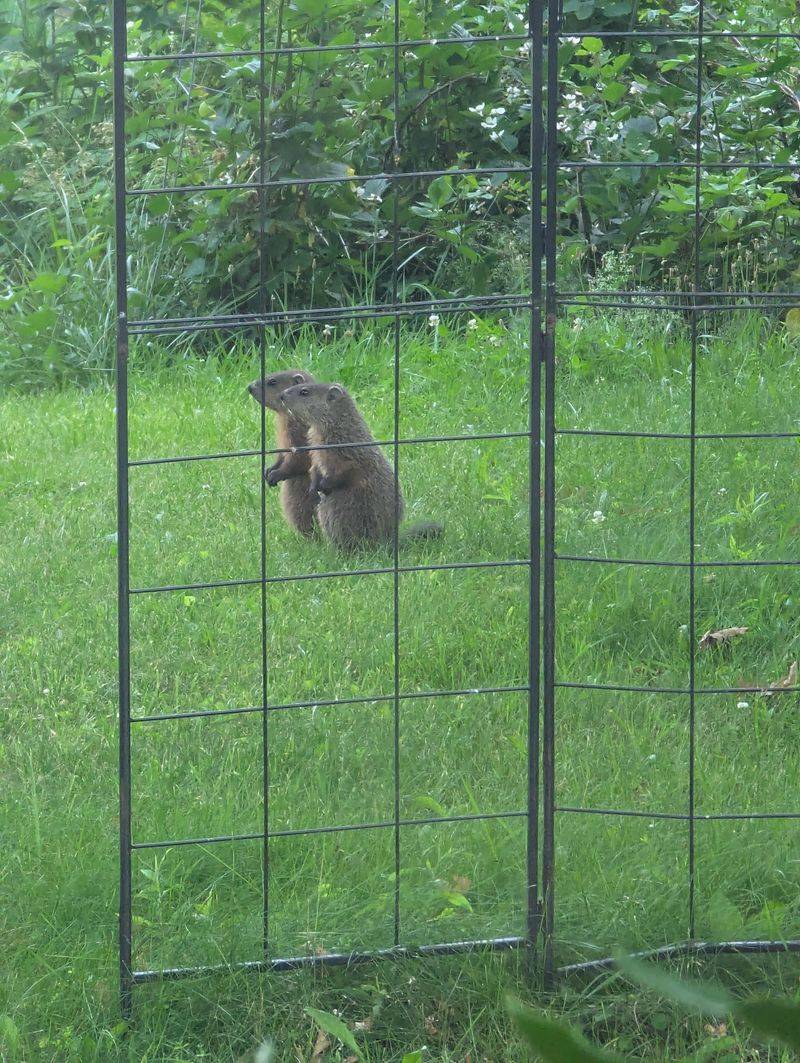
Plants disappearing overnight near your garden beds can be confusing. When a groundhog has set up a burrow just steps away, those missing stems and clipped leaves start to make more sense.
Ohio State University Extension notes that groundhogs feed on a variety of garden crops, grasses, and tender vegetation. Vegetables like lettuce, beans, and peas are among the plants that can attract repeated visits when a burrow is located close by.
A protected den beside a productive garden makes repeated feeding trips very easy. The animal can emerge, eat, and retreat to safety within minutes.
That convenience is part of what makes a porch burrow so useful to the animal across an entire growing season. Feeding activity tends to be heaviest in the morning and late afternoon, which are the times groundhogs are most active above ground.
Before blaming a groundhog for every missing plant, consider other possibilities. Rabbits, deer, and insects can create similar-looking damage in a garden.
Direct observation or a trail camera can help confirm which animal is actually responsible. Tracks near the feeding area and the proximity of the burrow entrance are useful clues.
Knowing the actual cause of garden damage helps you respond appropriately. It also prevents you from targeting the wrong animal or wasting effort on a different problem.
6. Burrowing Can Put Foundations Under Pressure
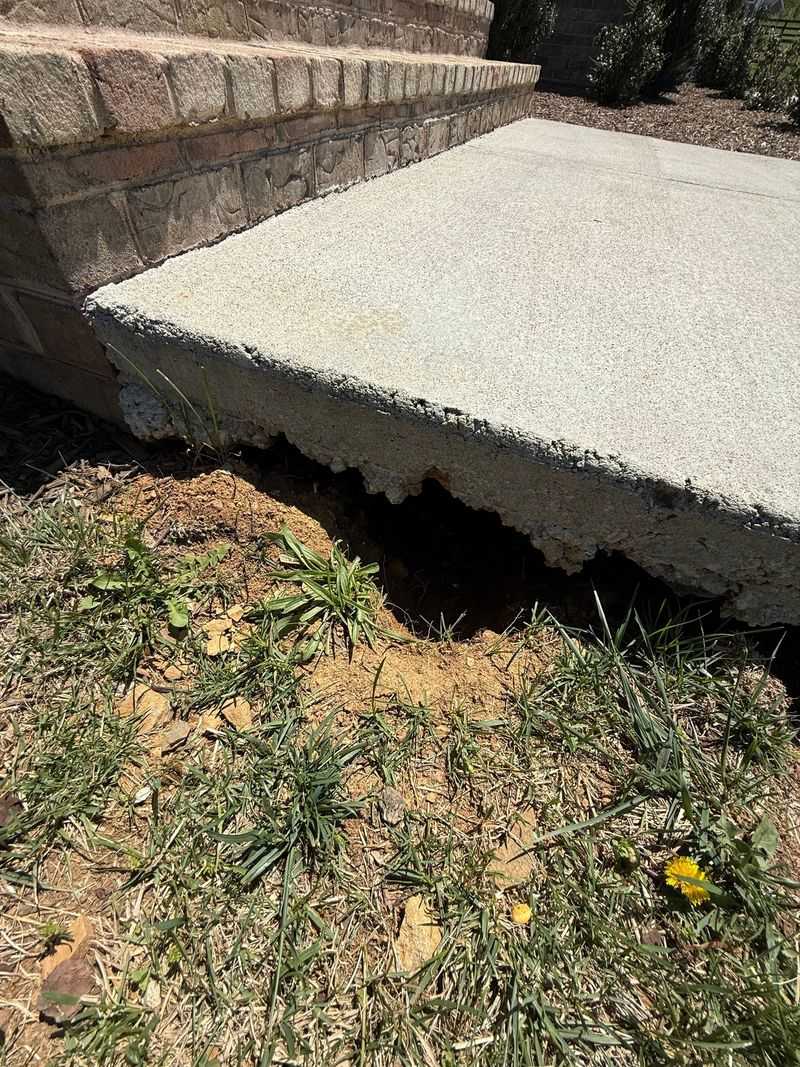
A hole beside a porch can look harmless at first glance. But when a burrow extends beneath a foundation, sidewalk, or concrete slab, the situation deserves a closer look.
Ohio State University Extension notes that groundhog burrows near structures can undermine foundations. They may also cause soil settling over time.
The risk depends on several factors, including where the tunnel runs, how extensive the burrow becomes, and what type of soil and structure are involved.
Not every burrow beneath a porch causes structural damage. Many animals dig and move on without leaving any lasting impact on the foundation.
But a burrow that grows larger over multiple seasons, or one that runs directly beneath a load-bearing element, carries more potential for concern.
Visible signs worth noting include gaps opening along the foundation, uneven settling of steps or slabs, and soil disappearing from around the base of the structure.
Do not attempt to diagnose foundation damage on your own. If you notice settling, cracking, or significant soil loss near a burrow, contact a qualified structural professional for an assessment.
Addressing a potential structural concern early is always smarter than waiting. Burrowing is natural behavior for a groundhog, but its location near a home deserves attention.
Property owners should monitor the surrounding soil and structure for changes over time.
7. One Groundhog Does Not Always Mean A Family
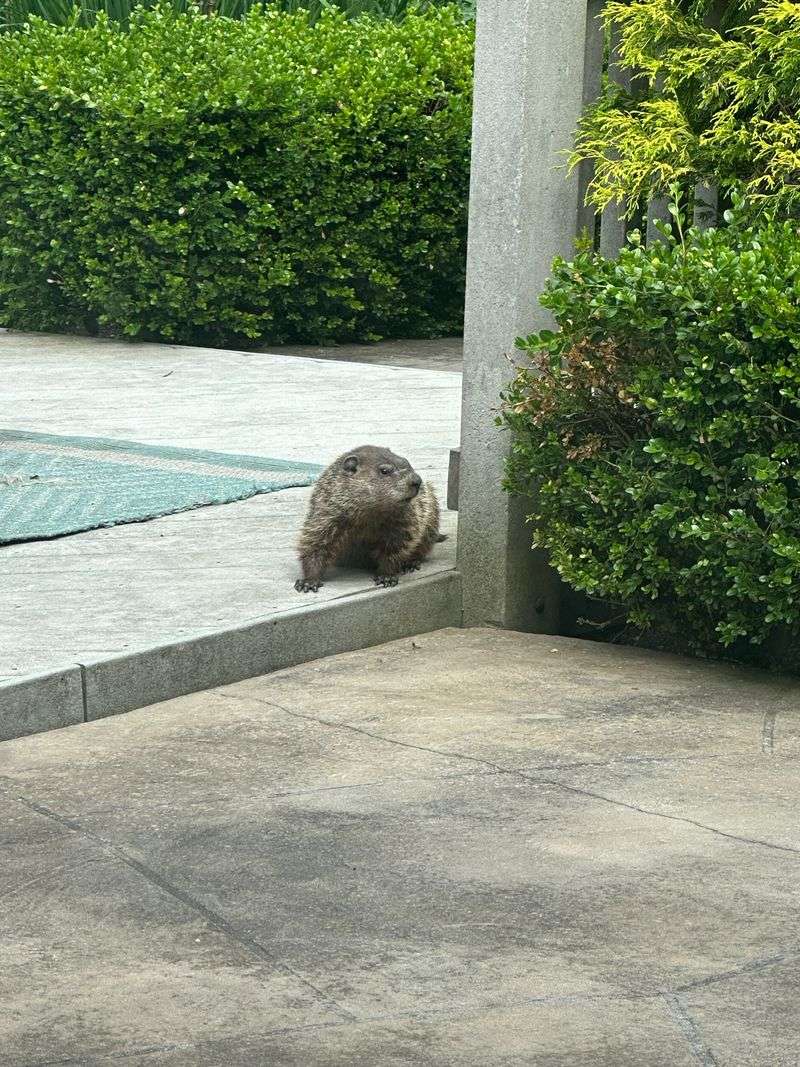
Seeing one groundhog slip beneath your porch can immediately raise the question of how many more might be down there. The assumption that one visible animal means a whole family is hiding below is a common one, but it is not always accurate.
According to wildlife guidance, groundhogs are generally solitary animals outside of the breeding season and the period when females are raising young. A single adult using a burrow beneath a porch is a very common situation.
Females do give birth to young in spring, and a mother may have dependent pups in a burrow for several weeks. If young are present, they will eventually become mobile and begin appearing above ground before dispersing to find their own territories.
Dispersal of young groundhogs typically occurs in late summer, though exact timing can vary. Observing the entrance over several days can help you get a clearer picture of how many animals are actually using the space.
This distinction matters most before any exclusion work is considered. Assuming the burrow is empty because only one animal has been spotted is not a safe conclusion.
Equally, spotting one adult does not mean young are automatically present. Patient observation is the most reliable way to understand what is happening beneath your porch.
Do this before taking further steps to manage the situation responsibly.
8. Seal The Space Only After The Burrow Is Empty
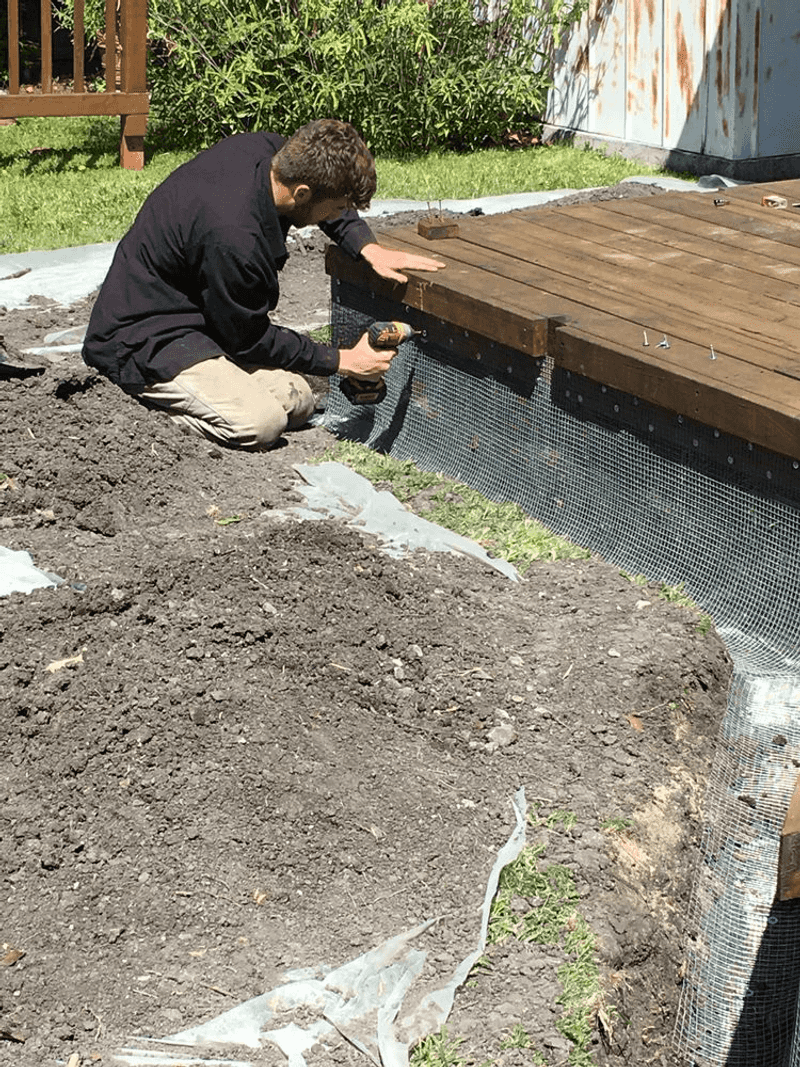
Closing off the space beneath your porch before confirming the burrow is empty can trap an animal inside. That outcome is harmful and can create additional problems, including odor and secondary pest activity.
Wildlife guidance consistently emphasizes that any permanent exclusion work should only happen after you have confirmed the den is no longer occupied. Rushing to seal an opening without that confirmation is a mistake that is easy to avoid with a little patience.
One commonly recommended method for checking occupancy is to loosely fill the entrance with soil or crumpled newspaper and then check it after a day or two. If the material has been pushed aside, the burrow is still active.
If it remains undisturbed over several days, the animal may have moved on. This approach is simple and does not require specialized equipment.
However, if you are uncertain or if young may be present, consulting a qualified wildlife professional is the smarter choice.
Exclusion materials installed along the base of a porch or deck need to extend below ground to prevent future digging beneath the barrier.
Check current Ohio Department of Natural Resources rules before trapping or relocating any wildlife, and use a licensed professional if removal is needed.
A groundhog beneath a porch has found useful habitat, plain and simple. The lasting solution is to remove access carefully, only after the space is safely and fully vacant.