The Meaning Behind Mourning Doves Nesting In Your Wisconsin Garden
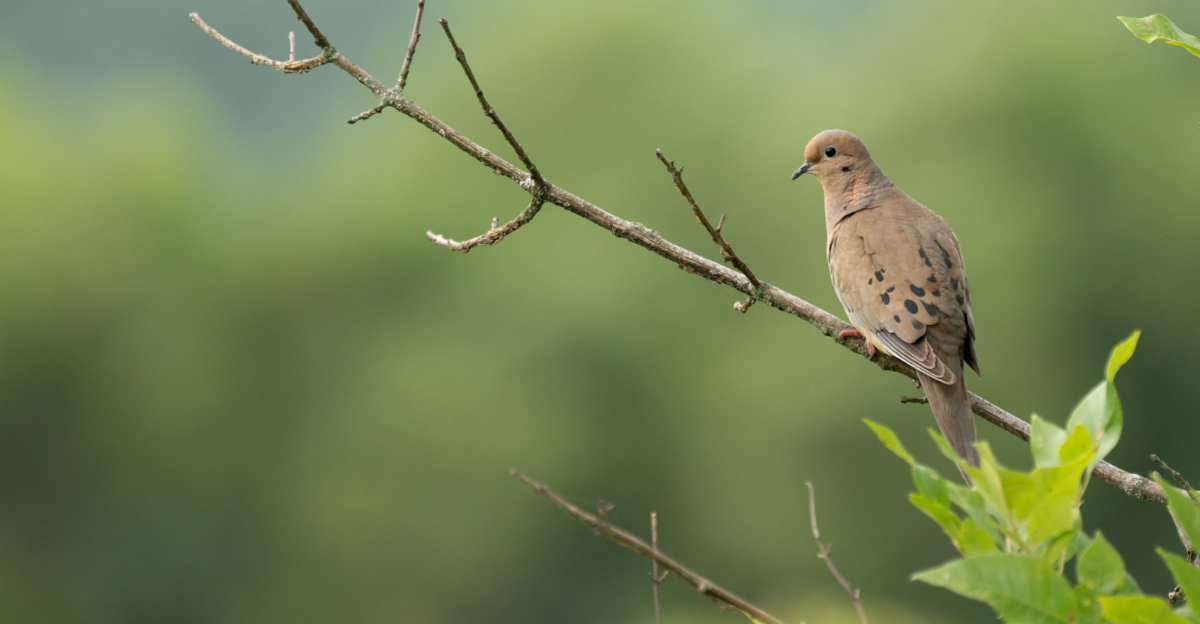
A pair of eyes meets yours from the garden shrubs. That nest looks too fragile for you to trust completely.
Pale eggs rest inside, waiting for you to notice them. This gray bird watches you with calm, unmoving eyes.
Wisconsin gardens host these quiet encounters more than you’d guess. Mourning doves choose your yard, then keep returning to you.
Spring brings that same soft presence right back to you. Meaning follows these birds straight into your own yard.
Ancient cultures saw their arrival as a message meant for you. Habits reveal themselves quickly once you start paying attention.
Nesting choices and feeding patterns unfold right before you. None of it stays hidden from you for long.
Backyards across Wisconsin become more meaningful than you expected. Everything happening in that nest keeps shifting in front of you. You already sense there’s more waiting to unfold, and looking away simply isn’t right.
What Mourning Doves Nesting Means For Your Yard
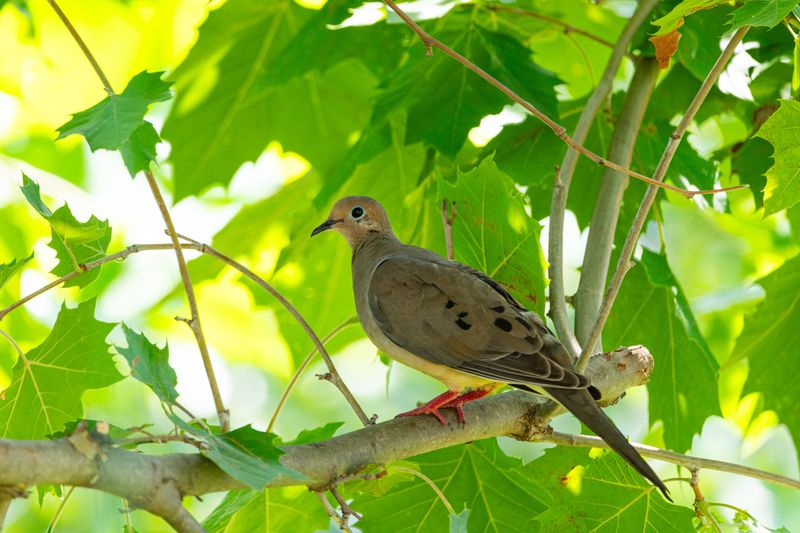
Something shifts when a mourning dove chooses your yard. It feels personal, like a small gift from nature placed right at your doorstep.
Mourning doves nesting near your home carry deep symbolic meaning across many cultures. They are widely seen as symbols of peace, love, and new beginnings.
Spotting a nest often signals that your outdoor space feels calm and safe enough to support new life.
In Christian traditions, doves represent the Holy Spirit and divine grace. Some Native American traditions associate doves with hope, peace, or renewal, though symbolism varies widely across different nations.
Even outside religious contexts, people often describe a strong feeling of comfort when doves choose their space.
Your yard earns that nest. Doves are selective about where they raise their young. They look for spaces that feel sheltered, quiet, and free from constant disruption.
A nesting dove also signals something practical about your garden. It usually means you have good ground cover, low foot traffic, and nearby food sources.
Mourning doves feed on seeds, so a yard with natural grasses or bird feeders is especially appealing. Seeing a dove nest is also a reminder to slow down. These birds move at a quiet pace.
Watching them encourages you to observe the small, beautiful details happening right in your own backyard. That sense of connection to nature is genuinely good for your mental health.
A 2017 University of Exeter study found that people living near more birds reported lower levels of depression, anxiety, and stress. Watching doves in your garden can be a calming addition to your daily routine.
Why Wisconsin Yards Attract Nesting Doves
Wisconsin offers favorable conditions for nesting doves. The state offers a mix of open fields, wooded edges, and suburban gardens that doves absolutely love.
Mourning doves thrive in areas with a blend of open ground and nearby trees or shrubs. They nest low, often in dense bushes or on flat ledges.
Wisconsin’s mix of urban green spaces and rural landscapes creates ideal conditions for these birds year-round.
Your Wisconsin Garden Changes Every Week. Your Plan Should Too.
Gardening in Wisconsin changes quickly throughout the season. Every Friday you’ll receive a simple weekly plan showing exactly what to plant, prune, fertilize, harvest, and protect so you never miss the right timing.
Mild springs and warm summers give doves a long breeding window. They can raise up to six broods per season in warmer climates, though in Wisconsin’s shorter season two to four broods is more typical.
That means your yard could host multiple nesting cycles between spring and early fall. Food availability plays a huge role in attracting doves.
Mourning doves feed almost entirely on seeds, and Wisconsin’s native plants provide a steady supply. Crabgrass, foxtail, and sunflower seeds are among their favorites.
Bird feeders stocked with millet or safflower seeds make your yard even more appealing. Doves prefer to feed on the ground, so a platform feeder or scattered seed works best. Fresh water nearby seals the deal for a nesting pair.
Suburban neighborhoods with mature trees and relaxed landscaping habits tend to attract more doves.
A yard that is not overly manicured gives doves the scrubby, natural-feeling spaces they prefer. A less manicured yard tends to feel more inviting to nesting doves.
Mourning doves nesting in your Wisconsin garden is often a direct reward for creating a bird-friendly environment. Your choices as a gardener genuinely matter to local wildlife.
Signs Of A Mourning Dove Nest
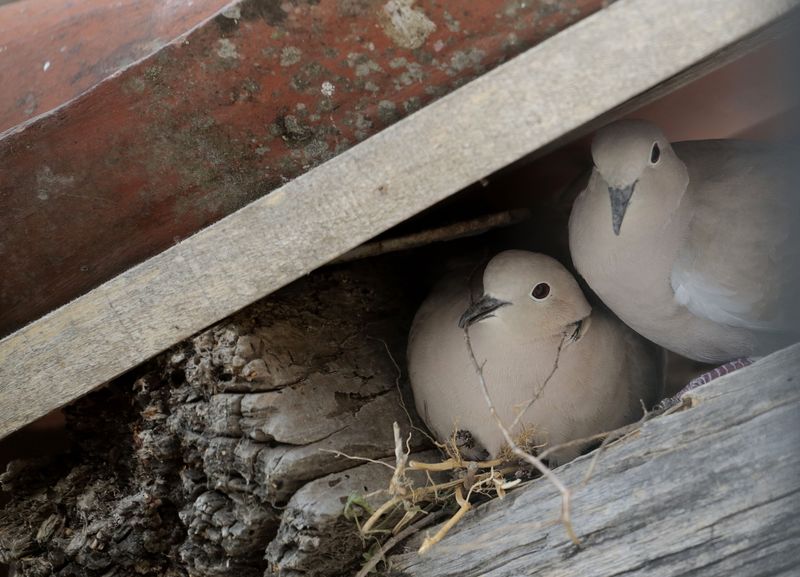
You might walk right past a dove nest without realizing it. These birds are masters of blending in with their surroundings.
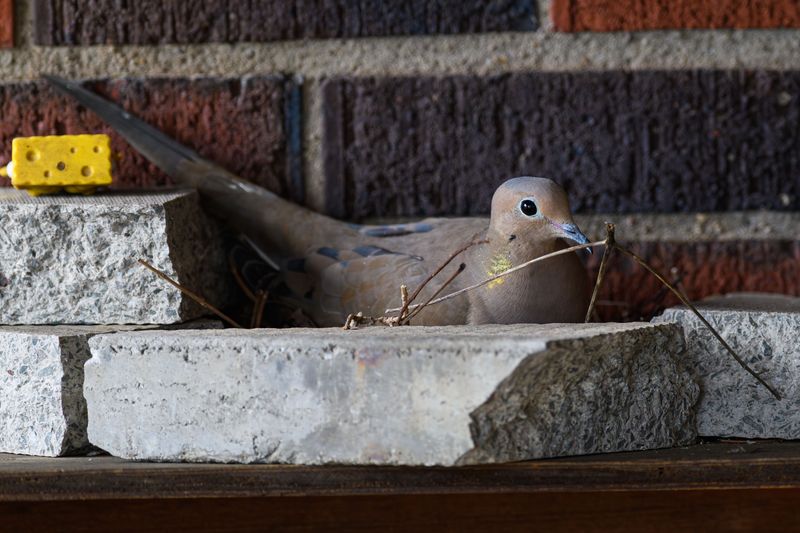
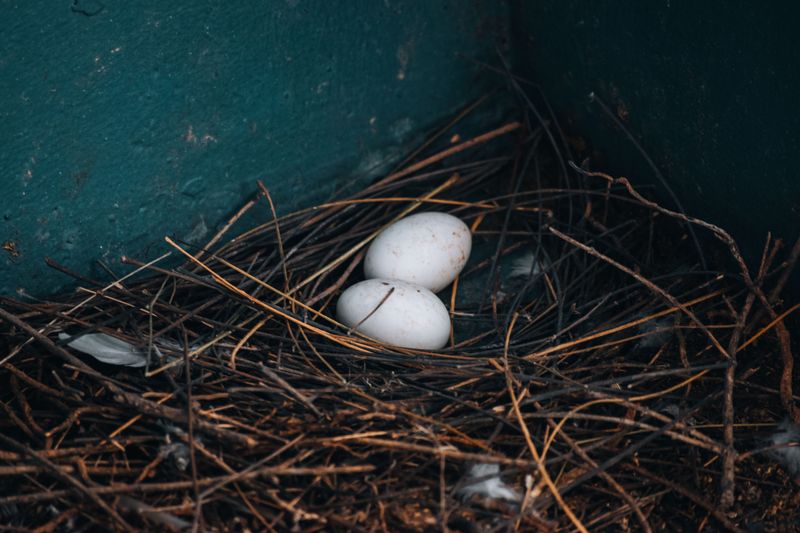
Mourning dove nests look almost laughably simple. They are loosely arranged platforms of twigs, pine needles, and grass stems.
The structure is so minimal that you can often see the eggs right through the bottom of the nest.
The nests are usually found low to the ground, between three and ten feet up, though they can occasionally sit much higher.
Dense shrubs, thick hedges, and evergreen trees are popular spots. Sometimes doves nest directly on the ground, especially in areas with good leaf cover.
Two white eggs are the classic sign of a mourning dove nest. The eggs are small, smooth, and bright white.
Both parents take turns incubating them, so you will often see one dove sitting very still and alert on the nest.
Listen for a soft cooing sound near your garden. Doves communicate with a low, mournful call that is easy to recognize.
If you hear that sound repeatedly from one area, a nest is likely close by. Watch for a bird that seems reluctant to leave a specific shrub or branch. A nesting dove will hold its position even when you approach.
That calm, steady behavior is a strong indicator that eggs or chicks are nearby. Avoid trimming shrubs during nesting season if you spot these signs.
Giving doves a little space to finish raising their young costs you nothing and means everything to them.
The Nesting And Breeding Cycle
Dove pairing and nesting happen quickly. A bonded pair can go from courtship to hatched chicks in under a month, which is notably efficient for a backyard bird.
Mourning doves are monogamous during a breeding season. Males court females with a puffed chest display and persistent cooing.
Once paired, the male collects nesting materials while the female does most of the building.
The female lays exactly two eggs per clutch. Incubation takes about 14 days, with both parents sharing the sitting duties.
The male typically covers the nest during daylight hours while the female takes the night shift. Chicks hatch covered in sparse yellow down and are completely helpless at first.
Parents feed them a special substance called crop milk, which is rich in protein and fat. This unique food source helps chicks grow at a rapid rate.
Baby doves, called squabs, leave the nest around 12 to 14 days after hatching. They cannot fully fly at first and spend a few days on the ground near the nest.
During this time, parents continue feeding and protecting them closely. Once the first brood is independent, the pair often begins the cycle again almost immediately.
This fast turnaround allows multiple broods per season. A single pair can raise several sets of chicks between spring and early fall.
Watching this full cycle unfold in your garden can be a rewarding experience for many birdwatchers. Mourning doves nesting in your Wisconsin garden gives you a front-row seat to something quietly extraordinary.
Supporting Nesting Doves Without Disturbing Them
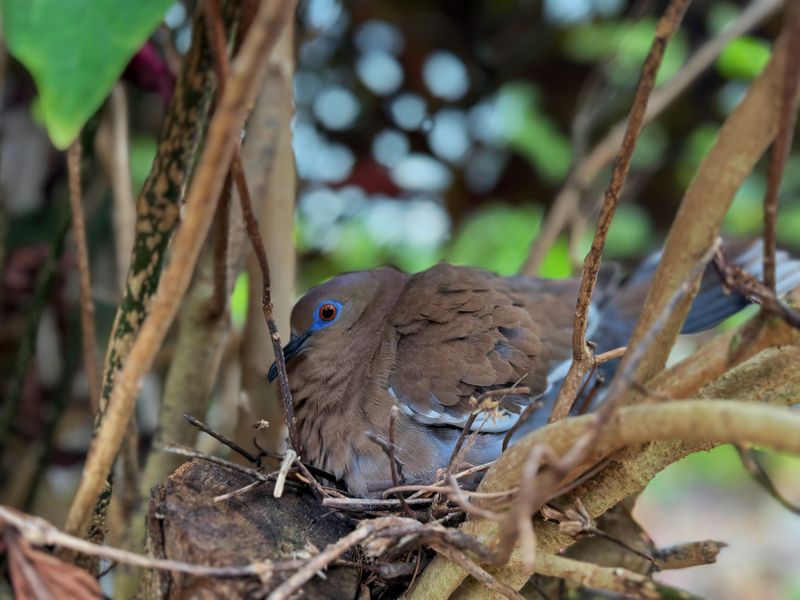
The best thing you can do for a nesting dove is also the easiest thing. Leave it alone and let nature take over.
Keep pets indoors or supervised when doves are actively nesting nearby. Cats are the biggest threat to ground-nesting birds.
Even a curious dog can stress a nesting pair enough to cause them to abandon the nest. Avoid loud yard work near the nest during incubation.
Lawn mowers, leaf blowers, and power tools create vibrations and noise that frighten sitting doves. Try to schedule those tasks for times when you know the birds are away.
Place your bird feeders at a reasonable distance from the nest site. Doves appreciate food nearby but do not want heavy bird traffic right next to where they are raising young.
A platform feeder about 20 feet away strikes a good balance. Keep a shallow dish of clean water nearby and refresh it daily. Doves need water for drinking and bathing.
A simple birdbath placed at ground level works perfectly for these low-flying birds.
Plant native shrubs like dogwood, viburnum, or dense juniper to give future nesting pairs more options.
These plants provide natural cover that doves find especially appealing. Adding native plants also supports the seed-producing plants that doves depend on for food.
Respecting the space of a nesting bird builds a long-term relationship with local wildlife. Doves that nest successfully in one spot often return the following season. Your thoughtful habits today could mean years of peaceful visits ahead.
Common Myths About Doves Nesting Near Homes
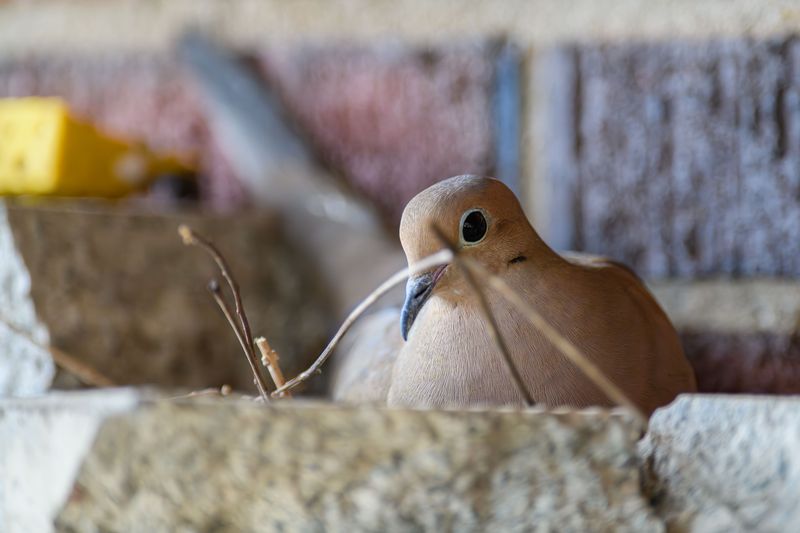
Several common misconceptions exist about doves. Some of these myths keep well-meaning homeowners from enjoying the birds right outside their windows.
One common myth is that touching a dove nest will cause the parents to abandon it. Birds have a very limited sense of smell and cannot detect human scent on their eggs.
If you accidentally disturb a nest, the parents will almost always return within an hour. Another popular belief is that doves bring bad luck to a home. This is not supported by evidence across most cultural traditions.
Doves are nearly universally seen as symbols of peace, hope, and positive energy. Some people think doves are too fragile to make it through Wisconsin winters.
Mourning doves are actually quite hardy, and a growing number now stay through winter in the upper Midwest, especially near reliable feeders.
They adapt their diet and behavior to handle cold temperatures with ease. There is also a myth that doves are messy and will damage your garden. Doves leave behind minimal waste and do not tear up plants or dig in soil.
They are among the most low-impact birds you can host in a residential yard. Finally, some homeowners worry that a nest means a permanent bird problem. Doves are seasonal nesters that move on naturally after each brood is raised.
You are not locked into anything by allowing them to stay. Mourning doves nesting in your Wisconsin garden deserve to be welcomed, not feared. Let go of the myths and enjoy one of nature’s most peaceful garden visitors.